Key takeaways
- Breadseed poppies are Papaver somniferum, a hardy annual reaching up to 120cm tall
- Growing them for seed, flowers or crafts is legal in the UK; extracting opium is a criminal offence
- Sow direct in autumn or early spring; the roots resent transplanting, so never sow in modules
- Thin seedlings to 20cm apart for full-sized pods and a decent seed yield
- Harvest seed heads when the pods turn beige and the seeds rattle inside
- A 3m row yields roughly 115-140g of seed; the seed stays viable up to 6 years
- One packet costs £2-3 and gives dozens of plants, each holding thousands of seeds
Breadseed poppies are the plant that turns a spare corner of ground into a year’s supply of baking seed, and they could not be easier to sow. Their botanical name is Papaver somniferum, the same hardy annual florists prize for papery flowers and fat blue-grey seed pods. This guide covers sowing, thinning, harvesting the seed heads and using the crop, plus the one thing every UK grower asks about: the law.
Let me deal with the legal question first, because it puts people off needlessly. Growing this poppy is legal. Only one narrow activity is not. Get that clear and the rest is as simple as growing a marigold.
Are breadseed poppies legal to grow in the UK?
Yes, growing breadseed poppies is legal in the UK, and no licence is required. You may sow Papaver somniferum, enjoy the flowers, harvest the seed, eat it, and sell it. Garden centres and seed firms stock it openly for exactly this reason.
The line the law draws is narrow but firm. The Misuse of Drugs Act 1971 makes it an offence to produce opium from the plant. That means processing the green pods to extract the milky latex, for example by scoring them to collect the sap. Cultivation of the plant itself is not licensed or restricted under the Act.
The seed is treated differently from the rest of the plant. In law, “poppy straw” covers all parts of the poppy except the seed. Ripe, cleaned seed contains no meaningful opiate content, which is why it sits on your bagels legally.
So the rule is simple. Grow it, cut it, bake with the seed: all fine. Score the pods for latex or process the plant for drugs: a criminal offence. No ordinary gardener ever crosses that line by accident.
If you like knowing where the legal edges sit, our guide to banned and restricted plants in UK gardens covers the species that genuinely are off-limits. Breadseed poppy is not one of them.
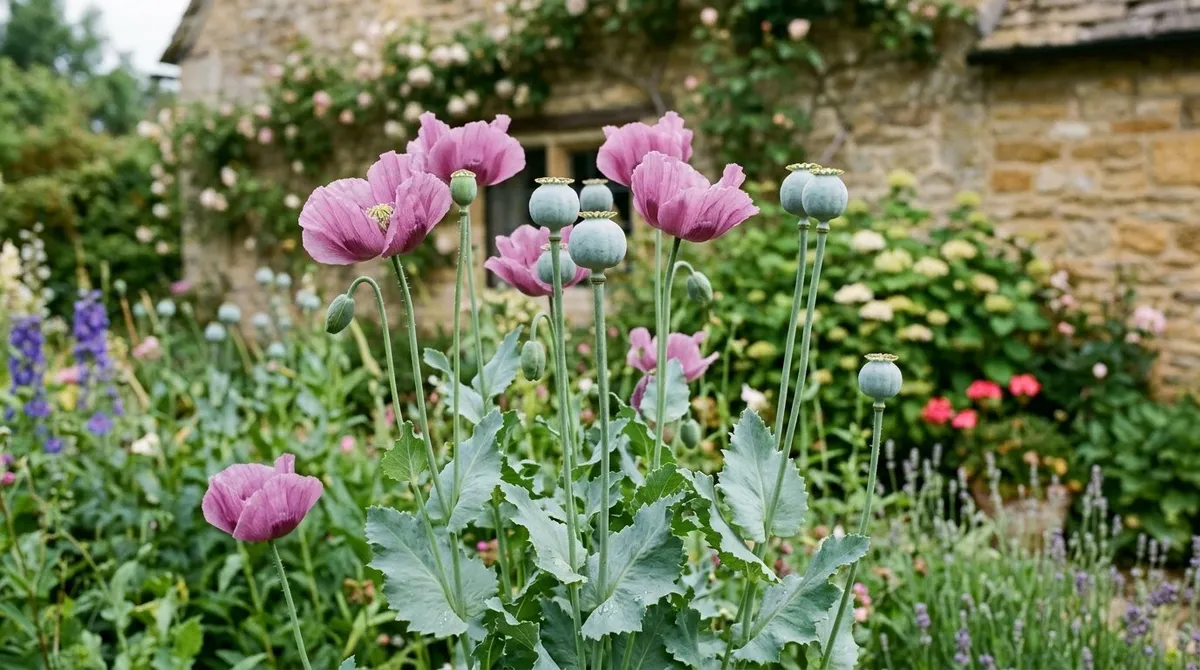
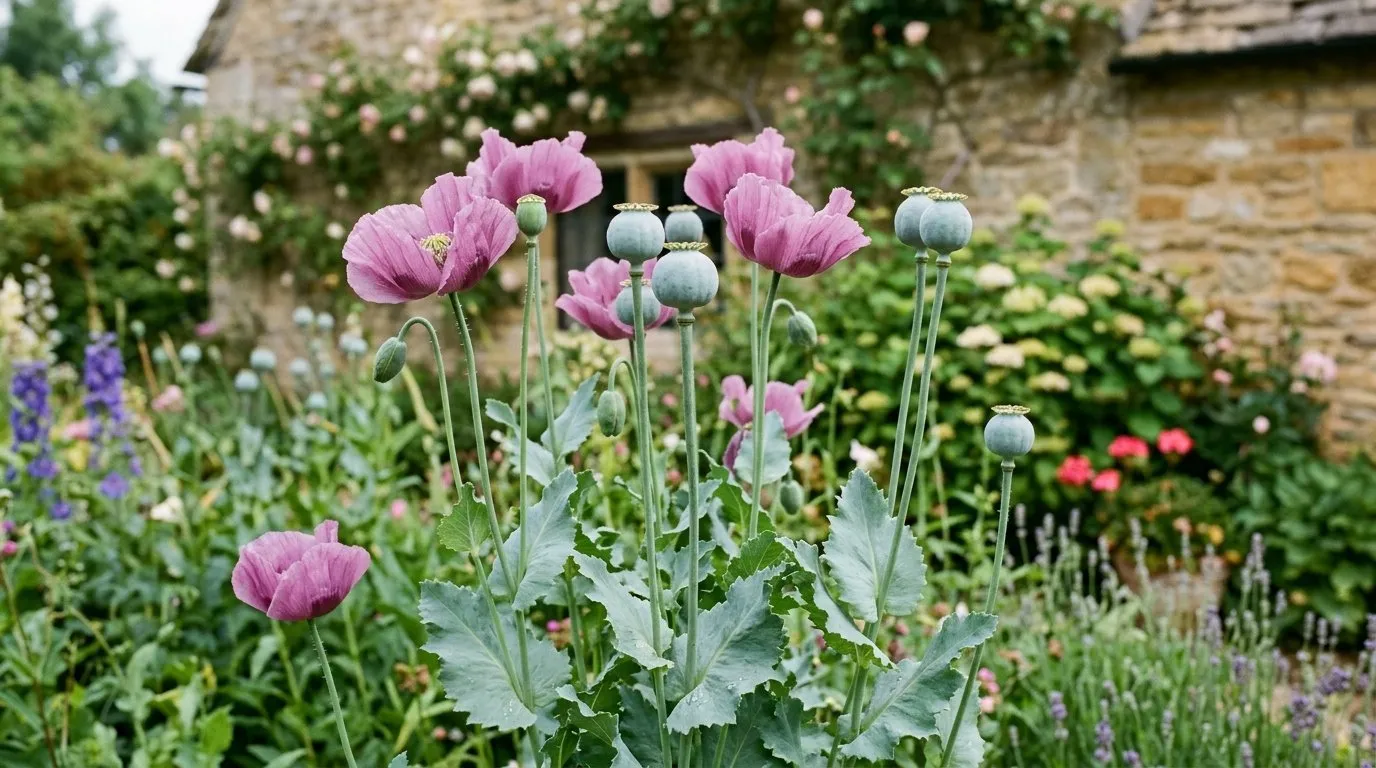 Breadseed poppies in full flower before the pods swell. The plant is legal to grow across the UK for seed and ornament.
What are breadseed poppies?
Breadseed poppies are a tall hardy annual grown for both their flowers and their edible seed. The RHS lists Papaver somniferum as reaching up to 120cm, with smooth grey-green leaves that clasp the stem and single or double flowers in white, pink, mauve and deep plum.
The name refers to the seed, which has fed bakers for centuries. After the petals drop, each flower forms a rounded pod the size of a walnut. Inside sit thousands of tiny seeds, ripening from creamy white to slate blue or steel grey depending on the variety.
Flowers appear from June to August. Pods ripen through August and September. The plant is a true annual: it grows, flowers, sets seed and dies in one season, so you sow fresh each year or let it self-seed.
It sits alongside the field poppy and other garden types in the same family. For the wider picture of the genus, our main guide to growing poppies sets out the perennial, biennial and annual kinds and where each belongs.
 A drift of breadseed poppies in a walled border. Papaver somniferum flowers June to August before the pods form.
When and how do you sow breadseed poppies?
Sow breadseed poppies direct where they are to grow, in autumn or early spring, and never in pots or modules. The seed germinates best in cold soil, so an autumn sowing often beats a spring one.
The single most important rule is this: breadseed poppies hate root disturbance. They form a taproot that snaps when lifted, so module-raised plants stall, sulk and usually die. Every packet that fails on a windowsill fails for this reason. Sow direct, thin the seedlings, and you sidestep the problem entirely.
Spring sowing, from March to April, is the fallback if you miss autumn. It works well but flowers two to three weeks later on shorter plants. Both methods use the same technique.
Rake the bed to a fine tilth, water if dry, then scatter the seed thinly across the surface. The seed is dust-fine, so mix a pinch with a handful of dry sand to spread it evenly. Barely cover it, because it needs light to germinate. A light firming with the back of a rake is enough.
Choose an open, sunny site on any free-draining soil. Poppies loathe waterlogged ground, especially over winter. The same sow-and-thin routine covered in our guide to sowing hardy annuals direct applies to breadseed poppies exactly.
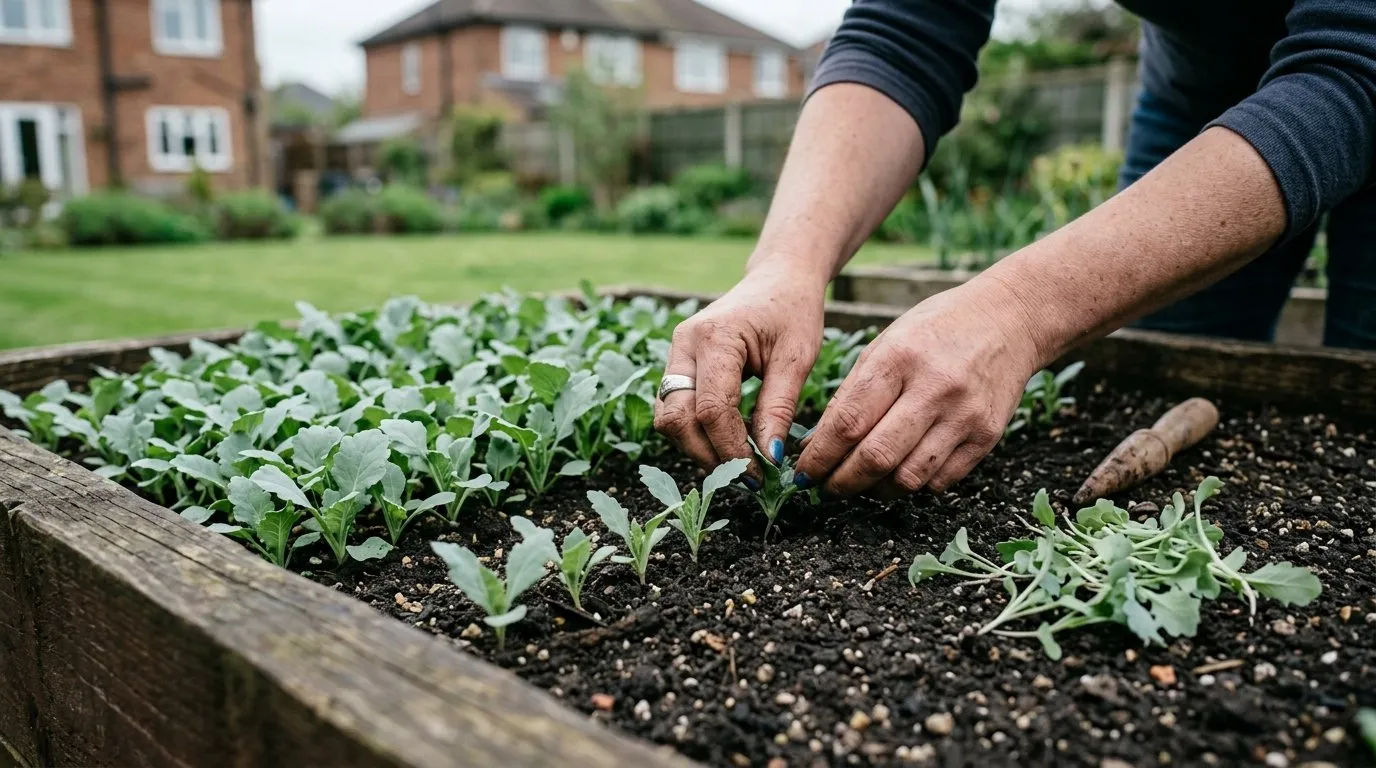 Thinning breadseed poppy seedlings to 20cm. Pull the surplus rather than lifting and moving them, as the taproot will not stand transplanting.
How do you thin breadseed poppy seedlings?
Thin breadseed poppy seedlings to 20cm apart once they reach 5cm tall, and resist any urge to move the ones you pull out. Crowded plants stay small and produce mean little pods, so thinning is where the seed yield is won or lost.
Work in two stages. When seedlings are 2-3cm high, thin to roughly 10cm apart. When they reach 8-10cm, thin again to a final 20cm spacing. For the largest exhibition pods, go wider at 30cm.
Pull the surplus seedlings out or nip them off at soil level. Do not try to replant them, because they will not take. Water the bed after the final thinning to settle the roots of those that remain.
Thin plants grow into sturdy specimens up to 120cm tall, each carrying several pods. Overcrowded rows give you a thicket of 40cm weaklings with one small pod apiece. The difference in seed weight at harvest is large.
How do you harvest breadseed poppy seed heads?
Harvest breadseed poppy seed heads when the pods turn from grey-green to beige and the seeds rattle inside. This usually falls in late August through September in most of the UK.
Watch for three signs. The stem browns and dries. The pod hardens and loses its bloom. A ring of small holes opens under the crown, like the top of a pepper pot, which is how the plant would normally shake out its own seed.
Cut the whole head with 15cm of stem on a dry day. Tip each pod over a bowl and the ripe seed pours out through the holes. Some heads need a gentle tap or a snip across the top. Sieve the seed to remove chaff, then spread it on a tray.
Dry the cleaned seed for a further week in an airy room out of direct sun. Store it in a paper envelope or airtight jar somewhere cool and dark. Kept dry, breadseed poppy seed stays viable for up to six years.
If you want a supply for next year as well as the kitchen, save the fattest pods from your strongest plants. Our seed saving guide for beginners covers labelling, drying and storage for poppy seed and much else.
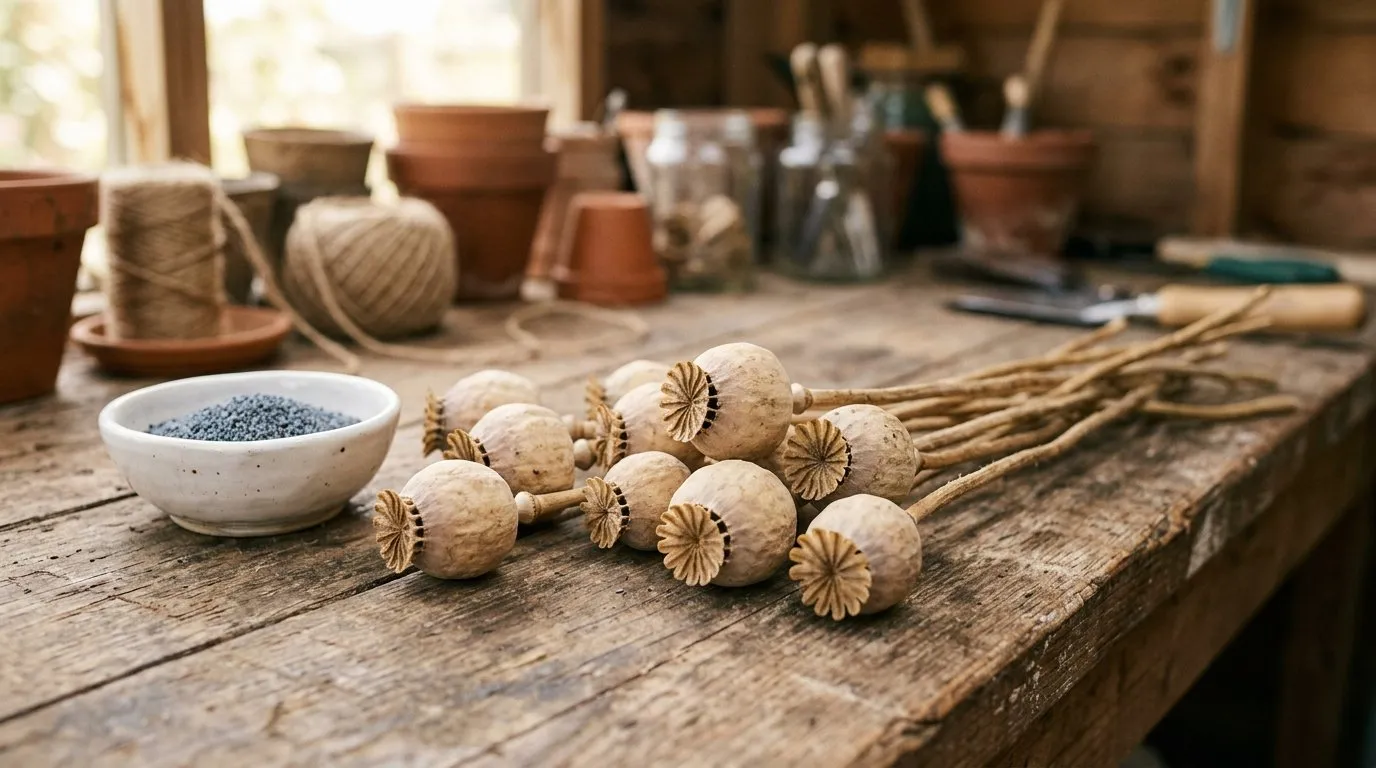 Ripe breadseed poppy pods turn beige and rattle. Tip them over a bowl and the seed pours through the holes under the crown.
How much seed does one plant yield?
One well-grown breadseed poppy plant holds thousands of seeds across its pods, and a 3m row yields roughly 115 to 140g of clean seed. That is enough poppy seed for a full year of home baking with plenty left to resow.
Yield depends almost entirely on spacing and vigour. A plant thinned to 20cm and grown in sun on decent soil can carry six to ten pods. A crowded plant may manage one small pod. This is why the thinning stage matters so much.
Here is what different sowings gave me across two Staffordshire seasons.
| Sowing | Flowered | Plant height | Pods per plant | Seed from row |
|---|---|---|---|---|
| Autumn (mid-October) | Early June | 100-115cm | 6-10 | 128g from 9 plants |
| Spring (late March) | Late June | 75-90cm | 4-6 | 74g from 9 plants |
| Crowded (unthinned) | Mid-June | 40-55cm | 1-2 | 22g from a clump |
The lesson is plain. Sow in autumn, thin hard, and the same patch of ground gives you two or three times the seed.
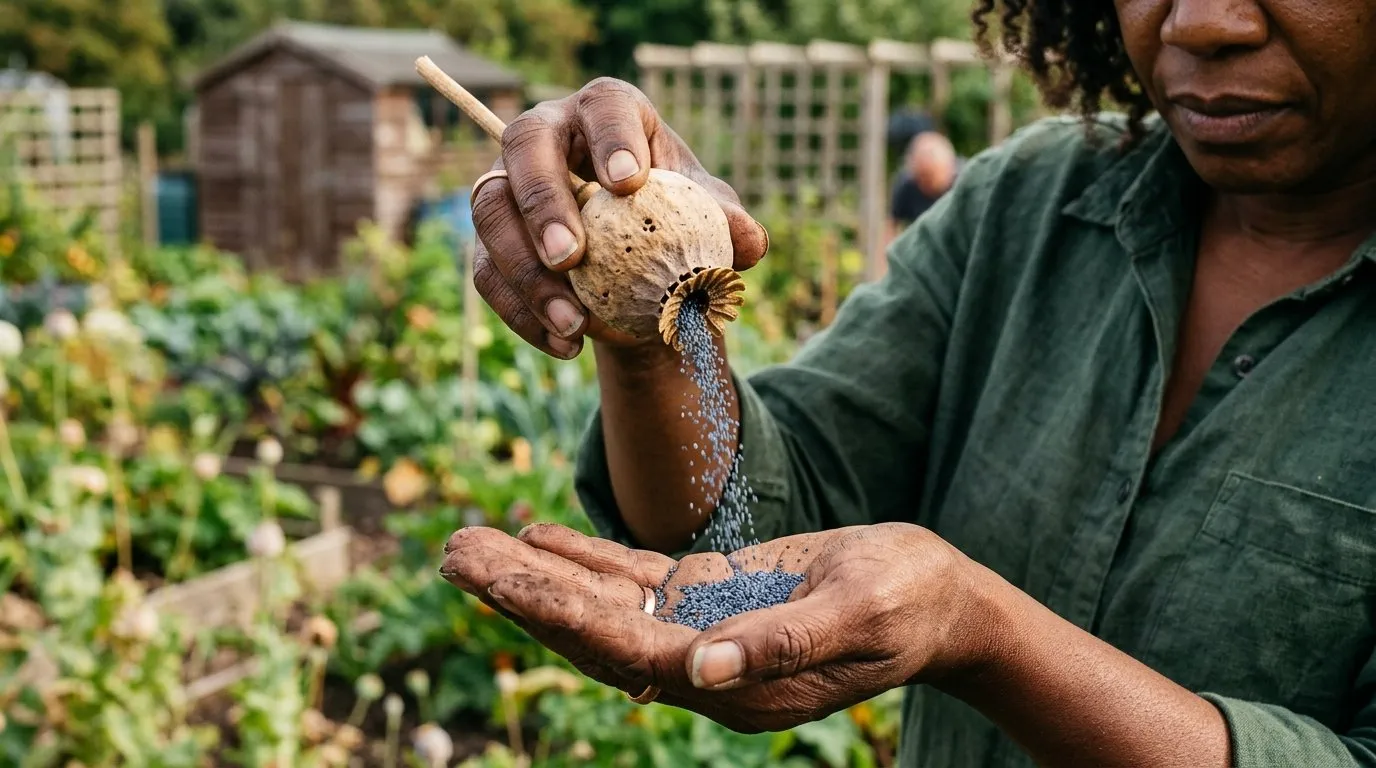 Clean blue-grey breadseed poppy seed at harvest. One good plant holds thousands of seeds across its pods.
What can you do with breadseed poppy seed?
Breadseed poppy seed is the same poppy seed sold for baking, so the kitchen uses are wide. The ripe, cleaned seed contains no meaningful opiates and is entirely safe and legal to eat.
Scatter it on bread rolls, bagels and crackers before baking. Fold it into lemon and poppy seed cake, or grind it for the poppy seed fillings used in central European pastries. A tablespoon in a salad dressing adds nutty crunch. The seed is rich in oil, which is why it stores so well and tastes so good.
Rinse the harvested seed briefly and dry it thoroughly before use, to remove field dust and any pod fragments. Home-grown seed tastes fresher than shop-bought, which often sits in warehouses for months.
The plant earns its place beyond the kitchen too. The dried pods are a florist’s staple for autumn and winter arrangements, holding their shape for years. If you dry flowers and pods, our guide to plants with the best winter seedheads shows how poppy pods sit among the finest structural seed heads for cutting.
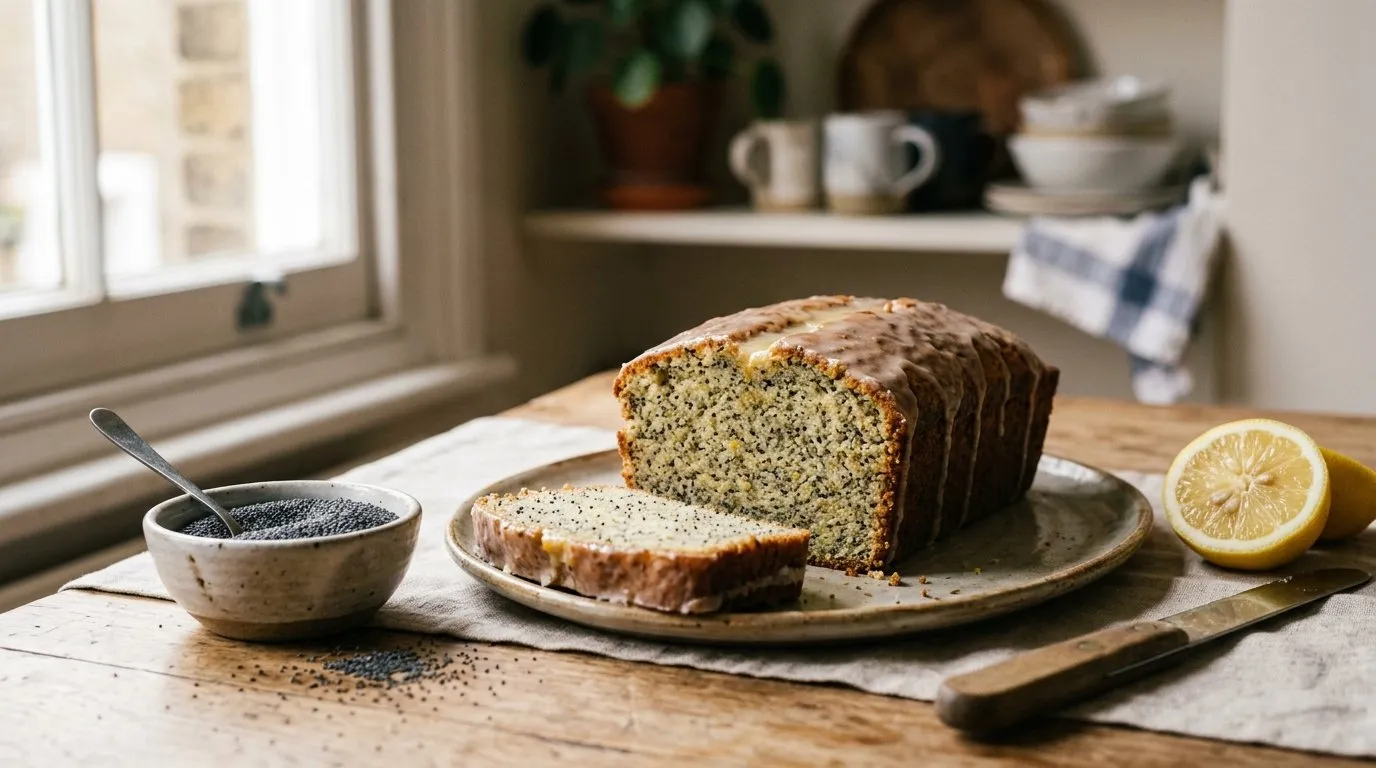 Lemon and poppy seed cake made with home-harvested breadseed poppy seed. The ripe seed is legal to eat and stores for years.
Which breadseed poppy varieties are best?
The best breadseed poppy variety depends on whether you want seed for the kitchen, showy flowers, or ornamental pods. All are the same species, so all give edible seed, but some crop more heavily than others.
‘Hungarian Blue’ is the classic seed variety. Single mauve flowers give way to large round pods packed with slate-blue seed. It is the one to grow if the harvest matters most.
‘Giganteum’ carries the biggest pods of all, prized for drying and for a heavy seed crop. Plants reach 120cm.
‘Lauren’s Grape’ is grown for its deep plum, single flowers. Seed yield is decent and the blooms are superb for cutting.
‘Black Peony’ and other peony-flowered types produce fat double pom-pom flowers in wine reds and pinks. They are showy but set slightly less seed.
‘Danish Flag’ has striking red flowers marked with a white cross, a fine ornamental with a usable seed crop.
| Variety | Flower | Best for | Approx height |
|---|---|---|---|
| ’Hungarian Blue’ | Single mauve | Seed yield | 90-120cm |
| ’Giganteum’ | Single lilac | Large pods, drying | 110-120cm |
| ’Lauren’s Grape’ | Single deep plum | Cut flowers | 75-100cm |
| ’Black Peony’ | Double wine red | Ornamental display | 80-100cm |
| ’Danish Flag’ | Red with white cross | Ornamental, seed | 90-110cm |
A packet of seed costs £2 to £3 and holds hundreds of seeds, so one purchase sows a generous patch for several years. Breadseed poppies also mix well with other easy annuals. Grow them beside California poppies for a long, overlapping display of papery flowers.
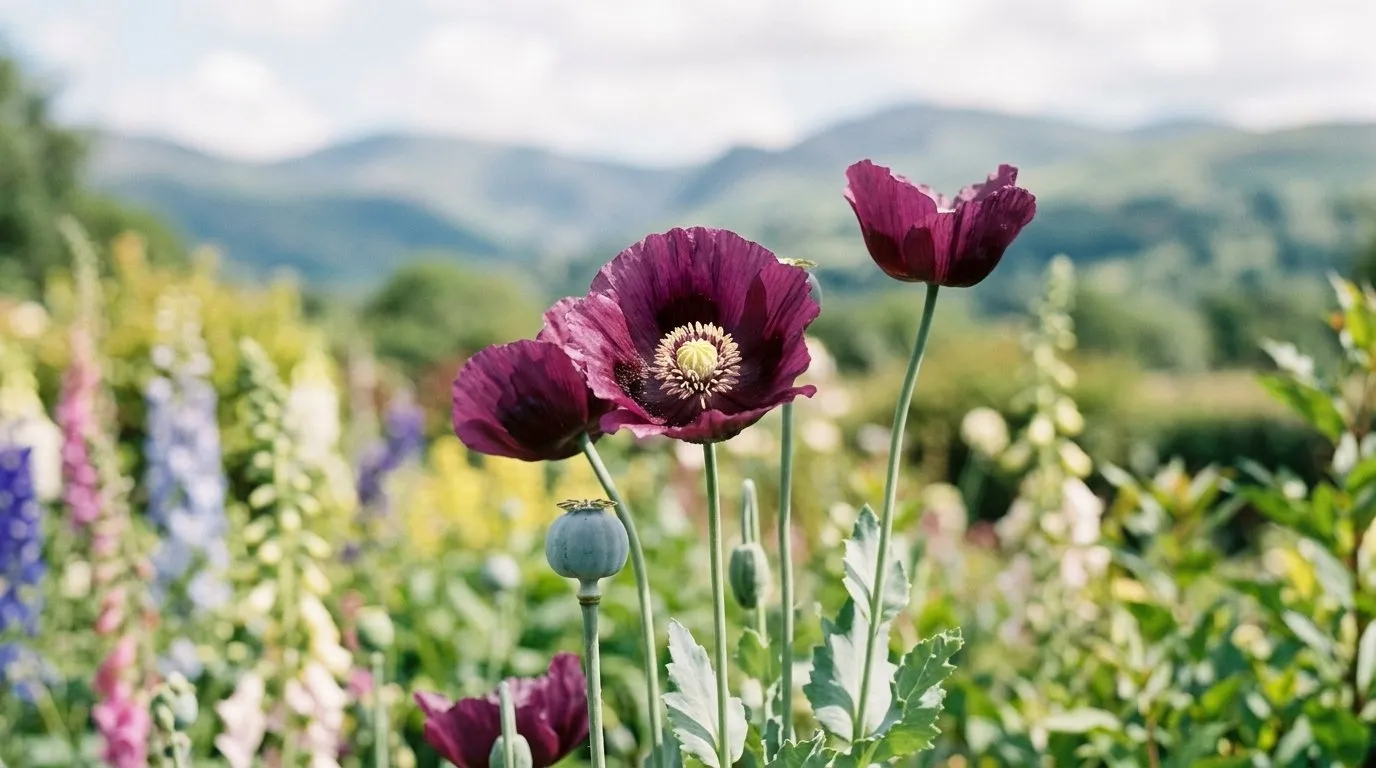 ‘Lauren’s Grape’, a plum-flowered breadseed poppy, in a sunny border. All varieties of Papaver somniferum give edible seed.
Common problems with breadseed poppies
Breadseed poppies are close to trouble-free, and most failures trace back to sowing method rather than pests. Get them started right and they largely look after themselves.
The commonest mistake is trying to raise them in modules or pots. As covered above, the taproot cannot be moved, so always sow direct. The second is sowing too thickly and never thinning, which gives a mat of weak, pod-poor plants.
Poor drainage is the main real threat. Autumn-sown poppies rot in cold, wet ground over winter, so heavy clay gardens do better with a spring sowing or a raised bed. Downy mildew can grey the leaves in a damp summer; space plants well for airflow and it rarely does lasting harm.
Aphids sometimes cluster on the buds. A jet of water or a squash by hand deals with small colonies, and hoverflies usually arrive to finish the job. Slugs graze young seedlings, so protect the emerging rosettes in a wet spring.
Finally, do not deadhead everything if you want the plant back. Leave a few pods to ripen and self-sow, or save seed each year. Breadseed poppies self-seed readily, and our guide to reliable self-seeding plants puts them among the easiest annuals to keep going for free.
 Dried breadseed poppy pods in a winter display. Leave a few heads to ripen for seed saving and self-sowing.
Related reading
For more on easy plants to raise from seed, our best hardy annuals to grow from seed rounds up the most reliable choices for a first-year cutting patch, breadseed poppies among them. Sow a row this autumn, thin them hard in spring, and you will be shaking blue seed into a bowl by August.
Our team produces practical UK gardening guidance from source research, contributor records and established horticultural practice. Editorial standards are overseen by Matt W.