Key takeaways
- Three cabbage crops fill the year: spring (sown Jul-Aug), summer (sown Feb-May) and autumn or winter (sown Apr-May)
- Sow 1.5cm deep in modules; seed germinates in 7-12 days at 12-20C soil temperature
- Transplant at five true leaves into very firm soil, because brassicas rock and fail in loose ground
- Fit a 13cm brassica collar at planting to block cabbage root fly laying eggs at the stem
- Lime acid soil to pH 6.8-7.5 to slow club root, the worst brassica disease in UK gardens
- Space summer types 35cm apart, large savoys and winter drumheads up to 60cm
- Cut a shallow cross in a summer cabbage stump for up to four smaller second-crop heads
Learning how to grow cabbage in the UK means mastering three separate crops rather than one plant. Spring, summer and winter cabbages are sown at different times, spaced differently, and cut across a ten-month window. Get the timing right and you can cut a fresh head from your plot in almost every month of the year.
Cabbage is not a difficult vegetable. It is a demanding one about a few basics: firm soil, steady feeding, and constant defence against pests. Meet those and the plant is generous. This guide covers the three seasonal types, plus savoy and red cabbage, then walks through sowing, transplanting, spacing, feeding, the main pests, and harvest, including the second-crop trick most gardeners never try.
What are the three types of cabbage?
Cabbage splits into three main groups by season: spring, summer, and autumn or winter. Each is a different sowing and a different harvest window, and stringing all three together is how you crop cabbage nearly year round.
Spring cabbage is sown in late summer, overwinters as a small plant, and hearts up the following March to June. It gives the first fresh greens of the year, right in the hungry gap. Varieties like ‘Durham Early’, ‘Pixie’ and ‘Spring Hero’ are the classics.
Summer cabbage is sown late winter to late spring and cut from July to September. This group includes the fast pointed types, ‘Hispi’ and ‘Greyhound’, which are the easiest cabbages for a beginner. Ballhead types like ‘Golden Acre’ follow on.
Autumn and winter cabbage is sown in spring and stands in the ground from October to February. It splits into three sub-types worth knowing.
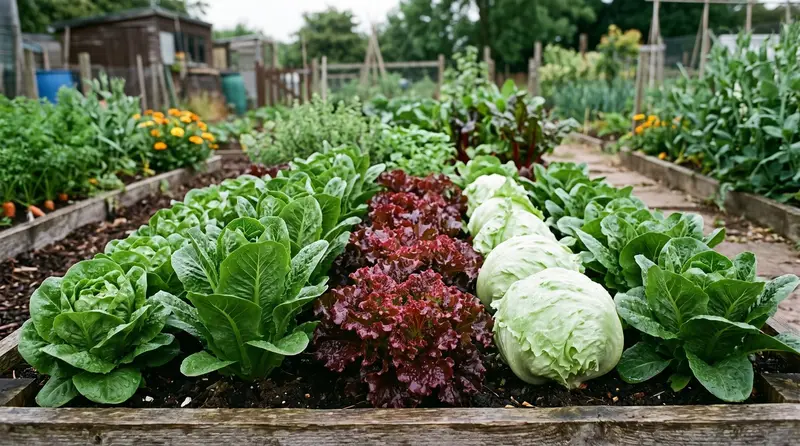
- Savoy cabbage has crinkled, blistered leaves and is the hardiest of all, shrugging off hard frost. ‘Ormskirk’ and ‘January King’ hold through the coldest months.
- White storage cabbage forms dense pale drumheads that store for months in a cool shed.
- Red cabbage is a spring-sown, autumn-cut type that stores as well as white and holds colour when cooked.
If you are picking your first cabbages, start with a pointed summer type and a savoy. Between them they teach you the fast crop and the hardy one.
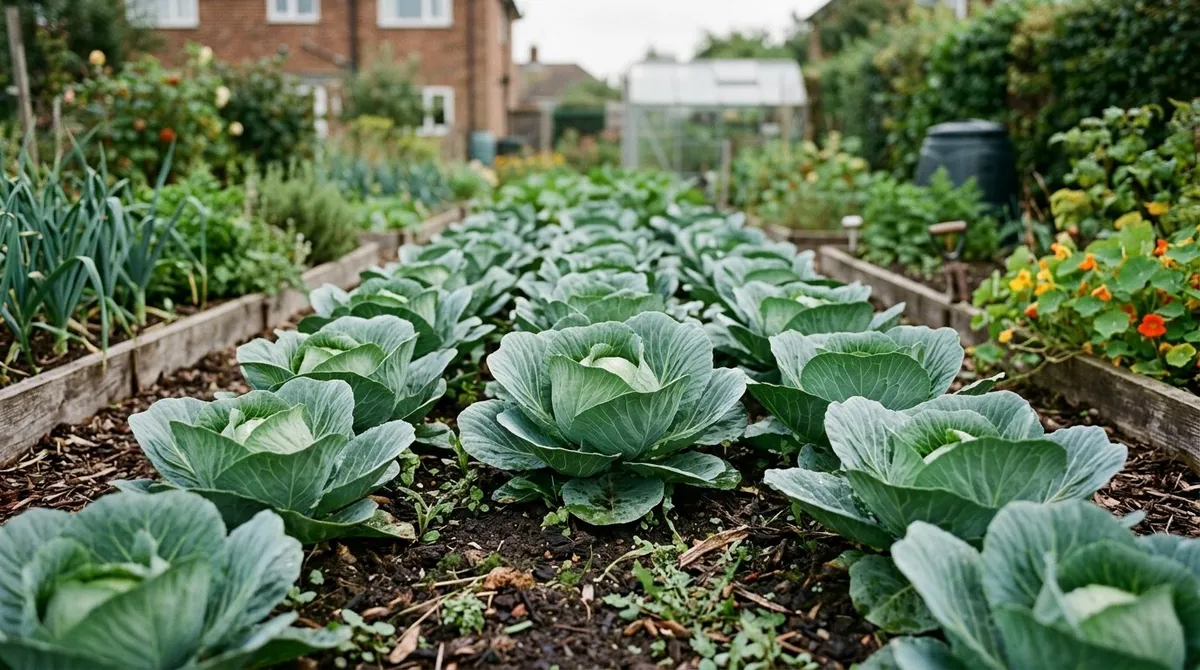
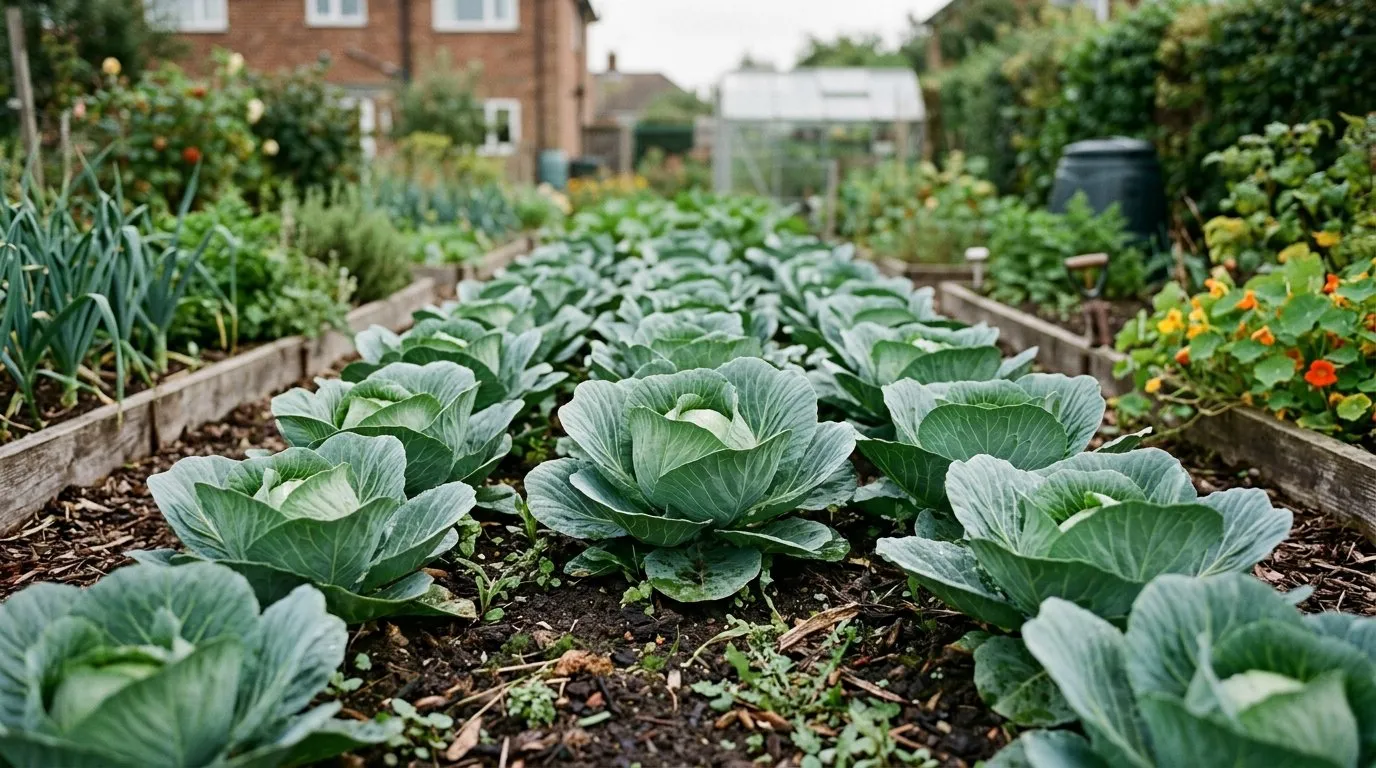 Summer cabbage hearting up in a firmed bed. Solid ground and a net are what turn loose leaves into a tight head.
The three cabbage types compared
| Type | Sow | Plant out | Harvest | Good varieties |
|---|---|---|---|---|
| Spring | Jul-Aug | Sep-Oct | Mar-Jun | ’Durham Early’, ‘Pixie’, ‘Spring Hero’ |
| Summer | Feb-May | Apr-Jun | Jul-Sep | ’Hispi’, ‘Greyhound’, ‘Golden Acre’ |
| Autumn/winter | Apr-May | Jun-Jul | Oct-Feb | ’January King’, ‘Tundra’, ‘Ormskirk’ (savoy) |
| Red | Mar-May | May-Jun | Sep-Nov | ’Red Drumhead’, ‘Kalibos’, ‘Ruby Ball’ |
Cabbage shares a bed and a set of pests with the wider brassica family, so it slots neatly beside a crop of cauliflower or a row of kale in the same rotation.
When do you sow cabbage seeds in the UK?
Sow cabbage according to which of the three crops you want, because the calendar is the whole game. There is no single sowing month for cabbage.
Sow summer cabbage from late February under glass, or March to May outdoors, for July to September heads. Sow autumn and winter cabbage in April and May for cutting October to February. Sow spring cabbage in July and August, so young plants go into the ground in autumn and overwinter small.
Seed germinates in 7 to 12 days at a soil temperature of 12 to 20C. Sow 1.5cm deep. Early sowings need a greenhouse or a cold frame, but from April the soil is warm enough to sow outside in a seedbed or, better, in modules.
Gardener’s tip: Stagger summer cabbage in two or three small sowings three weeks apart rather than one big batch. A dozen ‘Hispi’ every three weeks from March to May gives you cabbages that heart in succession, instead of twenty solid heads all splitting in the same fortnight.
Do not rush the very first sowing. A February sowing on a cold windowsill often sulks, damps off, or bolts once planted. A mid-March start under a little heat catches up fast and gives sturdier plants.
Should you sow cabbage in modules or direct?
Modules beat direct sowing for cabbage in almost every UK garden. A module-raised plant transplants with its roots intact, suffers no check, and dodges the slugs and flea beetle that shred seedlings in an open seedbed.
Sow one or two seeds per module cell, 1.5cm deep, in peat-free multi-purpose compost. Thin to the strongest seedling. Grow them on somewhere bright and cool until they have four or five true leaves and a firm rootball, usually four to six weeks.
The old method of a nursery seedbed still works. Sow thinly in a shallow drill, thin the seedlings, and lift them bare-root to transplant at six to eight weeks. It saves compost and module trays, but the plants get a bigger check and need more careful watering after the move.
Whichever route you use, plants raised under cover or in a cold frame must be hardened off over 10 to 14 days before they go out, or the cold and wind will stall them.
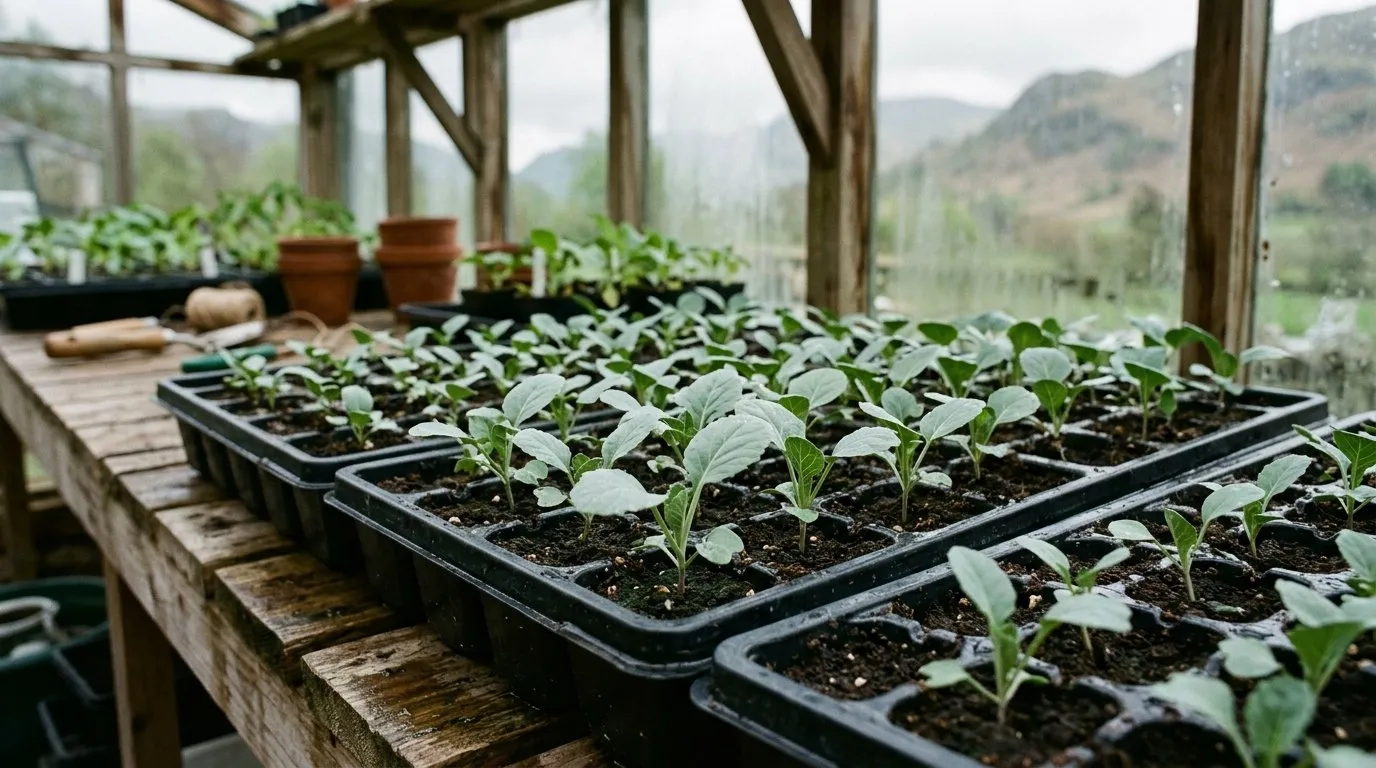 Module-raised cabbage seedlings ready to plant at five true leaves. Modules transplant without the check a bare-root seedbed gives.
How do you transplant cabbage and firm it in?
Firm soil is the single most important thing about growing cabbage, so plant into ground that has settled and heel each plant in hard. Brassicas that rock in loose soil make loose leaves instead of a tight heart.
Transplant when plants have five true leaves and stand 10 to 15cm tall. Set each one deep, up to the lowest leaves, in a hole made with a dibber. Backfill, then firm the soil around the stem with your knuckles or your heel until the plant resists a gentle tug on a leaf. Water in with a full can to settle the roots.
Cabbage wants a sunny, open site and rich, well-drained soil. Dig in a bucket of well-rotted manure or garden compost per square metre the winter before, then let the ground settle for weeks. Fresh, fluffy soil is the enemy. If you garden no-dig, tread the planting positions before you set the plants.
Fit a brassica collar at planting, a 10 to 13cm disc of card, felt or old carpet snugged around the stem at soil level. It stops cabbage root fly laying eggs against the stem, the pest whose maggots kill young plants outright. Ready-made collars cost about £4 to £6 for a pack of thirty, or you can cut your own for nothing.
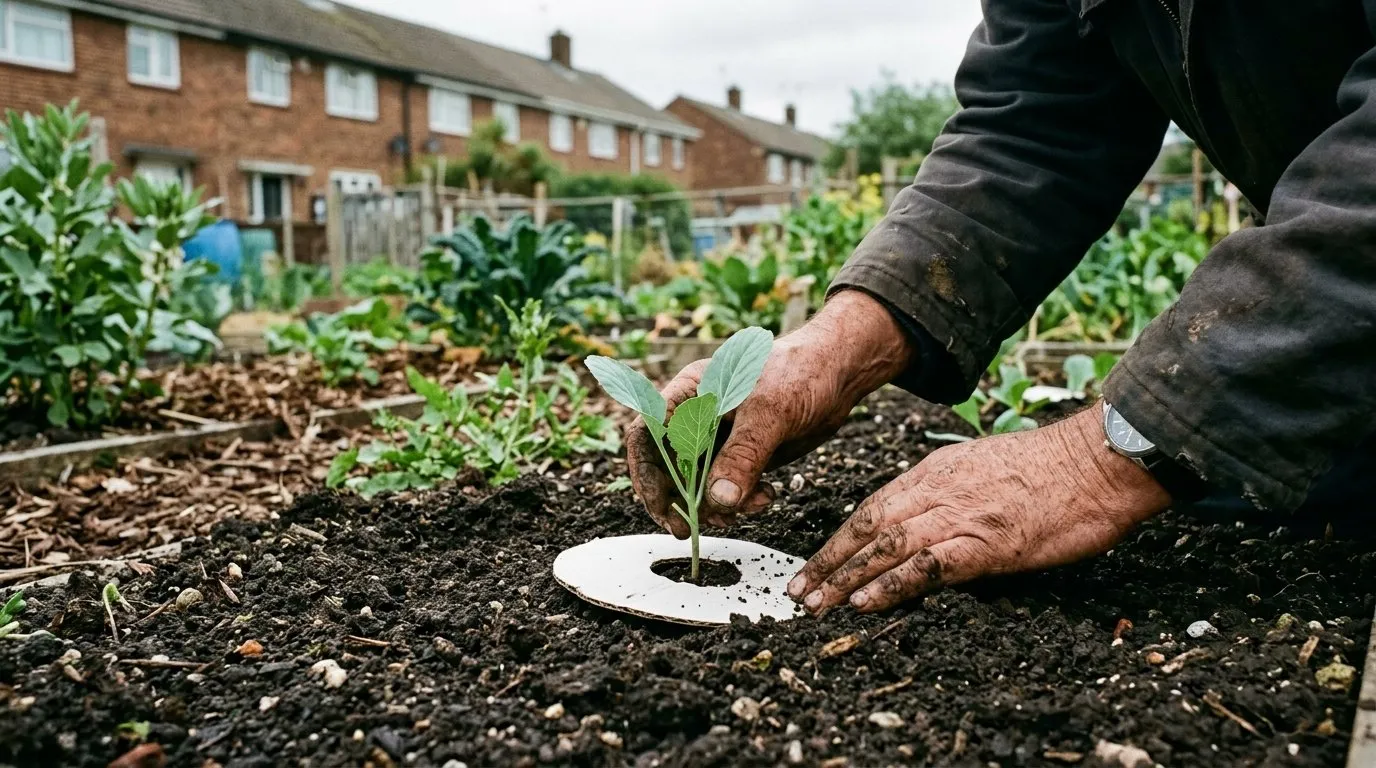 Planting deep and firming hard. The white collar at the base blocks cabbage root fly from laying at the stem.
How far apart should you space cabbages?
Space cabbage by type, because size at harvest sets the gap. Crowd them and heads stay small; space too wide and you waste ground.
Set summer and spring cabbage 30 to 35cm apart each way. Give autumn and winter types, savoys and big drumheads 45 to 60cm, as they build far larger frames. Rows sit roughly 45cm apart on the plot.
Spacing is also a lever. Plant summer cabbage at 35cm for full heads, or at 25cm if you want smaller, kitchen-sized cabbages that mature a little earlier. Spring cabbage can go in at 30cm, then every other plant cut young as loose spring greens, leaving the rest at 30cm to heart up.
Here is a quick spacing guide by group.
| Cabbage group | In-row spacing | Row spacing | Head size |
|---|---|---|---|
| Spring (for greens) | 15-30cm | 30cm | Loose greens to small hearts |
| Summer pointed | 30-35cm | 45cm | Medium pointed |
| Autumn/winter drumhead | 45-50cm | 50cm | Large dense |
| Savoy | 45-60cm | 50cm | Large crinkled |
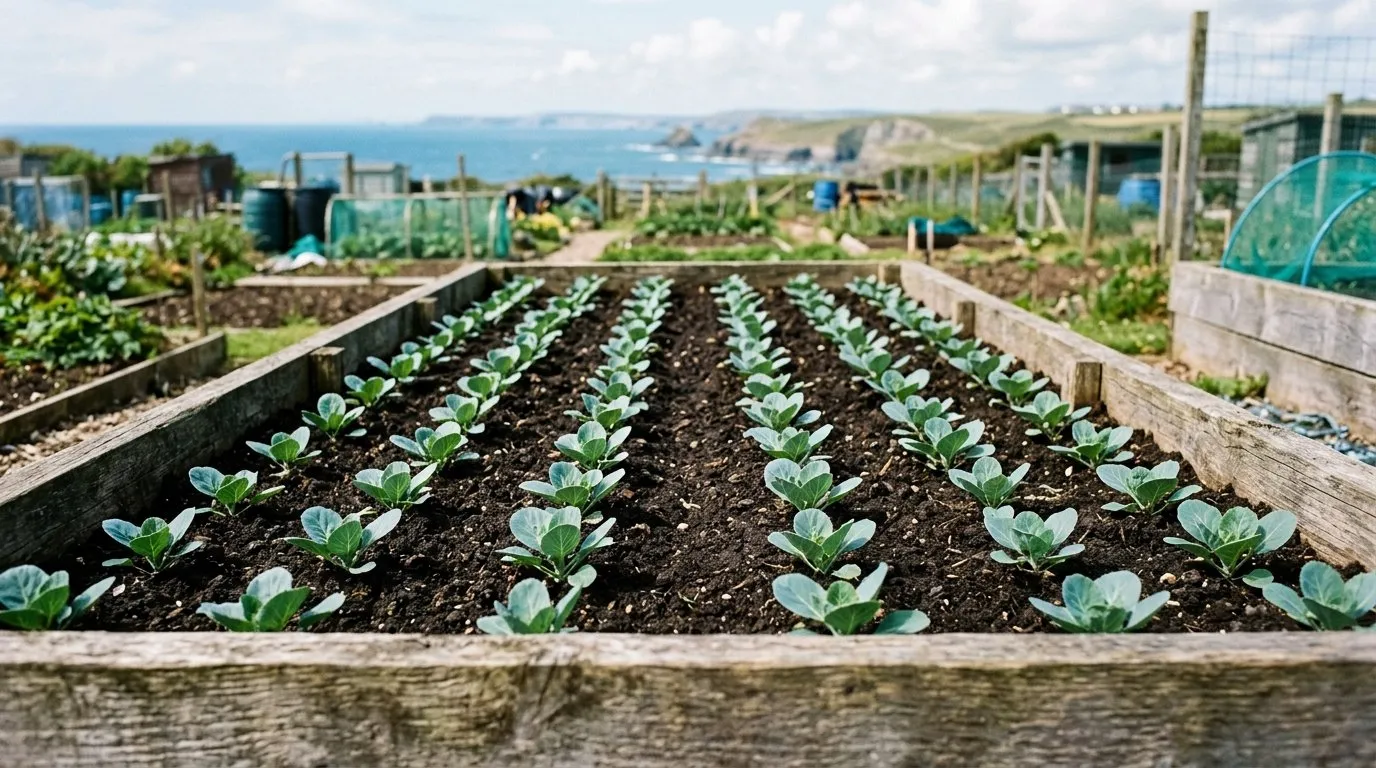 Young cabbages spaced 35cm apart in a raised bed. Correct spacing sets head size and keeps air moving between plants.
Cabbages are hungry and thirsty. Give them a bed to themselves in your rotation, following a legume crop that has fixed nitrogen, and keep brassicas off the same ground for three to four years to break club root and root fly. A planned four-year crop rotation makes this automatic.
How do you feed and water cabbages?
Cabbages need steady nitrogen and constant moisture to build a firm heart, so feed at planting and again as heads form. A hungry or dry cabbage makes floppy open leaves and never hearts.
Rake a general fertiliser such as fish, blood and bone into the bed before planting at about 100g per square metre. Six weeks later, as the plants bulk up, top-dress summer and winter cabbage with a nitrogen feed like sulphate of ammonia or a liquid seaweed and nitrogen mix. Spring cabbage gets its nitrogen boost in late February to drive fast spring growth after the lean winter.
Water new transplants in well and keep them moist for the first month. In dry spells, a good soak once a week is worth more than a daily splash. Mulch around established plants with garden compost to hold moisture and feed the soil.
Firm the soil around the stems again in autumn for winter cabbage, and draw a little earth up around the base. This anchors tall winter plants against wind rock through the worst weather.
What are the main cabbage pests and diseases?
Cabbage attracts more pests than almost any other vegetable, so plan your defence before you plant. A net over the crop from day one saves most of the trouble.
The cabbage white butterfly lays clusters of eggs whose caterpillars strip leaves to the veins in July and August. Fine insect mesh is the fix; the full detail is in our guide to cabbage white butterfly control. Cabbage whitefly rise in clouds when you brush the plants and coat lower leaves in sticky honeydew, covered in our cabbage whitefly control guide.
The disease that ends cabbage growing on many plots is club root, a soil fungus that swells and rots the roots and stunts the plant. It thrives in acid, wet ground and lasts up to 20 years in the soil. Lime to raise the pH above 6.8, improve drainage, rotate strictly, and grow resistant varieties like ‘Kilaton’. The RHS guidance on club root is worth reading before you plant on infected ground. Our own brassica club root guide covers UK treatment in detail.
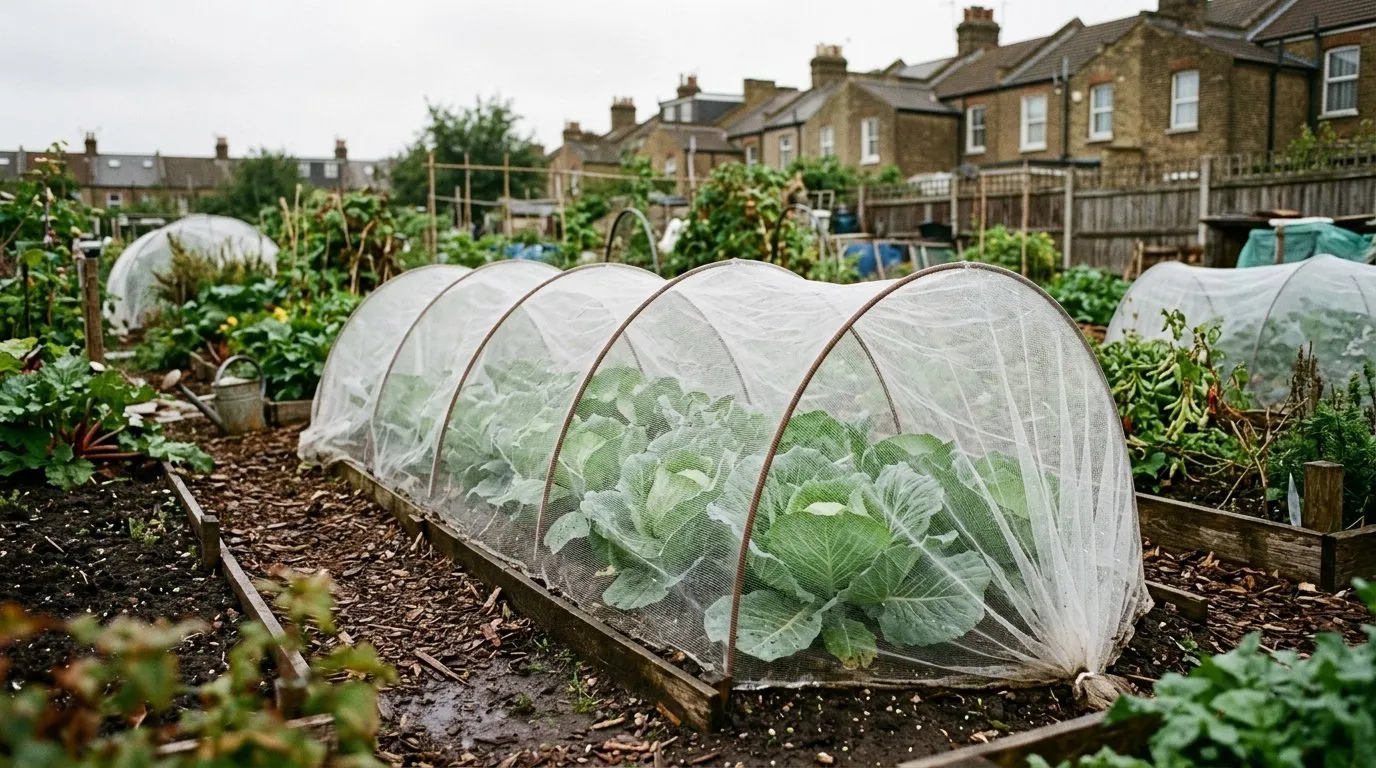 Fine mesh over hoops from planting day. It keeps out butterflies, whitefly and pigeons in one move.
When and how do you harvest cabbage?
Cut cabbage as soon as the head feels firm when squeezed, using a sharp knife to slice through the stem just below the head. A ripe summer cabbage that sits too long will split after rain.
Summer and autumn cabbages are cut and used fresh. Winter white and red drumheads store for two to three months lifted whole, roots trimmed, and hung or racked in a cool, frost-free shed. Savoys are best left standing in the ground and cut as needed, as frost sweetens them.
Spring cabbage gives two harvests from one bed. Cut every other young plant as loose spring greens from March, then let the rest heart up through May and June.
For the classic second crop, do not pull the stump of an early summer cabbage. Leave it rooted in firm soil and cut a shallow 1cm-deep cross in the cut surface of the stump. Keep it fed and watered, and within four to six weeks it throws up to four small secondary cabbages, each about the size of a tennis ball. It works best on ‘Hispi’ and other early types and is the cheapest extra crop on the plot.
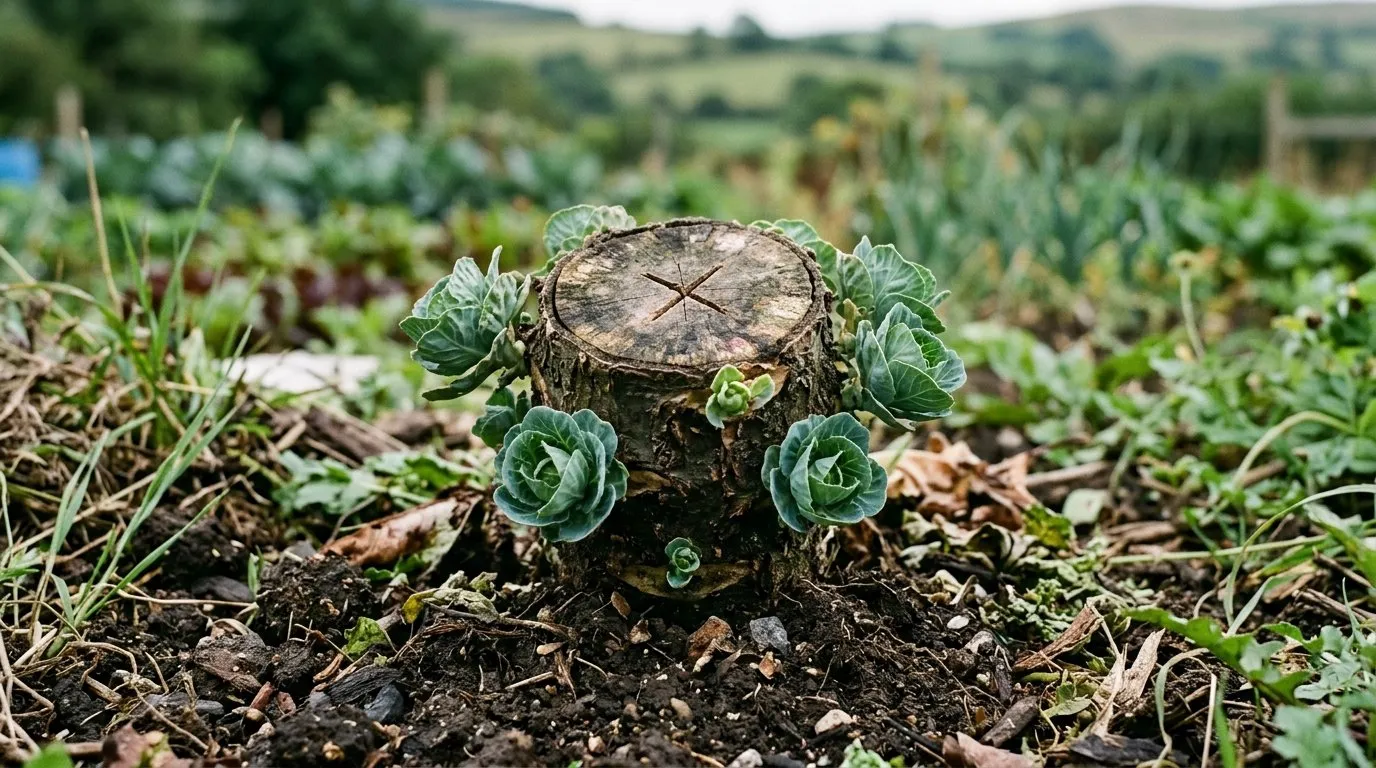 The cross-cut stump trick. A shallow cross in an early cabbage stump throws up to four small second-crop heads.
Which cabbage varieties grow best in the UK?
Choose varieties by season and by problem, because a good match does half the work. These are the ones that earn their place on UK plots.
‘Hispi’ (F1) is the pointed summer cabbage almost everyone starts with. Fast, sweet, tender, and forgiving of tight spacing, it is ready in around 20 weeks and rarely disappoints.
‘Durham Early’ is the reliable spring cabbage, sown in late summer for the first cut of greens in March. It stands the winter well in most of the country.
‘January King’ is the hardy autumn-to-winter type with red-tinged, semi-savoy heads that hold through frost from November into February.
‘Ormskirk’ and other savoys give the crinkled, sweet winter leaves that cook best of all, and are the toughest cabbages in a hard freeze.
‘Red Drumhead’ and ‘Kalibos’ are the red cabbages, spring-sown and cut in autumn, storing for months and holding colour in the pot.
‘Kilaton’ (F1) is the club-root-resistant white cabbage to grow if your soil is infected. It is not immune, but it crops where standard varieties fail.
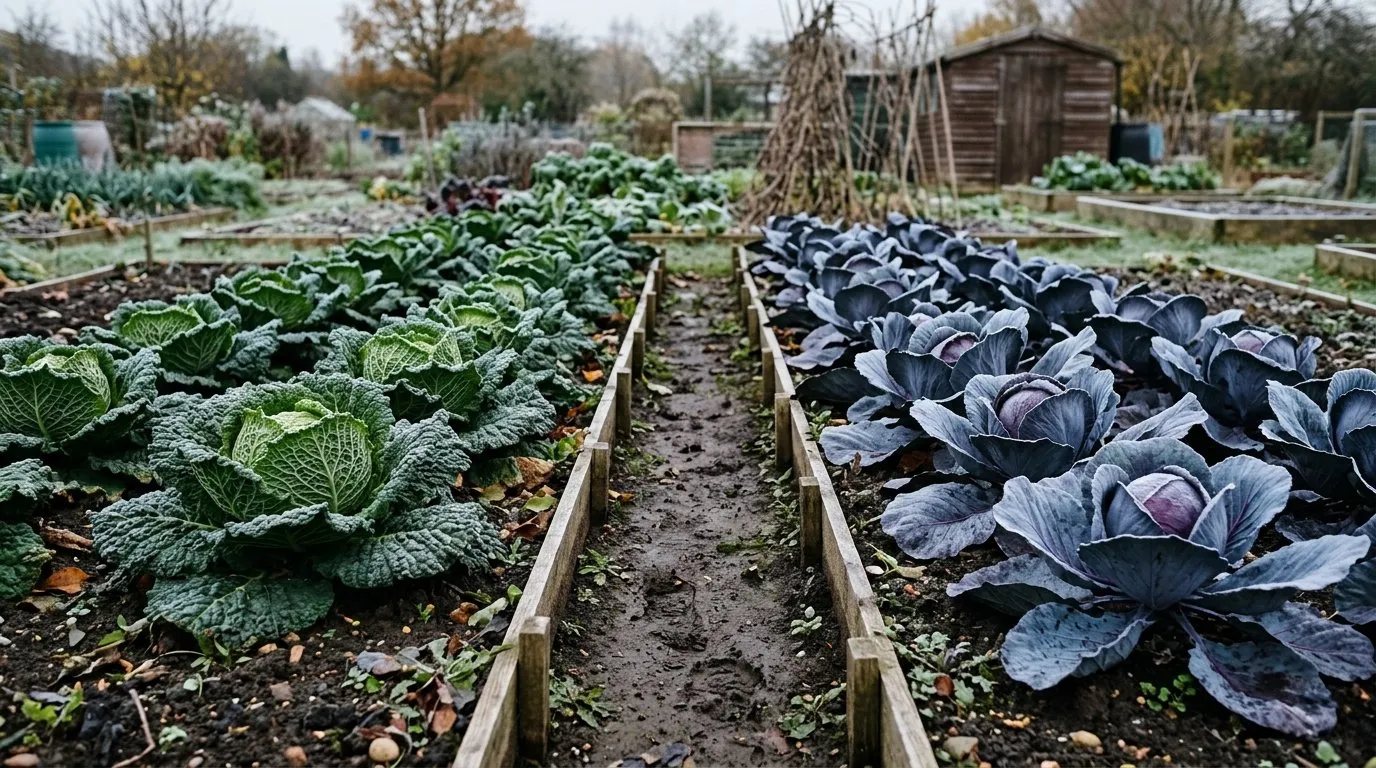 Savoy and red cabbage standing through a Midlands winter. Frost sweetens the crinkled savoy leaves.
Month-by-month cabbage calendar
| Month | Task |
|---|---|
| February | Sow first summer cabbage under glass; feed overwintered spring cabbage |
| March | Sow summer cabbage; plant out early module plants under fleece |
| April | Sow autumn, winter and red cabbage; keep transplanting summer types |
| May | Last summer sowings; plant out winter cabbage into firm soil |
| June | Plant out winter and savoy types; net everything against butterflies |
| July | Sow spring cabbage; start cutting early summer heads |
| August | Sow last spring cabbage; keep summer cabbage watered and netted |
| September | Plant out spring cabbage; harvest autumn types |
| October | Firm in spring cabbage; begin cutting winter drumheads |
| November | Cut and store white and red cabbage; leave savoys standing |
| December | Harvest savoys and ‘January King’ as needed under a pigeon net |
| January | Cut standing winter cabbage; plan next year’s rotation |
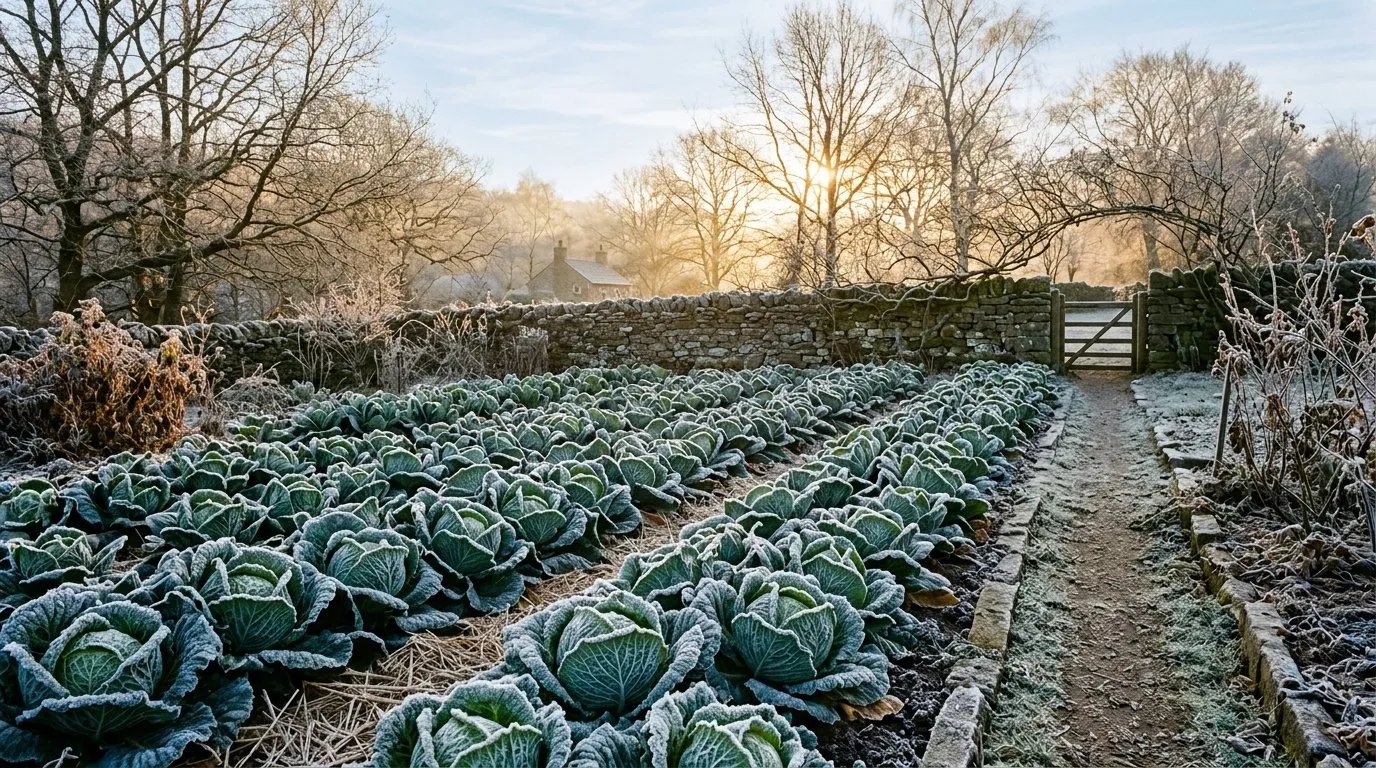 A frosted savoy in a cottage garden in January. Left standing, hardy types crop right through the coldest weeks.
Cabbage rewards a bit of planning more than most vegetables. Line up the three sowings, feed the soil, firm every plant, keep a net over the lot, and you will cut fresh heads from spring greens in March to standing savoys the following February. The RHS grow-your-own cabbage notes are a useful second reference once you have the basics down.
Frequently asked questions
How long does cabbage take to grow?
Summer cabbage takes about 20 to 35 weeks from sowing to a cut head. Fast pointed types like ‘Hispi’ can be ready in 20 weeks from a spring sowing. Dense winter drumheads and savoys need 30 to 35 weeks. Spring cabbage is sown in late summer, sits small over winter, then hearts up the following March to June.
What month do you plant cabbage in the UK?
It depends on the type, so there is no single month. Sow summer cabbage February to May and plant out April to June. Sow autumn and winter types April to May and plant out June to July. Sow spring cabbage July to August and plant out September to October to overwinter as small plants.
Why are my cabbages not forming a heart?
Loose soil is the most common reason cabbages fail to heart. Brassicas need firm ground and a steady supply of nitrogen and water. Plants rocked by wind, grown too far apart, short of feed, or checked by drought make loose leaves instead of a tight head. Firm them in hard, feed, water in dry spells, and net against pigeons.
Do you need to net cabbages?
Yes, netting is almost essential for cabbages in the UK. Fine insect mesh keeps out cabbage white butterflies, whitefly and mealy aphid, while 7mm netting stops wood pigeons stripping plants to the ribs. Fit it from planting and keep it on all season. Support it clear of the leaves so butterflies cannot lay eggs through the mesh.
Can you grow cabbage in pots?
Yes, compact cabbages grow well in large containers. Use a pot at least 30cm wide and deep, one plant per pot, filled with firmed loam-based compost. Pointed summer types like ‘Hispi’ and small ballhead varieties suit pots best. Water daily in summer, feed weekly, and net the pot, because pests find container cabbages just as fast as bed-grown ones.
What is the cross-cut trick for a second cabbage crop?
Cut a shallow 1cm cross into the stump left after harvest. Leave the stump and its roots in firm soil, cut a small cross in the cut surface, and keep it fed and watered. Within four to six weeks a summer cabbage stump throws up to four small secondary heads the size of a tennis ball. It works best on early summer and spring types.
Should I lime the soil before planting cabbage?
Lime if your soil is acidic, aiming for pH 6.8 to 7.5. Cabbages and other brassicas suffer badly from club root in acid ground, and raising the pH slows the disease. Test the soil first, then apply garden lime in autumn or winter before a spring planting. Never lime and add fresh manure at the same time, as they react.
Our team produces practical UK gardening guidance from source research, contributor records and established horticultural practice. Editorial standards are overseen by Matt W.