Key takeaways
- Patio roses are compact, repeat-flowering roses bred specifically for containers
- Use a pot at least 30 to 40cm wide and deep, with good drainage holes
- Loam-based John Innes No 3 holds nutrients and moisture better than peat-free multipurpose alone
- Feed every two weeks through summer; potted roses run out of food fast
- Water daily in hot weather, as pots dry out far quicker than open ground
- Deadhead regularly and prune in late winter to keep flowers coming all season
A patio rose in a pot is one of the most rewarding plants you can grow in a small space. Bred to stay compact and flower from June to the first frosts, it gives you the scent and beauty of a rose without needing a border. But roses are hungry, thirsty plants, and a pot is an unforgiving home, so the difference between a patio rose that flowers for months and one that sulks comes down to a few details. This guide covers the right pot, the best compost, and the feeding and pruning routine that keeps compact roses blooming all summer on a UK patio.
Get the set-up right at planting time and the rest is easy. Get it wrong, and you spend the summer nursing a thirsty, leggy plant that never quite performs.
What are patio roses?
Patio roses are a specific group, not just any rose squeezed into a pot, and that matters for success. A patio rose is a compact, repeat-flowering rose bred to grow 40 to 60cm tall, sitting between a tiny miniature and a full-size floribunda. Their modest size and tolerance of confined roots make them the natural choice for containers.
The flowers come in the same range of colours and forms as larger roses, just on a neater plant. Most are bushy, well-branched, and flower in repeated flushes through the season rather than one big show. Some carry good scent, though breeding for compactness has sometimes traded a little fragrance for flower power.
They are not the only roses you can grow in pots, but they are the easiest. Full-size shrub and climbing roses need very large containers and more care, as our broader guide to growing roses in containers explains. For a patio or balcony, a true patio rose is the reliable pick.
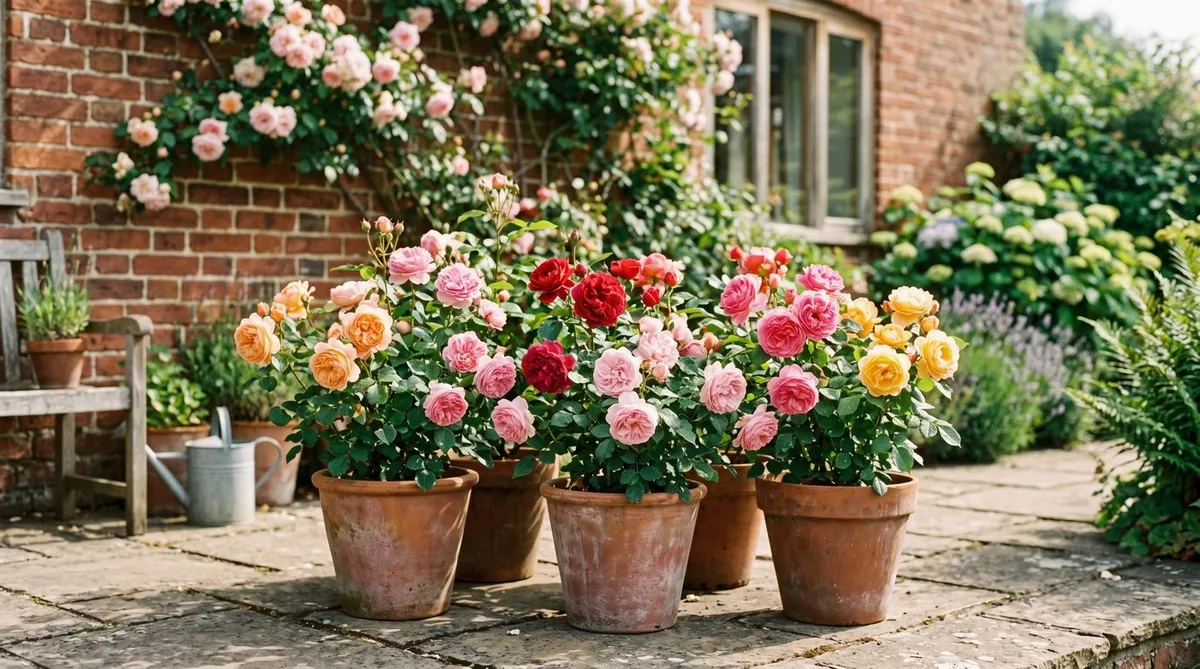
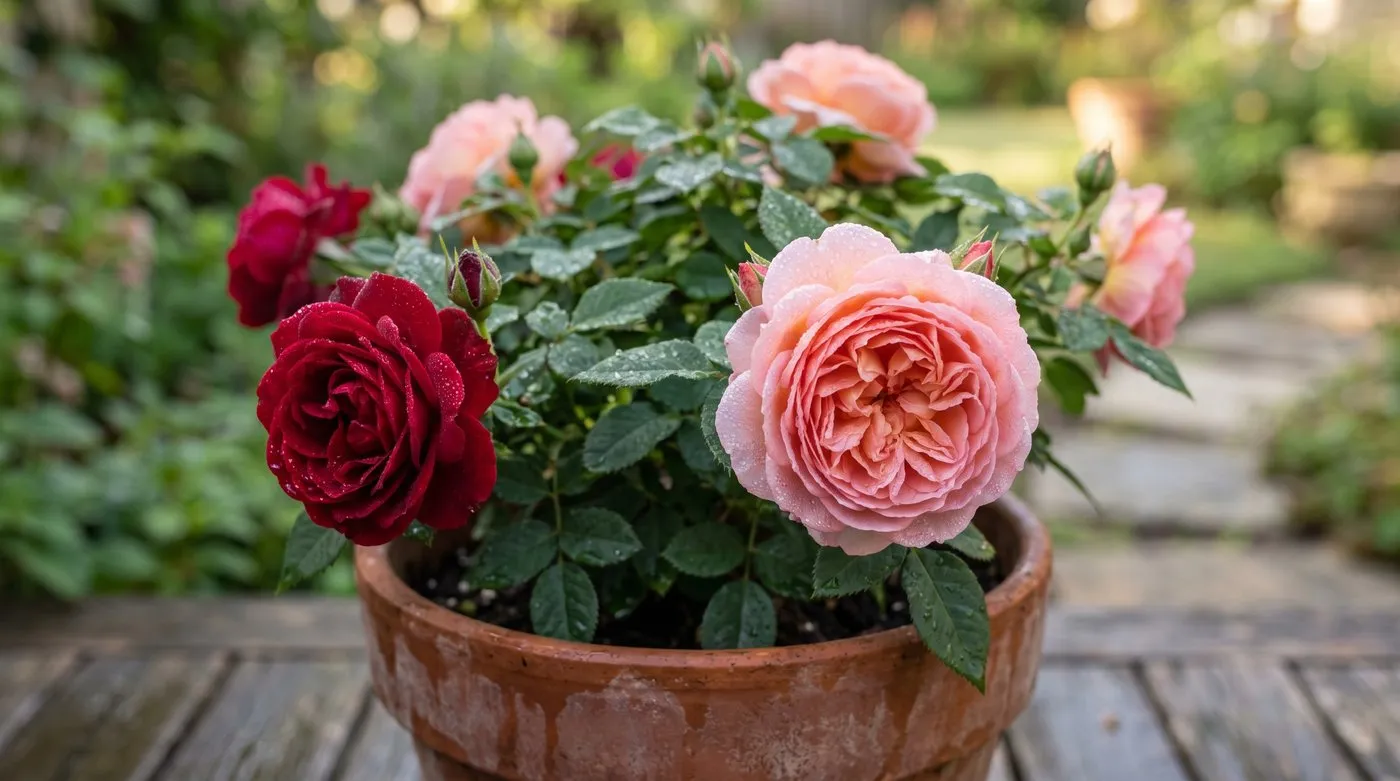 Patio roses flower in the same colours as full-size roses on a neat, bushy plant. Most repeat in flushes through summer rather than one big show.
Choosing the right pot and compost
This is the decision that makes or breaks a potted rose, so spend a moment on it. Use a pot at least 30 to 40cm wide and deep, filled with a loam-based compost such as John Innes No 3 rather than multipurpose alone. The pot size and the compost together decide how often you water and how well the rose feeds.
A bigger pot holds more compost, so it dries out more slowly and gives the roots room. Anything smaller than 30cm dries to dust in a heatwave and starves the plant. Good drainage holes are essential, as roses rot in waterlogged compost, so add crocks or gravel at the base and stand the pot on feet.
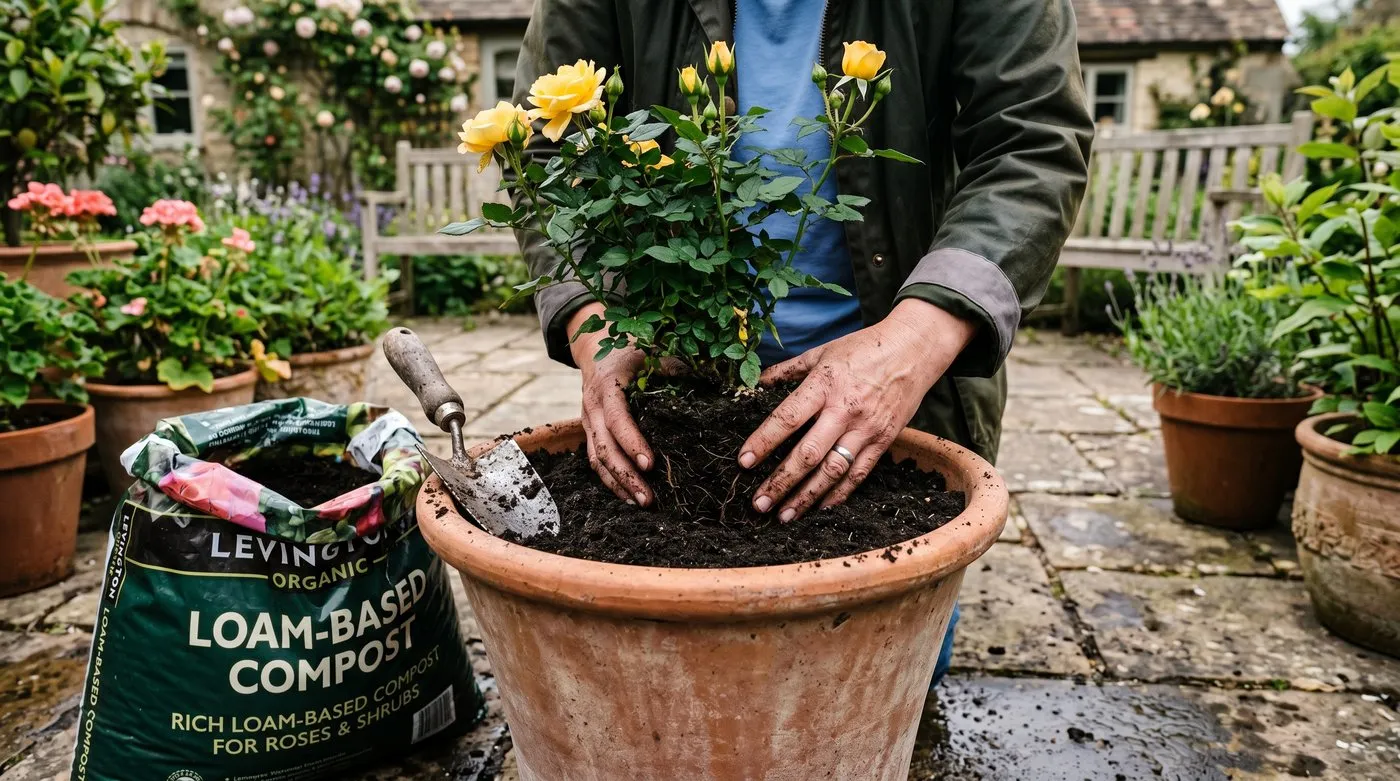 A 40cm pot of John Innes No 3 gives a patio rose room to root and feed. Add drainage at the base and stand the pot on feet so water runs free.
Watering and feeding for non-stop flowers
A potted rose lives or dies by water and food, far more than one in the ground. Water daily in hot weather and feed every two weeks through summer, because a pot runs out of both faster than open soil. Skip either and flowering stalls.
Check pots daily from June to August. A rose in a small pot in full sun can drain dry in a single hot day, and a wilted rose sheds buds and lower leaves fast. Water thoroughly until it runs from the base, rather than a daily splash that wets only the surface. A mulch of gravel or bark on the compost slows evaporation.
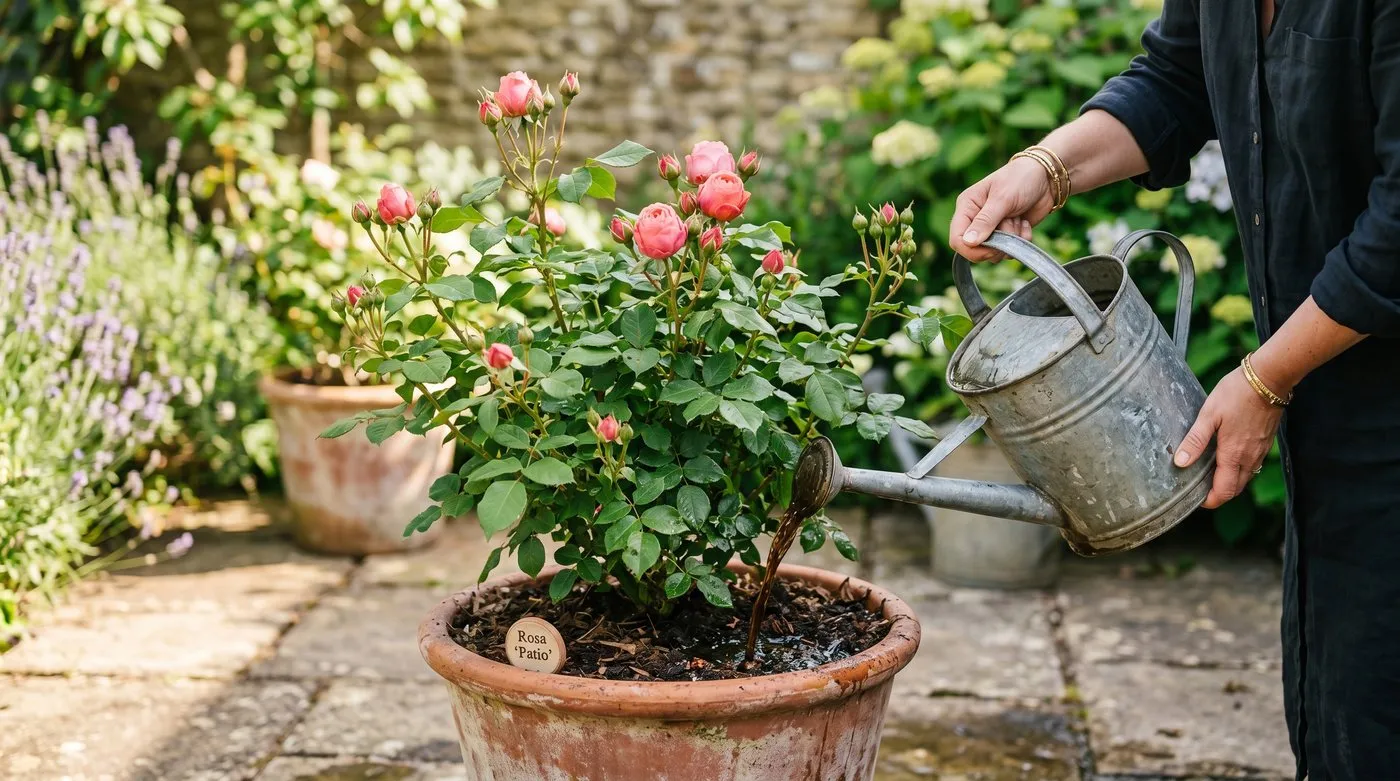 A fortnightly liquid feed from spring to late summer drives the repeat flushes. Container compost runs out of food within weeks, so feeding is not optional.
Gardener’s tip: Stand your patio rose pots on pot feet or a couple of tiles, never flat on the paving. It stops the drainage holes blocking, keeps slugs out of the base, and lets you see at a glance whether water is running through after you water.
Patio rose pot set-ups compared
Pruning, deadheading and keeping them tidy
A little regular attention keeps a patio rose flowering and stops it turning leggy. Deadhead through summer to push out new flowers, and prune in late winter by cutting stems back about a third to a half. Both jobs are quick and forgiving on a compact rose.
Deadheading is the single best thing you can do for continuous flowers. Snip off each spent bloom just above the first healthy leaf, and the plant puts its energy into new buds rather than hips. Do it every few days in peak season. Our guide to deadheading flowers shows the technique.
Prune in February while the rose is dormant. Take out dead, damaged or crossing stems first, then shorten the rest to an open, balanced shape, cutting just above an outward-facing bud. Patio roses are tough and bounce back from a firm prune. Our full guide to pruning roses covers the cuts in detail. Underplant the pot with low companions to hide bare ankles, using ideas from our companion plants for roses list.
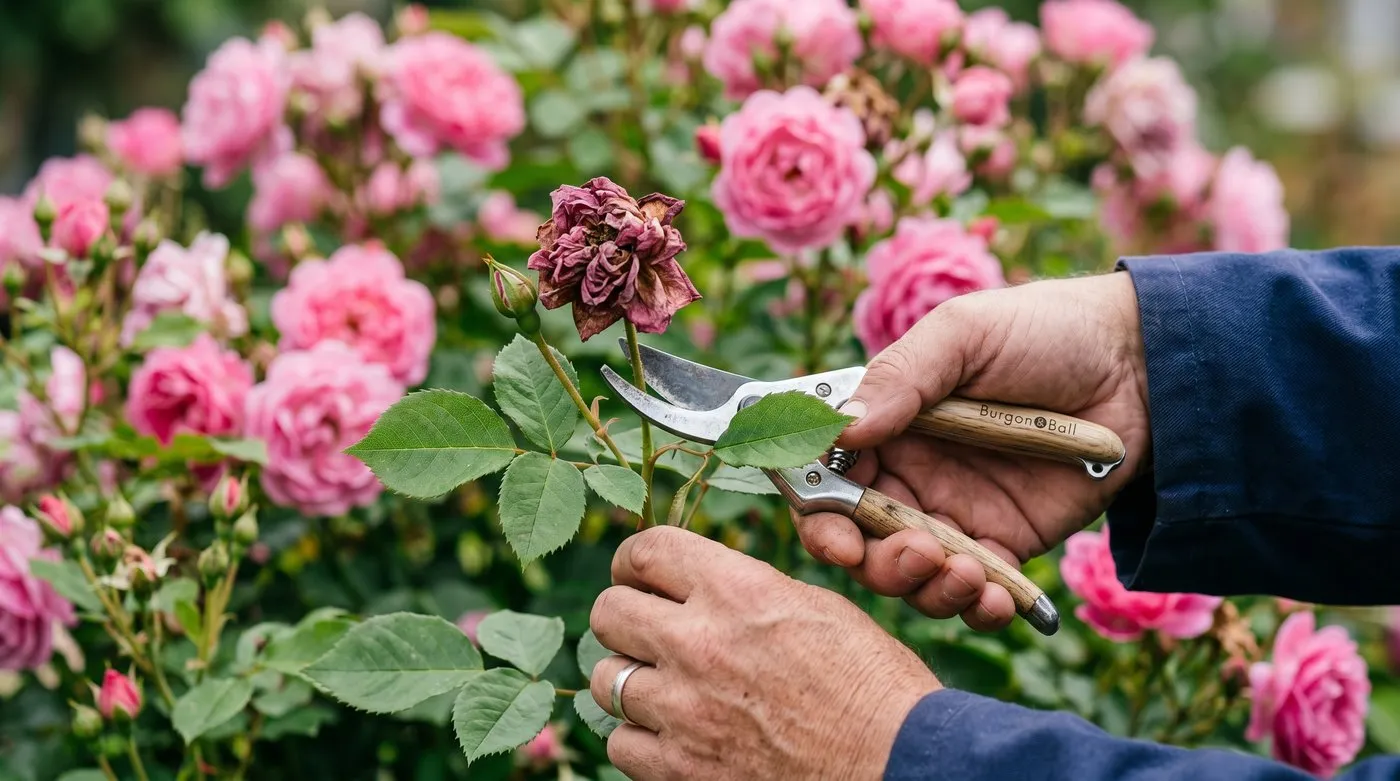 Deadhead every few days in summer, cutting just above the first healthy leaf. It is the single best way to keep a patio rose flowering for months.
Caring for potted roses over winter
Patio roses are hardy, but a pot exposes the roots to cold far more than open ground. Most patio roses survive a UK winter outdoors in their pots, but move them to a sheltered spot and protect the roots in a hard frost. The plant copes; the pot is the weak point.
Group pots together against a house wall over winter to shelter them and reduce the chance of the compost freezing solid. In a severe cold snap, wrap the pots in hessian, bubble wrap or fleece to protect the roots, and stand them on feet so they never sit in frozen water. Terracotta can crack in deep frost, so a frost-proof pot is worth the extra cost.
Keep watering light over winter, just enough to stop the compost drying out entirely, since a dormant rose needs little. Hold off feeding until growth restarts in spring. For pest and disease problems that can carry over, our guide to container pest protection covers prevention, and the RHS advice on growing roses is a useful reference for any rose questions beyond the patio.
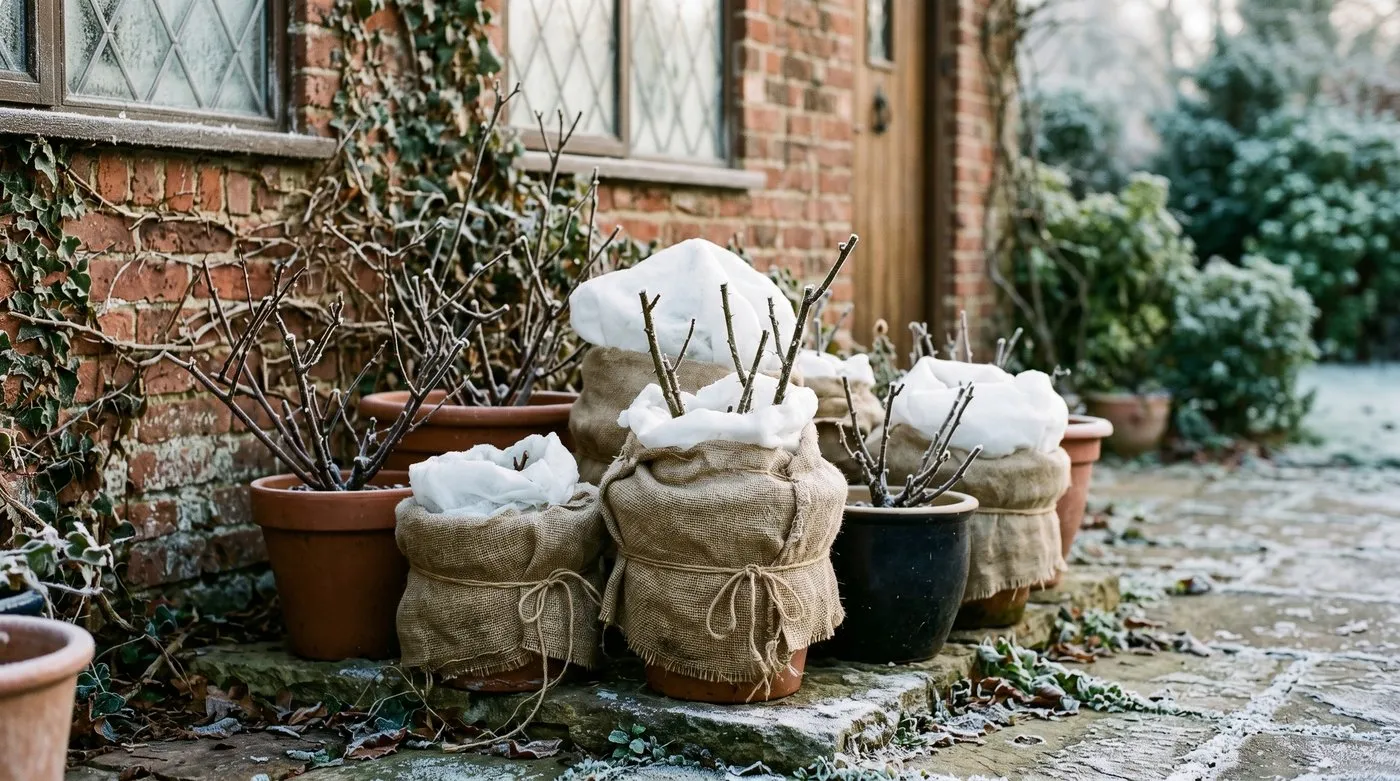 Group pots against a wall and wrap them in a hard frost. The rose is hardy; it is the exposed roots in the pot that need the protection.
Frequently asked questions
What is a patio rose?
A patio rose is a compact, repeat-flowering rose bred to grow 40 to 60cm tall, ideal for pots and small spaces. It sits between a miniature rose and a full floribunda in size. Patio roses flower from early summer to the first frosts and cope well with container life, which makes them the natural choice for a sunny patio or balcony.
What size pot do patio roses need?
Patio roses need a pot at least 30 to 40cm wide and deep. A bigger pot holds more compost, so it dries out more slowly and gives the roots room to feed. Avoid small or shallow pots, which dry out fast and starve the plant. Make sure the pot has good drainage holes, as roses hate sitting in waterlogged compost.
How often should you feed roses in pots?
Feed roses in pots every two weeks from spring to late summer. Container compost runs out of nutrients quickly, so regular feeding is essential for repeat flowering. Use a liquid rose or tomato feed, or a slow-release rose fertiliser topped up with liquid feeds. Stop feeding by early autumn so the plant can harden off before winter.
Do roses do well in containers?
Yes, compact roses do very well in containers if you choose the right type and look after them. Patio and miniature roses are bred for pot life. Full-size shrub and climbing roses are harder in pots and need very large containers. Give any potted rose enough pot size, loam-based compost, regular water and feed, and it will flower for years.
How do you prune patio roses in pots?
Prune patio roses in late winter, around February, cutting stems back by about a third to a half. Remove dead, damaged or crossing stems first, then shape the plant to an open centre. Cut just above an outward-facing bud. Deadhead through summer to keep new flowers coming. Patio roses are forgiving, so light, regular pruning works well.
With the right pot, compost and a fortnightly feed, a patio rose rewards you with months of flower in the smallest of spaces. Browse the rest of our growing guides to plan the wider potted display around it.
Our team produces practical UK gardening guidance from source research, contributor records and established horticultural practice. Editorial standards are overseen by Matt W.