Key takeaways
- Firestorm is the best all-round choice where unreliable flower set has spoiled previous crops
- Moonlight combines white flowers with smooth, stringless pods up to about 25cm long
- White Lady is the traditional pick for thick, tender pods and pale flowers
- Benchmaster produces long, straight pods and has a harvest window of roughly 12-16 weeks from sowing
- Hestia reaches about 45cm and grows in a 30-litre container without a 2.4m frame
- Which? Best Buy plants produced up to 1kg each, so twelve plants can swamp a small household
Runner beans can fail with a canopy full of flowers and almost no pods. Choosing the right variety reduces that risk before watering even starts.
Six varieties deserve space. They cover reliable set, classic flavour, straight pods, containers and beans for drying.
Which runner bean varieties are best for UK gardens?
Firestorm is the strongest all-round choice, particularly where hot weather disrupts pod set. Traditional varieties still win for specific uses.
| Variety | Flower colour | Height | Pod character | Best use | Main weakness |
|---|---|---|---|---|---|
| Firestorm | Scarlet | About 3m | Stringless, fleshy | Reliable all-round crop | Pods are thicker than Moonlight |
| Moonlight | White | About 3m | Smooth, stringless, up to 25cm | Warm sites and tender pods | Pale flowers have less visual impact |
| White Lady | White | About 3m | Thick, tasty, stringless young | Traditional flavour | Needs steady pollination conditions |
| Benchmaster | Red | About 3m | Straight pods over 40cm possible | Long pods and showing | Oversized pods become coarse |
| Celebration | Pink | About 3m | Straight, fleshy pods | Flavour and flower colour | Climbing frame required |
| Hestia | Red and white | About 45cm | Short crop on dwarf plants | Containers and small spaces | Lower total crop than climbers |
Which? gives yield 40% of its overall rating. Flavour and pod quality each supply 20%. The remaining marks reward an extended harvest and easy picking.
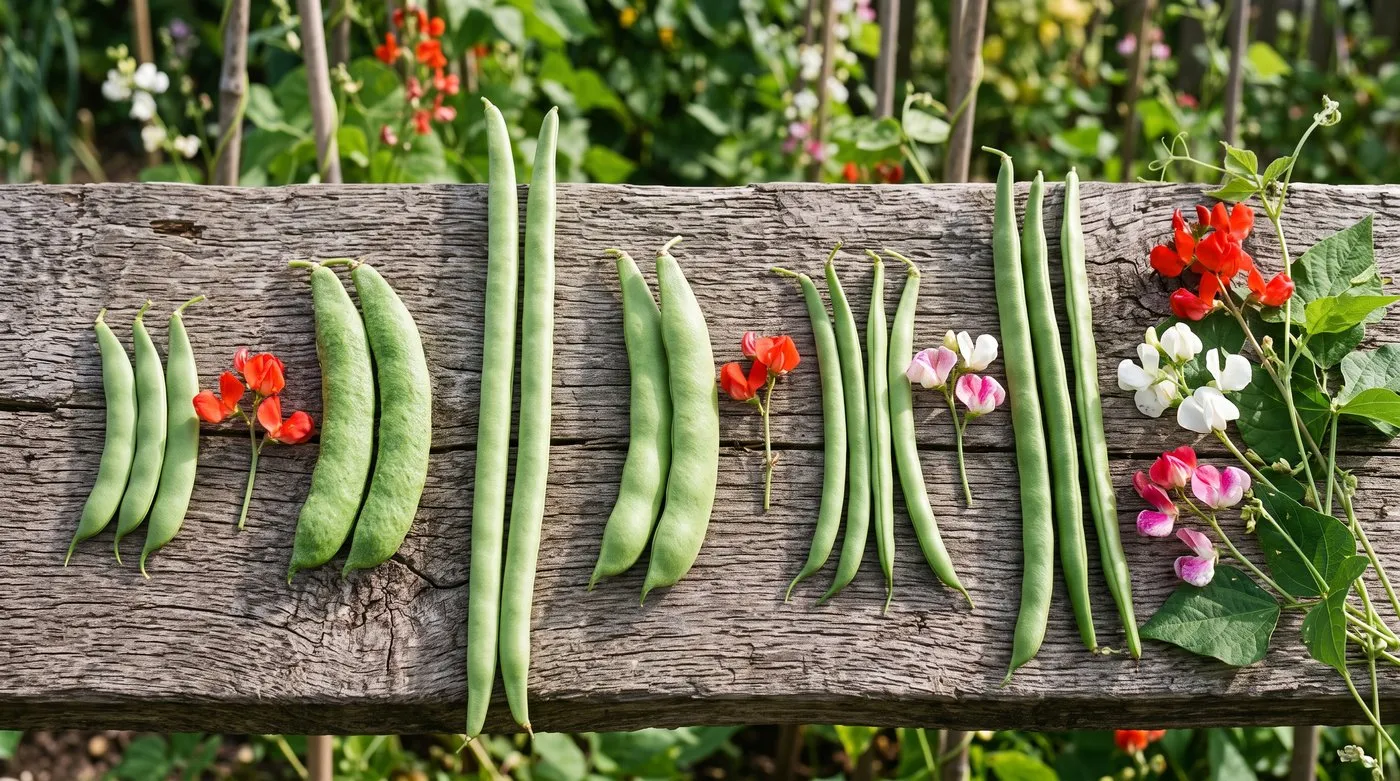 Choose for pod set and eating quality first. Flower colour is useful, but it should break a close tie.
What is the best all-round runner bean?
Firestorm is the best default variety for dependable pods across changeable UK summers. It is a runner and French bean cross.
That breeding improves self-pollination. Flowers can set without depending entirely on bees, which helps during very hot or unsettled weather. Suttons describes Firestorm as the first fully self-fertile scarlet-flowered runner bean.
The pods are stringless when young, with a slightly thicker texture than Moonlight. Pick them before the seeds swell visibly. A 20-25cm pod usually snaps cleanly and cooks evenly.
Grow six Firestorm plants beside six traditional runners. This keeps flower colour and flavour varied while protecting the main harvest.
Our runner-bean growing guide covers indoor sowing, planting dates and cane spacing.
Which runner bean sets pods most reliably?
Moonlight and Firestorm set more reliably because they have French bean parentage. Moonlight is the smoother, white-flowered option.
Moonlight produces stringless pods up to about 25cm. The flowers are self-fertile, so plants rely less heavily on pollinating insects. This helps when high temperatures, wind or low insect activity interrupt traditional pod set.
Reliable genetics cannot compensate for dry roots. Water deeply twice weekly during normal dry weather. Soak daily during hot spells if the soil dries quickly.
Mulch with 5cm of garden compost after planting. Keep the mulch a few centimetres away from each stem. Once flowers open, inspect plants every two days for young pods.
If flowers keep falling, use our diagnosis guide for runner beans not setting pods. It separates heat stress, drought, pests and poor pollination.
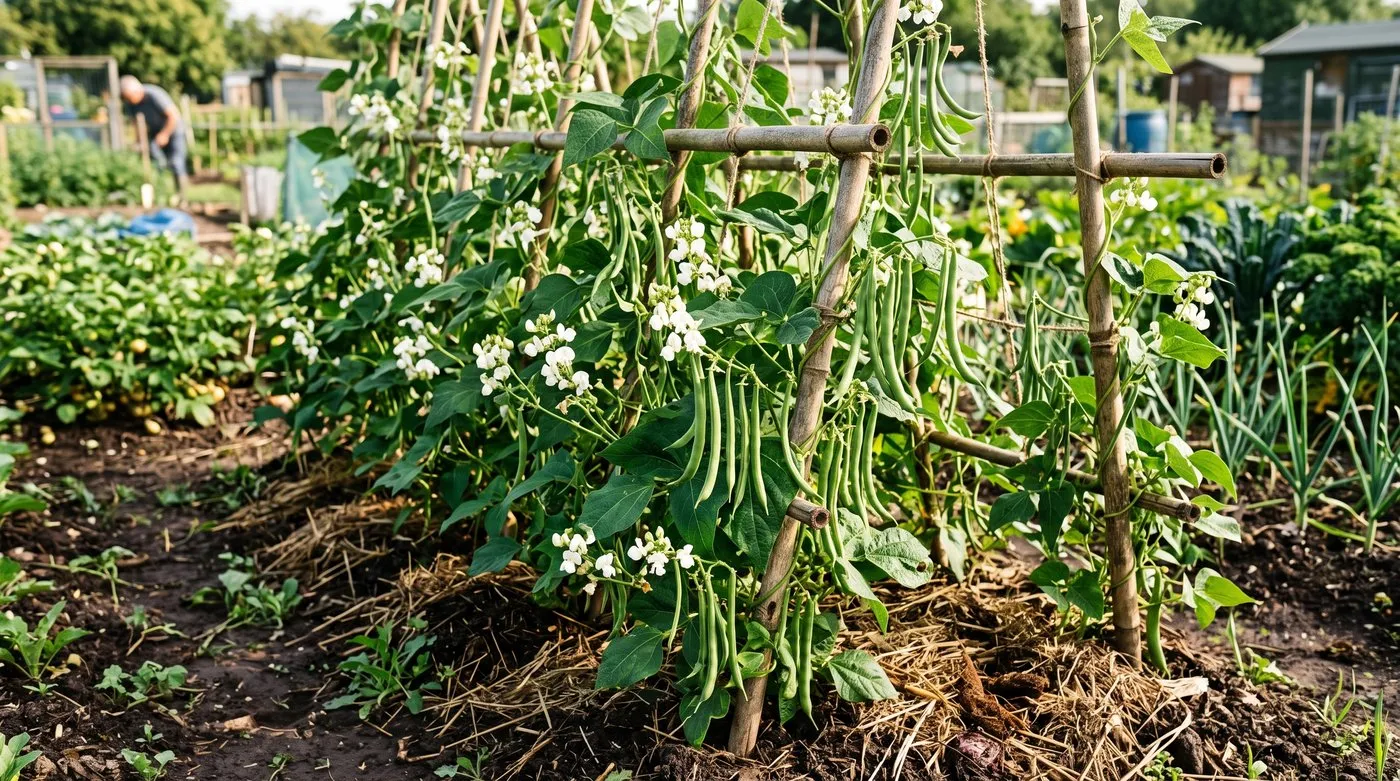 Runner-French crosses can set pods without relying completely on bees, although dry roots still stop production.
Which runner bean has the best traditional flavour?
White Lady is the dependable choice for thick, tender pods with classic runner-bean flavour. Its white flowers also attract fewer sparrows in some gardens.
Which?’s published guide names White Lady beside Firestorm and Moonlight. The current RHS list also recognises it for heavy crops of tasty pods.
Flavour depends heavily on harvest size. Pick before the pods exceed roughly 25cm and before the seeds create obvious bumps. Slice across the pod and cook briefly.
Celebration is the alternative when flower colour matters. It carries pink flowers and produces straight, fleshy pods. An RHS trial described its flavour and colour positively.
Do not grow five near-identical climbing varieties on one crowded frame. Two cultivars give enough comparison without making harvest tracking tedious.
Which runner bean produces the straightest long pods?
Benchmaster is the practical pick for long, straight pods and village-show classes. Suttons states that pods can exceed 40cm under good care.
Its plants reach about 3m, so use 2.4m canes pushed firmly into the ground. The stems continue above the support and can be pinched out safely.
Long pods require steady moisture. Uneven watering produces hooked beans and coarse skin. Thin crowded flower trusses only when growing for exhibition; kitchen crops should keep more pods.
Pick standard table beans young. Leave the straightest exhibition candidates to lengthen, then remove any twisted pod immediately.
For show preparation, our exhibition runner-bean guide covers cordon training, judging faults and the 12-inch class.
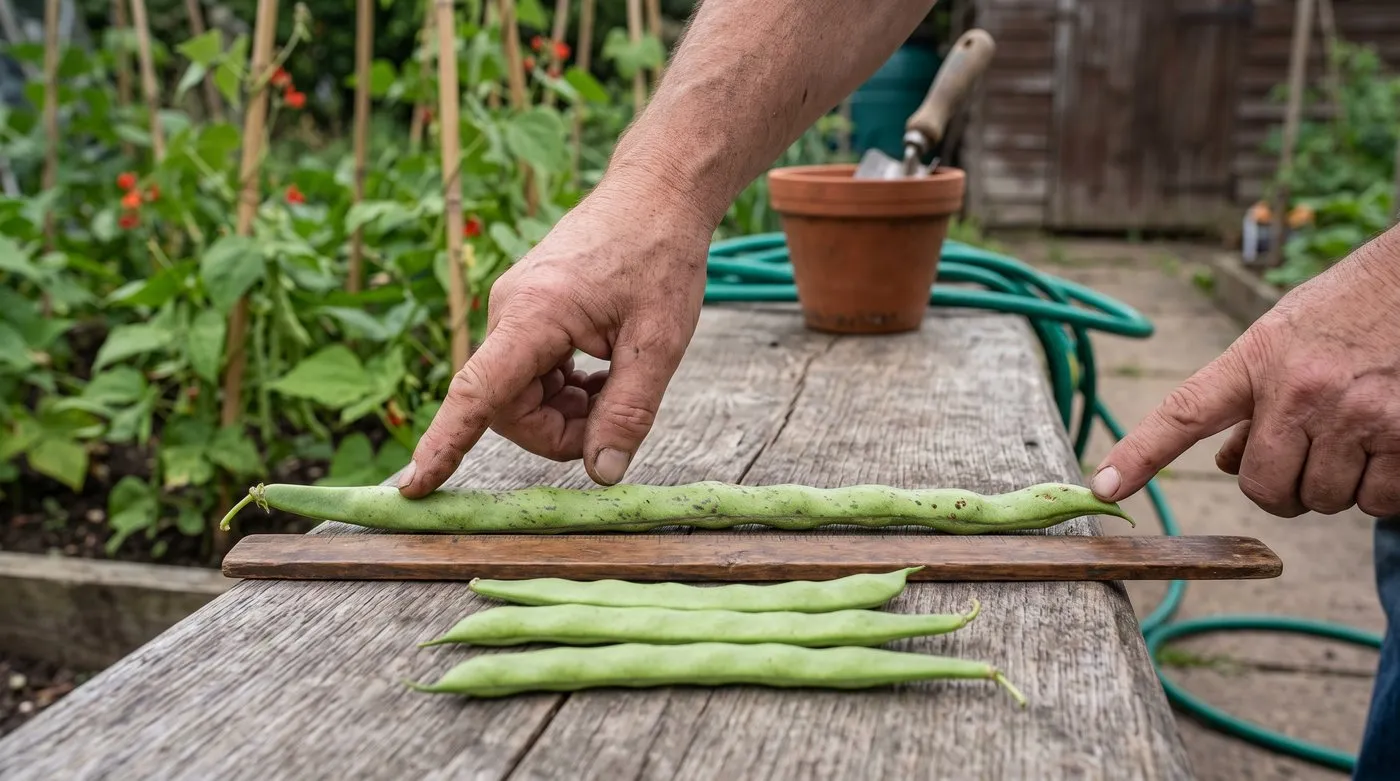 Long-pod varieties still taste best when young. Let only selected show pods grow beyond table size.
Which runner bean grows best in a container?
Hestia is the best choice when a 3m climbing frame is impractical. Mature plants reach about 45cm and need only short supports.
Use one plant in a 30-litre container or two in a 45-litre tub. Smaller pots dry too fast during flowering. Mix peat-free compost with loam-based compost to improve water retention.
Place three 90cm canes around the pot and tie them at the top. Hestia does not need a full wigwam, but its stems still benefit from support.
Feed weekly with a high-potash liquid feed after the first pods form. Water whenever the top 2cm of compost feels dry.
Climbing beans yield more from the same ground area. Choose Hestia for patios, mobility or appearance rather than maximum weight. More compact choices appear in our guide to dwarf vegetables.
How many runner bean plants should you grow?
Twelve strong plants can supply a small household and leave enough for the freezer. More plants often create a picking problem.
Which? states that most tested varieties produced at least 0.5kg per plant. Its Best Buys reached up to 1kg. A twelve-plant frame therefore represents roughly 6-12kg under the trial’s conditions.
That is a planning range, not a promise. Weather, watering and picking frequency change the total. Garden UK’s useful rule is three plants per regular bean eater, capped at twelve for a small household.
Pick every two or three days. Remove oversized pods even when they are too tough to eat. Mature pods tell the plant to slow flower production.
Freeze surplus young beans after blanching. Leave Czar pods to mature if you want large white beans for soup. Our drying beans and peas guide explains safe final drying and storage.
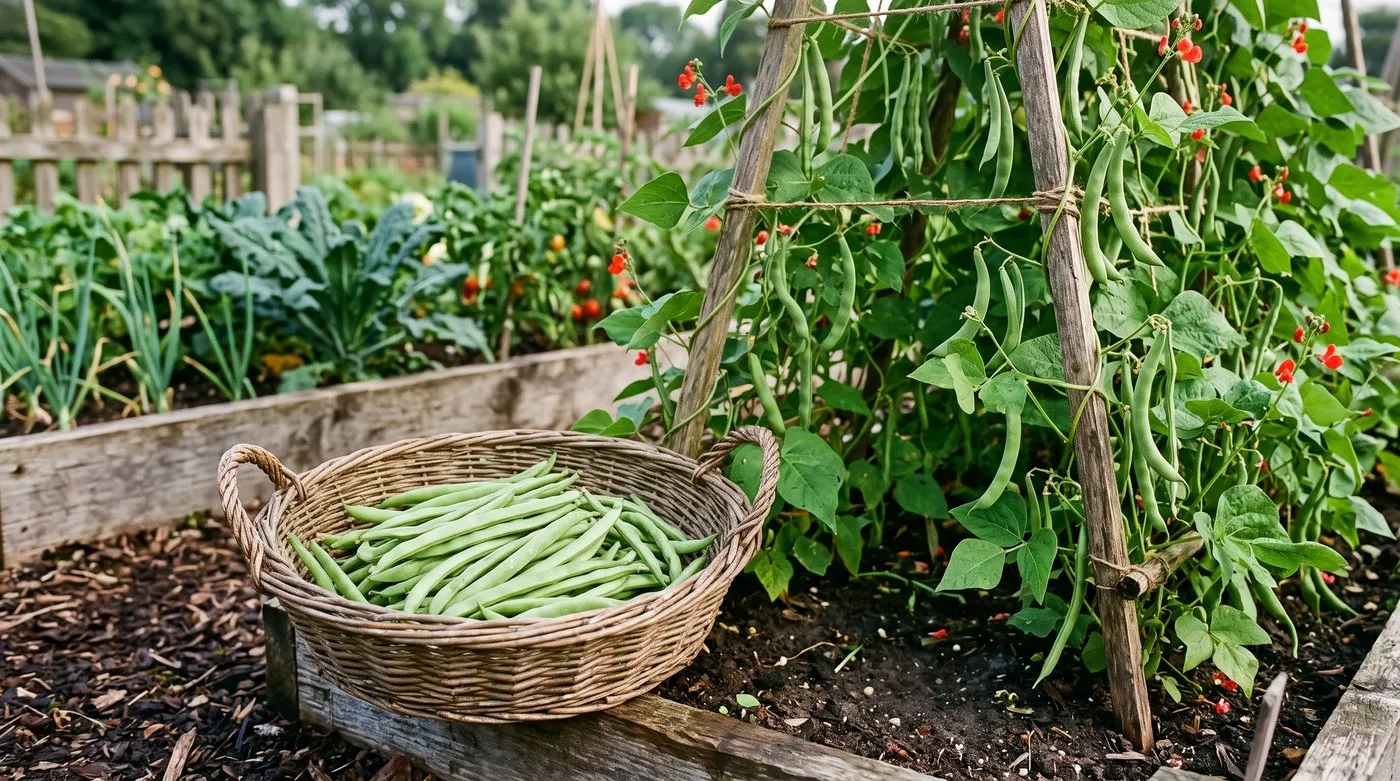 A twelve-plant frame can produce 6-12kg using the Which? trial range. Pick every two or three days.
The best support for each runner bean variety
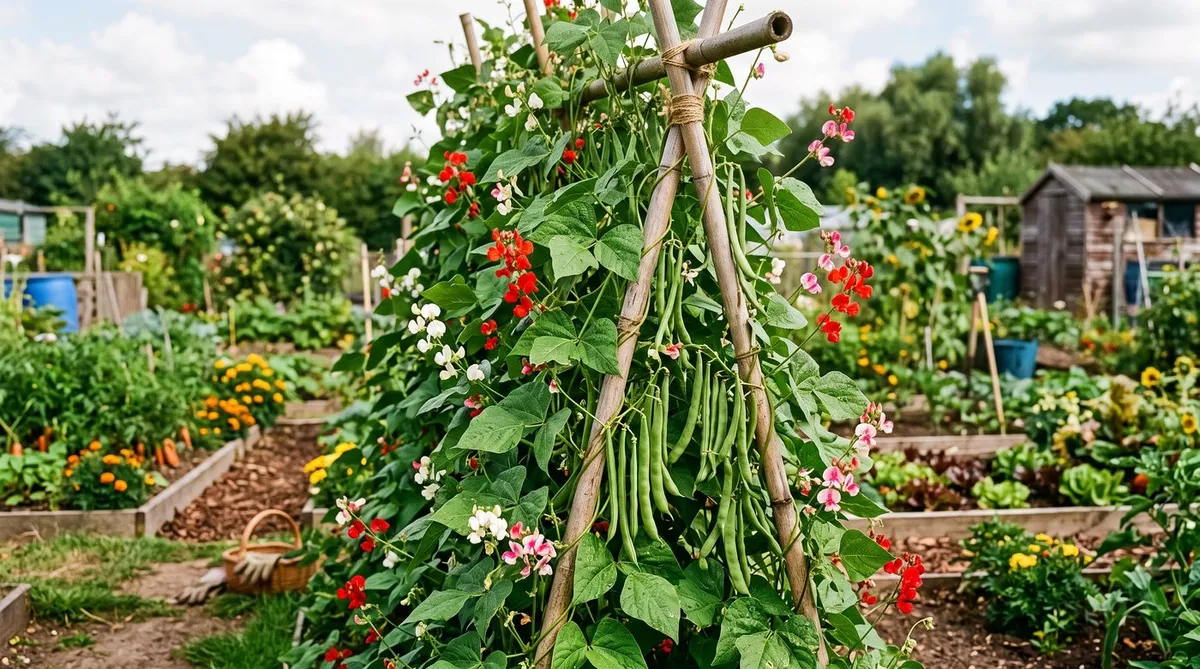
An X-frame makes long climbing varieties easier to pick because pods hang outside the foliage. A wigwam uses less ground and suits smaller plots.
Which? trialled supports and rated wigwams, X-frames and A-frames as its best three methods. Use canes at least 2.4m tall for Firestorm, Moonlight, White Lady, Celebration and Benchmaster.
Hestia needs only short canes in a heavy pot. Do not place a container where the foliage catches strong wind.
Our guide to vegetable trellises compares frame heights and anchoring. A separate hazel pea-stick guide covers free supports for shorter crops.
Frequently asked questions
What is the best runner bean variety for the UK?
Firestorm is the best all-round runner bean for most UK gardens. It sets pods more reliably than traditional types and produces stringless beans. Moonlight is a strong white-flowered alternative.
Which runner bean has the best flavour?
White Lady is a dependable choice for traditional runner-bean flavour. Pick its pods at 20-25cm while the seeds remain small. Older pods become coarse regardless of variety.
Which runner bean is stringless?
Firestorm and Moonlight both produce smooth, stringless pods when picked young. Lady Di and Polestar are also sold as stringless varieties. Regular picking matters as much as the cultivar.
Which runner bean is best for a container?
Hestia is the best runner bean for containers. It grows to about 45cm, unlike 3m climbing varieties. Use a 30-litre pot and keep it consistently watered.
How many runner bean plants do I need?
Twelve plants are enough for most small households. Which? recorded up to 1kg per plant from Best Buy varieties. Six plants may suffice if you pick and eat beans regularly.
Our team produces practical UK gardening guidance from source research, contributor records and established horticultural practice. Editorial standards are overseen by Matt W.