Key takeaways
- Ambassador is the best all-round shelling pea for a dependable UK maincrop
- Kelvedon Wonder is the compact early variety for the first sowing and smaller plots
- Hurst Green Shaft produces long maincrop pods containing up to 11 peas
- Carouby de Maussane and Oregon Sugar Pod are the Which? mangetout recommendations
- Delikett is the named sugarsnap choice and can also mature for shelling
- Terrain earns the late slot because its disease resistance helps as powdery mildew pressure rises
Peas lose sweetness soon after picking, so home growing has a real advantage. The wrong variety can still give one short, mildew-hit glut.
The best plan uses more than one maturity class. An early, a maincrop and an edible-pod pea extend both harvest and texture.
Which pea varieties are best for UK gardens?
Ambassador is the best all-round shelling pea, while Delikett covers edible pods. Kelvedon Wonder earns the first early slot.
| Variety | Type | Approximate height | First harvest | Best use | Main strength |
|---|---|---|---|---|---|
| Kelvedon Wonder | First early shelling | 45-60cm | About 12 weeks | Earliest sweet peas | Compact with excellent flavour |
| Ambassador | Maincrop shelling | 75-90cm | 14-16 weeks | Best all-round | Reliable and disease resistant |
| Hurst Green Shaft | Maincrop shelling | 90-120cm | 14-16 weeks | Large pods | Up to 11 peas per pod |
| Carouby de Maussane | Mangetout | 150-180cm | 12-14 weeks | Large flat pods | Productive traditional mangetout |
| Oregon Sugar Pod | Mangetout | 75-90cm | 12-14 weeks | Easier support | Shorter plants and tender pods |
| Delikett | Sugarsnap | About 60cm | 12-14 weeks | Crisp whole pods | Long picking season |
| Terrain | Late shelling | 75-90cm | 14-16 weeks | Final sowing | Strong disease resistance |
These timings follow crop classes, not fixed promises. Cold soil delays germination, while warm late-spring weather speeds early growth.
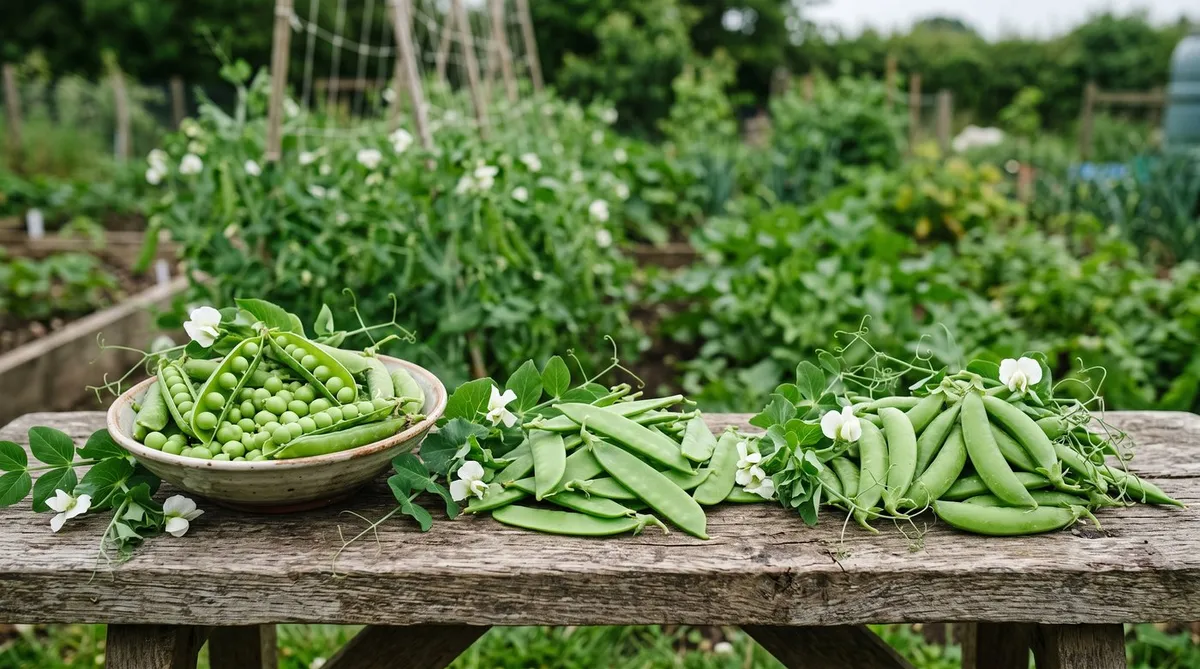
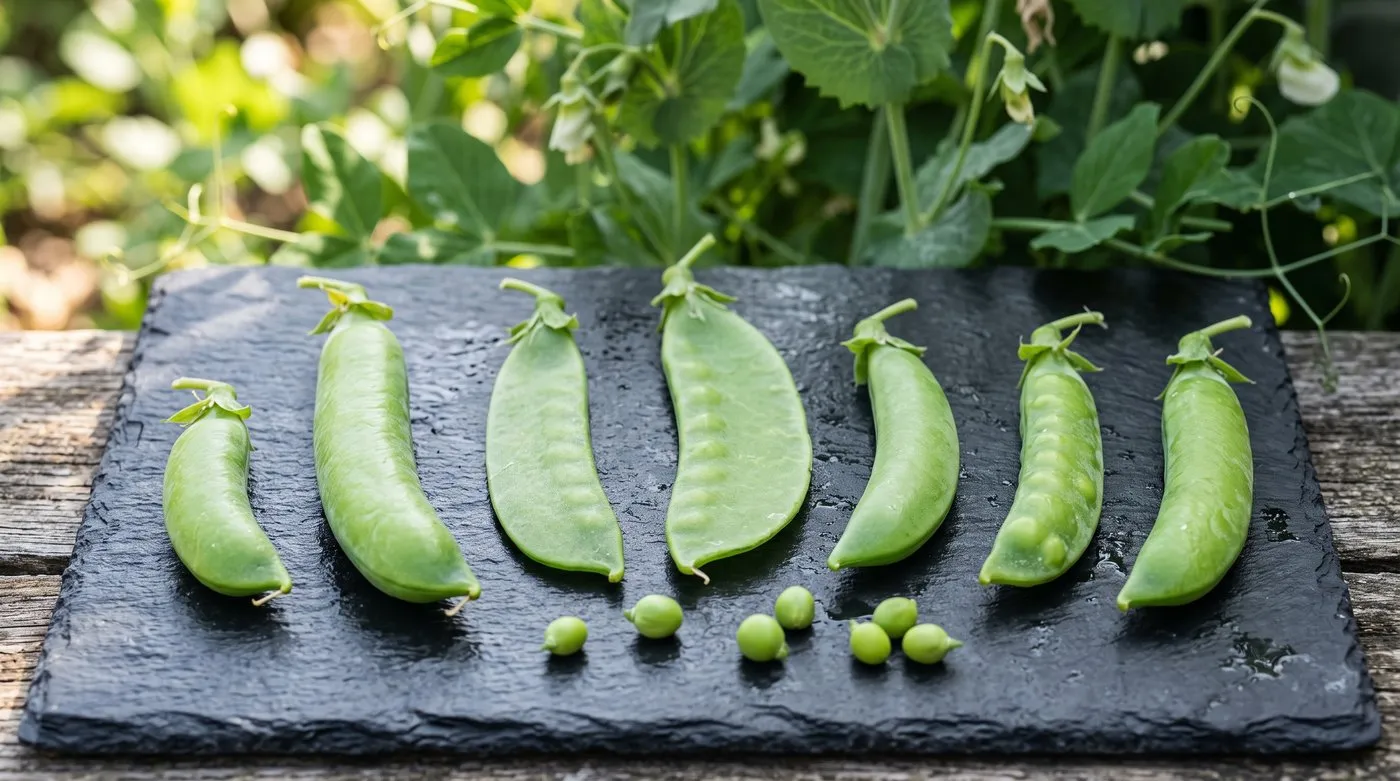 Shelling peas, mangetout and sugarsnaps are separate harvests. Grow at least two types for a useful comparison.
What is the best all-round shelling pea?
Ambassador is the best maincrop shelling pea for a normal UK vegetable bed. Which? names it as its shelling recommendation.
The plants reach roughly 75-90cm and need netting or twiggy sticks. Ambassador carries useful resistance to powdery mildew, pea wilt and other diseases. That helps a crop stay productive as summer advances.
Sow from March to June in batches rather than one long row. Place seeds 5cm deep and 7.5cm apart in a flat-bottomed drill. Put supports in immediately because later work damages shallow roots.
Harvest every two or three days once pods feel full. Shell and eat peas promptly. Their sugars begin changing into starch after picking.
Our pea growing guide covers drills, supports, watering and harvest signs.
Which pea gives the earliest crop?
Kelvedon Wonder is the best sweet first early for a compact plot. It begins cropping in about 12 weeks under suitable spring conditions.
The short plants need only low sticks or 60cm mesh. That makes them easier to fleece than a tall maincrop during late cold snaps.
Kelvedon Wonder is a wrinkled pea, which gives sweeter flavour than smooth-seeded earlies. Wrinkled seed is less tolerant of cold, wet soil. Wait until the bed drains freely before sowing.
For genuinely cold ground, Meteor is tougher. Its round seed handles early conditions better, though the peas taste less sweet.
Sow Kelvedon Wonder first, then Ambassador three weeks later. This simple pairing separates harvests without creating a complicated calendar.
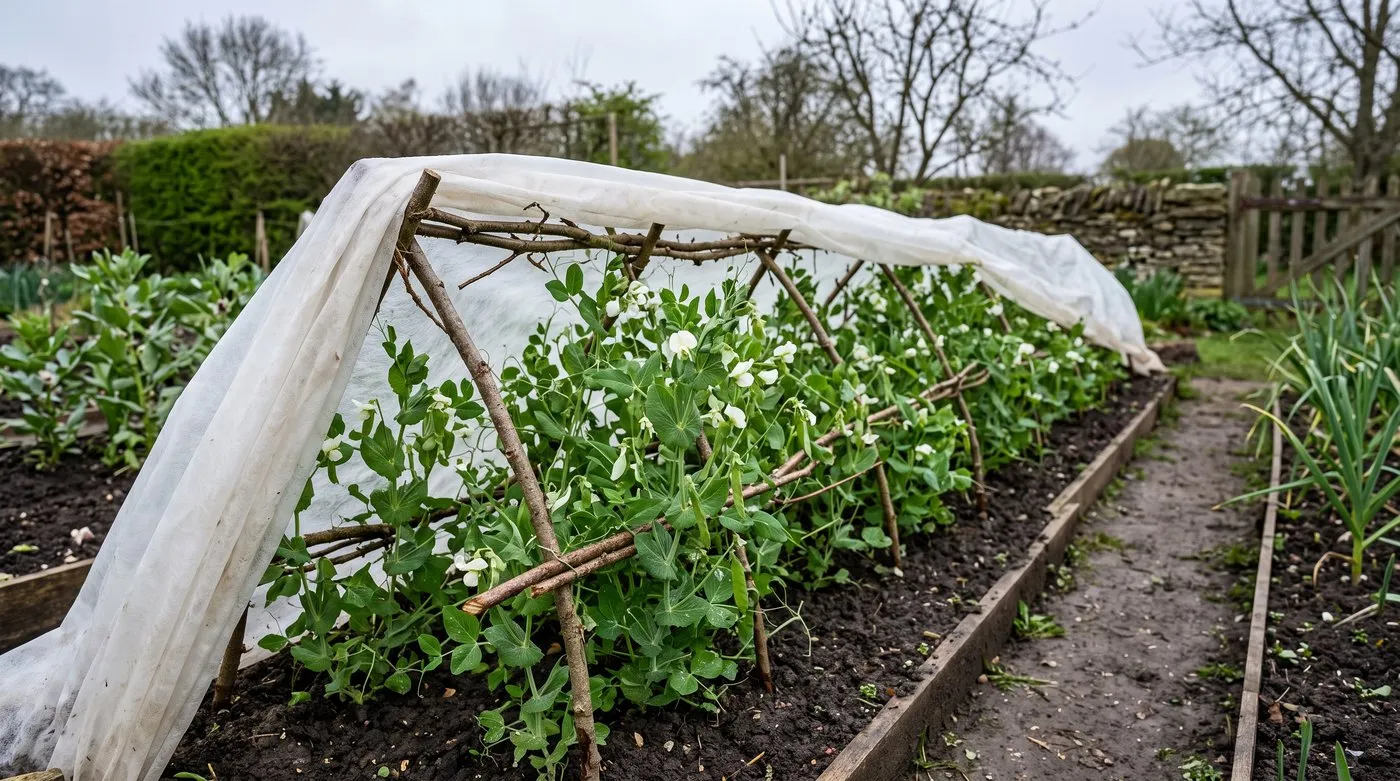 Compact first earlies are easy to protect. Remove fleece once flowers open so the crop stays airy.
Which pea produces the biggest pods?
Hurst Green Shaft is the maincrop choice for long pods packed with peas. An individual pod can contain up to 11 peas.
The plants reach about 90-120cm and become top-heavy in wind. Use netting fixed to stout stakes rather than loose pea sticks. Keep the bottom edge tight so shoots do not sprawl across paths.
Large pods are useful for shelling but can turn starchy when left too long. Check the crop daily during warm weather. Pick when pods are full yet still bright green.
Hurst Green Shaft also suits village-show pea classes. Uniform pods, even fill and fresh bloom matter more than record length.
Our show-pea guide covers double rows, watering and judging standards. It also explains how exhibitors select matching pods.
What are the best mangetout varieties?
Carouby de Maussane is the best tall mangetout, while Oregon Sugar Pod is easier to manage. Which? recommends both cultivars.
Carouby de Maussane climbs to roughly 1.5-1.8m. It produces broad, flat pods and mauve flowers. Choose it where a tall, secure support can stay in place all summer.
Oregon Sugar Pod usually stays below 1m. Its shorter growth suits exposed plots and smaller frames. The tender pods are ready while still flat, before the peas swell.
Pick mangetout every two days. One hidden mature pod can slow further flowering. Hold the stem with one hand and pull the pod with the other to avoid tearing growth.
For detailed edible-pod care, use our guide to growing mangetout and sugarsnaps.
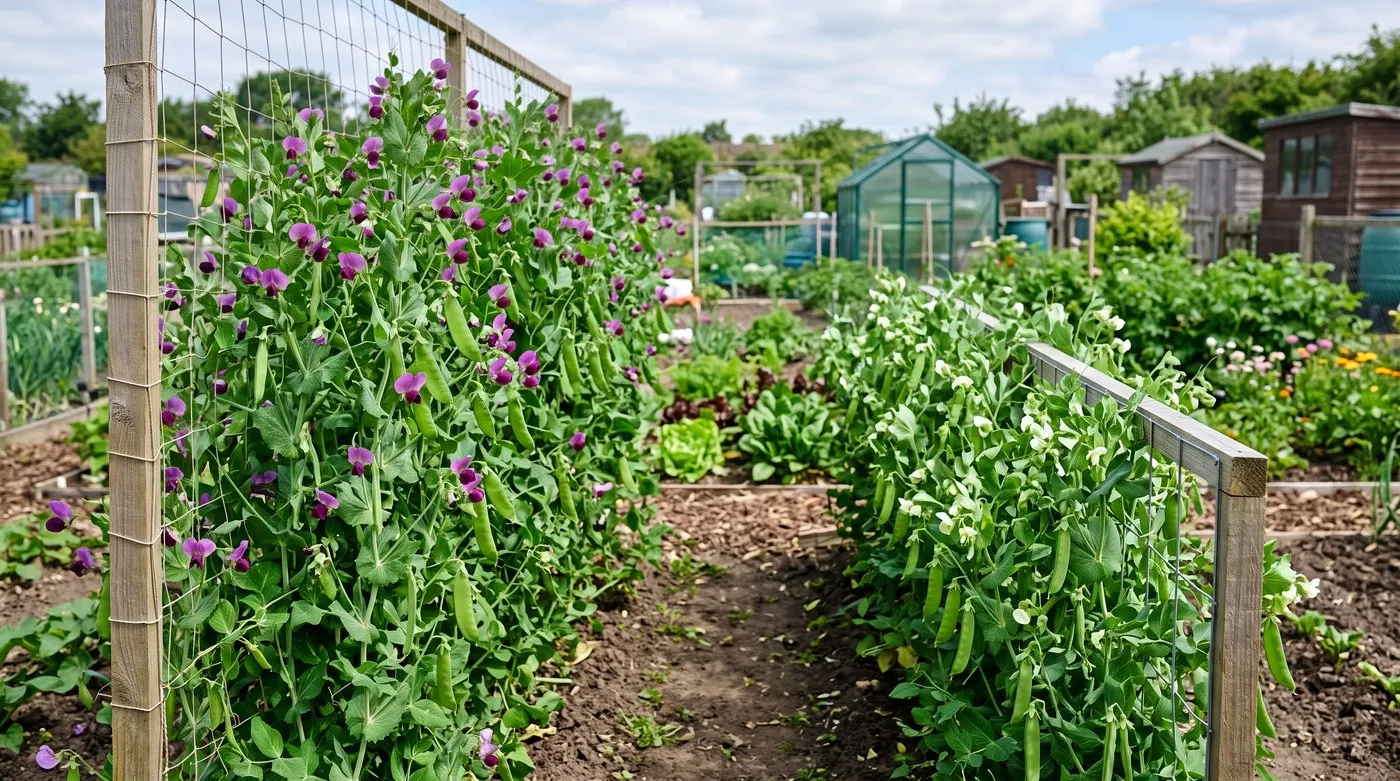 Tall Carouby needs a firm frame. Shorter Oregon Sugar Pod is simpler on exposed or compact plots.
What is the best sugar snap pea?
Delikett is the best all-round sugarsnap for crisp pods and a long picking period. Which? names it as the sugarsnap recommendation.
The plants reach about 60cm and fit low mesh. Pick young pods whole when they are rounded but still snap cleanly. Later pods can mature for shelling, which reduces waste at the end of the crop.
Delikett differs from mangetout because its pod is fleshy and rounded. Mangetout pods stay flat at harvest. Both are easier to use than shelling peas because the pod is edible.
The RHS gives Delikett an Award of Garden Merit. Cascadia and Sugar Ann are useful alternatives. Sugar Ann is particularly early and carries fleshy pods about 6cm long.
Grow ten sugarsnap plants per regular eater if most pods will be eaten raw while gardening. They disappear remarkably fast.
Which pea is best for a late sowing?
Terrain is the safer late pea because its disease resistance includes powdery mildew. Warm, dry weather raises mildew pressure on ageing plants.
Sow Terrain from late May into June for a late-summer harvest. Do not push sowing far into July unless autumns are reliably mild in your area.
Give late peas more space and steady moisture. A 5cm compost mulch helps keep the roots cool. Water the soil deeply when pods begin filling.
Pea moth also affects summer crops. Adult moths fly while peas flower, then larvae enter the pods. Early crops often escape because flowering finishes before the main flight.
Our pea moth guide explains pheromone timing and resistant harvest windows. The pea and bean weevil guide covers scalloped seedling leaves.
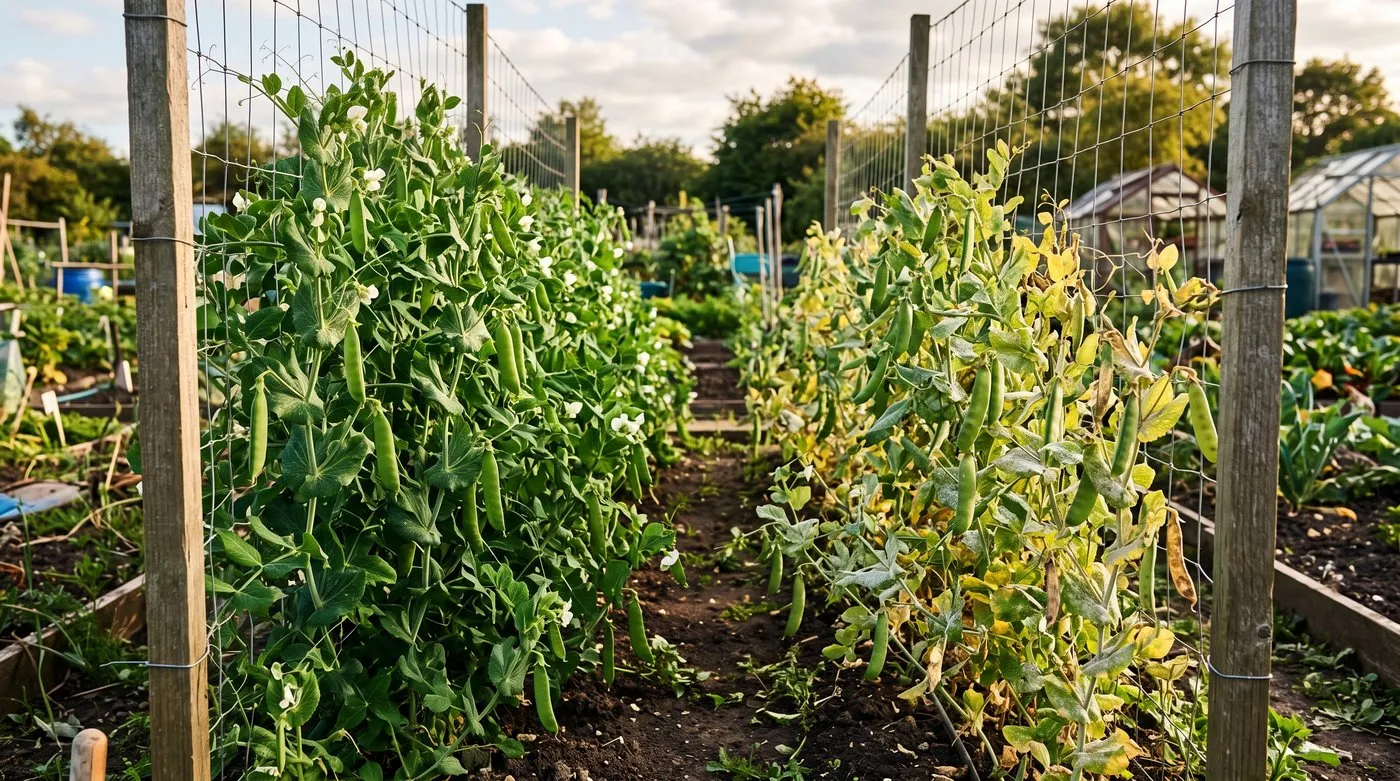 Disease resistance matters most in the late slot, when older foliage faces rising powdery mildew pressure.
A three-sowing plan for twelve weeks of peas
Three 2m rows can spread picking across much of early and mid-summer. Variety timing does the work.
Sow Kelvedon Wonder first. Add Ambassador three weeks later, then Delikett after another three weeks. At 7.5cm spacing, a single 2m row holds about 26 plants.
The three rows therefore contain roughly 78 final plants. This is Garden UK’s spacing calculation, not a yield claim. Allow spare seed for gaps and losses.
Kelvedon Wonder should start near week 12. Ambassador follows around weeks 14-16 from its own sowing. Delikett begins after that, with repeated whole-pod picking.
Use sturdy supports from sowing day. Our hazel pea-stick guide shows how to build them from winter prunings.
Frequently asked questions
What is the best pea variety to grow in the UK?
Ambassador is the best all-round shelling pea for most UK gardens. It crops reliably and has useful resistance to powdery mildew and other diseases. Kelvedon Wonder is earlier.
What is the sweetest garden pea variety?
Kelvedon Wonder has excellent sweet flavour when picked young. Hurst Green Shaft and Ambassador also taste good straight after harvest. Pick pods before peas become large and starchy.
Which pea variety is best for an early crop?
Kelvedon Wonder is the best compact first early for many gardens. Smooth-seeded Meteor tolerates colder early sowing, but its flavour is less sweet than wrinkled varieties.
What is the best mangetout variety?
Carouby de Maussane is the best tall mangetout for flavour and large pods. Oregon Sugar Pod is shorter and easier to support. Which? recommends both varieties.
What is the best sugar snap pea?
Delikett is the strongest all-round sugarsnap choice. Its crisp pods crop over a long period with regular picking. Allow later pods to mature if you want shelling peas.
Our team produces practical UK gardening guidance from source research, contributor records and established horticultural practice. Editorial standards are overseen by Matt W.