How to Grow Cut Flowers UK: Beginners
Beginner guide to growing cut flowers in the UK. Best varieties, sowing calendar, cutting techniques and vase life from 7 years of cutting garden trials.
Key takeaways
- A 3m x 3m cutting garden produces 200-300 stems per season from a 30-50 pound investment
- Sweet peas, cosmos, dahlias and sunflowers are the four best starter crops for UK beginners
- Cut flowers in early morning when stems are fully hydrated for maximum vase life (7-14 days)
- Succession sow every 3 weeks from March to June for continuous cutting from June to October
- Pinch out growing tips on sweet peas and cosmos at 15cm tall to double the stem count
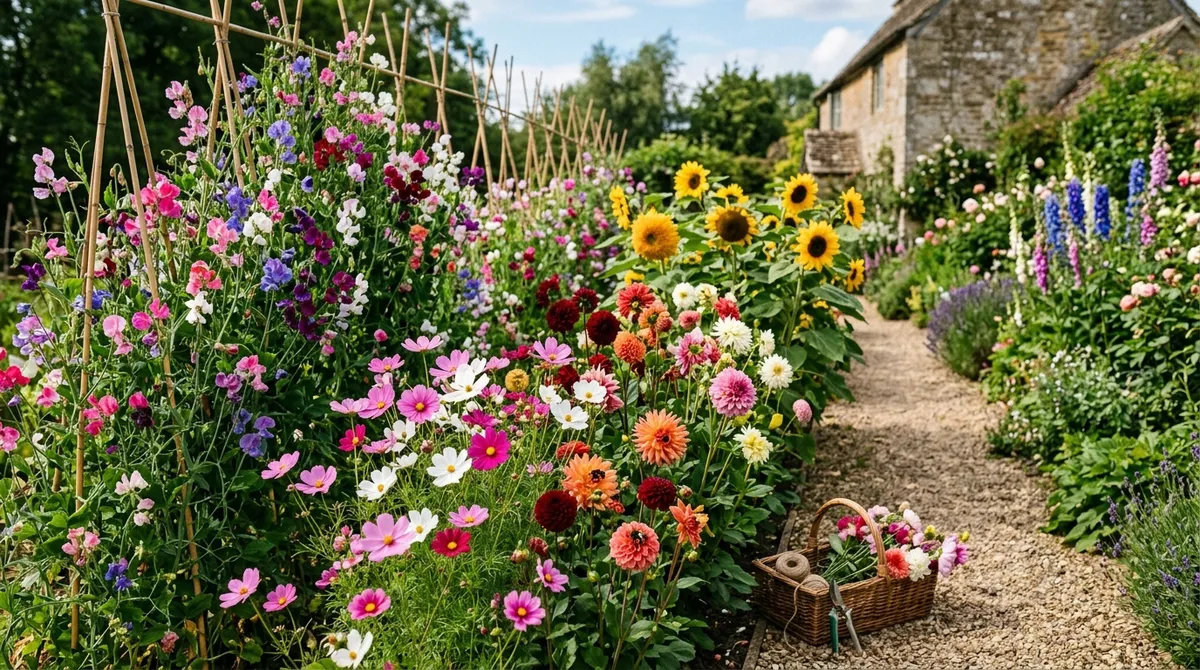
Growing your own cut flowers is one of the most rewarding things you can do in a UK garden. A small patch of ground and 30-50 pounds in seeds produces enough blooms to fill vases from April to October, replacing supermarket bunches that cost 5-8 pounds each.
The skill is simpler than most people expect. If you can grow vegetables, you can grow cut flowers. The techniques are similar: sow at the right time, feed and water, and harvest regularly.
After 7 years of running a dedicated cutting garden in Staffordshire, I have identified the best varieties for UK conditions and the techniques that make the difference between a few stems and buckets of blooms.
The best cut flowers for UK beginners
Start with these four reliable crops. They are forgiving, productive and cover the main cutting season from June to October.
Sweet peas
The quintessential British cut flower. Fragrant, prolific and available in every colour except yellow. Sow in October (autumn sowing produces earlier, stronger plants) or February to March under cover. Plant out in April. Sweet peas flower from June to September if picked regularly. Stop picking and they set seed and stop flowering within two weeks.
Key tip: Grow up 2.4m cane wigwams or along a trellis or fence. Pinch out the growing tip at 15cm to encourage branching.
Cosmos
The easiest annual cut flower. Cosmos bipinnatus grows 90-120cm tall with ferny foliage and daisy flowers in white, pink and crimson. Sow direct in May or start under cover in April. Flowers from July until the first frost in October or November.
Key tip: Pinch out the central growing tip when plants reach 15cm tall. This forces side branching and doubles the number of flowering stems from 8 to 16 per plant.
Dahlias
The workhorses of the late summer cutting garden. A single dahlia plant produces 20-30 stems between July and the first frost. Tubers cost 3-8 pounds each. Plant dahlias in May after the last frost.
Key tip: Disbud for larger blooms. Remove the two side buds next to each main bud, directing energy into one bigger flower per stem.
Sunflowers
Dramatic statement flowers. Single-stem varieties (Velvet Queen, Earthwalker) produce one large bloom per plant. Branching varieties (Autumn Beauty, Valentine) produce 5-8 smaller flowers per plant. Sow direct in April to May. Flowers August to September.
Key tip: Sow every 3 weeks from April to June for a succession of blooms rather than one concentrated burst.
| Variety | Sow | Flowers | Stems per plant | Vase life | Difficulty |
|---|---|---|---|---|---|
| Sweet peas | Oct or Feb-Mar | Jun-Sep | 30-50 | 5-7 days | Easy |
| Cosmos | Apr-May | Jul-Oct | 15-20 | 7-10 days | Very easy |
| Dahlias | Plant May | Jul-Oct | 20-30 | 5-7 days | Easy |
| Sunflowers | Apr-Jun | Aug-Sep | 1-8 | 7-10 days | Very easy |
| Zinnias | Apr (under cover) | Jul-Sep | 10-15 | 7-10 days | Moderate |
| Cornflowers | Mar-Apr (direct) | Jun-Aug | 8-12 | 5-7 days | Very easy |
| Ammi majus | Mar-Apr (direct) | Jun-Aug | 10-15 | 7 days | Easy |
| Larkspur | Sep or Mar (direct) | Jun-Jul | 3-5 | 7-10 days | Easy |
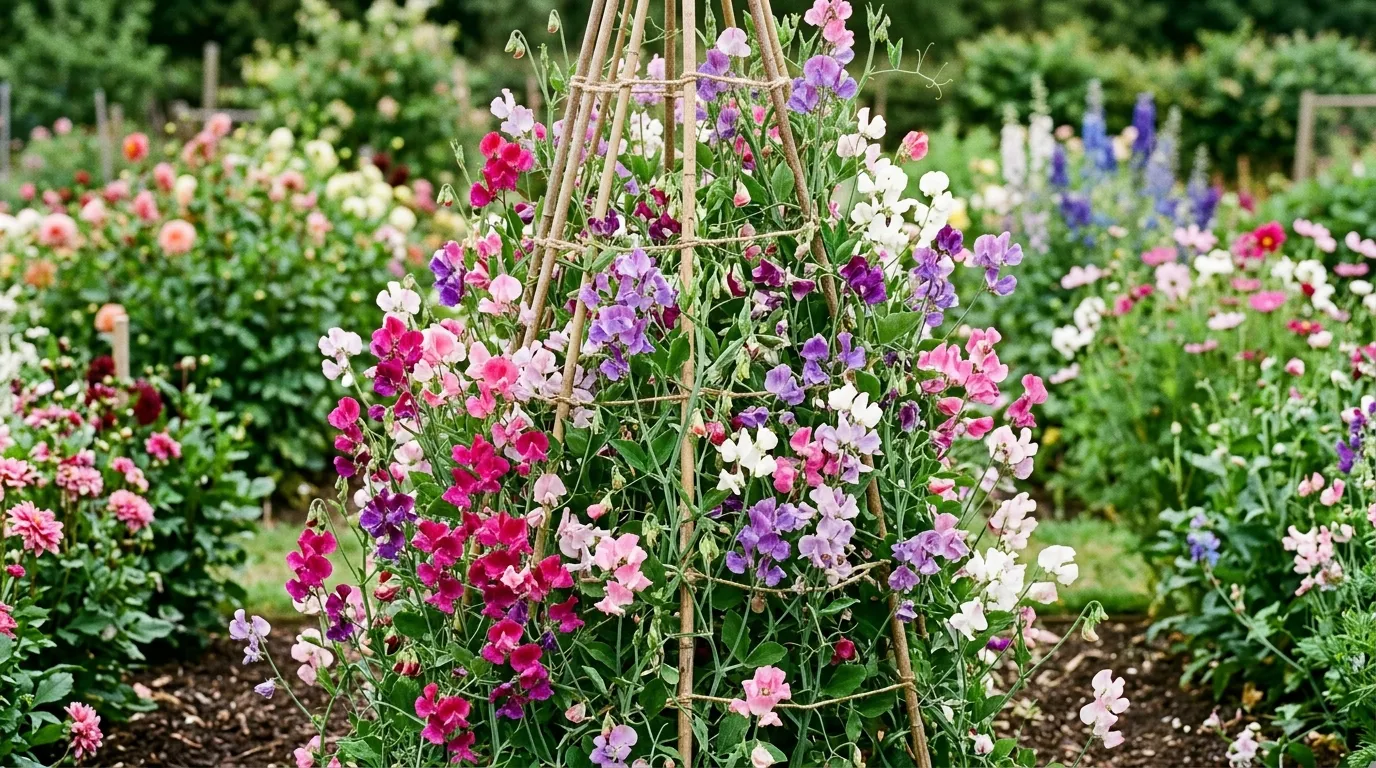
Sweet peas climbing a cane wigwam in a cutting garden. Regular picking every 2-3 days keeps them flowering from June to September.
Setting up a cutting garden
A dedicated cutting patch works better than scattering flowers through ornamental borders. You can pick freely without ruining the garden display, and the utilitarian row planting makes maintenance easier.
Size: 3m x 3m is a good starting plot. This gives four 70cm-wide rows with 30cm paths between them.
Location: Full sun (minimum 6 hours direct) with shelter from strong wind. A south or west-facing spot against a wall or fence is ideal. Wind snaps tall stems and reduces bee pollination.
Soil preparation: Dig in plenty of garden compost before planting. Cut flowers are hungry plants that need rich, well-drained soil. A no-dig approach works well if you mulch heavily with compost each spring.
Support: Install a support framework before planting. Sweet peas need 2.4m supports. Dahlias need individual stakes. Cosmos and ammi benefit from horizontal netting at 40cm height to keep stems upright.
Sowing and planting calendar
| Month | Action |
|---|---|
| January | Order seeds and dahlia tubers |
| February | Sow sweet peas under cover (if not sown in October) |
| March | Sow hardy annuals direct: cornflower, ammi, larkspur, calendula |
| April | Start cosmos, zinnias, sunflowers under cover. Plant out sweet peas |
| May | Plant out half-hardy annuals after last frost. Plant dahlia tubers |
| June | Begin cutting sweet peas. Succession sow cosmos and sunflowers |
| July | Main cutting season begins. Dahlias, cosmos, sweet peas in full swing |
| August | Peak production. Sunflowers join the display |
| September | Continue cutting. Save seed from favourite annuals |
| October | Lift dahlia tubers after first frost. Clear spent annuals. Sow sweet peas for next year |
| November | Compost the bed. Order next year’s seeds |
How to cut and condition flowers
The way you cut and condition flowers determines how long they last in the vase. Poor technique gives 2-3 days. Good technique gives 7-14 days.
When to cut: Early morning (before 9am) when stems are fully charged with water. Evening is the second-best time. Never cut in midday heat.
What to cut: Choose stems with buds just starting to open. Fully open flowers have shorter vase life. For dahlias, cut when the flower is three-quarters open.
How to cut: Use clean, sharp secateurs or flower scissors. Cut at a 45-degree angle to maximise the water uptake surface. Immediately place stems in a bucket of cool water.
Conditioning: Strip all foliage that will sit below the waterline. Leaves in water rot and breed bacteria that block stems. Place the bucket in a cool, dark place (garage or shed) for at least 4 hours, ideally overnight. This deep drink before arranging extends vase life significantly.
Vase water: Fresh, clean water with commercial flower food. Or make your own: 1 teaspoon sugar (energy) plus 2 drops bleach (anti-bacterial) per litre. Change every 2-3 days.
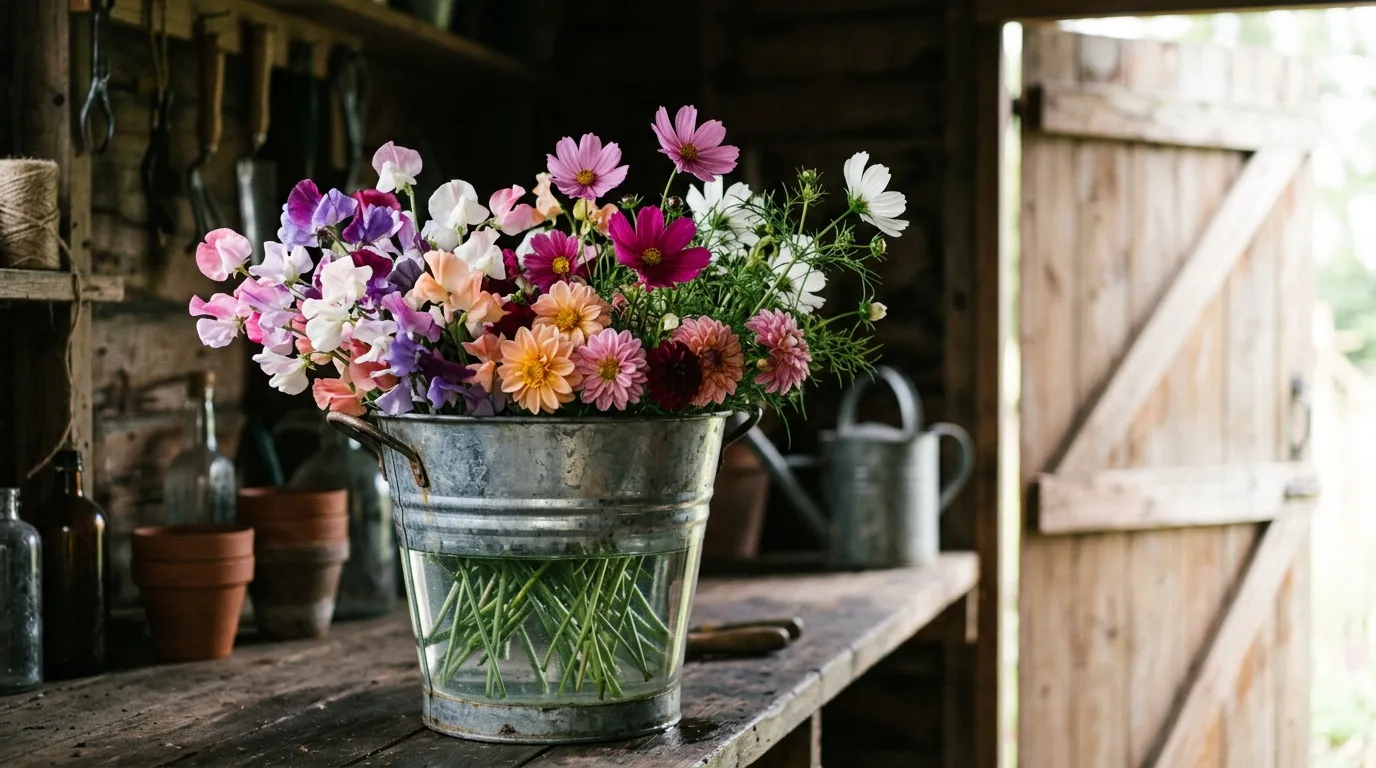
Freshly cut sweet peas, cosmos and dahlias conditioning in a bucket of cool water. Four hours minimum before arranging extends vase life by 3-5 days.
Growing cut flowers in small spaces
No garden? No problem. Many excellent cut flowers grow in containers on a patio or balcony.
Best container cut flowers: Dwarf sunflowers, pot dahlias (Gallery series), dwarf sweet peas (Cupid series), cornflowers, calendula. Use 40cm pots minimum with the standard compost mix.
Grow herbs alongside cut flowers for foliage to use in arrangements. Mint, rosemary and sage all provide useful filler greenery.
Flower arranging from the garden
The advantage of growing your own is variety. A supermarket bunch has 3-5 types. A garden arrangement can have 10-15 types from a single morning’s pick.
Structure formula: For a balanced arrangement, use this ratio: 60% focal flowers (dahlias, roses, sunflowers), 25% filler (ammi, gypsophila, alchemilla) and 15% foliage and texture (grasses, herbs, seed heads).
Seasonal combinations that work:
- June: Sweet peas + cornflowers + ammi + roses
- July: Dahlias + cosmos + grasses + mint
- August: Sunflowers + zinnias + dahlias + echinacea
- September: Dahlias + Japanese anemones + seed heads + late cosmos
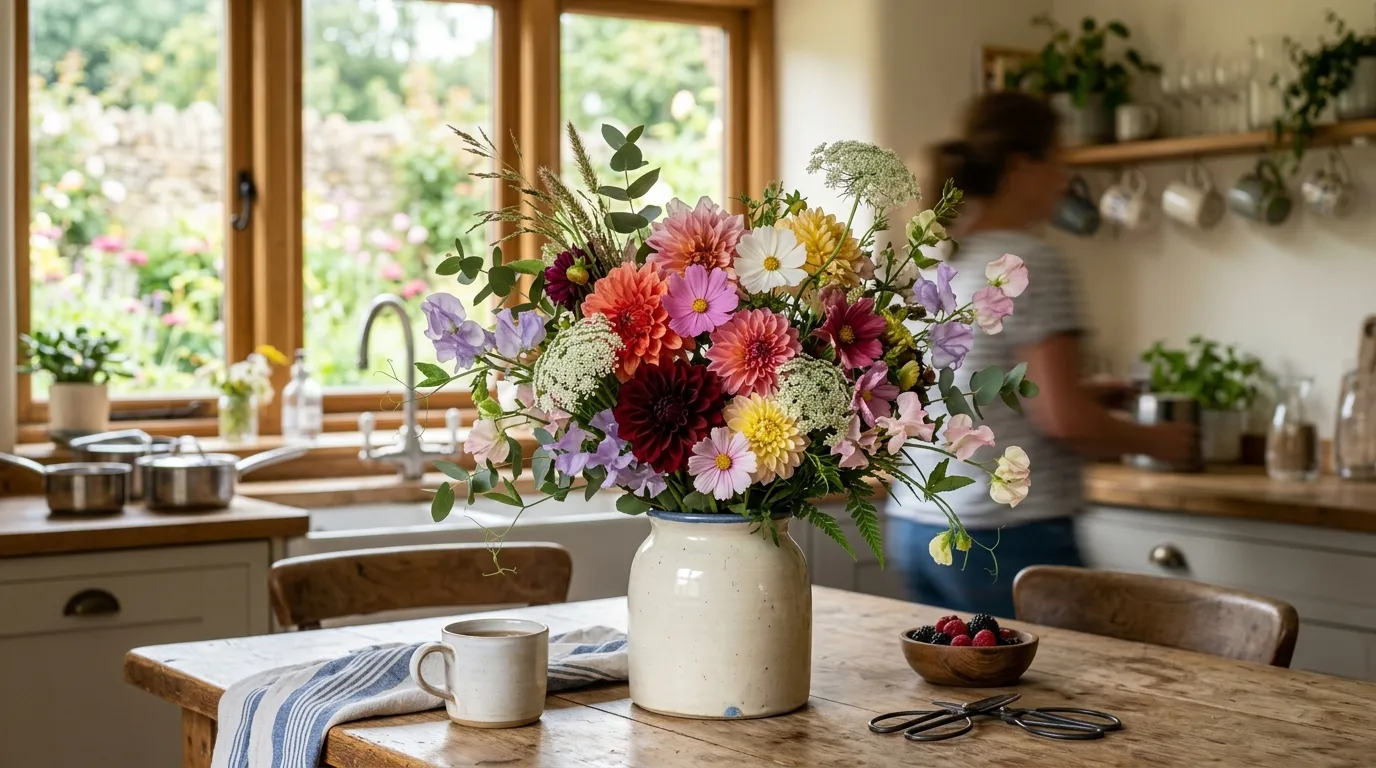
A late summer arrangement of dahlias, cosmos, sweet peas and ammi, all cut from a small UK garden. The mix of shapes and textures is what makes garden flowers special.
Related reading
Lawrie has been gardening in the West Midlands for over 30 years. He grows his own veg using no-dig methods, keeps a wildlife-friendly garden, and writes practical advice based on real UK growing conditions.