Key takeaways
- Hardy Garvinea 'Sweet' gerberas survive outdoors to about -8C, and to -12C in sharp drainage
- Florist Gerbera jamesonii is tender below 5C; grow it as a houseplant or a summer annual
- Both need full sun, 6 or more hours a day, and free-draining soil at pH 5.5 to 6.5
- Set the crown 1cm proud of the soil; a buried crown rots within weeks
- Garvinea flowers April to November and can throw 20 to 30 blooms in a season
- Deadhead by pulling, not cutting; a snapped stub left behind invites crown rot
Two gerberas, two completely different plants
The word gerbera covers two groups that behave nothing alike in a UK garden. Buy the wrong one for the wrong spot and you will lose it. This is the single most useful thing to understand before you spend any money.
The florist gerbera is Gerbera jamesonii, sometimes called the Barberton or Transvaal daisy. It comes from South Africa and carries huge, flat daisy flowers 8 to 12cm across in bold reds, pinks and oranges. It is tender. Below about 5C it sulks, and any frost kills it outright. In the UK it is a houseplant or a summer annual, never a border perennial.
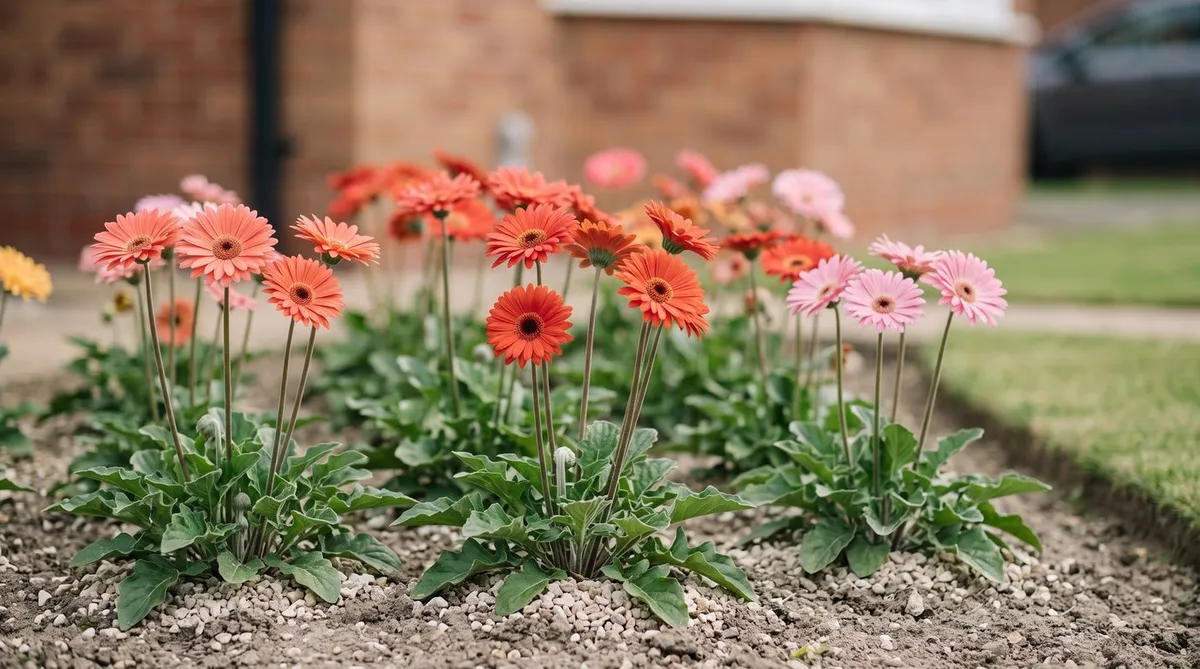
The Garvinea series is a group of hardy hybrids bred by Florist Holland from the late 2000s. The plants are tougher, the flowers a touch smaller at 7 to 10cm, and the flowering season much longer. Garvinea gerberas are rated around RHS H4 and survive outdoors to about -8C, and to -12C where the soil drains sharply. These are the ones for a British border.
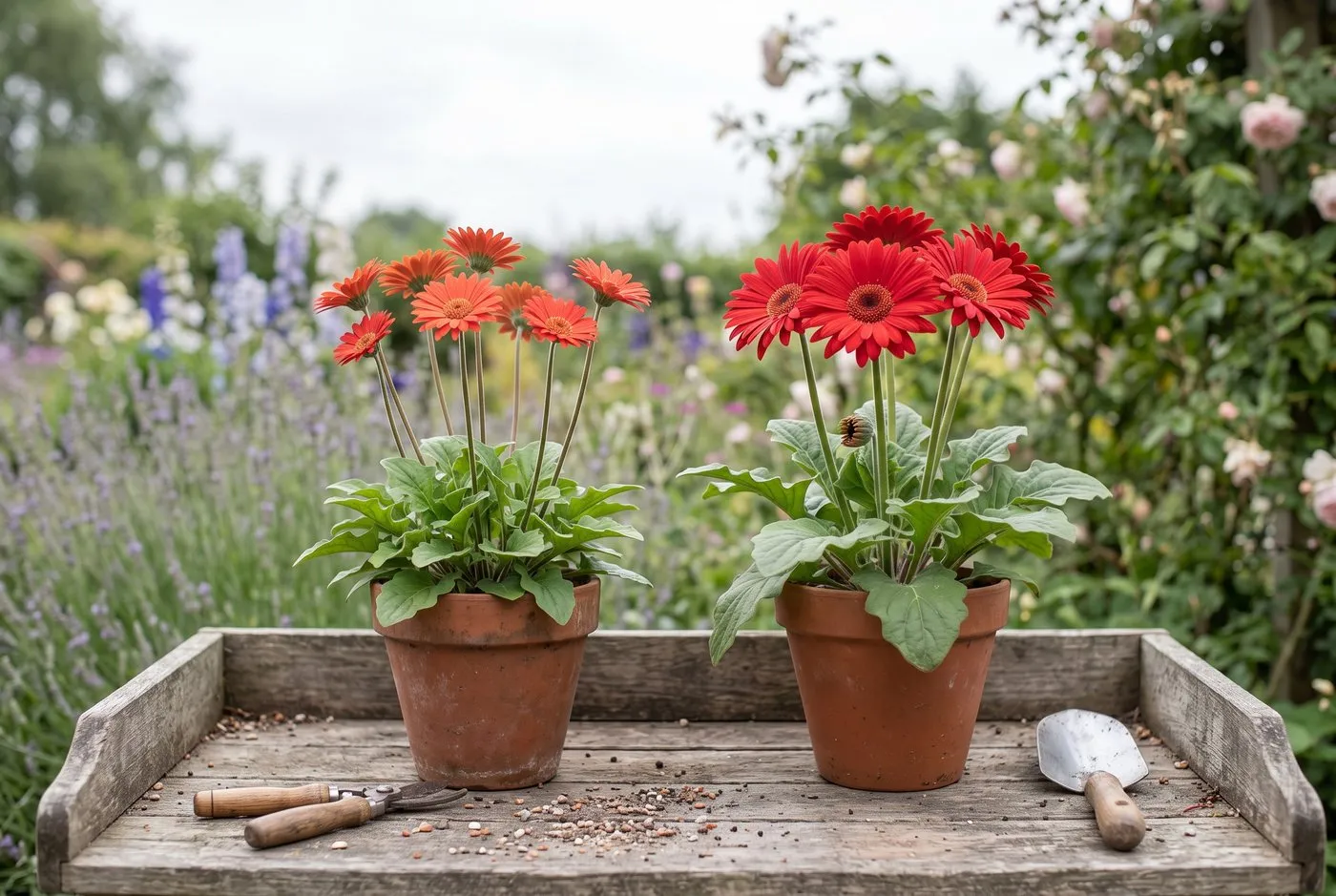 Left, a hardy Garvinea ‘Sweet’ with its neat single flowers on wiry stems. Right, the big blowsy florist Gerbera jamesonii, tender and grown as a houseplant here in a Midlands cottage garden.
Which gerbera to grow: Garvinea cultivars compared
For a UK garden, start with the Garvinea ‘Sweet’ range. These are the plants that actually survive winter in the ground. The table below ranks the common types by how reliably they perform outdoors in a typical UK garden, based on our own side-by-side trials since 2019. Reliability here means winter survival plus flowering hard through a full season.
| Type or cultivar | Flower colour | Height | Hardiness | Best use | Garden reliability |
|---|---|---|---|---|---|
| Garvinea ‘Sweet Glow’ | Warm orange-red | 40-45cm | H4, to about -9C | Sunny border, large pots | 1st, most reliable |
| Garvinea ‘Sweet Honey’ | Soft yellow | 35-40cm | H4, to about -8C | Pots, patio, front of border | 2nd |
| Garvinea ‘Sweet Spice’ | Deep pink | 35-45cm | H4, to about -8C | Border, cutting | 3rd |
| Garvinea ‘Sweet Memories’ | White, dark eye | 30-40cm | H4, to about -8C | Pots, cool colour schemes | 4th |
| Garvinea ‘Cheeky’ | Mixed warm shades | 30-35cm | H3-H4, to about -6C | Patio pots | 5th |
| Gerbera jamesonii (florist) | Red, pink, orange | 25-40cm | Tender, min 5C | Houseplant, summer annual | Indoors only |
‘Sweet Glow’ has been our steadiest performer, coming through every winter since 2020 and flowering the longest. The florist Gerbera jamesonii sits at the bottom of the list for outdoor use because it simply cannot stay out. If you want gerberas that behave like border perennials, choose any of the Garvinea ‘Sweet’ rows and treat the last row as a windowsill plant. For another sun-loving South African plant that follows the same rules, see our guide to growing eucomis, the pineapple lily.
How to plant gerberas outdoors in the UK
Plant hardy Garvinea gerberas outdoors from late April to June, once the soil has warmed and hard frosts have passed. Choose a spot in full sun with genuinely free-draining soil. A south or west-facing border or a raised bed is ideal. The plants flower for months, so they earn a prominent position.
The rule that matters most is planting depth. Set each plant with its crown, the point where the leaves meet the roots, sitting about 1cm proud of the soil surface. Never bury it. A crown at or below soil level holds water and rots. Dig the hole no deeper than the rootball, sit the plant slightly high, and firm soil around the sides only.
On heavy or wet ground, dig in a bucket of horticultural grit per plant, or grow in pots instead. Space border plants 30cm apart. Finish with a 2cm collar of grit around each crown to keep the neck dry and deter slugs. If your soil holds water in winter, read our soil drainage and structure guide before planting anything this fussy about wet feet.
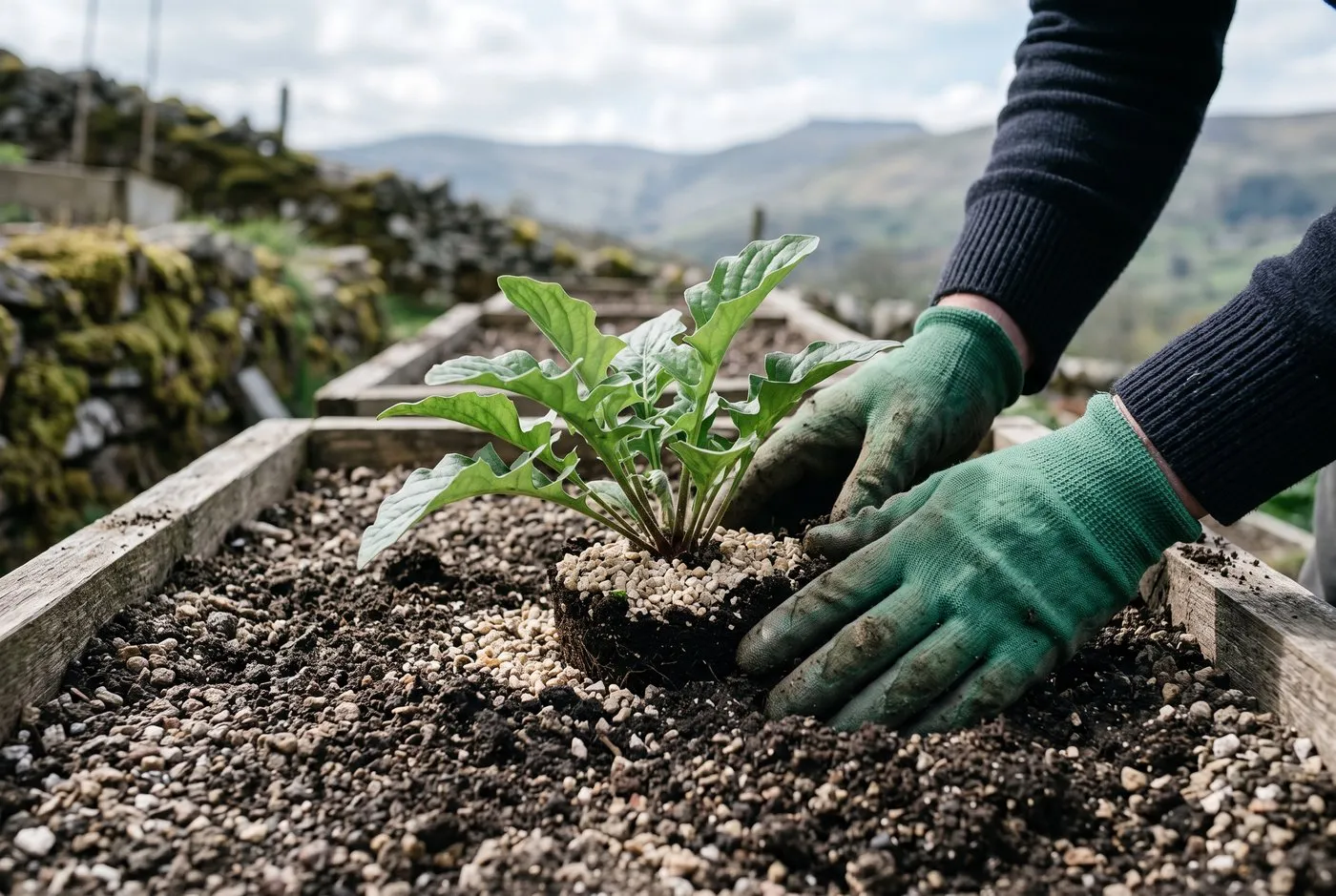 The crown sits about 1cm proud of the soil, never buried. A grit collar keeps the neck dry. This raised bed on a Welsh hillside plot drains hard, exactly what gerberas want.
Growing gerberas in pots and containers
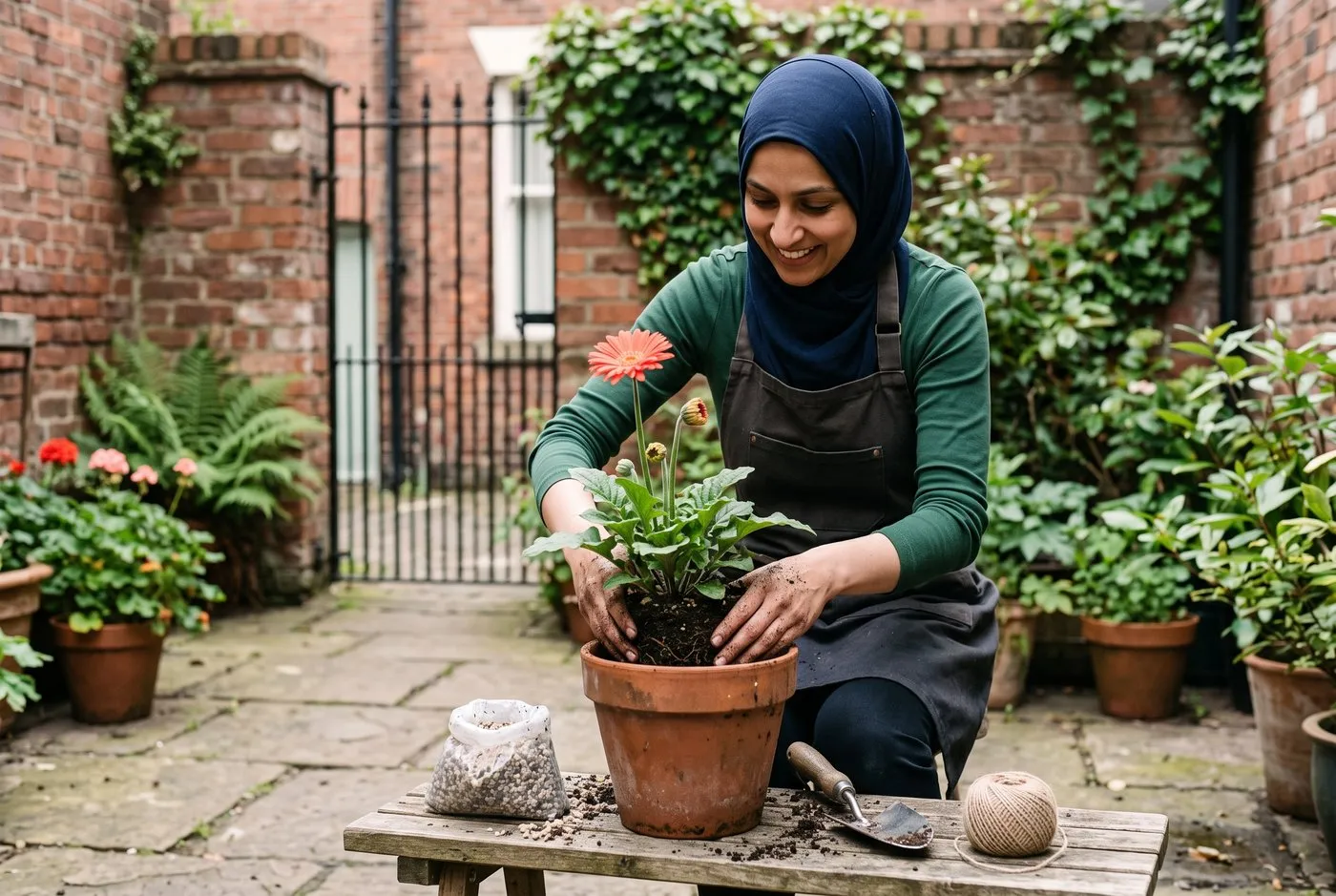 Potting up a Garvinea into gritty, loam-based compost on a city courtyard patio. The crown sits proud of the surface and the compost is firmed around the sides only.
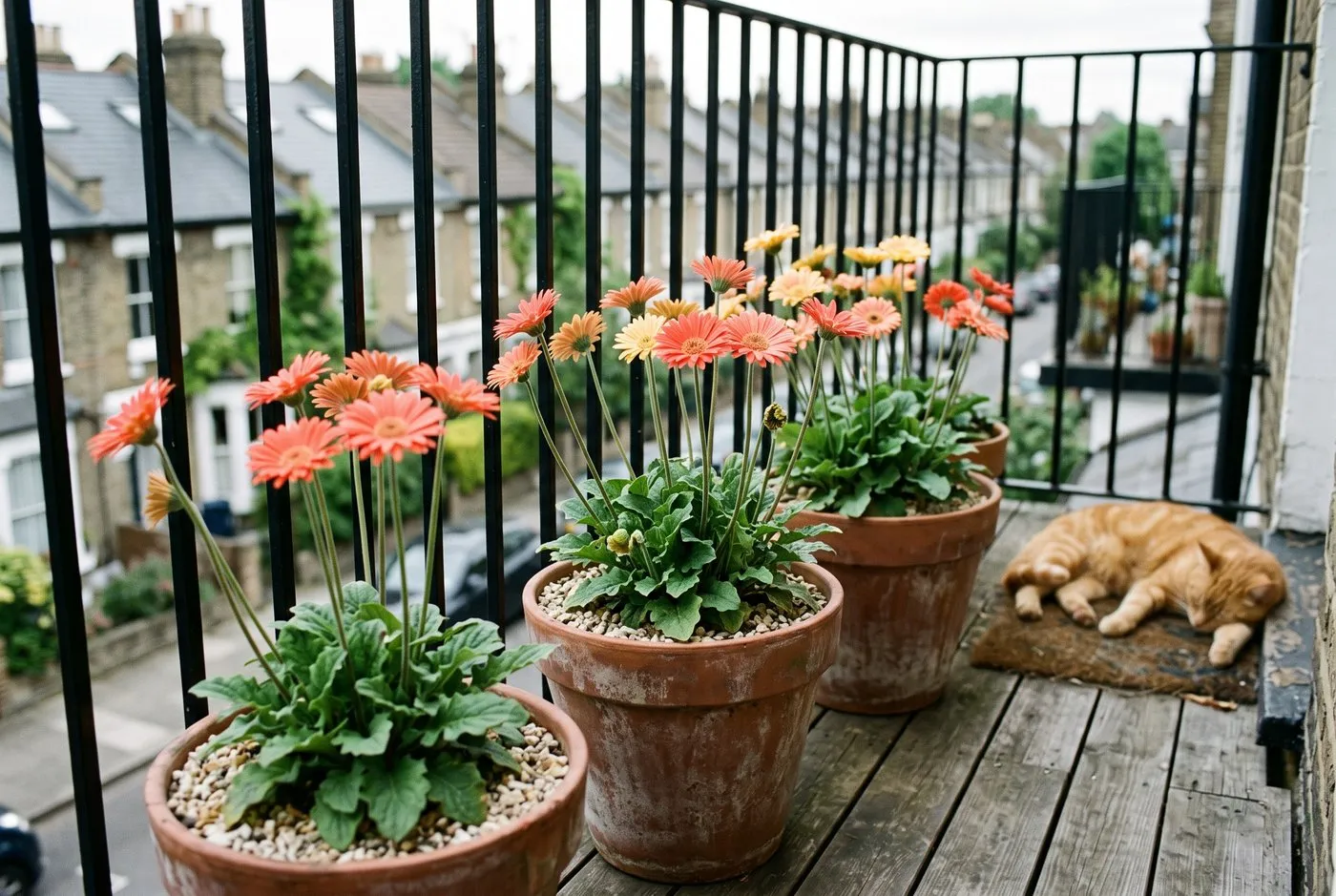 Garvinea gerberas earn their keep in pots. Three plants in gritty, loam-based compost flower hard all summer on this sheltered city balcony.
Full sun, drainage and the yearly growth cycle
Understanding the gerbera’s yearly rhythm makes every care job obvious. Gerberas are evergreen or semi-evergreen perennials from the summer-rainfall grasslands of South Africa. They are built to grow in warmth and bright light, rest a little in the cold, and never sit in cold standing water. The growth cycle runs in four clear stages.
- Spring wake-up, March to April. As light and warmth return, new leaves push from the crown. Soil above roughly 8C triggers active root growth. Start light watering and hold off feed.
- Build-up and first flowers, May to June. Growth speeds up. The first buds rise on single stems above the leaves. Begin fortnightly high-potash feed. Air temperatures of 15 to 22C give the strongest flushes.
- Peak flowering, July to September. Continuous bloom, up to 20 to 30 flowers per established Garvinea across the season. Deadhead every few days and keep feeding.
- Wind-down and dormancy, October to February. Flowering slows, then stops. Growth pauses below about 7C. Stop feeding and cut watering right back.
The critical mistake most people make is watering and feeding right through the cold months out of habit. A gerbera crown sat cold and wet from November to February rots from the centre. In dormancy the plant wants to be kept on the dry side, not moist. Water in growth, keep dry at rest.
Feeding, watering and deadheading through summer
Gerberas are hungry, thirsty plants in full growth and light feeders at rest. Water pots when the top 3 to 4cm of compost is dry, always at the base and never over the crown. Wet leaves and a wet neck in warm, still weather are what start most fungal problems. In a hot July spell a flowering gerbera in a small pot may need water daily.
Feed every two weeks from May with a high-potash liquid feed, such as a tomato feed at the maker’s rate. Potash drives flowers rather than soft leaf. Stop feeding by early October so the plant hardens off before winter.
Deadheading is the job that keeps the show going. Do not cut spent stems. Instead, hold the stem low and pull it sideways so it snaps cleanly away at the crown. A cut stub rots back into the plant and can kill the whole crown. Pulled cleanly, the wound seals and new buds keep coming. Done every few days, this keeps a Garvinea flowering right up to the frosts.
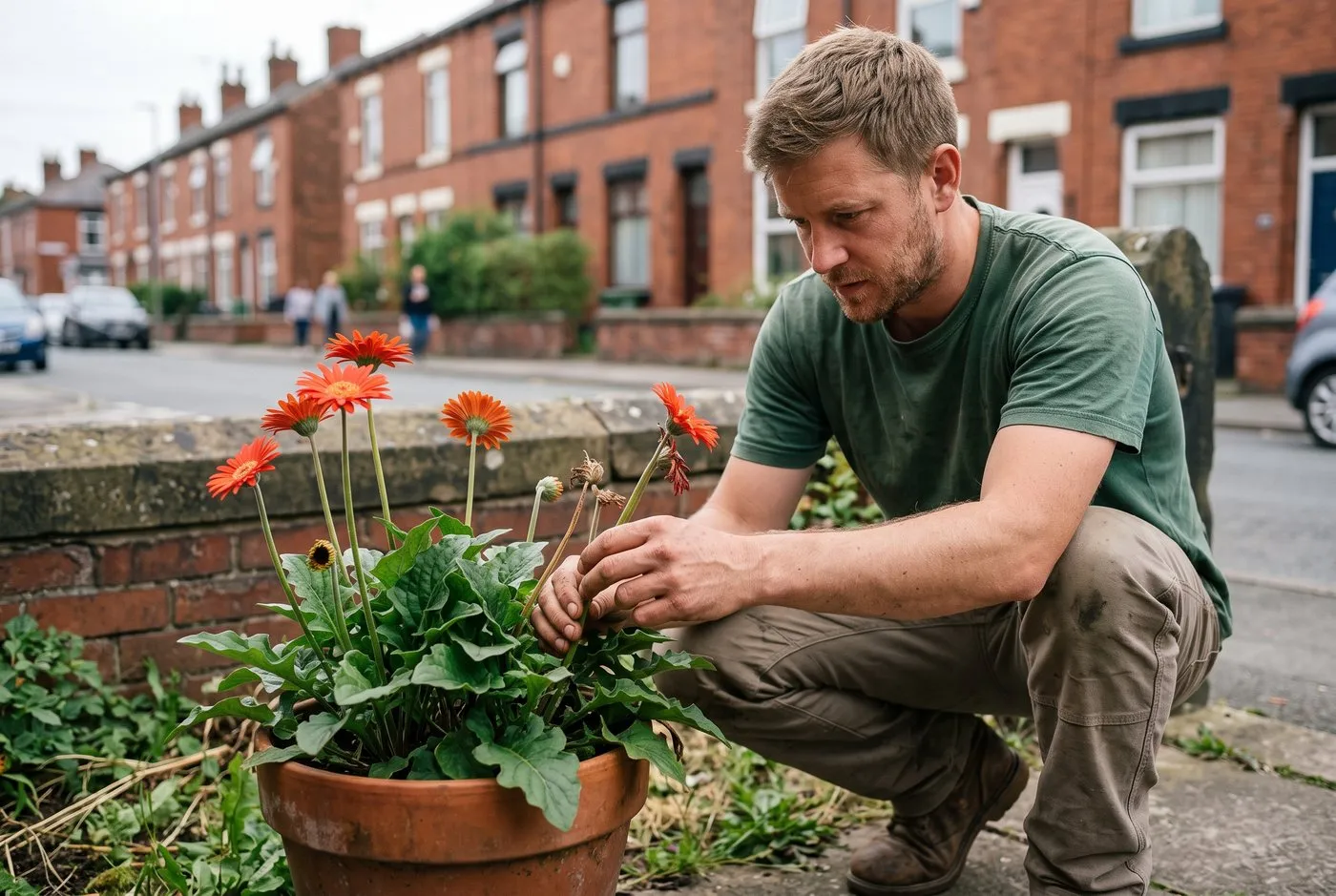 Deadhead by pulling, not cutting. Tugging the spent stem sideways snaps it off cleanly at the crown, which keeps new buds coming and stops rot setting in.
Overwintering gerberas: hardy and tender types apart
Overwintering depends on your type, and this is where most gerberas are won or lost. The two groups need opposite treatment.
Hardy Garvinea gerberas stay outdoors. In free-draining ground they need no special protection down to about -8C. In pots, the roots are more exposed, so raise the pot on feet to keep the base draining, move it to a sheltered wall, and wrap the pot (not the plant) in bubble fleece if a spell below -10C is forecast. Keep the crown dry. A light, open mulch of grit around the crown helps, but never pile wet bark or leaves over the centre, which traps damp and rots it.
Tender florist Gerbera jamesonii must come in before the first frost, usually mid to late October. Move it to a bright, cool windowsill or a frost-free conservatory at 8 to 10C. Reduce watering to a trickle and stop feeding. Treat it as a houseplant until May. Many people instead grow it as a summer annual and simply compost it in autumn, which is cheaper than heating a space to keep it alive. For the wider principles, see our guide to overwintering plants in the UK, and for other tender daisies that follow this pattern, our osteospermum growing guide.
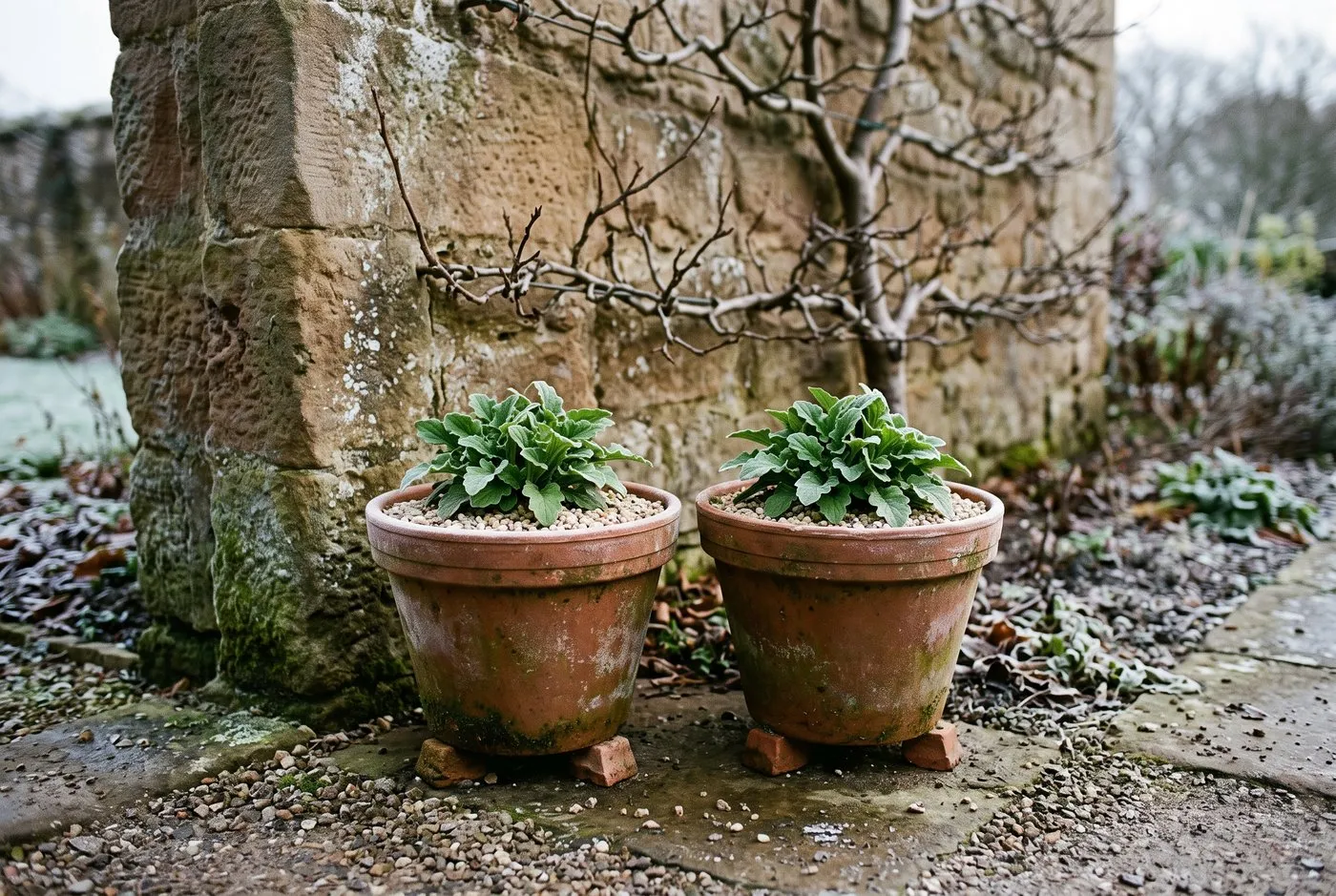 Hardy Garvineas stay out over winter. Raised on feet against a sheltered wall in this Scottish walled garden, the pots drain freely and the crowns stay dry through the cold.
The long season is what sets ‘Sweet Glow’ apart. Most bedding daisies give a few weeks. This one works for six months or more, which makes the price per week of colour very low. It sits well at the front of a hot-coloured border or in a pot by a sunny door, and it needs nothing more than deadheading and a fortnightly feed.
Why gerberas rot: crown rot and the permanent fix
The commonest way to kill a gerbera is crown rot, and it is almost always a planting and drainage fault, not bad luck. The rot is caused by soil-borne fungi, chiefly Phytophthora and Pythium, which thrive where the crown sits wet. The plant collapses from the centre, leaves yellow and pull away easily, and the base turns brown and mushy.
The root cause is usually one of two things: the crown was planted too deep, or the soil or compost holds water. Both keep the neck of the plant permanently damp, which is exactly what the fungi need. People often blame cold, but a dry crown takes hard frost far better than a wet one takes a mild, damp winter.
The permanent fix is drainage and planting height, not fungicide. Always set the crown 1cm proud. Grow in a loam-based, gritty mix or improved free-draining ground. Water at the base only. On heavy clay, grow in raised beds or pots you control. Get these right and crown rot simply does not appear. No spray matches good drainage here.
Vine weevil and other container problems
Gerberas in pots are a favourite target for vine weevil, and this is the most serious pest you will meet. The adults are dull black beetles about 9mm long that feed at night, leaving clean notches bitten from the leaf edges. The real damage is below ground. The plump, C-shaped white grubs eat the roots through autumn and winter, and the first you often know is a plant that lifts out with no roots left.
Control the grubs biologically. Drench pots with nematodes (Steinernema kraussei for cool soil above about 5C, or Heterorhabditis in warmer spells) in early autumn and again in spring. This is the gold-standard fix for containers and safe around pets and pollinators. Our full vine weevil treatment and prevention guide covers timing and products in detail.
Watch also for aphids on soft new growth, whitefly on plants brought under glass, and grey mould (Botrytis) on flowers in damp, still air. Good spacing, base watering and prompt deadheading prevent nearly all of it.
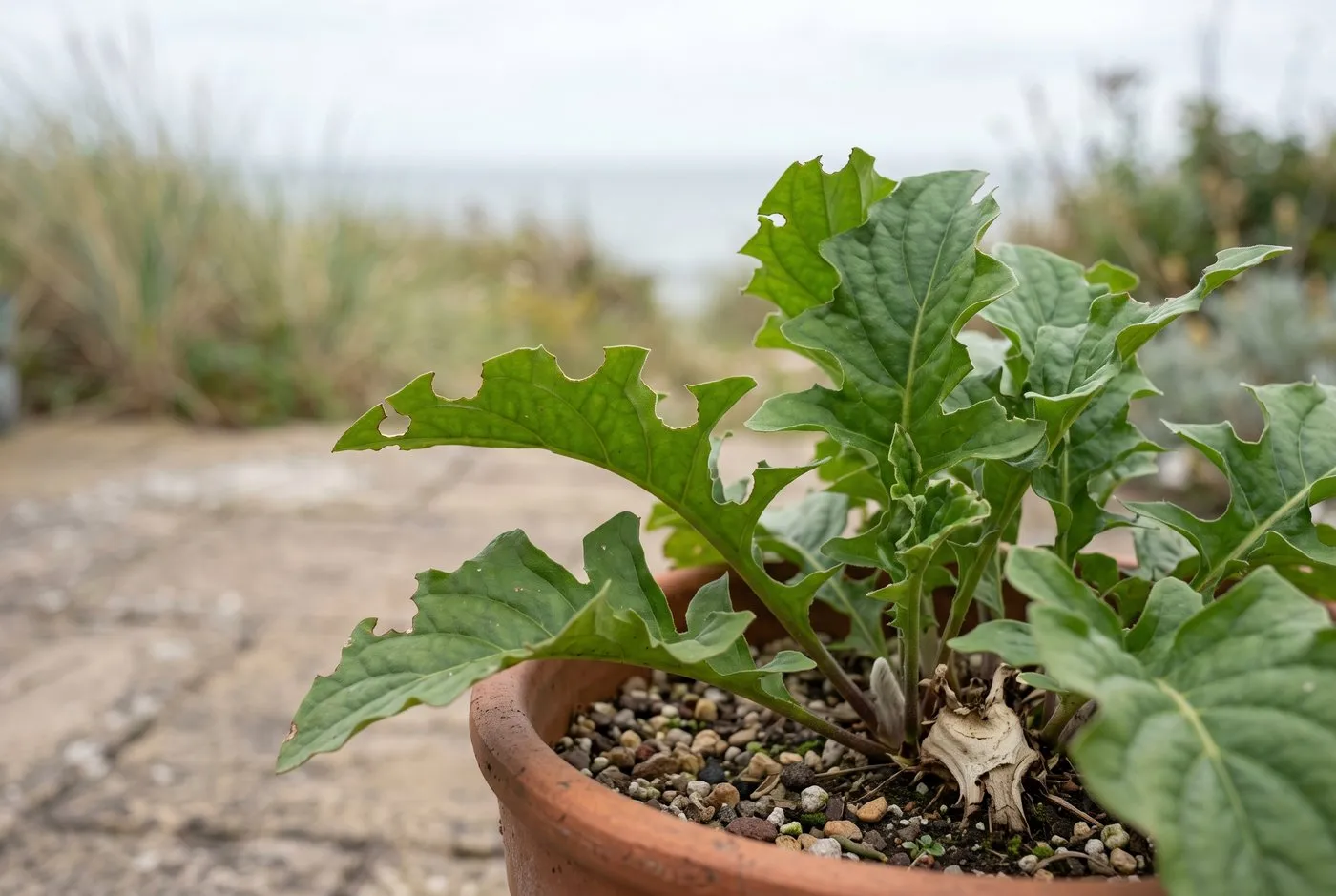 Clean notches cut from the leaf edges are the tell-tale sign of adult vine weevil. The real harm is underground, where grubs eat the roots. This pot sat in a seaside garden.
Month-by-month gerbera calendar
| Month | Task |
|---|---|
| January | Fully at rest. Keep hardy Garvineas dry, not wet. Keep florist types on a windowsill at 8 to 10C. No feed. |
| February | Check crowns for rot. Firm any lifted by frost. Order new Garvinea plants from suppliers. |
| March | New leaves appear on hardy types. Start light watering. Repot pot-grown plants into fresh gritty compost. |
| April | Growth speeds up. Begin fortnightly high-potash feed. Harden off florist types before any move outside. |
| May | Plant hardy Garvineas outdoors once frost risk passes. First buds rise. Watch for slugs and aphids. |
| June | Peak growth. Water freely at the base. Deadhead by pulling as the first flowers fade. Keep feeding. |
| July | Full flower. Water pots daily in heat. Deadhead every few days to keep buds coming. |
| August | Continuous bloom. Keep feeding and deadheading. Move any stressed pots out of the fiercest midday sun. |
| September | Flowering carries on. Reduce feeding late in the month. Apply autumn nematodes to pots for vine weevil. |
| October | Lift and bring in tender florist gerberas before the first frost. Stop feeding hardy types. |
| November | Last hardy flowers fade. Raise pots on feet, move to a sheltered wall, keep crowns dry. |
| December | Dormant. Fleece pots only if below -10C is forecast. No feed, minimal water. |
Common mistakes when growing gerberas
- Planting the crown too deep. A buried crown holds water and rots within weeks. Always set the crown 1cm proud of the soil, and keep grit and mulch clear of the centre.
- Treating a florist gerbera as hardy. Gerbera jamesonii dies at the first frost. If a bunch-shop or gift-pot gerbera goes into the border, it will not return. Grow it as a houseplant or annual, and buy Garvinea for the garden.
- Wet winter soil. Cold alone rarely kills a hardy gerbera. Waterlogged winter ground does. Grow in raised beds, gritty ground or pots you can keep draining freely.
- Cutting spent stems instead of pulling. A cut stub rots back into the crown. Pull each spent stem sideways so it snaps cleanly away at the base.
- Feeding a high-nitrogen feed. General feeds high in nitrogen give lush leaf and few flowers. Use a high-potash feed, such as a tomato feed, from May to early autumn.
Warning: Slugs and snails strip soft new gerbera growth fast, especially in a wet spring. The emerging leaves are tender from March to May. Protect crowns with a barrier of grit or wool pellets, and check after every damp evening until the leaves toughen. A single wet night can shred a new plant.
Growing gerberas from division and seed
Hardy Garvinea gerberas are best increased by division in spring. Lift an established clump as growth restarts, tease it apart into pieces each with roots and a few leaves, and replant at once with the crown proud. Named Garvinea cultivars do not come true from seed, so division is the only way to keep the exact plant.
Florist Gerbera jamesonii can be raised from seed sown at 20 to 22C in late winter, though the results are variable in colour and size. Sow on the surface, as the seed needs light to germinate, and expect flowers in the first year. For an easy first houseplant to grow alongside them, see our best house plants for beginners.
The Royal Horticultural Society lists both groups and confirms the hardy Garvinea types as the reliable choice for UK borders. For pollinators, the open, single-flowered Garvineas are far more useful than the double florist types, a point the Bumblebee Conservation Trust makes about open, accessible flowers.
Now you know how to grow gerberas and tell the hardy types from the tender ones, read our guide to growing agapanthus in the UK for another sun-loving perennial to plant alongside them. You can browse more of our growing guides for plants that share the same hot, free-draining spot.
Frequently asked questions
Can gerberas survive winter outside in the UK?
Yes, hardy Garvinea gerberas survive outdoors to about -8C. The Garvinea ‘Sweet’ series was bred for UK gardens and stays out all winter in free-draining soil. In sharp drainage the toughest plants shrug off -12C. Florist gerberas, Gerbera jamesonii, will not survive frost and must come indoors.
What is the difference between Garvinea and florist gerberas?
Garvinea gerberas are hardy garden perennials; florist gerberas are tender. Garvinea plants, bred by Florist Holland, take frost to about -8C and flower April to November. Gerbera jamesonii, the big blowsy florist type, dies below 5C and is grown as a houseplant or annual bedding in the UK.
Why is my gerbera rotting in the middle?
Most gerberas rot because the crown was buried or the soil stays wet. The crown, where leaves meet root, must sit proud of the soil. Buried or waterlogged, it grows the fungus that causes crown rot. Replant with the crown 1cm above the surface and improve drainage with grit.
Do gerberas grow better in pots or in the ground?
Pots suit gerberas in most UK gardens because they drain faster. A 3-litre terracotta pot of gritty compost warms quickly, drains hard, and lets you lift tender types under cover for winter. Only plant Garvinea gerberas in open ground where the soil is genuinely free-draining or has been improved with grit.
How do you deadhead gerberas?
Pull the spent flower stem off cleanly at the base, do not cut it. Hold the stem low and tug sideways so it snaps away at the crown. A cut stub rots back into the plant and invites disease. Deadheading this way every few days keeps Garvinea flowering hard until the frosts.
How much sun do gerberas need?
Gerberas need at least six hours of direct sun a day. Less than that and they make leaves but few flowers. A south or west-facing spot, or a sunny patio, gives the best display. In too much shade the plants also stay wetter, which raises the risk of crown rot.
Why are the leaves on my gerbera notched at the edges?
Clean notches bitten from the leaf edge mean adult vine weevil. The adults feed at night in summer, but the real damage is underground, where the white grubs eat the roots. Drench pots with nematodes in spring and again in early autumn to break the cycle before the grubs kill the plant.
Are gerberas perennials or annuals in the UK?
It depends on the type. Hardy Garvinea gerberas are true perennials that return each year outdoors. Tender Gerbera jamesonii is a perennial in its native South Africa, but in the UK it is grown as a houseplant or treated as a summer annual, because it cannot survive a frost outside.
Our team produces practical UK gardening guidance from source research, contributor records and established horticultural practice. Editorial standards are overseen by Matt W.