Key takeaways
- Eucomis flowers July to September, each spike lasting six to eight weeks
- Plant bulbs in spring, nose 10 to 15cm deep, once the frost risk eases
- Most garden cultivars reach 30 to 75cm; E. pole-evansii tops 1.8m
- Needs full sun and sharp drainage; wet cold, not cold alone, is the killer
- Borderline hardy at roughly H3, to about -5C; mulch 15cm deep or lift pots dry
- 'Sparkling Burgundy' holds an RHS Award of Garden Merit for its dark foliage
This guide covers which types to grow, how and when to plant, and the part most people get wrong: getting the bulb safely through a cold, wet UK winter. Get the drainage and the winter right, and Eucomis returns bigger every year. It suits pots, sunny borders and exotic schemes equally well.
The pineapple-shaped bulb from South Africa
Eucomis is a genus of summer-growing bulbs from southern Africa, most of them from the eastern grasslands of South Africa. The name comes from the Greek for “beautiful hair”, a nod to the leafy topknot on each flower spike. In the UK we simply call it the pineapple lily, because the crown of green bracts over a fat spike mimics a pineapple almost exactly.
Each plant grows from a large, rounded bulb. In spring it sends up a rosette of strappy, glossy leaves, often 30 to 45cm long. From the centre rises a thick, fleshy stem carrying dozens of small, star-shaped flowers up the spike. They open from the bottom up over several weeks, in colours from greenish-white through cream to pink and deep burgundy.
The show lasts. A single spike stays presentable for six to eight weeks, and cut spikes hold in a vase for around two weeks. After flowering, the spike sets green seed pods that keep the pineapple look going into autumn.
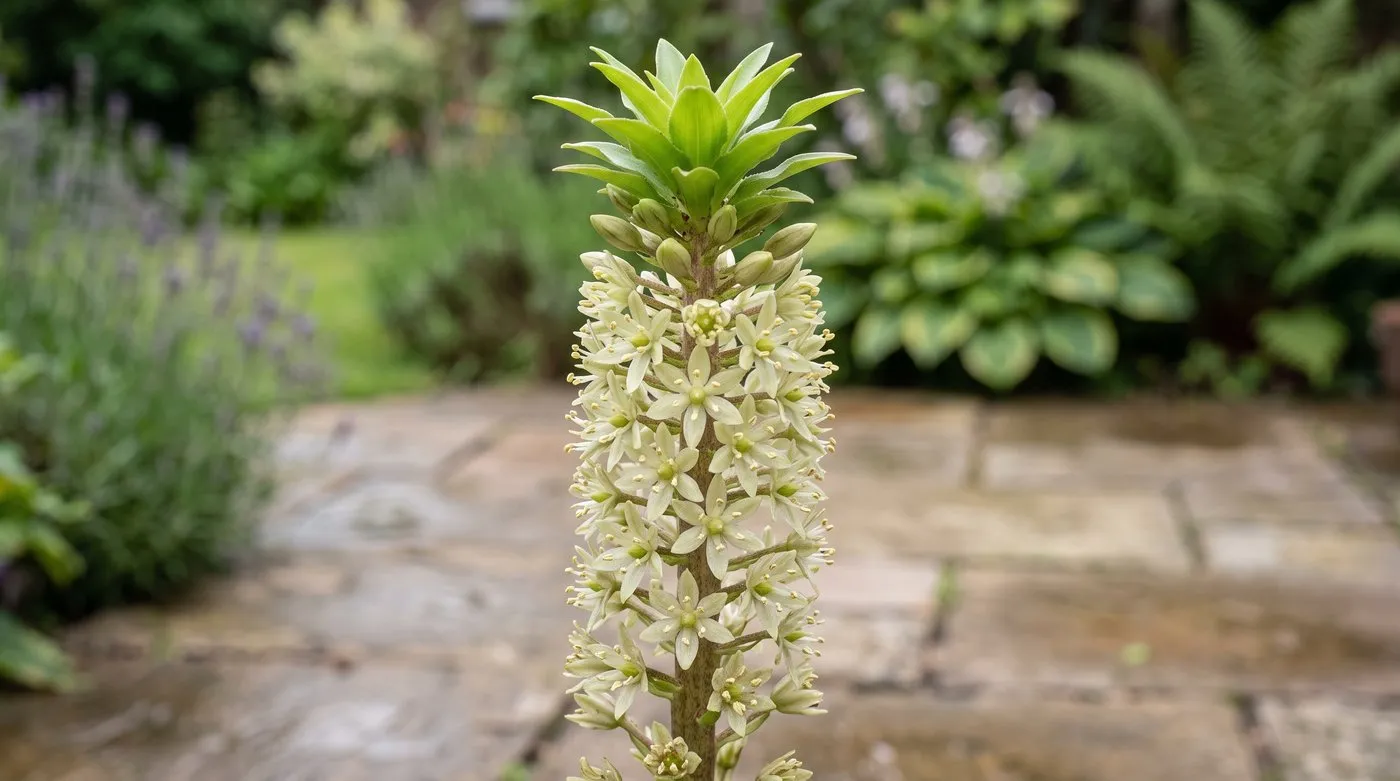 The pineapple lily’s signature: dozens of star-shaped flowers packed up a stout spike, crowned by a tuft of leafy bracts. This spike opened in mid-July on our Staffordshire patio.
Which Eucomis to grow: species and cultivars compared
Not all pineapple lilies are the same size or the same hardiness. Choosing the right one for your garden matters more than any other decision here. Most garden types sit between 30 and 75cm tall, but one giant, E. pole-evansii, reaches 1.5 to 2m and needs staking and winter shelter.
For a first pineapple lily, we steer people towards E. bicolor or the dark-leaved ‘Sparkling Burgundy’. Both are widely sold, reasonably tough, and superb in pots. The table below ranks the common types by how reliably they perform in a typical UK garden, based on our own side-by-side trials.
| Cultivar / species | Height | Flower colour | Hardiness | Best use | Garden reliability |
|---|---|---|---|---|---|
| E. ‘Sparkling Burgundy’ | 50-60cm | Pink over wine-purple foliage | H3-H4 | Pots, front of exotic border | 1st, most reliable |
| E. bicolor | 30-45cm | Green edged maroon-purple | H3 | Pots, gravel, sunny border | 2nd |
| E. comosa | 60-75cm | Cream to pink, purple ovary | H3-H4 | Border, cut flowers | 3rd |
| E. autumnalis | 30-40cm | Greenish-white, very late | H4 | Border, hardiest choice | 4th, hardiest |
| E. ‘Sparkling Rosy’ | 50-60cm | Rosy-pink spikes | H3 | Pots, sunny patio | 5th |
| E. pole-evansii | 1.5-2m | Green-white giant spike | H3 | Focal point, large pots | 6th, must lift for winter |
E. autumnalis is the hardiest and the latest, often still flowering in September. E. pole-evansii is the showstopper but the least forgiving: it is tender and top-heavy. If you garden cold and wet, start with the top three rows and grow them in pots you can move.
When and how to plant pineapple lily bulbs
Plant Eucomis bulbs in spring, from March to April, once the worst frosts have passed and the soil is warming. Do not plant in autumn. A bulb sitting cold and wet through a UK winter usually rots before it ever grows. This single point catches out more gardeners than any other.
Choose a spot in full sun with sharp drainage. A south or west-facing border, a gravel bed, or a raised sunny bank all work. On heavy ground, dig in plenty of coarse grit first, or grow in pots instead. Set the bulb with its nose 10 to 15cm below the surface, sitting on a handful of grit to keep the base drained. Space bulbs about 20 to 30cm apart.
Water in once, then let spring rain do the rest until growth appears. Bulbs planted in April usually show leaves within three to four weeks. For a warm, sheltered exotic scheme, Eucomis pairs beautifully with cannas and colocasia. Our guide to growing cannas in the UK covers the same start-in-spring, lift-for-winter rhythm, and the colocasia growing guide gives you the big leaves to set the flower spikes against.
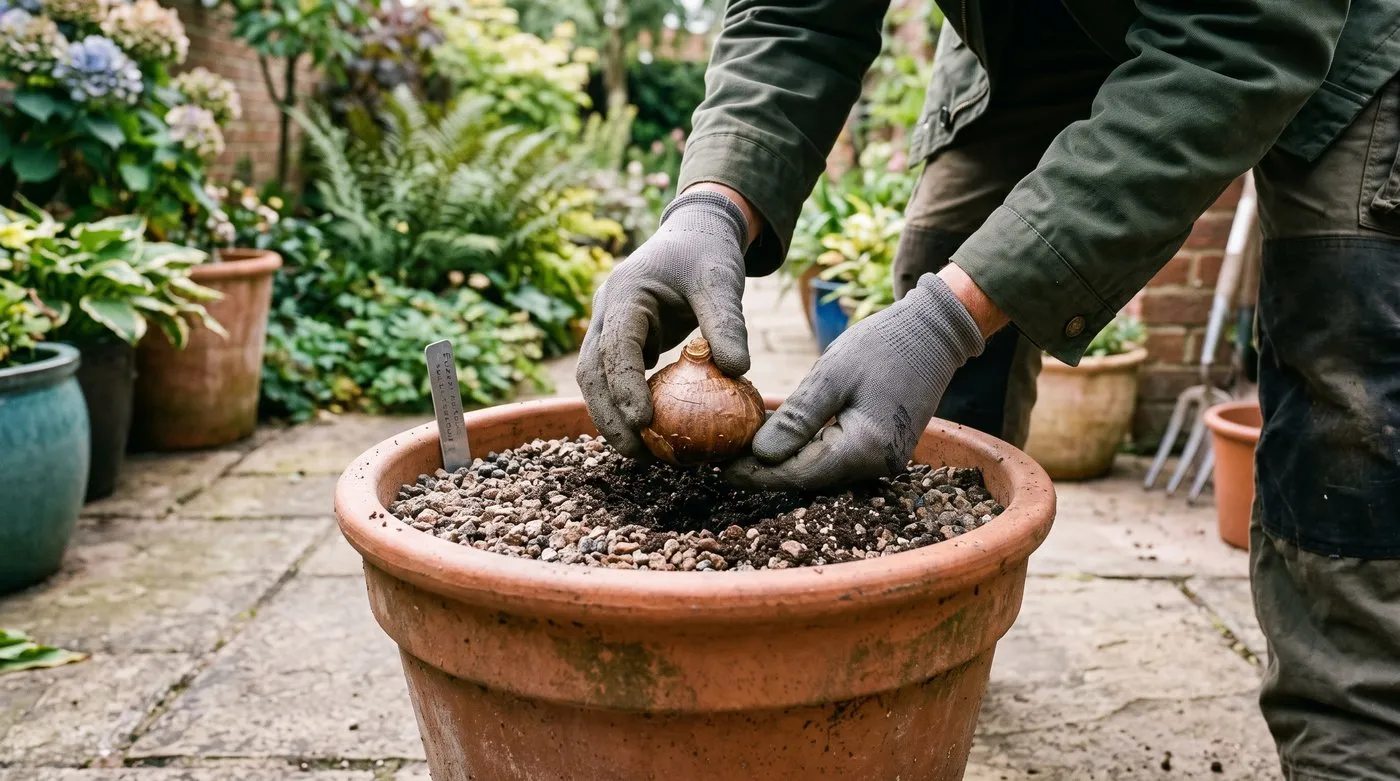 Plant the bulb nose 10 to 15cm deep, sat on a handful of coarse grit. On heavy soil that grit layer keeps the base drained and cuts winter rot.
Growing Eucomis in pots on a sunny patio
Use a 25 to 30cm pot with a generous drainage hole. Fill with a free-draining, gritty compost: we mix roughly two parts peat-free multipurpose to one part horticultural grit. Plant one to three bulbs per pot, about 8 to 10cm deep, and stand the pot in the sunniest spot you have. A single bulb of ‘Sparkling Burgundy’ fills a 25cm pot within two seasons.
Water freely once in growth, but never leave the pot standing in a saucer of water. Feed fortnightly from May with a high-potash liquid feed, such as a tomato feed, to build flowering size. Top-dress with fresh gritty compost each spring and repot every third year, splitting off the offsets as you go.
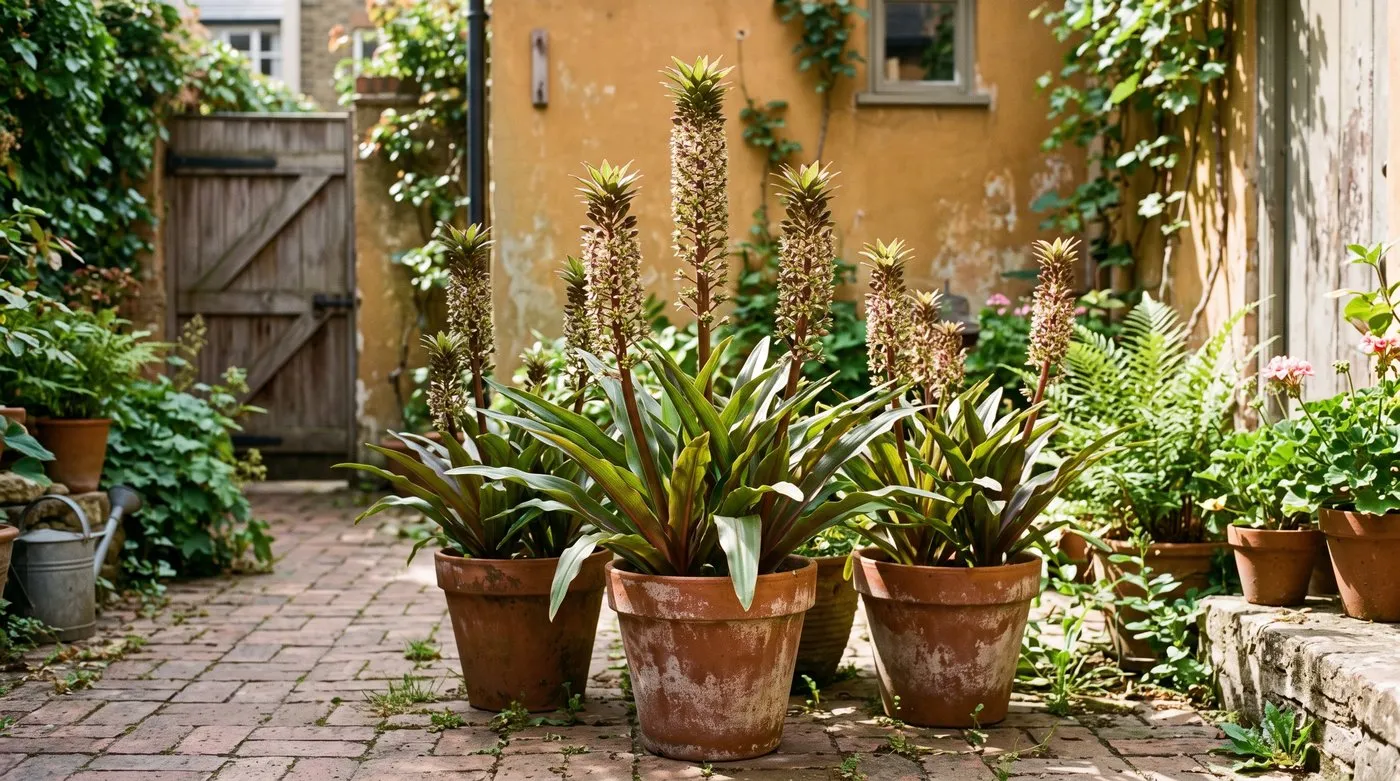 Pineapple lilies earn their keep on a sunny patio. Grown in gritty compost in deep pots, they flower hard and lift easily for a dry winter under cover.
Will Eucomis survive a UK winter?
Eucomis is borderline hardy in the UK, rated roughly RHS H3, which means it survives to about -5C. Some, like E. autumnalis, edge into H4 and take a few degrees more. But hardiness ratings only tell half the story. On our heavy Staffordshire clay, the deciding factor is not the temperature. It is the wet.
A dormant Eucomis bulb sat in cold, waterlogged soil from November to March rots from the base up. The same bulb kept dry shrugs off surprising cold. This is the key to overwintering it well. Keep the crown dry through the dormant months and the plant is far tougher than the H3 label suggests.
You have two options. In a mild, free-draining garden, leave border bulbs in place under a deep, dry winter mulch: 15cm of bark, straw or bracken piled over the crown after the foliage dies down. In a cold or wet garden, lift the bulbs or move pots into a frost-free, dry shed or greenhouse. The RHS advice on Eucomis confirms this dry-over-winter approach for our climate.
For the wider principles of protecting tender plants over winter, our guide to overwintering plants in the UK sets out mulching depths, lifting and storage in more detail.
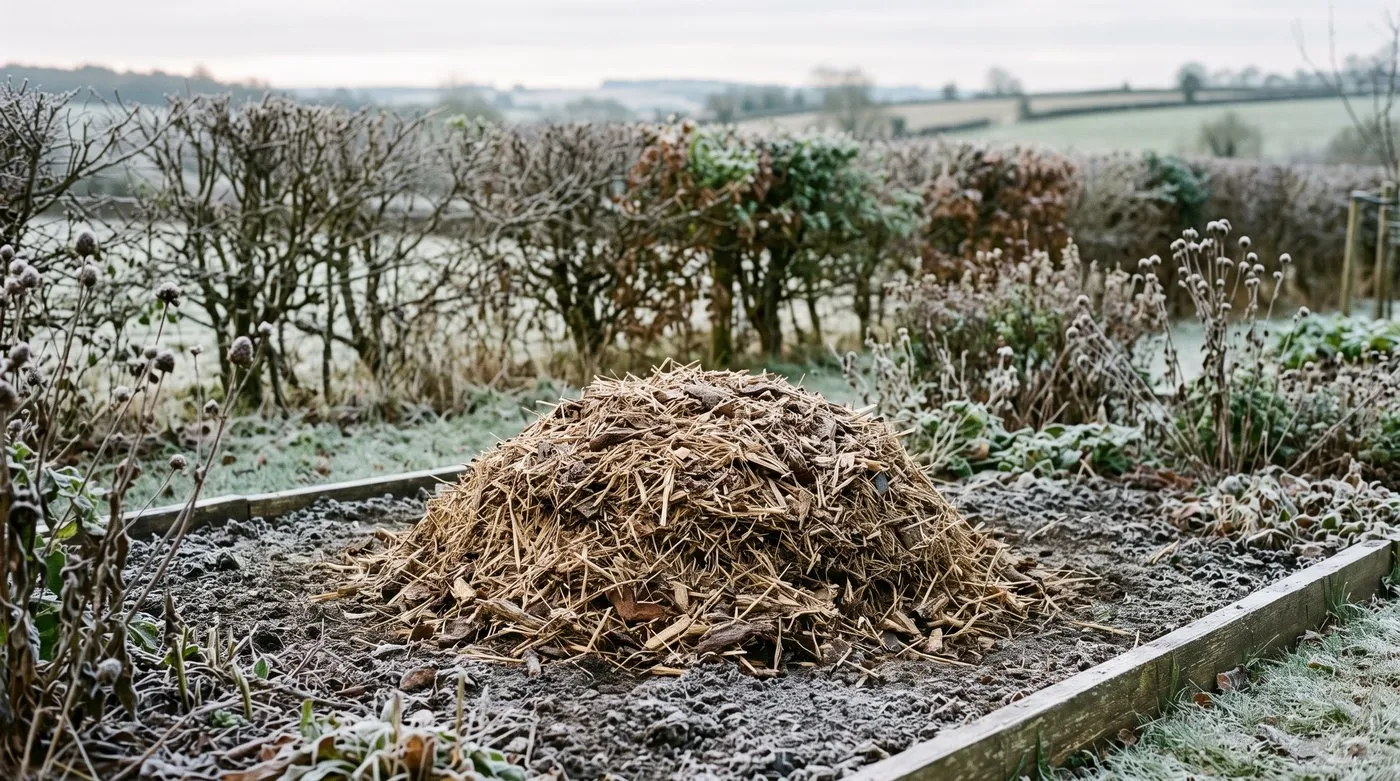 Border bulbs left in place get a 15cm dry mulch dome over the crown once foliage dies back. It sheds rain and buffers frost through the dormant months.
So we moved the survivors and all new stock into 30cm terracotta pots of gritty compost. Each November, once the leaves yellowed, we tipped the pots on their side under the staging in a dry, unheated shed that dips to about 1 to 2C on cold nights. Across five winters from 2020 to 2025, potted survival ran at 90 percent, even after a -6C December in 2022. The potted bulbs also flowered around two weeks earlier than any survivor left outside, because the compost warmed faster in spring.
The lesson: on cold, wet soil, dry storage beats mulching every time. The bulb tolerates the chill of an unheated shed. It cannot tolerate wet feet.
Gardener’s tip: Lift potted Eucomis before the compost gets sodden, not after the first frost. We move ours the week the foliage first yellows, usually late October. Tip each pot on its side so no rain reaches the compost, and leave the bulbs dry in the pot until March. A pencil pushed into the compost should come out dry all winter.
Feeding, watering and the yearly dormancy cycle
Understanding the pineapple lily’s yearly rhythm makes every care job obvious. Eucomis is a summer-growing geophyte. It is programmed to grow hard in the warm, wet months and rest bone-dry through winter, mirroring its South African home where summer brings the rain.
The cycle runs in four clear stages: spring reshoot, summer growth, flowering, then autumn dormancy. The critical mistake is watering during dormancy. Many gardeners keep the pot moist all year out of habit. That is exactly what rots the bulb. Once the foliage yellows in autumn, stop watering completely until growth restarts in spring. In growth the opposite is true: a Eucomis in full flower on a hot July day is thirsty and will wilt if the pot dries out.
| Stage | Months | Water | Feed |
|---|---|---|---|
| Spring reshoot | March to May | Light, keep just moist | None yet |
| Summer growth | May to July | Free, never waterlogged | Fortnightly high-potash |
| Flowering | July to September | Steady, ease off late | Monthly, then stop |
| Dormancy | October to February | None, keep dry | None |
Month-by-month pineapple lily calendar
| Month | Task |
|---|---|
| January | Fully dormant. Keep lifted pots dry and frost-free. Do not water. Check stored bulbs for rot or mice. |
| February | Order new bulbs from suppliers. Keep everything dry. Firm any bulbs lifted loose in their pots. |
| March | Pot up new bulbs in gritty compost 8 to 10cm deep. Start watering sparingly as growth resumes. |
| April | Bring pots into the light and warmth. Plant border bulbs late this month, 10 to 15cm deep, once frost risk eases. |
| May | Growth speeds up. Begin fortnightly high-potash feed. Watch for slugs on emerging shoots. |
| June | Water freely in warm spells. Move patio pots to their sunniest, most sheltered spot. |
| July | First flower spikes open. Keep feeding. Stake giant E. pole-evansii if grown in an exposed place. |
| August | Peak flowering. Cut a few spikes for the vase; they last about two weeks in water. |
| September | Spikes fade to green seed pods. Reduce feeding. Leave foliage to keep building the bulb. |
| October | Foliage yellows. Lift tender pots before the compost gets sodden, or mulch border crowns 15cm deep. |
| November | Move lifted pots under cover, dry and frost-free. Finish mulching any border bulbs left in place. |
| December | Bone dry and dormant. No water. Keep the shed or greenhouse frost-free and check for stored-bulb rot. |
The dark foliage is what sets ‘Sparkling Burgundy’ apart. Most pineapple lilies have plain green leaves, so the flower does all the work. This one earns its space from the moment it emerges, months before the spike appears. It sits perfectly at the front of an exotic border, echoing the reds and purples of dahlias planted behind it.
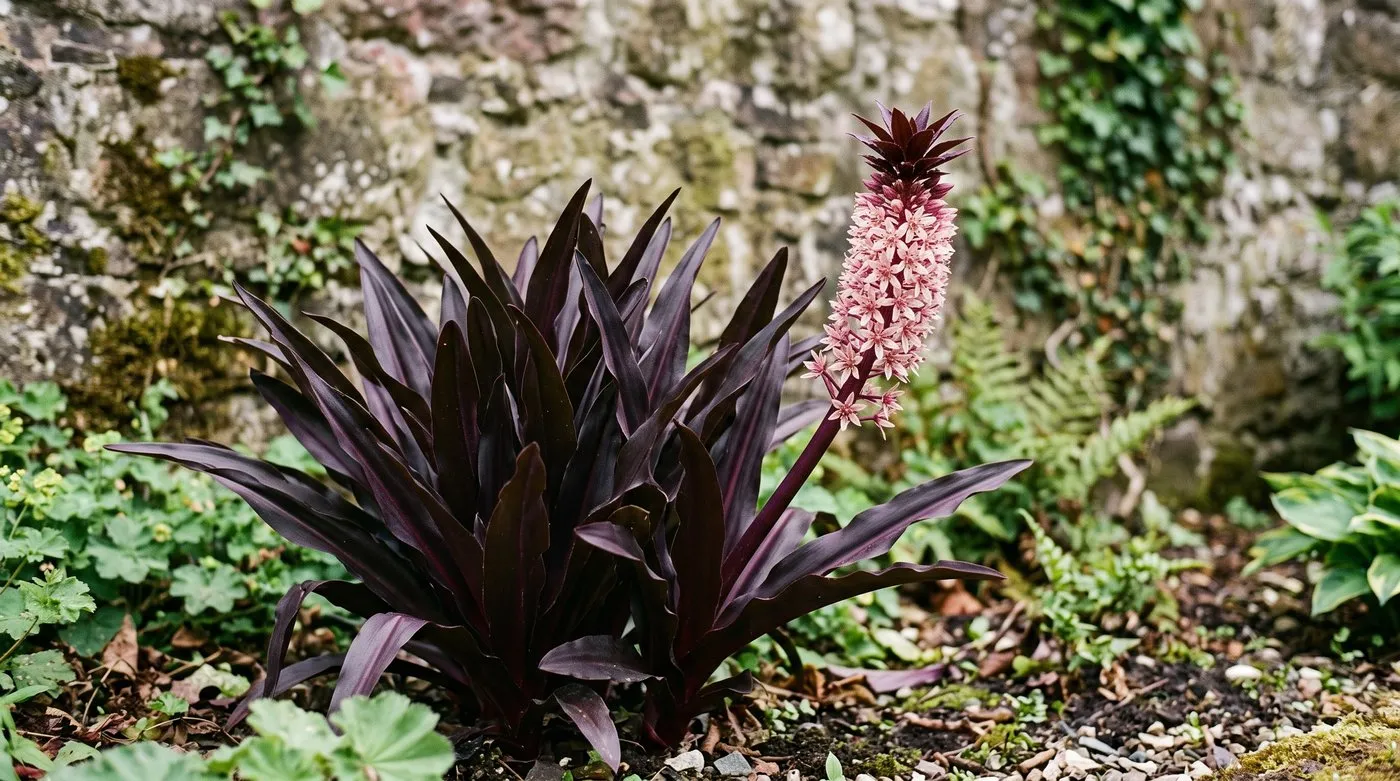 ‘Sparkling Burgundy’ earns its place before it even flowers. The wine-dark foliage holds colour from spring, then the pink-flushed spike rises to about 60cm.
Pineapple lily in the exotic border and for pollinators
Eucomis is a natural fit for an exotic or tropical-style border, standing among big-leaved plants that share its love of warmth and summer water. Group it with cannas, colocasia and dahlias for a bold late-summer scene. The strappy leaves and fat spikes read as architectural, holding the eye when softer perennials have gone over.
It also pulls in pollinators. The open, shallow flowers suit a wide range of insects, and several species carry a faint scent that draws flies, bees and wasps. On warm August afternoons our spikes are busy with honeybees and hoverflies working from the bottom of the spike upwards. Late-summer nectar matters for insects building reserves, a point the Bumblebee Conservation Trust makes about the value of flowers that carry on into autumn.
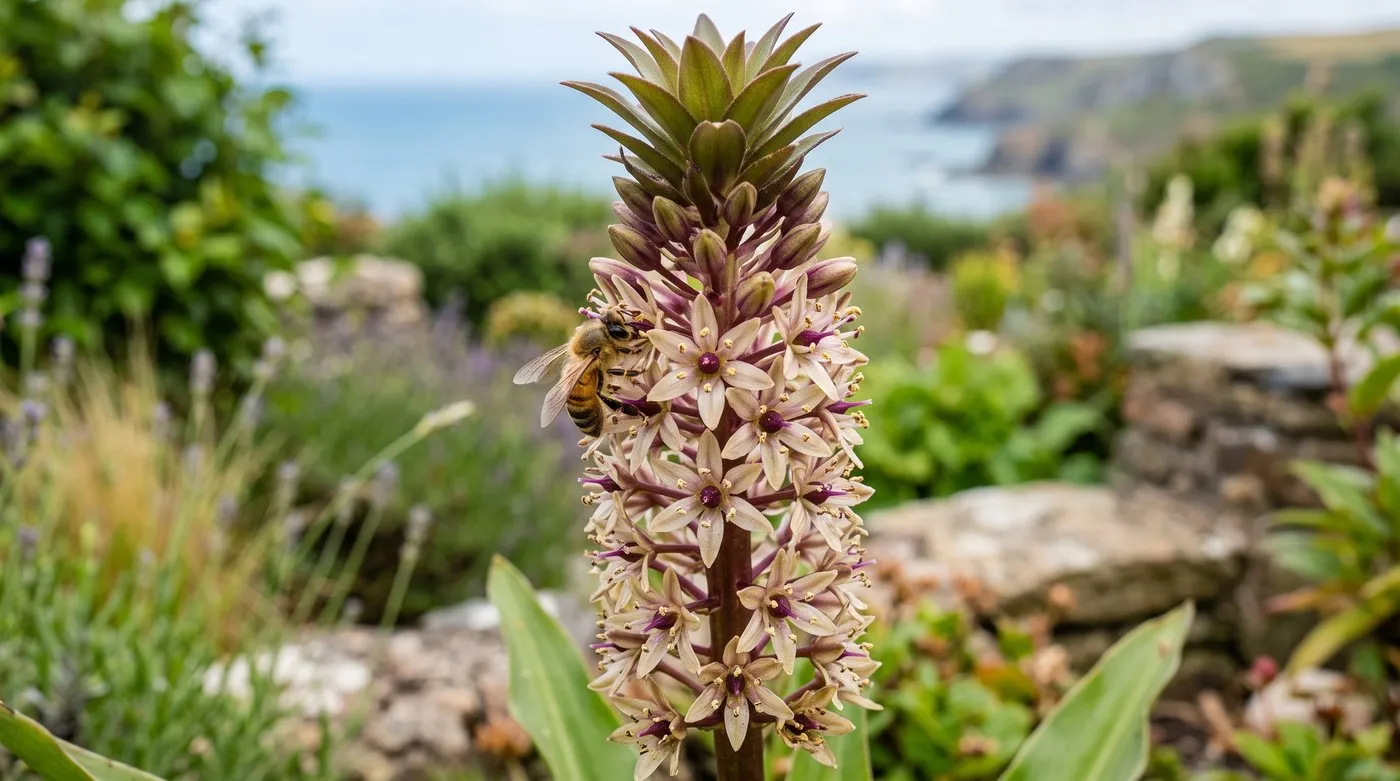 The open, shallow flowers suit a wide range of insects. Honeybees and hoverflies work each spike from the bottom upwards through August.
For a fuller exotic scheme, pair Eucomis with other tender showpieces. Our guide to hardy exotic and tropical plants for UK gardens lists partners that take the same warm, sheltered, free-draining spot. Add agapanthus for blue globe heads at the same season, and nerines to carry the pink theme on into October once the pineapple lilies fade.
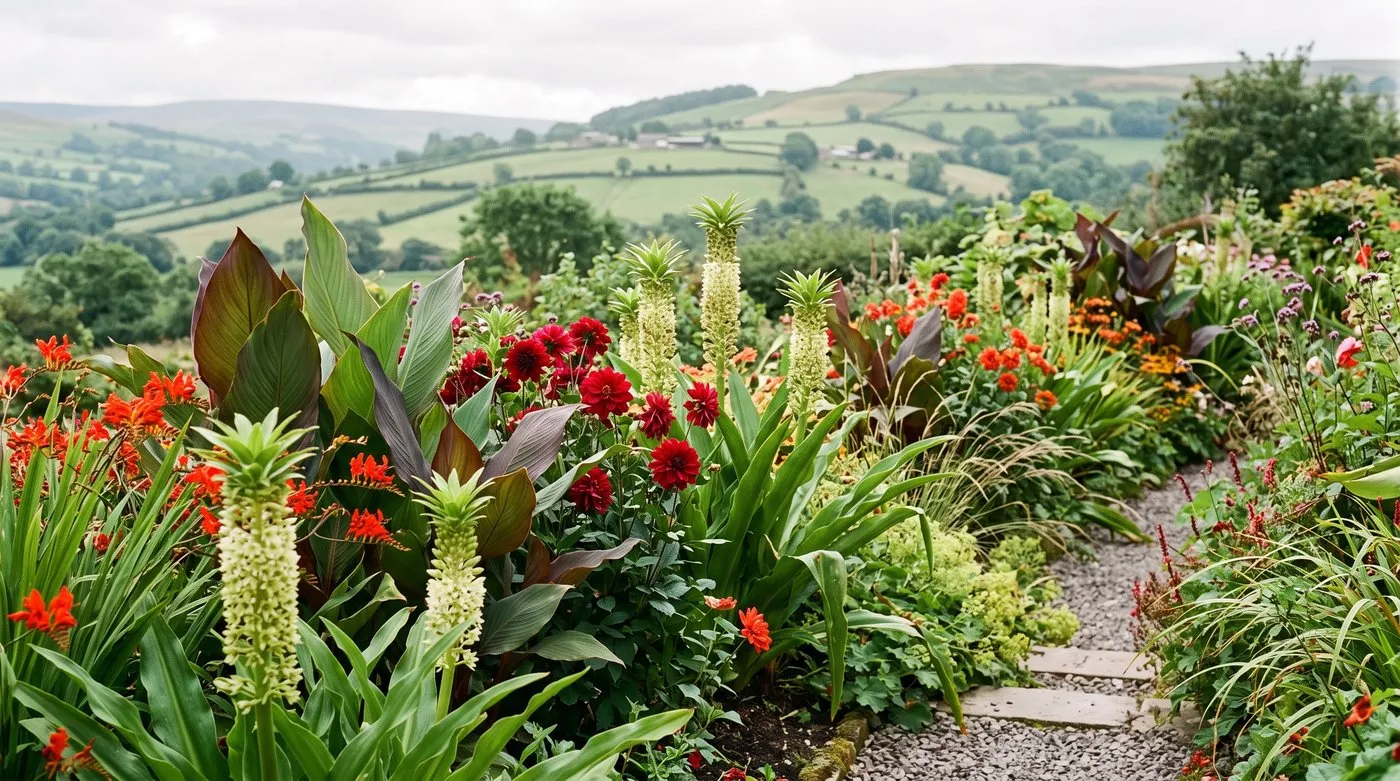 Pineapple lily in its element: an exotic late-summer border with cannas and dahlias. The fat spikes hold the scene together as softer perennials fade.
Common mistakes when growing pineapple lily
- Planting in autumn. Autumn-planted bulbs sit cold and wet for months and usually rot. Eucomis is spring-planted, from March to April. Buy dormant bulbs in late winter, keep them dry, and plant only when the soil warms.
- Wet winter soil. Cold alone rarely kills Eucomis. Waterlogged winter ground does. On heavy or badly drained soil, grow in pots you can lift, or dig in a bucket of grit under each border bulb.
- Planting too deep or too shallow. Aim for the nose 10 to 15cm down in the ground, or 8 to 10cm in a pot. Too deep and cold, damp bulbs are slow and prone to rot. Too shallow and they heave and dry out.
- Growing it in shade. Six or more hours of direct sun is the threshold for good flowering. In shade the plant makes leaves but few or no spikes. A hot, sunny, sheltered spot is what triggers the flower.
- Watering through dormancy. Keeping the pot moist all winter is the classic bulb-killer. Once the foliage yellows in autumn, stop watering entirely until spring growth restarts.
Warning: Slugs and snails love emerging Eucomis shoots and can strip a pot in a single wet spring night. The fat new shoots are soft and vulnerable from March to May. Protect them with a barrier of grit, wool pellets or copper tape around the pot rim, and check after every damp evening until the leaves toughen up.
Propagating Eucomis from offsets and leaf cuttings
Eucomis increases itself over time, so free plants are easy. The simplest method is division of offsets. A healthy bulb makes small bulblets around its base. Lift and split an established clump in spring, detaching the offsets with a bit of root attached. Pot them individually in gritty compost. They reach flowering size within two to three years.
You can also take leaf cuttings, which is how nurseries bulk up named cultivars. Cut a healthy leaf into 5cm sections in early summer and insert each piece the right way up into gritty compost in a propagator at around 20C. Tiny bulblets form at the base over several weeks.
Left alone, a single bulb in a pot builds into a clump of four or more within four years, as ours did. Buy one good bulb and, with care, you never need to buy another.
Now you know how to grow pineapple lily and keep it going through winter, read our guide to growing agapanthus in the UK for the next step in a sun-loving, late-summer border. You can browse more of our plants guides for varieties to grow alongside it.
Frequently asked questions
How do you grow Eucomis in the UK?
Plant bulbs in spring in full sun with sharp drainage. Set the nose 10 to 15cm deep in gritty soil or a deep pot of free-draining compost. Water and feed through summer, then keep the bulb dry over winter. Mulch border plants deeply or lift pots under cover in cold, wet gardens.
Is the pineapple lily hardy in the UK?
Pineapple lily is borderline hardy, roughly RHS H3, surviving to about -5C. In mild, free-draining gardens it stays out under a deep dry mulch. In cold or wet gardens, lift the bulbs or move pots into a frost-free, dry shed. Waterlogged winter soil rots the bulb faster than frost does.
When do you plant Eucomis bulbs?
Plant Eucomis bulbs in spring, from March to April. Wait until the worst frosts pass and the soil begins to warm. Potted bulbs can start earlier under glass in March. Autumn planting risks the bulb sitting cold and wet for months, which usually rots it before it ever grows.
Can you grow pineapple lily in pots?
How deep do you plant Eucomis bulbs?
Plant Eucomis bulbs 10 to 15cm deep, with the nose just below the surface. In pots you can plant a touch shallower, at about 8 to 10cm. On heavy soil, sit each bulb on a handful of coarse grit to keep the base drained. The neck should sit near soil level, not buried deep.
Does Eucomis come back every year?
Yes, Eucomis is a perennial bulb that returns each year with winter protection. It dies back fully in autumn, rests through winter, then reshoots in late spring. Bulbs bulk up and form clumps of offsets over time. The main reason plants fail to return is winter rot in cold, wet soil.
Why is my Eucomis not flowering?
Most non-flowering Eucomis are in too much shade or planted too deep. The bulb needs six or more hours of direct sun and a warm summer to set a spike. Young or recently divided bulbs often skip a year while they build size. Feed with a high-potash liquid feed through summer to help.
Our team produces practical UK gardening guidance from source research, contributor records and established horticultural practice. Editorial standards are overseen by Matt W.