Key takeaways
- Kangaroo paw is tender and hardy only to about 0 to -2C, so grow it in pots and overwinter frost-free at 5-7C
- Use a gritty, free-draining, LOW-phosphorus mix; rich compost rots the roots and burns them
- Tall Anigozanthos flavidus is the most perennial type; Bush Gems hybrids often last one or two years
- Ink disease (Alternaria) causes black leaf streaks in damp, cool air; airflow and dryness prevent it
- Cut spent flower stems to the base and remove tatty old fans to keep plants vigorous and clean
Kangaroo paw (Anigozanthos) is one of the most striking plants you can grow on a sunny UK patio, with fuzzy, paw-shaped flowers in red, yellow, orange, pink, and even green-black held high on slender stems. This Australian native is tender, though, so growing kangaroo paw in Britain is mainly a container job rather than a border one. Get the drainage, the sun, and the winter protection right and it rewards you for years.
The plant forms evergreen fans of strappy, iris-like leaves. In its homeland, birds pollinate the velvety blooms. In a British garden, the make-or-break points are sharp drainage, a lean low-phosphorus diet, full sun, and frost-free overwintering. This guide covers varieties, soil, watering, feeding, the dreaded ink disease, and a month-by-month UK calendar drawn from three seasons of trials.
What kangaroo paw is and why it is tender
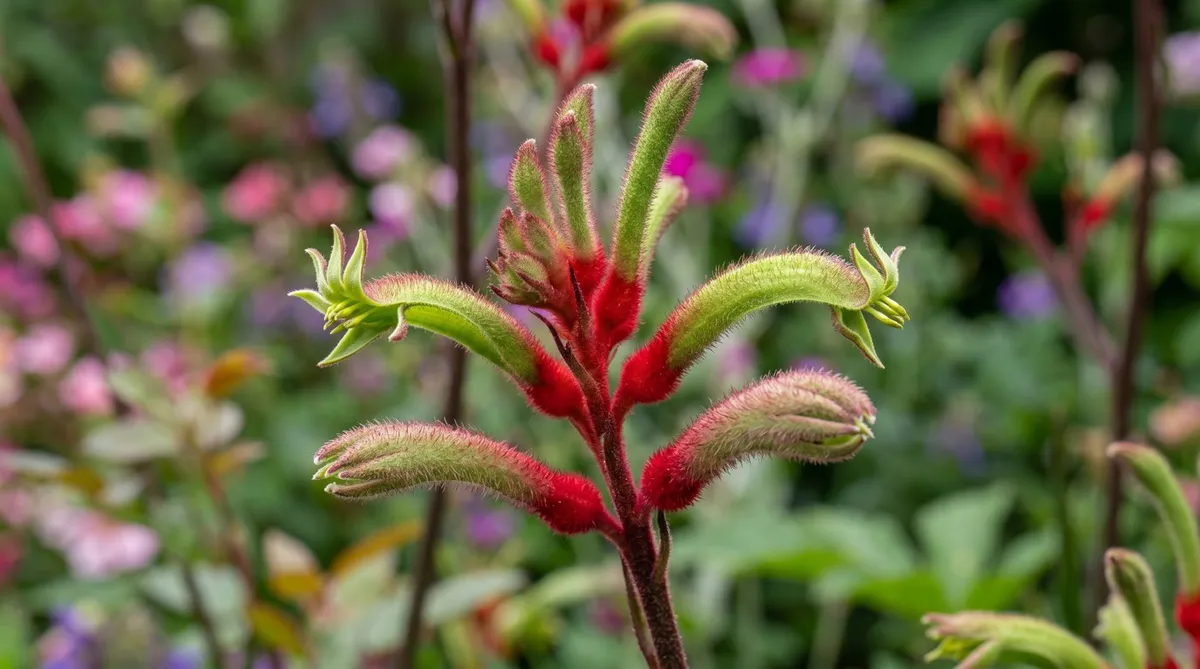
Kangaroo paw belongs to the genus Anigozanthos, native to the south-west corner of Western Australia. The common name comes from the flower shape: a curved, furry tube that splits into six “claws”, much like an animal’s paw. The fuzz is made of dense coloured hairs, and the colour of those hairs gives each variety its character.
The plants grow from fleshy rhizomes and throw up flat fans of evergreen, sword-shaped leaves. Flower stems rise well above the foliage, from 40cm on dwarf types to 2m on tall Anigozanthos flavidus. In the wild, honeyeater birds perch on the stems and pollinate the flowers, which is why the blooms sit high and hold a lot of nectar.
The catch for UK gardeners is cold. Kangaroo paw evolved in a dry, frost-light climate. It tolerates only about 0 to -2C for short spells before the rhizome and roots suffer. Combine cold with winter wet and the plant rots. That is why container growing, with the option to move plants into the dry, frost-free air of a greenhouse, is the standard British approach. Treat it as you would a tender exotic, not a hardy border perennial.
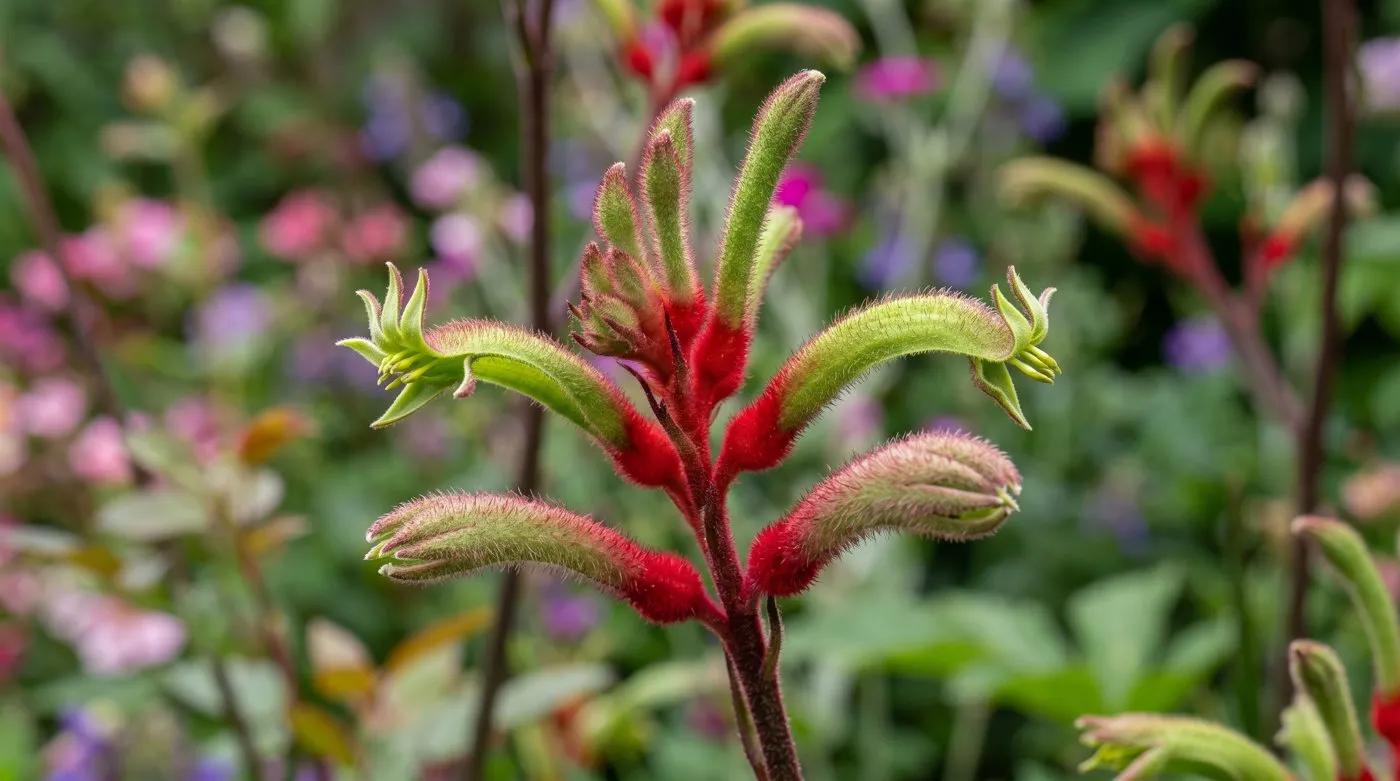 The fuzzy, paw-shaped flowers that give Anigozanthos its name, here in classic red and green.
Choosing kangaroo paw varieties for British gardens
Variety choice decides whether your plant is a one-summer wonder or a long-term resident. The genus splits broadly into two camps for UK growers: the tall, tough species types and the showy, short-lived hybrids.
Anigozanthos flavidus is the tall species, reaching 1.5-2m in flower. It is the most cold-tolerant and the most reliably perennial of the lot. Flowers tend toward yellow-green, soft orange, and dusky red. If you want a plant that comes back year after year with frost-free winter care, start here.
The Bush Gems series (bred by Angus Stewart in Australia) are compact hybrids prized for vivid colour and heavy flowering. ‘Bush Pearl’ is a dwarf, deep-pink repeat-flowerer around 40-50cm. ‘Bush Ranger’ is a fiery orange-red. They flower fast and hard in their first summer, which makes them superb patio colour, but they are short-lived and often act as annuals or biennials in Britain.
For the dramatic dark flowers, look to Macropidia fuliginosa, the true black kangaroo paw, with green-and-black blooms. It is the trickiest to keep but worth the effort. Like other hardy and tender exotics for UK gardens, it earns its place through sheer presence rather than easy care.
Kangaroo paw variety comparison
| Variety | Height | Flower colour | UK hardiness | Perennial or annual in UK |
|---|---|---|---|---|
| A. flavidus (tall species) | 1.5-2m | Yellow-green, orange, red | Best, to about -2C briefly | Reliably perennial with frost-free winter |
| ’Bush Pearl’ (dwarf hybrid) | 40-50cm | Deep pink | Tender, 0 to -1C | Short-lived, often 1-2 years |
| ’Bush Ranger’ (hybrid) | 50-60cm | Orange-red | Tender, 0 to -1C | Short-lived, often grown as annual |
| ’Bush Gems’ mixed hybrids | 40-80cm | Red, yellow, pink, orange | Tender, 0 to -1C | Usually annual or biennial |
| Macropidia (black paw) | 60cm-1m | Green-black | Most tender, needs heat | Short-lived, specialist plant |
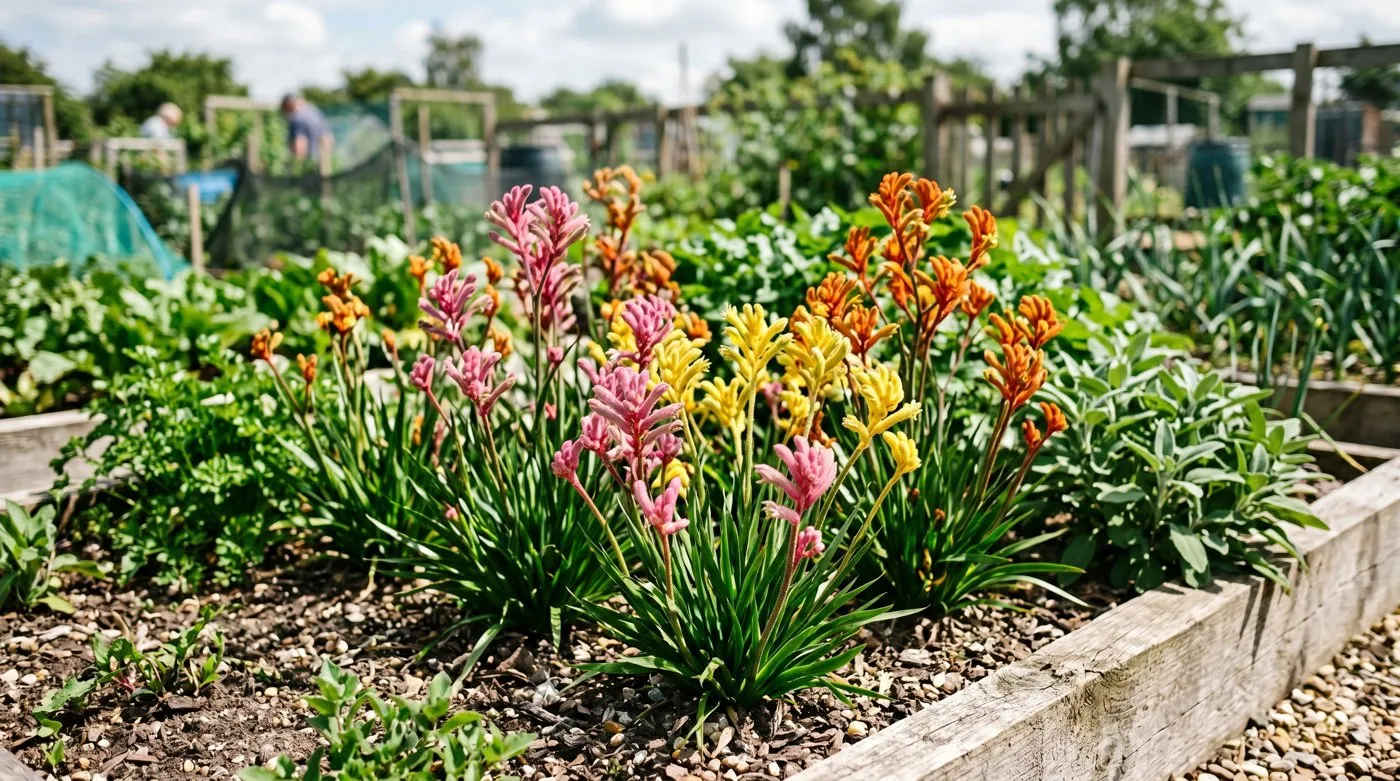 Dwarf Bush Gems hybrids give vivid first-year colour in pink, yellow and orange, but are often short-lived in Britain.
Why full sun is non-negotiable for flowering
Full sun is the single biggest factor in how well kangaroo paw flowers. These plants come from open, sun-baked country, and they convert light directly into flower spikes. The more sun, the more stems.
Aim for a minimum of six hours of direct sun a day, ideally more. A south-facing patio, a sunny balcony, or a south-facing full-sun spot is exactly right. Against a warm wall is even better, because the reflected heat suits the plant and helps ripen the rhizome for winter.
Shade does more than cut flowering. It keeps the foliage damp for longer, weakens the stems, and slows the plant’s recovery after winter. There is no shade-tolerant kangaroo paw. If your only space is shady, this is not the plant for you.
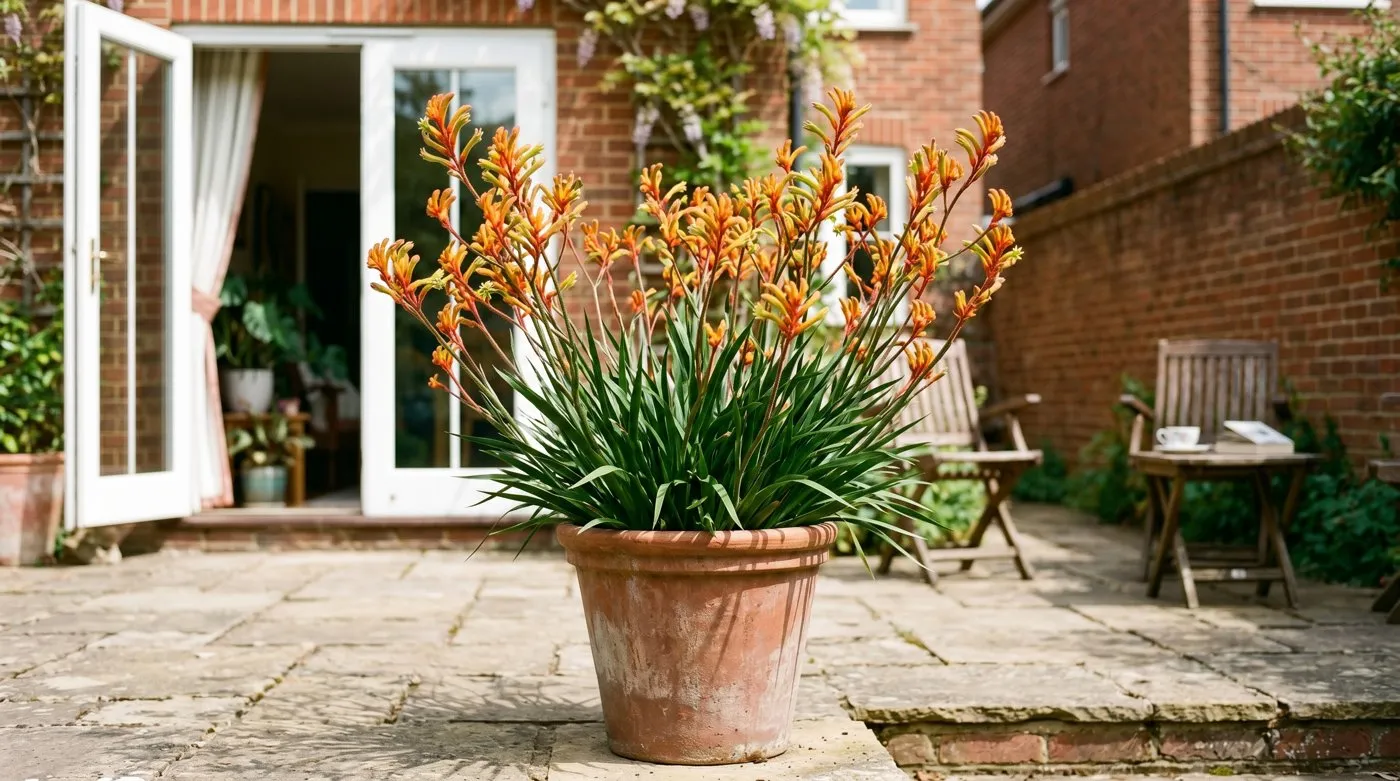 A potted kangaroo paw thrives in full sun on a paved patio, the British default for this tender plant.
The free-draining, low-phosphorus soil it demands
Drainage and low phosphorus are where most UK kangaroo paw plants live or die. The roots need air and resent both wet feet and rich feeding. Get the mix wrong and no amount of sun will save the plant.
Kangaroo paw evolved on Australian soils that are extremely low in phosphorus, among the poorest on the planet. As a result, the plant is a phosphorus accumulator: it hoovers up the element so efficiently that ordinary fertiliser levels poison it. Standard composts and general feeds, which are deliberately phosphate-rich for vegetables and bedding, scorch the roots and blacken the leaf tips.
Avoid bonemeal, mushroom compost, and rich manures entirely. They are high in phosphate. Treat kangaroo paw like a native-plant specialist would: lean, sharp, and mineral.
Warning: Never feed kangaroo paw with tomato food, bonemeal, or standard high-phosphorus fertiliser. Phosphate toxicity blackens the roots and leaf tips and can kill the plant within one season. Use only a low-phosphorus or native-plant feed at half strength.
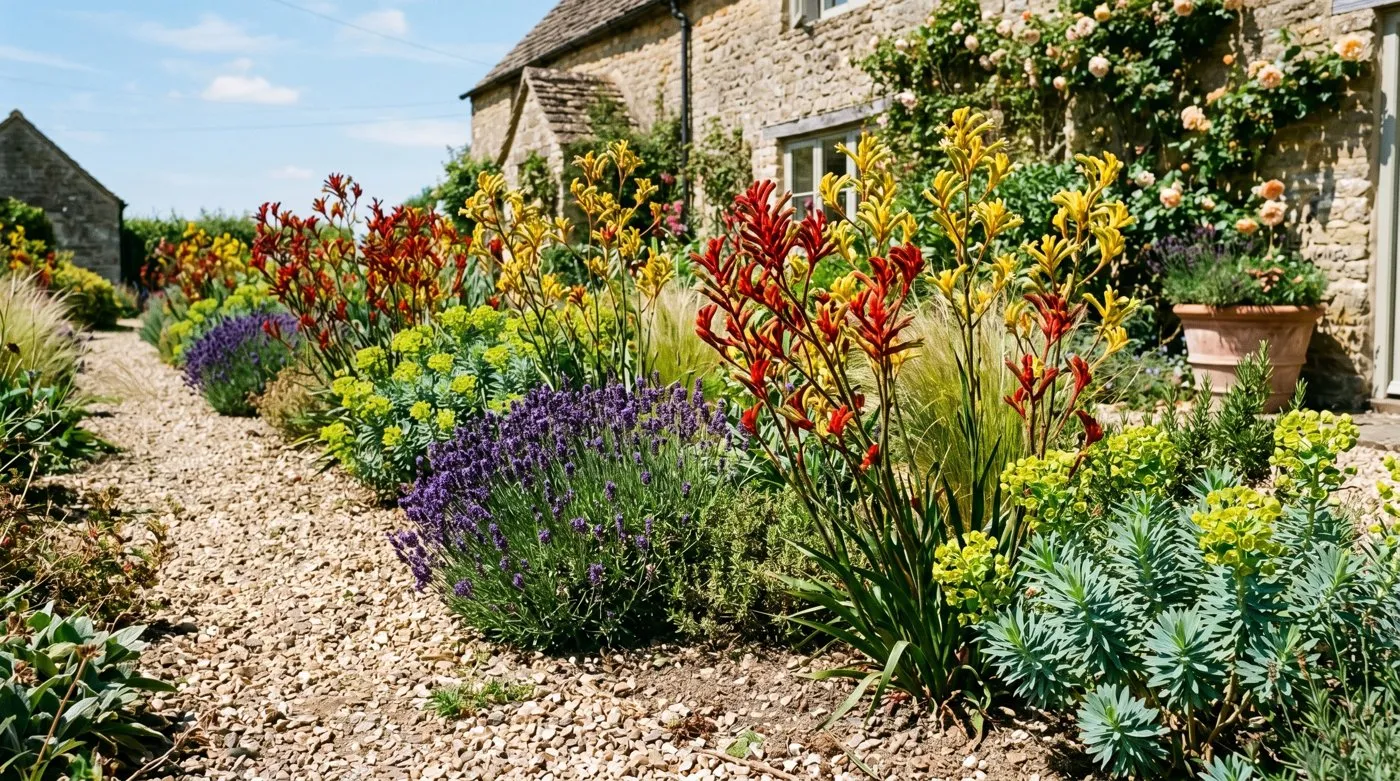 In the mildest gardens, kangaroo paw can join a sharply drained gravel border alongside lavender and euphorbia.
Watering and low-phosphorus feeding through the year
Watering for kangaroo paw follows a simple rule: moderate in growth, dry-ish in winter, never waterlogged. The plant copes far better with drought than with sitting wet, much like the drought-tolerant plants it shares a border with in dry-garden schemes.
From May to September, water when the top 3-4cm of compost is dry. In summer heat that means roughly twice a week for a pot in full sun, less in cool spells. Let the pot almost dry out between waterings. Sharp drainage means you can water freely without the roots staying wet. Empty any saucer so the pot never stands in water.
Over winter at 5-7C, cut watering right back. The plant is barely growing and excess moisture invites root rot and ink disease. Water just enough to stop the rhizome shrivelling, perhaps once every two to three weeks, and always in the morning so foliage dries by night.
Container growing as the UK default
Container growing is the standard British method because it lets you control drainage, position, and winter shelter. A pot you can wheel into a greenhouse is far safer than a plant locked in cold, wet clay.
Choose a pot with generous drainage holes, at least 30cm wide for a tall flavidus and 20-25cm for dwarf hybrids. Terracotta suits the plant because it breathes and dries the rootball faster than plastic. Add a 3-4cm layer of crocks or coarse grit at the base. Fill with the gritty, low-phosphorus mix described above. Plant so the crown sits just above the compost surface, never buried.
Stand the pot in your sunniest, most sheltered spot. A container also lets you build a display: kangaroo paw mixes well with other sun-lovers in Mediterranean-style planting, alongside lavender, salvias, and grasses that share its need for sun and sharp drainage.
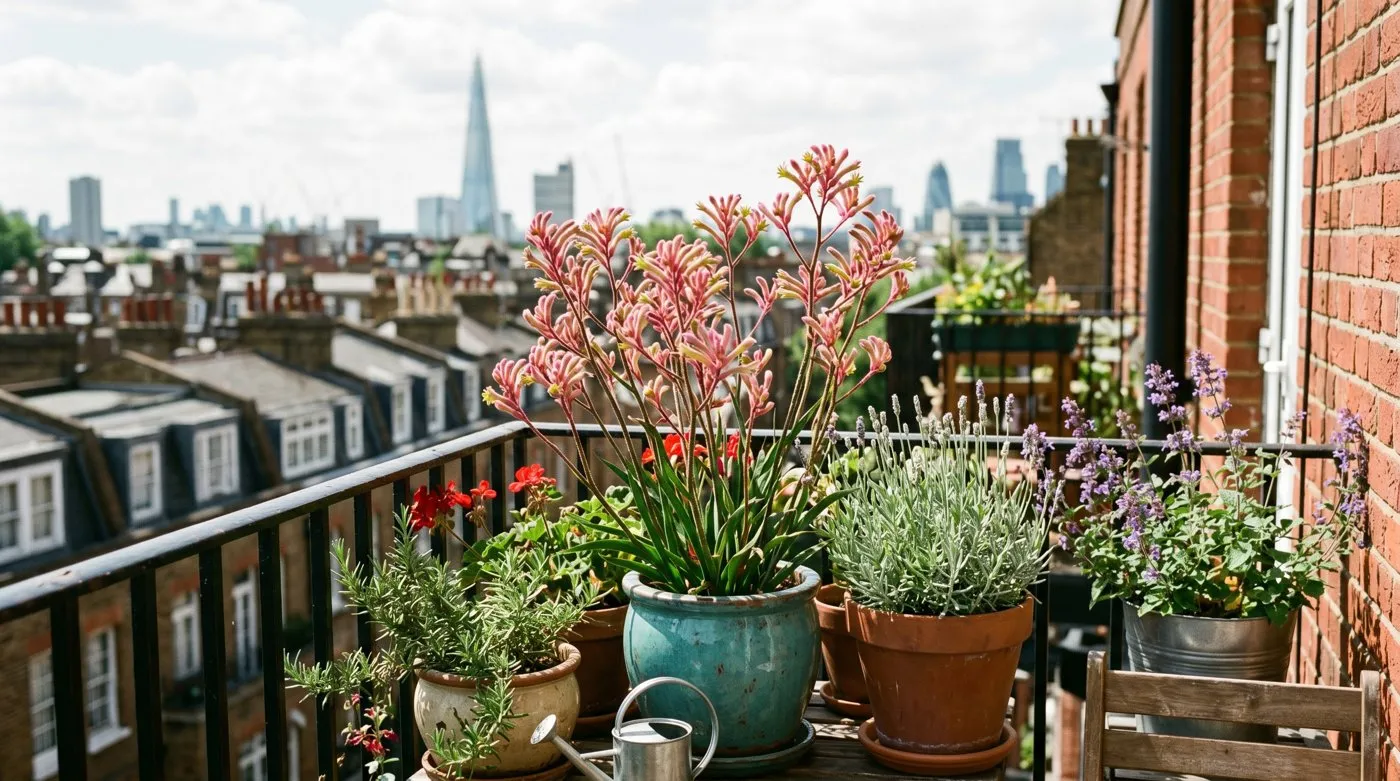 Pink and yellow kangaroo paw makes a bold container display on a sunny urban balcony.
How to overwinter kangaroo paw frost-free
Overwintering is the part that catches people out. Outside in a UK winter, the combination of frost and wet kills most plants, so the rhizome must spend the cold months under cover, bright, cool, and dry.
Move pots indoors before the first frost, usually mid to late October in most of the UK, earlier in Scotland and the north. Aim for a minimum of 5-7C in a bright spot: a cool greenhouse, a frost-free porch, a conservatory, or a bright windowsill in an unheated room. The plant needs light even in dormancy, so a dark shed will not do. The same logic applies to many tender plants, as covered in our guide to overwintering plants in the UK.
Before bringing plants in, cut spent flower stems to the base and remove any tatty or marked leaves. This reduces the disease load and tidies the plant. Reduce watering to near-dry and keep air moving to prevent ink disease in the still, damp winter air. A small fan or an open vent on milder days helps enormously.
Bring plants back outside after the last frost, generally mid to late May once nights hold above 5C. Harden them off over a week, moving them out by day and back under cover at night, before settling them in full sun for the season.
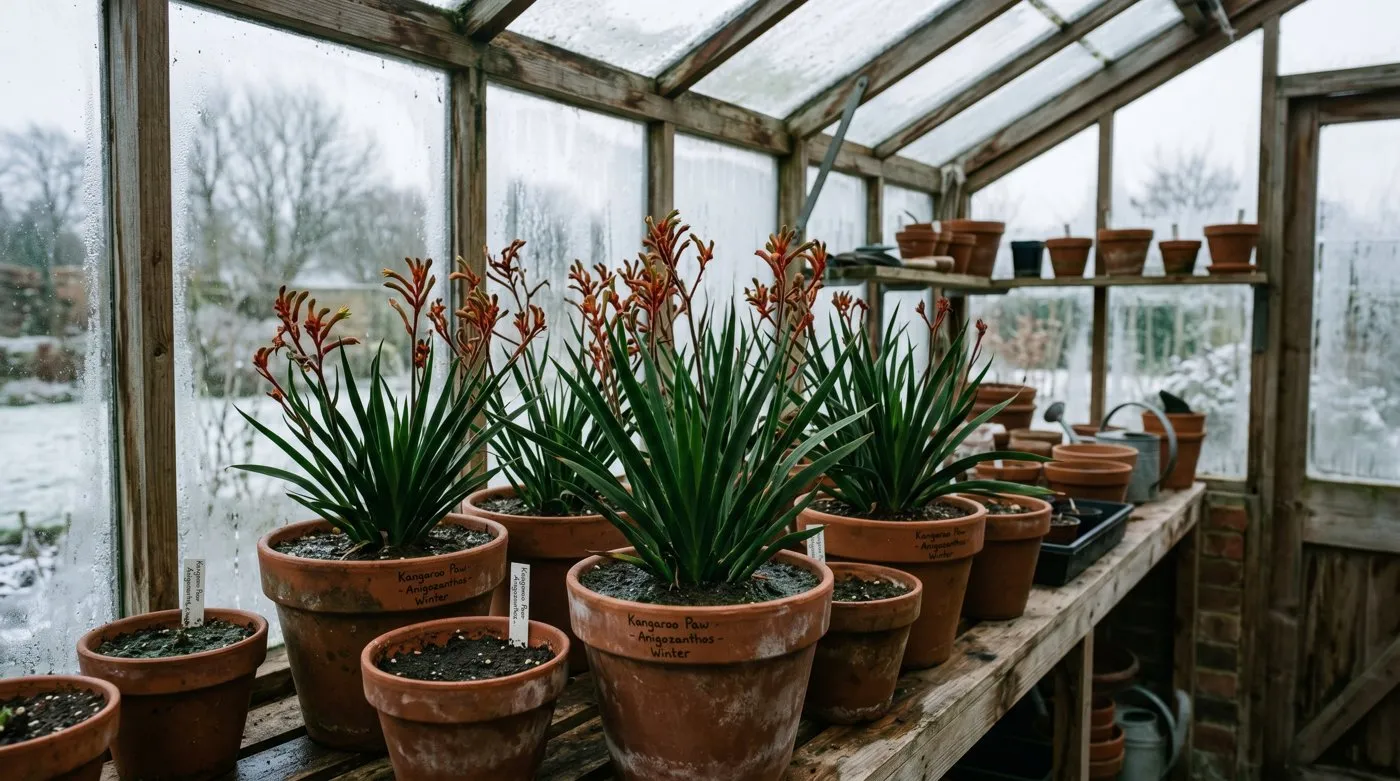 Kangaroo paw spends the UK winter bright, cool and frost-free in a greenhouse, watered sparingly.
Ink disease and the damp UK problem
Ink disease is the classic British kangaroo paw problem, and it is caused by the fungus Alternaria alternata. It shows as black streaks, blotches, and spreading dark markings on the leaves, as if someone has dragged an inky pen down the fan. Cool, damp, still air is the trigger, which is exactly what a UK autumn delivers.
The disease rarely kills an established plant outright, but it ruins the foliage and weakens the fan. Because the leaves are evergreen, damaged foliage stays ugly until you cut it out. The Royal Horticultural Society lists kangaroo paw as needing a frost-free, well-ventilated winter home for this reason. Prevention beats cure.
Airflow and dryness are your main weapons. Space plants well, avoid crowding pots together, and keep water off the leaves by watering at the base in the morning. In a greenhouse, open vents on mild days and run a fan if you can. Remove badly marked leaves at the base and bin them, do not compost them. A copper-based fungicide can slow severe outbreaks, but cultural control is far more important than spraying.
The varieties differ in resistance. Tall flavidus types and many newer Bush Gems selections shrug off mild ink disease, while older hybrids and the black Macropidia are more prone. If your plant blackens every autumn, switch to a more resistant variety and improve the airflow around it.
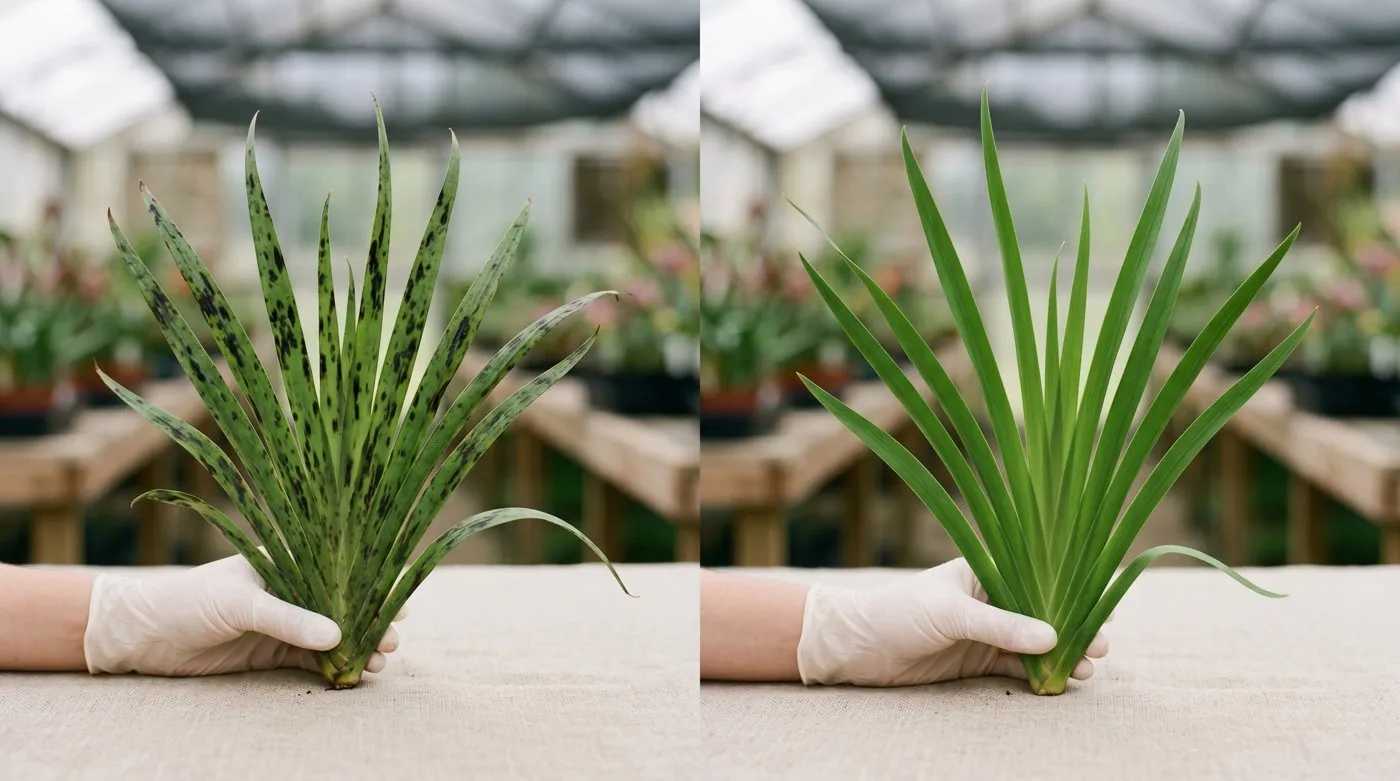 Left: ink disease (Alternaria) blackening a kangaroo paw leaf. Right: clean, healthy foliage. Airflow and dryness make the difference.
Cutting back, dividing, and growing from seed
Maintenance and propagation keep kangaroo paw vigorous and let you make more plants for free. The two key jobs are tidying spent growth and dividing or sowing for new stock.
Once a flower stem fades, cut it right down to the base. Leaving spent stems saps energy and looks untidy. Each fan flowers only once, so removing old fans after they bloom encourages fresh ones from the rhizome. Strip away any brown, tatty, or ink-marked leaves through the season to keep the plant clean and airy.
Division is the easiest way to make more plants and to rejuvenate a congested clump. In spring, knock the plant from its pot, find the natural splits between fans, and pull or cut the rhizome into sections, each with healthy roots and at least two fans. Pot each division into fresh gritty mix and water in lightly. Divided plants establish fast and flower the same summer.
Seed is slower but rewarding. Sow fresh seed in spring at 18-22C in a gritty, low-phosphorus seed mix. Some species germinate better after a smoke treatment, mimicking the bushfires that trigger growth in the wild; smoke discs or smoke water from specialist suppliers help. Germination is uneven and can take 3-6 weeks. Seedlings take two to three years to flower, so most gardeners buy plants or divide instead.
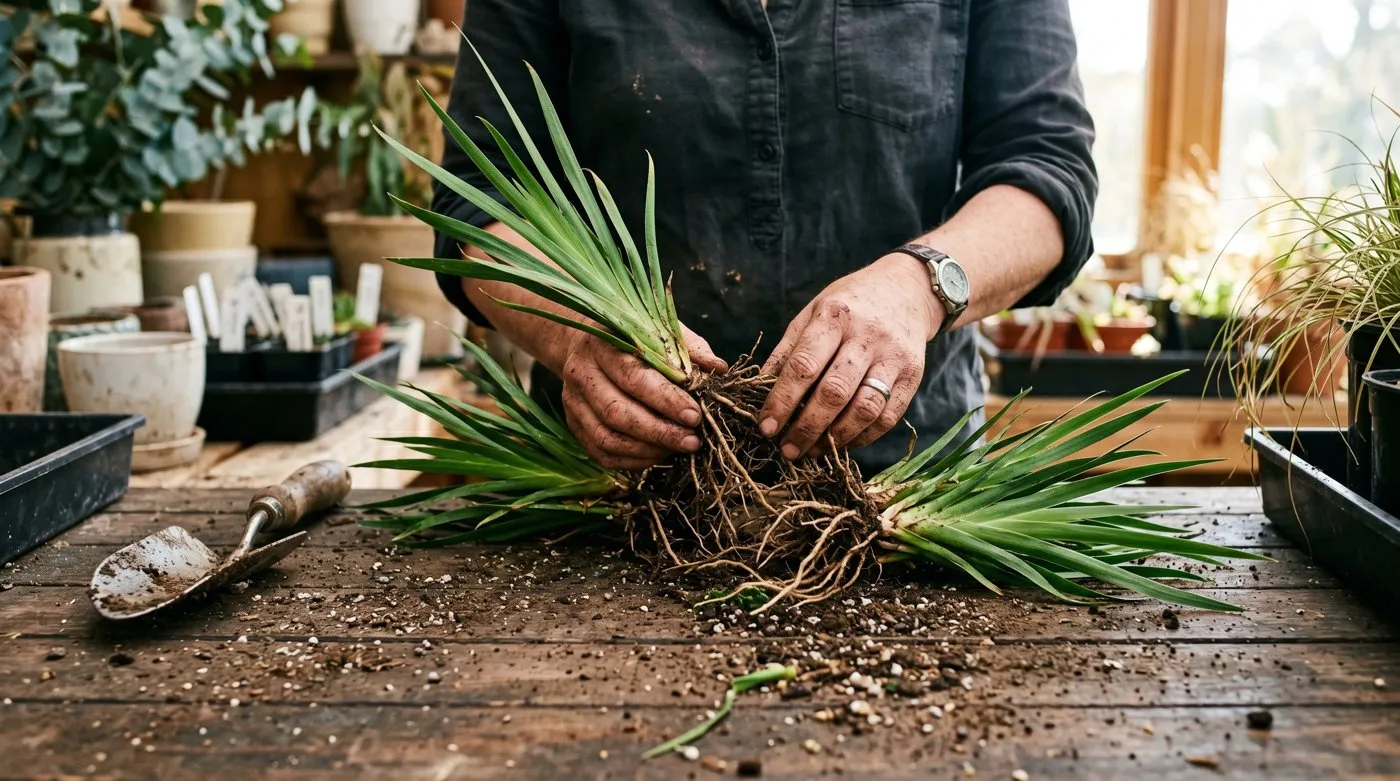 Dividing a congested kangaroo paw clump in spring, each section keeping healthy roots and at least two fans.
Pests that target kangaroo paw
Pests are a minor problem compared with cold and ink disease, but a few are worth watching. Kangaroo paw is not a pest magnet, yet stressed or sappy new growth attracts the usual suspects.
Aphids cluster on tender flower stems and new fans in spring, sucking sap and distorting growth. Squash small numbers by hand or wash them off with a jet of water. Encourage natural predators rather than reaching for sprays. Our notes on container pest protection cover keeping potted plants clean without chemicals.
Snails and slugs chew the soft new fans as they emerge in spring, leaving ragged holes. They are most active in damp, mild weather. Check plants at dusk, clear hiding spots near the pots, and use barriers around containers if damage mounts.
Mealybugs can appear on plants overwintered under glass, hiding in the leaf bases as white, waxy clusters. Wipe them off with a cotton bud dipped in dilute soft soap. Good airflow and not overcrowding the greenhouse keep numbers down. As with kangaroo paw’s relatives among tender container exotics like a passionflower in a pot, the healthiest plants in full sun with sharp drainage shrug off most pests on their own.
Month-by-month kangaroo paw care in the UK
This calendar assumes a container-grown plant overwintered frost-free. Adjust by a week or two earlier for Scotland and the north, later for mild south-coast gardens.
| Month | Task |
|---|---|
| January | Keep frost-free at 5-7C, bright. Water sparingly, once every 2-3 weeks. Watch for ink disease. |
| February | Check for pests under glass. Keep cool and bright. Resist the urge to water heavily. |
| March | Divide congested clumps. Repot if rootbound into gritty low-phosphorus mix. Sow seed at 18-22C. |
| April | Increase watering as growth restarts. Begin half-strength low-phosphorus feed. Keep under cover if frost threatens. |
| May | Harden off over a week after last frost. Move pots outside into full sun once nights stay above 5C. |
| June | Full growth and early flowering. Water when top 3-4cm dries. Feed every 3-4 weeks low-phosphorus. |
| July | Peak flowering. Deadhead spent stems to the base. Water freely but never waterlogged. |
| August | Continue feeding and watering. Remove ink-marked leaves. Enjoy the main flush of colour. |
| September | Last feed early in the month. Reduce watering as the season cools. Cut spent flower stems. |
| October | Cut back and tidy. Move pots under cover before the first frost. Reduce watering sharply. |
| November | Settle plants frost-free and bright. Water only to stop shrivelling. Ensure good airflow. |
| December | Rest period. Keep at 5-7C, dry-ish, bright. Check no pot is standing in water. |
Common mistakes when growing kangaroo paw
Avoiding these five errors prevents most kangaroo paw failures in the UK.
Leaving plants outside over winter
Frost and winter wet together kill kangaroo paw. Many people lose a healthy plant simply by leaving the pot out through a cold, soggy British winter. Move it under cover to a bright, frost-free spot at 5-7C before the first frost. This single habit decides whether the plant returns.
Feeding with phosphate-rich fertiliser
Letting the roots sit wet
Waterlogging rots the rhizome and triggers ink disease. Rich, water-retentive compost and saucers full of standing water are the usual culprits. Use a gritty, sharp-draining mix, water only when the surface is dry, and empty saucers. The plant tolerates drought far better than wet feet.
Growing it in shade
Kangaroo paw in shade barely flowers and stays damp and disease-prone. There is no shade-tolerant type. Give it your sunniest spot with at least six hours of direct sun. If your only space is shady, choose a different plant rather than fighting a losing battle.
Crowding plants in still, damp air
Crammed pots in stagnant air invite ink disease, especially in autumn and under glass. Space plants for airflow, water at the base in the morning, and ventilate the greenhouse on mild days. Good circulation does more to prevent black leaf streaks than any fungicide.
Frequently asked questions
Is kangaroo paw hardy in the UK?
No, kangaroo paw is tender and not reliably hardy in the UK. It survives only to about 0 to -2C for short spells. Grow it in a container so you can move it into a frost-free greenhouse or conservatory at 5-7C from late October. In mild coastal or city gardens, a sheltered south-facing spot may carry a tough Anigozanthos flavidus through a soft winter, but never count on it.
Can kangaroo paw be grown outside all year in Britain?
Only in the mildest gardens, and even then it is a gamble. Frost, winter wet, and cold clay kill most plants. The safe UK method is container growing with frost-free overwintering. If you want a permanent outdoor planting, choose a free-draining raised bed in full sun against a warm wall, plant a tough flavidus type, and accept you may lose it in a hard winter.
Why are my kangaroo paw leaves turning black?
Black streaks usually mean ink disease, a fungal Alternaria infection. It spreads in cool, damp, still air, exactly the UK autumn. Cut off badly marked leaves at the base, improve airflow, and keep water off the foliage. Avoid overhead watering and crowding. Ink disease rarely kills established plants but ruins their looks, so spacing and dryness matter through wet spells.
What compost should I use for kangaroo paw?
Use a gritty, free-draining, low-phosphorus mix. A good blend is two parts loam-based John Innes No.2, one part horticultural grit, and one part perlite, with no added high-phosphorus fertiliser. Kangaroo paw resents rich, wet, phosphate-heavy compost. The roots need air and sharp drainage. If water sits at the surface for more than a few seconds, add more grit before planting.
How often should I water kangaroo paw?
Water moderately in growth, then keep it dry-ish in winter. From May to September, water when the top 3-4cm of compost is dry, roughly twice a week in summer heat. Let pots almost dry out between waterings. Over winter at 5-7C, water just enough to stop the roots shrivelling, perhaps once every two to three weeks. Waterlogging is the fastest way to kill the plant.
Are Bush Gems kangaroo paws perennial or annual in the UK?
Bush Gems hybrids are short-lived and often behave as annuals here. They flower fast and freely in their first year, which makes them excellent summer patio colour. Many fade after one or two winters even with frost-free care. For a longer-lived plant, grow tall Anigozanthos flavidus, which is tougher and more reliably perennial when overwintered correctly in a bright, cool, frost-free space.
Why is my kangaroo paw not flowering?
How do I overwinter kangaroo paw in the UK?
Move pots under cover before the first frost, into a bright, frost-free space at 5-7C. A cool greenhouse, porch, or conservatory windowsill works well. Cut back spent flower stems, remove tatty leaves, and reduce watering to near-dry. Keep good airflow to prevent ink disease. Bring plants back outside after the last frost in mid to late May once nights stay above 5C.
Now you know how to keep this tender Australian beauty alive through a British winter, try another sun-loving container star with our guide to growing agapanthus, which shares its need for sharp drainage and full sun.
Our team produces practical UK gardening guidance from source research, contributor records and established horticultural practice. Editorial standards are overseen by Matt W.