Key takeaways
- Four base ingredients cover every mix: sieved garden compost, loam, leafmould and sharp sand
- Seed compost must be low in nutrients: a 2:1:1 leafmould, loam and sand blend works well
- General potting compost is about 3 parts compost, 2 loam, 1 grit, plus 30g base feed per 10 litres
- John Innes No 2 by volume is 7 parts loam, 3 leafmould, 2 sand, with ground limestone added
- Ericaceous mixes use composted bark and leafmould with no lime, holding pH 4.5-5.5
- Sterilise loam at 80-90C before use to kill weed seeds and damping-off pathogens
Mixing your own peat-free potting compost is cheaper, greener and gives you control no bag can match. You need only four base ingredients: sieved garden compost, loam, leafmould and sharp sand. Get the ratios right for the job and the results match or beat bagged peat-free, at a fraction of the cost.
The four ingredients every mix is built from
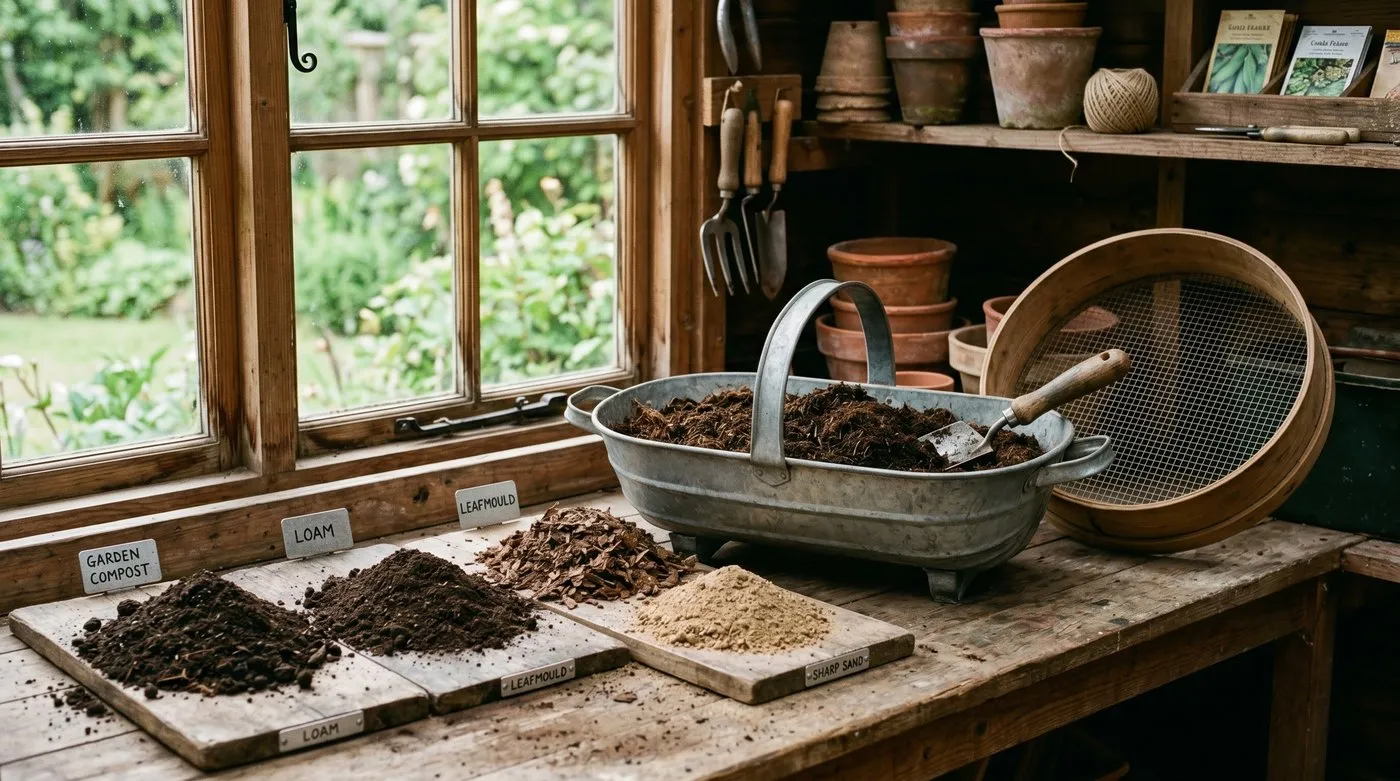
Almost every potting mix is a blend of just four materials, each doing one job. Learn what each contributes and you can build any recipe without a chart.
Sieved garden compost is the engine. It holds moisture and supplies slow-release nutrients, but on its own it is too rich and too dense for seeds. Loam, which is sterilised garden topsoil, adds body, trace elements and a buffer that stops the mix drying out to dust. Leafmould, made from rotted autumn leaves, is the peat substitute: light, open and low in nutrients, ideal for seeds and cuttings. Sharp sand or fine grit opens the structure and adds drainage, which matters most in pots that sit wet over winter.
Three extras fine-tune a mix. Perlite or vermiculite lightens heavy blends and holds air. Composted fine bark adds long-lasting air space for shrubs and acid-lovers. Worm castings give a gentle nutrient boost. If you can make leafmould and compost, the rest costs very little. Our guide to making leafmould covers the single most useful ingredient to stockpile.
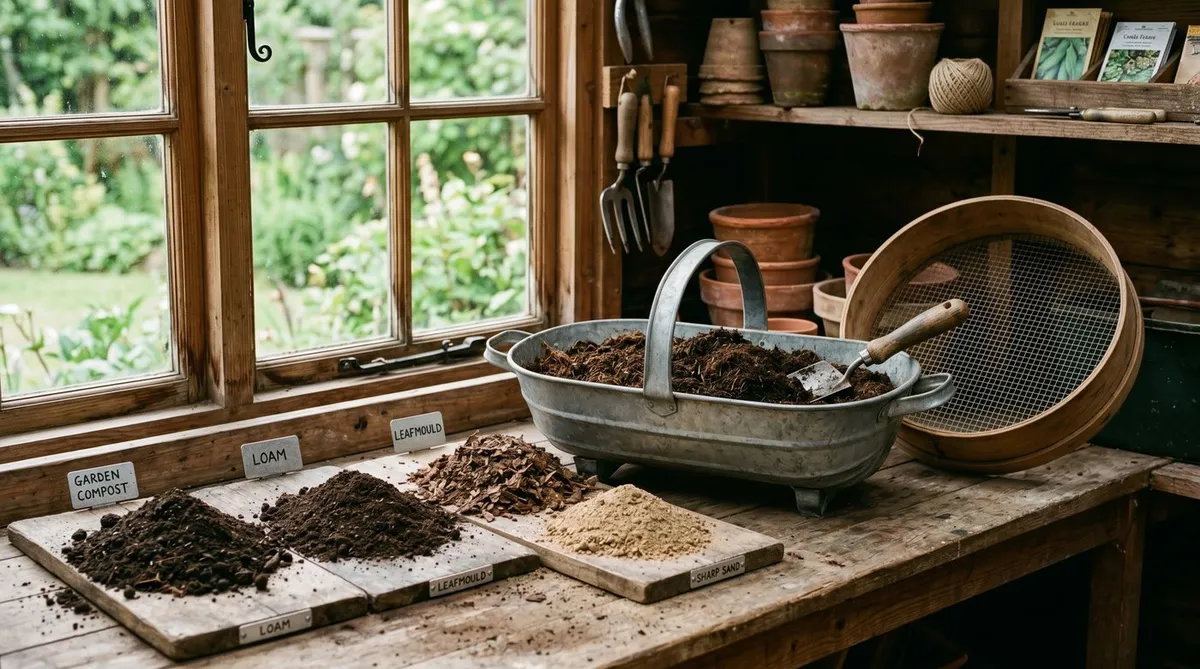
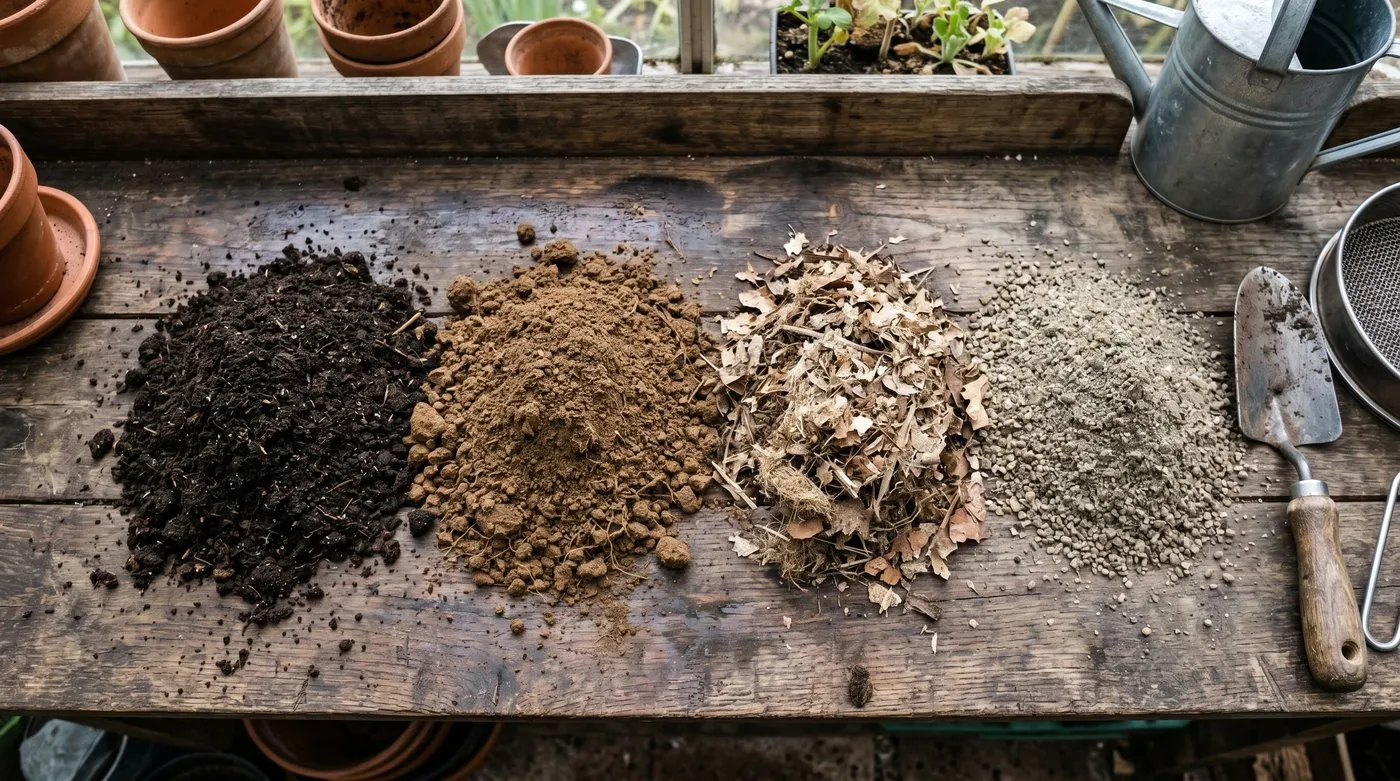 The four building blocks: sieved compost for feed, loam for body, leafmould for open structure, sharp sand for drainage. Almost every recipe is a ratio of these.
Seed compost: low feed, fine and open
Seed compost must be low in nutrients, because strong feed scorches emerging roots. This is the mix gardeners most often get wrong by using rich multipurpose compost, which checks germination.
Mix 2 parts sieved leafmould, 1 part sterilised loam and 1 part sharp sand by volume. Add no base fertiliser. Sieve the leafmould and loam to 6mm so the surface stays fine, letting tiny seeds make contact and small roots push through. The seed carries its own food until the first true leaves appear. Only then do you prick out into a richer potting mix.
If you have no leafmould, sieved coir works as a substitute for the open texture, though it holds less. Keep seed compost barely moist, never wet, as damping-off thrives in cold, saturated mixes. Time your sowings with our seed sowing calendar so trays are not sitting cold and idle.
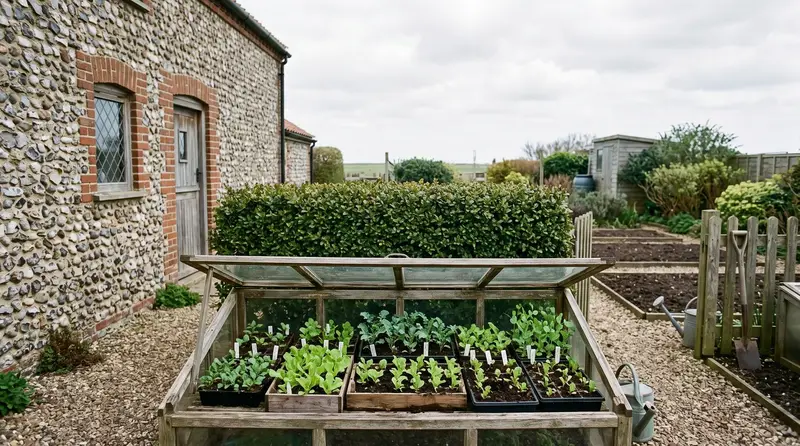
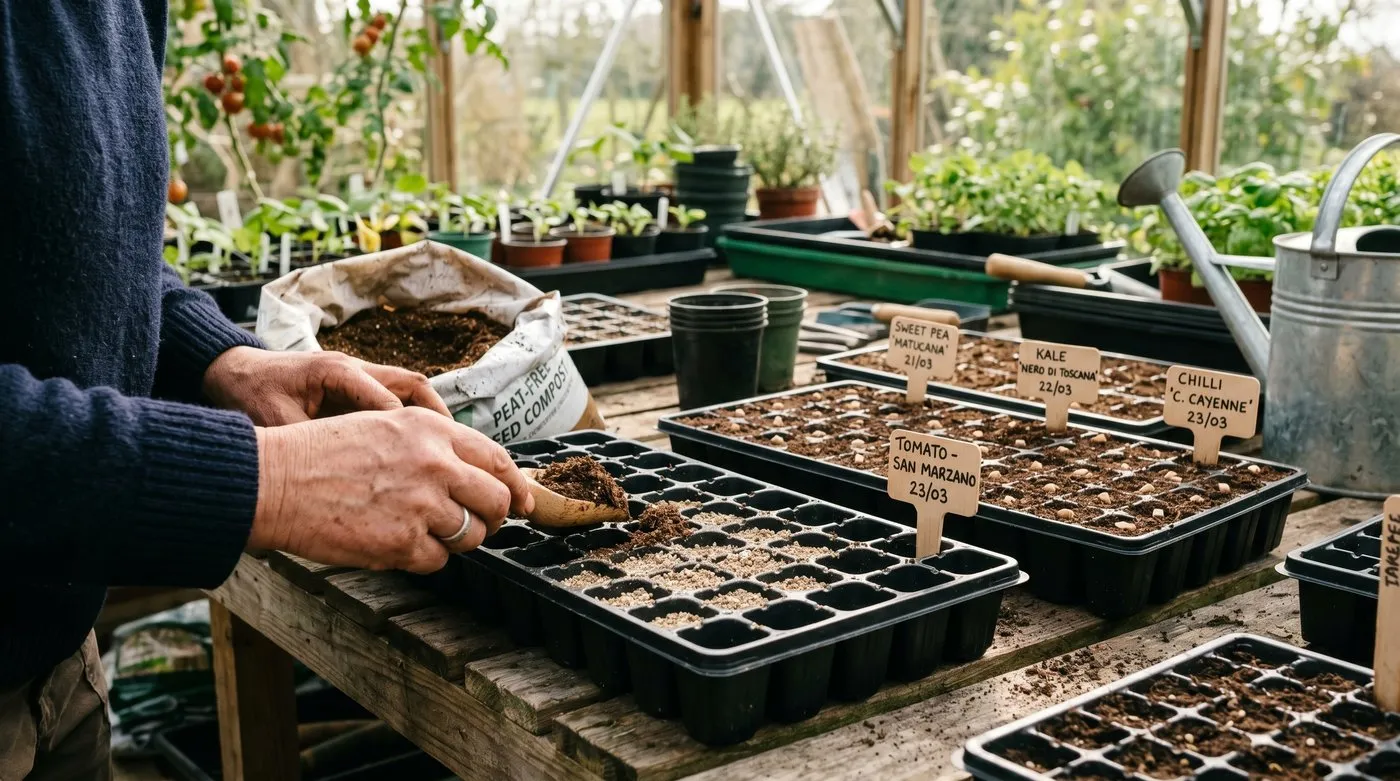 Seed compost sieved to 6mm fills module trays cleanly and keeps the surface open. No added feed: the seed has all it needs until the first true leaves.
General potting compost for potting on
Once seedlings have true leaves they need a richer, free-draining mix to grow on. This is your everyday workhorse for potting on and for container plants.
Mix 3 parts sieved garden compost, 2 parts loam and 1 part sharp grit by volume. Add a slow-release base feed at about 30g per 10 litres, such as blood, fish and bone or a seaweed meal. The compost supplies the bulk of the feed; the base fertiliser tops it up for hungry growth. For long-term pots, swap a third of the compost for composted bark to keep the structure open for a full season.
This mix suits most annuals, vegetables and young perennials. Heavy feeders like tomatoes want extra: a high-potash liquid feed once flowering starts. For a free nitrogen boost through summer, water with home-made compost tea.
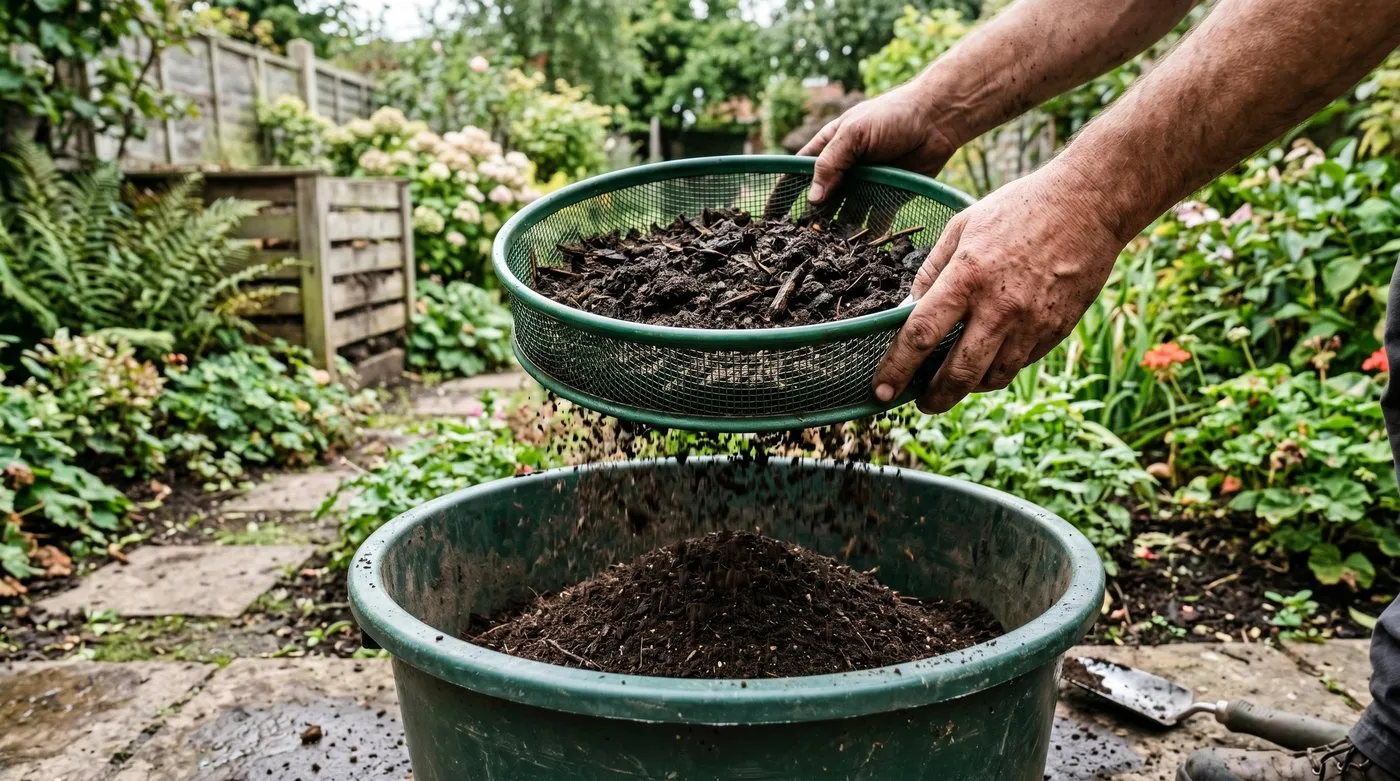 Sieving compost through a 6mm riddle removes lumps and twigs, giving the fine, even texture that potting and seed mixes need.
Ericaceous compost for acid-loving plants
Ericaceous compost holds a low pH of 4.5 to 5.5 for blueberries, azaleas, camellias and rhododendrons. The trick is to leave out everything alkaline.
Blend 2 parts composted fine bark, 2 parts leafmould and 1 part sharp sand, with no loam and no ground limestone. Loam is usually neutral to alkaline, so it pushes the pH the wrong way. Composted bark is naturally acidic and holds the level well. Test the finished mix with a cheap pH kit before potting. If it reads above 5.5, mix in more bark or a small dose of flowers-of-sulphur. Pine needle leafmould, if you can get it, makes an even better acidic base. Match the mix to the plant with our list of the best plants for acid soil.
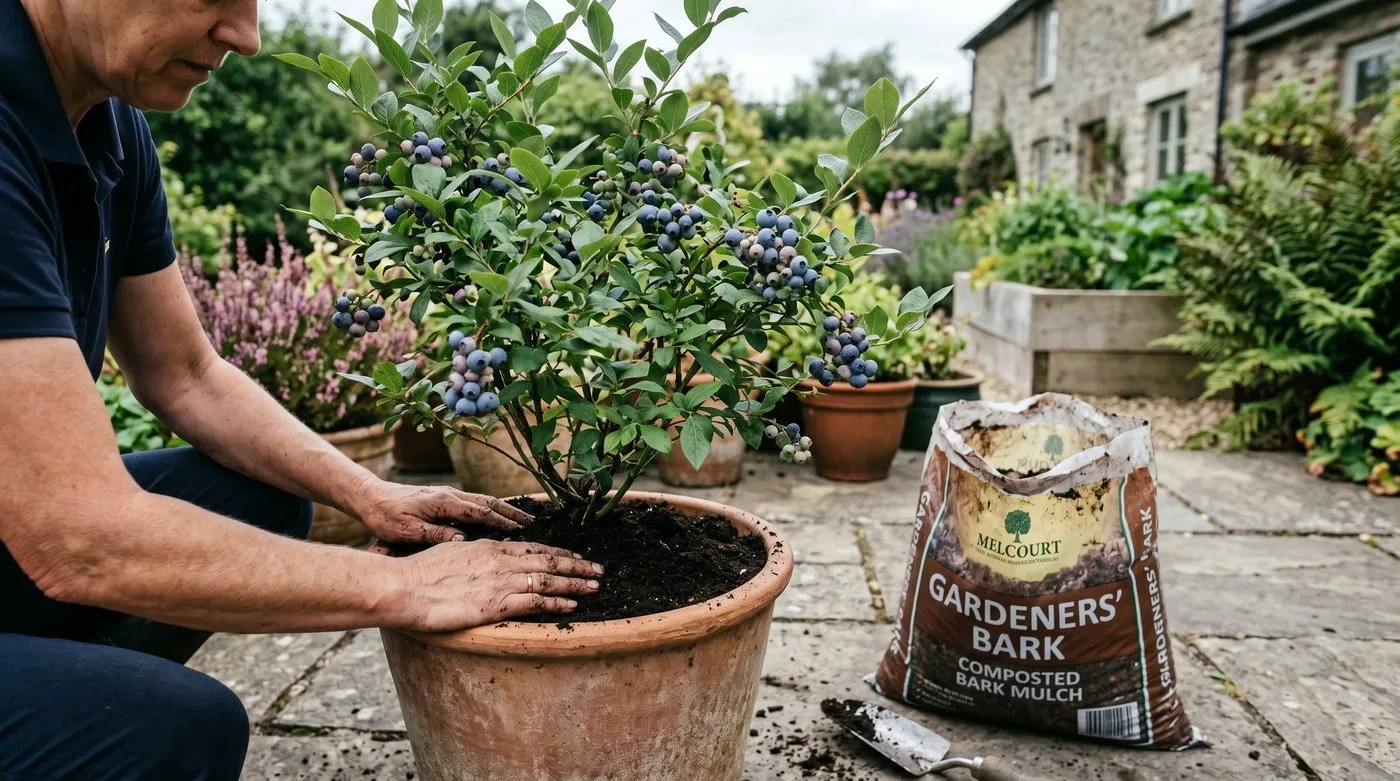 Ericaceous mix for a potted blueberry: composted bark and leafmould, no lime. A quick pH test before potting confirms it sits in the 4.5-5.5 band.
John Innes loam-based formulas
John Innes mixes are loam-based, so they hold feed and water far longer than peat-free bagged composts. They are the gold standard for shrubs, trees and any plant staying in the same pot for years, because the loam stops the mix collapsing.
The base for all three is 7 parts loam, 3 parts leafmould and 2 parts sharp sand by volume. To that you add John Innes base fertiliser and ground limestone in rising amounts:
| Formula | Base fertiliser per 36 litres | Ground limestone per 36 litres | Use |
|---|---|---|---|
| John Innes No 1 | 110g | 20g | Pricking out and young seedlings |
| John Innes No 2 | 220g | 40g | General potting on and most container plants |
| John Innes No 3 | 330g | 60g | Hungry shrubs, roses and long-term pots |
| Seed grade | 40g superphosphate only | 20g | Sowing seed in loam |
The loam must be sterilised first, which is the step most home mixers skip and then wonder why weeds appear. A correctly made John Innes No 3 will feed a shrub for a full growing season before you need to liquid feed.
How to sterilise loam at home
Heat moist loam to 80-90C for 30 minutes to kill weed seeds, fungus gnat larvae and damping-off fungi. Skip this and a loam-based mix sprouts weeds and loses seedlings to rot.
Spread riddled, slightly moist loam in a tray no deeper than 10cm. Heat in an oven at 90C, checking with a probe thermometer, and hold the core temperature for half an hour. Do not exceed 95C: above that you drive off ammonia and kill the useful bacteria, leaving a sterile but sour mix. Cool it fully before blending. The smell is earthy, not unpleasant, but open a window. Mature garden compost used for shrubs does not need sterilising, only the loam destined for seed and potting mixes.
Gardener’s tip: Sterilise loam in autumn when the oven is on anyway, then store it dry in lidded buckets. A cold, wet spring is the worst time to be baking soil, and dry sterile loam keeps for months ready to blend.
Testing and adjusting pH
A cheap pH test kit costs a few pounds and saves a season of poor growth. Most home blends land between pH 6 and 7, which suits the majority of plants, but it pays to check.
Take a sample of the finished, moist mix and follow the kit instructions. For general potting, aim for pH 6.0 to 6.5. For ericaceous mixes, aim for 4.5 to 5.5. To raise pH, add ground limestone at about 20g per 10 litres and retest after a week. To lower it, mix in more composted bark or flowers-of-sulphur. Our guide to soil pH explained covers why the number matters so much for nutrient uptake.
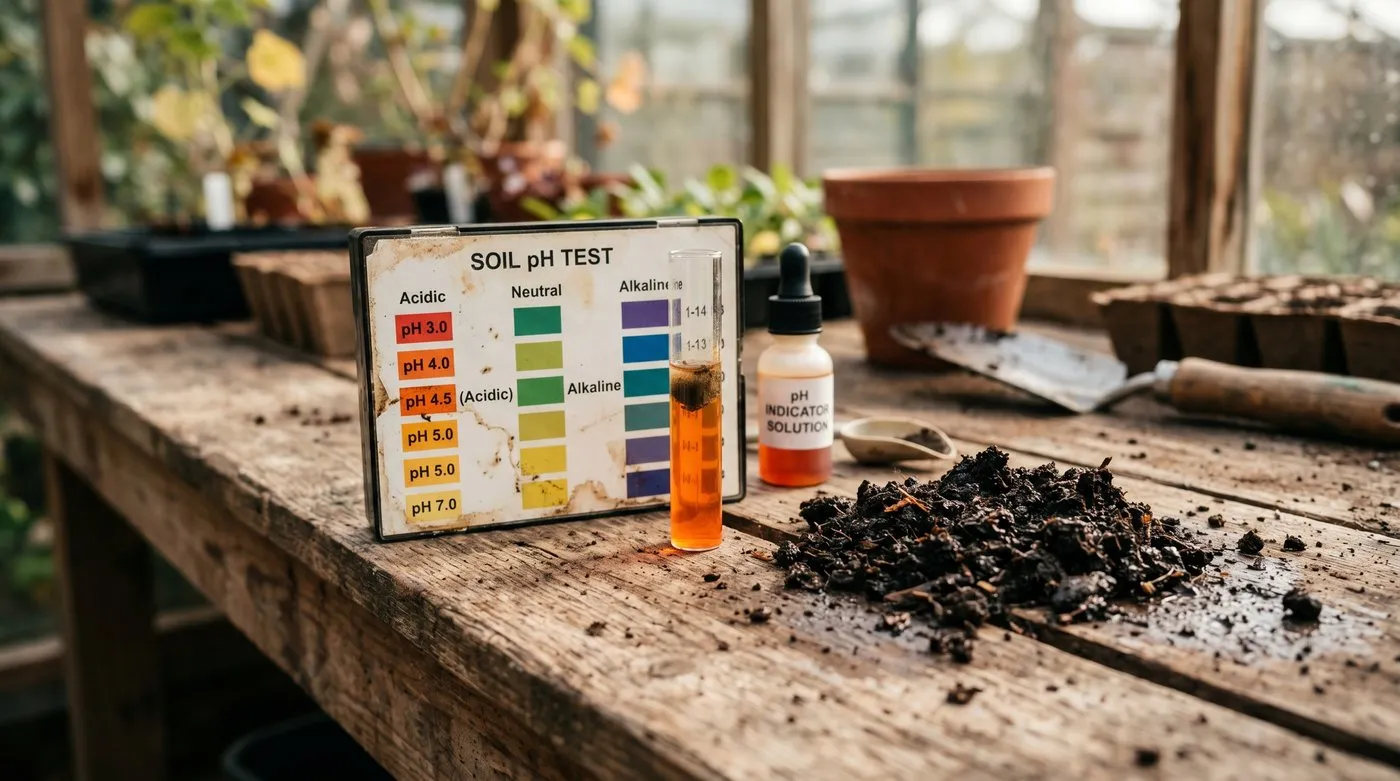 A few-pound pH kit settles the question in minutes. Aim for 6.0-6.5 for general potting and 4.5-5.5 for ericaceous mixes.
Feeding home-mixed compost
Home blends carry enough feed for six to eight weeks, then plants need topping up. Compost-based mixes run out faster than loam-based ones, so plan to liquid feed.
For a steady release, mix in blood, fish and bone at 30g per 10 litres, or a seaweed meal for a gentler organic feed. From midsummer, switch container plants to a fortnightly liquid feed: a balanced feed for foliage, a high-potash one such as tomato feed for flowers and fruit. A handful of worm castings stirred through any mix adds a slow background boost. Compare bulk soil improvers and their nutrient values in our guide to animal manures compared.
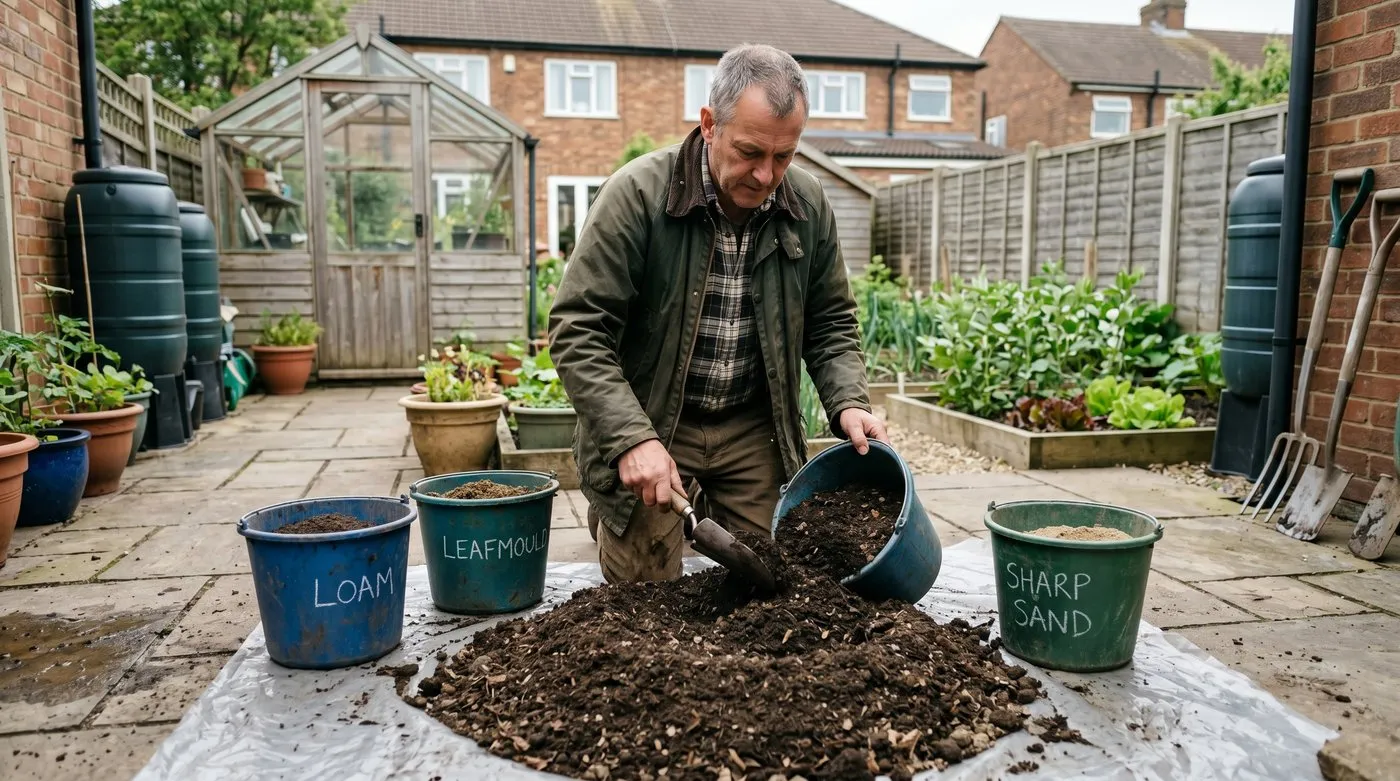 Measuring by volume with a single bucket keeps ratios honest. A loam-based John Innes mix feeds shrubs and long-term pots far longer than a compost-only blend.
When to mix and use each compost
Mixing follows the gardening year: stockpile ingredients in autumn, blend in late winter, use through spring and summer. A little planning means the right mix is ready when you need it.
| Month | Job |
|---|---|
| October-November | Gather and stack autumn leaves for leafmould; sterilise loam while the oven is on |
| December-January | Turn and sieve garden compost; order grit and base feed |
| February | Mix seed compost ready for the first sowings under cover |
| March-April | Sow into seed compost; mix potting-on batches as seedlings develop |
| May | Prick out and pot on into general potting compost; mix ericaceous for acid-lovers |
| June-August | Pot summer containers in John Innes No 2 or No 3; liquid feed established pots |
| September | Use remaining mixes for autumn sowings; start the next leafmould heap |
When you cannot get an ingredient
No single ingredient is irreplaceable: a ranked list of substitutes keeps you mixing. Reliability falls as you move down each list, so reach for the top option first.
| Missing ingredient | Best substitute | Then | Avoid |
|---|---|---|---|
| Leafmould | Sieved coir | Composted fine bark | Fresh sawdust (robs nitrogen) |
| Loam | Sterilised molehill soil | Bought topsoil, sterilised | Builder’s subsoil (no life) |
| Sharp sand | Horticultural grit | Perlite | Soft builder’s sand (sets hard) |
| Garden compost | Bagged peat-free multipurpose | Well-rotted manure (shrubs only) | Fresh manure (scorches roots) |
Coir is the most useful thing to keep in reserve, since it stands in for both leafmould and, at a push, the open texture of a seed mix. If you are reusing old compost, refresh it first with the method in our guide to reusing spent compost.
Common mistakes when mixing potting compost
These are the errors that turn a good idea into a tray of failed seedlings.
Using rich compost for seeds
The most common mistake. Seed compost must be low in feed, so never sow into multipurpose or a compost-heavy blend. Use the lean 2:1:1 leafmould mix and feed only after pricking out.
Skipping loam sterilisation
Unsterilised garden soil brings weed seeds, gnats and damping-off. Heat loam to 80-90C before it goes anywhere near seed trays, or expect weeds and rot.
Mixing too coarse for small seeds
Lumpy compost leaves air gaps that strand tiny seeds and roots. Sieve seed and pricking-out mixes to 6mm so the surface is fine and even.
Forgetting drainage in winter pots
A water-holding mix that suits summer drowns roots in winter. Add extra grit, up to a third by volume, for any pot standing out through the wet months.
Never testing pH
Guessing the pH wastes a season on acid-lovers that sulk in alkaline mixes. Test every ericaceous batch and adjust before you pot anything precious.
If you mix your own compost, it pays to know how to sterilise garden soil and compost so weed seeds and damping-off fungi never reach your seedlings.
Frequently asked questions
What can I use instead of peat in potting compost?
Leafmould, sieved garden compost, composted bark and coir replace peat. Each adds the moisture-holding, open structure peat once gave. Leafmould is the closest match for seed and cuttings mixes, while composted bark adds long-lasting air space for shrubs and pots. Blend two or three together rather than relying on one to get both drainage and water holding right.
How do you make seed compost at home?
Mix 2 parts sieved leafmould, 1 part sterilised loam and 1 part sharp sand. Seed compost must be low in nutrients, because strong feed scorches emerging roots. Sieve the leafmould to 6mm so the surface stays fine and open. Do not add base fertiliser. The seed carries its own food until the first true leaves form, when you prick out into a richer potting mix.
What is the John Innes formula by volume?
John Innes uses 7 parts loam, 3 parts leafmould and 2 parts sharp sand by volume. To that base you add John Innes base fertiliser and ground limestone: No 1 has one measure, No 2 has two, No 3 has three, for seedlings, general potting and hungry shrubs in that order. The loam must be sterilised first, which is the part most home mixers skip.
Do I need to sterilise soil for potting compost?
Yes, sterilise loam before using it in seed or potting mixes. Garden soil carries weed seeds, fungus gnats and damping-off pathogens that ruin trays of seedlings. Heat moist loam to 80-90C for 30 minutes in an oven, then cool. Above 95C you release ammonia and kill the useful bacteria, so watch the temperature. Mature garden compost used for shrubs does not need it.
How do you make ericaceous compost?
Blend composted fine bark, leafmould and sharp sand with no lime added. Aim for pH 4.5 to 5.5 for blueberries, azaleas and camellias. Avoid loam, which is usually neutral to alkaline, and never add ground limestone. Test the finished mix with a cheap pH kit. If it reads too high, mix in more composted bark or a little flowers-of-sulphur to bring it down.
Is homemade compost cheaper than bought?
Far cheaper, at roughly 4p a litre against 25-30p for bagged peat-free. The ingredients, garden compost, leafmould and grit, cost almost nothing if you make your own. The real cost is time and storage space. For large volumes the saving is significant, and you control the texture and feed in a way no single bagged product allows.
Now you can mix the right compost for any job, the next step is the feed that keeps plants going. Read our guide to the peat-free compost options for the best bagged products to fall back on, and lean on Garden Organic and the RHS advice on peat-free composts for further reading.
Our team produces practical UK gardening guidance from source research, contributor records and established horticultural practice. Editorial standards are overseen by Matt W.