Key takeaways
- Persicaria flowers from July to the first frosts, crimson or pink bottlebrush spikes for up to 14 weeks
- It is NOT Japanese knotweed: garden bistorts are clump-formers you can lift with one spade
- The one to refuse is Persicaria wallichii, Himalayan knotweed, listed on Schedule 9
- It loves what kills most late perennials: heavy, moisture-holding soil and part shade
- 'Firetail' and 'Superba' hold the RHS Award of Garden Merit and are the two to start with
- Divide every 3-4 years in spring or autumn; deadhead in October if self-seeding bothers you
And yet people hesitate, because persicaria carries an awkward common name: knotweed. The word alone puts gardeners off a whole genus of superb, well-behaved border plants. So let me deal with that fear properly, then get into the cultivars worth your money, the conditions they want, and what three seasons of growing them on Staffordshire clay has taught me.
What is persicaria and why is it now sold as bistorta?
Persicaria is a genus of hardy herbaceous perennials in the dock family, Polygonaceae, grown for slender flower spikes held above dense, leafy clumps. The garden forms come mainly from meadows and streamsides in the Himalayas, which explains both their toughness, most are rated RHS H7, hardy below -20C, and their love of moisture.
The naming is in flux, so labels vary. Botanists have moved the main garden species into the genus Bistorta: Persicaria amplexicaulis is now Bistorta amplexicaulis, Persicaria bistorta has become Bistorta officinalis, and Persicaria affinis is Bistorta affinis. Nurseries sell the same plants under either name, often both at once. The common name bistort covers the lot. Search for whichever name you like; you will end up at the same plant.
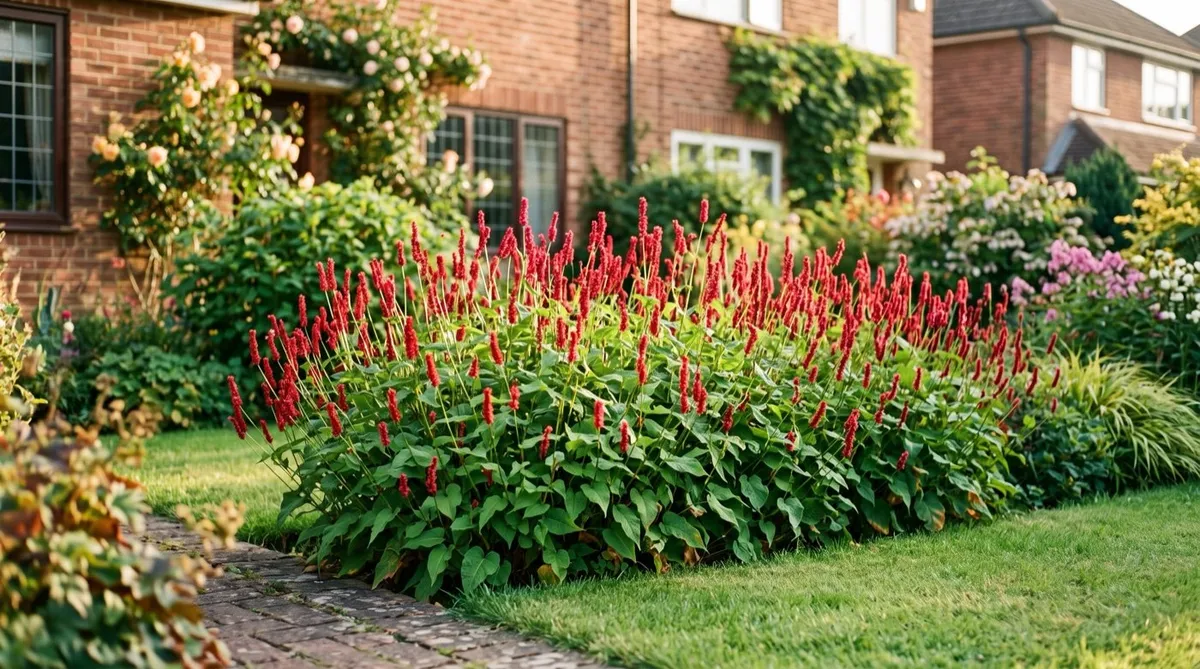
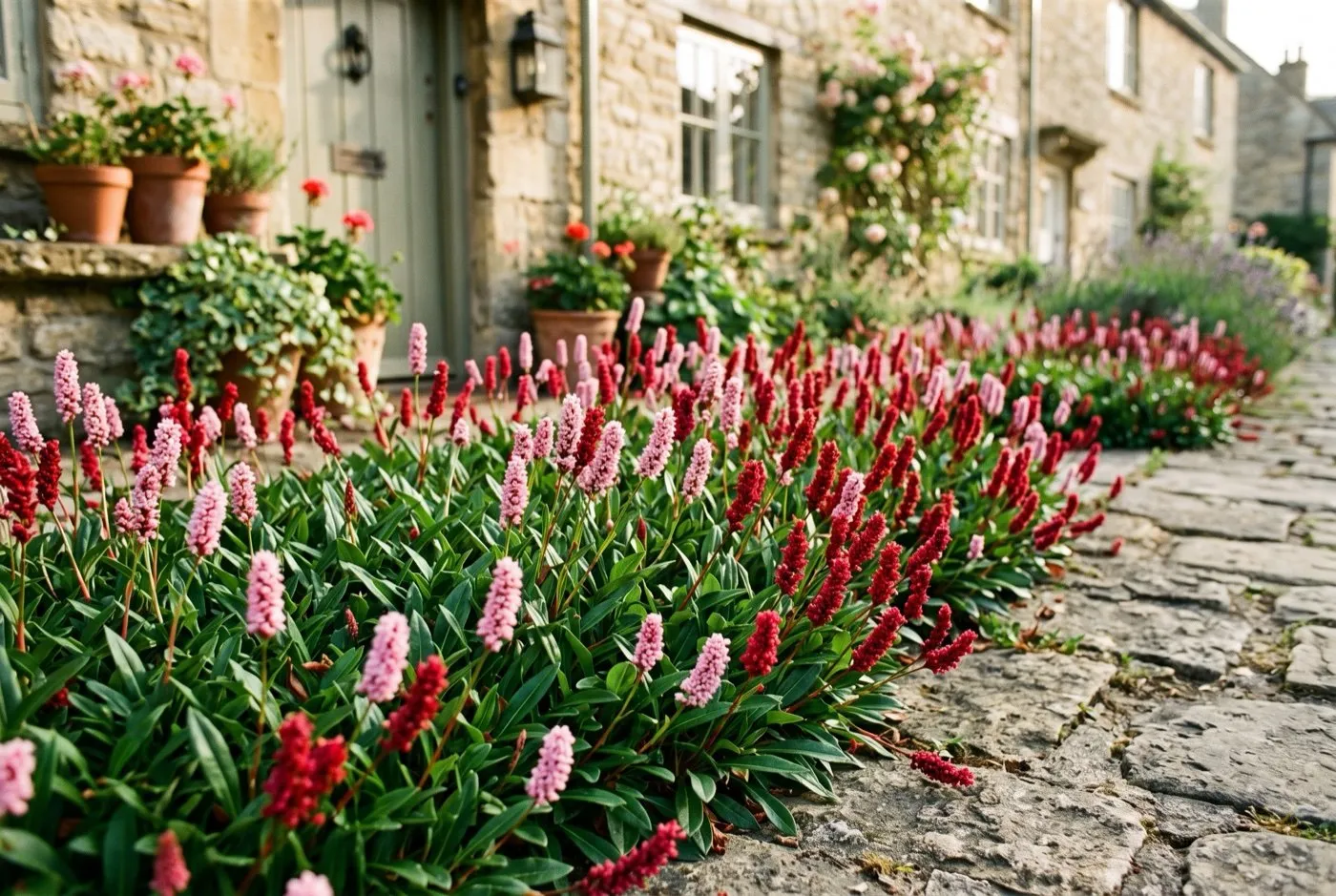
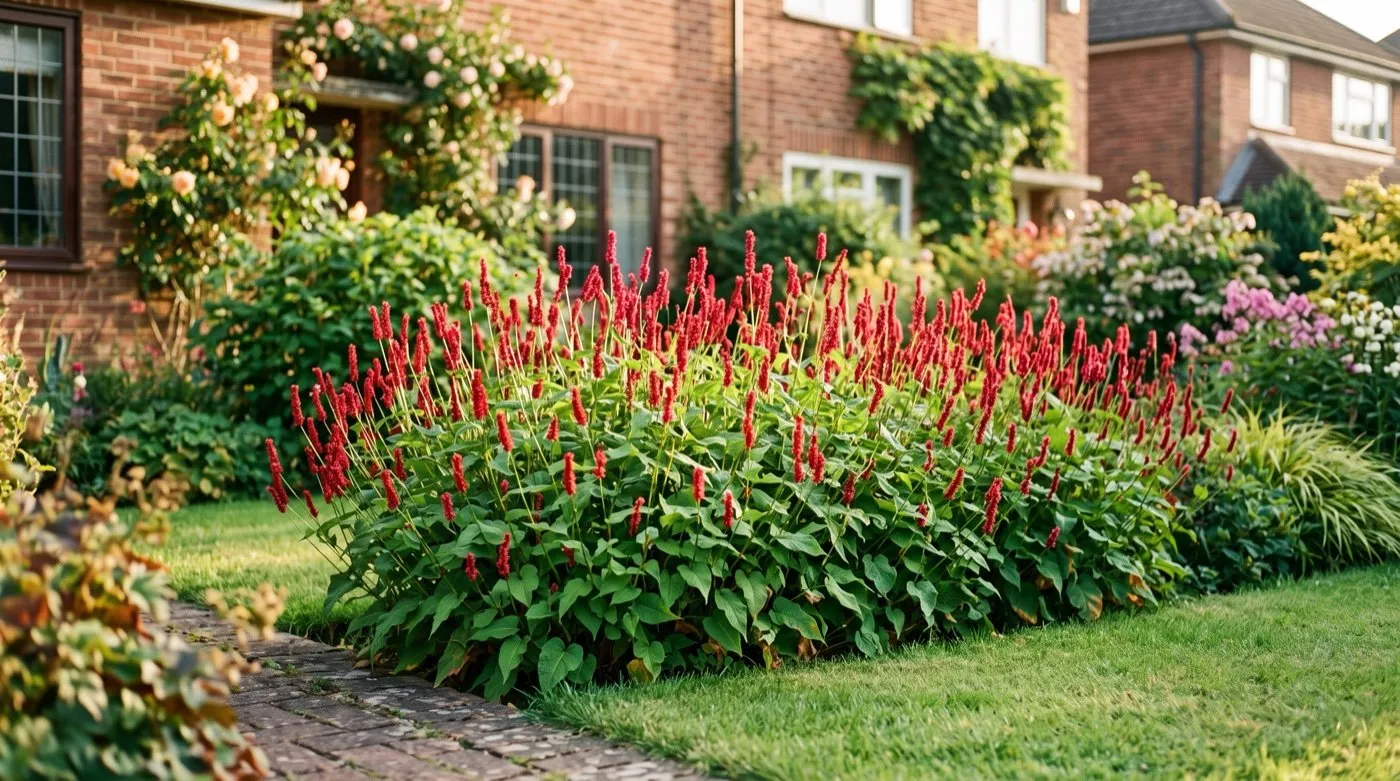 ‘Firetail’ in early September: slim crimson pokers in their tenth week, with plenty still to come.
Is persicaria the same as Japanese knotweed?
No, and this matters enough to say plainly. Persicaria and Japanese knotweed sit in the same plant family, but Japanese knotweed is Reynoutria japonica, a different genus altogether. Garden persicarias share none of its behaviour. Nobody will refuse you a mortgage over a clump of ‘Firetail’.
The safe list is long: every cultivar in this article, Persicaria amplexicaulis, P. bistorta, P. affinis and P. microcephala ‘Red Dragon’, is a well-mannered garden plant. There is one genuine exception. Persicaria wallichii, Himalayan knotweed, is itself listed on Schedule 9. It forms dense 1.8m thickets from spreading rhizomes and it is an offence to plant it or allow it to spread into the wild.
Warning: Never buy or accept Persicaria wallichii, sold as Himalayan knotweed or Polygonum wallichii. It is the only persicaria on Schedule 9 and behaves nothing like the border cultivars. If a plant swap offers you an unnamed “giant persicaria” with rhizomes rather than a fibrous crown, walk away.
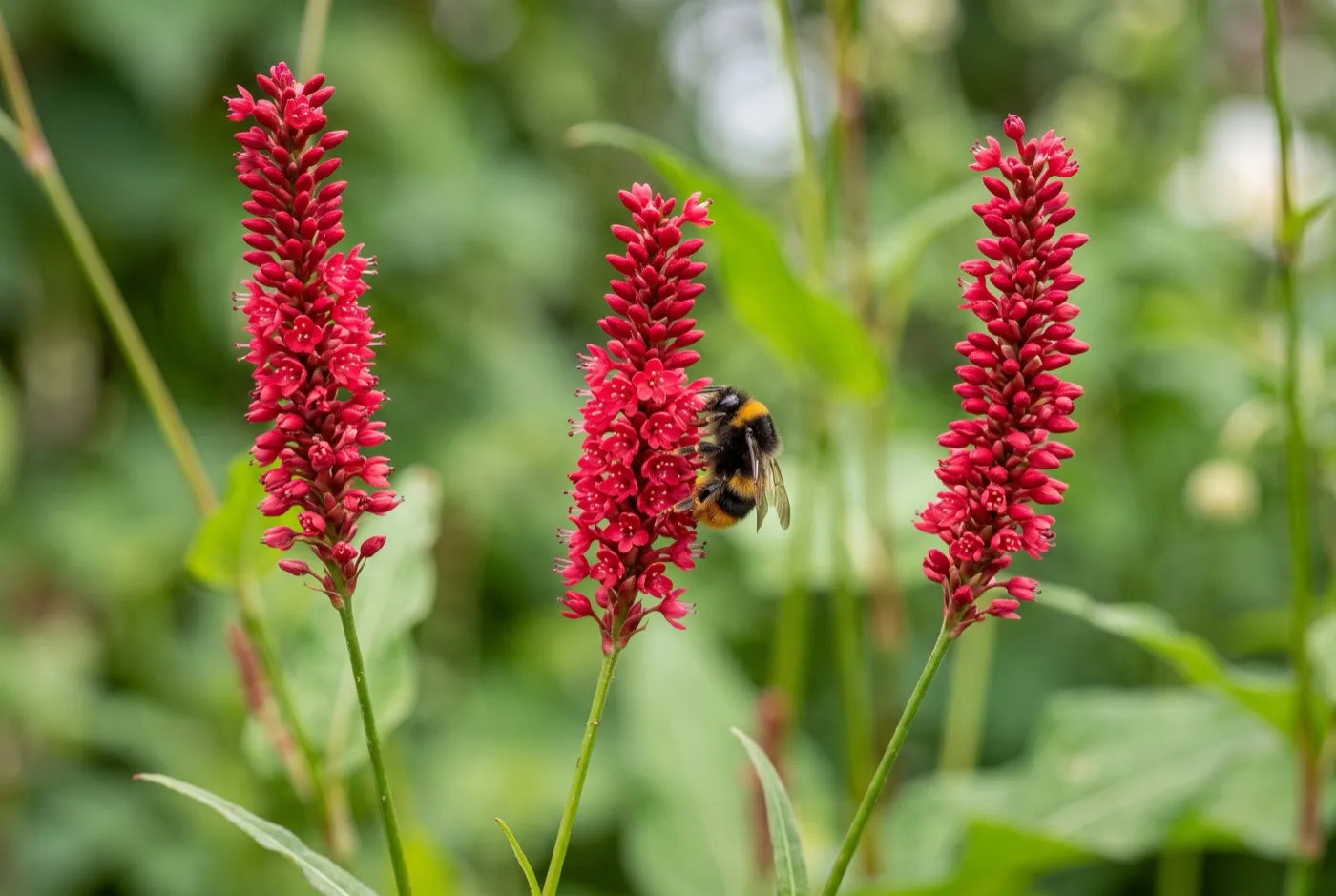 ‘Firetail’ in close-up. Each slim spike carries dozens of tiny bells that bees work from the bottom up.
Two other species earn space. Persicaria bistorta ‘Superba’, the common bistort, flowers earlier, fat candy-pink pokers from late May or June on 75-90cm stems, and holds an AGM. It is the one for genuinely damp ground. Persicaria affinis is the groundcover: a semi-evergreen mat 15-25cm high, studded with pink spikes that age red, its leaves turning russet-brown for winter. ‘Darjeeling Red’ and ‘Donald Lowndes’ both hold AGMs and both are rated H7.
Then there is the oddball. Persicaria microcephala ‘Red Dragon’ is grown for foliage, not flowers: purple-flushed lance leaves with a silver chevron on red stems, to about 1.1m. Sprays of tiny white flowers arrive in late summer. It is vigorous but clump-forming, it does not run, and part shade gives the best leaf colour.
Persicaria cultivar comparison
| Cultivar | Height | Colour | Flowering months | Spread rating |
|---|---|---|---|---|
| ’Firetail’ (AGM) | 1.2m | Bright crimson | Jul-Oct | Steady clump |
| ’Fat Domino’ | 90-120cm | Deep blood-red | Jul-Oct | Steady clump |
| ’Rosea’ | 90-120cm | Pale shell-pink | Jul-Oct | Steady clump |
| ’JS Caliente’ | 70cm | Fiery red | Jul-Oct | Compact clump |
| P. bistorta ‘Superba’ (AGM) | 75-90cm | Candy pink | May-Jul, repeat flushes | Spreads on damp soil |
| P. affinis ‘Darjeeling Red’ (AGM) | 25cm | Pink ageing to red | Jun-Sep | Running mat |
| ’Red Dragon’ | 1.1m | White; purple foliage | Aug-Oct | Steady clump |
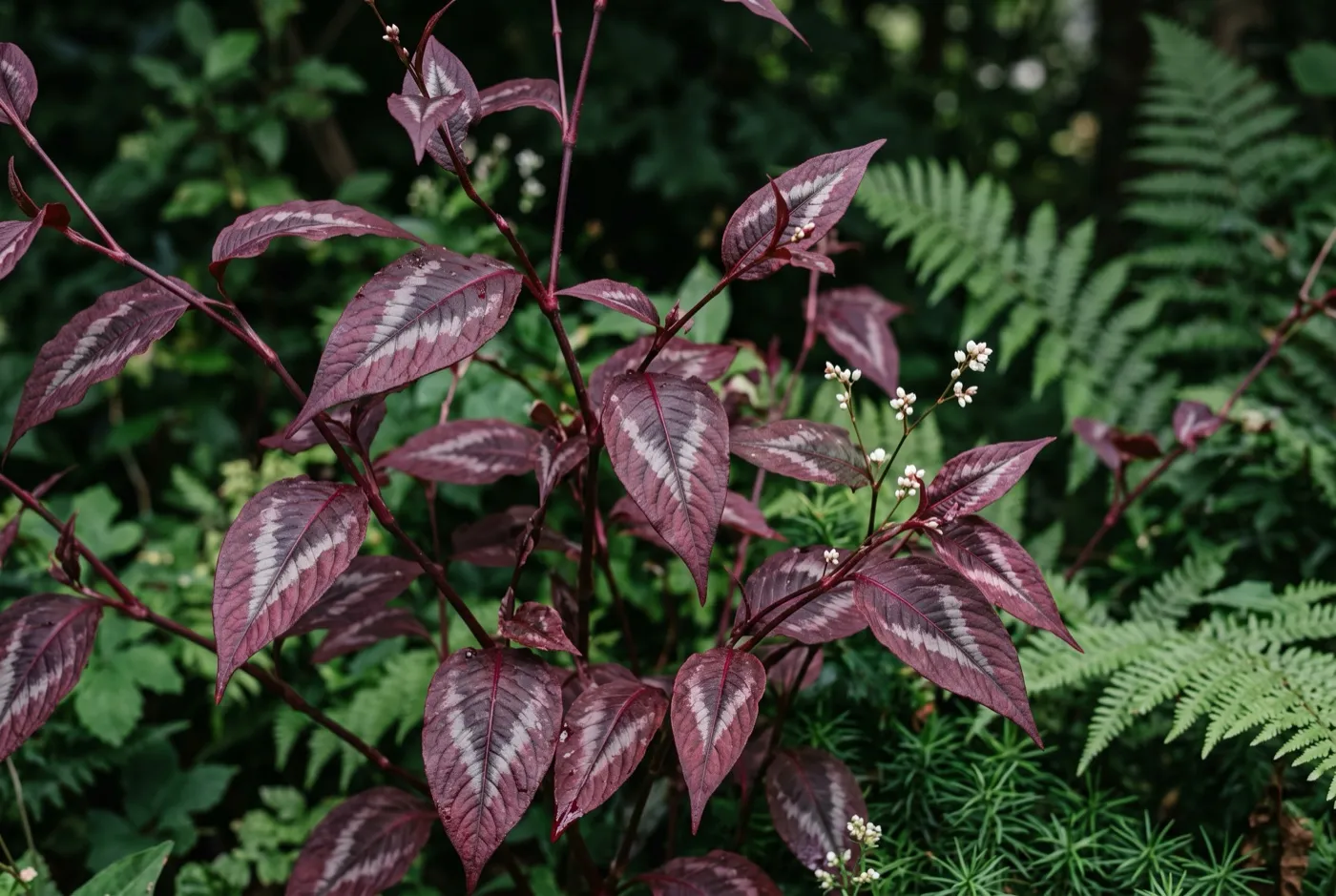 ‘Red Dragon’ earns its place on leaves alone: purple, silver-marked foliage from April to the frosts.
Where does persicaria grow best? Soil, sun and moisture
Persicaria grows best in soil that holds moisture, in full sun or part shade. That single sentence covers most of its cultivation, and it is why the plant is such a gift to anyone gardening on heavy ground. The conditions that rot Mediterranean perennials are exactly what bistorts want.
Moisture decides the display. On damp soil, ‘Firetail’ flowers for 12-14 weeks. On dry soil it manages half that. P. bistorta ‘Superba’ goes further and thrives with its feet properly wet, at a pond margin or in ground that floods in winter, which puts it among the most useful plants for wet and boggy soil you can buy.
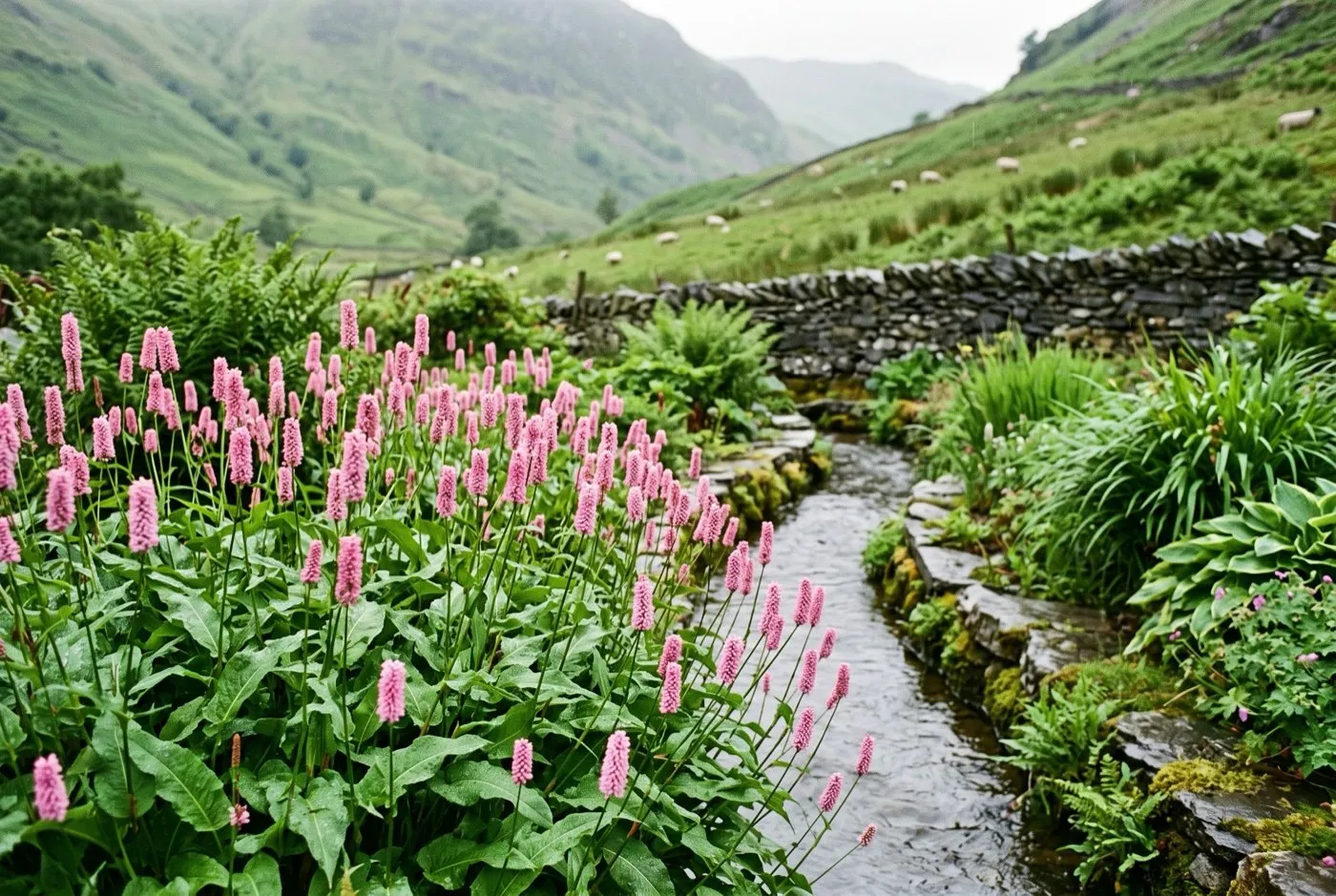 ‘Superba’ at a streamside. The wetter the ground, the happier this early-flowering bistort grows.
How and when to plant persicaria
Preparation is minimal. Dig a hole twice the width of the rootball, work a bucket of garden compost into the base on poor ground, and set the crown level with the soil surface. Water in well, then mulch 5cm deep with compost or bark, keeping it clear of the crown. That mulch matters more here than for most perennials, because it locks in the moisture that drives the long flowering season.
 P. affinis knitting along a path edge. The spikes open pink and age red, so the mat carries two colours at once.
Persicaria care through the year
The one timing rule worth underlining is the cut-back. Leave the stems standing over winter. The rusty seedheads of ‘Firetail’ hold their shape through frost, look superb rimed in December, and give finches something to work on. Cut the whole plant to the ground in late February or March. Border types do not need the Chelsea chop that keeps taller daisies upright; persicaria stems are self-supporting even at 1.2m.
Month-by-month persicaria calendar
| Month | Task |
|---|---|
| January | Leave seedheads standing; enjoy the frosted spikes, no action needed |
| February | Cut all top growth to the ground late in the month |
| March | Mulch 5cm with compost; lift and divide congested clumps as shoots appear |
| April | Main spring planting month; water new plants in dry weeks |
| May | ’Superba’ opens its first pink pokers; hoe off any unwanted seedlings |
| June | P. affinis mats start flowering; water first-year plants weekly in dry spells |
| July | Amplexicaulis cultivars begin; the display runs from now to the frosts |
| August | Peak flowering; nothing to do but watch the bees |
| September | Autumn planting and division window opens; colour continues |
| October | Deadhead spent spikes now if you want to prevent self-seeding |
| November | First frosts end flowering; leave everything standing |
| December | Check mats of P. affinis have not crept over small neighbours; enjoy the russet foliage |
When and how do you divide persicaria?
Divide persicaria every three to four years, in early spring or autumn, to keep flowering strong and the clump within bounds. This is the plant’s only real maintenance demand, and it doubles as your propagation method, because named cultivars must be divided rather than grown from seed if you want them true.
Spring division suits heavy, cold soils best because the plants restart into warming ground. On lighter soil, September works equally well. If you are planning a wider splitting session, persicaria slots into the same window as the other perennials to divide in late spring, and the technique is covered step-by-step in our guide to propagation by cuttings, division and layering.
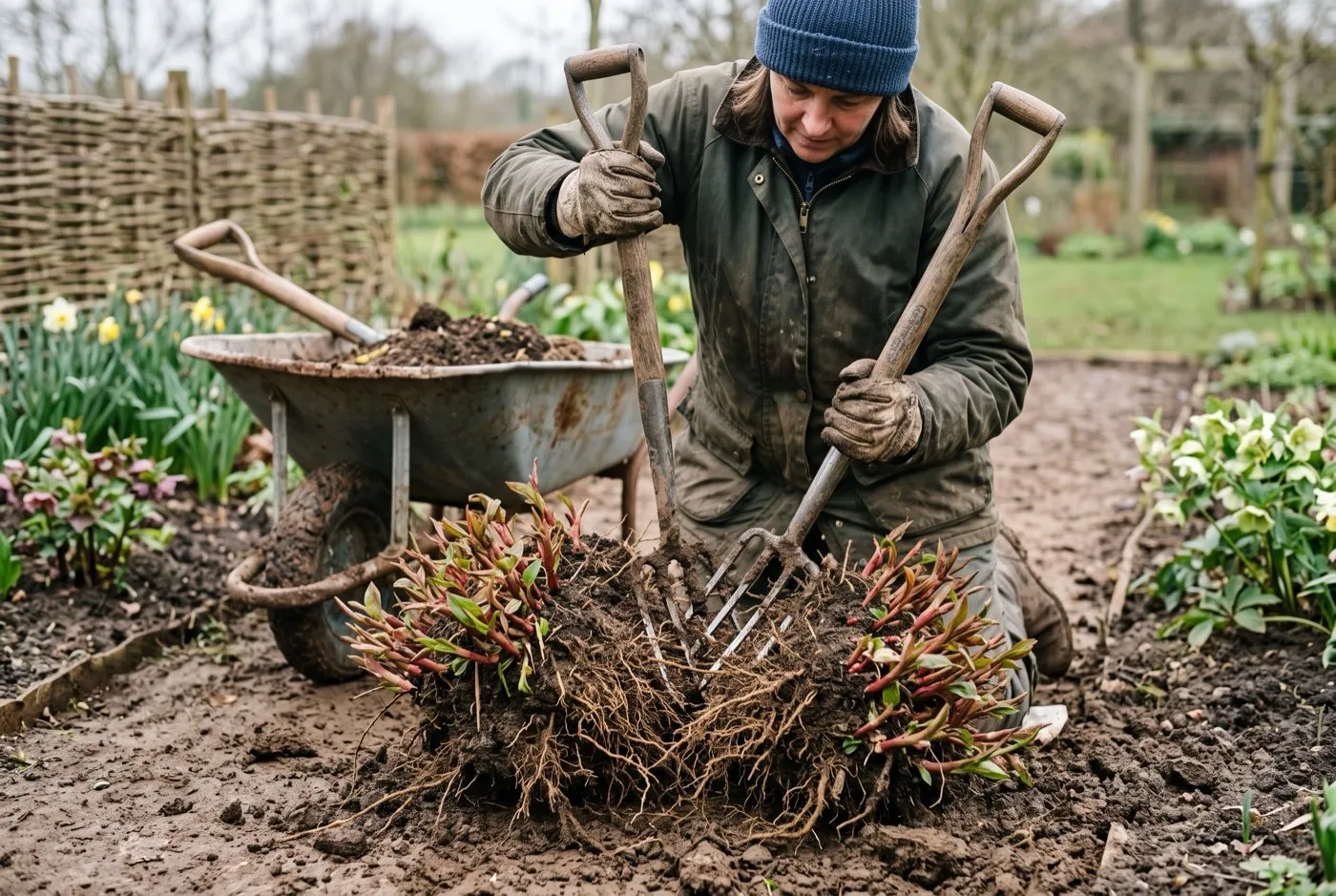 Two forks back-to-back split a three-year clump in minutes. Replant the outer sections and bin the woody core.
Does persicaria spread or self-seed? Keeping it in bounds
Garden persicarias spread, but slowly, shallowly and honestly, and control takes minutes with a spade. It is worth being precise here, because “does it spread?” is the question the knotweed name plants in everyone’s head.
P. affinis runs as a surface mat. It colonises quickly on moist soil, rooting as it goes, which is exactly what you want from groundcover and exactly what you watch at the edges. Keep it away from small alpines. A shear along the boundary once a year holds the line, and stray rooted stems pull up by hand.
Persicaria for late-summer borders and prairie planting
Persicaria amplexicaulis is one of the backbone plants of the modern prairie style, and its cultivars appear in naturalistic schemes across the country, Piet Oudolf has used ‘Firetail’ for decades. The reason is structural: those upright spikes keep their form and colour for months, then hold their architecture as seedheads deep into winter, which is precisely what perennial meadow planting asks of a plant.
The classic partners are grasses. Thread ‘Rosea’ or ‘Firetail’ through Calamagrostis ‘Karl Foerster’, Molinia or deschampsia and the pokers flicker among the stems every time the wind moves. Among flowering neighbours, it pairs naturally with rudbeckia, echinacea, sanguisorba, eupatorium and late asters, all plants that share its taste for moisture-holding soil and its August-October peak.
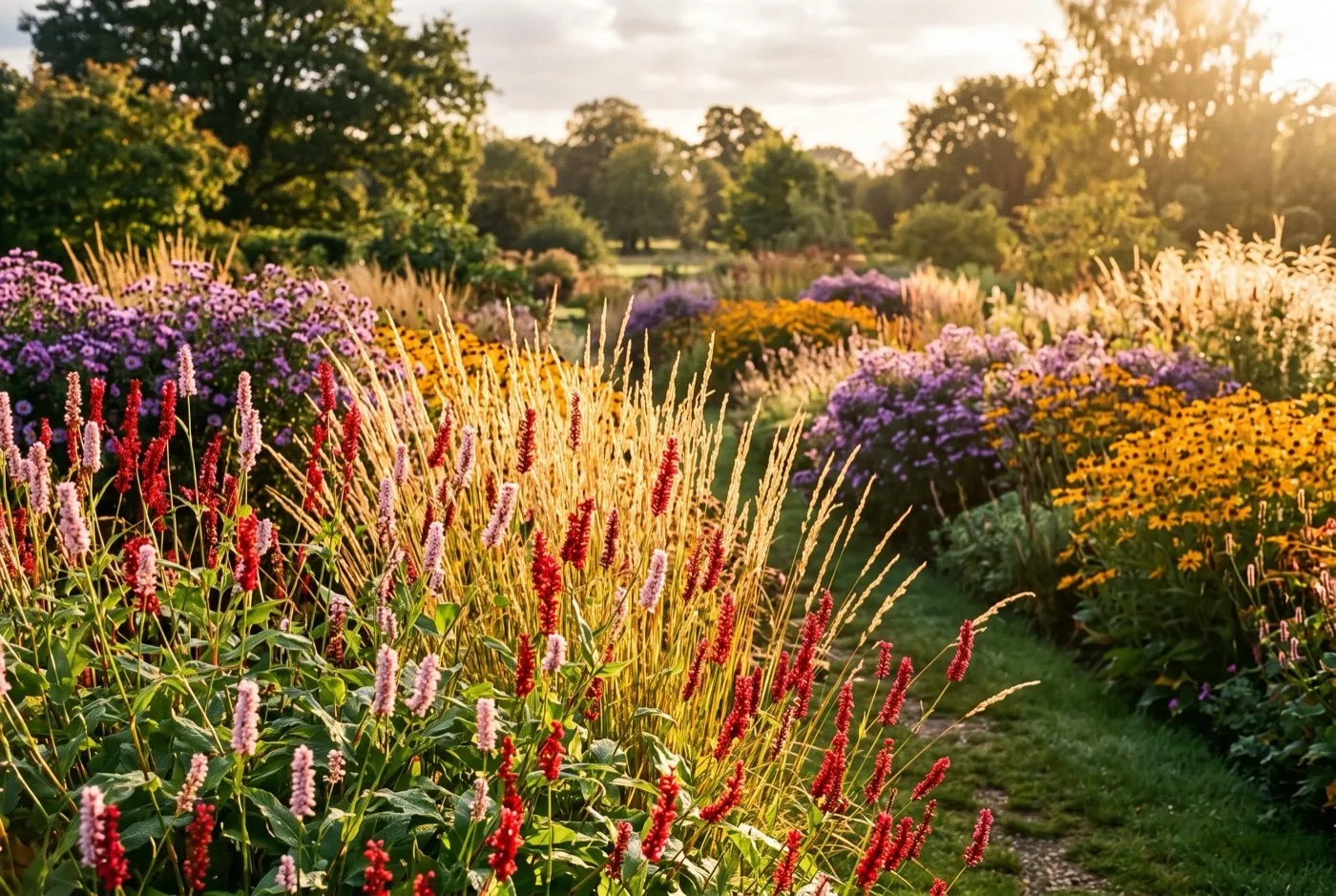 Crimson and pink spikes flickering through grasses in a prairie-style scheme. The pokers hold this form for months.
Do not assume the style needs acreage, either. A canalside strip, a suburban front garden or a 3m border takes the same recipe at smaller scale: one grass, one persicaria, one daisy, repeated. ‘JS Caliente’ at 70cm makes the whole prairie look workable in a small plot.
 A canalside border in its fourteenth week of persicaria colour. Damp ground beside water suits bistorts perfectly.
Common persicaria mistakes
Most persicaria problems come from the same short list of errors. None is fatal, and all are avoidable.
Refusing it because of the knotweed name
The most common mistake happens at the nursery, not in the garden. “Knotweed” on the label sends people running from one of the best-behaved late perennials available. Garden bistorts are clump-formers with shallow roots; the name is guilt by family association only.
Planting it in dry, thin soil
Persicaria on drought-prone sand gives scorched leaves and a six-week season instead of fourteen. If your soil is dry, either improve it with organic matter and mulch hard, or choose genuinely drought-proof plants instead. This is a moisture plant.
Letting P. affinis loose among small treasures
The groundcover mat does its job too well next to alpines and dwarf bulbs. Give it a path edge, a slope or a kerb to run against, and shear the boundary once a year.
Never dividing the clump
After four or five years an undivided clump goes woody in the centre and flowering thins. Lift, split, replant the outer sections. It takes twenty minutes and resets the plant for another four years.
Cutting everything down in November
Autumn tidying throws away three months of winter structure and the frosted seedheads that finches pick over. Leave the stems standing and cut in late February instead. The plant does not care either way, but your winter garden does.
Frequently asked questions
Is persicaria the same as Japanese knotweed?
No. They share a family, Polygonaceae, but Japanese knotweed is Reynoutria japonica, a different genus with deep rhizomes and 2-3m bamboo-like canes. Garden persicarias are soft-stemmed clump-formers with shallow, fibrous roots that lift out with one spade. Planting garden bistorts brings none of the legal or mortgage problems attached to knotweed.
Is persicaria invasive in the UK?
Garden persicarias are not classed as invasive, with one exception: Persicaria wallichii, Himalayan knotweed, is listed on Schedule 9 of the Wildlife and Countryside Act, so never plant it. Border types like ‘Firetail’ form expanding clumps, and Persicaria affinis runs as a shallow surface mat. Both are controlled with a spade in minutes.
Does persicaria prefer sun or shade?
Both, provided the soil holds moisture. Persicaria amplexicaulis cultivars flower most heavily in full sun on damp soil and still perform well in part shade. ‘Red Dragon’ colours best with some shade. The combination to avoid is full sun on thin, dry soil, which scorches the foliage and shortens the flowering season.
Should persicaria be cut back in autumn or spring?
Spring. Leave the stems and seedheads standing over winter; the rusty spikes hold their shape through frost and feed birds. Cut everything back to the ground in late February or March before new growth appears. If self-seeding is a worry, deadhead the spent spikes in October instead, then leave the foliage.
How often should you divide persicaria?
Every three to four years, in early spring or autumn. Lift the whole clump, split it with two forks back-to-back or a sharp spade, and replant vigorous outer sections 60cm apart. Division keeps flowering strong, limits the clump’s slow outward march, and gives you free plants that establish within one season.
Why is my persicaria not flowering?
Dry soil is the usual cause. Persicaria amplexicaulis flowers on and off from July to frost only when its roots stay moist; in drought it stalls and produces leaf instead. Deep shade halves flower count too. Mulch 5cm deep in spring, water in prolonged dry spells, and move the plant if it sits in full shade.
Can persicaria grow in pots?
Yes, but only the compact types are practical. Persicaria affinis makes a good container mat and ‘JS Caliente’, at 70cm, suits a large pot of 40cm or more. Use loam-based compost, keep it reliably damp all summer, and divide every second spring. Tall cultivars like ‘Rosea’ dry out too fast in containers.
Once your pokers are settled in, round out the season around them with our pick of the best autumn flowers for UK gardens.
Our team produces practical UK gardening guidance from source research, contributor records and established horticultural practice. Editorial standards are overseen by Matt W.