Key takeaways
- Boggy soil stays wet but is not underwater, unlike a pond margin
- Candelabra primulas and astilbe are the most reliable bog perennials
- Marsh marigold and flag iris cope with the wettest standing margins
- Most bog plants want part shade and soil rich in organic matter
- Big-leaved ligularia and rodgersia give dramatic foliage in damp shade
- Dig in 5 to 10cm of compost before planting heavy wet clay
Boggy soil is not the same as a pond. It stays wet but is rarely under standing water for long. Get that distinction right and the planting almost looks after itself.
Boggy soil or pond margin, and why it matters
The single most useful step is working out how wet your ground actually is. Two very different conditions get lumped together as wet soil, and the plant lists for each barely overlap.
Boggy soil stays moist all year but is not submerged. Water drains slowly after rain, the surface may puddle briefly, and the ground feels spongy underfoot. This suits the largest group of plants, including primulas, astilbe and ligularia. A pond margin holds shallow standing water at least part of the year. Only true marginal aquatics, such as flag iris and marsh marigold, cope with roots underwater.
Test your spot by digging a 30cm hole and watching it after rain. If water sits in the bottom for days, you have a wet margin. If the soil is damp but the hole drains within a day, you have boggy ground. Our guide to the best pond plants for UK gardens covers true aquatics, while this article focuses on damp soil.
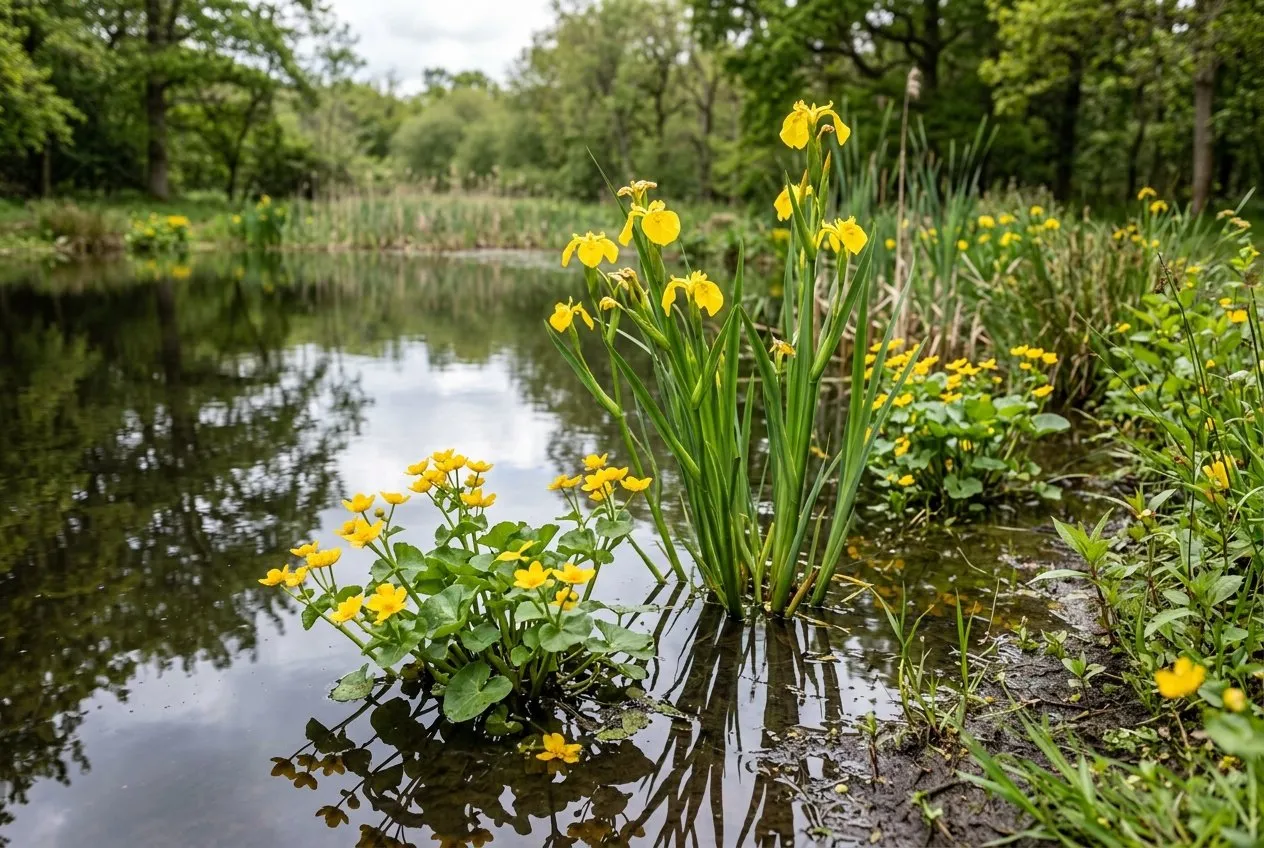 True marginals like flag iris and marsh marigold sit in standing water. Bog plants want damp soil, not submersion.
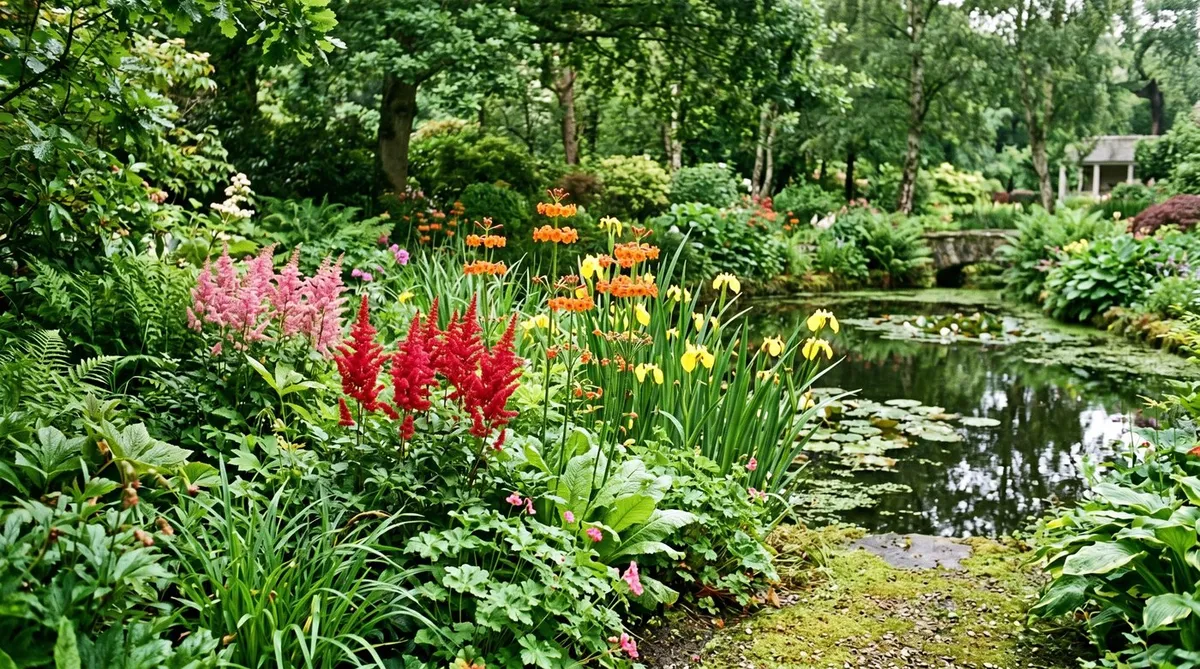
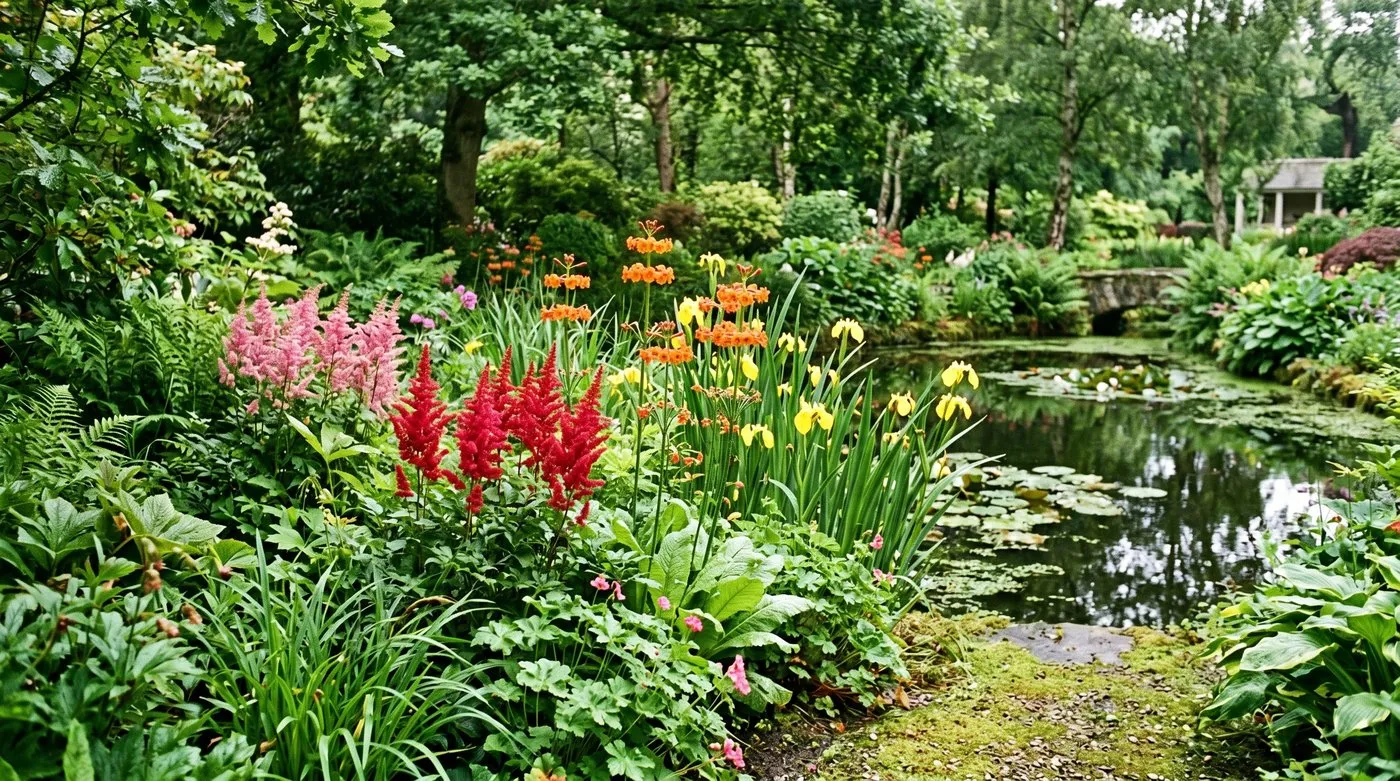 A worked bog border. Primulas, astilbe and iris turn a winter-flooding corner into the richest planting in the garden.
The most reliable perennials for boggy ground
Bog perennials are the foundation of damp planting. They return each year, bulk up fast in the moisture, and many self-seed into generous drifts. These earned their place across five wet seasons.
Candelabra primulas, such as Primula bulleyana and Primula japonica, top the list. They flower May to July in tiered whorls at 60cm and self-seed freely into colonies. Astilbe carries feathery plumes from June to August at 30 to 90cm, in red, pink and white. Its only demand is that the soil never dries out. Our guide to growing astilbe covers dividing the clumps.
Iris sibirica sends up slender blue or white flowers in June at 90cm and copes with damp better than most. Filipendula meadowsweet and Trollius globe flower both thrive in the same conditions. For colour into autumn, Lobelia cardinalis carries scarlet spikes on red-flushed stems until September. Persicaria does the same late-season job on damp clay, carrying bottlebrush spikes from July until the first frosts. Sanguisorba is another damp-meadow native worth adding, with wiry stems to 1.2m that never need staking.
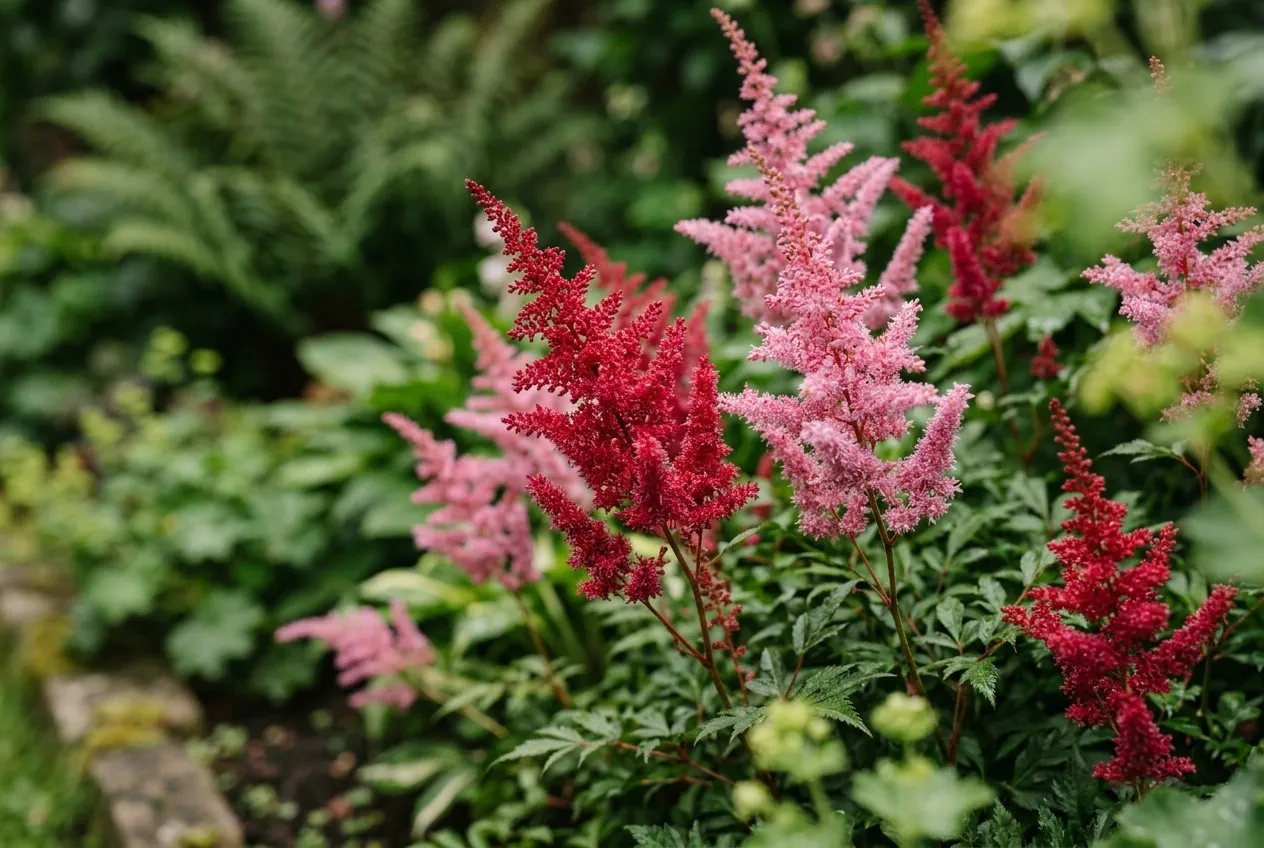 Astilbe plumes light up damp shade from June to August. Its one rule is that the soil must never dry out.
Gardener’s tip: Let candelabra primulas set seed before you tidy them. The shed seed germinates in the damp soil and a single plant becomes a drift of 40 or more within three years, at no cost and with no effort.
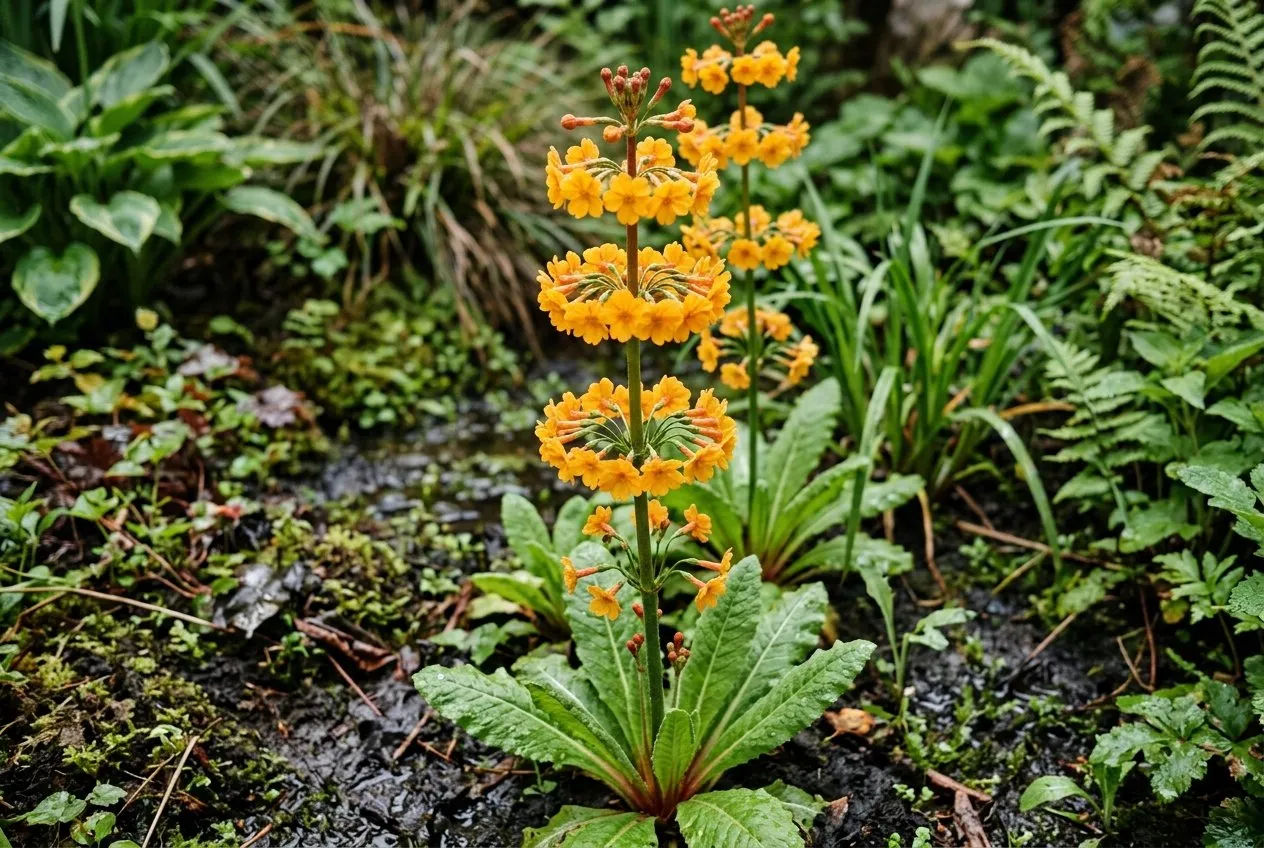 Candelabra primulas self-seed into drifts in damp soil. The cheapest way to fill a bog border over a few seasons.
Big-leaved plants for drama in damp shade
Architectural foliage is where bog gardens beat any dry border. Constant moisture lets plants build huge leaves that would scorch on normal soil. These give structure and a near-tropical feel in a damp, part-shaded corner.
Ligularia, such as The Rocket and Desdemona, throws up spikes of yellow flowers above bold rounded leaves, reaching 1.5m in flower. It wilts dramatically in dry soil and recovers when watered, a clear signal of its thirst. Rodgersia carries handsome divided leaves and creamy plumes at 1.2m, thriving in the same damp shade.
For the wettest, largest spaces, Darmera peltata spreads round umbrella leaves up to 40cm across, with pink flowers appearing before the foliage in spring. Gunnera manicata is the giant of the group, with leaves over 1.5m wide, but it needs a crown mulch to survive a hard UK winter. These big-leaved plants also tolerate part shade well, so see our roundup of the best plants for shade in UK gardens for companions.
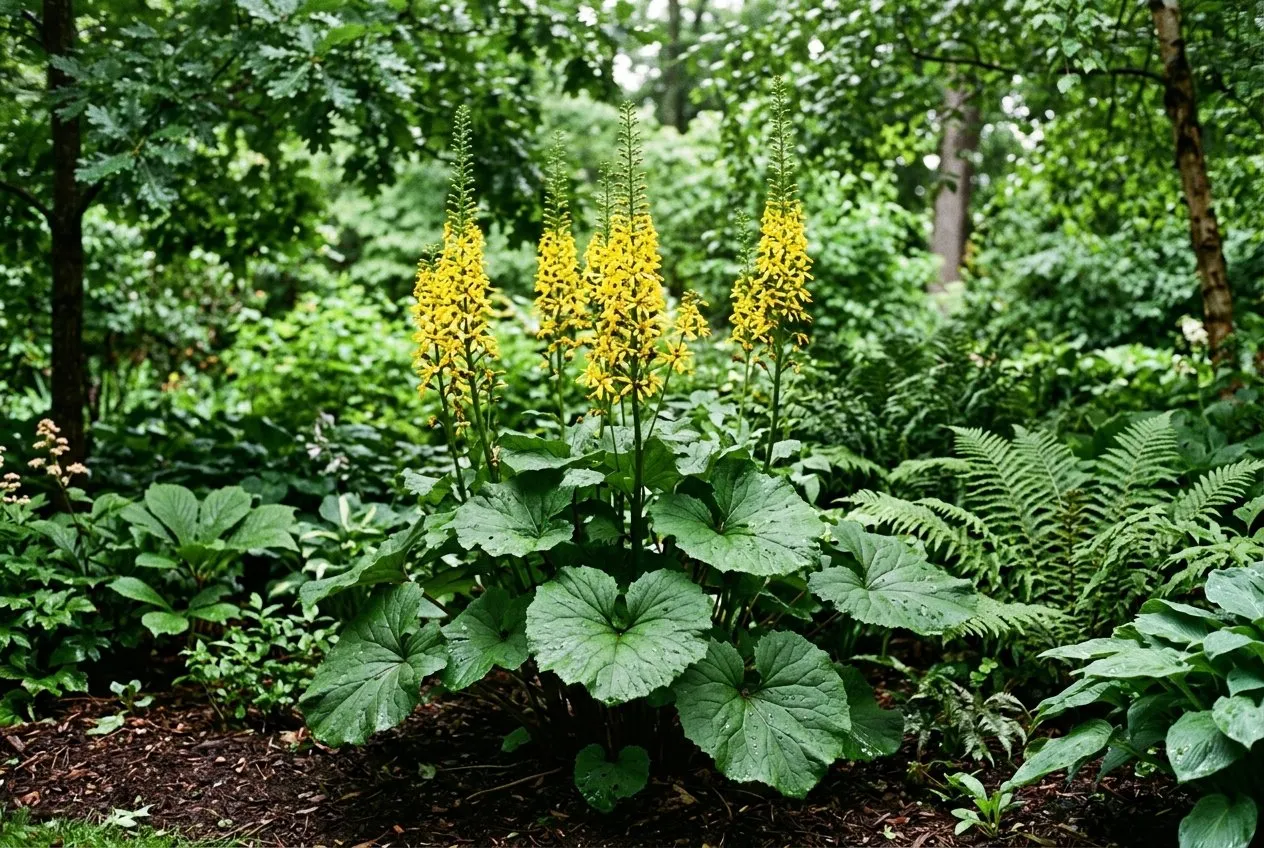 Ligularia gives near-tropical drama in damp shade. It wilts when dry and bounces back within hours of a soak.
Shrubs and ferns that cope with wet feet
Wet-tolerant shrubs add height and winter structure that perennials cannot. They also drink large volumes of water, which helps dry out the wettest corners over time.
Cornus alba dogwood gives bright red or yellow winter stems and tolerates damp clay without complaint. Willow, including the colourful Salix alba vitellina, copes with the wettest ground of any shrub, but its roots seek out drains and pipes, so keep it well clear of the house. Elder and Viburnum opulus guelder rose both suit damp hedging and feed wildlife.
For ground-level texture, ferns thrive in damp shade. The royal fern, Osmunda regalis, reaches 1.5m in boggy soil and turns rich gold in autumn. The shuttlecock fern, Matteuccia struthiopteris, spreads by runners in moist ground to form a colony. Underplant with sedges, such as Carex elata Aurea, for fine evergreen contrast. Hostas also work on the drier edge, covered in our guide to growing hostas.
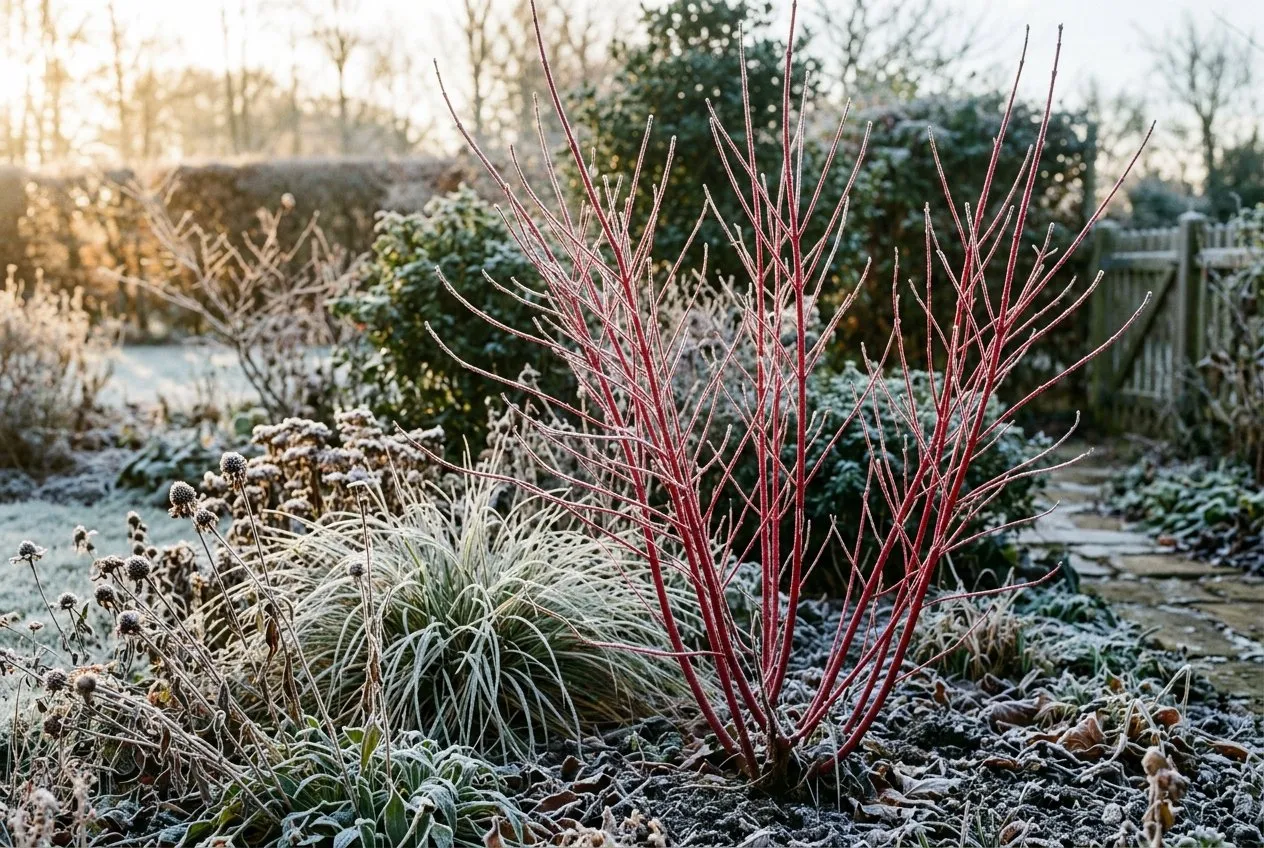 Cornus alba thrives on wet clay and earns its space with glowing winter stems once the leaves drop.
Wet-soil plants compared by height, moisture and shade
This table ranks the most useful damp-ground plants by how wet a spot they tolerate. Match the moisture level to your tested conditions, then check height and aspect before planting.
| Plant | Type | Height | Wettest spot it tolerates | Flowering months | Aspect |
|---|---|---|---|---|---|
| Marsh marigold | Marginal perennial | 30cm | Standing water margin | March to May | Sun or part shade |
| Flag iris (Iris pseudacorus) | Marginal perennial | 1.5m | Standing water margin | May to June | Sun or part shade |
| Candelabra primula | Perennial | 60cm | Boggy, never dry | May to July | Part shade |
| Astilbe | Perennial | 30 to 90cm | Boggy, never dry | June to August | Part shade |
| Ligularia | Perennial | 1.5m | Boggy, never dry | July to August | Part shade |
| Iris sibirica | Perennial | 90cm | Reliably moist | June | Sun or part shade |
| Cornus alba (dogwood) | Shrub | 2m | Wet clay | Foliage and stems | Sun or part shade |
| Hosta | Perennial | 30 to 75cm | Moist, not winter-wet | July (foliage plant) | Part to full shade |
The gold standard for a lasting bog garden is layering moisture tolerance. Put true marginals like marsh marigold at the wettest point, the bulk of bog perennials on permanently damp ground, and moisture-lovers such as hostas on the drier edge. Match each plant to the right band and the planting thrives with almost no intervention. For more on improving difficult ground, see our guide to the best plants for clay soil.
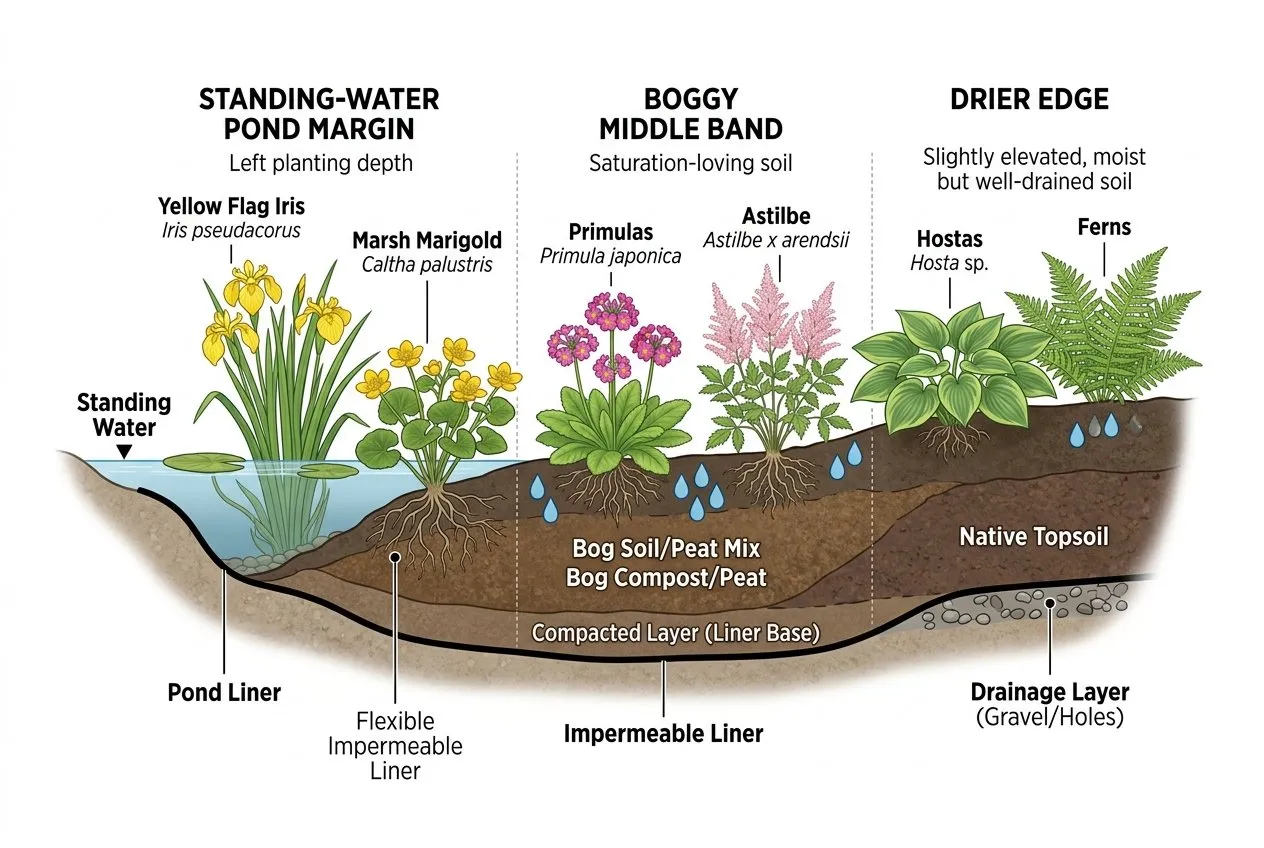 Plant in moisture bands. Marginals at the water, bog perennials in the middle, moisture-lovers on the drier edge.
How to prepare and plant boggy ground
Soil preparation decides whether bog plants establish or sulk. Even moisture-lovers want air at the roots and food in the soil, so heavy waterlogged clay needs improving first.
Plant in spring, from March to May, when the soil is warming and growth is fast. Water new plants in even though the ground is wet, to settle the soil around the roots. Mulch with composted bark to lock in moisture through summer. If the wet comes from compaction rather than a naturally low spot, our guide to improving drainage in clay soil and lawns explains when a soakaway is worth the work.
A month-by-month plan for a bog garden
Damp planting has a clear rhythm through the year. This calendar keeps a bog border looking its best and timed to UK conditions.
| Month | Action |
|---|---|
| January | Plan and order bog plants, check no crowns are heaving in frost |
| February | Cut back old fern fronds and dead perennial stems before new growth |
| March | Dig in compost, plant marsh marigold and early primulas |
| April | Main planting month, plant astilbe, ligularia and iris |
| May | Candelabra primulas peak, water any new plants in dry spells |
| June | Iris sibirica and astilbe flower, mulch to hold summer moisture |
| July | Ligularia and later primulas flower, deadhead to tidy |
| August | Keep soil damp, never let bog plants dry out in heat |
| September | Lobelia cardinalis flowers, divide overgrown clumps |
| October | Cornus and fern foliage colours, leave seed heads for wildlife |
| November | Mulch gunnera crowns against frost, clear fallen leaves from primulas |
| December | Review which plants thrived, note the wettest spots for spring |
Primulas are not maintenance-free. The drifts crowd over time, so lift and thin them every few years to keep flowering strong. But for sheer return on a single planting, nothing else in the bog border comes close.
Common mistakes when planting wet soil
Most wet-soil plantings fail for predictable reasons. These are the errors that waste plants and money.
- Treating boggy soil like a pond. Plants that want standing water rot in merely damp soil, and bog plants drown in a true margin. Test how wet the ground is first.
- Planting border perennials and hoping. Lupins, delphiniums and most Mediterranean plants rot in winter wet. Choose true bog plants instead of fighting the conditions.
- Skipping soil improvement. Even moisture-lovers want air and food at the roots. Dig in organic matter and raise crowns on the wettest spots.
- Planting thirsty willows near drains. Willow roots seek out water and can block pipes or crack drains. Keep them at least 10m from any drainage or foundations.
- Letting the soil dry in summer. Bog plants have shallow, thirsty roots. A dry August kills astilbe and ligularia faster than any winter flood. Mulch and water in heat.
Frequently asked questions
What plants grow well in wet boggy soil?
Candelabra primulas, astilbe, ligularia, rodgersia and Iris sibirica thrive in boggy soil. These cope with permanently moist ground that would rot most border perennials. Add marsh marigold and flag iris for the wettest spots. Most prefer part shade and rich, humus-heavy soil.
What is the difference between boggy soil and a pond margin?
Boggy soil is wet but not underwater, while a pond margin holds standing water. Bog plants want moisture without submersion. Marginal aquatics like flag iris tolerate roots in shallow water. Match the plant to whether the ground is damp or genuinely flooded.
Can I improve boggy soil or should I just plant for it?
Planting for it is usually easier and cheaper than draining. Adding organic matter improves structure and crown health. If the wet comes from compaction, a soakaway or land drain helps. For a naturally low, wet spot, embrace it with bog plants instead.
Do any shrubs grow in wet soil?
Yes, dogwood, willow and elder all tolerate wet ground. Cornus alba gives bright winter stems and copes with damp clay. Willows drink huge amounts of water and suit the wettest corners. Keep thirsty willows well away from drains and house foundations.
Will hostas grow in boggy soil?
Hostas grow well in reliably moist soil but dislike standing winter water. They thrive on the drier edge of a bog garden in part shade. Slugs are the main problem in damp conditions. Choose thick-leaved varieties, which resist slug damage better than thin ones.
Why do my plants keep dying in wet soil?
Most border perennials rot when their crowns sit in cold, airless winter wet. Roots starve of oxygen in waterlogged ground. Either switch to true bog plants or raise the planting line with organic matter. Improving drainage on compacted clay also helps.
Our team produces practical UK gardening guidance from source research, contributor records and established horticultural practice. Editorial standards are overseen by Matt W.