Key takeaways
- Celosia is a half-hardy annual rated RHS H2: frost kills it and nights below 5C damage it
- Three forms to choose from: crested cockscombs, feathery plumes and slender wheat-type spikes
- Sow late February to April under glass at 21-25C; germination takes 7-14 days
- The roots hate disturbance, so sow in modules or soil blocks and never tease seedlings apart
- A cold check below 10C stunts young plants and forces premature, undersized flower heads
- Cut stems last 10-14 days in a vase, and the heads air-dry with their colour intact
What is celosia and which type should you grow?
Celosia is a half-hardy annual from the warm parts of Africa and Asia, grown for flower heads unlike anything else in a UK garden. Botanically most garden forms are Celosia argentea, and the common name cockscomb strictly belongs to the crested types, though it gets used for all of them. The RHS rates it H2: happy down to about 5C, damaged below that, dead at the first frost.
Garden celosias come in three distinct forms, and choosing between them is the first decision.
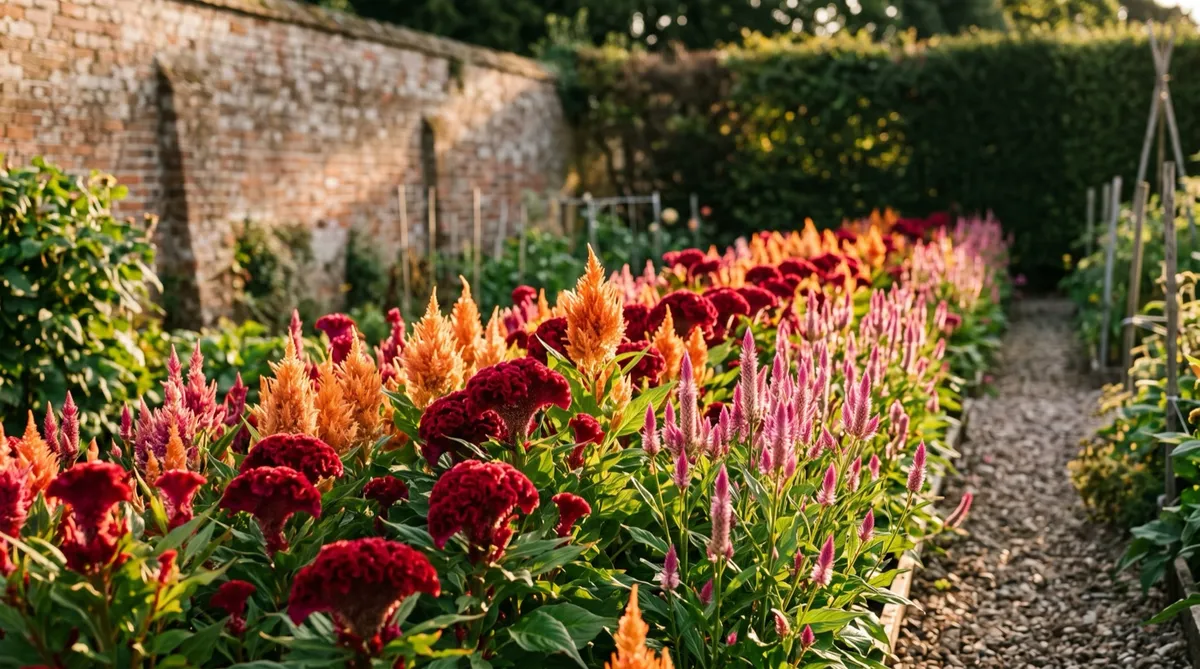
Cristata, the crested cockscombs. These carry dense, folded, velvet combs that look like coral or a rooster’s crest. Heads on cut flower varieties reach 10-20cm across in crimson, burgundy, orange, gold and pink. They are the show-stoppers, and florists pay well for them.
Plumosa, the plumed celosias. These produce soft, feathery, flame-shaped plumes. Most bedding celosias belong here, from 20cm dwarfs for pots and edging up to 60cm plants for the border. This is also the form sold as a pot plant in supermarkets.
Spicata, the wheat or flamingo celosias. These send up slender, tapering spikes on tall branching plants, usually pink or purple fading to silver. They are airier and more graceful than the other two, superb for cutting and the easiest form to dry.
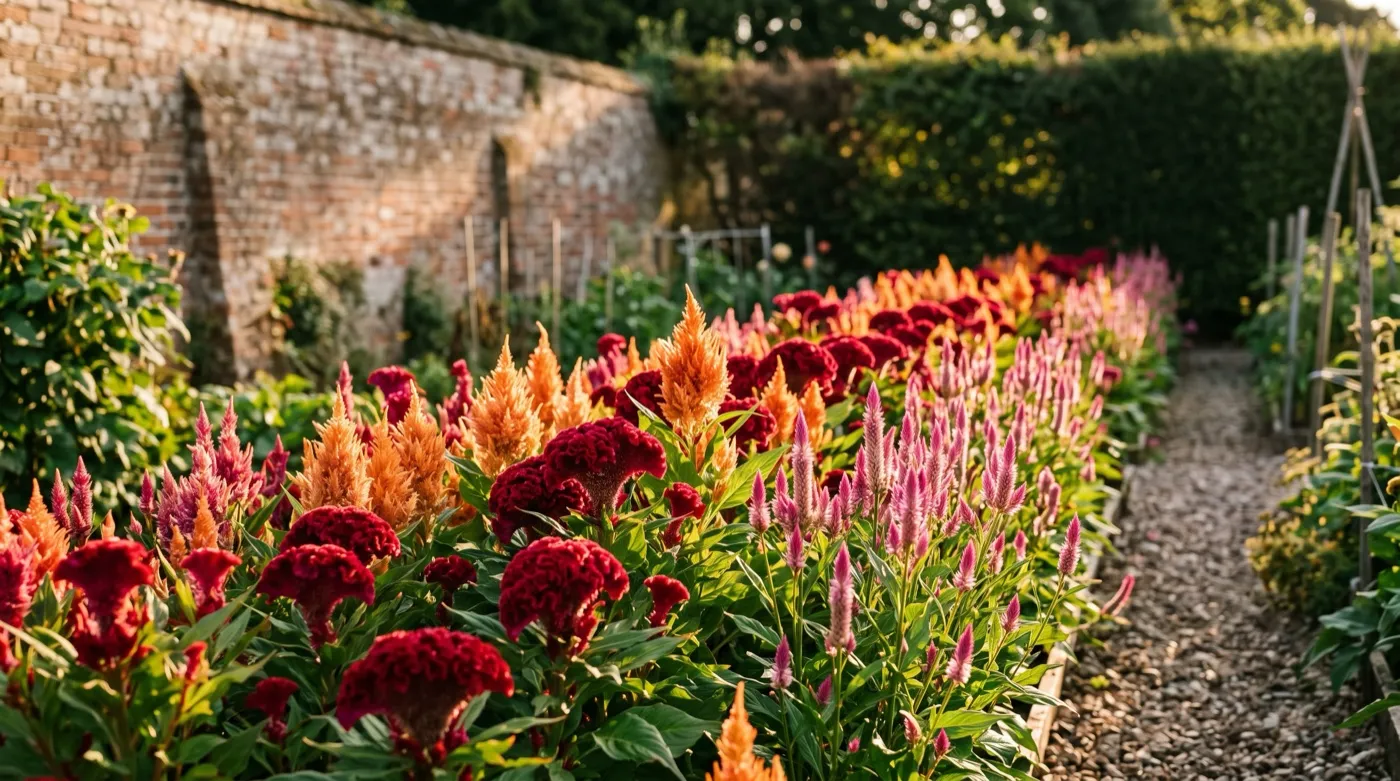 Celosia in a late-summer cutting row. The velvet texture and saturated colour are what no other annual matches.
The three celosia forms compared
| Form | What it looks like | Typical height | Best use |
|---|---|---|---|
| Cristata (crested) | Dense folded velvet combs, coral-like | 25-90cm | Premium cut flowers; dwarf types for bold bedding |
| Plumosa (plumed) | Soft feathery plumes, flame-shaped | 20-60cm | Bedding, containers, houseplant; shorter cut stems |
| Spicata (wheat) | Slim tapering spikes, pink to silver | 60-100cm | Cut flowers, drying, airy planting in borders |
If you are weighing celosia against other tender annuals for the same slot, our guide to the best half-hardy annuals puts it in context. Celosia earns its place on texture alone.
When to sow celosia seed in the UK
Sow celosia from late February to mid-April under glass at 21-25C. That temperature is the crux of the whole crop. Celosia demands more warmth to germinate than almost any other flower seed we sow, and a cold windowsill in February will give you nothing but mould. Use a heated propagator, an airing cupboard shelf, or the warmest spot in the house. At a steady 22-25C the seed comes up in 7-10 days. At 18-20C expect closer to two weeks, and below that germination turns patchy.
The second rule matters just as much: celosia hates root disturbance. Seedlings pricked out from an open tray sulk, stall, and often bolt into premature flower. Sow into modules, soil blocks or small pots instead, two or three seeds per cell, and snip out the weakest at soil level. Never tease tangled seedlings apart. The seed is tiny, so surface-sow onto firmed, moist compost and cover with the thinnest dusting of vermiculite. It needs some light to germinate, so do not bury it.
Water from below and keep the compost moist, never sodden. If module sowing is new to you, the routine in our guide to sowing seeds indoors applies to celosia exactly, just with the thermostat turned up.
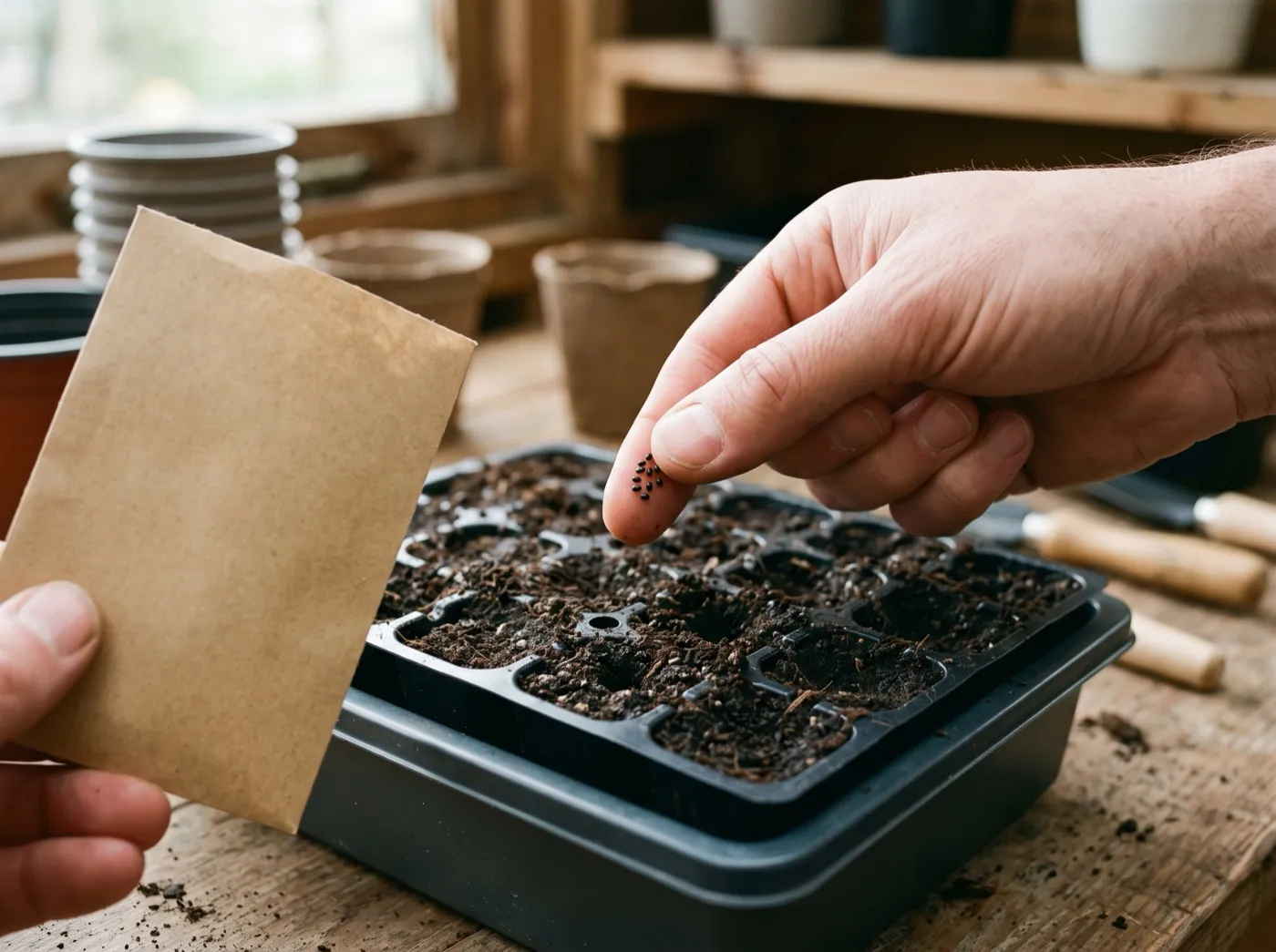 Modules, bottom heat and a thin vermiculite cover. Celosia germinates in 7-10 days at 22-25C and resents disturbance ever after.
Are celosia plug plants easier than seed?
Yes, plug plants are the easier route, and for many gardeners they are the sensible one. Buying plugs in April or May skips the two trickiest stages: the 21-25C germination and the long warm growing-on period. If you have no heated propagator and no bright frost-free space, plugs turn a demanding crop into a simple one.
Mail-order nurseries and garden centres sell celosia plugs from mid-spring, usually the bedding series in mixed colours, and increasingly the cut flower types too. Pot them on the day they arrive into 9cm pots of peat-free multi-purpose compost, handling the rootball whole. The no-disturbance rule applies to plugs as much as seedlings. Keep them somewhere bright at 15C or more until planting time.
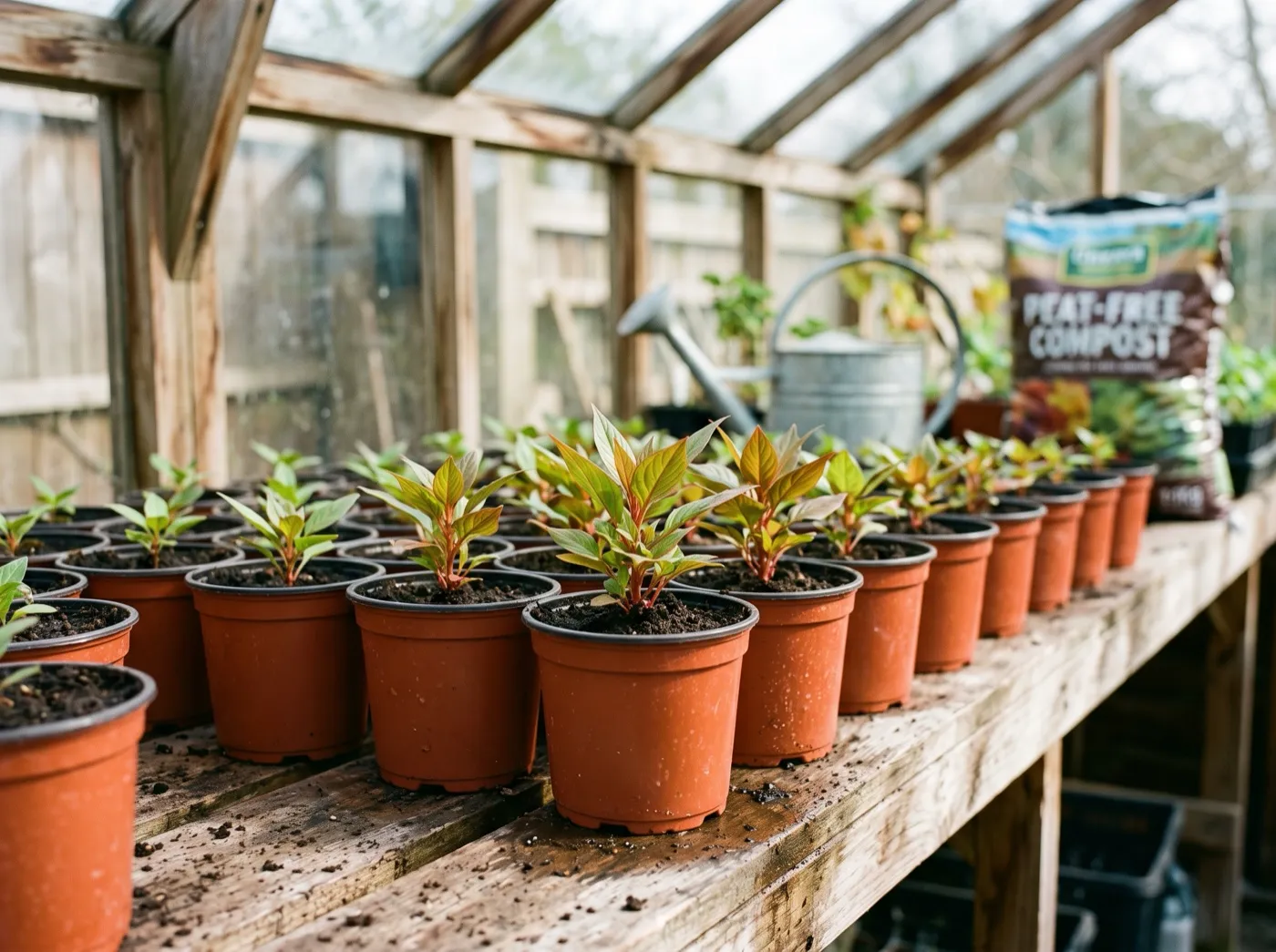 Plugs potted on whole into 9cm pots. Buying plants in April skips the heated-propagator stage entirely.
How to grow celosia on without a cold check
Keep young celosia above 15C, in full light, and moving steadily, because a single cold check can ruin the plant for good. This is the stage where most UK celosia fails. A seedling chilled below about 10C, even for a few nights, responds by stalling and initiating a flower head far too early. You get a stunted 20cm plant with a mean little button on top, and no amount of feeding recovers it. The same happens to plants left to go pot-bound.
So the growing-on routine is simple but firm. Once the seedlings have their first true leaves, move them somewhere bright at 16-20C. A warm windowsill works into April; an unheated greenhouse is too cold until well into May in most of the country. Pot on into 9cm pots as soon as roots show at the module base, lifting each rootball intact. Do not let roots circle the pot. If your seedlings start leaning and stretching for light, act quickly, because the fixes in our leggy seedlings guide work on celosia only while plants are young.
Water little and often, keeping compost evenly moist. Celosia sulks in cold wet compost and damps off easily when small, so err on the dry side and water in the morning. A half-strength liquid feed every 10 days from the 9cm-pot stage keeps growth moving without forcing it soft.
When can you plant celosia outside?
Harden plants off over 10-14 days first, and do it more cautiously than you would with cosmos or marigolds. Start with two hours in a sheltered spot on a mild day, build up gradually, and bring plants in at night for the whole first week. Never leave them out when nights threaten to drop below 8C. The full routine is in our hardening off guide, but with celosia the watchword is patience.
Give them fertile, well-drained soil in full sun, with shelter from wind for the tall cut flower types. Work in a bucket of garden compost per square metre before planting. Space bedding types 20-25cm apart and tall varieties 30cm in borders. Water in well, and keep watering through dry spells for the first month. Flowers start in July and keep coming until the first frost cuts the plants down, often well into October.
 Planting out in early June once frosts are done and the soil has warmed. Cold ground stalls celosia and triggers premature heads.
Can you grow celosia in pots and indoors?
Celosia grows very well in containers, and the plumed types double as short-term houseplants. The dwarf bedding series were bred for exactly this. A 30cm patio pot takes three dwarf plants and glows from July to October, and pots sited against a warm south-facing wall give celosia the microclimate it loves. Use a peat-free multi-purpose compost with a handful of grit, water when the top 2cm dries, and feed weekly with liquid tomato feed once flowering starts. Pot-grown plants dry out fast in August, so check them daily in hot spells.
One honest warning for outdoor pots: do not put them out before June. A container is even quicker to chill than a border, and one cold night undoes months of care.
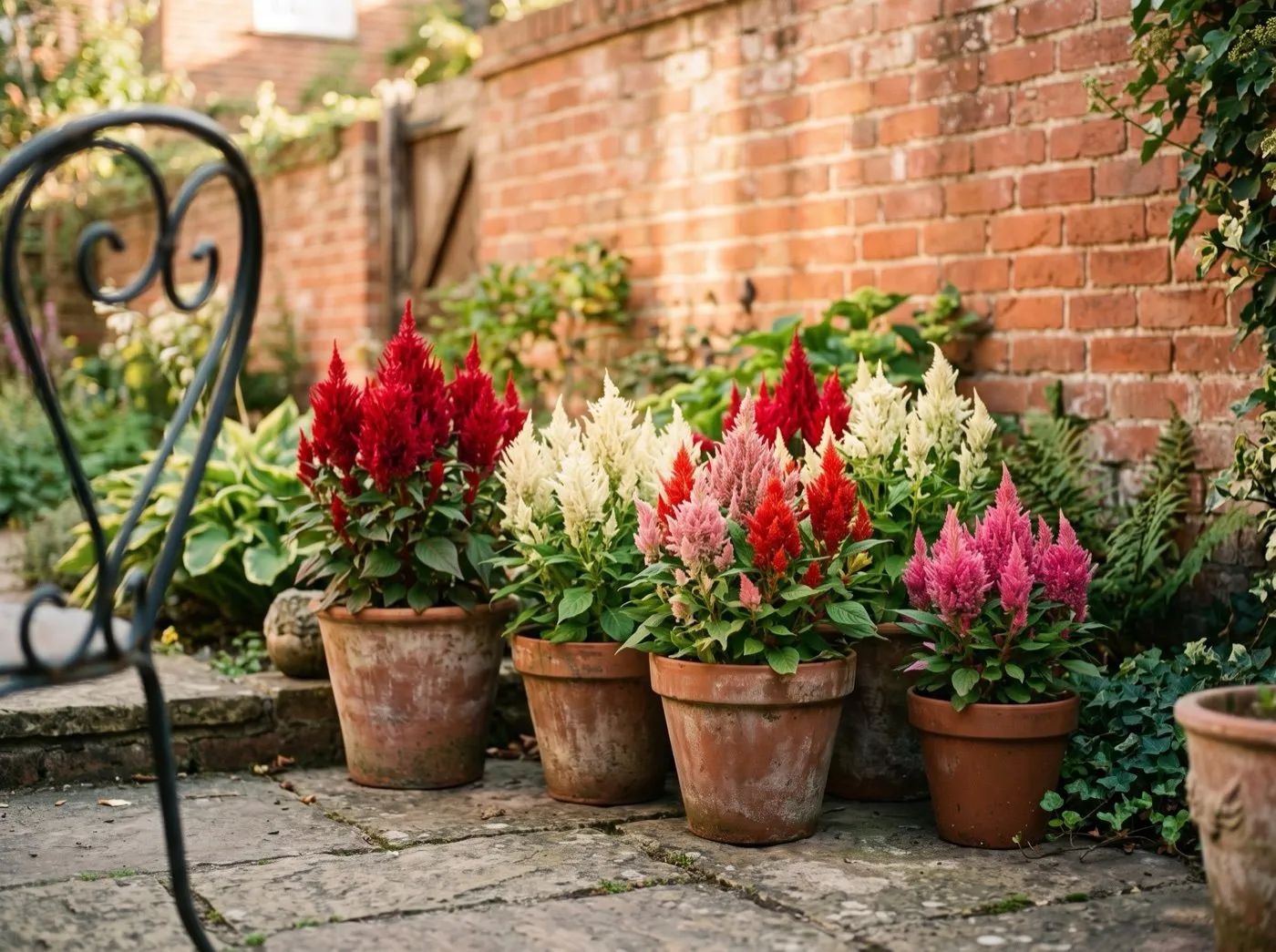 Dwarf plumed types in patio pots against a warm wall. Three plants fill a 30cm pot and flower into October.
How do you grow celosia as a cut flower?
Spacing and support. For cutting, plant closer than the packet says: 15-20cm apart in rows. Tight spacing pushes longer, straighter stems and, on the crested types, keeps head size manageable. Tall varieties need one layer of horizontal support netting at 30cm, fixed before the plants reach it. A 90cm ‘Cramer’s’ plant with a saturated velvet head catches the wind like a sail.
Pinching. Pinch the plumed and wheat types once, above the third or fourth leaf pair, when plants are 20-25cm tall. Each plant then throws 15-30 branching stems instead of one. Leave crested types unpinched if you want a single enormous exhibition comb, or pinch them for a spray of smaller heads. The technique is the same one covered in our pinching out cut flowers guide.
Harvest stage. Timing the cut matters more with celosia than most flowers. Cut crested types when the comb is fully formed and coloured but before it sets seed, which shows as dust dropping when tapped. Cut wheat types when the lower half of the spike is coloured. Cut in the cool of the morning, straight into water, and strip every leaf, because the foliage collapses days before the head tires.
Vase life and drying. Expect 10-14 days in the vase with a water change every two days. The full conditioning routine in our cut flower conditioning guide stretches it further. For drying, bunch six to eight stems, strip the leaves, and hang upside down somewhere warm, dry and airy, out of direct sun. Heads dry in two to four weeks and hold their colour better than almost anything else in the drying shed.
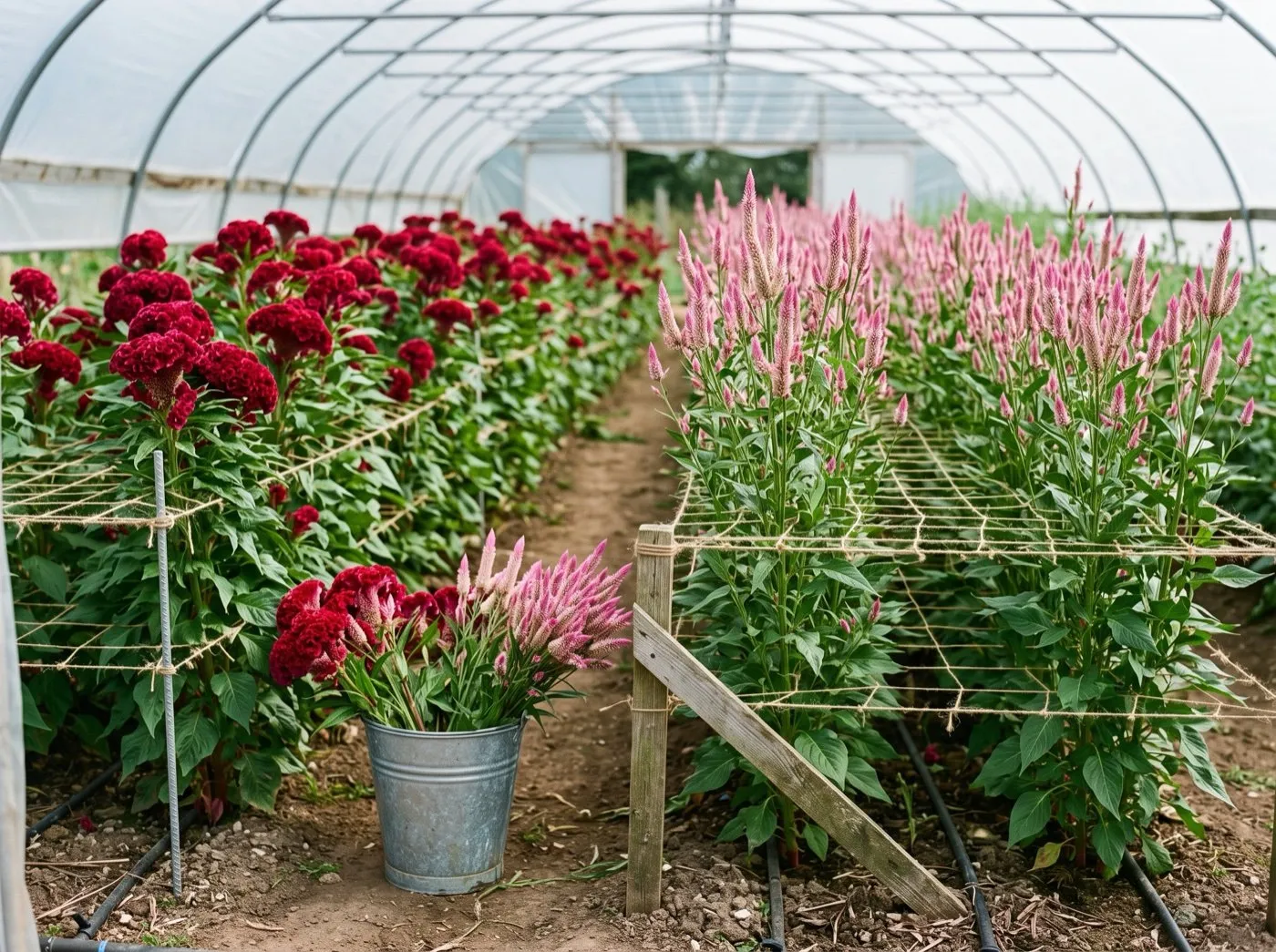 Cutting rows at 15-20cm spacing with netting fixed early. Close planting pushes long straight stems for the vase.
Which celosia varieties grow best in the UK?
Stick to varieties with a track record in cool-summer gardens, because UK conditions expose weak celosia breeding fast. These are the ones that have earned their space.
The ‘Cramer’s’ series are the florists’ crested types. ‘Cramer’s Amazon’ (magenta-rose), ‘Cramer’s Burgundy’ and ‘Cramer’s Rose’ give big velvet combs on 90-120cm plants. They want the best spot you have, or a polytunnel, but the heads are worth it.
The Century series is the reliable tall bedding plume, around 50-60cm, in scarlet, yellow, rose and cream. It shrugs off mixed summers better than most and cuts respectably too.
The Kimono series is the dwarf bedding and pot plume at 20-25cm, in a wide colour run from cream to scarlet. It is the one for containers, edging and windowsills.
‘Dragon’s Breath’ deserves a mention for its dark red leaves topped with scarlet plumes, a striking dot plant at 50cm.
Wheat and plumed types handle our climate best outdoors. The big exhibition combs appreciate cover in the north. Celosia also mixes well in the vase and the bed with the other tender cutting annuals; grow it beside zinnias and dahlias and you will have buckets of colour from July to the frosts.
Month-by-month celosia calendar
| Month | Task |
|---|---|
| January | Order seed; the good cut flower varieties sell out early |
| February | Late Feb: first sowing at 21-25C in modules on a heated propagator |
| March | Main sowing month; keep seedlings above 15C in full light |
| April | Last sowings; pot on into 9cm pots before roots circle; buy plugs |
| May | Grow on warm and bright; harden off over 10-14 days at month end in the south |
| June | Plant out after the last frost into warm soil; pinch plumed types at 20-25cm |
| July | First flowers; net tall rows; feed pots weekly; water in dry spells |
| August | Peak flowering; cut hard and often, stems keep coming |
| September | Harvest main batches for drying; hang bunches in a warm airy shed |
| October | Last flowers until frost cuts plants down; save seed from open-pollinated types |
| November | Compost frosted plants; clean pots and module trays |
| December | Review the season and shortlist next year’s varieties |
Most celosia failures happen before midsummer, and nearly all trace back to cold or damp. The plant is close to trouble-free once established in warm soil. Here is what goes wrong earlier, and the fix.
Damping off at the seedling stage
Warm, humid propagators are suited to celosia and for the fungi that topple seedlings at soil level. Sow thinly, use fresh compost and clean trays, water from below, and vent the propagator lid daily once seed germinates. Remove casualties immediately. Morning watering, so surfaces dry by night, prevents most of it.
Cold checks and stunted premature flowering
The signature celosia failure: a chilled or pot-bound young plant stops growing and throws a tiny flower head it can never enlarge. Prevention is everything, because there is no cure. Keep young plants above 15C, pot on promptly, harden off gently and plant into warm June soil. If a plant does button prematurely, snip the head off at once; caught early, some branch again from below.
Aphids under glass
Aphids cluster on soft celosia tips in the greenhouse and on windowsills, and they multiply fast in the warmth this crop needs. Check growing tips twice a week from April. Squash small colonies by hand, or use fatty acid spray on worse ones, and get plants outside on schedule where hoverflies and ladybirds do the work free.
Wilting despite wet compost
Cold, waterlogged compost rots celosia roots, and the plant wilts as if thirsty, which tempts you to water again. If a potted plant wilts in cool conditions with dark, sodden compost, stop watering, move it somewhere warmer and let it dry to barely moist. Always err dry with this plant below 15C.
Red spider mite indoors
Pot plants in dry centrally heated rooms attract red spider mite: fine speckling on leaves, then webbing. Raise humidity by standing the pot on a tray of damp gravel and mist around the plant. Badly infested houseplant celosias are best composted before mites spread.
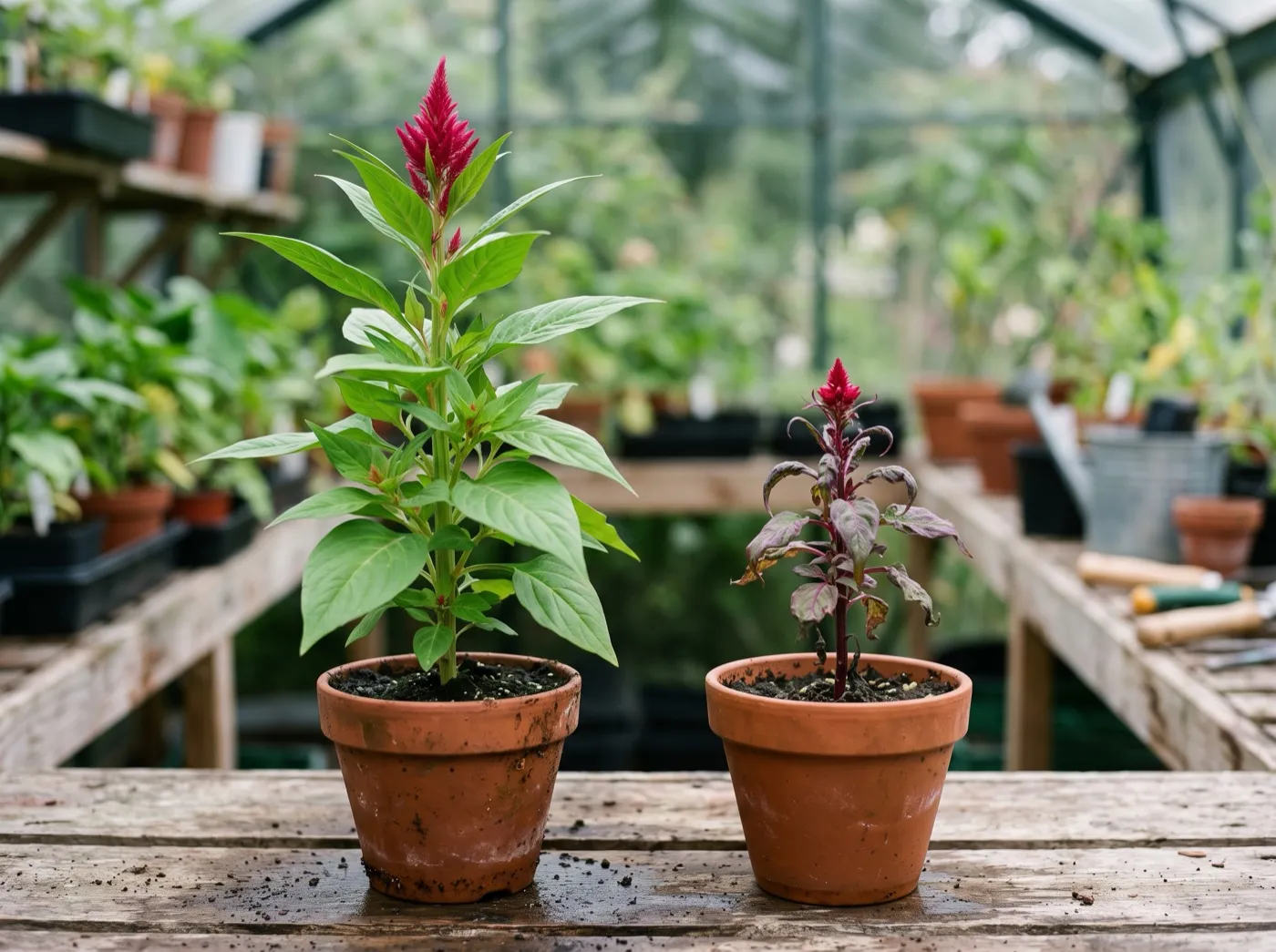 The classic cold check: same sowing date, but the chilled plant (right) buttoned at 25cm and never recovered.
Frequently asked questions
Is celosia a perennial in the UK?
No, celosia is grown as a half-hardy annual in the UK. It is a tender perennial in the tropics, but the RHS rates it H2, which means it tolerates 1-5C at best and dies when frozen. Sow fresh seed each spring, enjoy the plants from July to the first frost, then compost them.
When should I sow celosia seed?
Sow from late February to mid-April under glass at 21-25C. A heated propagator or warm windowsill gives the steady warmth the seed needs, and germination takes 7-14 days. Later sowings in April catch up quickly in the longer days, so do not panic if you miss March.
Why is my celosia flowering while it is still tiny?
A cold check has forced it into premature flowering. Chilling below about 10C, or letting roots become pot-bound, stresses young celosia into throwing a small head early. The plant stays stunted and the head never reaches full size. Keep young plants above 15C and pot on before roots circle.
Can you grow celosia outside in the UK?
Yes, once all risk of frost has passed, usually late May in the south and early June further north. Give it the warmest, sunniest, most sheltered spot you have and fertile, well-drained soil. It flowers outdoors from July to October. A polytunnel or greenhouse gives taller stems and bigger heads.
How long does celosia last in a vase?
Cut celosia lasts 10-14 days in a vase, which beats most summer annuals. Strip all the leaves, because the foliage wilts days before the flower head fades. Cut in the cool of the morning into water and change the water every two days to keep stems fresh.
How do you dry celosia flowers?
Hang small bunches of six to eight stems upside down in a warm, dry, airy place out of direct sun. The heads dry in two to four weeks and hold their colour remarkably well. Strip the leaves first and harvest before the heads set seed, or they shed everywhere indoors.
Can you eat celosia?
Yes, the young leaves are a cooked vegetable in West Africa, where Celosia argentea is called Lagos spinach or soko. The leaves are picked young and cooked like spinach. In the UK it is grown almost entirely as an ornamental, but the edible leaves are a genuine bonus if you grow spares.
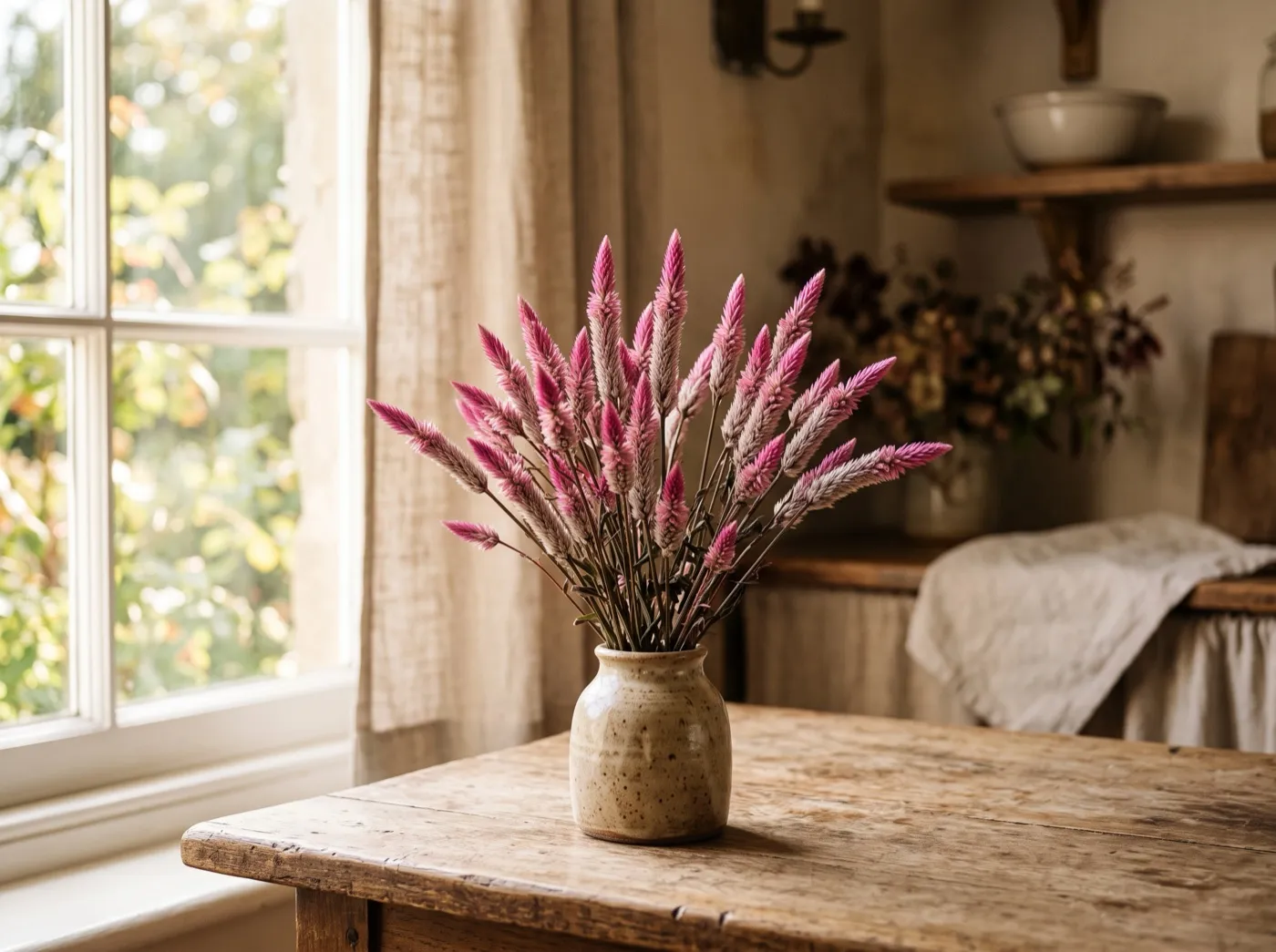 Air-dried celosia holds its colour for months. Hang bunches for two to four weeks and arrange them dry.
Once your celosia rows are cropping, build the rest of your summer patch around them with our full guide to growing cut flowers in the UK.
Our team produces practical UK gardening guidance from source research, contributor records and established horticultural practice. Editorial standards are overseen by Matt W.