Key takeaways
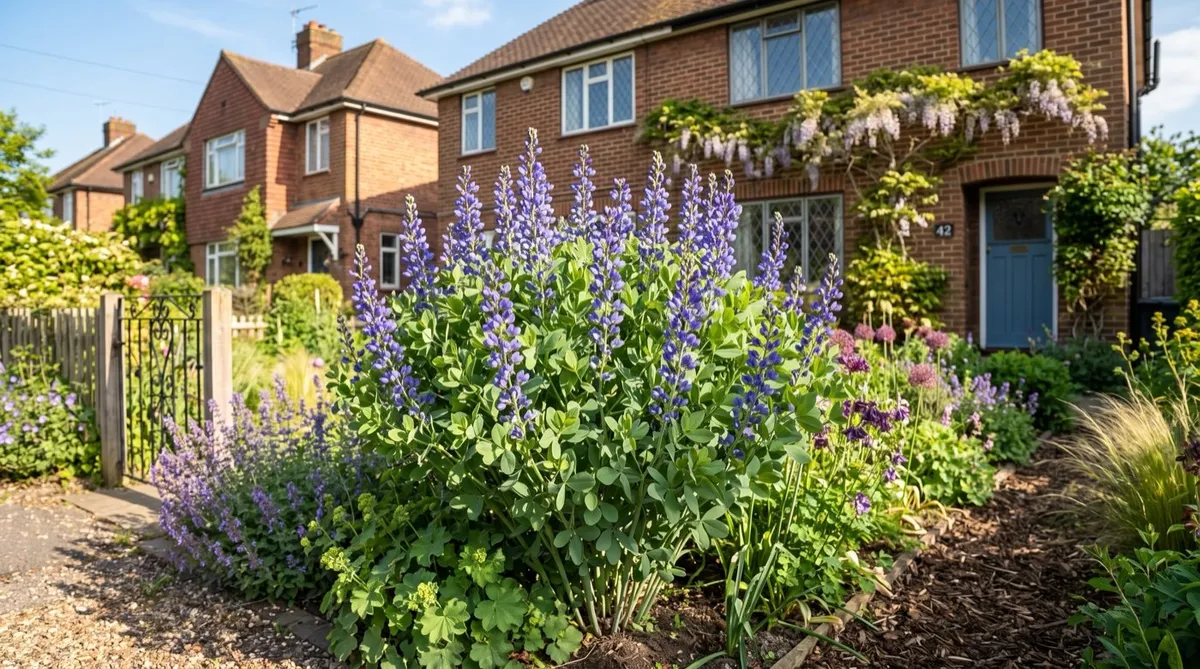
- Baptisia australis carries lupin-like spires of indigo-blue pea flowers from late May to July, and holds the RHS Award of Garden Merit
- It is a nitrogen-fixing legume: no feeding needed, ever, and it flowers better on lean soil
- The deep taproot means one rule above all others: plant it once, in its final spot, and never move it
- Expect a slow start. Most plants take three years to flower well, then live for decades
- It replaces lupins without the heartbreak: no lupin aphid, no mildew, no two-year lifespan
- Hybrids widen the colours: 'Purple Smoke' in smoky violet, plus the compact Decadence series in yellow, maroon and chocolate
There is a catch, and it shapes everything in this guide. Baptisia builds a taproot that plunges a metre or more into the ground. That root makes it drought-proof and permanent, but it also means the plant cannot be moved, hates pots, and spends its first two or three years growing downwards instead of flowering. Get the position right on day one and it asks for almost nothing again. This guide covers the varieties worth buying, the plant-once rule, and what to do during the slow years.
What is baptisia and is it better than lupins?
Baptisia, commonly called false indigo, is a long-lived herbaceous perennial from the prairies of eastern and central North America. The garden staple is Baptisia australis, blue false indigo, which grows 1.2-1.5m tall with spires of violet-blue pea flowers in early summer. It holds the RHS Award of Garden Merit and is rated H7, hardy through the harshest European winters. Early American settlers used it as a substitute for true indigo dye, which is where both names come from.
It is a legume, in the same family as peas and beans, and that matters in the garden. Nodules on the roots fix nitrogen from the air, so the plant feeds itself. You never fertilise a baptisia. It actually flowers better on lean, hungry soil than on ground you have enriched.
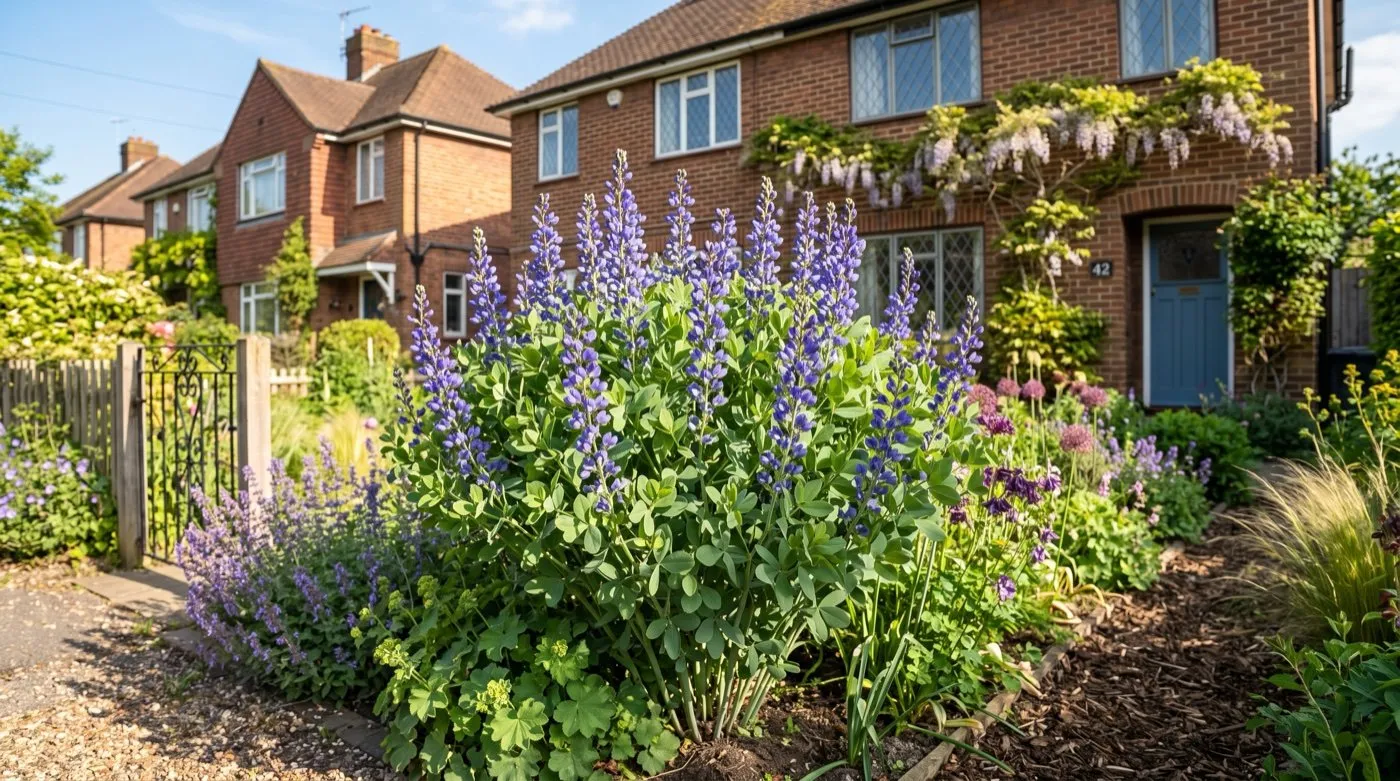 Baptisia australis in full flower in late May. Lupin-like spires, clean foliage, and not an aphid in sight.
Best baptisia varieties for UK gardens
Baptisia australis is still the best starting point, but American breeding has widened the colour range far beyond blue. The RHS thinks enough of the newer hybrids that it is running a dedicated baptisia trial at Wisley, comparing the new arrivals against the established species. These are the ones worth hunting down in UK nurseries.
‘Purple Smoke’ is the classic hybrid, a cross between B. australis and the white B. alba found as a chance seedling in North Carolina. The flowers are smoky violet with a darker purple eye, carried on charcoal-grey stems to about 1.2m. It is vigorous, free-flowering and the easiest hybrid to find here.
The Decadence series solves the size problem. Bred by Walters Gardens in the USA, these compact hybrids stay around 75-90cm, roughly two-thirds the bulk of the species, so they fit a small border without swamping it. ‘Lemon Meringue’ carries clear lemon-yellow flowers on dark grey stems and is one of the strongest growers in the series. ‘Cherries Jubilee’ opens maroon-red with a yellow keel, an odd and lovely bicolour that fades to burnt orange. ‘Dutch Chocolate’ is deep chocolate-purple, ‘Pink Truffles’ a soft dusky pink, and ‘Sparkling Sapphires’ a compact rich blue.
For white, B. australis ‘Alba’ and the species B. alba give clean ivory spires that light up against dark hedging. For the front of a border, B. australis var. minor is a genuine dwarf form of the species at around 60cm, with full-sized flowers.
Baptisia cultivar comparison
| Variety | Height | Flower colour | Flowering | Notes |
|---|---|---|---|---|
| B. australis | 1.2-1.5m | Violet-blue | Late May-July | The species; RHS AGM; toughest of all |
| ’Purple Smoke’ | 1.2m | Smoky violet, dark eye | June-July | australis x alba hybrid; grey stems |
| ’Lemon Meringue’ (Decadence) | 90cm | Lemon yellow | June-July | Compact; vigorous; dark stems |
| ’Cherries Jubilee’ (Decadence) | 90cm | Maroon and yellow bicolour | June-July | Fades to burnt orange; unusual |
| B. australis ‘Alba’ | 1.2m | White | June-July | Ivory spires; good against dark backdrops |
| B. australis var. minor | 60cm | Violet-blue | June-July | Dwarf species form; front of border |
One buying tip: baptisia sells in small pots because nurseries cannot hold a taprooted plant in a container for long. Do not be put off. A 9cm plant put in well overtakes a 3-litre one within two seasons, because it settles its taproot with less disturbance.
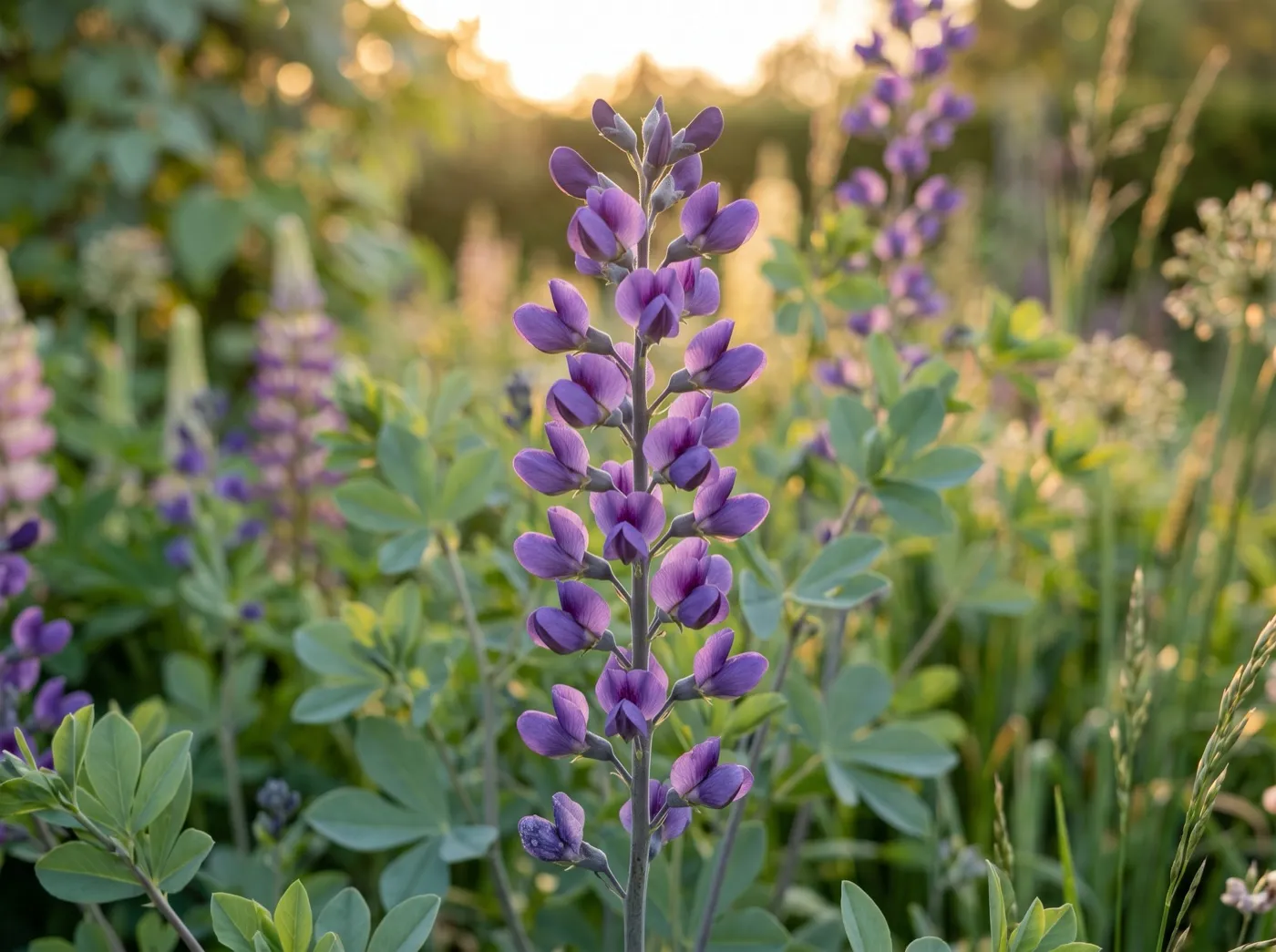 ‘Purple Smoke’: smoky violet flowers with a darker eye on charcoal stems. The easiest hybrid to find in the UK.
Where to plant baptisia: sun, soil and the taproot rule
Baptisia wants full sun, reasonable drainage, and a permanent home, in that order. Give it those three things and it is one of the least demanding perennials you can grow. Miss one and you will spend years wondering why it sulks.
Sun is the big one. Six hours or more of direct light keeps the plant compact, upright and heavy with flower. In part shade it survives, but it stretches, leans towards the light and flowers thinly. If your only spot is shaded after lunch, plant something else there and give baptisia the hot border.
Permanence is the rule people break. The taproot can drive down a metre or more, and old plants go far deeper. That root is why an established baptisia laughs at drought, and it is also why the plant cannot be lifted. There is no teasing it out. The root snaps, and the plant usually dies. So walk the garden before you dig. Picture the mature plant: a rounded mound over a metre wide, shrub-like from May to October. If you have read our guide to moving perennials and shrubs, file baptisia under the short list of plants that guide simply does not apply to.
How to plant baptisia (you get one go at this)
Plant baptisia in spring, from April to early June, in a hole no deeper than the pot but twice as wide. Spring planting gives the taproot a full season to drive down before winter, and on clay it is far safer than autumn planting. Handle the rootball gently. Even at planting time the young taproot resents rough treatment, so do not tease the roots apart the way you would with most perennials. Slide it out, set it in, backfill.
Set the crown level with the soil surface, never buried. Water in well, then water weekly through the first summer if it stays dry. This is the only period in the plant’s life when watering matters. From the second year, the root finds its own moisture.
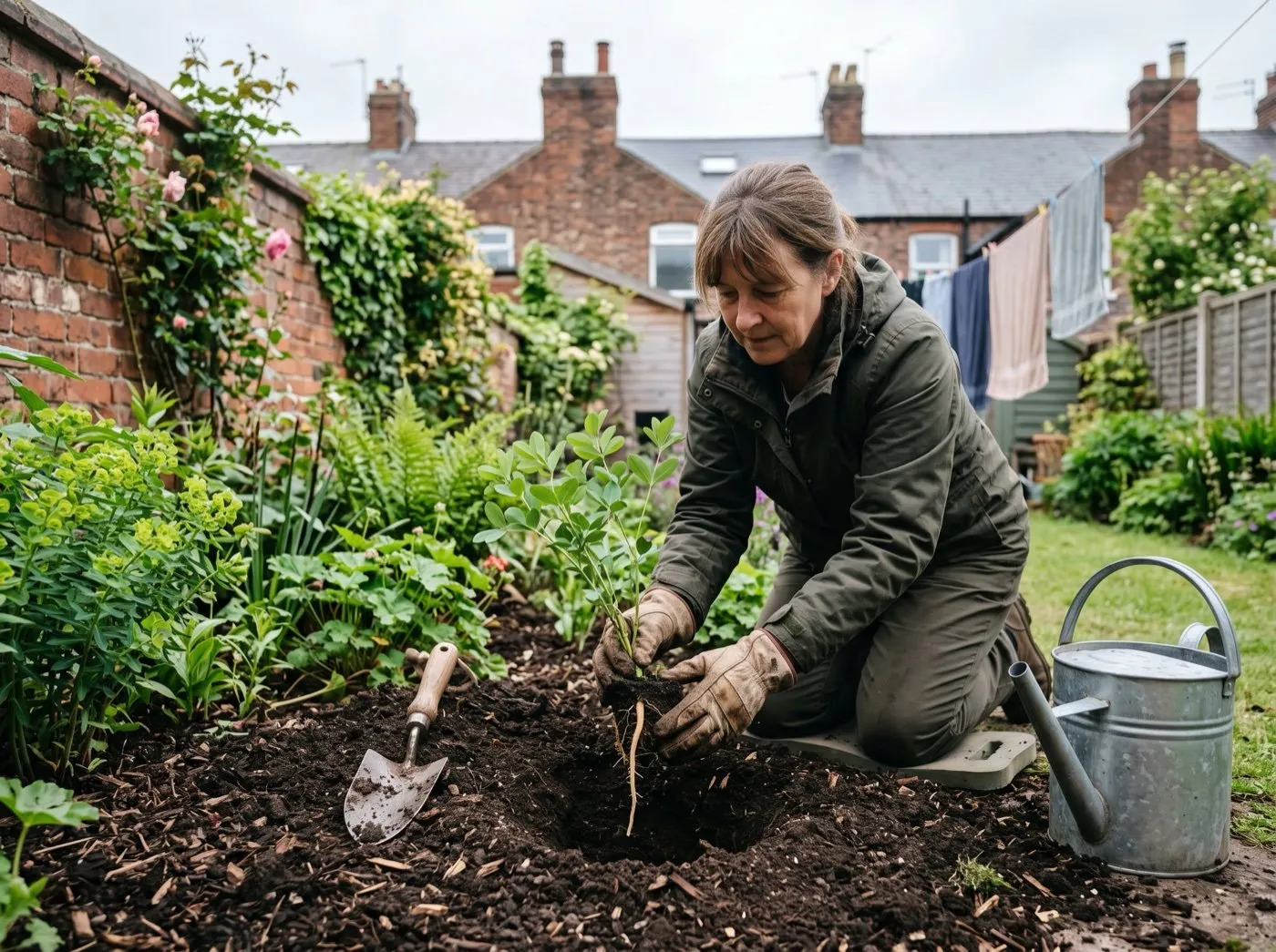 Planting day is the one decision that counts. Wide hole, crown level, roots undisturbed, final position.
How long does baptisia take to establish?
Three years, give or take, and knowing this in advance is the difference between loving the plant and binning it. American growers have a saying for prairie perennials: first year it sleeps, second year it creeps, third year it leaps. Baptisia follows the script almost exactly.
In year one, a new plant makes a modest tuft of foliage, maybe 30cm of growth, and probably no flowers. The energy is going down, not up. In year two it doubles in size and often throws two or three trial spires. Year three is when it arrives: a proper mound and a genuine show of flower. From year four it behaves like a small shrub that happens to die down each winter.
The reward for the wait is a plant on a different timescale from the rest of the border. Clumps in North American gardens carry on for 50 years and more without division, and there is no reason a UK plant should differ. Among the best perennials for UK gardens, almost nothing else offers decades of performance from a single planting decision.
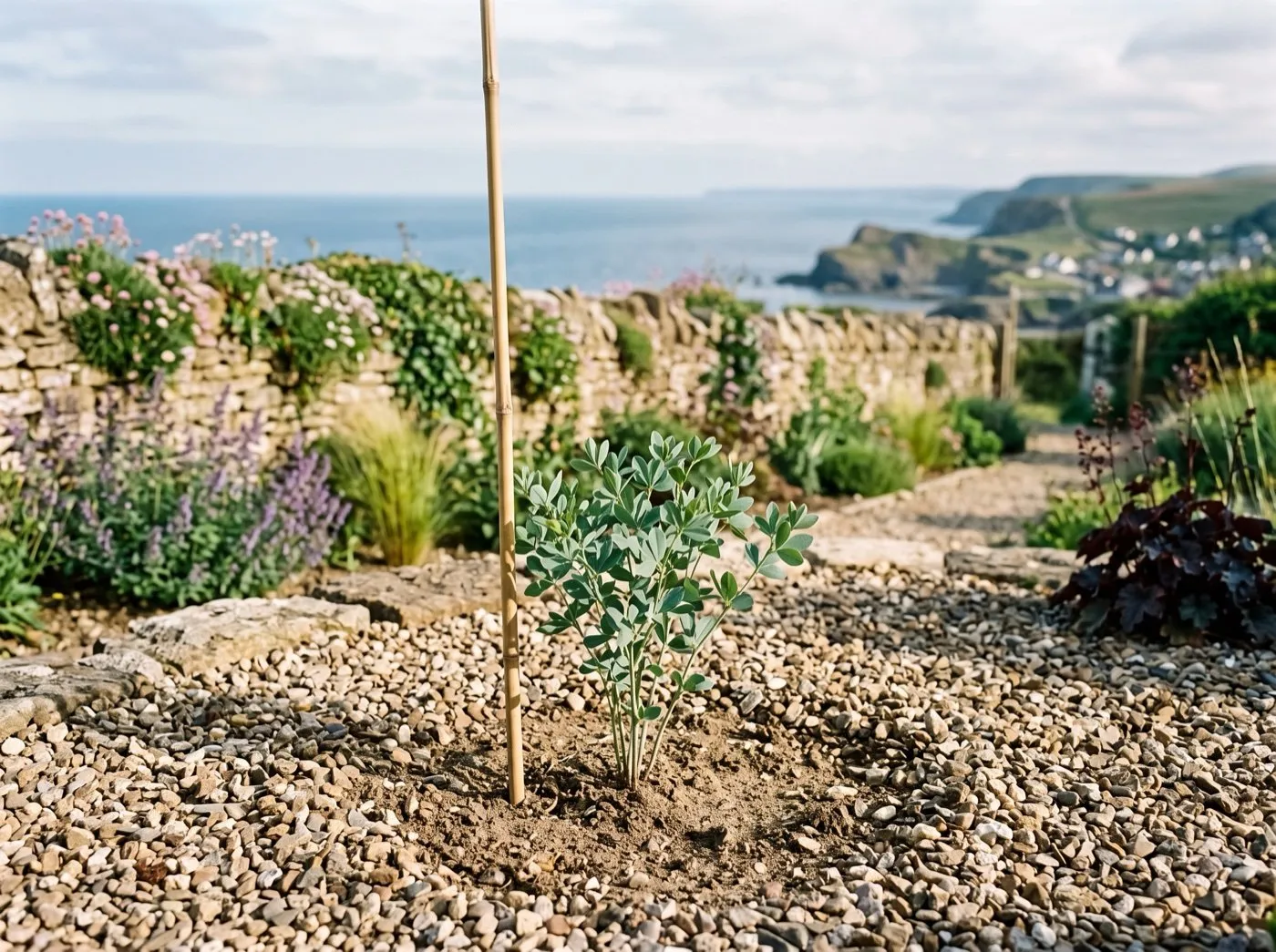 A first-year plant looks like this: small, quiet, and busy underground. Year three is when it leaps.
Watering, feeding and staking: what baptisia actually needs
Staking is usually unnecessary in full sun, where plants grow stocky and self-supporting. In part shade or overfed soil, stems stretch and the clump can splay open after heavy rain. If that describes yours, a grow-through hoop set over the crown in April vanishes into the foliage by June. Fix the cause too: more light, no feed.
Month-by-month baptisia calendar
| Month | Task |
|---|---|
| January | Nothing; crowns are dormant and fully hardy, no protection needed |
| February | Cut any standing stems and pods to the ground before new growth |
| March | Mark crown positions with canes; shoots are late and easy to spade |
| April | Main planting month; take basal cuttings as shoots reach 8-10cm |
| May | First flower spires open on established plants from late May |
| June | Peak flowering; water first-year plants weekly in dry spells |
| July | Last flowers fade; shear lightly for a tight mound, or leave for pods |
| August | Pods swell and darken; collect seed as pods turn grey-black |
| September | Sow fresh seed after scarifying, or store it dry for spring |
| October | Foliage blackens with first frosts; cut back now or leave for winter |
| November | Leave pods standing for winter structure if you did not cut back |
| December | Nothing; enjoy the rattle of dry pods in frost |
Baptisia seed pods: cut them or keep them?
The seed pods are half the reason to grow the plant. After flowering, baptisia sets fat, inflated pods, 3-5cm long, that swell green through summer and ripen charcoal-grey and black by early autumn. The loose seeds rattle inside them in wind, and the dark pods on stiff stems stand right through frost. Flower arrangers cut them for dried displays; the stems last for months indoors.
You have two options, and both are right. Cut the spent spires in July and the plant puts nothing into seed, keeping the foliage mound at its freshest. Or leave them, and trade a slightly tidier mound for months of structure plus a seed harvest in September. For winter presence, the pods sit alongside grasses and sedum heads as some of the best in the border.
One thing worth knowing: baptisia self-seeds only rarely in UK gardens. The hard seed coat means few seedlings appear on their own, so leaving pods on will not fill the border with volunteers. Collect the seed deliberately if you want more plants, and prepare it properly, which brings us to propagation.
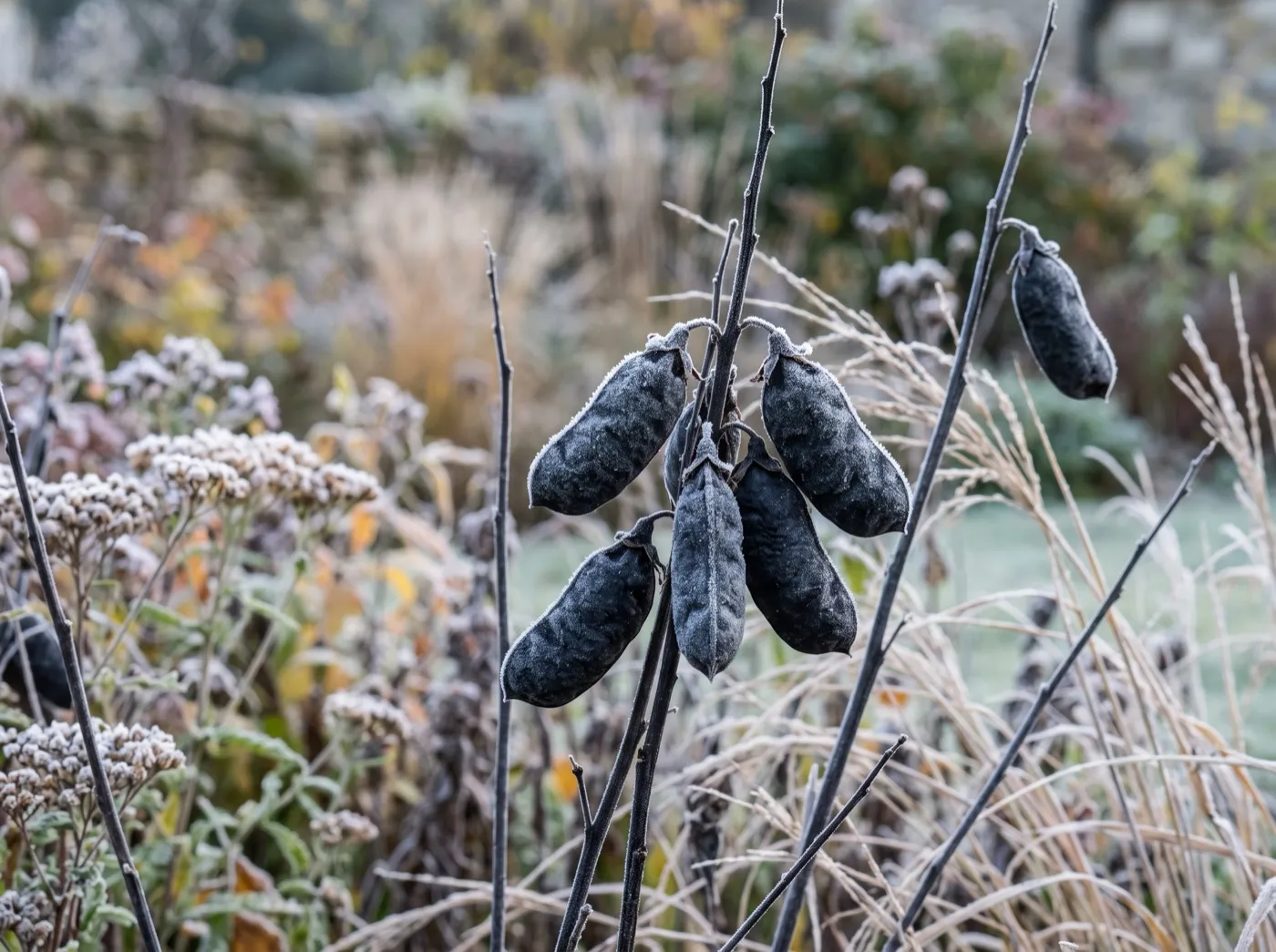 The pods ripen charcoal-black and rattle in wind. Leave them standing and they hold structure deep into winter.
How to propagate baptisia: seed and basal cuttings
Baptisia is awkward to propagate, and it helps to accept that up front. The taproot rules out division on mature plants: split a settled clump and you will usually kill both halves. That leaves seed, which is slow but reliable with the right preparation, and basal cuttings, which are quicker but chancier.
Seed is the main route, and the trick is breaking the coat. Baptisia seed is armoured like a pea left in a shed for a decade, and sown untreated most of it just sits there. Scarify it first: fold a sheet of sandpaper, rub the seeds between the layers until the coats look dulled and scratched, then soak them overnight in warm water. Plump seeds after soaking are viable. Sow 5mm deep in gritty compost in spring at 15-21C. Germination takes three to six weeks and stays patchy even when you do everything right. Fresh seed collected in autumn germinates far better than packet seed, so sow your own harvest the same year or the following spring. Named cultivars like ‘Purple Smoke’ will not come true, so seed suits the straight species. Seedlings flower in their third year.
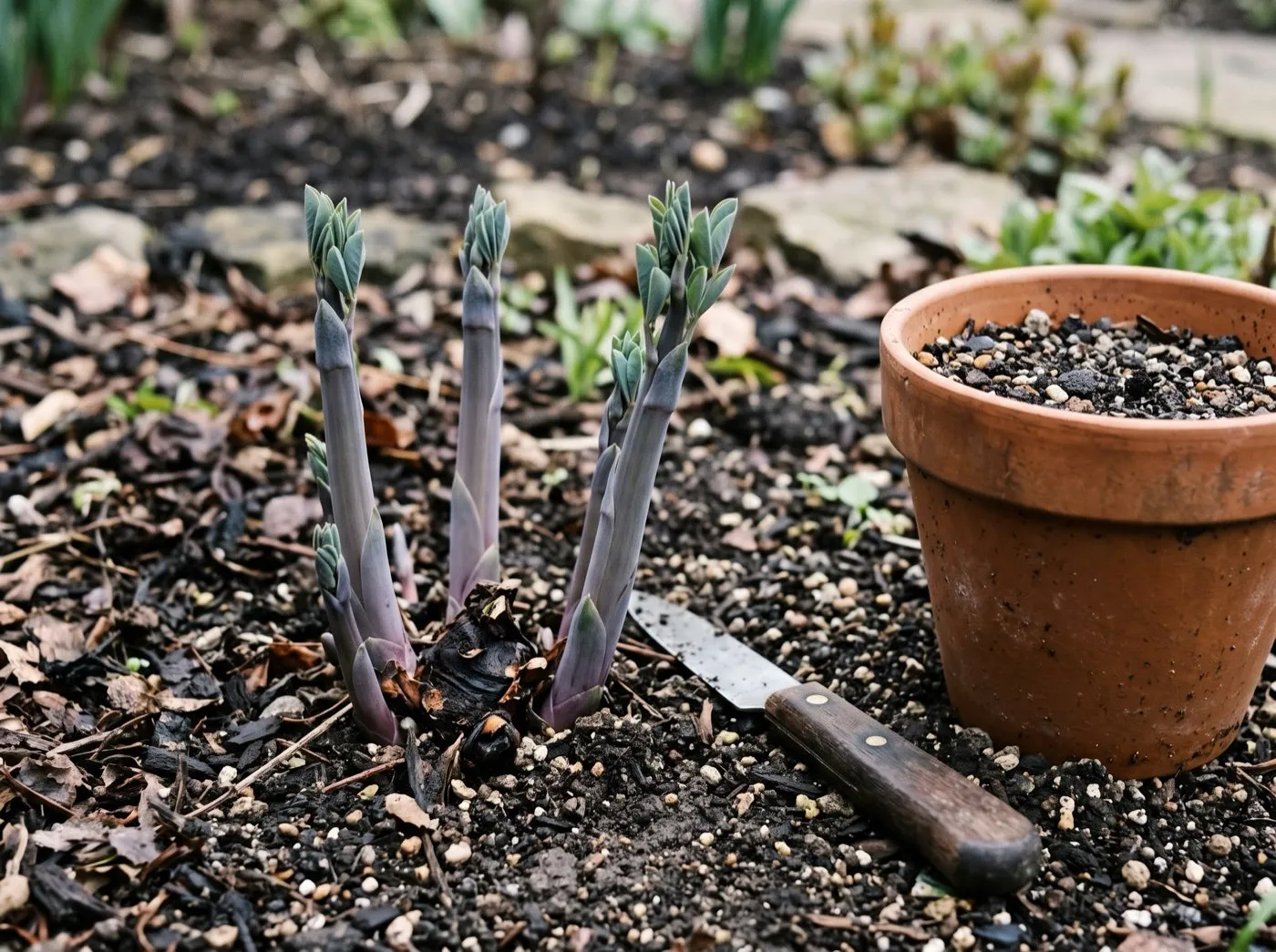 Basal cuttings in late April, taken as new shoots reach 8-10cm. Expect eight slow weeks to rooting.
Cutting back baptisia in winter
Baptisia is fully herbaceous, so everything above ground dies each winter and the annual cut-back is the one non-negotiable job. The only decision is timing, and it depends on whether you kept the pods.
The first hard frost blackens the foliage, usually late October or November here in Staffordshire. If you cut the spires off in July, cut the blackened mound to the ground now and compost it. If you left the pods, keep the stems standing. They stay upright through gales, and the black pods against frost are as good as anything in the December garden.
Either way, everything must be down at the crown by late February, before the new shoots push. Baptisia shoots are thick, asparagus-like spears, easy to snap and impossible to replace that season, so cut while the plant is fully dormant. No mulch, no fleece, no protection: an H7 rating means the crown is hardier than the UK climate will ever test.
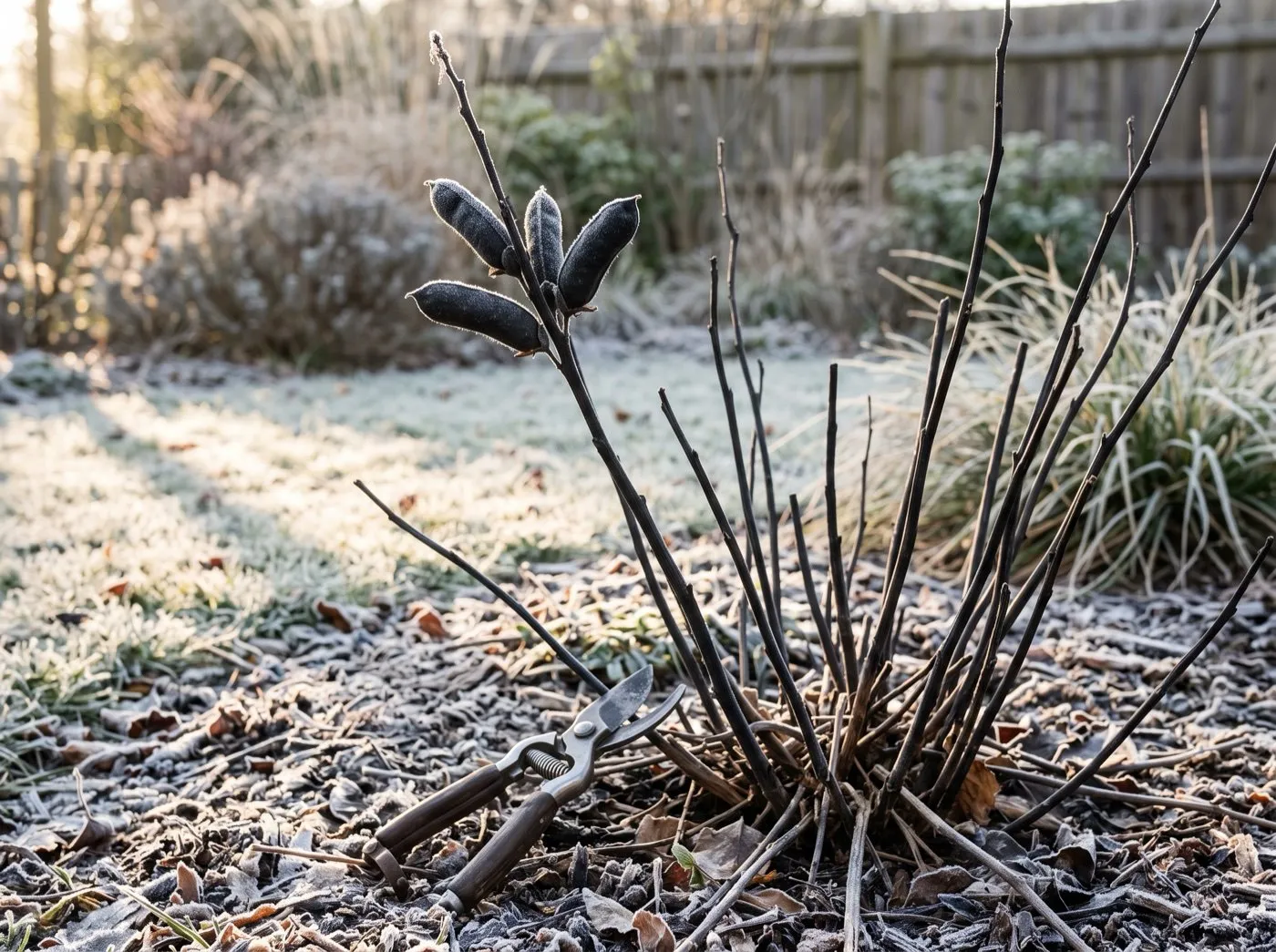 The one job of the year: everything down to the crown by late February, before the asparagus-like shoots push.
What to plant with baptisia
Baptisia works as the early-summer anchor in a sunny mixed border, flowering in that late May gap after the tulips and before the main perennial crescendo. Its blue reads well from distance, and the foliage mound holds a solid, calm shape that lasts until frost, which makes it a natural companion for looser, airier plants.
The classic pairings are hot and cool. For contrast, run it with geums in orange and scarlet, which flower at exactly the same moment and sit at knee height in front of the spires. Oriental poppies do the same job at larger scale. For a cooler scheme, salvias in deep purple pick up the blue and carry the border on after the baptisia fades, with silver artemisia or nepeta at the front. In a gravel or prairie planting, set it among ornamental grasses, deschampsia, sporobolus, early miscanthus, where the pods earn their keep from August onwards.
It also slots into traditional schemes better than its prairie origins suggest. Used where you might once have put a delphinium or a lupin, it gives a cottage garden its vertical blues without the staking, slug pellets and greenfly. Give it the middle of the border, a metre of space, and neighbours that will not crowd its slow first two years.
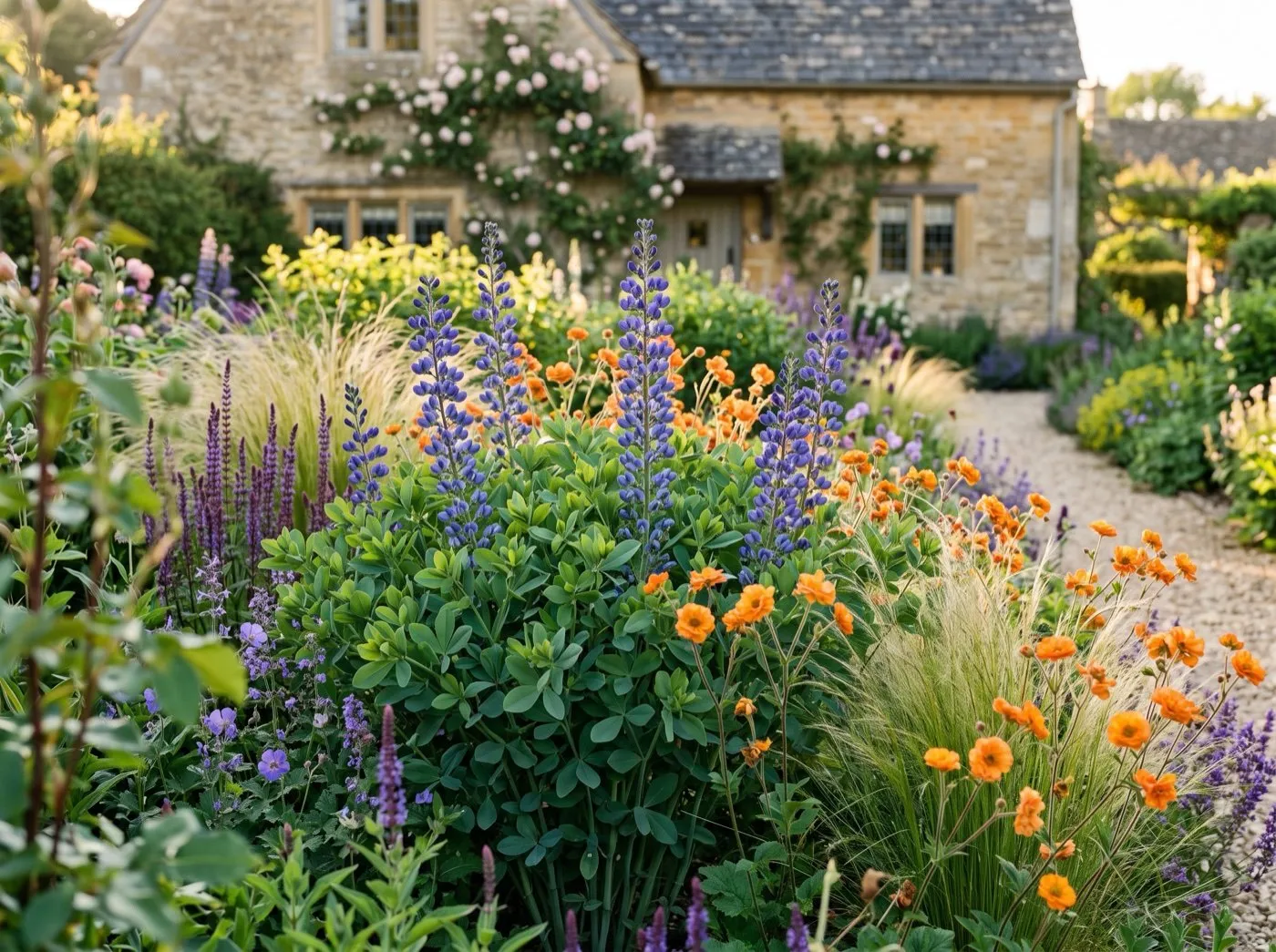 Blue baptisia against orange geums, flowering together in early June. The foliage mound holds the space until frost.
Common baptisia problems
The honest list is short, and most of it is gardener-inflicted rather than pest or disease.
No flowers for the first years
The commonest complaint is no complaint at all: the plant is simply young. Two to three flowerless years are normal while the taproot establishes. If a plant older than that will not flower, look up. It is nearly always shade. Six hours of direct sun is the minimum for a proper show.
Collapse after transplanting
Flopping and open centres
A splayed, floppy baptisia is telling you it wants more light or less food. In full sun on lean soil the stems are stiff enough to shrug off summer storms. In part shade, or on soil enriched for the roses next door, growth is soft and the clump falls open. A grow-through hoop hides the symptom; light and lean soil cure it.
Slow to shoot in spring
Baptisia emerges late, often mid-April, weeks behind most perennials. Every spring, someone declares theirs dead and digs into a perfectly healthy crown. Mark the position, hold your nerve, and wait until May before you even think the word “dead”.
Frequently asked questions
Why is my baptisia not flowering?
It is almost certainly too young. Baptisia spends its first two or three years building a deep taproot before it flowers properly, so a quiet start is normal. If a mature plant stops flowering, the cause is usually shade: it needs at least six hours of direct sun. Recent transplanting also stops flowering for a year or more. Do not feed it, as rich soil delays blooming.
Is baptisia hardy in the UK?
Yes, completely. Baptisia australis is rated RHS H7, hardy through the severest European winters, far below anything the UK throws at it. It is a herbaceous perennial from the North American prairies, so it dies back to the crown each winter and reshoots in spring. Unlike gaura or salvias, it does not mind cold, wet clay once established.
Can you move an established baptisia?
No, not safely. The taproot can run a metre or more down and it snaps rather than lifts. Mature plants moved or divided usually die, and survivors sulk for years without flowering. Plant baptisia in its final position from the start. If you need more plants, sow seed or take basal cuttings in spring instead of splitting the clump.
Should I cut back baptisia in autumn?
Can you grow baptisia in a pot?
Not well for the long term. The taproot wants a metre or more of soil depth, which no container gives it. A young plant will cope in a deep 40cm-plus pot for a year or two, but flowering will be poor and the plant is a fraction of its border self. Treat pots as a holding measure only, and plant it out sooner rather than later.
Is baptisia better than lupins?
For most UK gardens, yes. Lupins get wrecked by the giant lupin aphid, suffer mildew, and fade after two or three years. Baptisia gets neither pest, fixes its own nitrogen, tolerates drought, and lives for decades. The trade is patience: lupins flower well in year one, baptisia takes about three years. After that it beats lupins every summer.
How do you grow baptisia from seed?
Scarify the seed first: the coat is hard, so rub it between sandpaper sheets, then soak overnight in warm water. Sow 5mm deep in spring at 15-21C. Germination is slow and patchy, taking three to six weeks, and fresh seed germinates far better than old. Seedlings need two to three years before flowering, so most gardeners buy one plant and collect seed later.
Our team produces practical UK gardening guidance from source research, contributor records and established horticultural practice. Editorial standards are overseen by Matt W.