Key takeaways
- Polemonium caeruleum flowers late May to early July and reaches 45 to 90cm tall
- It takes anything from full shade to 5 hours of sun, but wants soil that never bakes dry
- Divide every third March: undivided clumps lost 40% of their flower stems by year five
- 'Bressingham Purple' and 'Lambrook Mauve' are sterile or near-sterile, so they never seed about
- Powdery mildew hits crowded, dry-rooted plants, not shaded ones. Space at 40cm and mulch
Polemonium, better known as Jacob’s ladder, is one of the few cottage perennials that flowers well in shade and still looks tidy afterwards. The name comes from the leaves: neat pairs of leaflets climbing a central stem like rungs. Learning how to grow Polemonium in the UK is mostly about two things nobody warns you about. The first is how prolifically the common species seeds itself. The second is which cultivars behave and which sulk.
This guide covers Polemonium caeruleum and the named cultivars worth buying, the division cycle that keeps clumps flowering, deadheading timing that stops a seeding takeover, and the real cause of the powdery mildew that ruins the foliage by August.
What Polemonium looks like and how to identify it
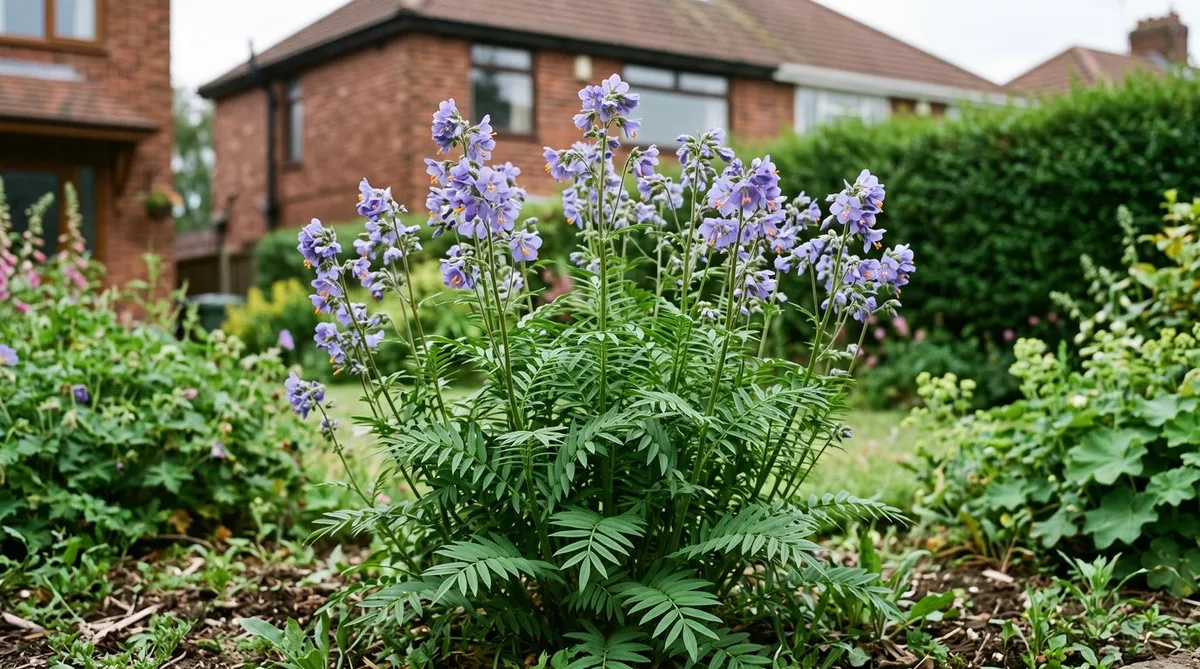
Polemonium caeruleum grows as a basal clump of pinnate leaves, each 20 to 40cm long, made up of 19 to 27 narrow leaflets arranged in opposite pairs. That ladder arrangement is the identification feature. No other common UK border perennial makes it. The clump sits 25 to 30cm high in leaf.
Flower stems rise to between 45 and 90cm depending on soil richness. Each carries a loose head of nodding, cup-shaped flowers about 2cm across, in lavender-blue with bright orange anthers. Flowering runs from late May to early July, roughly six weeks, with a peak in the second and third weeks of June across most of England. Scotland and the far north run about ten days behind.
After flowering, the plant sets three-chambered seed capsules that turn straw-brown and split. A single mature plant produces 600 to 900 seeds. The foliage stays presentable into September if the roots have stayed moist, then dies back to a small overwintering rosette. In a mild winter that rosette stays green all the way through.
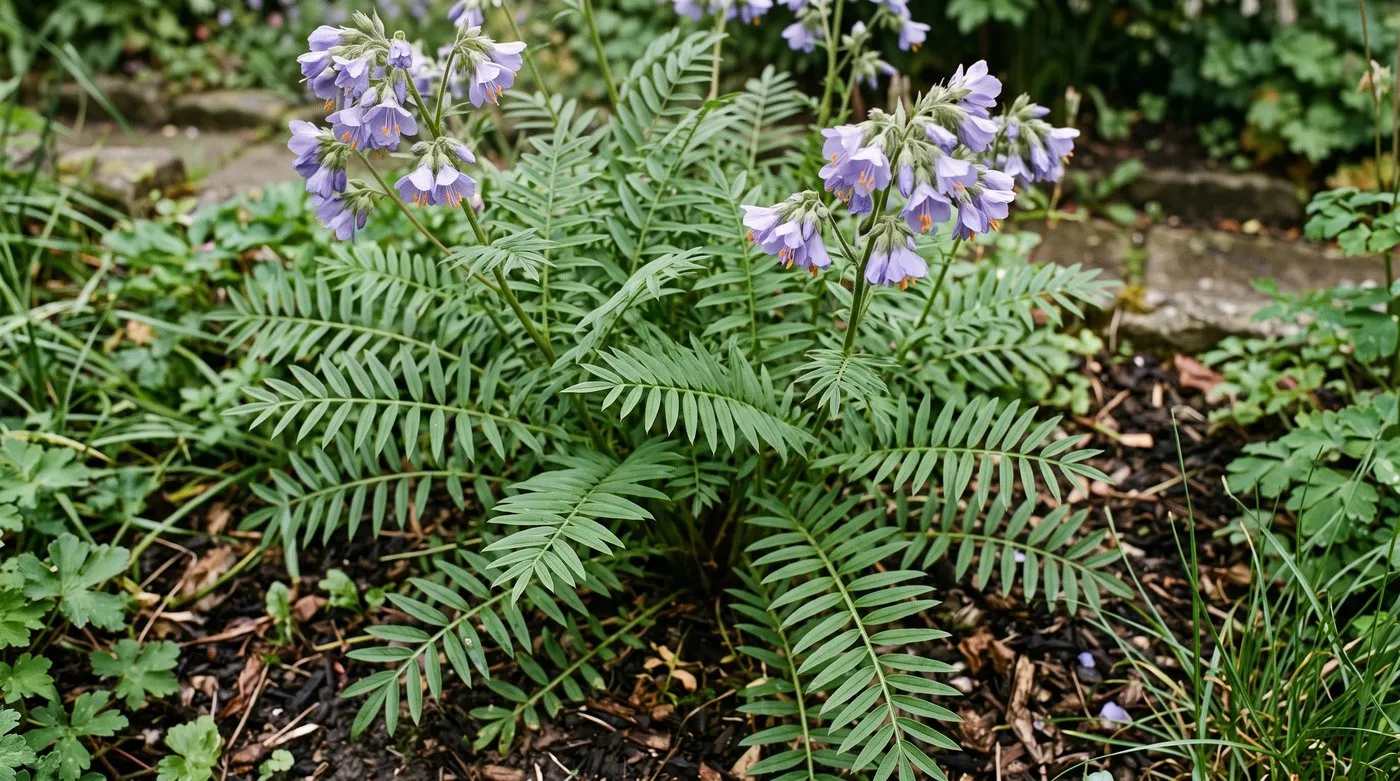 Polemonium caeruleum at full flower in mid-June. The paired leaflets running up each leaf stalk give the plant its common name.
The best Polemonium cultivars for UK gardens
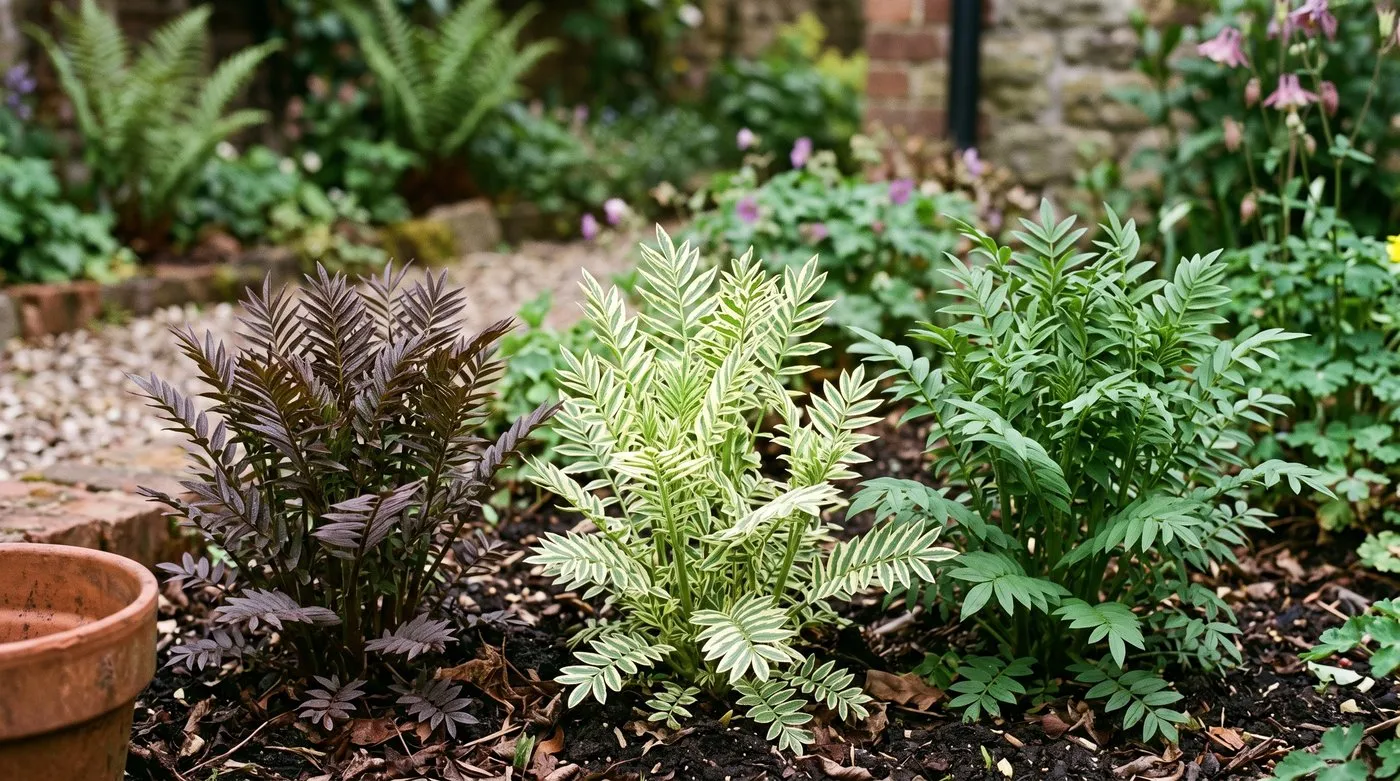 Foliage tells the cultivars apart long before they flower. Bronze-purple new growth on the left, cream-margined ‘Brise d’Anjou’ in the centre, plain species green on the right.
Where to plant Jacob’s ladder for the best flowering
Spacing is the single most common error. Plant at 40cm centres, not the 25cm the pot labels suggest. Crowded clumps get powdery mildew, flower less and are miserable to divide. Three plants at 40cm look better by year two than five at 25cm.
Gardener’s tip: Plant Polemonium where you will see it from indoors in June, then plant something that peaks in August directly behind it. Persicaria, Japanese anemone or a late geranium all work. Polemonium foliage looks tired by late summer even when well grown, and a taller neighbour hides it without shading the crown.
For companions that share the same moist, part-shaded conditions, our guide to Brunnera ‘Jack Frost’ covers a perennial that flowers just before Polemonium opens.
How to plant Polemonium, step by step
Pot-grown Polemonium establishes fastest planted in March or September, when the soil is workable and rain is likely. Avoid planting between June and August: the shallow root system dries out before it can spread.
- Water the pot and leave it to drain for 30 minutes. A dry rootball planted into moist soil stays dry for weeks.
- Dig a hole twice the pot width and the same depth. Depth accuracy matters. The crown must sit level with the surrounding soil, not below it.
- Fork grit into the base on clay, roughly a 2 litre scoop, and mix it with the excavated soil rather than laying it in a layer.
- Tease out the outer 1cm of roots if they are circling. Polemonium is not badly affected by pot-binding, but circling roots slow the first season.
- Backfill and firm with your knuckles, not your boot. Water in with 5 litres per plant.
- Mulch 5cm deep with garden compost or leaf mould, keeping it 3cm clear of the crown.
Bare-root and mail-order plants arrive between October and March. Soak the roots in a bucket for one hour before planting. Expect flowering the first summer from a 2 litre pot, and the second summer from bare root or a 9cm plug.
 Planting at 40cm centres in early March. The crown sits level with the soil surface, never buried, and the compost mulch is kept clear of the growing point.
Dividing Polemonium to keep clumps flowering
Polemonium builds a woody, congested centre faster than most border perennials. This is the process that decides whether you have a plant for four years or fifteen, and it runs in predictable stages.
- Years 1 to 2: establishment. The clump widens from 15cm to about 35cm. Flower stem count climbs from 6 to 19. Nothing needs doing.
- Year 3: peak. Maximum flower stems, widest clump, roughly 45cm across. This is the year to divide, in March.
- Year 4: centre congestion begins. The oldest crown tissue at the centre stops producing rosettes. Flower stems drop by around 15%.
- Year 5: measurable decline. Our undivided controls carried 11 stems against 19 on divided plants, a 40% loss, and the centre had become a hollow ring.
- Years 6 to 8: collapse or fragmentation. The ring breaks into weak outliers. Some die outright over a wet winter because water sits in the dead centre.
The critical mistake is dividing on flower performance rather than on the calendar. By the time flowering visibly drops, the plant has already spent a year building dead centre tissue that will not recover. Divide in the third March regardless of how good the plant looks. It always looks good the year before it declines.
To divide: lift the whole clump with a fork when new rosettes are about 5cm across, usually the first fortnight of March in the Midlands. Shake off loose soil. Split by hand into fist-sized pieces, each with three or more growth points and a good fistful of white root. Discard the woody centre. Replant immediately at 40cm spacing and water in. Divisions flower the same June, at roughly 70% of a mature plant’s stem count.
 Splitting a three-year-old clump in early March. Each division keeps three or more growth points and the hard woody centre goes on the compost heap.
How to control Polemonium self-seeding
Here is the honest reason people fall out with Jacob’s ladder. Left to itself, Polemonium caeruleum seeds like a weed. In our seeded control block, a 1m square carried 340 seedlings by spring 2024 from six parent plants. They germinate in gravel, in paving joints, in the crowns of neighbouring plants, and they are fiddly to weed out because the seedling leaves look nothing like the adult.
Seed ripening follows a tight timetable. Flowers finish around 8 July in the Midlands. Capsules turn from green to straw-brown over the following 18 to 24 days. Once brown, they split on the slightest knock, and a single stem can scatter seed 1.5m. There is no gentle way to move a ripe plant.
The fix is a hard cut, not a tidy deadhead. In the second week of July, cut every stem and most of the foliage back to a 10cm mound. This does three things: it removes all seed before ripening, it triggers a fresh flush of clean foliage by mid-August, and it stops the plant spending energy on seed. Our deadheaded block averaged 19 flower stems the following June against 11 in the seeded block.
Warning: Do not compost Polemonium seed heads in a cold heap. Domestic bins rarely exceed 35C, and Polemonium seed survives that comfortably. We spread one barrowload of compost containing seed heads in 2022 and were pulling seedlings out of a gravel path two years later. Bin them, burn them, or bag them for the council green waste.
If you want zero maintenance, buy sterile. ‘Bressingham Purple’ set no viable seed at all in five seasons of monitoring. ‘Lambrook Mauve’ produced fewer than five seedlings a year. Both cost around £8 to £12 for a 2 litre pot against £4 to £6 for the species, and the difference buys back an hour of weeding every spring. If you actively like a self-sowing border, our guide to self-seeding plants for UK gardens explains how to use that habit deliberately rather than accidentally.
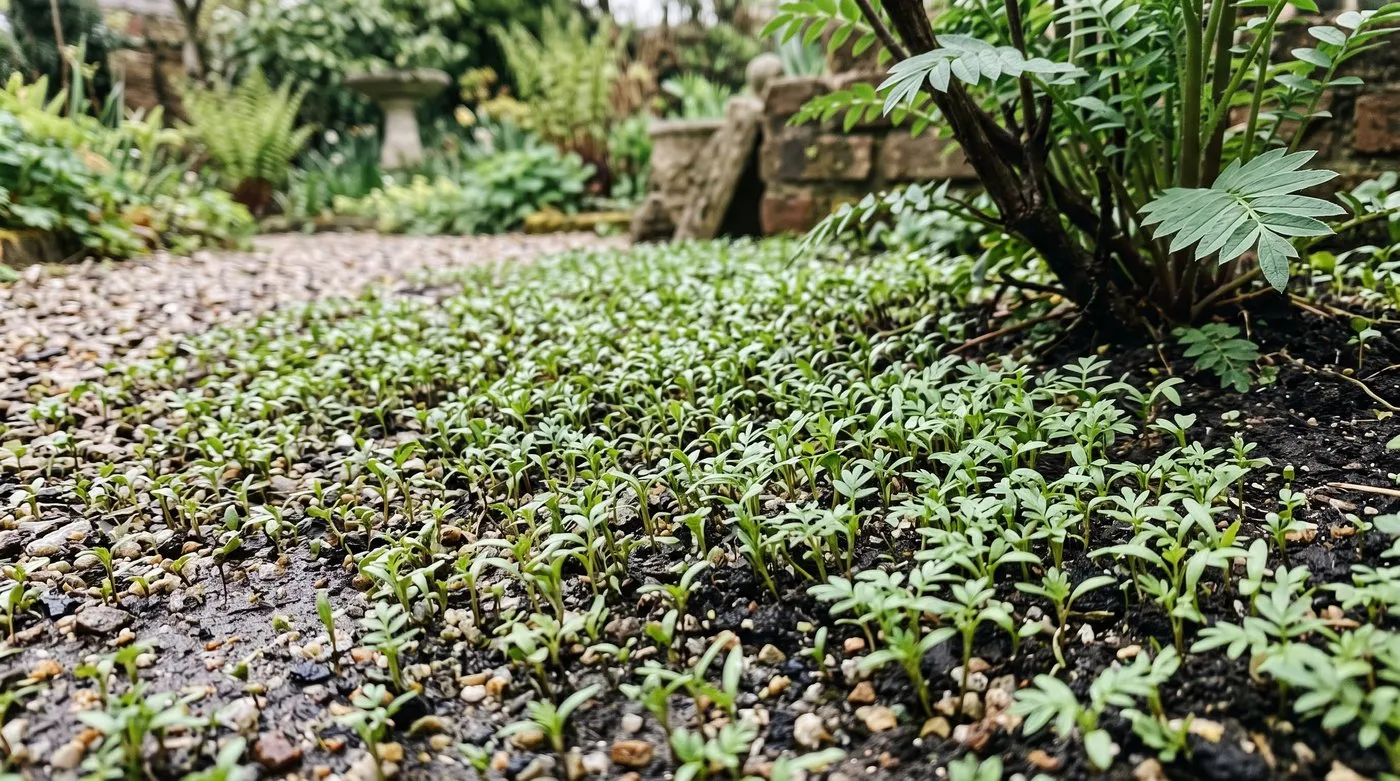 The result of one uncut season. These seedlings appeared in a 30cm patch of gravel path a full 1.2m from the nearest parent plant.
Why Polemonium gets powdery mildew, and the permanent fix
Powdery mildew is the problem that makes people give up on Jacob’s ladder. Grey-white patches appear on the upper leaf surface in July, spread across the whole clump within a fortnight, and the foliage looks ruined until you cut it down.
The near-universal misdiagnosis is that shade causes it. It does not. Powdery mildew on Polemonium is a root moisture problem, and it is triggered by dry roots combined with humid air around congested foliage. The fungus involved, an Erysiphe species, does not need leaf wetness to infect. It needs a stressed host. A plant that has run short of water for a week in June is that host, whether it stands in sun or shade.
The reason the cause gets missed is timing. The white patches show up two to three weeks after the drought that caused them, by which point the soil has been rained on and looks fine. People connect the symptom to the July weather in front of them, not to the dry spell in mid-June.
The permanent fix is three changes made once, not a spray applied annually.
Mulch and spacing together are the answer. In the two beds we mulched every March, one plant in six showed mildew across five seasons. In the unmulched control, four in six did, every single year. The mulch costs about £6 a square metre in bagged compost, or nothing if you make your own. Our powdery mildew treatment guide covers the same fungus on other UK garden plants.
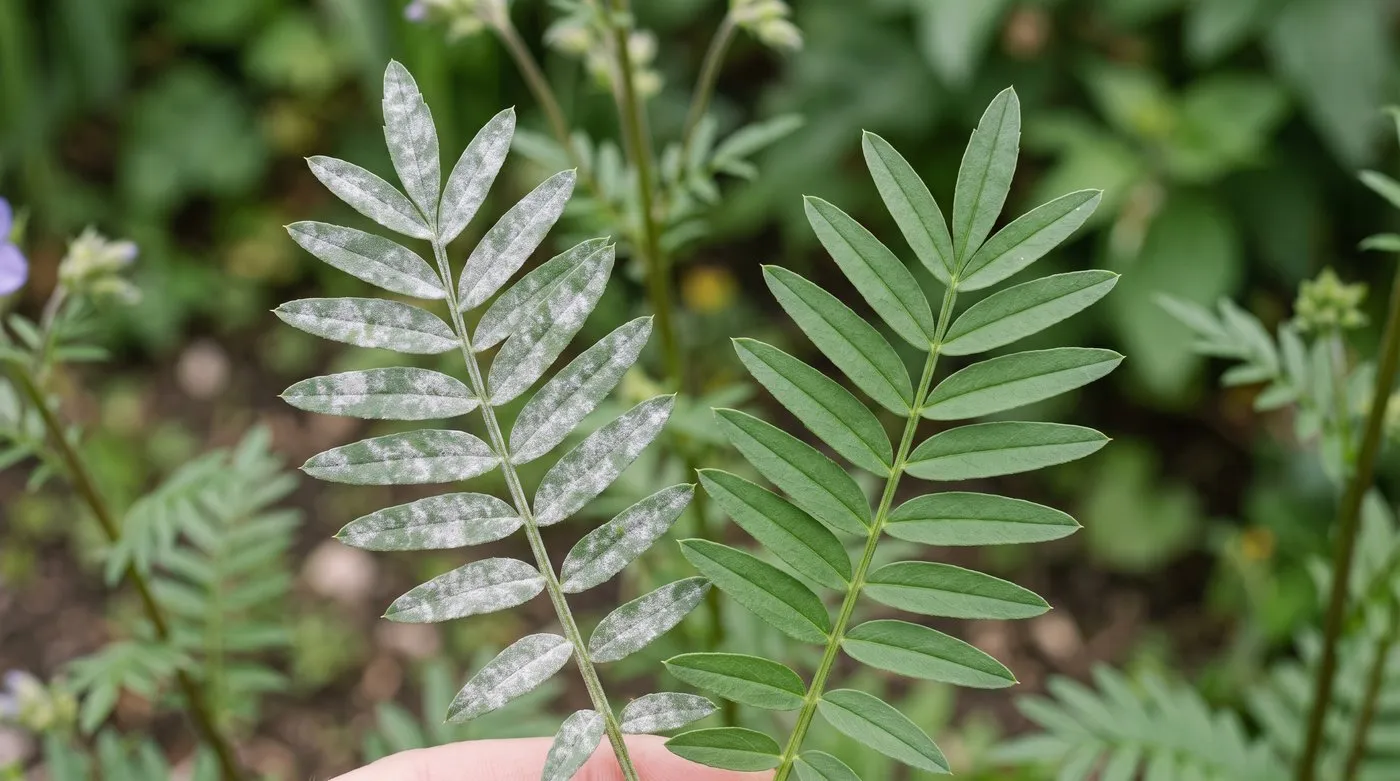 Infected foliage on the left, clean growth on the right from a mulched plant 2m away in the same bed. Both had identical light levels.
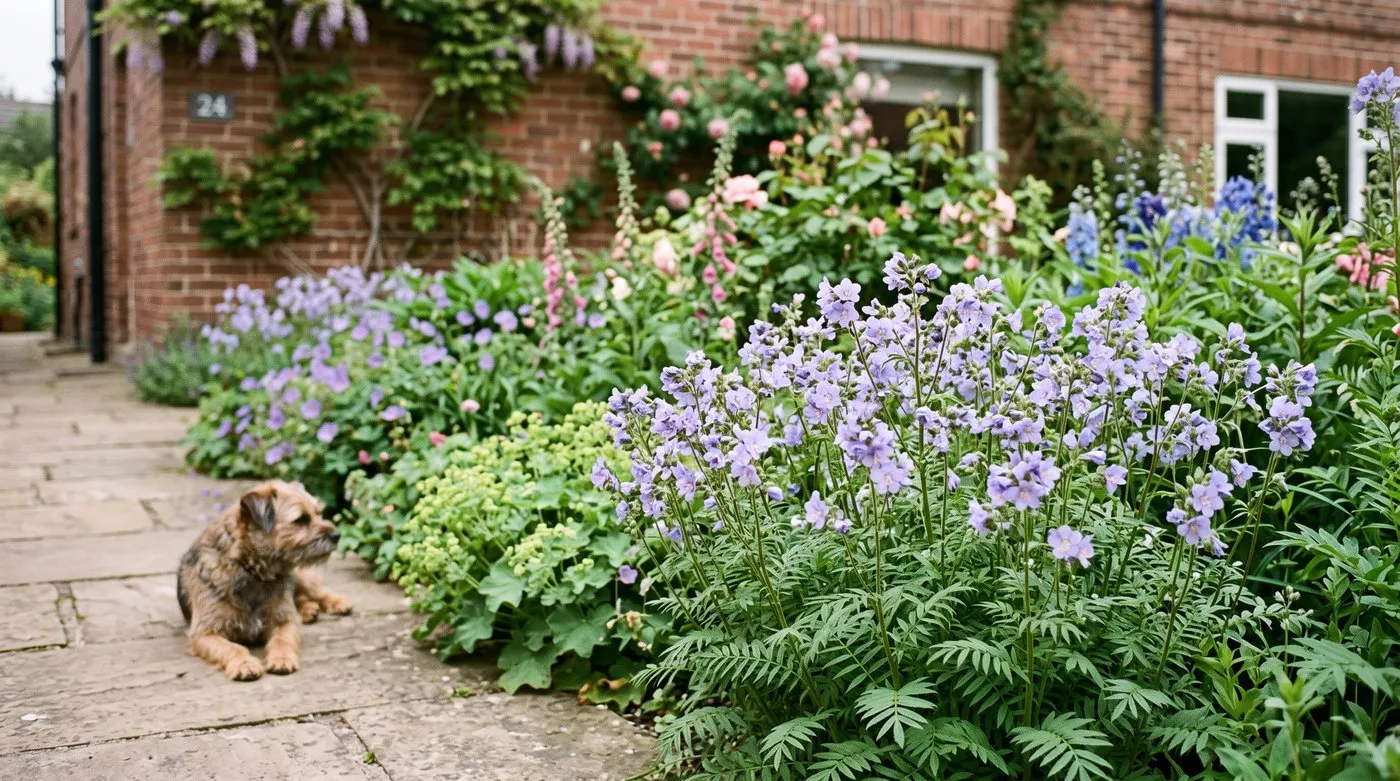 A three-year-old planting in a Yorkshire back garden. Polemonium is non-toxic to dogs and cats, which is one reason it suits family borders.
Month-by-month Polemonium calendar for UK gardens
| Month | What to do |
|---|---|
| January | Nothing. Check crowns are not sitting in standing water on clay. |
| February | Order plants. Clear any old foliage from around the rosettes. |
| March | Divide three-year-old clumps. Plant new stock. Mulch 5cm deep, clear of crowns. |
| April | Slug patrol on emerging shoots. Water new plantings if the top 5cm is dry. |
| May | Support 90cm species plants with pea sticks. Flowering starts late in the month. |
| June | Peak flower. Water deeply once a week in dry spells. This prevents July mildew. |
| July | Cut back hard to a 10cm mound in week two, before seed capsules turn brown. |
| August | Fresh foliage flushes. Water it once if the month is dry. No feeding needed. |
| September | Plant new stock. Take a last look before deciding what to divide next March. |
| October | Leaves die back. Leave the rosette alone. Do not mulch over the crown now. |
| November | Weed out any seedlings from a missed deadhead while they are still small. |
| December | Nothing. On heavy clay, check the crowns are proud of any surface water. |
What Polemonium costs to grow properly
A three-plant group of species Polemonium costs £12 to £18 in 2 litre pots from a UK nursery, or £4 to £6 each. Named cultivars run £8 to £12 each, so the same group costs £24 to £36. Seed is cheapest at around £2.50 a packet for 100 seeds, though seed-raised plants take two years to flower and will not come true from a named cultivar.
The hidden costs are what people miss. Bagged peat-free compost for the annual March mulch runs about £6 per square metre at 5cm depth. Horticultural grit for clay soil adds roughly £1.50 per plant. If you plant the species and skip deadheading, budget an hour a spring pulling seedlings for as long as you keep the border, which over ten years is more expensive in time than buying sterile cultivars at the start.
Replacement frequency is the last figure. Divided every third year, a Polemonium planting is effectively permanent and generates free plants. Left undivided, expect to buy replacements in year six to eight. Three original plants divided twice give you nine to twelve plants by year seven at no cost.
Common Polemonium mistakes
Polemonium sits naturally alongside other plants that flower in the same difficult half-light. For the wider planting picture, see our roundup of the best plants for shade in UK gardens, or read up on Aquilegia, which shares Polemonium’s habit of seeding itself into every crack.
Now you know how to grow Polemonium without the seedling problem, take on the other half of the shade border with our guide to growing hostas in the UK, or browse more of our plant growing guides for the next perennial.
Frequently asked questions
Where is the best place to plant Polemonium in a UK garden?
Dappled shade with moist soil that never dries out completely. Polemonium tolerates full shade and up to five hours of direct sun. The one thing it will not forgive is a hot, dry spot against a south wall. North and east-facing borders suit it best in most of England.
Does Jacob’s ladder come back every year?
Yes, Polemonium is a fully hardy herbaceous perennial down to minus 20C. It dies back to a low rosette or disappears entirely in winter, then reappears in March. Plants live five to eight years, longer if you divide them every third spring.
How do you stop Polemonium self-seeding everywhere?
Cut the whole plant back hard in the second week of July. Waiting until the pods turn brown is too late, as they shed on contact. Alternatively grow sterile cultivars such as ‘Bressingham Purple’ or the near-sterile ‘Lambrook Mauve’.
When should you divide Polemonium?
Early March, as the new rosettes reach 5cm across. Autumn division works on free-draining soil but rots on wet clay. Lift the clump, split it into fist-sized pieces with three or more growth points, and replant at the same depth 40cm apart.
Why does my Jacob’s ladder get white powder on the leaves?
That is powdery mildew, caused by dry roots and poor air movement. It is not caused by shade, which is the common misdiagnosis. Water deeply in dry spells, mulch 5cm thick each March and space plants at 40cm centres so air can move through the clump.
Which Polemonium cultivar is best for a small UK garden?
‘Bressingham Purple’ at 45cm tall, for dark foliage and no self-seeding. Its bronze-purple leaves hold colour from March to October, so it earns its space when out of flower. ‘Brise d’Anjou’ is prettier in leaf but far fussier about drought.
Is Polemonium good for bees?
Our team produces practical UK gardening guidance from source research, contributor records and established horticultural practice. Editorial standards are overseen by Matt W.