Key takeaways
- Primula splits into five garden groups: primroses and polyanthus, candelabra, drumstick, auriculas, and giant cowslips
- Get soil moisture right: candelabra and cowslips need bog, auriculas need gritty free drainage
- Native primroses and polyanthus flower from February; candelabra primulas follow in June and July
- Division right after flowering is the reliable way to multiply primulas; sow seed while it is fresh
- Vine weevil grubs and brown core root rot are the main killers, and both hit pots hardest
- Shop primroses sold in winter are treated as disposable but naturalise if you plant them out
The trick to growing them well is to stop thinking about primula as one plant. UK gardeners really buy from five practical groups, and each group wants something different. Get the soil moisture right for the group in front of you and primulas are among the easiest, longest-lived spring plants you can own.
The five primula groups UK gardeners actually buy
Primula divides into five groups that matter in a real garden. Forgetting the botanical detail, these are the plants you find on sale and the way they behave once planted.
First, the primrose and polyanthus group. This is the native primrose, Primula vulgaris, plus polyanthus, its multi-flowered garden hybrid. These are your border and container plants for early spring colour. Second, the candelabra primulas, tall bog and pond-margin plants with flowers stacked in tiers up the stem. Third, the drumstick primula, Primula denticulata, with perfect round flower heads in March. Fourth, the auriculas, gritty-soil alpines grown for their velvety, painted flowers and often shown off in a theatre. Fifth, the giant cowslips, Primula florindae and sikkimensis, statuesque bog plants with nodding yellow bells in summer.
The single most useful thing you can learn is the soil-moisture split. Candelabra primulas and giant cowslips want wet, boggy ground. Auriculas want sharp drainage and will rot in a bog. Primroses, polyanthus and drumsticks sit in the middle: moist but not waterlogged. Buy the wrong group for your conditions and no amount of care saves it.
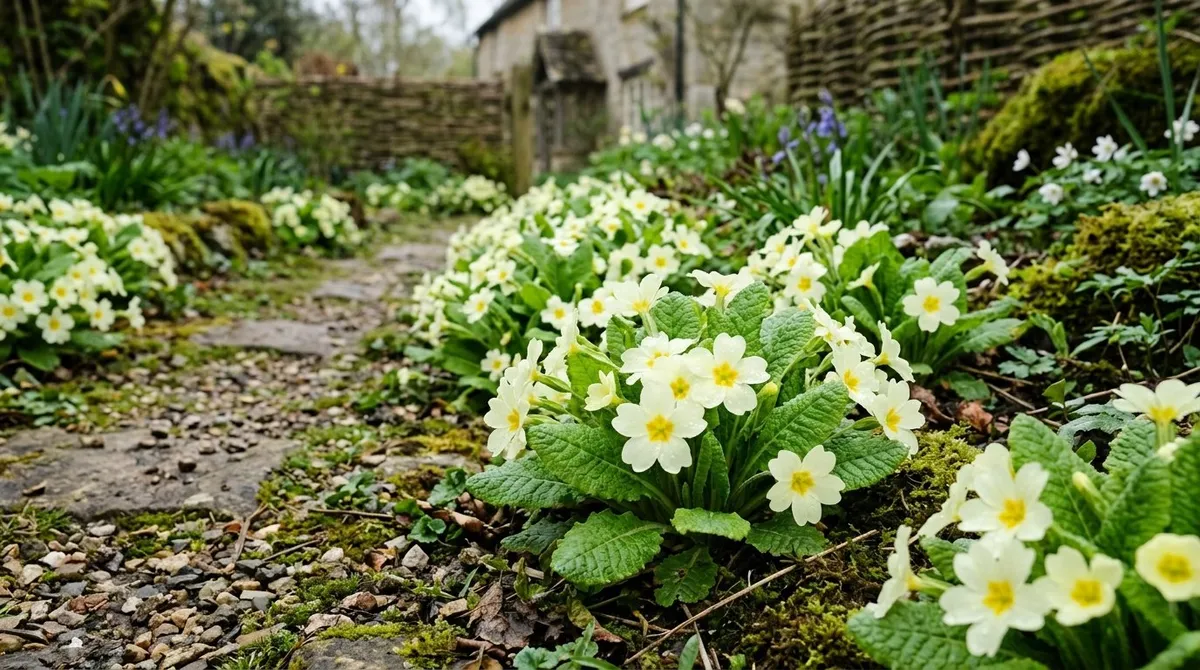
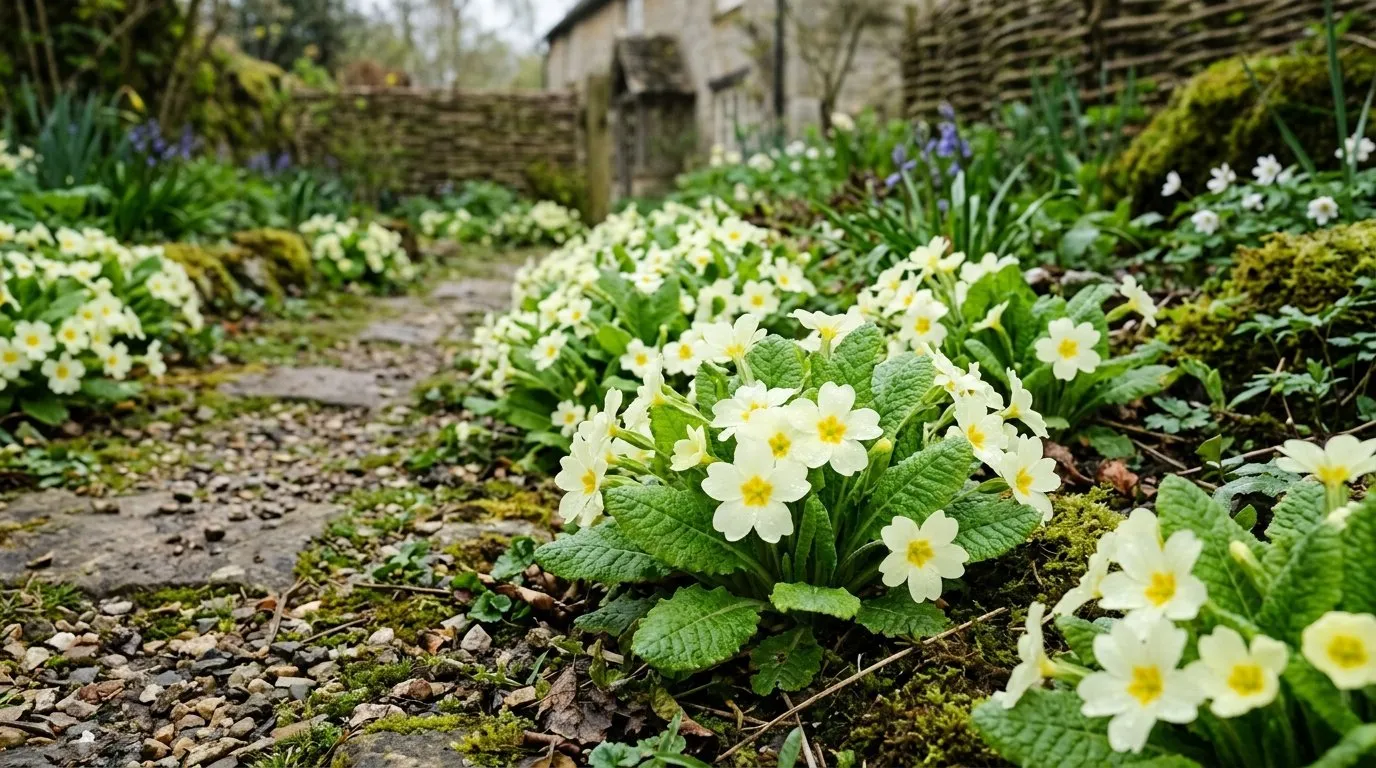 Native primroses, Primula vulgaris, the plant most people picture first. One species in a genus of around 500.
How to tell the primula groups apart
Read that table before you buy. If your garden is dry and sunny, the candelabra primulas and cowslips are not for you, however tempting the picture on the label. If you have a shady, damp corner that sulks all summer, that is exactly where the bog primulas will thrive while other plants rot.
Native primroses and polyanthus for spring colour
Primroses and polyanthus are the easiest primulas and the first to flower. The native primrose, Primula vulgaris, opens pale sulphur-yellow blooms from February on woodland floors and shady banks across Britain. It is fully hardy, rated H7 on the RHS scale, and asks only for cool, moist, leafy soil in part shade. In the garden it settles into borders, the front of beds, and under deciduous shrubs where spring light reaches it before the leaves come.
Polyanthus are the multi-coloured cousins. They came from crossing the primrose with the cowslip, Primula veris, and centuries of breeding. Instead of single flowers on short stalks, polyanthus carry a whole head of blooms on one stem, in reds, yellows, blues, whites and bicolours. They are the classic spring bedding plant for pots, window boxes and the edges of borders, flowering from March into May. Treat them as short-lived perennials: they keep going for years, but flower best in their first two or three springs.
Plant both in soil improved with leaf mould or garden compost. They like their roots cool and never bone dry. In a hot, exposed border they fade fast, so give them the shadier, moisture-holding spots. For the full detail on the wild species and its named forms, see our detailed primrose guide. Both groups pair well with hellebores, wood anemones and early bulbs for a layered spring display.
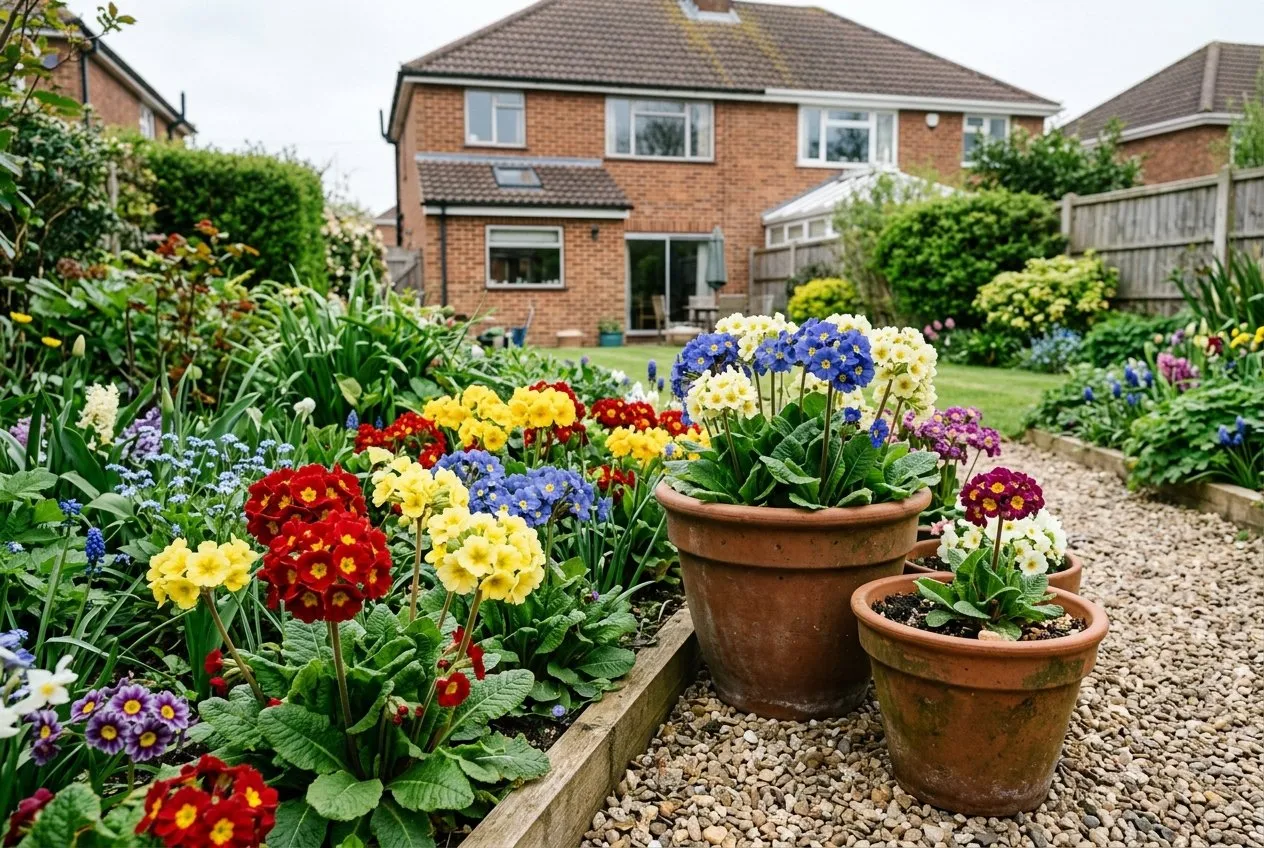 Polyanthus give instant spring colour in pots and border edges. Keep the roots cool and moist and they flower for weeks.
Candelabra primulas for pond margins and bog gardens
Candelabra primulas are the tall, tiered plants for permanently wet ground. The name describes the flower: instead of one head, the blooms are arranged in whorls stacked up the stem like the arms of a candelabra, opening from the bottom ring upward over several weeks. They reach 45-90cm and flower in June and July, well after the primroses have finished.
The best garden species are worth knowing by name. Primula bulleyana carries orange and apricot tiers. Primula japonica is the toughest and most vigorous, in crimson, pink or white, and the one that self-seeds most freely for me. Primula pulverulenta throws deep wine-red flowers on white, farina-dusted stems to 90cm. Primula beesiana and the yellow Primula prolifera round out a group that hybridises happily, so a mixed planting soon gives seedlings in a spread of shades.
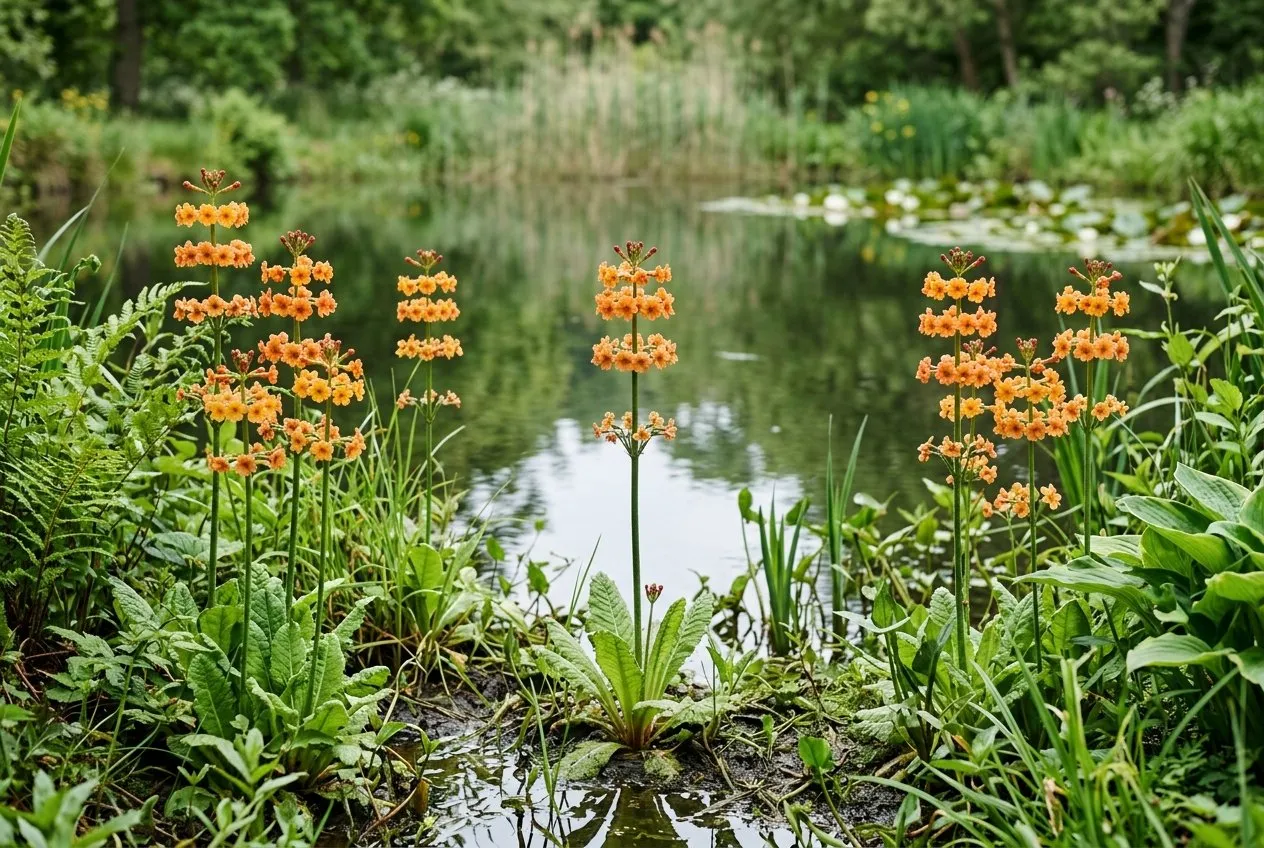 Candelabra primulas at the water’s edge. The flowers open in stacked rings, and on wet ground they seed themselves into colonies.
Drumstick primulas: Primula denticulata for early colour
Drumstick primulas are the ones with perfect round flower heads, and they are among the earliest to bloom. Primula denticulata produces a tight globe of small florets on a single stout stem, 30-45cm tall, in mauve, lilac, purple, pink or white. The heads appear in March and April, often before the leaves have fully expanded, which is what gives them their neat, lollipop look.
They are easy and reliable. Grow them in moist, rich soil in sun or part shade, the same middle-ground conditions primroses enjoy. They are not bog plants, but they hate drying out, so a border that holds moisture through spring suits them well. Fully hardy at H6 to H7, they need no winter protection in a UK garden.
Drumsticks have a useful party trick: they propagate from root cuttings more readily than most primulas. In winter you can lift a plant, cut sections of the thick roots, and lay them in gritty compost to sprout. For most gardeners, though, simple division after flowering does the job. They sit well with the fresh green of unfurling ferns and the early growth of hostas.
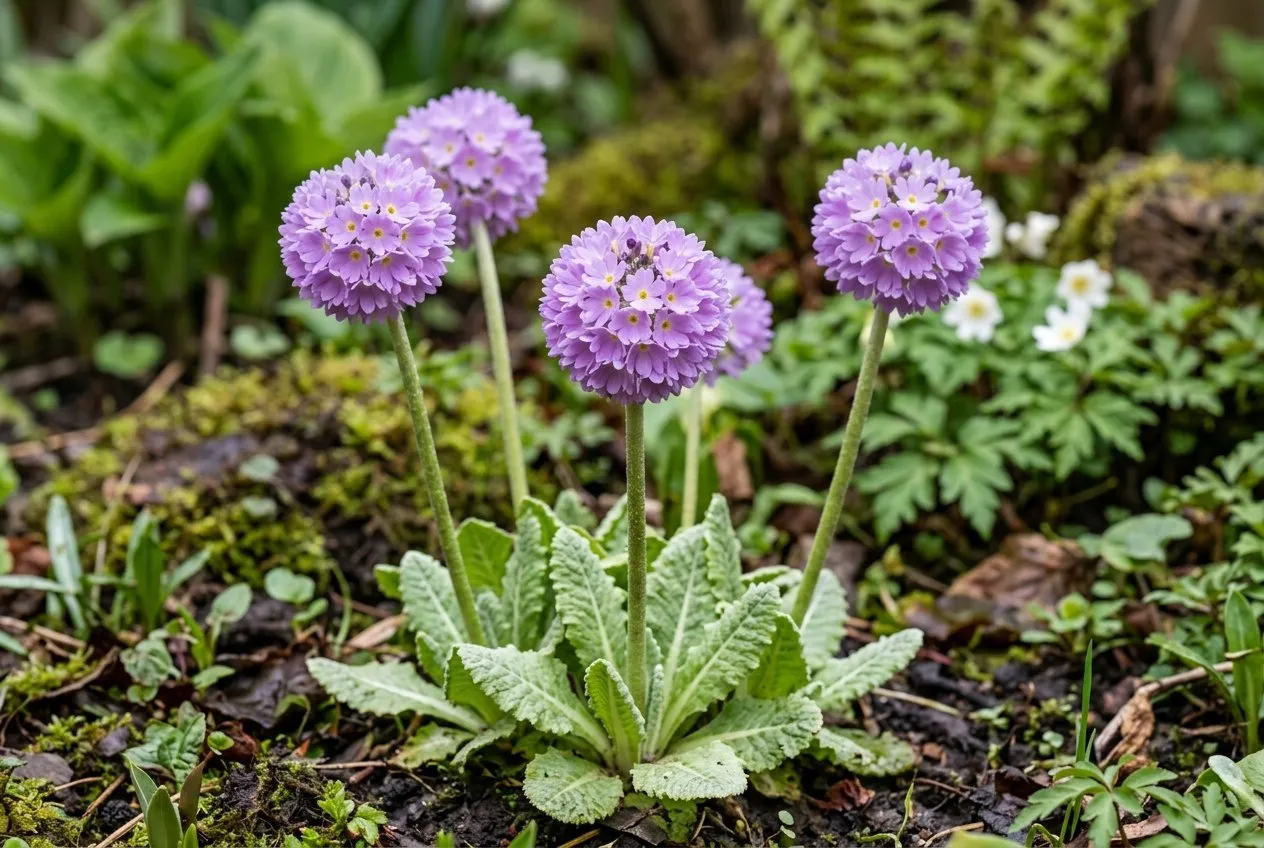 Drumstick primula, Primula denticulata. The round heads open in March, often before the leaves fully expand.
Auriculas and the auricula theatre
Auriculas are the collector’s primula, grown as much for the display as the plant. Primula auricula is an alpine from the European mountains, so unlike the bog primulas it wants sharp drainage. The flowers are unlike anything else in the genus: flat, round, and often ringed in contrasting colours, many dusted with a white, floury bloom called farina. Gardeners divide them into three types. Show auriculas have the painted, farina-edged flowers grown under cover to protect the meal from rain. Alpine auriculas are hardier and shaded rather than white-centred. Border auriculas are the tough, garden-worthy plants that take a well-drained bed outdoors.
Grow them in a gritty, free-draining compost, ideally in clay pots. A mix of two parts loam-based compost, John Innes No.2, to one part horticultural grit keeps the roots open and stops the crown rotting. They want bright light but shade from hot summer sun, and they detest sitting wet, which is the opposite of every other group here. Water from below and keep water off the farina-covered leaves.
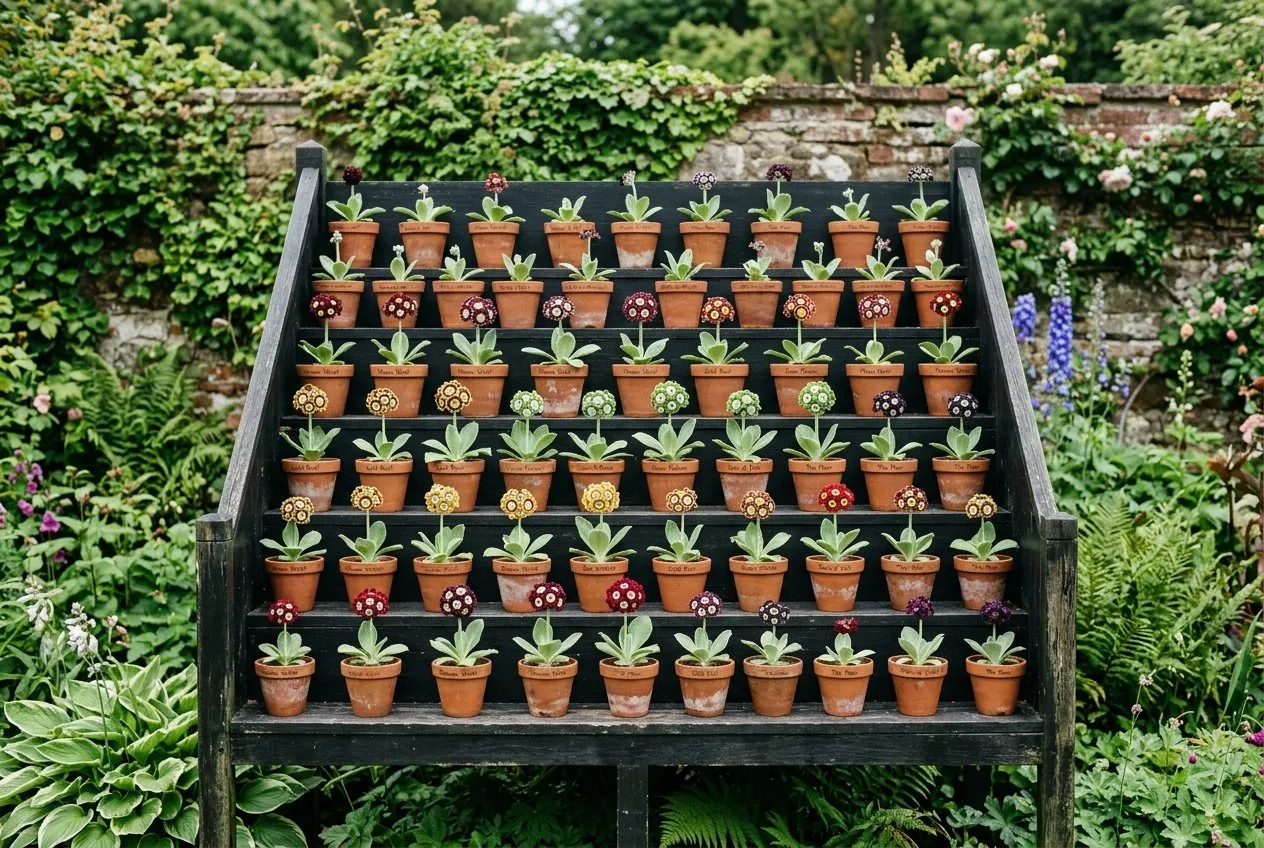 An auricula theatre frames the potted plants at eye level. The black backing throws the painted, farina-dusted flowers forward.
Giant cowslips: Primula florindae and sikkimensis
Giant cowslips are the statuesque bog primulas for the back of a damp planting. Primula florindae, the Tibetan or giant Himalayan cowslip, sends up stout stems to 90-120cm topped with drooping clusters of soft sulphur-yellow bells, each dusted with farina and carrying a warm, honeyed scent. It flowers from June into August, later than most primulas, extending the season on wet ground. Primula sikkimensis is similar but smaller, around 60cm, with paler yellow nodding bells.
Both want the same conditions as the candelabra group: permanently moist to wet, rich soil in part shade. They are ideal at a pond edge, streamside, or in the wettest, shadiest corner where little else flowers in summer. Fully hardy at H6, they self-seed on damp ground and naturalise into generous stands over a few years. Where the ground is reliably wet they cope with more sun than you might expect.
These are the primulas to reach for if you want height and late colour in a bog. Behind a rank of orange candelabra, a stand of Primula florindae reads as a proper piece of planting rather than a novelty. They also feed late bumblebees, which work the hanging bells steadily through July.
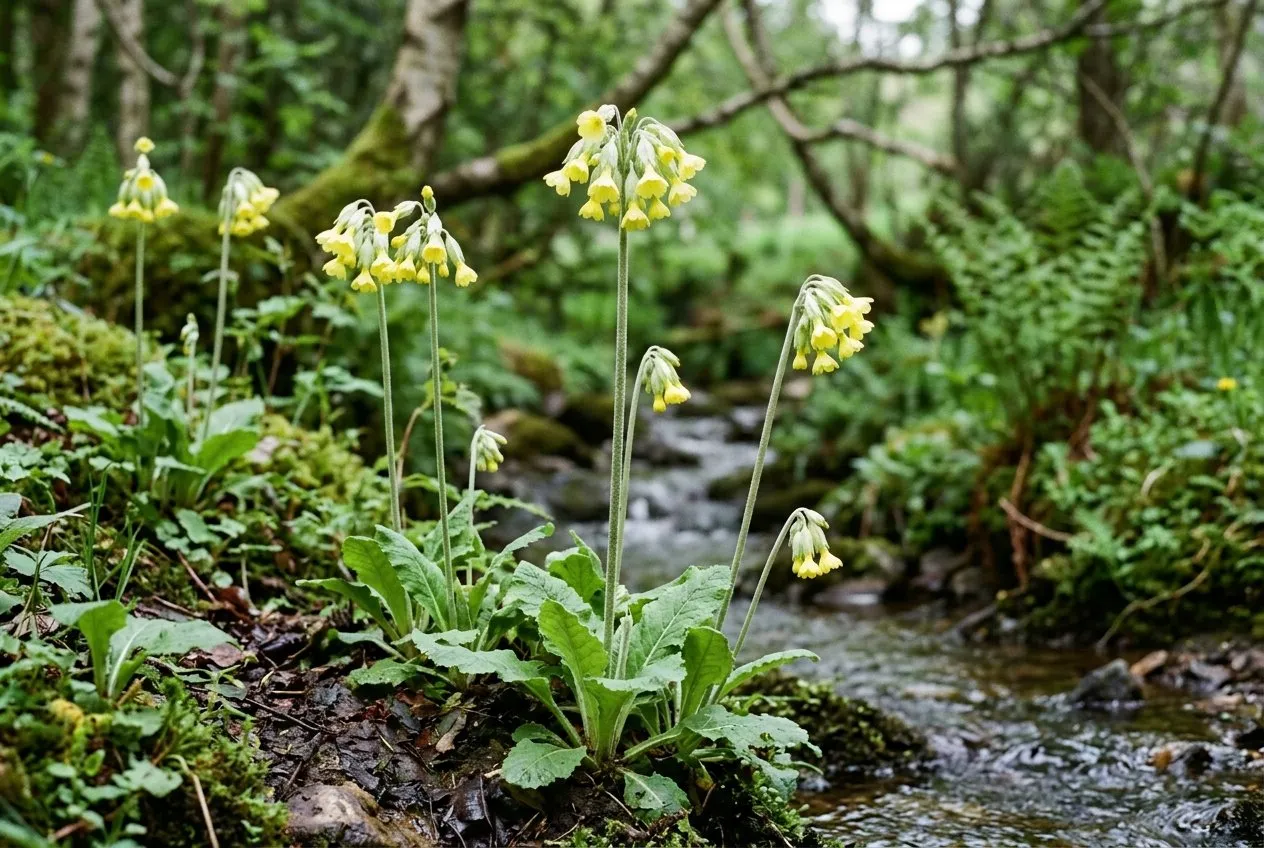 Primula florindae, the giant cowslip, reaches 1.2m and flowers into August, extending the primula season on wet ground.
Which primula needs damp soil and which needs drainage
This is the question that decides success, so it is worth spelling out plainly. The bog primulas, candelabra types and giant cowslips, need ground that never dries out. The auriculas need sharp drainage and rot in wet soil. Everything else, the primroses, polyanthus and drumsticks, wants moist but free-draining ground, the ordinary good border soil most plants like.
The reverse trap catches auriculas. Gardeners lump all primulas together as moisture-lovers, plant an auricula in rich, damp soil, and the crown rots over winter. Auriculas evolved on mountain screes. They want grit, air around the crown, and protection from constant wet. Keep the two extremes clear in your head and you avoid nine out of ten primula failures.
Warning: Never plant an auricula in the same wet, boggy spot that suits a candelabra primula. The crown will rot within a winter. Auriculas need gritty, free-draining compost and dislike sitting wet, which is the exact opposite of every bog primula in this guide.
How to propagate primulas by division and seed
Division right after flowering is the reliable way to multiply almost every primula. Wait until the blooms fade, usually May or June, then lift the whole plant with a fork. Most primulas form a clump of separate crowns that pull apart easily, each with its own roots and rosette of leaves. Tease them into pieces by hand, trim any long roots, and replant at once into soil improved with compost. Water them in and keep them shaded and moist while they re-root.
Dividing every two or three years does more than make new plants. It rejuvenates a tired clump, breaks up the woody centre that stops flowering, and gives you spares to spread around. Do it as part of your general spring and early-summer border work, alongside the other jobs in our guide to dividing perennials. Auriculas are the exception: rather than splitting the clump, pull off the small offsets, the baby rosettes that form around the main plant, and pot them individually.
Seed is the other route, and the rule is simple: fresh seed germinates best. Primula seed loses viability quickly, so sow it as soon as it ripens in summer. Many species, especially the alpines and cowslips, need a cold spell to break dormancy, so sowing in late summer and leaving the tray outdoors over winter lets the frost do the work. Prick out the seedlings the following spring. Seed-raised candelabra primulas often flower in their second year and give you a natural mix of colours.
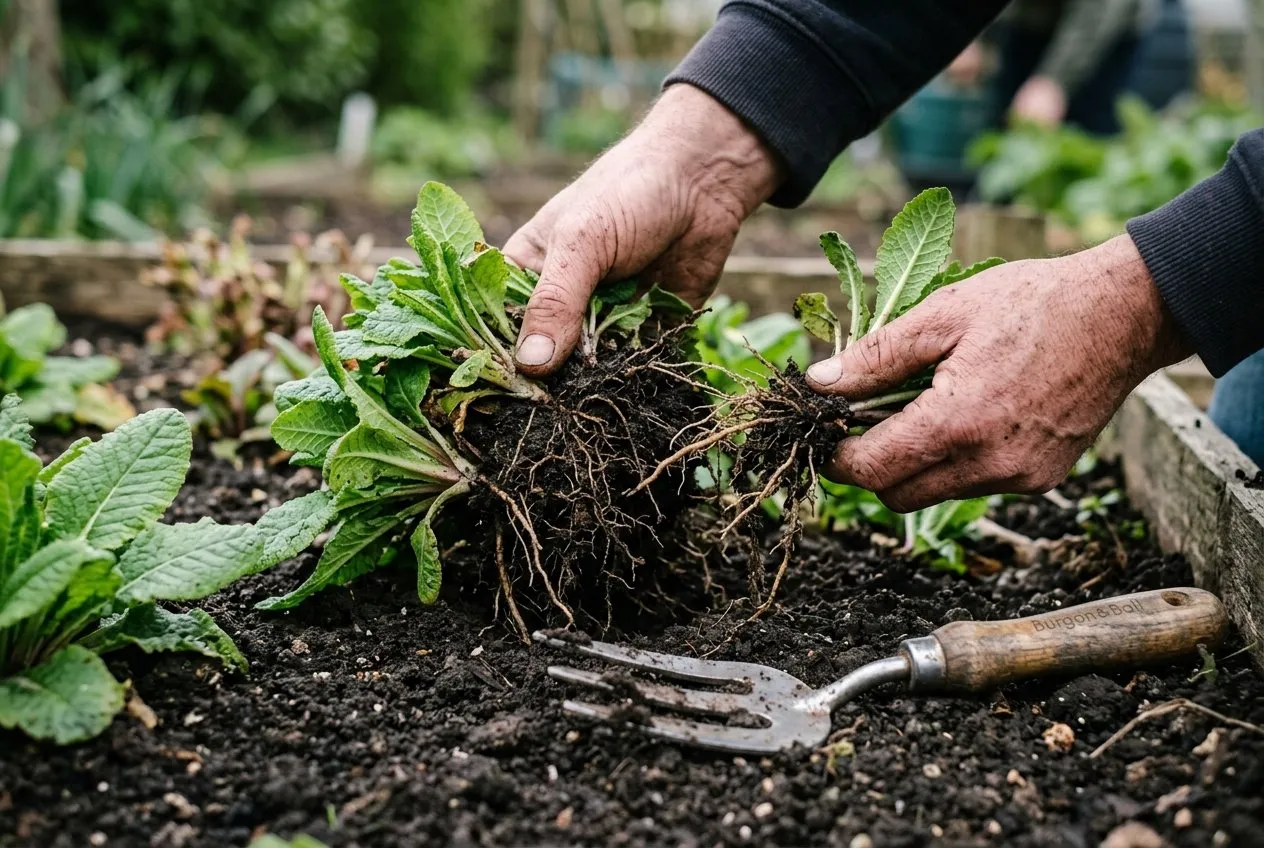 Dividing a primrose clump straight after flowering. Each rooted piece replants at once and settles in within weeks.
Month-by-month primula care calendar
Primula care spreads thinly across the year because the groups flower at different times. This calendar covers the whole genus, so pick the lines that match the primulas you grow.
| Month | Task |
|---|---|
| January | Check pot-grown auriculas are not sitting wet; ventilate on mild days |
| February | Native primroses start flowering; clear leaf litter off emerging crowns |
| March | Drumstick primulas and polyanthus open; top-dress auriculas with fresh gritty compost |
| April | Peak primrose and drumstick display; watch for vine weevil notches on leaves |
| May | Divide primroses and polyanthus as they finish; sow last year’s stored seed |
| June | Candelabra primulas open; keep bog plantings wet; deadhead spent polyanthus |
| July | Giant cowslips flower; let some candelabra set seed for free colonies |
| August | Collect and sow fresh ripe seed at once; keep bog primulas from drying out |
| September | Apply vine weevil nematodes while soil is warm and moist; repot auricula offsets |
| October | Plant new pot-grown primroses and polyanthus for spring; mulch bog primulas |
| November | Move show auriculas under cover to protect farina from winter rain |
| December | Little to do; ensure auricula pots drain freely and border primulas are not waterlogged |
Primula pests and diseases to watch for
Primulas are largely healthy, but three problems account for most losses. Vine weevil is the worst. The adults chew distinctive C-shaped notches from leaf edges in summer, which is unsightly but survivable. The real damage is underground: the cream, C-shaped, legless grubs eat the roots through autumn and winter, and the first sign is a plant that wilts and lifts away with no roots left. Containers suffer most because the grubs are trapped with the roots. Water on biological nematodes in September when the soil is warm, repot pot plants yearly, and check the compost of any collapsing plant. For the full control programme, see our guide to vine weevil treatment. The RHS covers the vine weevil lifecycle in detail.
Primula brown core is a soil-borne root rot caused by Phytophthora primulae. Affected plants wilt, the leaves yellow, and when you lift them the roots are rotted away leaving a short, dark brown core at the base of the crown. There is no cure. Dig up and destroy affected plants, do not compost them, and do not replant primulas in the same spot, as the organism persists in the soil. Good drainage and not planting primulas year after year in the same bed keep it at bay.
Slugs and snails are the third problem, and they love the soft new growth of primroses and polyanthus in spring, along with the flowers. Emerging drumstick heads are a favourite. Protect young plants and divisions with grit, wool pellets or nightly patrols until the foliage toughens. Our guide on how to deter slugs without chemicals covers the methods that actually hold up in a wet UK spring. Under glass, auriculas can also pick up red spider mite in hot, dry air, so keep the atmosphere cool and humid.
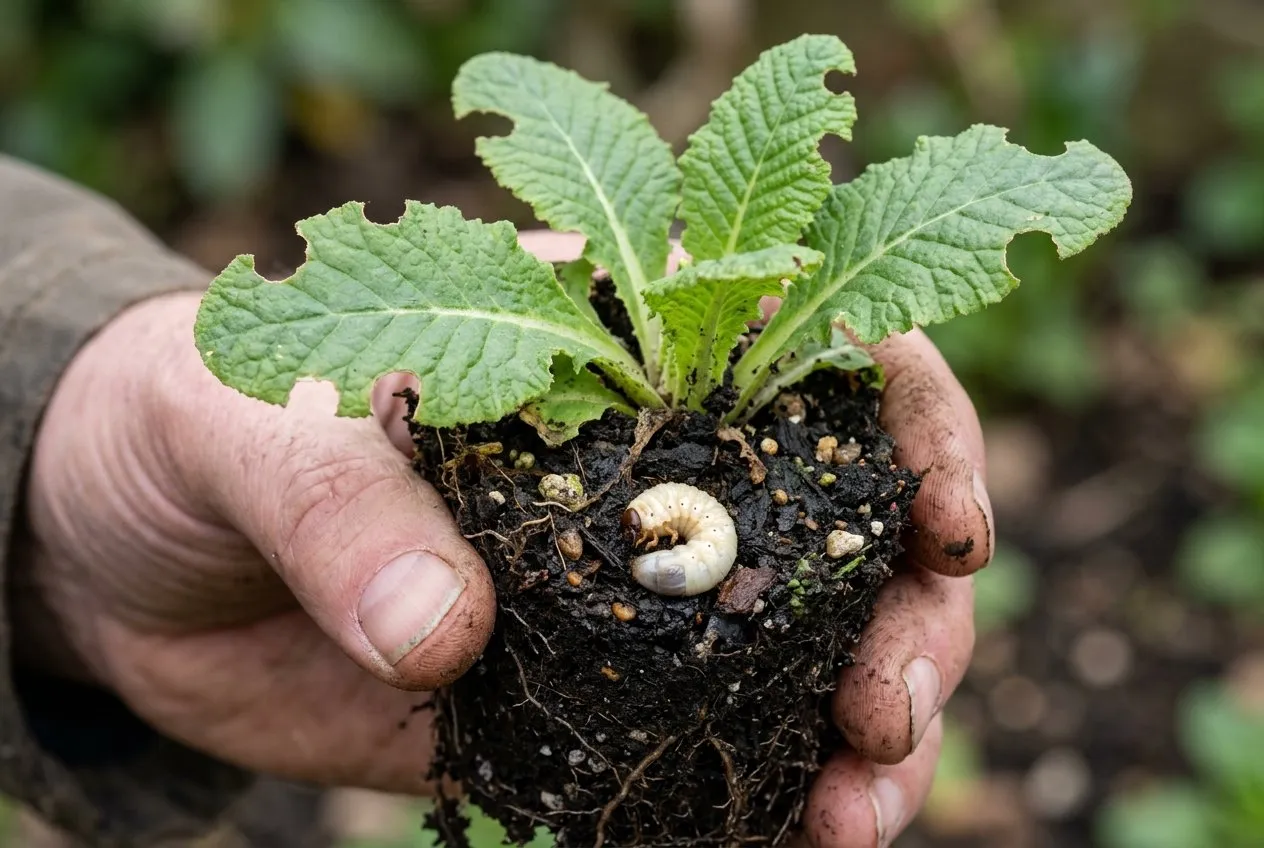 Vine weevil damage: C-shaped notches in the leaves above, and the root-eating grubs below. Pots suffer worst.
Common mistakes when growing primulas
Most primula disappointments come down to a handful of avoidable errors. Fix these and the plants look after themselves.
Buying the wrong group for your soil
The number one mistake is ignoring the moisture split. A candelabra primula in a dry border dies; an auricula in a bog rots. Read the group table above and match the plant to the conditions you actually have, not the ones you wish you had.
Letting bog primulas dry out in summer
Candelabra primulas and giant cowslips collapse the moment their roots dry. A pond margin buffers this; a border does not unless you water it. If you cannot keep a spot reliably wet from June to August, choose a different group rather than fighting the soil.
Sitting auriculas in rich, wet compost
Auriculas want grit, not goodness. Planting them in rich, moisture-retentive soil rots the crown over winter. Use a gritty, free-draining mix in clay pots, water from below, and keep them on the lean side.
Sowing old, stored primula seed
Primula seed loses viability fast. A packet kept warm in a drawer for a year often fails completely. Sow fresh seed as soon as it ripens in summer, leave alpine and cowslip types outdoors to chill over winter, and germination jumps.
Treating winter shop primroses as bin fodder
The forced primroses sold for winter colour are hardy plants, not throwaways. Deadhead them, and once they finish plant them out in moist part shade. Most naturalise and flower again for years at no extra cost.
Can you plant supermarket primroses outside?
Yes, and it is one of the best-value things you can do in the spring garden. The trays of brightly coloured primroses sold in supermarkets and garden centres from January are forced Primula vulgaris hybrids, grown fast under glass for instant colour. Shops and buyers alike often treat them as disposable, tossed on the compost once the flowers fade. That is a waste, because they are fully hardy and perennial.
Keep them watered and deadheaded while they flower indoors or in a cold porch. Harden them off gradually if they have been kept warm, then plant them out once the main flush finishes, usually March or April. Choose a spot in moist, leafy soil in part shade, the same conditions the wild primrose enjoys. Space them 20-25cm apart and water them in.
Most settle in within weeks and flower again the next spring, often for several years. Over time they can self-seed and revert toward the softer, natural primrose colours, which many gardeners prefer to the forced brights. A £4 tray of six, planted out rather than binned, becomes a permanent drift for the price of a coffee.
Frequently asked questions
What is the difference between a primula and a primrose?
A primrose is one species within the much larger primula genus. Primula is the whole genus of around 500 species. The native primrose, Primula vulgaris, is just one of them. Polyanthus, candelabra primulas, drumsticks and auriculas are all primulas too. So every primrose is a primula, but not every primula is a primrose.
Do primulas come back every year?
Yes, most garden primulas are hardy perennials that return each spring. Primroses, polyanthus, candelabra types, drumsticks and auriculas all come back for years in the right spot. They can be short-lived if the soil dries out or vine weevil takes the roots. Lift and divide congested clumps every two or three years to keep them vigorous.
Where should I plant candelabra primulas?
In permanently damp or boggy ground, ideally beside a pond. Candelabra primulas like Primula japonica and bulleyana need soil that never dries out. A pond margin, bog garden or a shaded, moisture-retentive border all suit them. Give them dappled shade and rich soil. In full sun they scorch and collapse unless the ground stays wet.
How do I stop vine weevil killing my primulas?
Water on a nematode drench in late summer and repot pot-grown plants yearly. Vine weevil grubs eat primula roots, and they hit containers hardest. Check the compost of any wilting plant for cream, C-shaped grubs. Biological nematodes applied in September, when the soil is warm and moist, give the most reliable control. Squash any adult weevils you find at night.
Can I plant supermarket primroses in the garden?
Yes, plant them out after flowering and most will naturalise. Shop primroses sold in winter are forced for instant colour and often treated as disposable. They are usually Primula vulgaris hybrids and fully hardy. Deadhead them, plant in moist part shade once they finish, and many settle in to flower again the following spring.
How do I propagate primulas?
Divide clumps straight after flowering, or sow fresh seed in summer. Division is the quickest method: lift the plant, tease it into rooted pieces and replant at once. Seed germinates best when sown fresh, and many primulas need a cold spell to break dormancy. Auriculas are increased from offsets pulled off the main rosette.
Do primulas need sun or shade?
Most primulas prefer dappled shade and cool, moist soil. Primroses, polyanthus, candelabra types and drumsticks all do best in part shade. They tolerate more sun only where the ground stays reliably damp. Auriculas are the exception, wanting bright light but shade from hot midday sun. Deep, dry shade suits none of them.
Now you know how to match each primula group to your soil, carry the spring display on with our pick of early spring pollinator plants to keep the bees fed from February onward.
Our team produces practical UK gardening guidance from source research, contributor records and established horticultural practice. Editorial standards are overseen by Matt W.