Key takeaways
- Grow auriculas in clay pots of gritty compost mixed roughly 60% loam-based compost to 40% grit
- Flowering runs April to May in most of the UK, around three weeks per plant
- Show and Double classes carry powdery white farina that rain destroys, so grow them under cold glass
- Vine weevil grubs are the number one killer: gritty compost cut our grub counts from 11 to 2 per pot
- Water from below into a tray, never over the rosette, and keep plants cool and shaded in summer
- One established plant throws three to five offsets a year, so a collection doubles for free
Auriculas are the collector’s primula, and learning how to grow auriculas well is mostly about pots, grit, and shade. Primula auricula is an alpine plant from the European mountains, not a woodland flower like the common primrose. That single fact drives everything: gritty compost, clay pots, cool conditions, and careful watering from below. Get those right and these plants reward you for decades.
These are not difficult plants, but they are particular. They split into four show classes, some carry a strange white meal called farina, and they have one serious enemy in the vine weevil. The Royal Horticultural Society holds a national collection and useful references. This guide focuses on the practical decisions that keep an auricula alive and in good flower year after year.
How auriculas differ from common primroses
Auriculas and primroses both belong to the genus Primula, but they grow in opposite worlds. The common primrose, Primula vulgaris, is a woodland plant. It wants moist, humus-rich soil in dappled shade and copes happily in the open garden. Our guide to growing primroses covers that woodland approach in full.
Primula auricula comes from limestone mountains across the Alps. It grows in thin, gritty pockets with sharp drainage and bright cool air. That heritage is why auriculas hate the two things primroses tolerate: heavy wet soil and summer warmth. A primrose shrugs off a damp clay border. An auricula in the same spot rots at the crown within a season.
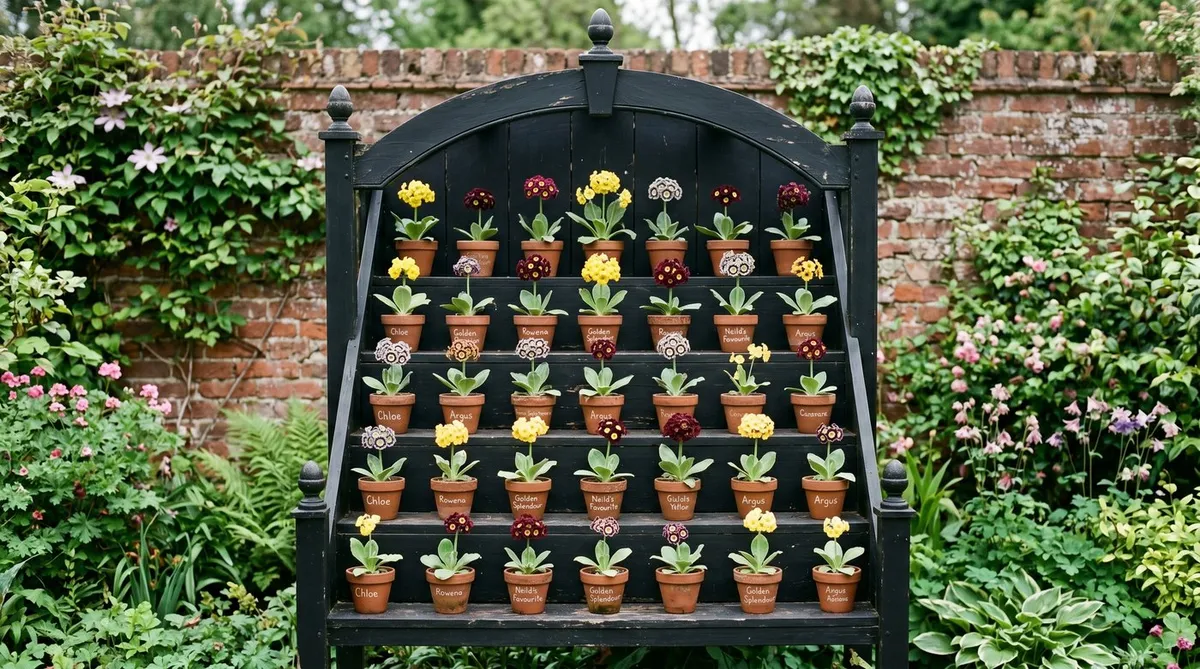
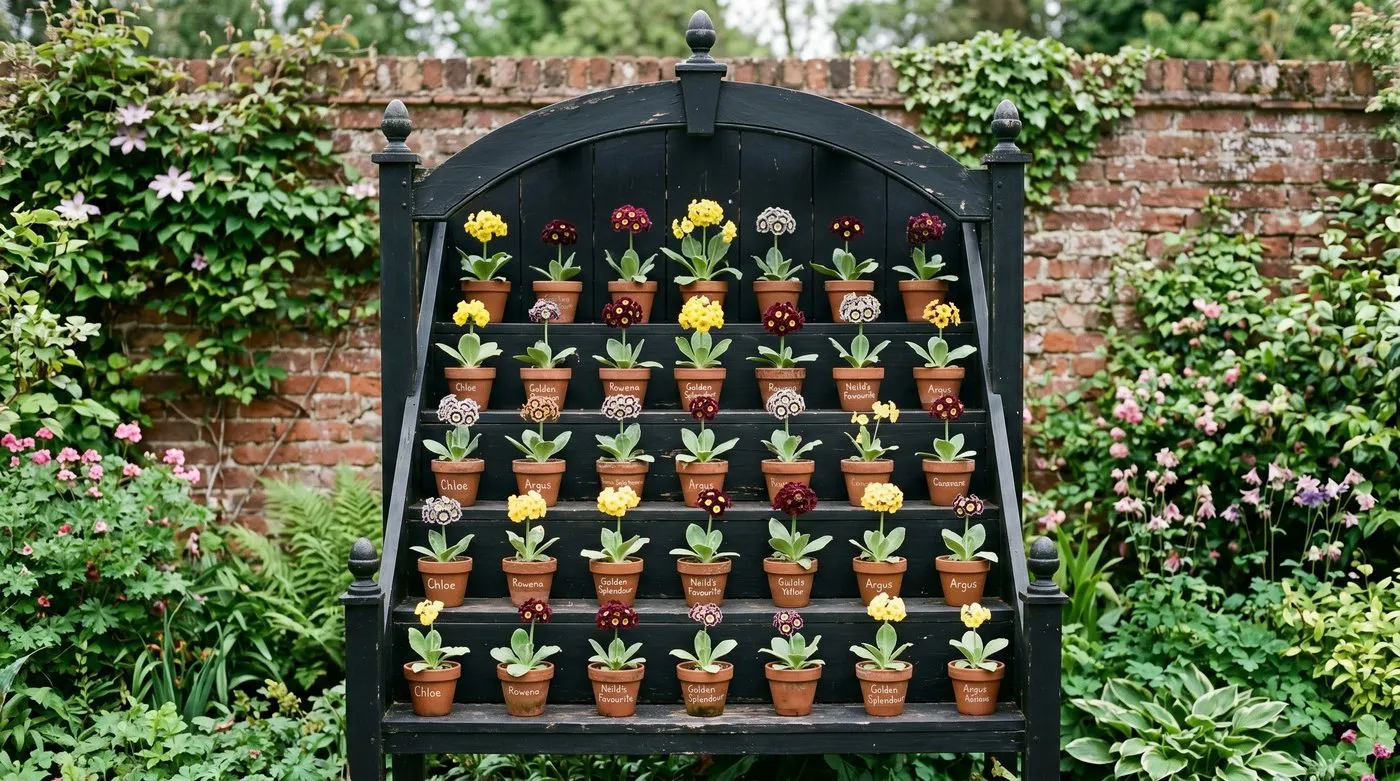 A traditional auricula theatre stages the pots at eye level and shelters the blooms from rain.
The auricula theatre and why it exists
An auricula theatre is a tiered set of shelves, usually painted black inside, that holds the potted plants in rows. The dark backing makes the flowers stand out and the roof keeps rain off the farina. The tradition began in the 18th century and remains the classic way to display a collection.
The theatre solves a real problem, not just a decorative one. Show and Double auriculas carry farina that rain destroys in days. A roofed theatre, a cold frame, or a north-facing porch keeps the blooms dry while they are open. It also raises the small flowers to eye level, where the detail of the paste and edging can be seen.
You do not need a theatre to grow auriculas. Many gardeners use a simple shelf under the eaves, a cold greenhouse bench, or an open cold frame. The principle matters more than the structure: keep rain off the open flowers of farina types, give bright light without hot afternoon sun, and keep air moving to prevent rot. A windowsill indoors is too warm and too dry.
The four show classes explained
Auriculas divide into four classes, and the class decides how much shelter a plant needs. Getting this right at the buying stage saves disappointment later.
Show auriculas carry a circle of white farina paste around the centre, then a body colour, then an edge. The edge can be green, grey, or white, formed from leaf tissue dusted in meal. These are the aristocrats of the group and need cold glass to protect the paste.
Alpine auriculas have a clean gold or cream centre with no paste, shading out to a darker rim. They carry little farina, so they cope better in the open than Show types, though a roof still improves them.
Border auriculas are the tough garden plants. They descend from the old “dusty miller” types, often scented, and grow happily in a well-drained border or trough outdoors. Most carry only a trace of farina.
Double auriculas have many petals in rosette form. They behave like Show types and carry farina, so they want cover.
| Class | Farina / paste | Grow under cover? | Best for |
|---|---|---|---|
| Show | Heavy farina, paste centre | Yes, cold glass essential | Collectors, exhibition |
| Double | Farina present, many petals | Yes, cold glass | Collectors, display |
| Alpine | Clean centre, light farina | Preferred, not essential | Cold frame, porch |
| Border | Little or no farina | No, grows outdoors | Open garden, troughs |
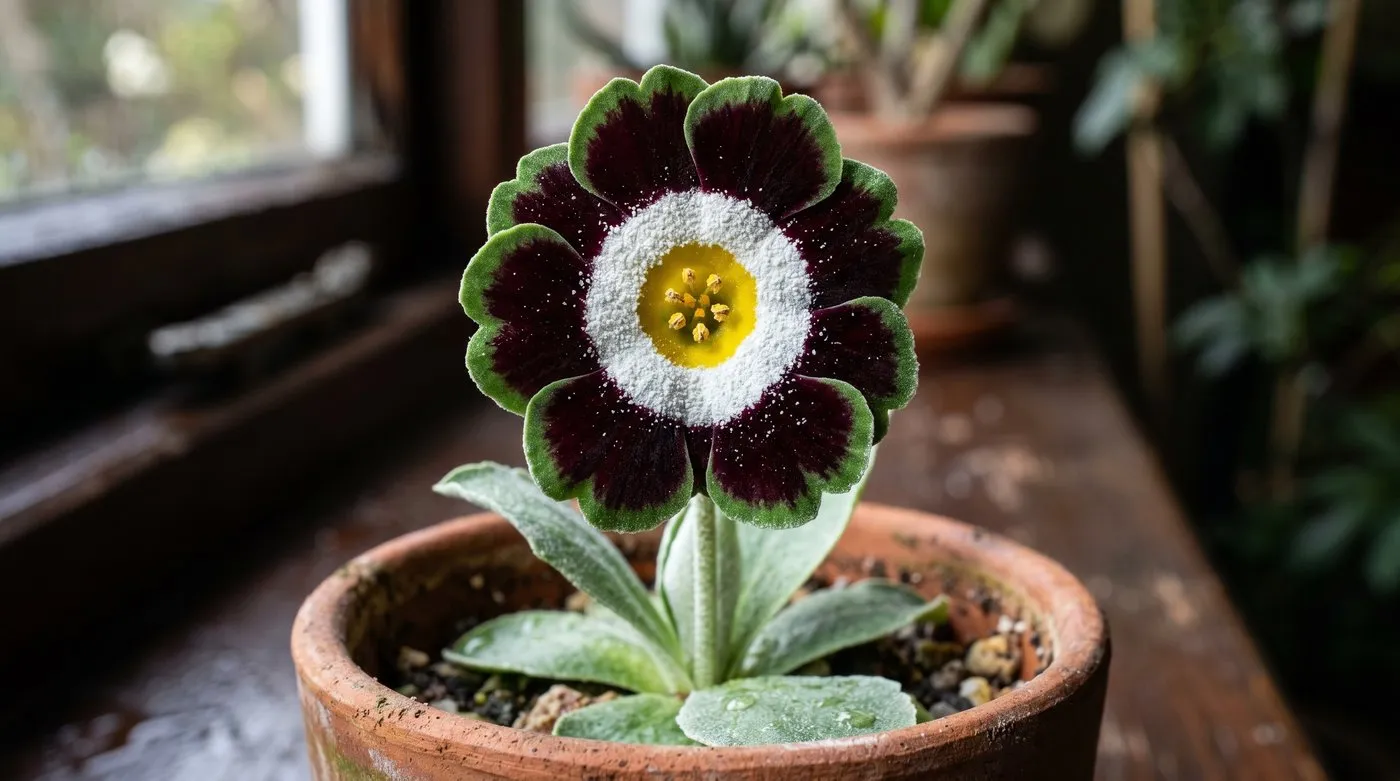 A Show auricula: the white paste ring is pure farina, and a single shower of rain can wash it away.
What farina is and why rain ruins it
Farina is a fine white meal the plant produces from glandular hairs. It coats the petals, forms the paste centre, and often dusts the leaves with a grey bloom. Botanically it is a wax-like flavonoid powder, and it is one of the features judges score most closely in Show classes.
Gardener’s tip: Never mist or hose an auricula in flower. If a Show plant gets caught in rain, do not wipe it. Let it dry, and lift it under cover before the next shower to save what farina remains.
Compost and pots: getting drainage right
Auriculas live or die by drainage. The compost must be open and gritty so water runs through fast and the roots never sit wet. A peat-based multipurpose compost holds too much water, breaks down to a soggy mush, and is the single most common reason beginners lose plants.
Mix your own at roughly 60 percent loam-based compost (John Innes No. 2 is ideal) to 40 percent horticultural grit or sharp sand. Some growers add a handful of perlite as well. The aim is a mix that drains within seconds when you water it. If water pools on the surface, add more grit.
Clay pots beat plastic for auriculas. Clay is porous, so the rootball breathes and dries more evenly, which suits an alpine plant. A standard pot of 9cm to 13cm suits one plant. Auriculas like a snug root run, so do not over-pot. Repot annually in late June or July, after flowering, refreshing the gritty mix and removing dead lower leaves.
 Gritty, free-draining compost in a clay pot is the foundation of a healthy auricula.
If you make your own gritty mix, good homemade compost sieved and blended with grit works well as the loam fraction. Keep the texture coarse and open.
Watering, feeding and keeping plants cool
Auriculas need a careful, light touch with water. Water from below by standing the pot in a tray of water for ten minutes, then lifting it out to drain. This keeps water off the rosette and farina, and lets the gritty compost wick up only what it needs. Never leave pots standing in water.
In spring and autumn, water when the surface feels dry, roughly twice a week. In hot summer weather, plants enter a semi-dormant rest. Reduce watering and keep them cool and shaded. Overwatering a resting plant in July causes more deaths than drought. In winter, keep the compost barely moist, never wet, as cold wet roots rot fast.
Feed lightly. A weak liquid tomato feed at half strength, every two or three weeks from March to June, gives steady growth and good flower. Stop feeding in high summer. A balanced feed resumes briefly in early autumn as the plant puts on new roots.
Heat is the enemy in a British summer. Auriculas evolved in cool mountain air, so they sulk above 25C. Move pots into shade, into a north-facing cold frame, or under a bench. Good airflow prevents the rot and mildew that warm, still, humid conditions bring on.
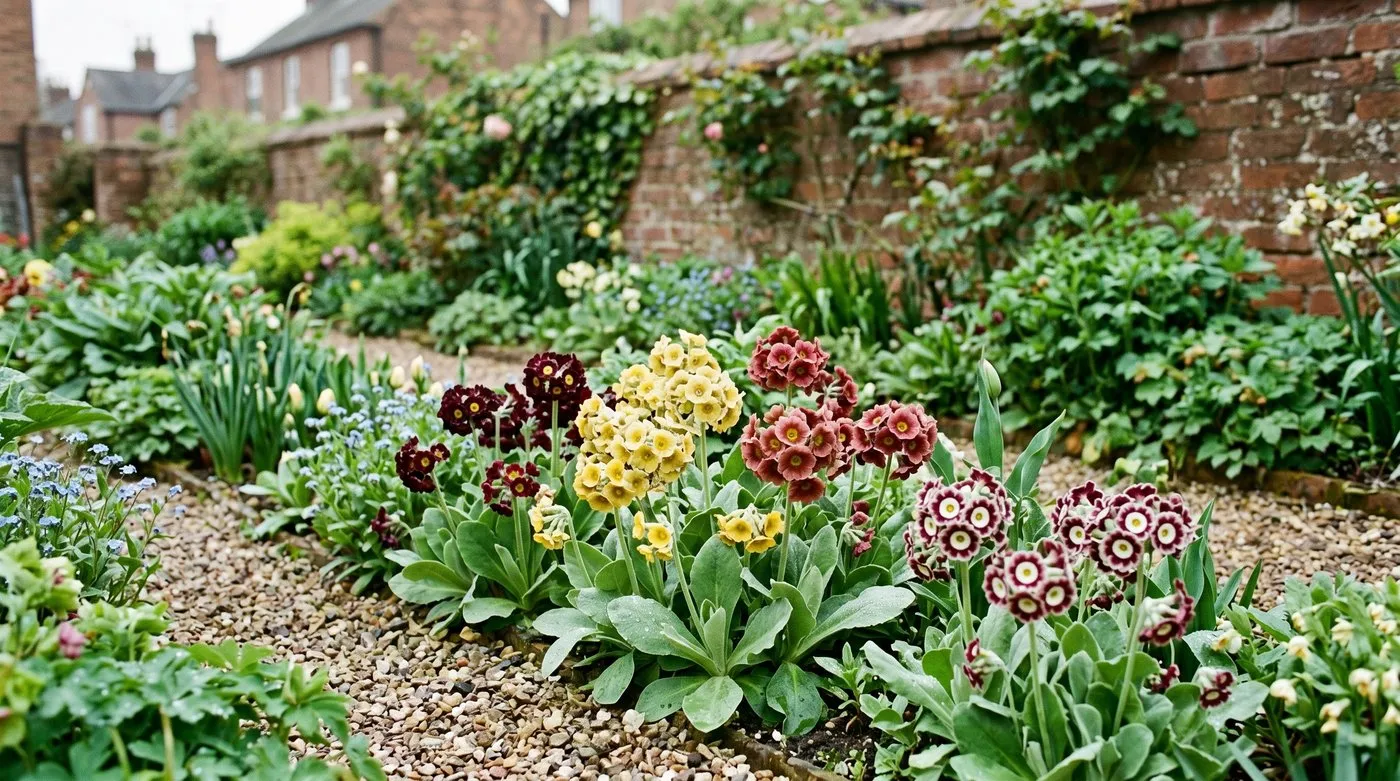 Border auriculas are tough enough for an open spring border and carry little farina to lose.
Vine weevil: the main pest and how to beat it
The vine weevil is the auricula grower’s worst enemy. The adult is a dull black beetle that notches leaf edges at night, but the real damage is below ground. The white, C-shaped grubs eat the roots and the crown, and the first sign is often a plant that wilts and lifts away with no roots left.
Control runs on three levels. First, prevention: gritty compost and clean pots. Second, biological: water on a nematode drench (Steinernema kraussei works in cool soil) in late summer and again in spring when soil is above 5C. Third, physical: tip plants out at repotting and crush any grubs you find by hand.
| Method | Targets | Effectiveness | Role |
|---|---|---|---|
| Gritty compost | Egg-laying adults | Cuts grub counts by around 80% | Primary prevention |
| Nematode drench | Grubs in soil | 70 to 90% of larvae killed | Primary treatment |
| Hand inspection at repot | Visible grubs | Removes what you find | Monitoring |
| Insecticide drench | Grubs and adults | High but harms beneficials | Emergency only |
Warning: Vine weevil grubs do the worst damage in autumn and early spring, eating roots while the plant looks fine above ground. Do not wait for wilting. Inspect the rootball every time you repot.
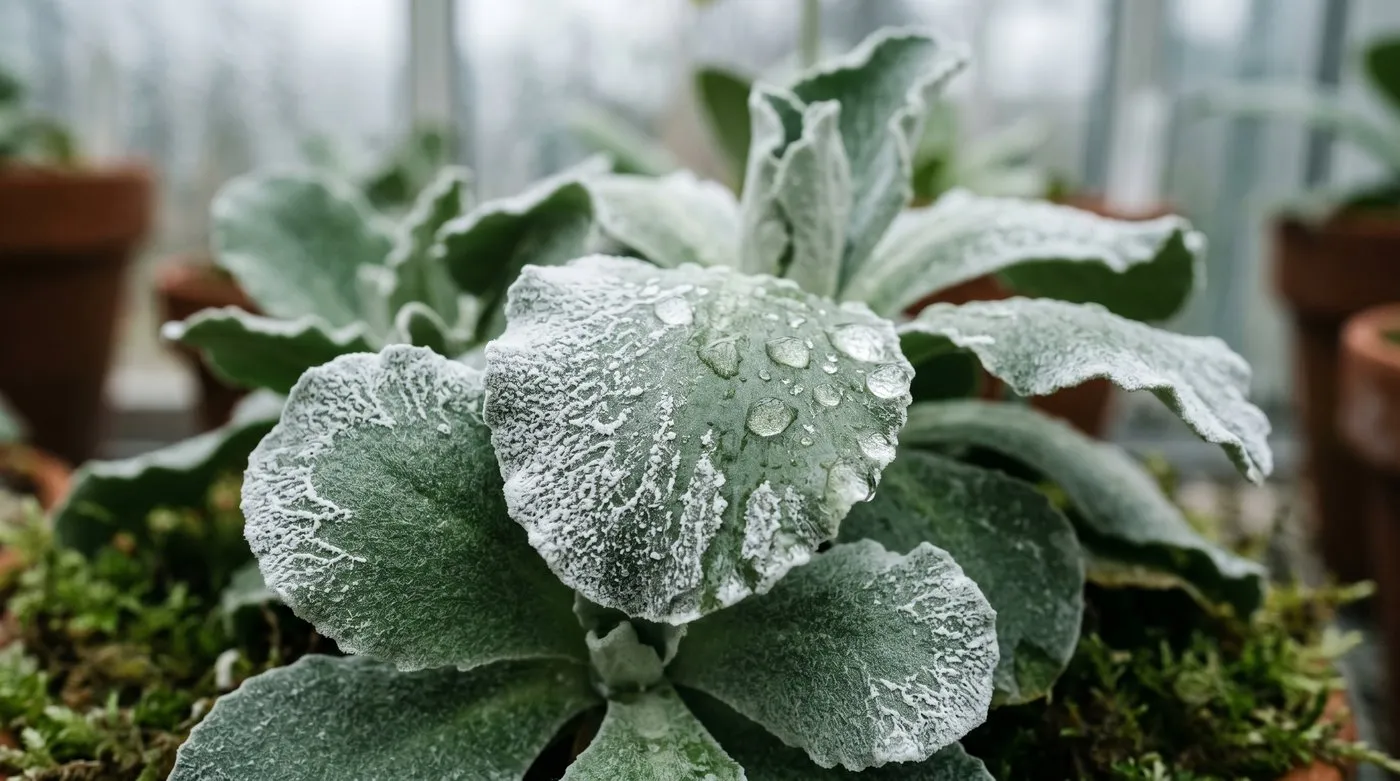 Farina also dusts the leaves of many auriculas, giving them a grey, mealy bloom.
Propagating auriculas from offsets
Auriculas multiply themselves, which is why a small collection grows quickly. The parent crown throws out offsets, small rooted rosettes around its base. Lifting and dividing these is the standard way to propagate, and it keeps named varieties true, which seed does not.
The best time is right after flowering, in June or July, when you repot anyway. Tip the plant out, brush off loose compost, and ease the offsets away by hand. Each one should have a few roots of its own. If an offset has no roots, treat it as a cutting: trim the base cleanly, dip in hormone rooting powder, and pot it into gritty mix to root over a few weeks.
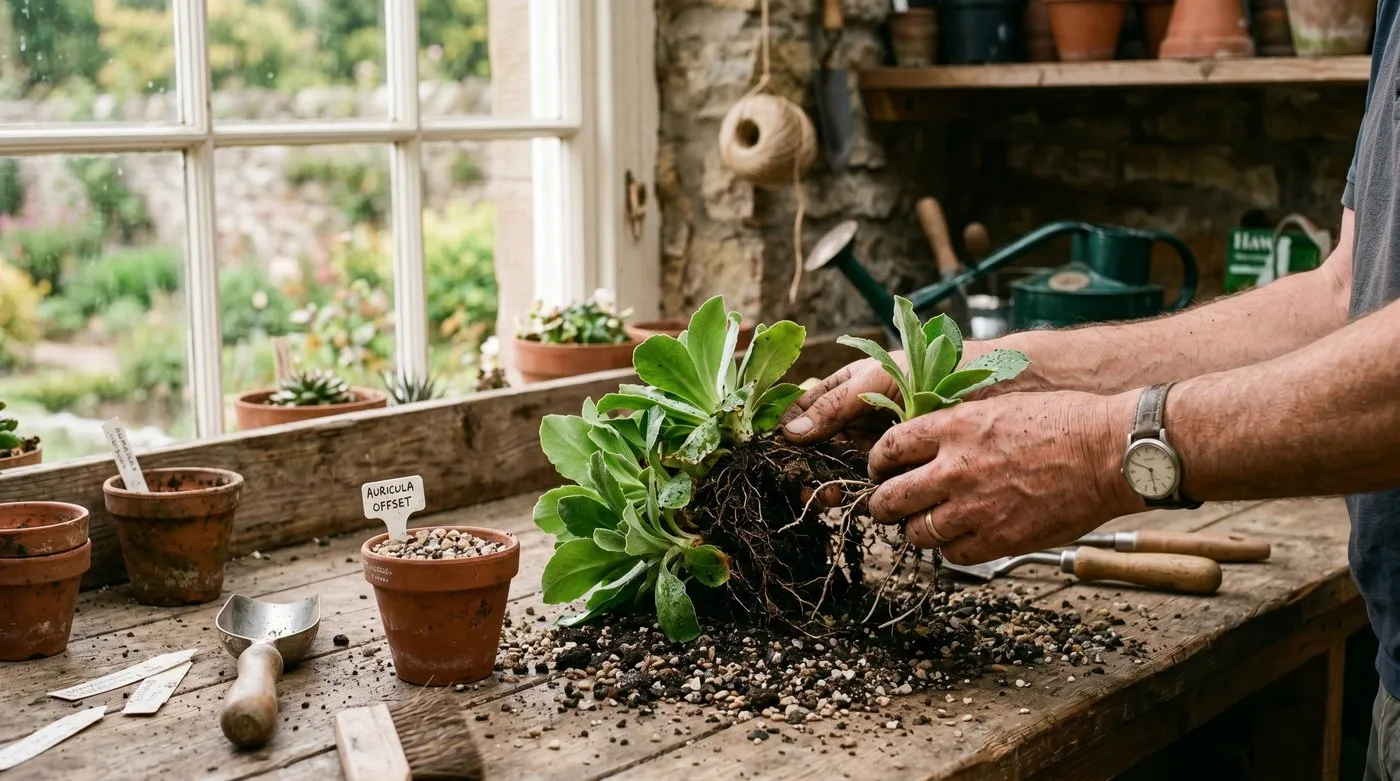 Each offset is a small rosette with its own roots, ready to pot up on its own.
Month-by-month auricula calendar
| Month | What to do |
|---|---|
| January | Keep compost barely moist. Ventilate cold frames on mild days to prevent rot. Remove any dead leaves. |
| February | Growth resumes. Begin light watering from below as the rosettes swell. Check for vine weevil notching. |
| March | Start a weak fortnightly feed. First buds appear. Move farina types under cover for the show season. |
| April | Main flowering begins. Keep Show and Double types out of rain. Stage the theatre or cold frame for display. |
| May | Peak bloom. Deadhead spent flower stems. Continue feeding lightly and watering from below. |
| June | Flowering ends. Repot plants into fresh gritty mix. Pull off and pot up rooted offsets. |
| July | Plants rest in the heat. Reduce watering. Keep cool and shaded. Stop feeding. |
| August | Apply a nematode drench against vine weevil while soil is warm. Keep airflow high to stop mildew. |
| September | Cooler weather restarts root growth. Resume light feeding briefly. Check rootballs for grubs. |
| October | Reduce watering as growth slows. Clear fallen leaves. Move pots under cover for winter. |
| November | Keep barely moist. Protect from prolonged wet. Plants are hardy but hate cold wet roots. |
| December | Rest period. Minimal water. Ventilate on dry days. Inspect for late vine weevil damage. |
Common mistakes to avoid
Using peat-based multipurpose compost. This is the number one killer. It holds too much water, rots the crown, and breeds vine weevil. Always use a gritty, loam-based mix with at least 40 percent grit.
Watering over the top. Splashing water onto the rosette strips farina and invites crown rot. Water from below into a tray every time, and lift the pot out once it has drunk.
Leaving Show types in the rain. A single shower can ruin the paste on a Show or Double auricula. Move farina classes under cover before the flowers open and keep them dry throughout bloom.
Growing them too warm. Auriculas are alpines that resent summer heat. A hot greenhouse or a sunny windowsill bakes them into early dormancy. Keep them cool, shaded, and airy from June to September.
Ignoring the roots. Vine weevil works unseen until the plant collapses. Check the rootball at every repot and run a nematode drench in late summer rather than waiting for damage.
Companions and where auriculas fit in the garden
Auriculas are container plants first, but Border types and a wider spring scheme can sit alongside other early flowers. They suit the same cool, well-drained conditions as several spring favourites. Planting in pots lets you move the display to wherever it looks best as each plant peaks.
For a spring container or trough scheme, auriculas pair well with early bulbs. They flower at the same time as crocus and just after the earliest anemones, giving a layered display from late winter into May. A later run of tulips extends the show once the auriculas fade. In the same trough, lewisia enjoys identical gritty compost and follows on with candy-striped flowers from May.
In a cool, shaded bed, Border auriculas associate happily with foliage plants such as heuchera, whose coloured leaves carry interest long after the auricula flowers have gone. For a fuller picture of what thrives in our plants cluster, browse the wider grow guides and build a planting that holds together across the seasons.
Now you’ve mastered auriculas, read our guide on growing ranunculus in the UK, another collector’s flower that rewards careful watering and sharp drainage.
Frequently asked questions about growing auriculas
How do you grow auriculas in the UK?
Grow auriculas in clay pots of gritty, free-draining compost. Keep them cool, water from below into a tray, and shade them from hot summer sun. Show and Double types need cold glass to protect the farina from rain. Flowering runs April to May, and plants are fully hardy to around minus 15C.
What is the white powder on auricula flowers?
The white powder is farina, a natural meal the plant produces. It coats the petals, the centre paste, and often the leaves of Show and Double auriculas. Rain washes it off, which is why these classes are grown under cover. Border auriculas carry little or no farina and cope outdoors.
Why are my auriculas dying or collapsing?
Sudden collapse is almost always vine weevil grubs eating the roots. Tip the plant out and check for white C-shaped larvae in the compost. Other causes are summer heat, waterlogging, or compost staying wet in winter. Switch to gritty compost and water from below to prevent both rot and grubs.
What are the four classes of auricula?
The four classes are Show, Alpine, Border and Double. Show auriculas have a farina-paste centre and need cold glass. Alpines have a clean gold or cream centre with no paste. Borders are tough garden plants. Doubles have many petals and carry farina like Show types.
Do auriculas need full sun?
No, auriculas prefer cool shade or morning sun only. Hot afternoon sun scorches the leaves and forces early dormancy. A north or east-facing position, or an open cold frame, suits them best. They are alpine plants and resent both heat and humidity in a British summer.
How do you propagate auriculas?
Lift the plant after flowering and pull away the rooted offsets by hand. Each offset is a small rosette with its own roots, growing around the parent crown. Pot each one into gritty compost in a small clay pot. One healthy plant gives three to five offsets a year.
When do auriculas flower in the UK?
Auriculas flower in April and May across most of the UK. Each plant stays in bloom for around three weeks. Cold northern gardens may flower a week or two later than the south. A cold spring delays the display, while a mild March can bring early flowers in April.
What compost do auriculas need?
Auriculas need gritty, free-draining compost, not peat-based multipurpose. Mix roughly 60 percent loam-based compost with 40 percent horticultural grit. The grit stops the roots sitting wet and deters vine weevil. Wet, soft peat compost is the fastest way to lose a plant to rot or grubs.
Our team produces practical UK gardening guidance from source research, contributor records and established horticultural practice. Editorial standards are overseen by Matt W.