Key takeaways
- Red campion (Silene dioica) is one of the few UK natives that flowers well in shade
- It flowers March to October in mild years, one of the longest native flowering seasons
- The plant is dioecious: male and female flowers sit on separate plants, so grow five or more for seed
- Surface sow fresh seed in August-September or March-April; no heat needed, germination takes 2-3 weeks
- Rated RHS H7, fully hardy below -20C, so it survives winter anywhere in the UK
- It feeds long-tongued bumblebees, hoverflies and at least three moth species; finches take the seed
- Seed costs £2-3 a packet, plugs £1-2 each; shear after the first flush for a second in autumn
The name misleads on two counts. The flowers are rose-pink, never red, and the plant is a true perennial rather than a one-summer annual. This guide covers sowing, siting, the best companions, the male-and-female quirk that baffles seed savers, and honest advice on managing a generous self-seeder.
What is red campion and where does it grow wild?
Red campion (Silene dioica) is a native perennial of hedgerows, woodland edges and shaded banks across most of Britain. The Wildlife Trusts record it almost everywhere except the drier parts of East Anglia and the far north of Scotland. In the West Country it turns whole lanes pink through May, often shoulder to shoulder with bluebells and stitchwort.
The plant makes a loose clump of softly hairy leaves held in opposite pairs, then sends up branching stems 60-90cm tall. Each flower is 18-25mm across with five deeply notched petals. The main flush runs from April to June, but in mild years plants flower from March right through to October. Few British natives come close to that season.
It is rated RHS H7, hardy below -20C, so winter never touches it. Individual plants are short-lived, usually three to five years, but a colony renews itself from seed indefinitely. Where it meets its cousin white campion, the two cross freely and produce pale pink hybrids.
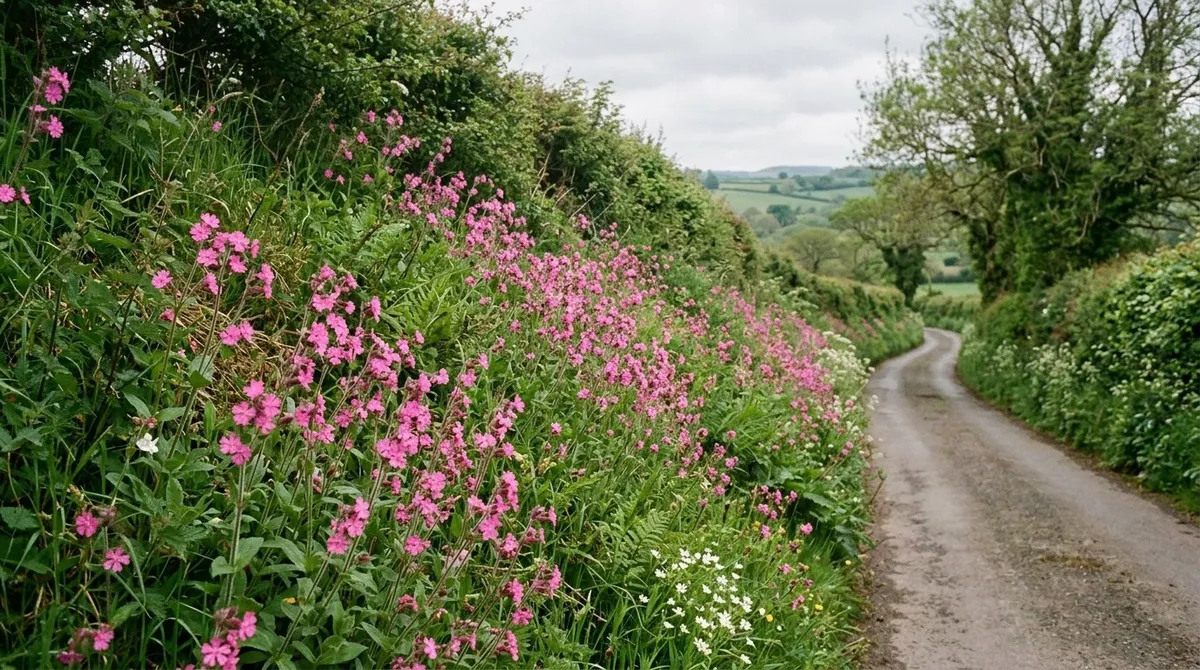
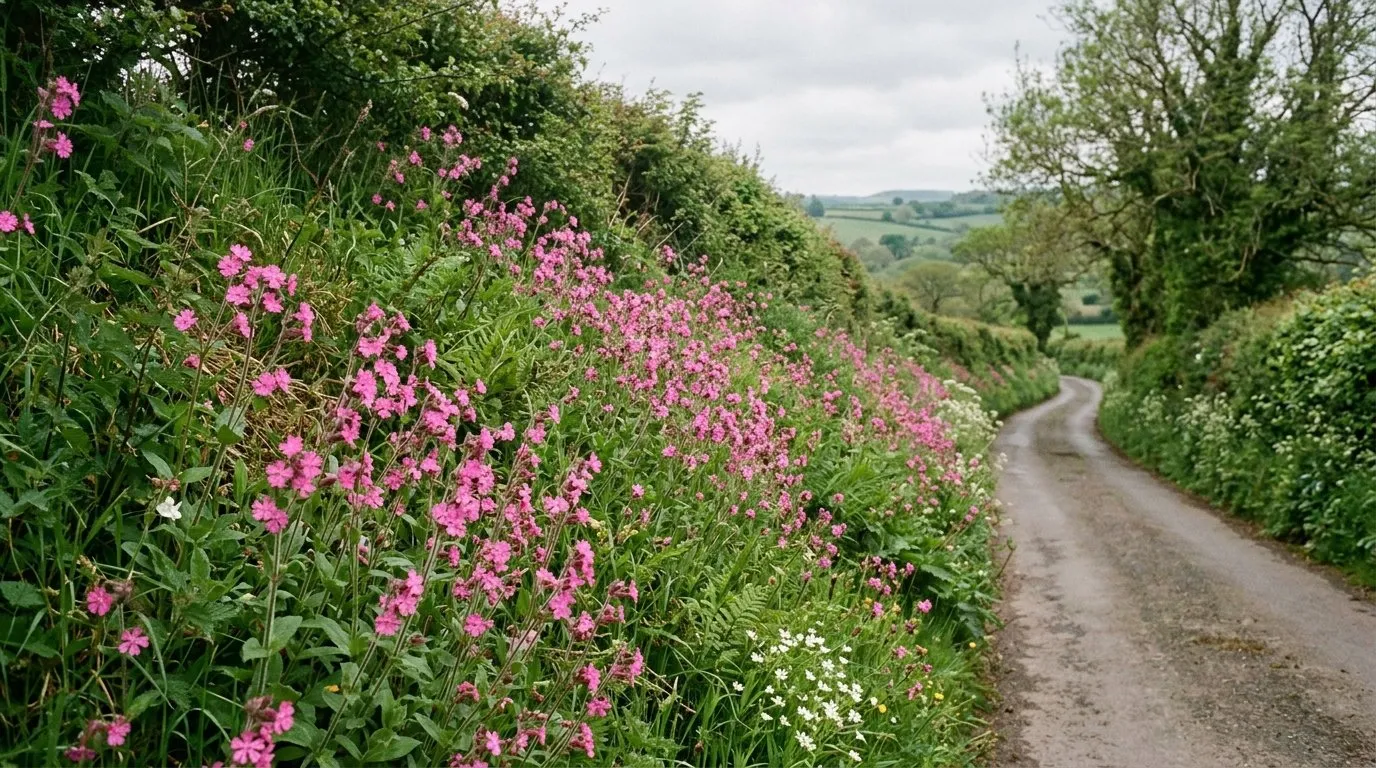 A Devon hedge bank in May. Red campion holds its own in the rough grass and part shade where fussier wildflowers give up.
Does red campion grow in shade?
Yes, red campion grows and flowers well in partial shade, and that makes it nearly unique among common British wildflowers. Cornfield annuals like poppies and corncockle sulk without full sun. Ox-eye daisies lean and flop. Red campion evolved on the woodland edge, so dappled light is home ground.
Two limits are worth knowing. Deep, dry shade under conifers beats it, and permanently waterlogged ground rots the crown. Bright shade with morning or evening sun is the sweet spot. In full sun it still grows well, though it runs shorter and finishes flowering sooner on light soils.
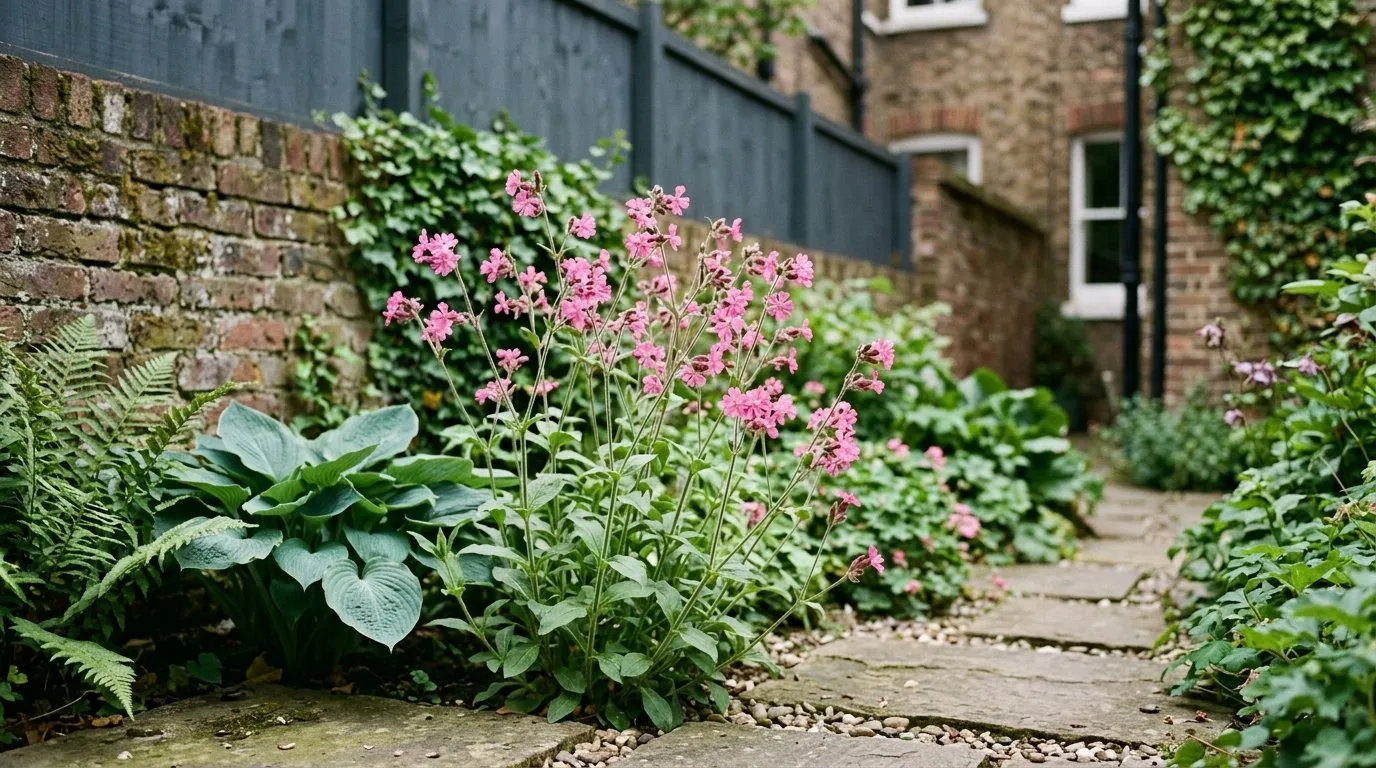 A north-facing border in a city terrace garden. Red campion flowers here for months while sun-lovers refuse the spot.
Why has my red campion got no seed?
A lone red campion never sets seed because the species is dioecious: every plant is either male or female. The species name dioica means “two houses”. Male plants carry flowers with ten stamens and a slimmer tube behind the petals. Female flowers show five curled styles and a rounder, swollen calyx that later becomes the seed capsule.
You cannot sex the plants until they flower, and nurseries do not label them. The fix is numbers. Plant five or more and the odds of having both sexes reach 97 per cent. Bees do the rest, moving pollen from male to female as they work the patch.
This quirk is worth explaining to children, because you can see the difference with a hand lens in seconds. It also explains a common disappointment: a single bought plant flowering beautifully for years while producing not one seedling.
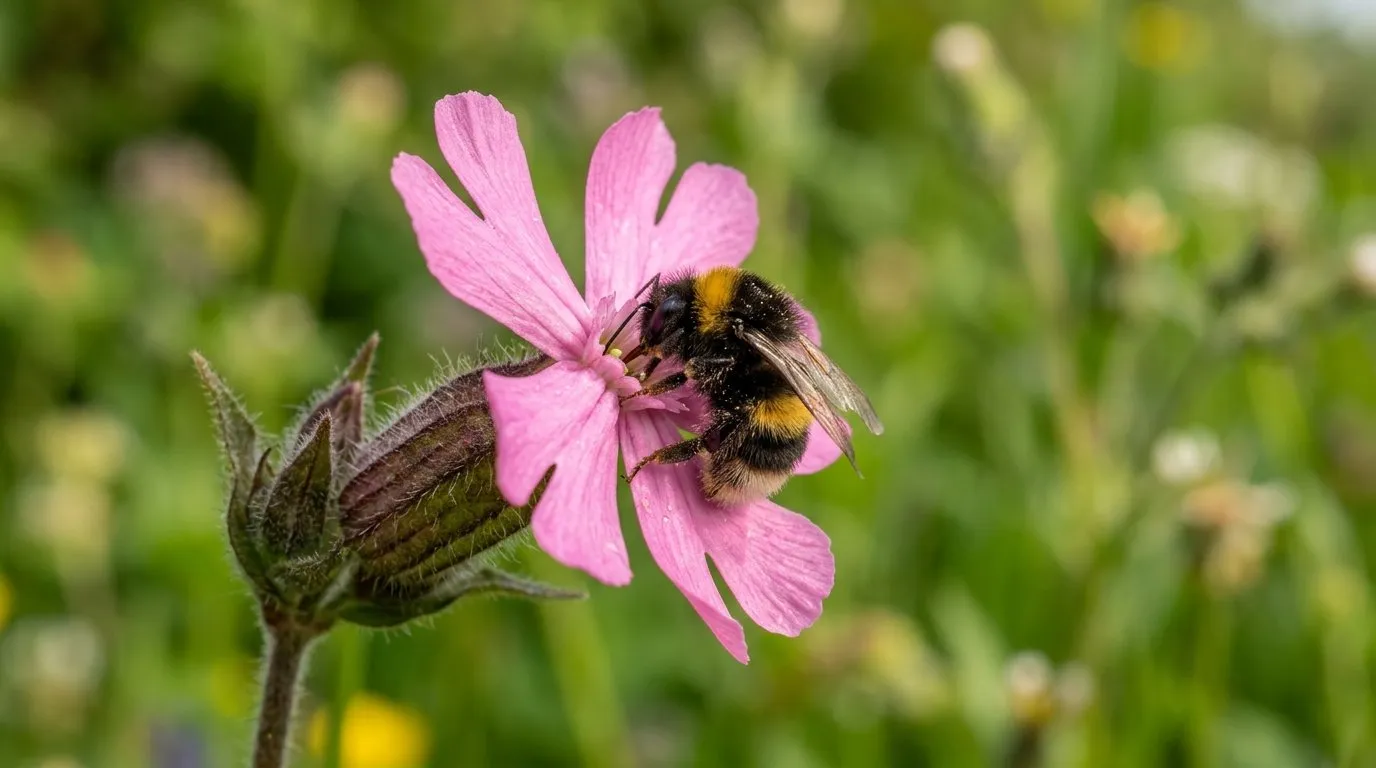 The deeply notched petals that identify red campion at a glance. Long-tongued bumblebees reach the nectar; short-tongued species often cannot.
When and how do you sow red campion seed?
The method is as simple as native sowing gets:
- Rake the soil to a rough crumb and water if dry.
- Surface sow, about 1,000 seeds per gram, thinly across the area.
- Press the seed in with a board or your palm. Do not bury it.
- Leave it alone. No propagator, no fleece, no heat.
Germination takes two to three weeks at 10-15C. In modules, sow a pinch per cell, thin to one seedling, and plant out at 30cm spacings after six to eight weeks. A packet costs £2-3 from any wildflower seed house, and bulk species seed runs about £15 per 25g if you are sowing a long hedge base. Timing for the wider mix is covered in our guide on when to sow wildflower seeds.
Collecting your own is even cheaper. From July the female capsules dry to brown flasks with ten rolled-back teeth at the mouth, like tiny crown-topped urns. Bend a stem over an envelope, shake, and hundreds of black seeds rattle out.
Gardener’s tip: Sow campion seed the same season you collect it. Fresh August seed gives me near-full trays in under three weeks. Packets kept warm in a shed until the following May come up thin and slow. If you must store seed, keep it cool, dry and dark, and expect some loss by spring.
 Seed collection in late July. Each dried capsule holds dozens of black seeds and sheds them with one shake.
Where should you plant red campion in the garden?
Plant red campion where shade or rough grass defeats showier flowers: hedge bases, north beds, thin woodland, and the edges of wilder lawns. It is a gap-filler and edge-softener rather than a centrepiece, and it looks best in drifts of at least a dozen plants.
Soil is rarely a problem. It takes clay, loam and sand, acid or alkaline, and moderate fertility does not stop it flowering the way it stops cornfield annuals. Only bog and bone-dry conifer root zones defeat it.
 A front-garden verge on a 1950s estate. A £3 packet of red campion seed turned a mown strip into six months of flowers.
The best companions for red campion
The classic pairing is bluebells, and it happens naturally in every western wood: pink over blue through late April and May. The campion then carries the display alone once the bulbs retreat. Our bluebell growing guide shows how to establish the English species alongside it.
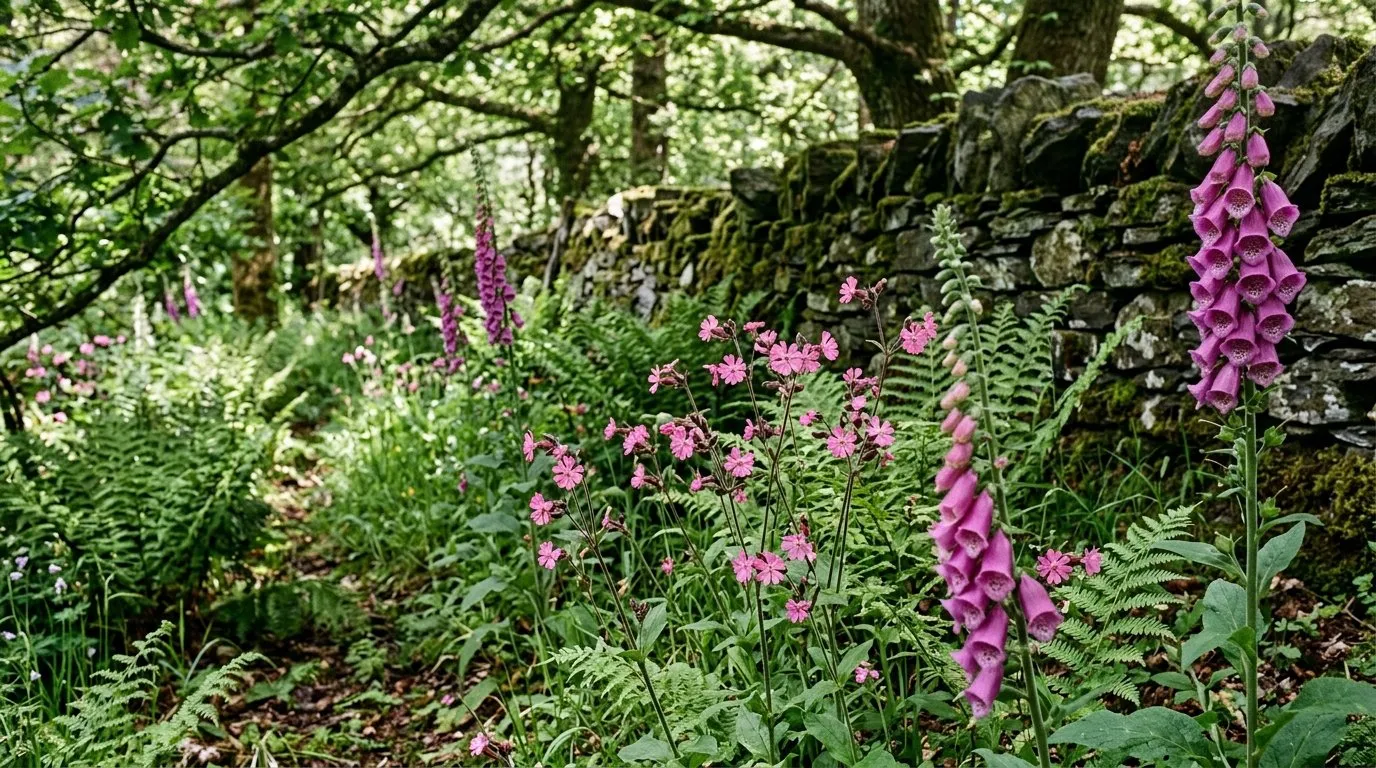 The full woodland edge trio in a Welsh garden: campion, foxgloves and ferns. All three want the same dappled light.
Red campion vs white campion vs ragged robin
Red campion is the shade-tolerant one of the three, and that single fact settles most planting decisions. The trio are close relatives in the same genus and get confused constantly at plant sales. Here is how they separate:
| Species | Flower colour | Natural habitat | Light needs | Flowering season |
|---|---|---|---|---|
| Red campion (Silene dioica) | Rose-pink, notched petals | Hedgerows, woodland edges, banks | Sun to part shade | March-October in mild years, peak May-June |
| White campion (Silene latifolia) | White, night-scented | Arable margins, open waste ground | Full sun | May-September |
| Ragged robin (Silene flos-cuculi) | Pink, petals cut to ragged strands | Damp meadows, pond margins | Full sun, wet soil | May-August |
White campion opens and scents in the evening for moths, so it earns a spot near a seating area in sun. Ragged robin is the choice for a pond edge or boggy corner. Where red and white campion grow together they hybridise, and the pale pink crosses are fertile, so a mixed colony drifts towards pink over the years.
How do you stop red campion taking over?
Red campion self-seeds generously, but every seedling pulls out whole with one gentle tug, so control takes minutes rather than hours. This is the honest trade. A happy colony will put seedlings in your veg beds, your pots and your gravel within a 10-metre radius. None of them resist removal, and none regrow from root fragments the way true weeds do.
Two habits keep a colony tidy. First, shear the whole patch to 10-15cm after the main June flush. Plants regrow fast and give a second flush from August into October, and you remove thousands of ripening capsules in one pass. Second, weed the seedlings you do not want in spring, when they show as pairs of hairy oval leaves.
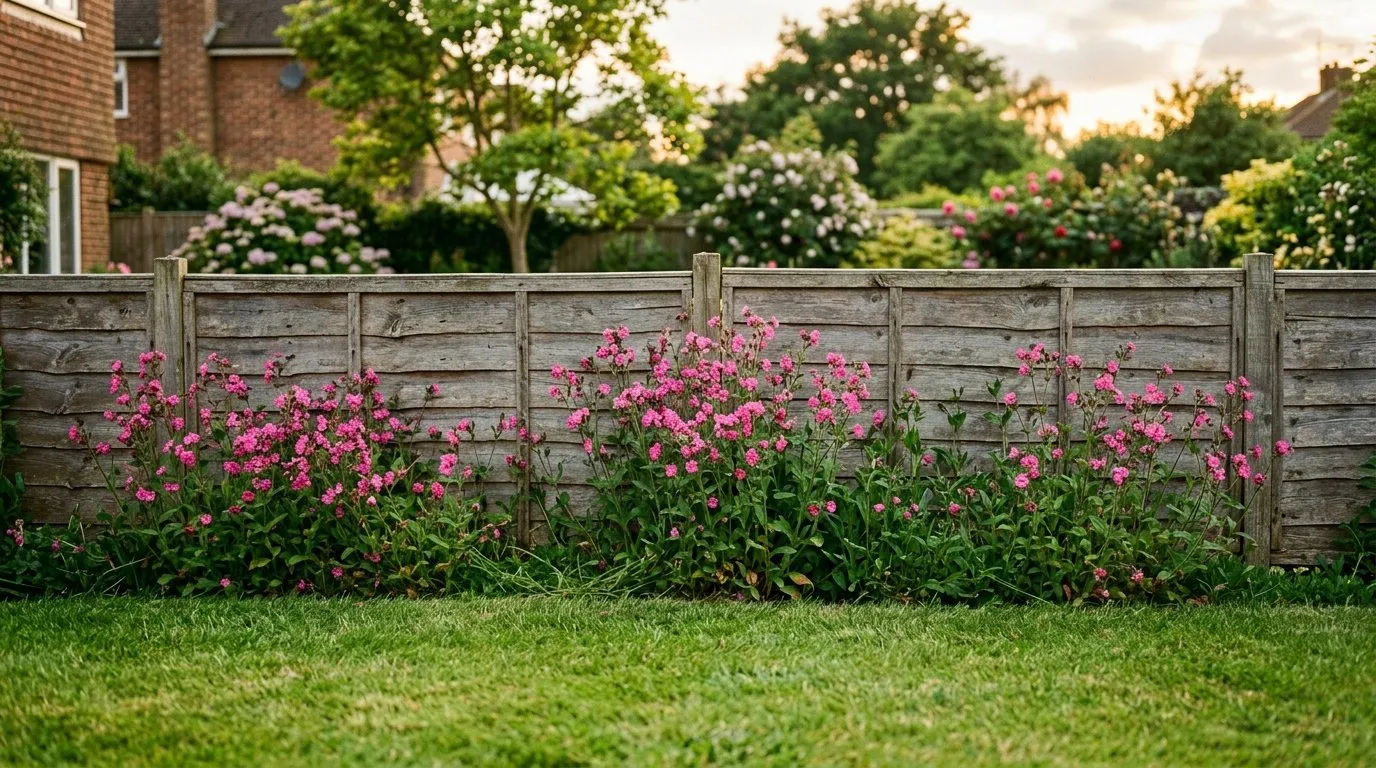 A suburban fence line colonised from one original sowing. Everything here arrived by seed, and any unwanted plant pulls out in seconds.
What wildlife does red campion support?
Red campion feeds long-tongued bumblebees, hoverflies and at least three moth species, and finches take the seed in late summer. The flower tube is deep, so garden bumblebees and common carder bees work it hard while short-tongued species pass by. Hoverflies take pollen from the male flowers through the whole season.
The moth connection is the part most gardeners never see. The campion moth and the lychnis both lay on the plant, and their caterpillars feed inside the ripening seed capsules through summer. The marbled coronet uses it too. A patch of campion is a small working nursery, which is a better reason to plant it than the colour. The Woodland Trust lists it among the woodland edge flowers with real value for this web of species.
One buying warning: choose the straight species, not the doubles. Double pink forms such as ‘Firefly’ look plump in a pot but their extra petals block the nectar tube, so bees get nothing. Wildlife value lives in the single wild flower.
Should you buy red campion seed, plugs or pots?
Seed is the best value by a wide margin, at £2-3 for a packet that sows several square metres. It suits patient gardeners and anyone covering a hedge base or bank. The only cost is time: flowers arrive the spring after an autumn sowing.
Plug plants cost £1-2 each in trays of 30 or more, and they close the time gap. Plugs planted in September flower fully the next spring, and 30 plugs fill three metres of border at proper density. 9cm pots run £4-6 from nurseries and are only worth it for small numbers, say five pots to start a colony that seed will then extend for nothing.
Whichever route you take, buy from a UK native plant specialist so the stock is true Silene dioica of British origin rather than a garden selection.
Frequently asked questions
Is red campion actually red?
No, the flowers are rose-pink, never red. The name is old rather than accurate. Each flower is 18-25mm across with five deeply notched petals, and the shade varies from mid-pink to near-magenta. If you find a white or pale pink one, it is probably a hybrid with white campion.
Does red campion grow in shade?
Yes, red campion grows and flowers well in partial shade. It is a woodland edge and hedge bank plant by nature, so a north-facing border or hedge bottom suits it. Deep, dry shade under conifers is the one shady spot where it struggles. Most other UK wildflowers need far more sun.
Why is my red campion not setting seed?
A lone plant cannot set seed because red campion is dioecious. Every plant is either male or female, and only females carry seed capsules after pollination. Grow five or more plants together and you will almost certainly have both sexes within easy reach of a bee.
When should I sow red campion seed?
Sow fresh seed in August or September, or in March and April. Surface sow onto raked soil or compost and press it in without burying it. No heat is needed and germination takes two to three weeks. Autumn-sown plants flower the following spring; spring sowings flower properly in their second year.
Is red campion invasive?
No, red campion self-seeds freely but never becomes a thug. Seedlings appear in numbers near the parent plants, yet each pulls out whole with one gentle tug. Shearing plants back after the June flush cuts seed drop sharply. It is far easier to manage than foxgloves or aquilegia.
What is the difference between red campion and ragged robin?
Ragged robin has petals split into thin, ragged strands; red campion petals are simply notched. The two are close relatives, but ragged robin (Silene flos-cuculi) grows in damp, sunny meadows and pond edges. Red campion takes drier soil and real shade. Plant whichever matches your conditions.
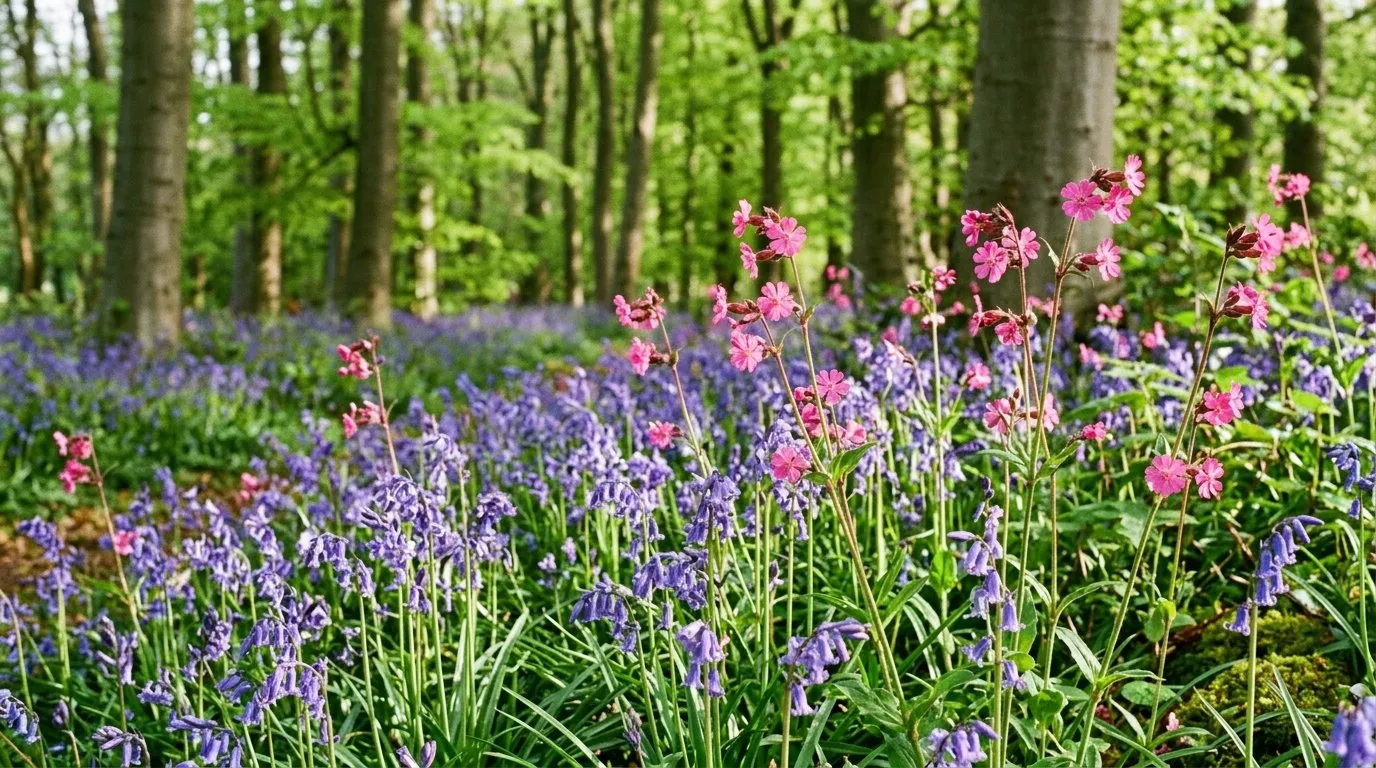 The oldest pairing in the British spring wood. Get both established and the display repeats itself every year without help.
Every garden has one dim corner where nothing native seems to try. Give that corner a £3 packet of red campion this September and count the months of flower you get back.
Our team produces practical UK gardening guidance from source research, contributor records and established horticultural practice. Editorial standards are overseen by Matt W.