Key takeaways
- Full-size pampas grass reaches 2.5-3m in flower on a clump 1.5-2m across: measure your border first
- Dwarf 'Pumila' stays 1.2-1.5m and is the right choice for most UK gardens
- Plant in spring, April to May, never autumn: young plants rot in cold wet winter soil
- Full sun and sharp drainage are non-negotiable; established clumps shrug off drought
- Cut back in late winter wearing gauntlet gloves and long sleeves, and never burn the clump
- Division in April is the only reliable way to propagate it; clumps live 15 years or more
- For dried plumes, cut in early September and hang upside down for 2-3 weeks
Pampas grass is having its biggest moment since the 1970s, and this time the dried plumes are driving it. Cortaderia selloana sends up flower plumes 2.5-3m tall from an evergreen fountain of arching leaves, and a single stem sells for \u00a33-5 in homeware shops. Growing your own is easy. Keeping it in proportion is the part nobody talks about.
How big does pampas grass actually get?
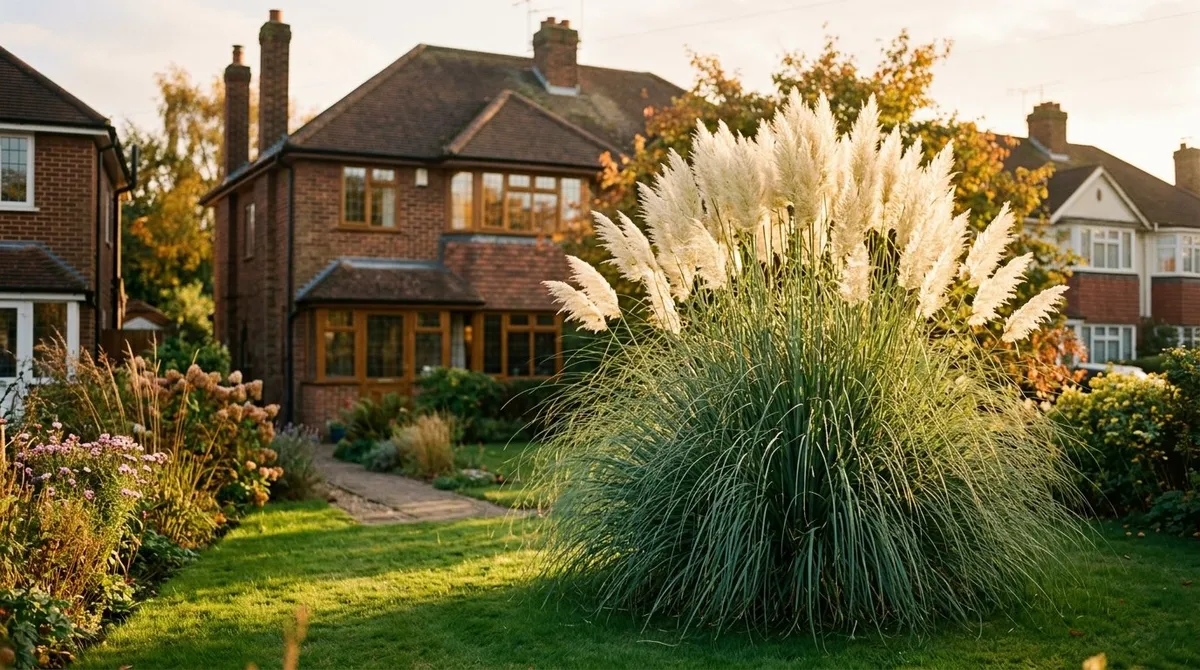
Almost every pampas regret starts the same way: a \u00a315 pot planted into a border 2m deep. For three years it behaves. Then it swallows the path, shades out everything within a metre and turns pruning into a fencing match. If your border is less than 3m deep, plant the dwarf ‘Pumila’ instead. The full-size species wants an island bed in a lawn, a large gravel garden or a boundary corner where it can be admired from a distance.
It earns that space, to be fair. The plumes catch low autumn light like nothing else hardy in Britain, stand through winter, and the clump lives 15 years or more with one haircut a year.
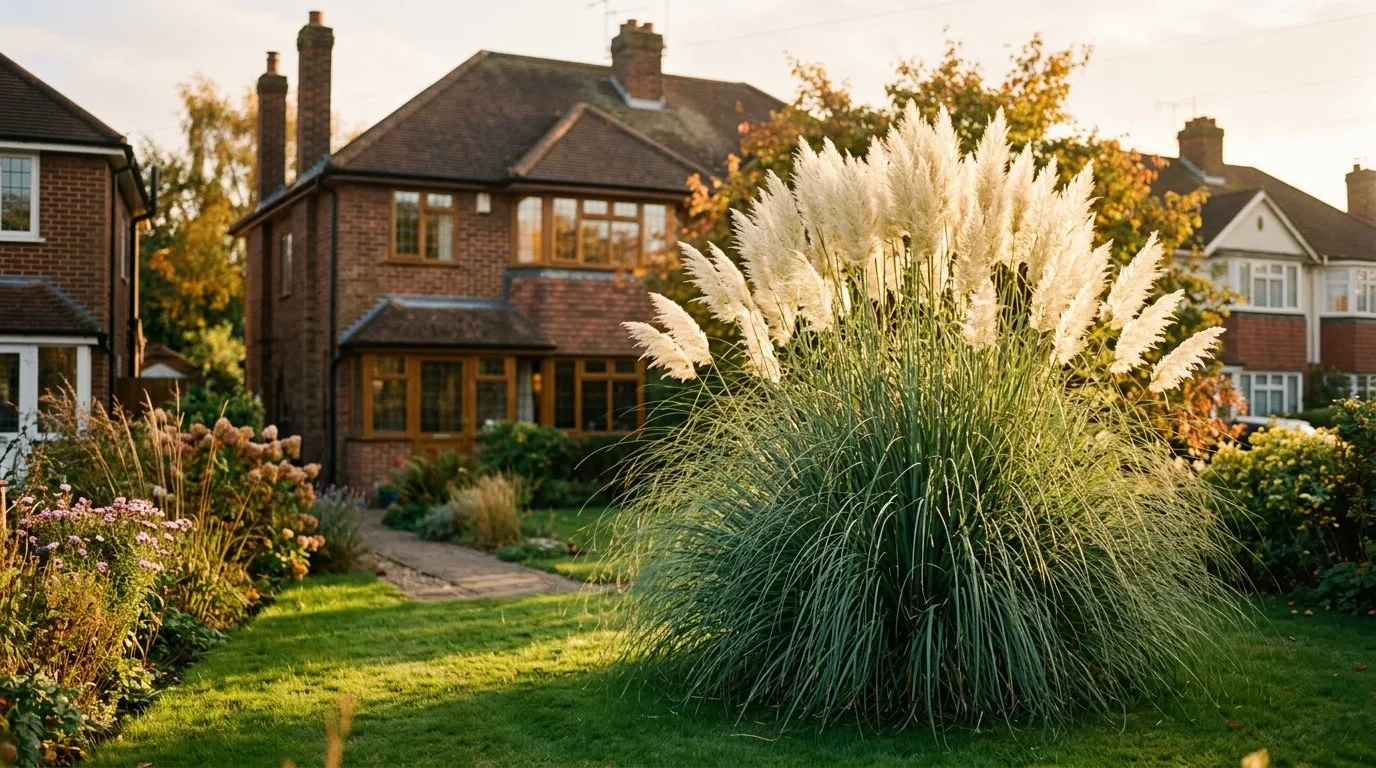 A full-size clump in October sun. Plumes at 2.5m plus need viewing distance, not a narrow border.
Choosing the right pampas grass for your space
Five varieties cover almost every UK situation, and ‘Pumila’ is the correct answer for most gardens. The named cultivars are far better behaved than cheap unnamed seedlings, which vary wildly in size and flowering.
| Variety | Height in flower | Spread | Why choose it |
|---|---|---|---|
| ’Pumila’ (AGM) | 1.2-1.5m | 1m | Dwarf, flowers young and heavily; the right pick for most gardens |
| ’Sunningdale Silver’ (AGM) | 3m | 2m | The giant: huge loose silver plumes, needs an island position |
| ’Rosea’ | 2-2.5m | 1.5m | Plumes flushed soft pink, strongest colour in September |
| ’Aureolineata’ (AGM) | 1.8-2.2m | 1.5m | Gold-margined leaves that earn their keep out of flower |
| Cortaderia richardii (AGM) | 2.5m | 1.5m | Flowers from July, arching one-sided plumes, the graceful one |
Four of the five hold the RHS Award of Garden Merit, which tells you how reliable this genus is once sited properly. Cortaderia richardii, the New Zealand toe toe, flowers six weeks earlier than selloana and moves in the wind rather than standing to attention. It is slightly less hardy, so give it shelter in cold inland gardens.
If you want sheer size with a softer outline, miscanthus offers 2m plumes without the razor foliage. For the full family tree, our ornamental grasses guide compares the main garden grasses by height and site.
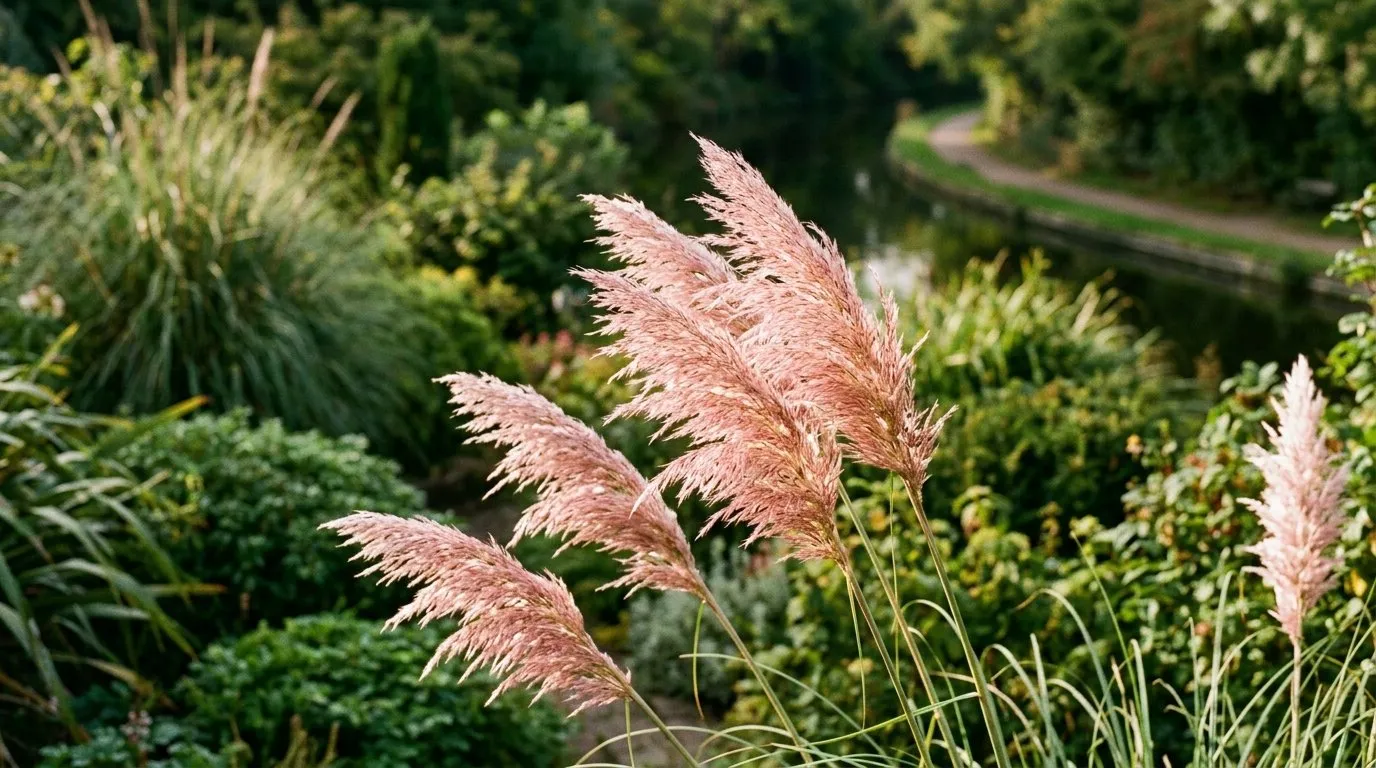 ‘Rosea’ carries a pink flush that is strongest in September and fades to silver by November.
Where should you plant pampas grass?
Keep it at least 1.5m from paths, washing lines and play areas because of the leaf edges, and away from low windows it will block by year three. Got dry sun to fill around it? Our drought-tolerant plants guide lists partners that take the same conditions. For shade, do not fight it: grow hakonechloa there instead and give pampas the sunny spot.
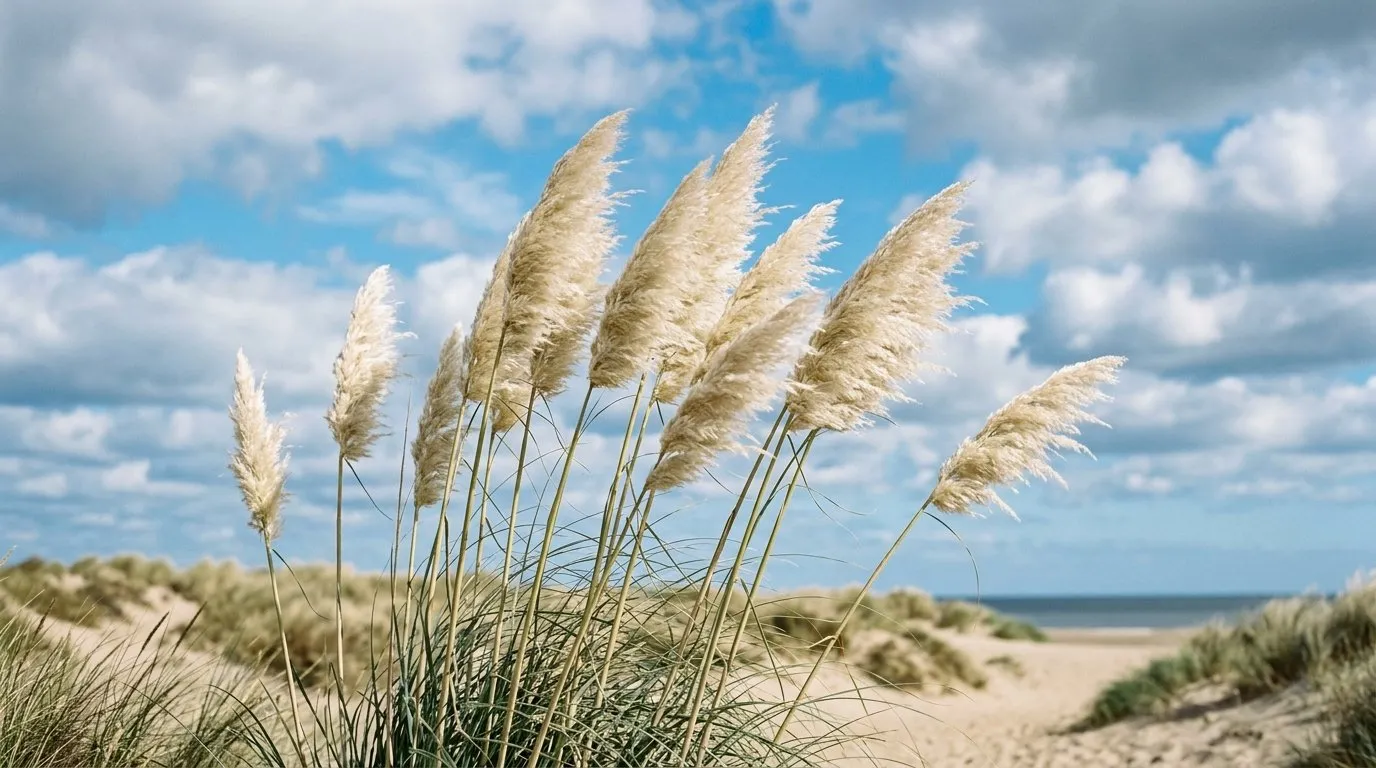 Salt wind barely marks pampas grass, which is why it thrives within sight of the sea.
And here is the cautionary picture. This is what the species does to a small terraced border in four years. The plant is not at fault; the siting is.
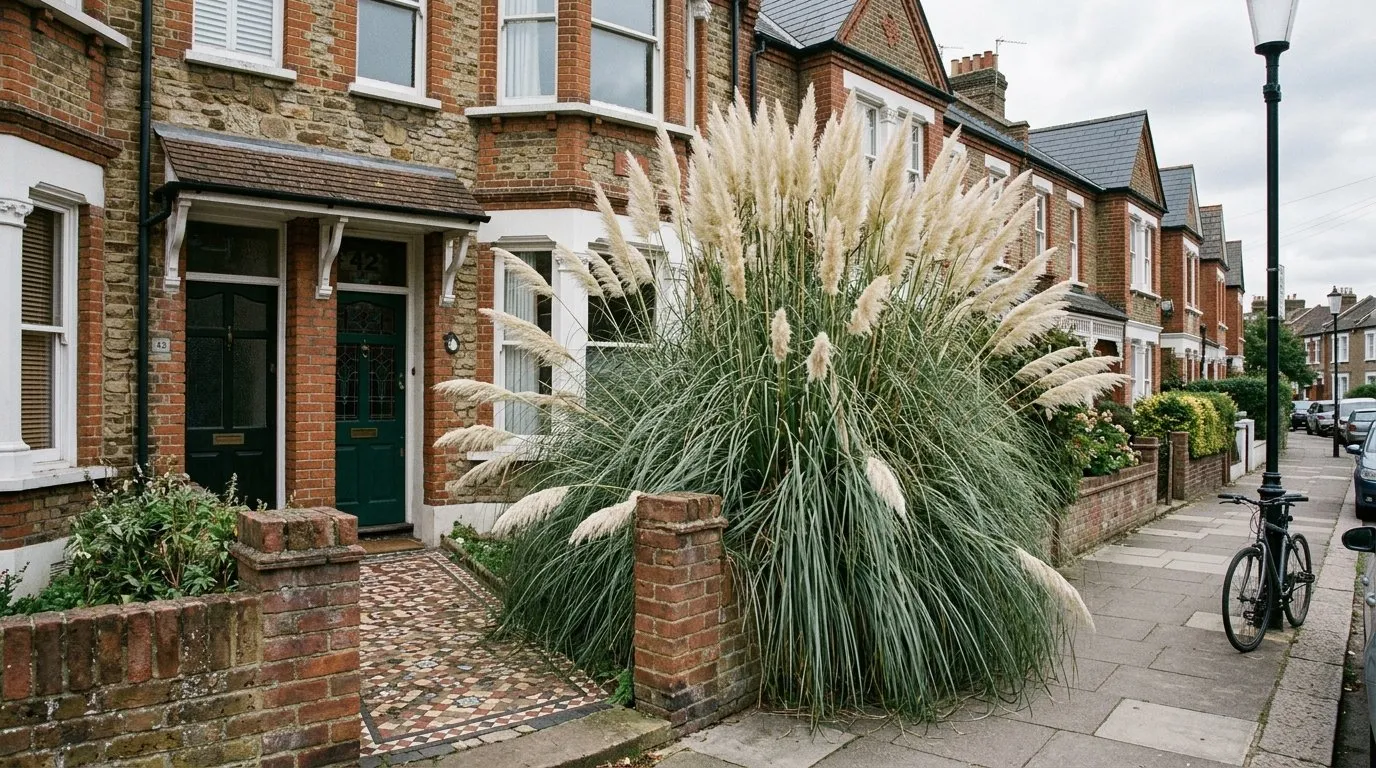 The classic mistake: a full-size plant in a 2m border. ‘Pumila’ would have fitted for good.
When is the best time to plant pampas grass?
Plant pampas grass in spring, April to May, and never in autumn. This rule surprises people because it is such a tough plant when mature. Young plants are different: put in during October, they sit in cold wet soil for five months, and the crowns rot before they ever root out. Spring planting gives a full warm season to establish, and by the following winter the plant is safe.
Water in with 10 litres, then weekly through the first summer in dry spells. In cold districts, tuck a loose dry mulch of straw around, not over, the crown for the first winter. After that, nothing. First plumes arrive in year two, full displays by year three or four.
How do you grow pampas grass in a small garden?
Grow the dwarf ‘Pumila’ and treat it as a specimen, not a filler. At 1.2-1.5m in flower with a metre-wide clump, it fits a suburban border, flanks a driveway, or anchors the corner of a new-build plot without ever threatening the fence. It also flowers harder for its size than the giant, with 20-plus plumes on a four-year-old plant.
In a container it is possible, just demanding. Use a 50-litre pot minimum, John Innes No 3 cut with 20 per cent grit, full sun, and a weekly soak from June to September. Expect fewer, shorter plumes than in the ground and refresh the top 5cm of compost each April.
If even ‘Pumila’ feels heavy for the space, two grasses give a similar upright-and-airy effect at smaller scale. Stipa gigantea throws 1.8m golden oat-heads over a knee-high clump you can see straight through, and pennisetum gives fluffy 60-90cm bottlebrush heads from August. Both play far better with neighbours.
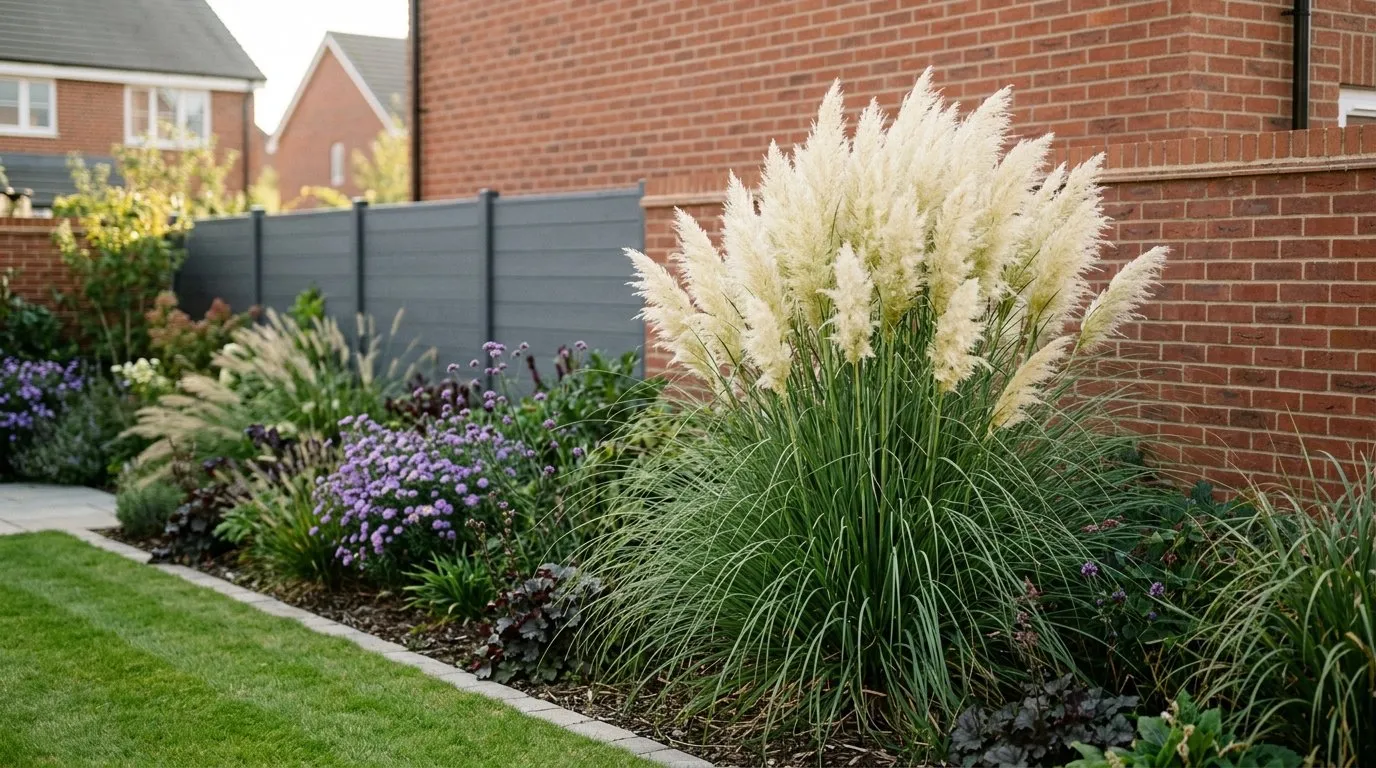 ‘Pumila’ at 1.4m in a new-build border. All the plume, none of the takeover.
Cutting back pampas grass without bloodshed (or a fire engine)
Cut back in late winter, February to early March, before the new green shoots lengthen. Take the spent plumes and dead foliage down to 30-40cm with shears or a hedge trimmer, then rake or comb out the loose brown thatch with gloved hands. Do not scalp into the fresh growth at the base; the clump flowers on what it builds from March onward.
Gardener’s tip: Before you cut, cinch the whole clump into a topknot with a length of rope, tightened at about chest height. The foliage then comes away in three or four tied armfuls instead of a loose heap of blades, and the whole job takes 20 minutes instead of an hour.
And the old wives’ method, setting fire to the clump: never. A March burn incinerates any hedgehog hibernating in the skirt of the plant, and they favour pampas thatch precisely because it is dry and dense. It also gets away from people every single year, taking fences and hedges with it. The plant usually survives. The wildlife, and the relationship with next door, usually do not.
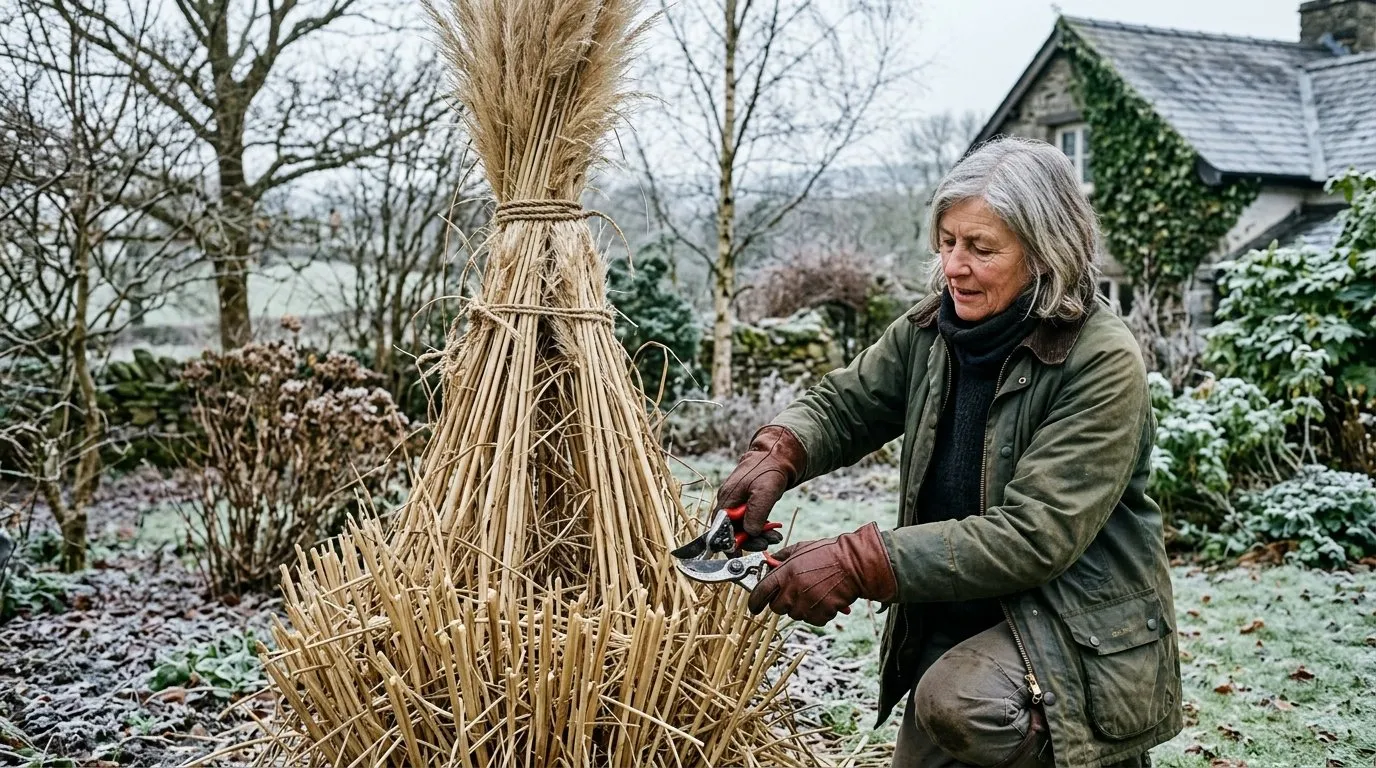 Late February, gloves on, clump tied. Down to 40cm, then comb out the thatch.
How do you propagate pampas grass?
Division in April is the only method worth your time. Most garden cultivars are female clones that set little or no viable seed, and seed-raised plants are a lottery for size anyway. Wait until new growth just shows, then slice rooted sections from the clump edge with a sharp spade. Each piece needs shoots above and a fist of root below. Replant immediately at the same depth and water weekly for the first month.
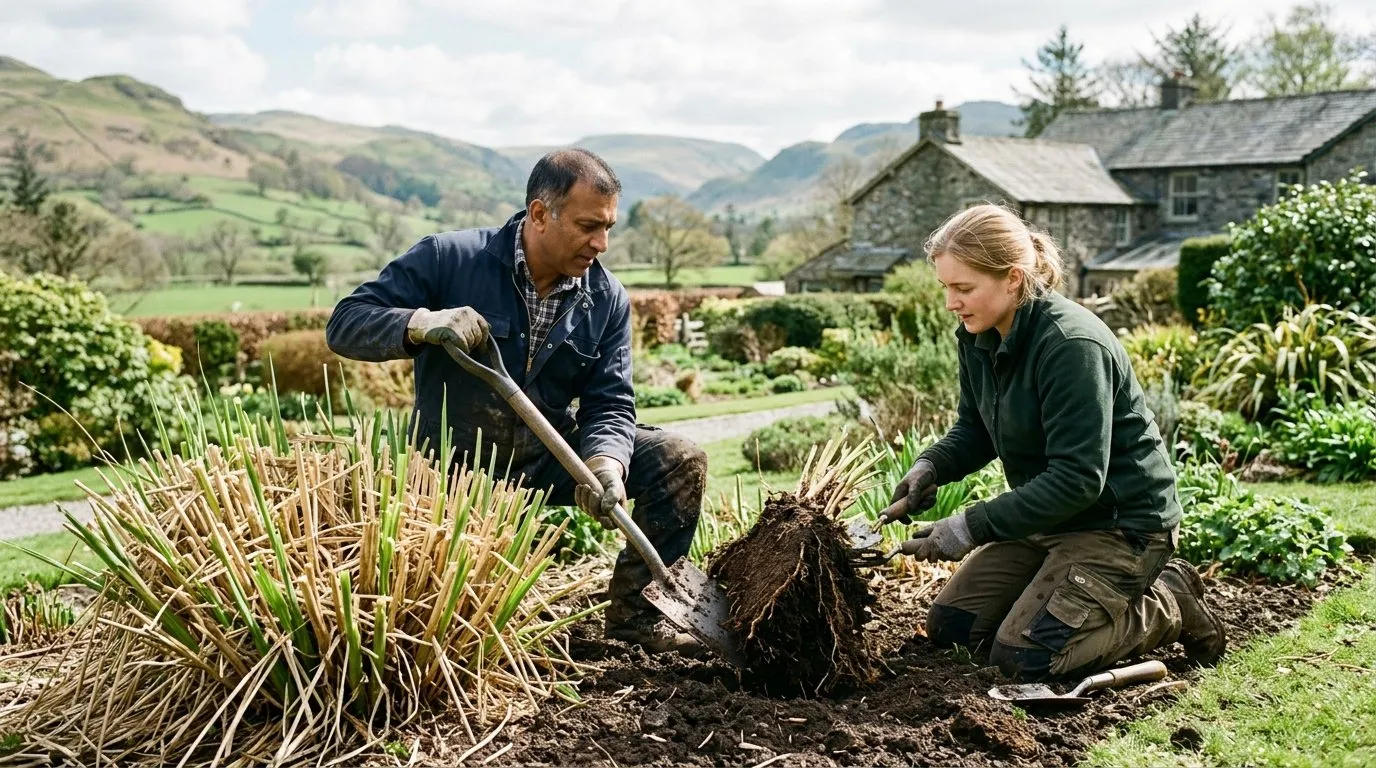 April division: slice rooted edge sections, each with shoots and roots, and replant the same day.
How do you dry pampas grass plumes for indoors?
Cut plumes in early September, just before they fluff fully open, and they will hold together for years indoors. Cut too late, once the head is fully expanded, and it sheds over every surface in the house. Choose a dry morning, cut stems at 60-90cm, and strip the leaves at once, wearing gloves.
Bunch five or six stems, tie them, and hang upside down in a warm, airy, dim place. An airing cupboard or dry shed is ideal. They are ready in two to three weeks, stiff and full. A light mist of cheap hairspray locks the filaments and cuts shedding to almost nothing.
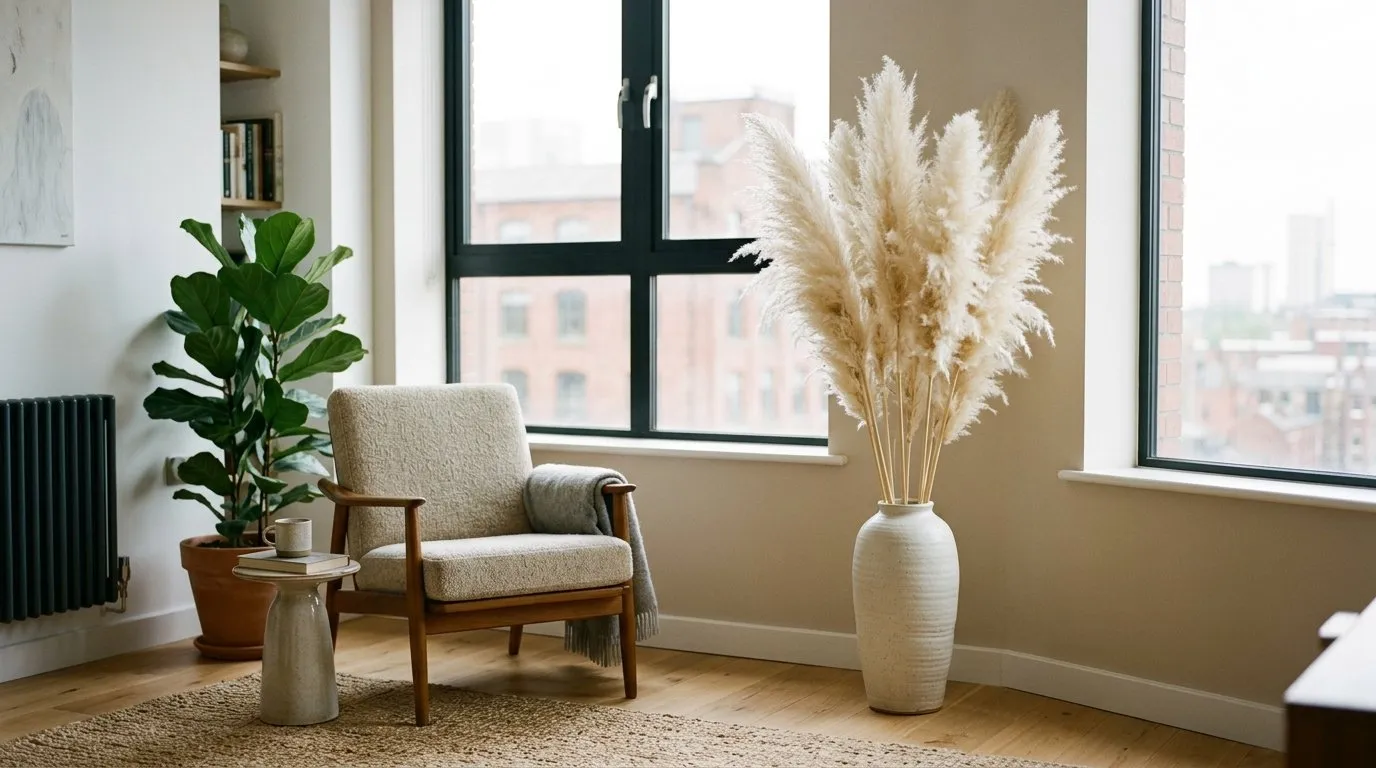 Cut in early September, dried for three weeks, and set dry in the vase. No water, ever.
Does pampas grass self-seed in the UK?
Rarely, but more than it used to. A fertile plume can carry up to 100,000 seeds, which is why the plant is banned in New Zealand and restricted in parts of Australia and California. Britain has mostly escaped because the trade sells female clones: with no male plant nearby, the seed is sterile. It is not listed as invasive under UK law and remains fully legal to plant.
Warmer autumns are shifting the picture, though. Seedlings now turn up on railway banks, dunes and waste ground along the south coast, where mixed plantings include the odd male. The sensible habit costs five minutes: if you garden within sight of open countryside, heath or dunes, cut the plumes by late winter rather than leaving them to shatter. You lose nothing; February plumes are tatty anyway.
Keep named cultivars, deadhead where it matters, and pampas grass stays what it should be here: a garden plant, not an escapee.
Frequently asked questions
Does pampas grass come back every year?
Yes, pampas grass is an evergreen perennial that lives 15 years or more. The foliage stands all winter and the plumes hold into February. It is rated RHS H6, hardy to about -15C, so British winters do not trouble an established clump. Only young plants in cold wet soil are at real risk.
How long does pampas grass take to grow?
Expect the first proper plumes two to three years after planting. A 2-3 litre plant put in during April will make a solid foliage clump in its first summer, flower lightly in its second, and hit full stride by year three or four. Feeding will not rush it; sun and drainage decide the pace.
Is pampas grass banned or invasive in the UK?
No, pampas grass is legal to plant and is not listed as invasive in the UK. It is banned in New Zealand and restricted in parts of Australia and California. British self-seeding is rare because most garden cultivars are female clones, though warmer autumns are producing more seedlings in southern England.
Can you grow pampas grass in a pot?
Only the dwarf ‘Pumila’, and only in a 50-litre or larger container. Use John Innes No 3 with 20 per cent grit, stand the pot in full sun and water weekly in summer. The full-size species starves and topples in any pot you can actually lift.
When should you cut back pampas grass?
Cut back in late winter, February to early March, before new growth starts. Remove the spent plumes and dead foliage down to 30-40cm, then comb out the loose thatch. Wear gauntlet gloves and long sleeves because the leaf edges cut like blades. Never set fire to the clump.
Why is my pampas grass not flowering?
Shade is the usual reason, followed by youth. Pampas grass needs full sun for most of the day to flower well, and new plants take two to three years to start. Heavy nitrogen feeding also pushes leaf at the expense of plumes. Move it, or wait, rather than feed it.
Sited with honesty and cut back with respect, pampas grass gives 15 years of the biggest autumn show a British garden can hold. Get the variety right first, and the rest is one gloved morning a year.
Our team produces practical UK gardening guidance from source research, contributor records and established horticultural practice. Editorial standards are overseen by Matt W.