Key takeaways
- Coleus is tender, rated RHS H1b: outdoors only from early June to late September in most of the UK
- Sow February to April at 20-25C on the compost surface; the seed needs light and germinates in 10-14 days
- Cuttings root in a jar of plain water in 7-14 days, so one stock plant gives 20 or more free plants each spring
- Pinch the tips every two to three weeks and remove every flower spike to keep the foliage dense
- Outdoors it colours best in morning sun with afternoon shade; indoors give bright light out of midday sun
- A £2.50-£3.50 packet of seed raises 50 or more plants; single supermarket pots cost £3-£8
Coleus is two plants for the price of one, and most UK gardeners only ever use half of it. Outdoors it is loud summer bedding, filling borders and pots with burgundy, lime, copper and pink from June to the first frost. Indoors the same plant is a year-round foliage houseplant for a bright windowsill.
Nobody should pay for it twice. Coleus roots from cuttings in a jar of water in under a fortnight. Keep one plant alive on a windowsill through winter and you can raise 20 or more free plants every spring. This guide covers seed, cuttings, bedding, containers, houseplant care and the problems that catch people out.
What is coleus and why does it have three names?
Coleus is a tender foliage plant in the mint family, and botanists have renamed it twice in thirty years. You will see Coleus scutellarioides, Solenostemon and Plectranthus on labels in the same garden centre. They are the same plant. Botanists settled the argument in 2019 and the RHS now lists it as Coleus scutellarioides, so use that name and ignore the rest.
Everything about it says mint family: square stems, paired nettle-shaped leaves, and small hooded flowers. The leaves carry the show, in patterns and colours no flower matches. The Victorians knew this and bedded coleus out by the thousand in their carpet schemes.
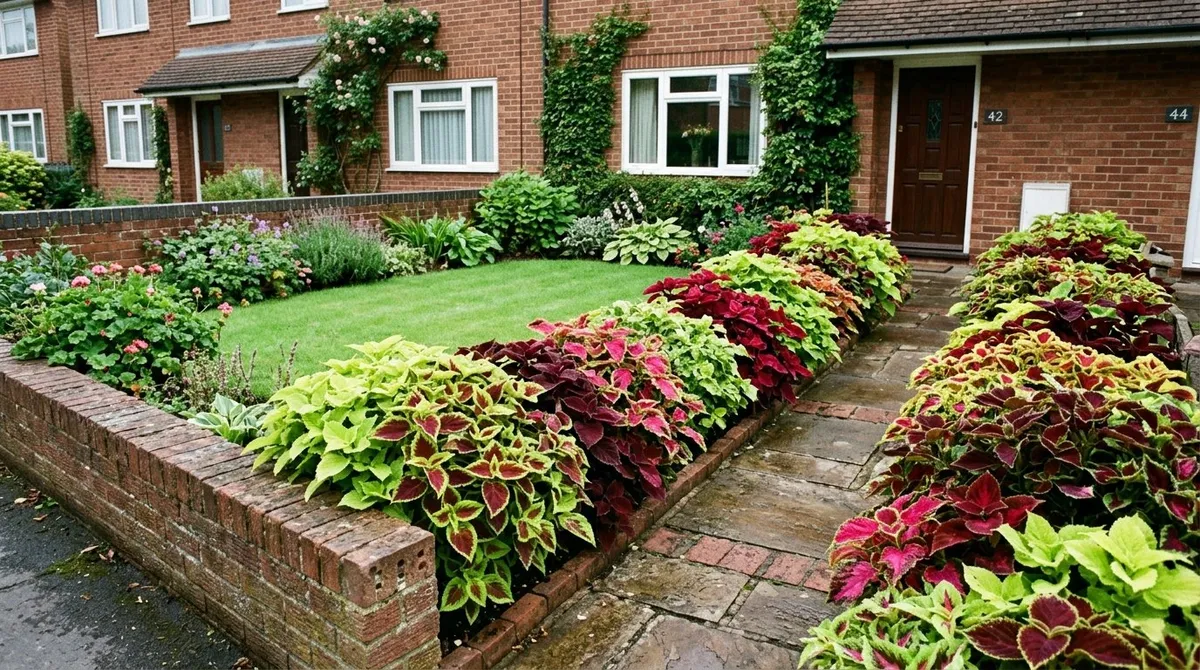
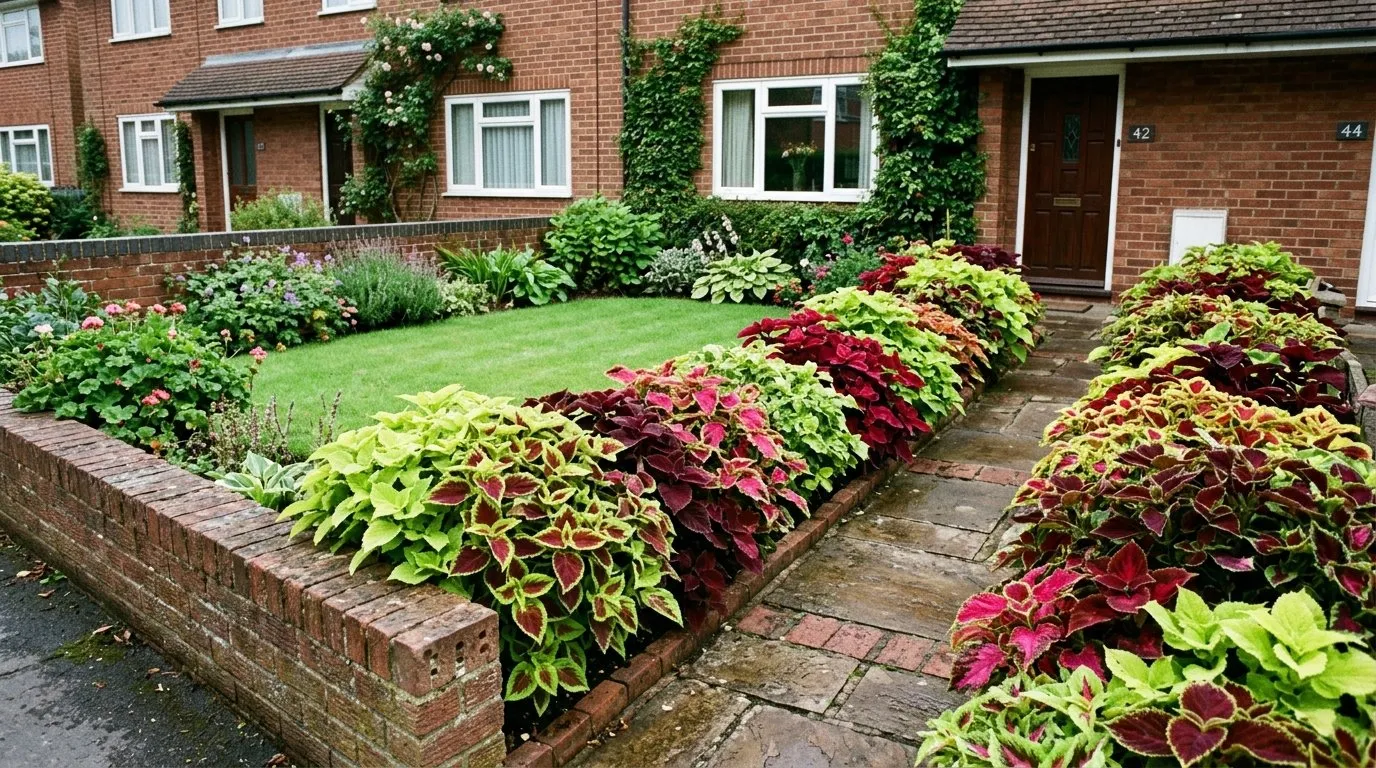 Seed-raised coleus edging a suburban front garden. Planted at 25cm spacings in June, this is the density you get by late July.
How to grow coleus from seed
Sow coleus from February to April at 20-25C, and do not cover the seed, because it needs light to germinate. Press it onto the surface of moist, peat-free seed compost and leave it uncovered. A heated propagator on a bright windowsill is ideal. Germination takes 10-14 days, and the seedlings show their leaf colour almost from the first true leaf.
Seed is the cheap route to a lot of plants. A packet of a mixed series such as Wizard or Fairway costs £2.50-£3.50 and holds 50-100 seeds. That is a whole summer bedding scheme for less than the price of one garden-centre pot.
Prick the seedlings out into modules or 9cm pots once they are big enough to handle. Keep them above 15C, in full light, and turn the pots every few days so they grow straight. They are ready to harden off once nights outside hold above 10C.
 Massed seed-raised coleus in a walled garden near Edinburgh. One packet of mixed seed sown in March fills a border like this by August.
How do you take coleus cuttings in water?
Coleus cuttings root in plain water in 7 to 14 days, faster than almost any other garden plant. You do not need hormone powder, a propagator or even compost. A jam jar on a windowsill does the whole job, which is why coleus has been passed over garden fences since Victorian times.
The method takes two minutes. Cut an 8-10cm tip shoot just below a leaf joint. Strip the lower leaves so nothing sits underwater, because submerged leaves rot and foul the jar. Stand the cuttings in the jar on a bright sill out of direct sun. White roots appear within a week in summer, and the cuttings are ready to pot once roots reach 2-3cm.
This is the classic softwood technique, and the RHS softwood cuttings guide applies if you prefer to root them in compost instead. Water is simply easier to watch. If rooting things in jars appeals, our guide to cuttings you can root in water lists the other plants that do the same trick.
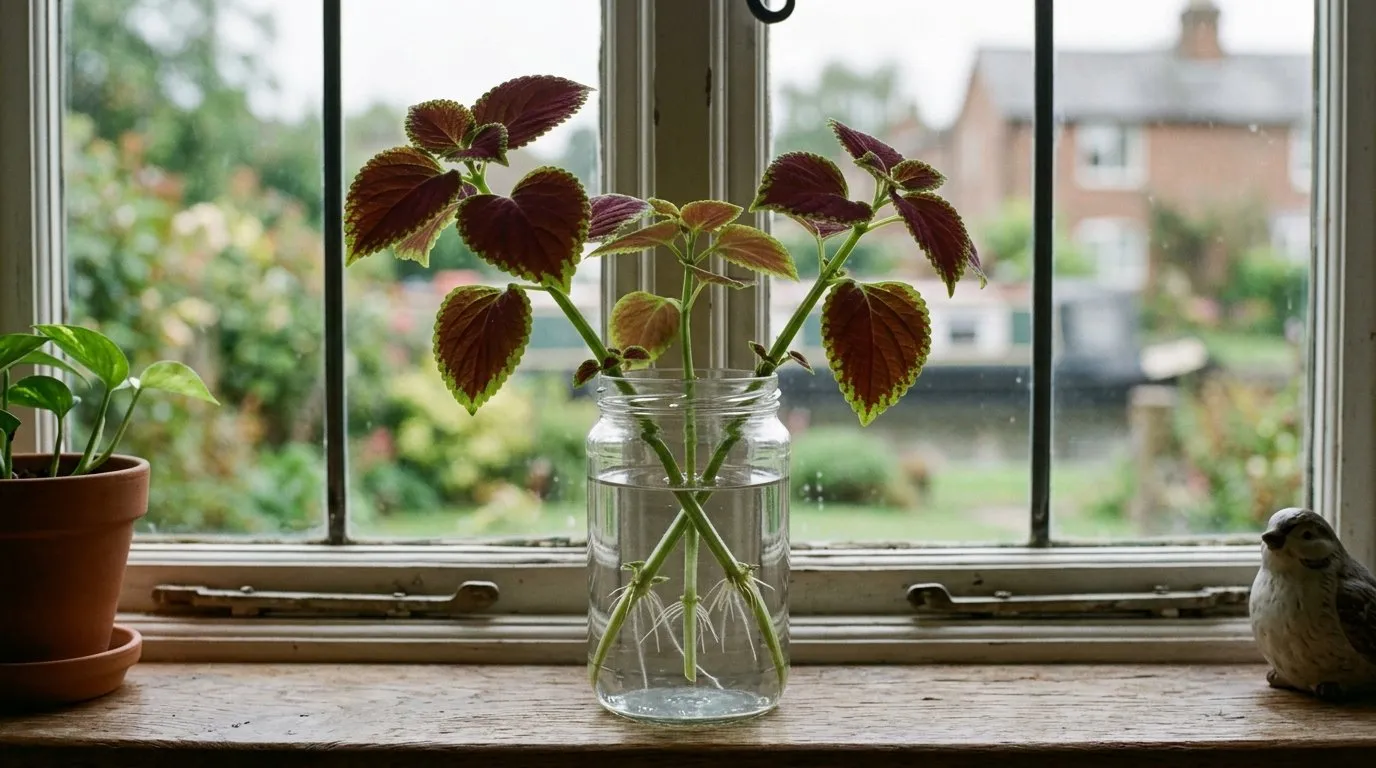 Tip cuttings rooting in plain water on a kitchen windowsill. White roots show within a week in summer warmth.
Free plants every year from one windowsill stock plant
One overwintered coleus supplies 20 or more cuttings each spring, which makes buying trays of bedding optional. Growers call it a stock plant. It is the cheapest propagation system in gardening, and it fits on a windowsill.
Choose your best plant in late September, before night temperatures slide below 10C. Either pot it up whole or take a few insurance cuttings and overwinter those instead, since rooted cuttings take less space than a mature plant. Keep it at 12-14C or warmer, in the brightest spot you have, and water only when the top 2cm of compost is dry.
The plant sits almost still through the dark months. In March it wakes, throws new shoots, and every shoot is a cutting. Take them as described above, pot them on, and by June you have a full bedding scheme that cost nothing. The general routine for bringing tender plants through winter is in our overwintering guide.
When can you plant coleus outside in the UK?
Plant coleus out in early June, once nights hold above 10C, and gain nothing by rushing. Late May is workable in the mild south and in city gardens. In the Midlands and north, the first week of June is the sensible date. Harden plants off over 10 days first, bringing them in at night for the first week.
Give it fertile, moisture-retentive soil and space plants 25-30cm apart. Closer spacing knits into a solid carpet of colour faster. Water new plantings in dry weeks for the first month, because a coleus short of water tells you about it loudly and often.
In containers, use peat-free multi-purpose compost and expect to water daily in hot spells. Feed pots fortnightly with a balanced liquid feed at half strength. If you skip seed and cuttings, plants are easy to buy in May and June: single pots cost £3-£8 in supermarkets and garden centres, and mail-order plug collections run £12-£18 for 12.
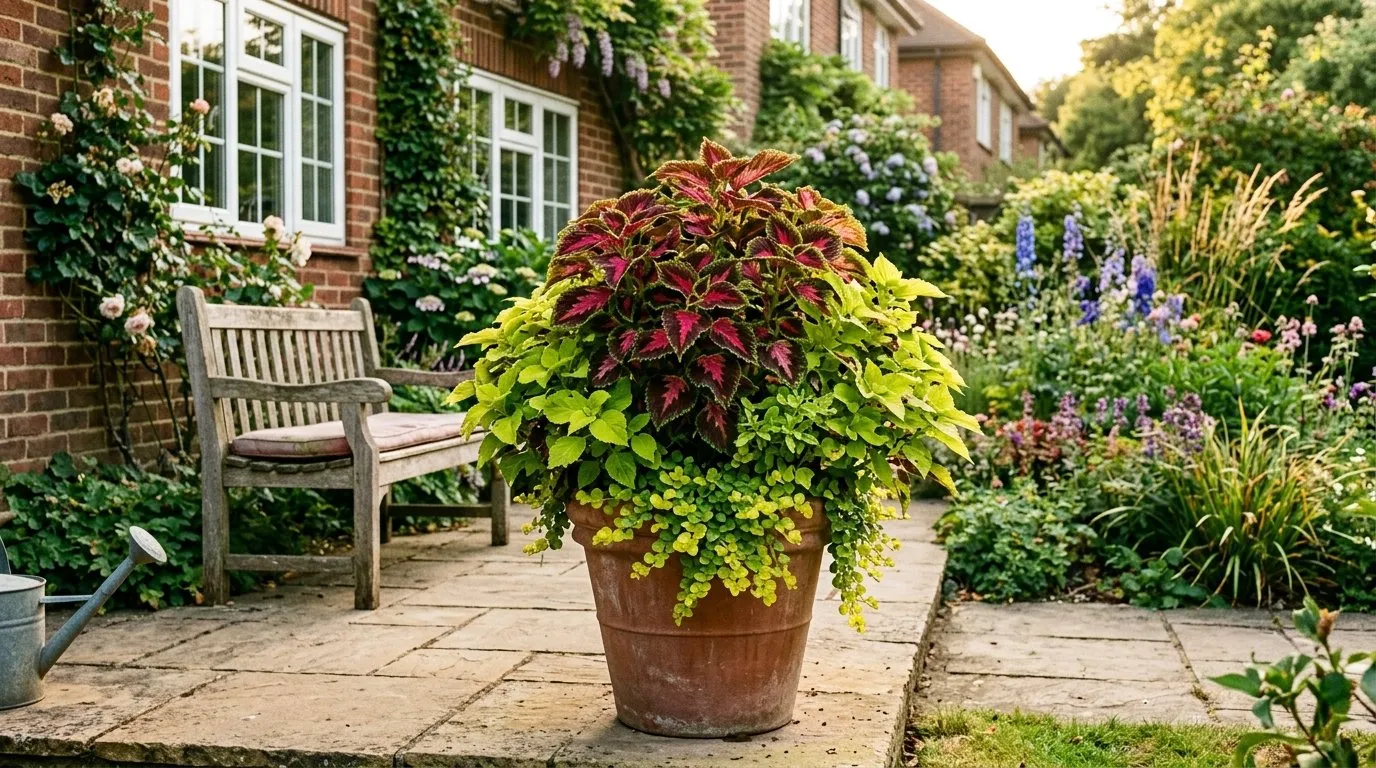 One dark coleus carries a 40cm terracotta pot, with lime companions and creeping Jenny spilling over the rim.
Morning sun, afternoon shade: getting the light right
Coleus colours best outdoors in morning sun with shade from around midday. That single fact decides where it thrives. Strong afternoon sun bleaches the reds to pink and scorches dry brown patches into the leaf edges. Deep shade does the opposite damage: the plant lives, but the colour dulls and the growth turns thin and leggy.
An east-facing bed or pot is the sweet spot. So is the bright edge of a tree canopy, where coleus earns its keep lifting hostas and ferns. The big-leaved Kong types hold their colour in more shade than any other series, which makes them the pick for gloomy corners. For the rest of the planting in those spots, our guide to shade-tolerant annuals covers the reliable partners.
 Coleus lifting a shady border of hostas and ferns. Bright shade keeps the colour rich; deep gloom dulls it.
Can you grow coleus as a houseplant?
Yes, coleus grows indoors all year on a bright windowsill out of harsh midday sun. Those £3-£8 pots sold by supermarkets are exactly this plant, and most get thrown away months before they need to be. Give bright, indirect light, turn the pot weekly, and water when the top 2cm of compost dries. It is happiest at 18-24C and sulks below 13C or near a cold draught.
An indoor coleus lives fast. After 12-18 months it turns woody at the base and sparse at the top, so take cuttings and start again rather than nursing an old plant. A summer holiday outside from June to September does it visible good, and our guide to moving houseplants outdoors for summer covers the safe way to do it.
The two ways of growing coleus ask for different habits, so here is the honest comparison.
Coleus as bedding versus coleus as a houseplant
| Summer bedding outdoors | Year-round houseplant | |
|---|---|---|
| Position | Morning sun, afternoon shade | Bright windowsill, out of midday sun |
| Season | Early June to first frost | All year above 10-13C |
| Watering | Daily in hot spells for pots | When top 2cm of compost dries |
| Feeding | Balanced liquid feed fortnightly | Half-strength feed monthly, none in winter |
| Lifespan | One season, killed by frost | 12-18 months before it turns woody |
| Winter | Composted, or cuttings brought in | Ticks over on the sill at 12C+ |
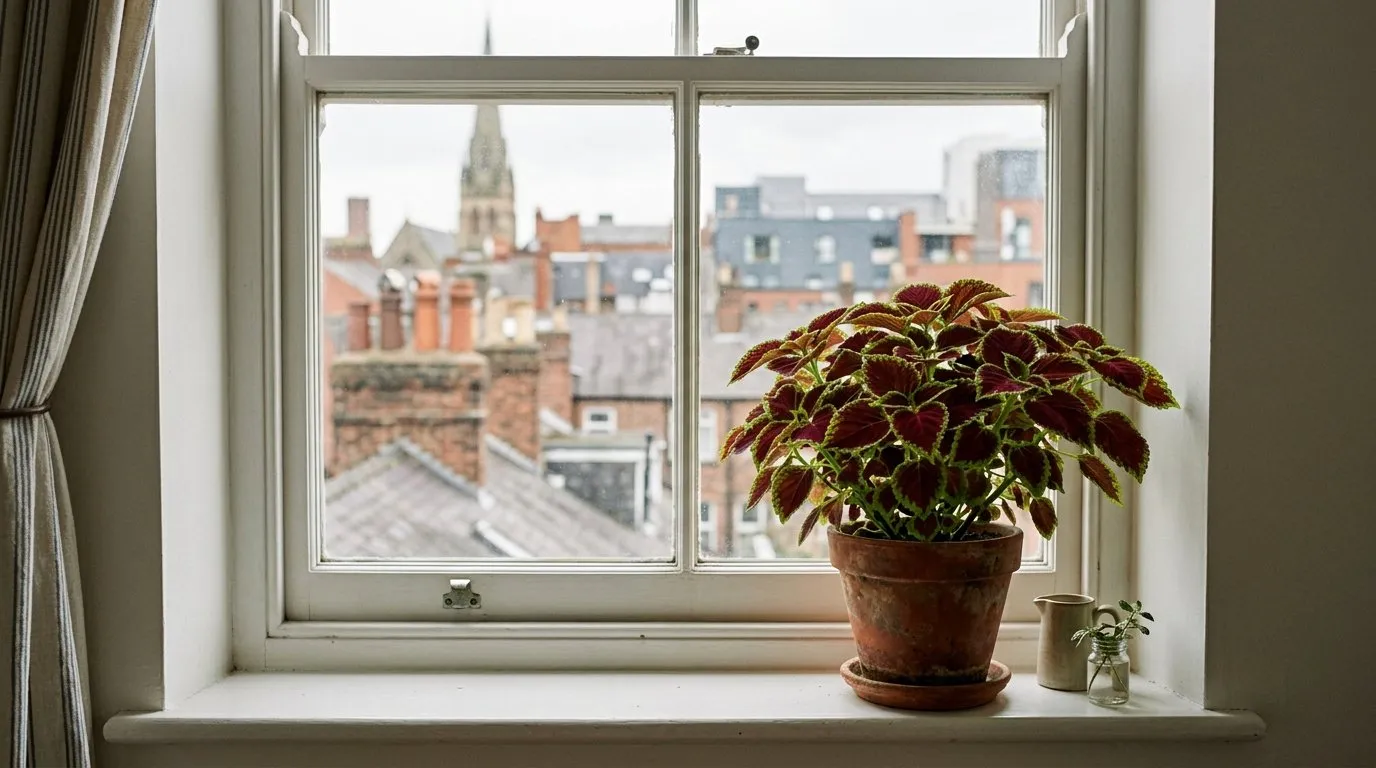 A supermarket coleus earning its keep on a city flat windowsill. Bright light off the glass keeps the colour saturated.
Pinching out, feeding and stopping the flower spikes
Pinch the growing tips every two to three weeks, because an unpinched coleus grows tall, thin and bare-legged. Nip each shoot back to just above a pair of leaves, using finger and thumb. Two shoots break from every pinch, so the plant doubles its density each time. Start when plants are 10-15cm tall and never stop.
Remove flower spikes on sight. The thin blue-white spikes cost the plant energy, dull the foliage and push it into decline once seed sets. Snap them off at the base the day you notice them. The pinching rhythm is the same one used for fuchsias, and our pinching out guide shows the technique on both plants.
Feed for leaves, not flowers. A balanced feed at half strength every fortnight keeps growth steady and colour deep. High-potash tomato feed is the wrong tool here, since it pushes exactly the flowering you keep pinching off.
 Pinching above a leaf pair every two to three weeks. Each pinch doubles the shoots below it.
Which coleus varieties grow best in the UK?
The Wizard series is the standard bedding coleus: 30-35cm, self-branching, in a dozen separate colours or as a mix. It is the forgiving one for a first attempt from seed.
The Fairway series is the dwarf, at 20-25cm, and comes into colour early. Use it for edging, window boxes and small pots.
The Kong series grows huge velvet leaves, 15cm or more across, on 45-60cm plants. It scorches in sun but holds saturated colour in shade better than anything else. Grow it as a specimen in a pot or under trees.
‘Campfire’ is the copper-orange one, around 40cm, usually sold as plants rather than seed. The colour reads like embers in an evening border and it takes cuttings generously.
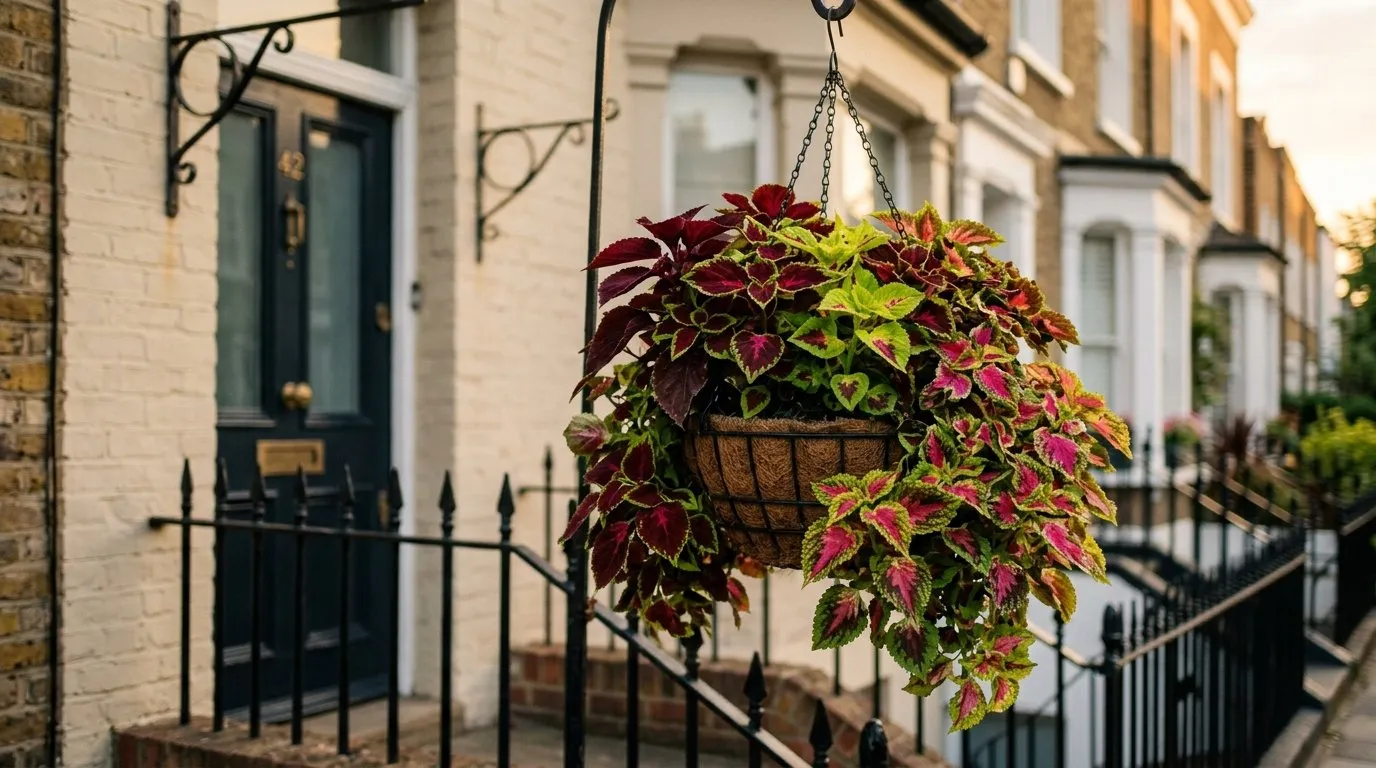 Trailing and upright coleus filling a basket on a London terrace. Foliage alone holds the show until October.
Most coleus problems trace back to cold, wet compost or the wrong light, and nearly all are fixable if caught early. Here is what goes wrong and what to do.
Dramatic wilting
Dry compost makes coleus collapse theatrically, and a drink restores it within the hour. If it wilts while the compost is wet, the problem is the opposite: roots rotting in cold, airless compost. Stop watering, move the plant somewhere warmer, and let the compost dry to barely moist before watering again.
Leaf drop indoors
A coleus shedding leaves in autumn or winter is telling you it is cold. Below about 10C, or in the draught from a door or single-glazed window at night, leaves yellow and fall within days. Move it to a warmer sill and pull it back from the glass at night.
Scorched or faded leaves
Brown crisp patches and washed-out colour mean too much direct sun, usually in the afternoon. Move pots into bright shade, or accept the bleaching until autumn in a border. The colour on new leaves recovers quickly once the light is right.
Leggy, dull growth
Long gaps between leaf pairs and muddy colour mean too little light, too little pinching, or both. Move the plant brighter, pinch every tip, and it rebuilds density in three to four weeks.
Whitefly and mealybug
Under glass and indoors, whitefly gather on leaf undersides and mealybugs tuck into stem joints as white fluff. Check weekly, squash small colonies, and use a fatty acid spray for worse ones. Outdoor plants rarely suffer, so get bedding plants out on schedule.
Slugs on young plants
Freshly planted June coleus is soft, and slugs know it. Torchlight rounds in the first fortnight, plus a tidy-up of nearby hiding places, gets plants through the vulnerable stage. Established plants shrug off the odd hole.
Frequently asked questions
Is coleus a perennial or an annual?
Coleus is a tender perennial grown as a half-hardy annual in the UK. The first frost kills it outdoors, so bedding plants are composted in autumn. Indoors, kept above 10C, the same plant lives for years, though it turns woody and sparse after 18 months or so. Most growers refresh from cuttings instead of keeping old plants.
Should I let my coleus flower?
No, pinch the flower spikes out as soon as they appear. Coleus is grown for leaves, and the thin blue-white spikes add nothing. A flowering plant puts its energy into seed, the foliage dulls, and the plant turns leggy and starts to decline. Check weekly from midsummer and snap spikes off at the base.
Can coleus take full sun in the UK?
Morning sun is fine, but strong midday sun bleaches and scorches the leaves. The richest colour comes in bright light with shade from about noon, such as an east-facing bed. A few modern varieties are bred for sun, yet even they fade in a hot south-facing corner. In deep shade the colour dulls and growth turns thin.
Why does my coleus keep wilting?
Dry compost is the usual cause, and coleus wilts more dramatically than almost anything else. Water it and the leaves lift again within an hour. If the compost is already wet and the plant still droops, the roots are rotting in cold, airless compost. Let it dry out, move it somewhere warmer and water less.
How long do coleus cuttings take to root in water?
Seven to fourteen days on a bright windowsill out of direct sun. Take 8-10cm tip cuttings, cut just below a leaf joint, and strip any leaf that would sit underwater. Pot the cuttings up once the roots reach 2-3cm. Rooting slows noticeably in winter, so spring and summer cuttings are the quick ones.
Is coleus poisonous to cats and dogs?
Yes, coleus is mildly toxic to cats and dogs. The leaves and stems contain essential oils that can cause vomiting, diarrhoea and skin irritation in pets. Serious poisoning is rare, but keep houseplant pots out of reach and site outdoor plants where pets do not chew them. The sap irritates some human skin too.
Can you keep coleus over winter in the UK?
Yes, indoors on a bright windowsill kept above 10C. Pot up or cut back a favourite plant in late September before night temperatures fall. Water sparingly through winter, never let it sit cold and wet, and it ticks over until March. Then take cuttings from the new shoots for the summer supply.
One plant on a windowsill, a jam jar, and a fortnight of patience. That is the entire coleus budget from now on. Take the cuttings in September, keep the jar topped up, and you will never buy a tray of them again.
Our team produces practical UK gardening guidance from source research, contributor records and established horticultural practice. Editorial standards are overseen by Matt W.