Key takeaways
- Plant Crocus sativus corms July to August, 10-15cm deep, 10cm apart in full sun
- Each autumn flower yields exactly 3 red stigmas; around 150 flowers make 1g dried
- Flowers open October to November before or with the grass-like foliage
- Sharp drainage is critical: the UK's wet summer dormancy kills more corms than frost
- Yield climbs from roughly 0.3g to over 2g per square metre as corms bulk up by year four
- Lift and divide congested corms every 3-4 years to keep flowering strong
The principle is simple. A corm flowers in autumn, feeds itself through winter with grass-like leaves, then rests dry through summer. Get the drainage right and a small bed pays you back in fragrant red threads for years.
What makes saffron so valuable and labour intensive
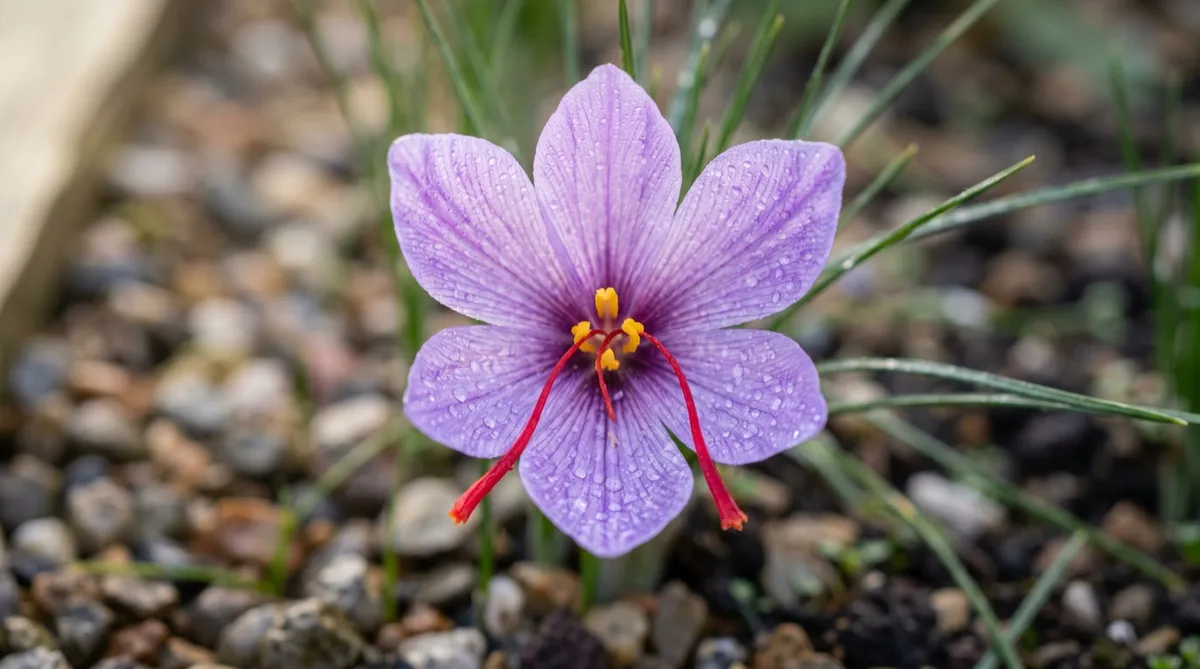
Saffron is the dried red stigma of the Crocus sativus flower, and the maths behind its price is brutal. Each flower produces just three stigmas, the female parts that catch pollen. To make a single gram of dried saffron you need roughly 150 flowers, which is about 450 stigmas, all picked and plucked by hand.
Crocus sativus is a sterile triploid, meaning it sets no seed and cannot be grown from seed at all. It exists only because growers have propagated it from corms for over three thousand years. Every plant is effectively a clone. This is why you buy corms, not seed packets, and why the species depends entirely on gardeners lifting and replanting it.
The spice itself owes its colour to crocin, its aroma to safranal, and its bitter edge to picrocrocin. Good saffron sells for £20 to £40 per gram in UK shops. A modest bed of 100 corms can repay that several times over once the corms have bulked up.
Gardener’s tip: Buy the largest corms you can find, ideally 9-10cm in circumference. Small corms under 8cm rarely flower in their first autumn and simply build size for a year before they earn their keep.
When to plant saffron corms in the UK
Plant saffron corms in July or August, as soon as you can get hold of them. This timing lets the corm root before it flowers in autumn. Corms planted after September often flower weakly or skip their first season, sitting dormant until the following year.
Choose a spot in full sun, with at least six hours of direct light. Saffron evolved in the dry hills of Iran and Greece, so it wants heat and a baked summer rest. Plant each corm 10-15cm deep and 10cm apart, pointed end up. Deep planting matters: shallow corms flower poorly and split into too many weak cormlets.
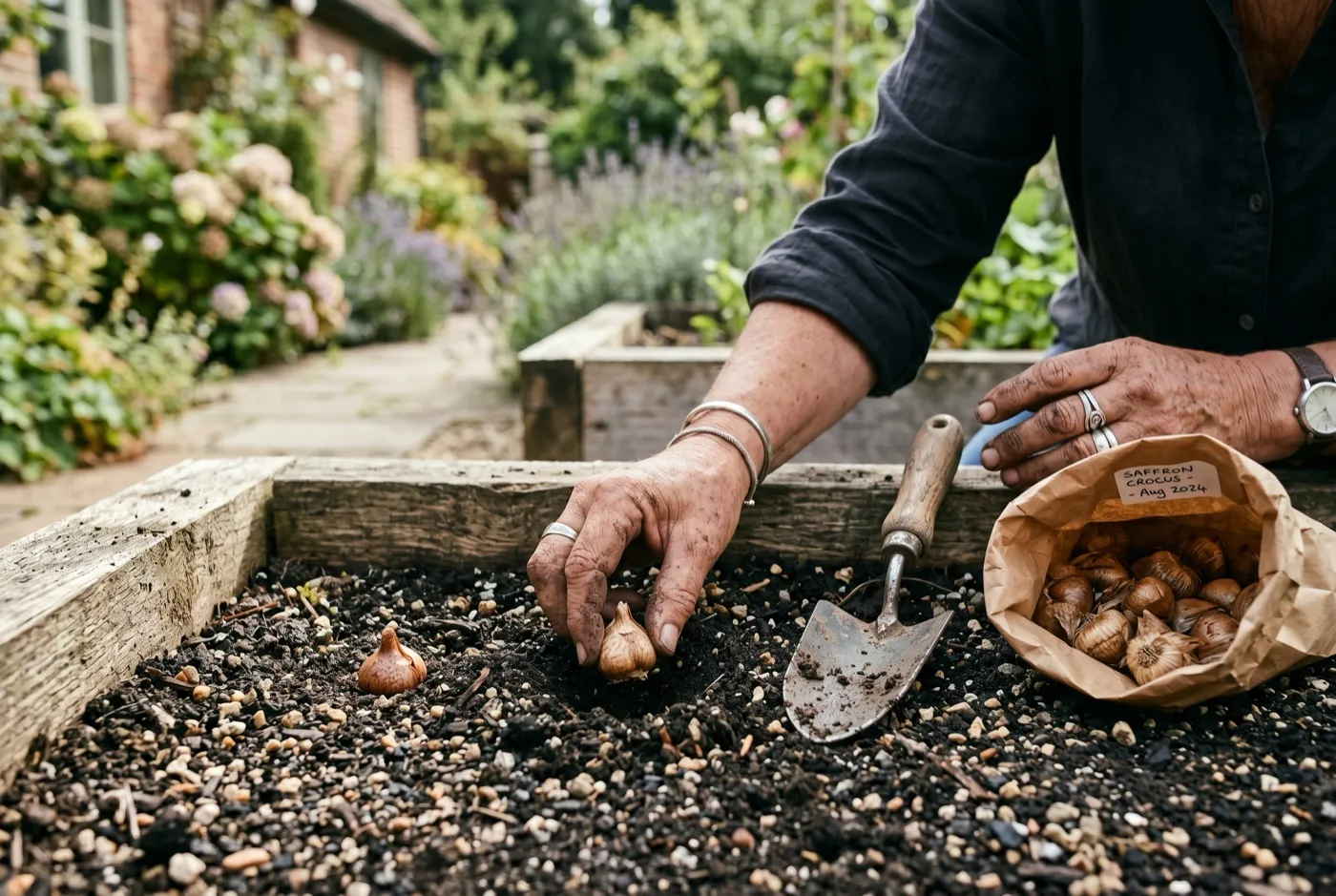 Plant corms 10-15cm deep and 10cm apart in July or August. The grittier the soil, the better they survive the wet UK summer dormancy.
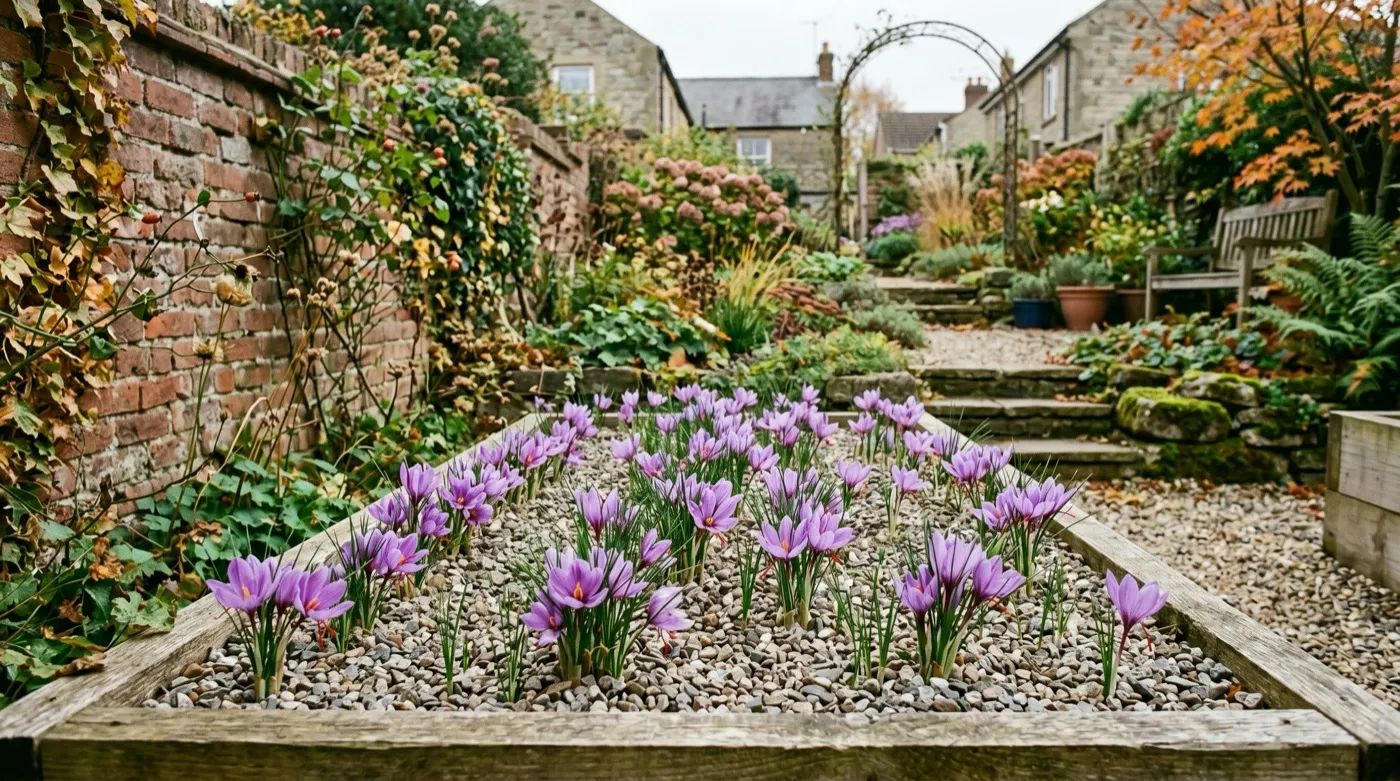 Sharp drainage is everything. A raised gravel bed keeps Crocus sativus corms dry through wet UK summers, the main reason home saffron crops fail.
The Crocus sativus growth cycle stage by stage
Understanding the four stages of the cycle tells you exactly when to act and when to leave the plant alone. Most failures come from watering or disturbing the corm at the wrong stage.
- Flowering, October to November. The purple flowers push up first, often before or with the leaves. Each lasts only a few days. Temperatures around 15-20C trigger flowering, which is why a warm early autumn brings a heavier flush.
- Foliage, November to May. Narrow, grass-like leaves with a silver midrib follow the flowers and stay green all winter. They photosynthesise through the cold and feed the corm. Never cut this foliage while green.
- Die-back, late May to June. The leaves yellow and wither as the corm finishes building next year’s flower inside itself. Stop any watering now.
- Dormancy, June to August. The corm rests underground and needs to stay warm and dry. This is the critical UK stage. A wet summer in soggy soil rots the corm before it can flower again.
The critical mistake most people make is watering or growing the corms in moisture-retentive soil through summer. In the wild, Crocus sativus bakes through a dry Mediterranean summer. A British clay bed holds rain all August and drowns the dormant corm. If you cannot guarantee dry feet, lift the corms in June and store them in dry sand until replanting. The principle mirrors the rest you give forced bulbs for indoor flowers, where a controlled cool period precedes growth.
How to harvest and dry saffron stigmas
Harvest decides flavour, so get the timing and the drying right. Pick the flowers mid-morning, once the dew has lifted but before the midday sun, when the blooms are fully open.
Snap or pull each flower from the plant, then pluck out the three red stigmas with your fingers or fine tweezers. Take only the deep red threads, leaving the pale yellow style behind, since the yellow part has no flavour and dilutes the colour. A flush of flowers opens over two to three weeks, so check the bed every morning during the season.
Drying is what turns raw stigmas into storable spice. Spread them in a single layer on paper or a fine sieve and dry them gently at 30-50C for 24 to 48 hours, until they snap crisply rather than bend. An airing cupboard, a dehydrator on its lowest setting, or a windowsill out of direct sun all work. Fresh stigmas lose about 80% of their weight as they dry, which is why the gram counts look so small.
Store the dried threads airtight, in the dark, in a small jar. Kept this way they hold their flavour for up to two years, slowly fading after that.
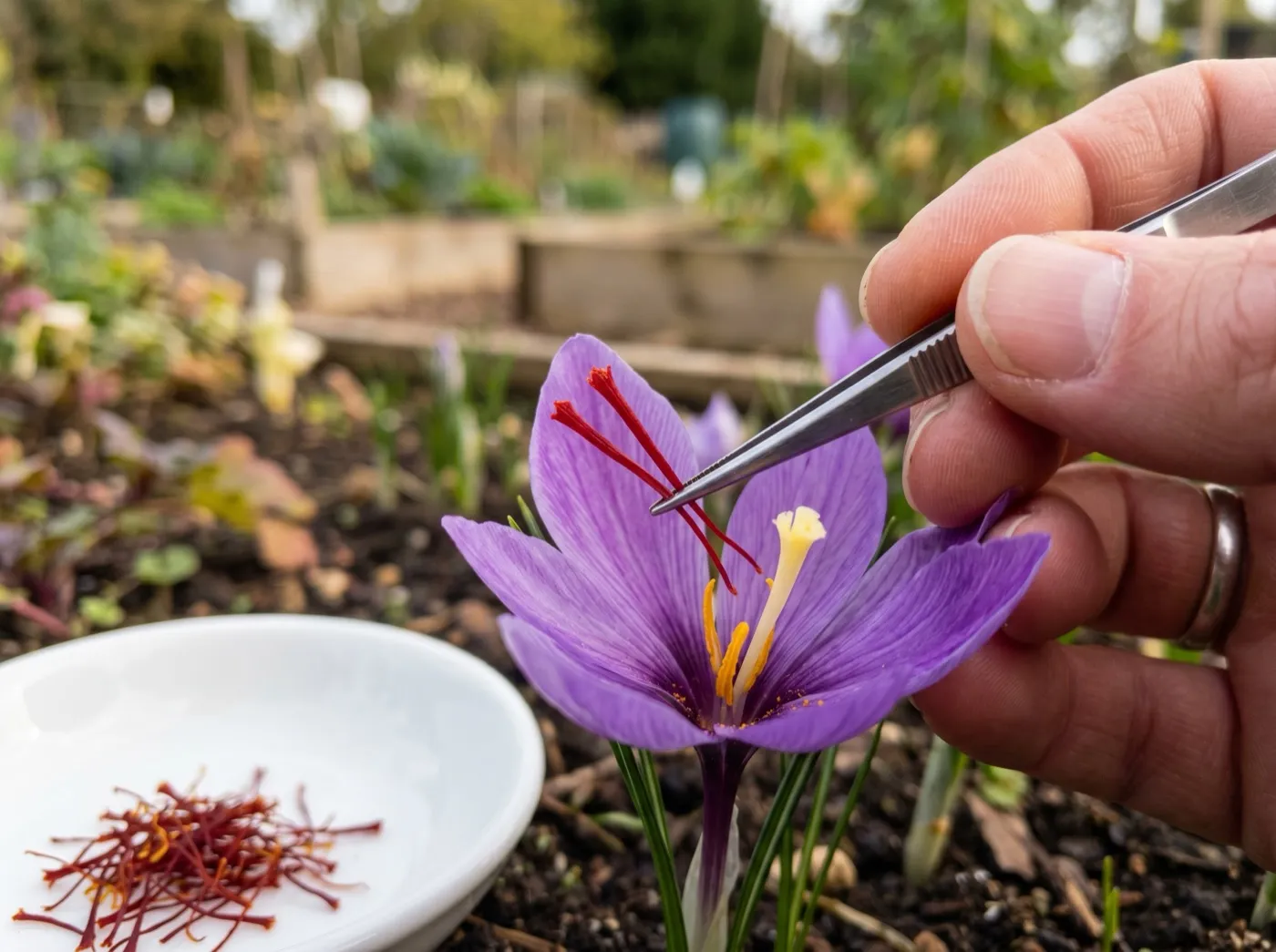 Pluck only the three deep red stigmas from each flower. The pale yellow style below has no flavour and is left behind.
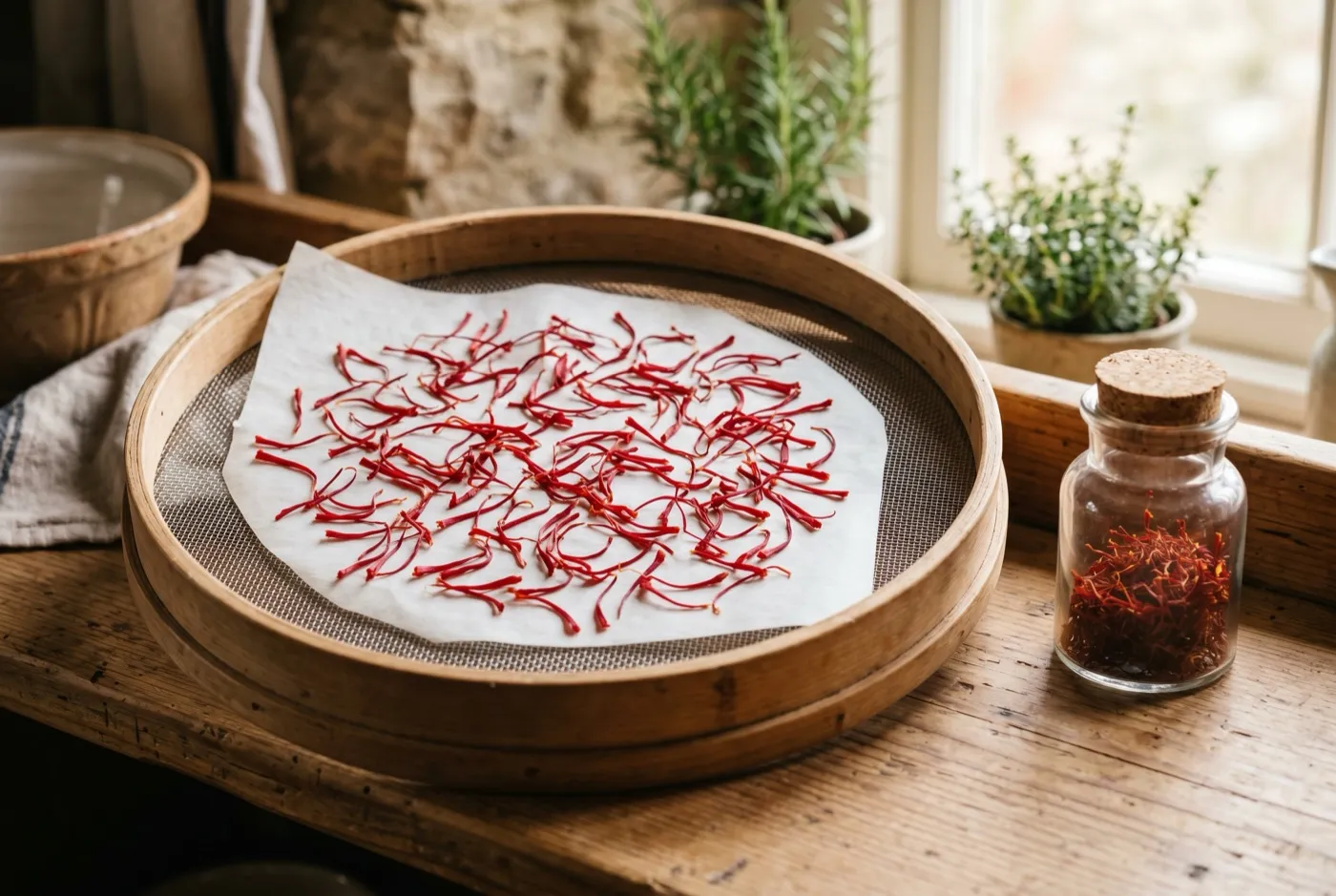 Dry the threads gently for 24 to 48 hours until brittle, then store them airtight in the dark. Careful drying locks in the colour and aroma.
Why most UK saffron crops fail and how to prevent it
The root cause of a failed saffron crop is almost never the cold. Crocus sativus shrugs off frost down to around minus 15C. The real killer is summer wet during dormancy. The corm sits underground from June to August, and if the soil stays saturated it develops fungal rot and turns to soft brown mush.
This cause is missed because gardeners assume a Mediterranean plant struggles with our winters. It does not. It struggles with our rain. A corm that survives a hard frost will still die in a soggy August border. Improving winter hardiness does nothing if the summer drainage is wrong.
The permanent fix is to engineer the drainage before you plant. Build a raised bed at least 20cm high, mix 50% horticultural grit into the planting zone, or grow in deep pots you can move under cover for summer. In a truly wet plot, lift the corms in June once the foliage dies back, store them dry in sand or paper bags at room temperature, and replant in late July. This mimics the dry summer rest the plant evolved for and guarantees survival regardless of the weather.
Warning: Never mulch saffron corms with bark, compost, or anything moisture-holding over summer. A damp mulch traps rain against the dormant corm and is one of the fastest routes to rot.
Lifting, dividing, and multiplying your corms
After 3 to 4 years the corms become congested and flowering drops as they compete for space and food. Lift the whole clump in June, once the foliage has died back, using a fork to ease the corms out without slicing them. Gently pull the cormlets apart, discard any soft or damaged ones, and dry the healthy corms in an airy, shaded spot for a week.
Replant the best corms in late July or August at fresh spacing of 10cm, ideally in soil refreshed with grit and a low-nitrogen feed. Dividing this way rejuvenates the colony and spreads your saffron across more ground. It also lets you start a second bed for free. The same multiply-and-divide habit applies to ordinary garden crocus species, though those are grown for show rather than spice.
Saffron growing calendar for the UK
This calendar tracks the full cycle so you know what to do, and what to leave alone, every month.
| Month | Saffron task |
|---|---|
| July | Plant or replant corms 10-15cm deep in full sun and grit |
| August | Finish planting; keep soil on the dry side |
| September | Water lightly once if very dry, to prompt flowering |
| October | Flowering begins; harvest stigmas mid-morning |
| November | Peak flowering and harvest; foliage emerges |
| December to February | Leave grass-like foliage to feed corms; no watering |
| March to April | Foliage continues growing; light low-nitrogen feed |
| May | Foliage yellows and dies back; stop all watering |
| June | Dormancy; keep dry, lift and divide congested beds every 3-4 years |
Saffron sits inside a wider autumn-planting cluster. The spring bulb planting calendar helps you slot saffron alongside your other autumn jobs, since the corms go in at the same time as daffodils and tulips. You will find more seasonal projects on our growing guides hub.
Common saffron growing mistakes to avoid
Most saffron failures trace back to drainage, depth, or harvest timing. These are the errors that cost a crop.
- Planting in heavy, wet soil. This is the number one killer. Corms rot in summer dormancy. Always plant into raised beds, gravel, or gritty pots with sharp drainage.
- Planting too shallow. Corms set above 10cm flower poorly and split into too many weak cormlets. Plant a firm 10-15cm deep.
- Cutting the foliage early. The grass-like leaves feed next year’s corm through winter. Cutting them green starves the corm and kills next autumn’s flowers. Wait until they yellow naturally in May.
- Watering through summer dormancy. A dormant corm needs a dry, warm rest. Summer watering or a damp mulch invites rot. Keep the bed dry from June to August.
- Harvesting too late in the day. Pick flowers mid-morning when fully open. Leaving them on the plant for days lets the stigmas degrade and lose colour and aroma.
Frequently asked questions
Can you grow saffron in the UK climate?
Yes, saffron grows well in the UK with sharp drainage. Crocus sativus is hardy to around minus 15C and flowers reliably in autumn. The real challenge is not cold but wet summer dormancy, which rots the corms. Raised beds, gravel gardens, or gritty pots solve this and give a dependable crop.
How many saffron flowers do you need for 1g?
Around 150 flowers produce 1g of dried saffron. Each Crocus sativus flower carries exactly 3 red stigmas, so 1g needs roughly 450 stigmas. This labour explains saffron’s price of £20 or more per gram. A bed of 100 corms in its fourth year can yield over 2g.
When do you plant saffron corms in the UK?
Plant saffron corms in July or August. This gives them time to root before flowering in October and November. Plant 10-15cm deep and 10cm apart in full sun with free-draining soil. Corms planted later than September often flower weakly or skip their first autumn entirely.
Why is my saffron not flowering?
Shallow planting and shade are the usual causes of no flowers. Corms set below 10cm and given full sun flower best. Overcrowding after several years also stops flowering, so lift and divide every 3-4 years. Small corms under 8cm in circumference rarely flower in their first season.
Do saffron corms come back every year?
Yes, saffron corms are perennial and multiply each year. A single corm splits into three or four cormlets annually if kept dry in summer. This is why yield rises over the first four seasons. Without sharp drainage the parent corms rot during dormancy and the colony collapses.
How do you dry saffron at home?
Dry fresh stigmas gently for 24 to 48 hours until brittle. Spread them on paper or a fine sieve somewhere warm and dark, around 30-50C, or use an airing cupboard. Properly dried stigmas snap rather than bend. Store them airtight in the dark, where they hold flavour for up to two years.
Saffron has deep UK roots: the Essex town of Saffron Walden is named for the medieval crop grown there. The Royal Horticultural Society holds further detail on autumn crocus care. Now you know how to crop your own threads, read our guide on growing Indian and Eastern spices in the UK to build a fuller home spice rack.
Our team produces practical UK gardening guidance from source research, contributor records and established horticultural practice. Editorial standards are overseen by Matt W.