Key takeaways
- Gardenia is a tender, acid-loving shrub: keep it at pH 5.0-6.0 in ericaceous compost, never garden soil
- Use rainwater only. Hard UK tap water at pH 7.5-8.5 causes lime-induced chlorosis within 3-4 weeks
- Hold a stable 16-23C by day and above 15-16C at night, away from radiators and cold draughts
- Keep humidity above 50%. Dry centrally heated air below 35% is the main cause of bud drop
- Sudden change in temperature, light, watering or position when budding drops 70-90% of buds
- 'Kleim's Hardy' survives to -10C and is the only variety worth trying outdoors in mild UK areas
Learning how to grow gardenia in the UK climate means accepting one hard truth first. Gardenia jasminoides is a tender, acid-loving shrub from warm, humid regions, and almost everything about a centrally heated British home works against it. Get the conditions right and you get glossy evergreen leaves and intensely fragrant double white flowers from June to October. Get them wrong and the plant yellows, drops every bud, then sulks.
The reward is worth the fuss. A single open gardenia flower scents a whole room. This guide covers the exact conditions that matter: acid soil, rainwater, steady warmth, and 50%-plus humidity. It also explains the two failures that catch out almost every UK grower, bud drop and yellow leaves, and how to stop both.
What gardenias are and why the UK fights them
Gardenia jasminoides is an evergreen shrub native to subtropical China and Japan. In the wild it grows in warm, humid, acidic woodland soils. The flowers are waxy, double, and pure white, fading to cream, with a scent close to jasmine and orange blossom combined. Mature plants reach 0.6-1.5m indoors, taller in their native range.
The trouble is the gap between that habitat and a UK home. Gardenias evolved with stable warmth, high humidity, and naturally acid soil. British growing throws three problems at them at once. Our tap water is mostly hard and alkaline. Our winter air, dried by central heating, drops below 35% humidity. And our temperatures swing, from a hot windowsill by day to a cold draught at night.
This is why gardenia has a reputation as a diva. It is not difficult so much as specific. The plant has narrow tolerances on four variables: soil pH, water quality, temperature, and humidity. Miss any one and it tells you fast. For comparison, many other acid lovers like our camellias are far more forgiving outdoors. Gardenia is not. Treat it as a precision houseplant and it will flower for years.
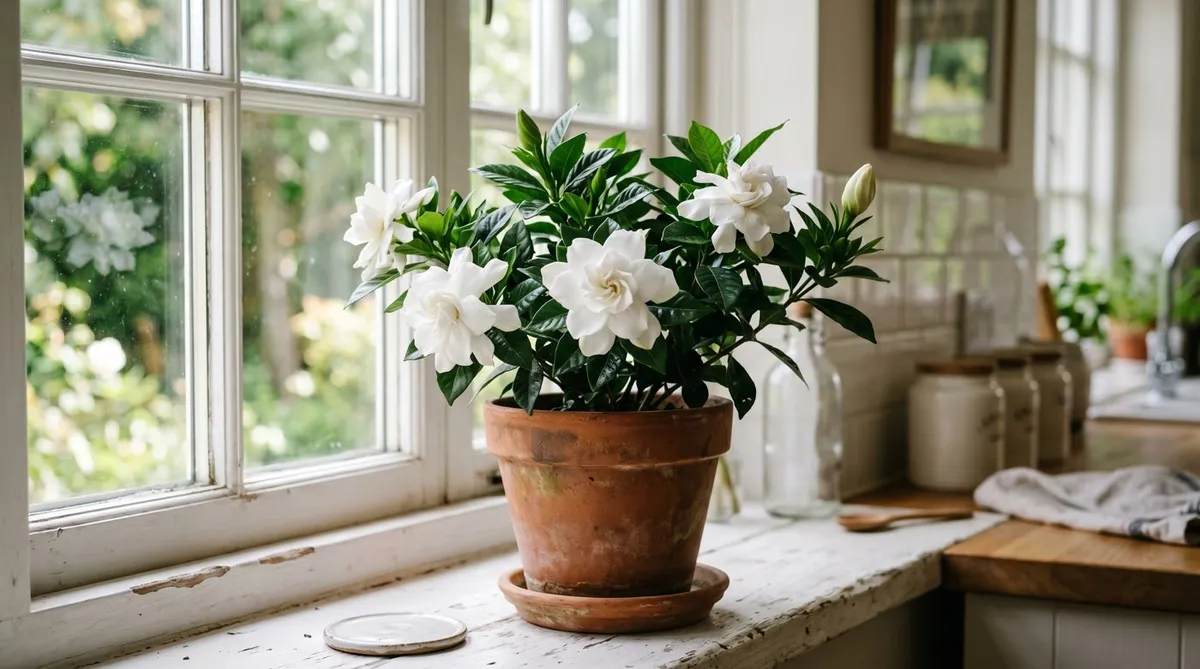
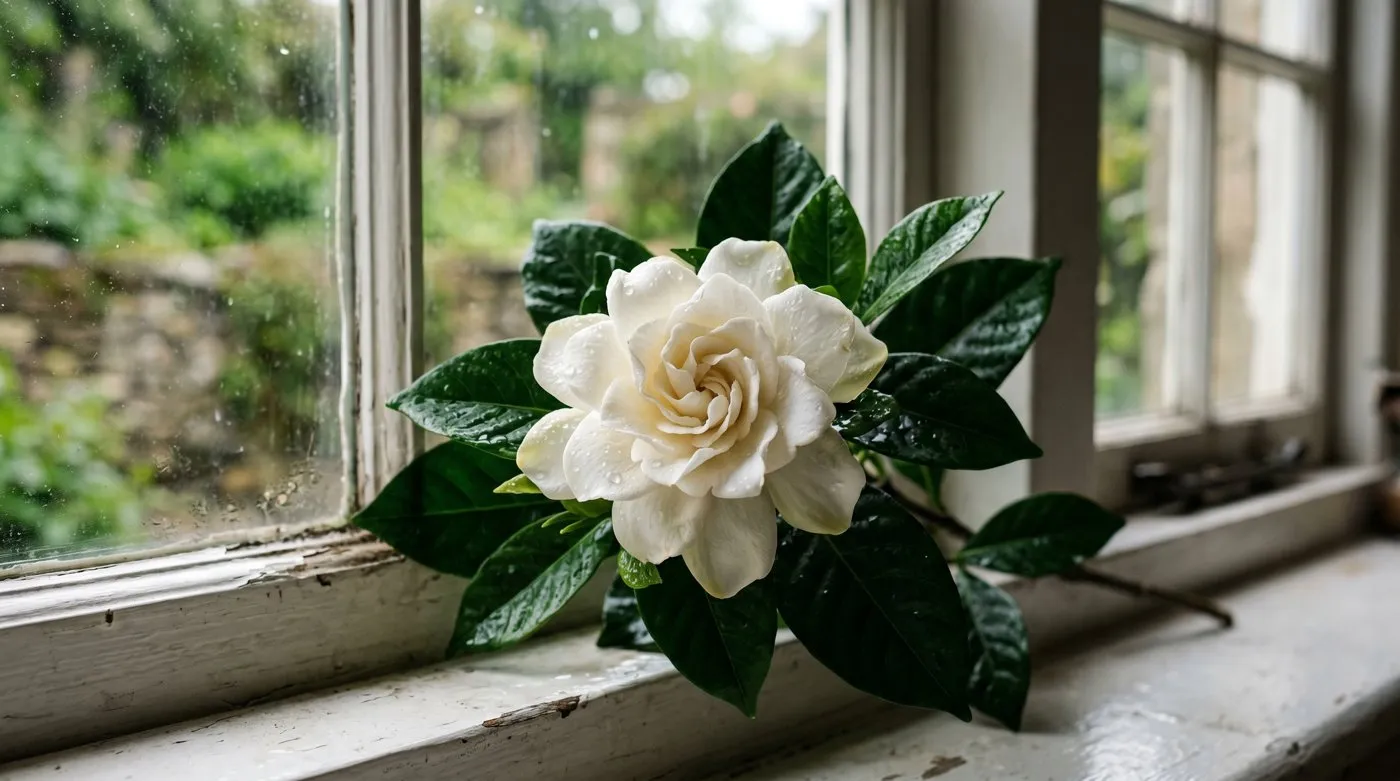 A healthy gardenia in full bloom on a bright, draught-free windowsill. Glossy dark leaves and clean white flowers are the sign conditions are right.
Light and temperature: the stable warmth gardenias need
Gardenias want bright indirect light, not harsh direct sun and not gloom. An east or north-east facing windowsill suits them in summer. A bright spot a metre back from a south window works in winter. Direct midday sun through glass scorches the leaves and dries buds. Deep shade stops flowering altogether.
Temperature is where most UK plants fail. The plant wants a steady 16-23C by day and 15-18C at night. A small drop of 5-7C overnight actually helps trigger flower buds. What it cannot stand is a sudden swing. Below 15C growth stalls and roots take up less water and iron. Above 24C with dry air, buds shrivel.
Two household habits cause most damage. The first is a radiator under the windowsill, which bakes the plant with hot, dry air. The second is a cold draught from a single-glazed window or an open door in winter. Both create the rapid temperature change that gardenias read as a threat. Keep the pot away from heat sources and draughts, and do not move it once buds form. If you grow yours in a conservatory, watch for the night-time temperature crash that unheated glass rooms suffer from October onward.
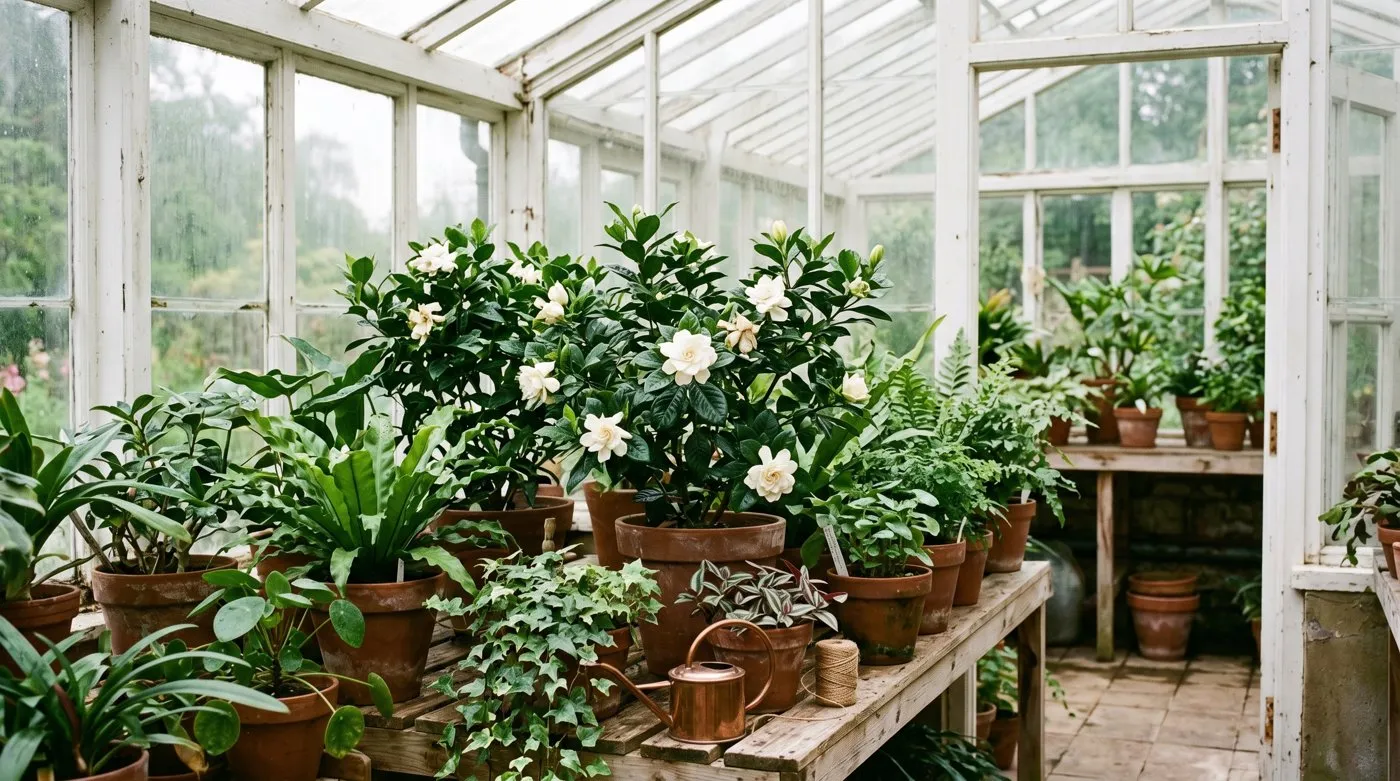 A bright conservatory gives gardenias the light and warmth they want, but watch night temperatures, which crash under unheated glass from autumn.
Why ericaceous compost and the right pH matter most
This is the single most important section. Gardenias are ericaceous, meaning they need acid soil at pH 5.0-6.0. At this pH the plant can take up iron and magnesium freely. Push the pH above 6.5 and those nutrients lock up chemically in the compost, even when present. The plant then starves in plain sight, and the leaves go yellow.
Use a proper ericaceous (lime-free) compost, the same type sold for rhododendrons, azaleas and acid-loving plants. Never use standard multipurpose compost, which sits near pH 6.5-7.0. Never use John Innes loam-based mixes or garden soil, both of which usually contain lime. Add 20-30% perlite to the ericaceous mix to keep it open and free-draining, because gardenia roots rot in stagnant wet compost.
Test the pH yourself. A cheap soil pH meter or a test kit costs 5-10 pounds and removes the guesswork. Check it twice a year. Over time, even ericaceous compost creeps toward neutral as you water, especially with hard water. If your reading climbs above 6.5, that is your cue to repot into fresh acid mix or apply a soil acidifier. Our guide on repotting houseplants correctly walks through easing out a rootbound plant, and we cover soil acidifiers below.
Gardener’s tip: Repot into fresh ericaceous compost every two years, in spring after flowering. Old compost loses its acidity and structure, and tired roots stop feeding. Go up only one pot size, as gardenias flower better slightly potbound. Use rainwater to settle the fresh compost, not tap.
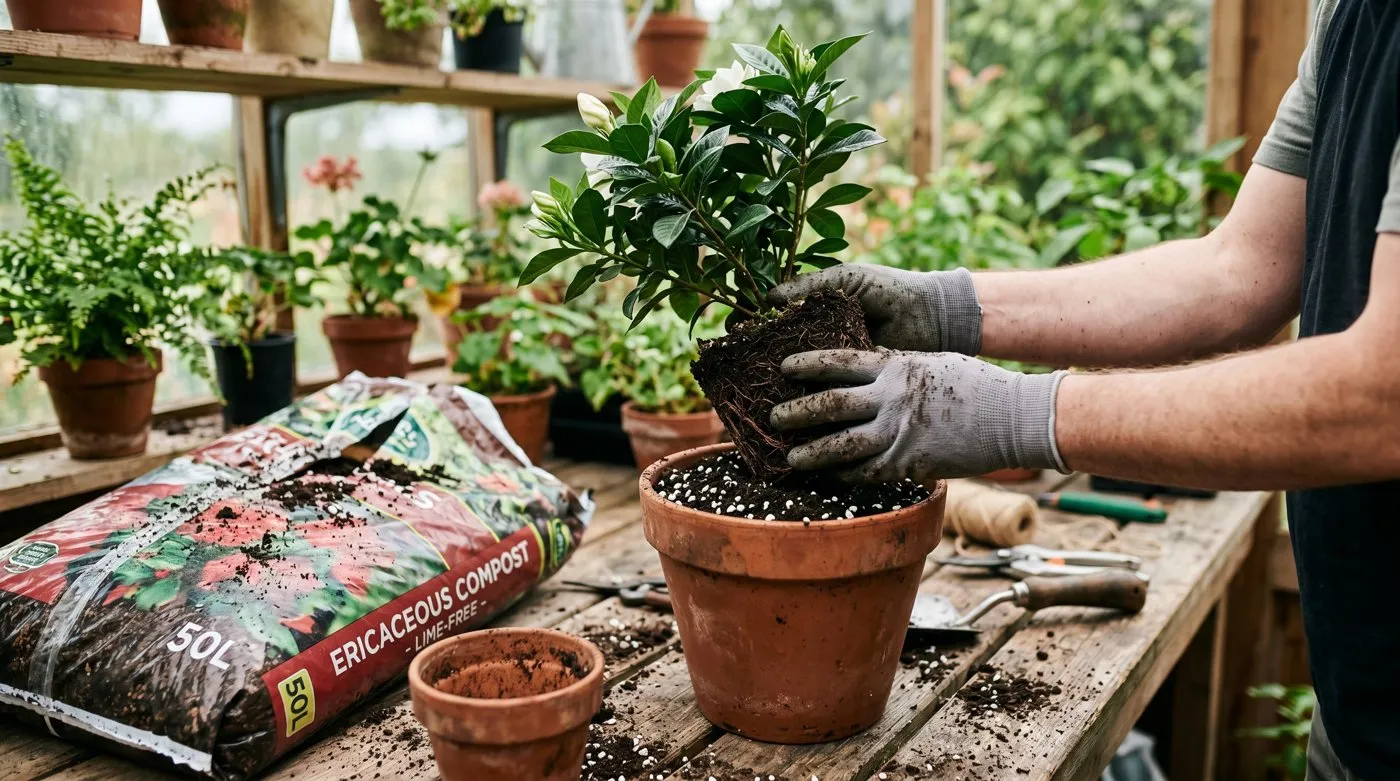 Repot every two years into fresh lime-free ericaceous compost with added perlite. Old compost drifts toward neutral and starves the roots of iron.
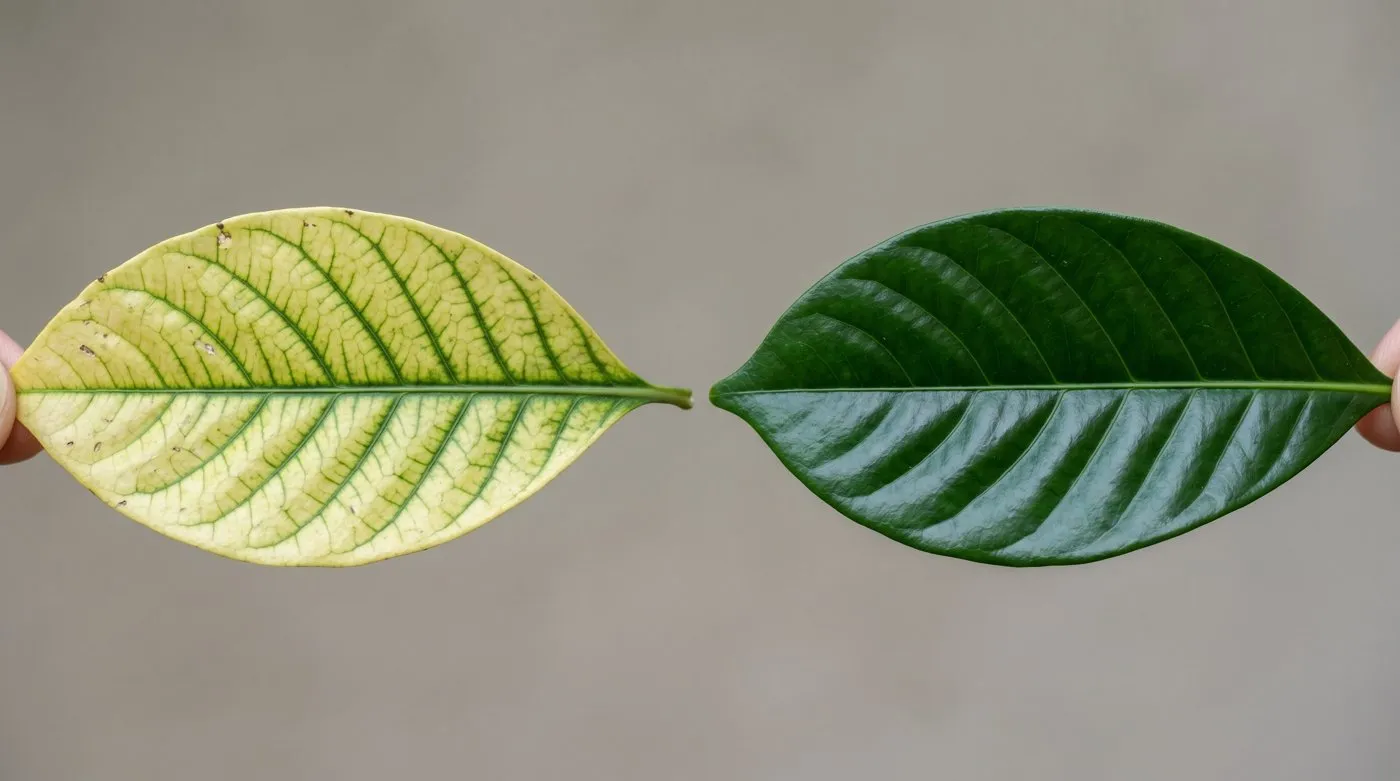 Left: lime-induced chlorosis from hard tap water, with yellow leaves and dark green veins. Right: healthy growth fed with rainwater and sequestered iron.
Watering gardenias with rainwater, not hard tap water
Water quality decides the fate of a gardenia. Most UK mains water is hard and alkaline, typically pH 7.5-8.5 with high calcium carbonate. Every time you water with it, you raise the compost pH a fraction. Within three or four weeks the pH climbs out of the acid range, iron locks up, and the leaves yellow. This is lime-induced chlorosis, and it is the slow killer of indoor gardenias.
The fix is simple and free. Water only with rainwater collected from a rainwater butt or stored in clean containers. Rainwater is naturally soft and slightly acidic, usually pH 5.5-6.5. If you cannot collect rain, cooled boiled water or filtered water is a poor second choice. Distilled or RO water also works but adds cost.
On quantity, keep the compost evenly moist, never waterlogged or bone dry. In summer that means watering two to three times a week. In winter, with slower growth, drop to once a week or less. Let the top 2cm dry slightly between waterings to check by finger. Never leave the pot standing in a saucer of water, as soggy compost rots the roots and, ironically, causes the same wilting people mistake for drought.
Warning: Do not let a budding gardenia dry out, even once. A single missed watering when buds are swelling will drop the lot. Stable, even moisture is as important as the right pH during the flowering run from June to October.
How to keep humidity above 50% indoors
Gardenias need humidity above 50%, and ideally 60%. This is the variable UK growers forget. Centrally heated rooms in winter often fall below 35% relative humidity, drier than many deserts. In that air, buds shrivel and drop, leaf tips brown, and red spider mite moves in.
Three methods raise local humidity around the plant. Pebble trays are the cheapest: fill a wide tray with gravel, add water to just below the top of the stones, and sit the pot on top so its base stays above the water line. As the water evaporates it lifts humidity around the leaves. Grouping plants together creates a shared humid pocket through their combined transpiration. A small humidifier is the most reliable option for a heated room in winter, holding a steady 50-60%.
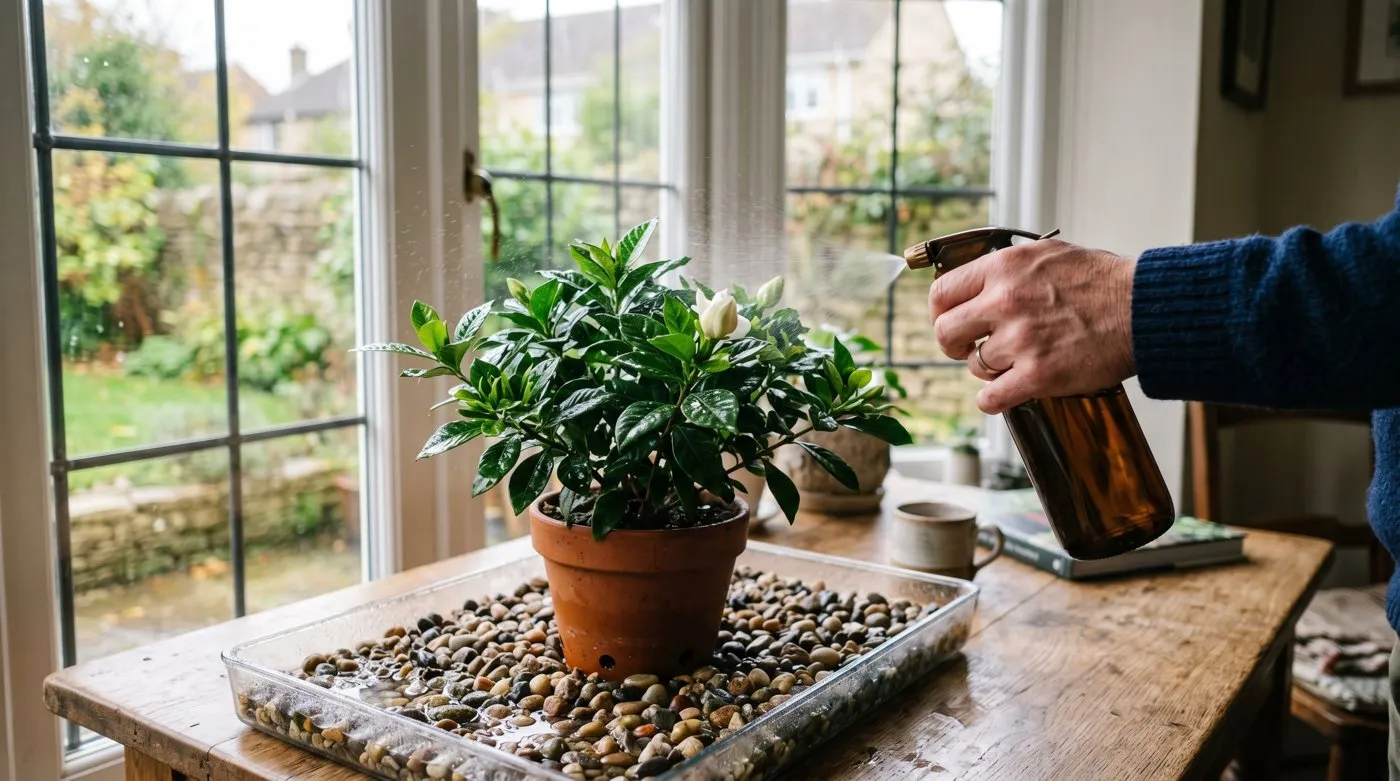 A pebble tray keeps humidity high around the foliage. Mist in the morning so leaves dry before the cooler night.
Feeding gardenias with ericaceous and sequestered-iron feed
Gardenias are hungry plants in the growing season and feeding keeps the leaves green and the flowers coming. Use an ericaceous liquid feed, the type sold for rhododendrons and azaleas, every two weeks from April to September. These feeds are formulated to keep the compost acid and supply iron in a form the plant can take up.
If leaves yellow despite rainwater, add a sequestered iron feed (chelated iron). This delivers iron directly in a plant-available form that survives slightly higher pH. A dose every 4-6 weeks through summer corrects most chlorosis within three to four weeks, with the new growth emerging green first. Magnesium deficiency shows as yellowing between the veins on older leaves and responds to a dose of Epsom salts, one tablespoon per 4.5 litres of rainwater, watered in.
Stop feeding from October to March while the plant rests. Feeding a dormant gardenia in cold, low-light conditions does no good and risks salt build-up in the compost. For the wider principles behind keeping potted plants fed correctly, see our guide on feeding houseplants. Always feed onto moist compost, never bone-dry roots, to avoid scorching.
Variety comparison: which gardenia to grow in the UK
Not all gardenias behave the same. Variety choice changes how hard the plant is to grow and whether you can risk it outdoors. ‘Kleim’s Hardy’ is the standout for UK growers wanting an outdoor or patio plant. The rest are best kept under glass or indoors. The table below ranks the common varieties by UK suitability.
| Variety | Hardiness | Mature size | Best location | Fragrance |
|---|---|---|---|---|
| ’Kleim’s Hardy’ | To -10C, hardiest | 0.6-0.9m | Sheltered patio, mild gardens | Strong, single flowers |
| ’Crown Jewel’ | To -12C in shelter | 0.6m | Patio in mild areas, pots | Strong, double flowers |
| Gardenia jasminoides (type) | Tender, min 10-15C | 1.0-1.5m | Conservatory, bright room | Very strong, double |
| ’Veitchii’ | Tender, min 13C | 0.6-1.0m | Heated conservatory, windowsill | Very strong, free-flowering |
| ’Frostproof’ | To -12C, marketing name | 0.9-1.2m | Sheltered patio, pots | Strong, double |
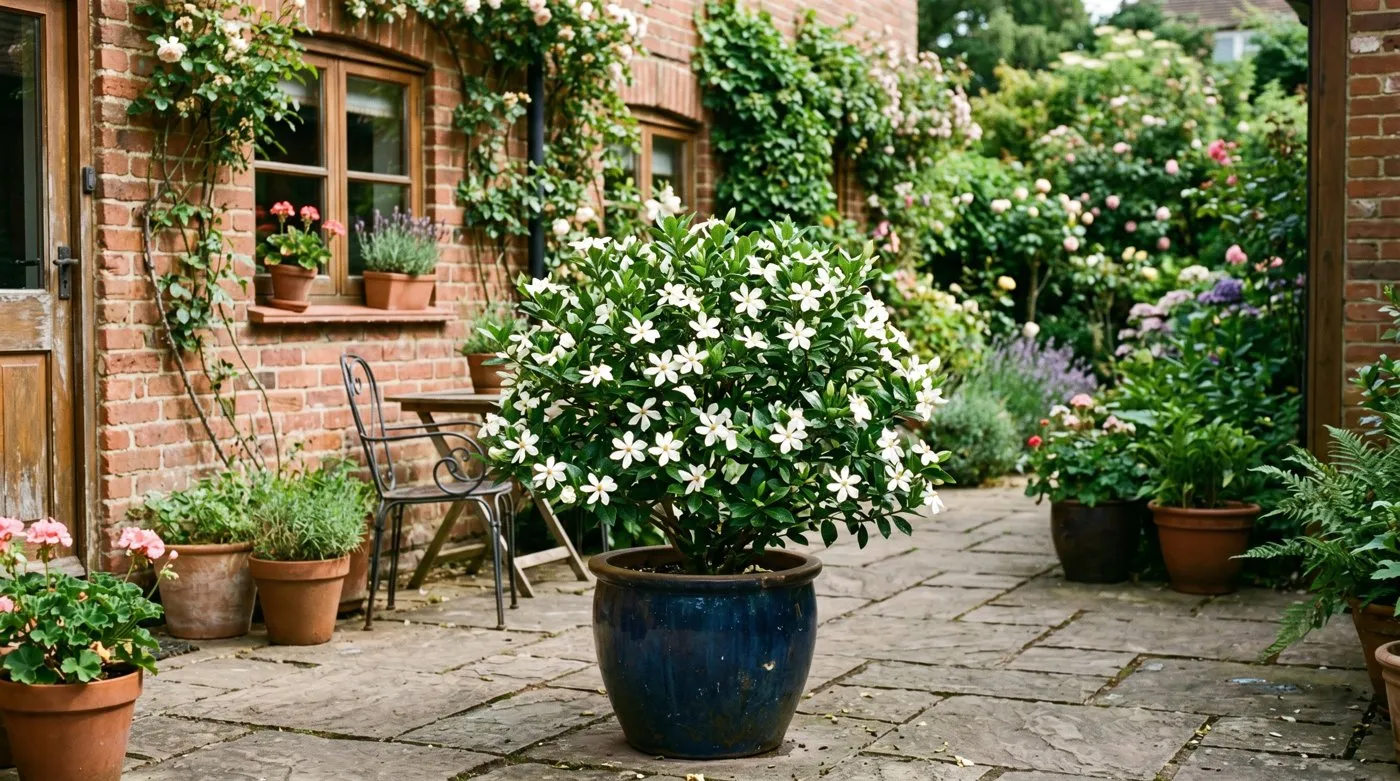 ‘Kleim’s Hardy’ is the toughest variety, suited to a sheltered patio in milder parts of the UK. It still needs acid compost and rainwater.
Diagnosing bud drop: the classic UK gardenia failure
Bud drop is the heartbreak of gardenia growing. The plant sets dozens of fat buds, then drops every one before a single flower opens. It is almost never disease. It is a stress response, the plant cutting its losses when conditions change. The root cause is always a sudden change in one of four things.
The first trigger is temperature swing. A budding plant moved from a warm room to a cold hall, or sat by a draughty door, reads the shift as danger and aborts. The second is humidity crash, the most common UK cause. Dry central-heating air below 35% dries buds at the base and they fall. The third is irregular watering, especially letting the compost dry out even once while buds swell. The fourth is moving the plant at all once buds form, even rotating it toward the light.
Why gardenia leaves turn yellow and how to fix it
Yellowing leaves on a gardenia almost always mean chlorosis, a nutrient lock-out rather than a true shortage. The compost has too much iron and magnesium present, but the pH is too high for the roots to take them up. The classic sign is interveinal chlorosis: the leaf goes pale yellow while the veins stay dark green. New growth shows it first.
The usual culprit is hard tap water slowly raising the compost pH above 6.5. Less often it is exhausted compost that has lost its acidity, or simple iron and magnesium deficiency after a long flowering run. Each has a clear fix. Switch to rainwater to stop the pH climbing. Apply a sequestered iron feed to deliver iron in a usable form. Add Epsom salts for magnesium. If the compost itself has gone neutral, repot into fresh ericaceous mix.
Our dedicated guide on chlorosis and yellow leaves goes deeper into diagnosis across acid-loving plants. With gardenias specifically, the order of attack is always water first, then feed, then compost. Correct the water and most cases turn green again within a month without touching anything else.
Month-by-month gardenia care calendar for the UK
This calendar assumes an indoor or conservatory plant in a typical UK climate, with ‘Kleim’s Hardy’ moved outside for summer only. Adjust by a couple of weeks for Scotland and the far north, or earlier for the mild south-west.
| Month | Task |
|---|---|
| January | Keep at 15-18C, away from radiators. Water sparingly with rainwater. Run a humidifier. No feed. |
| February | Check leaf colour for chlorosis. Maintain humidity above 50%. Watch for red spider mite in dry air. |
| March | Growth resumes. Increase watering slightly. Repot now if rootbound, into fresh ericaceous compost. |
| April | Start fortnightly ericaceous feeding. First buds may form. Move to brightest indirect light. |
| May | Take semi-ripe cuttings. Harden off ‘Kleim’s Hardy’ to go outside late month. Feed and water steadily. |
| June | Flowering begins. Keep conditions stable, do not move budding plants. Water 2-3 times weekly with rainwater. |
| July | Peak flowering. Hold humidity high. Feed every two weeks. Deadhead spent blooms to keep new buds coming. |
| August | Flowering continues. Prune lightly after the main flush. Keep feeding and watering. |
| September | Final flush. Reduce feeding toward month end. Bring ‘Kleim’s Hardy’ pots back under cover. |
| October | Stop feeding. Reduce watering. Move tender plants indoors before nights fall below 12C. |
| November | Rest period. Cool, bright, 15-18C. Water lightly with rainwater. Humidity above 50%. |
| December | Keep stable and frost-free. Minimal water. No feed. Avoid draughts from doors and windows. |
Pruning, overwintering and propagation
Pruning keeps gardenias bushy and flowering well. Prune straight after the main flowering flush, in late summer, never in spring or autumn. Cut leggy shoots back by up to a third and remove weak, dead or crossing stems. Flower buds form on the current season’s growth, so pruning late risks removing next year’s flowers. A light annual tidy is enough for most plants.
Overwintering is about stable cool warmth, not heat. Tender varieties need a minimum of 10-15C indoors over winter, kept bright, barely watered, and away from draughts and radiators. ‘Kleim’s Hardy’ and ‘Crown Jewel’ can stay outdoors in mild, sheltered spots, but pot-grown plants are safest moved under cover or given fleece protection in hard frost. See our guide on overwintering plants for the wider principles.
Propagation is by semi-ripe cuttings taken in May to July. Take 8-10cm cuttings of the current year’s growth, firm at the base and soft at the tip. Strip the lower leaves, dip in hormone rooting powder, and insert into a 50:50 mix of ericaceous compost and perlite. Cuttings need bottom heat of 20-24C in a heated propagator and high humidity to root, which takes 4-8 weeks. Our full guide on taking cuttings, division and layering covers the technique in detail.
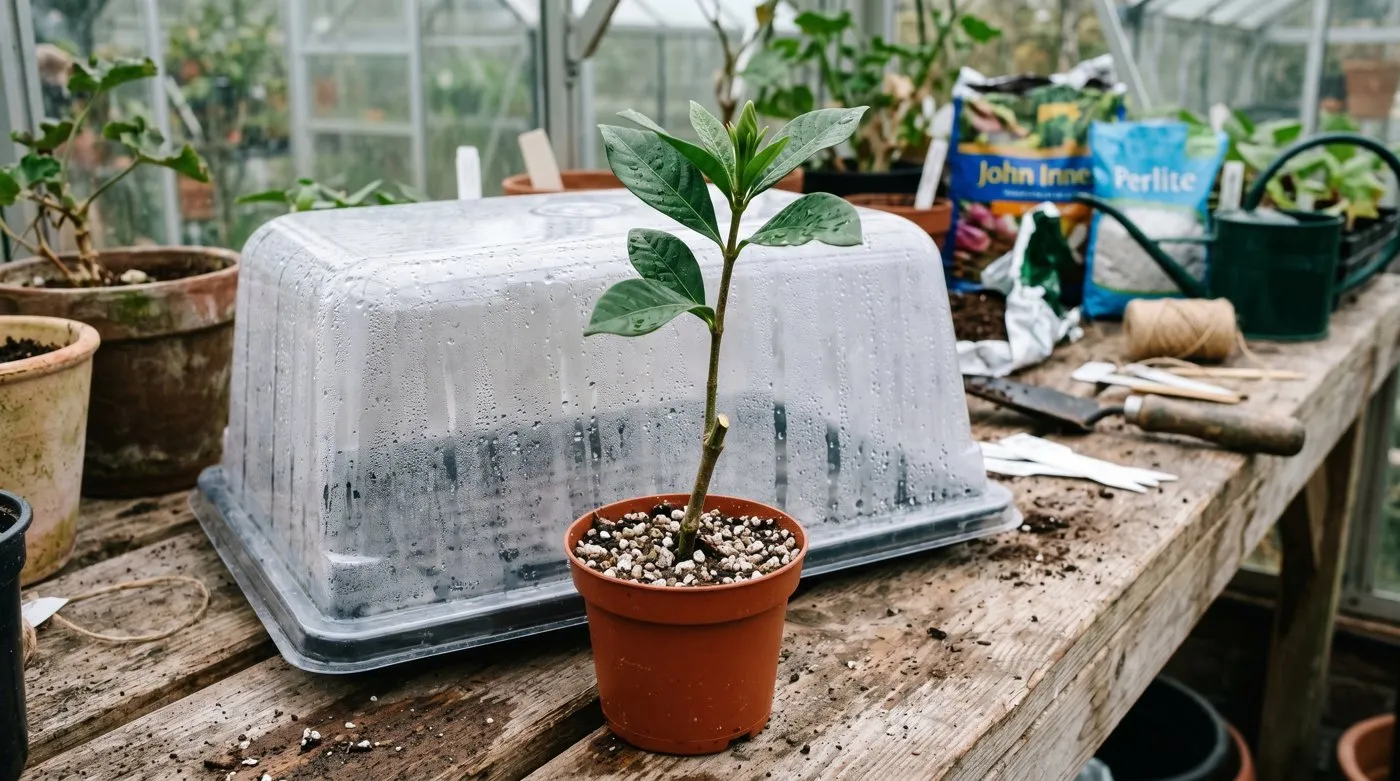 Semi-ripe cuttings root in a 50:50 ericaceous compost and perlite mix with bottom heat of 20-24C in a covered propagator.
Common gardenia mistakes UK growers make
Most gardenia failures trace back to the same handful of errors. Avoid these five and you avoid almost all the trouble.
Watering with hard tap water
This is the number one killer. Hard UK tap water at pH 7.5-8.5 raises the compost pH and triggers chlorosis within weeks. Always use rainwater. If you only fix one thing, fix this. The plant will green up within a month.
Moving the plant when it is in bud
Gardenias hate change while budding. Rotating the pot toward the light, or shifting it to “a better spot”, is enough to drop the buds. Choose the position before buds form, then leave it completely alone until the flowers open.
Letting the air get too dry
Central heating drops humidity below 35% in winter, far too dry for a gardenia. Buds shrivel and red spider mite arrives. Use a pebble tray and a humidifier to hold humidity above 50% from October to March.
Cold draughts and radiator heat
A windowsill above a radiator combines the two worst things: dry air and a temperature swing. So does a draughty door. Both cause bud drop and leaf yellowing. Keep the plant in a stable, sheltered spot away from both.
Using the wrong compost
Standard multipurpose, John Innes or garden soil all sit too close to neutral and contain lime. The plant slowly starves of iron. Use ericaceous compost only, at pH 5.0-6.0, with added perlite for drainage.
Pests and problems to watch for
Indoor gardenias attract the usual heated-room pests, made worse by dry air. Aphids cluster on soft new growth and flower buds, sucking sap and leaving sticky honeydew. Mealybug shows as white cottony tufts in leaf joints. Scale insects appear as flat brown discs on stems and leaf undersides. Red spider mite is the worst, thriving in dry heat and showing as fine webbing and a dull, speckled, bronzed leaf surface.
Raising humidity above 50% prevents most red spider mite outbreaks on its own, which is another reason humidity matters. Wipe off aphids, mealybug and scale with a cotton bud dipped in dilute insecticidal soap, or spray with an organic soap-based control, covering leaf undersides. Check new buds weekly, as pests on a budding plant cause the buds to drop. The Royal Horticultural Society provides further identification guidance for these common indoor pests.
Frequently asked questions
Why is my gardenia dropping all its buds before they open?
Bud drop comes from sudden change in conditions. Gardenias set buds in stable warmth and humidity. Move the plant, let humidity fall below 35%, swing the temperature, or skip watering and the plant aborts buds to save itself. Pick a spot above 50% humidity at a steady 16-23C and do not move the pot once buds form.
Can you grow gardenia outdoors in the UK?
Only ‘Kleim’s Hardy’ and only in mild, sheltered areas. It survives to about -10C in free-draining acid soil against a warm south or west wall. In most of the UK gardenia is a conservatory, windowsill or summer-patio plant brought under cover from October to May.
Why are my gardenia leaves turning yellow?
Yellow leaves usually mean lime-induced chlorosis from hard tap water. Hard water at pH 7.5-8.5 raises compost pH and locks out iron and magnesium. Switch to rainwater, feed with a sequestered-iron ericaceous feed, and the new growth comes back green within 3-4 weeks.
What compost should I use for gardenias?
Use ericaceous (lime-free) compost at pH 5.0-6.0. Standard multipurpose compost sits near pH 6.5-7.0 and starves the plant of iron. Mix in 20-30% perlite for drainage. Never use John Innes or garden soil, both contain lime.
How often should I water a gardenia in the UK?
Keep the compost evenly moist, never soggy or bone dry. In summer that means watering 2-3 times a week with rainwater. In winter drop to once a week or less. Let the top 2cm dry slightly between waterings and never leave the pot standing in water.
What is the best temperature for a gardenia indoors?
Aim for 16-23C by day and 15-18C at night. A 5-7C drop between day and night helps buds form. Below 15C the plant stalls, above 24C with dry air buds dry out. Keep it well away from radiators and cold window draughts.
How do I increase humidity for a gardenia?
Stand the pot on a pebble tray and group it with other plants. Fill a tray with gravel and water, sit the pot on top so the base stays above the water line. Mist in the morning, or run a small humidifier in winter to hold humidity above 50%.
When should I prune a gardenia?
Prune straight after flowering, usually late summer. Cut back leggy shoots by a third and remove weak or crossing stems. Pruning later risks cutting off next year’s flower buds, which form on the current season’s growth.
Now you understand what gardenia needs to thrive, keep its conditions stable and feed the soil, not just the plant. For the next step in keeping fussy acid lovers happy, read our guide on how to make soil acidic.
Our team produces practical UK gardening guidance from source research, contributor records and established horticultural practice. Editorial standards are overseen by Matt W.