Key takeaways
- Eight Indian spices grow well in UK protected cropping: chillies, turmeric, ginger, coriander, fenugreek, mustard, curry leaf, lemongrass
- Chilli sowings start in January at 24-27C heated propagator; harvest July to October
- Turmeric and ginger rhizomes plant in April, harvest October-November with 200-400g per pot in year one
- Cumin and holy basil need 25-30C greenhouse heat and a dedicated south-facing structure
- Tropical spices (cardamom, cloves, nutmeg, black pepper) will not crop in the UK climate
- Home-grown spice has 1.5-2x the volatile oil content of supermarket spice for fresher flavour
- A 6x8 greenhouse holds the full spice rack for an average UK household at under £80 in seed and rhizome cost
Eight Indian and Eastern spices grow reliably in the UK provided you cultivate them under glass, in a conservatory, or on a warm south-facing windowsill. The British climate suits chillies, turmeric, ginger, coriander, fenugreek, mustard, curry leaf, and lemongrass. Cumin and holy basil work too but need a hotter dedicated greenhouse zone. The tropical perennials that produce cardamom, cloves, nutmeg, and black pepper will not crop here because they need sustained 26C heat with high humidity year-round. The one exception worth attempting is vanilla: a heated conservatory can carry this climbing orchid to pods in three to five years.
Why UK growing changes the spice rack
Every Indian and Eastern spice on a supermarket shelf has been shipped from a hot-country origin. The two outcomes are obvious. The spice has lost volatile oil during transit and storage, and the cost reflects the journey rather than the crop. Both problems disappear with home growing.
UK protected cropping recreates the conditions Indian spices evolved to need. A south-facing greenhouse in midsummer sits at 22-30C through the day and 16-20C overnight with a small heater. That matches central India in May. Coriander, fenugreek, mustard, and chilli will all crop in those conditions. Turmeric and ginger crop too, with a longer growing cycle. The climate caveat is the dark UK winter; tender perennials such as curry leaf and lemongrass must come indoors November to April.
The financial saving is real but modest. A 6x8 UK greenhouse spice bed costs under £80 to set up in seed and starter rhizomes. The yield covers 6-12 months of household coriander, fenugreek, mustard, chilli, turmeric, and ginger for an average UK family. The honest reason to grow is flavour, not cost.
The eight spices that grow well in UK conditions
Eight spices crop reliably in UK protected cropping. The table below ranks them by difficulty. Easier crops at the top are achievable on a sunny windowsill; harder crops at the bottom need a heated greenhouse or conservatory.
| Spice | Botanical name | UK growability | Heat needed | Cycle length | Typical yield per plant or pot |
|---|---|---|---|---|---|
| Coriander | Coriandrum sativum | Easy outdoors and indoors | 12-25C | 6-8 weeks for leaf, 16 weeks for seed | 50-150g leaf, 30-80g seed |
| Mustard greens | Brassica juncea | Easy outdoors | 10-22C | 6 weeks for leaf | 200-400g leaf per plant |
| Fenugreek (methi) | Trigonella foenum-graecum | Easy indoors and out | 15-25C | 4-6 weeks for leaf | 100-200g fresh methi |
| Indian chillies | Capsicum annuum or chinense | Moderate, greenhouse needed | 20-30C day, 16C+ night | 6 months sowing to first fruit | 200-500g dried per plant |
| Ginger | Zingiber officinale | Moderate, greenhouse or conservatory | 22-30C | 8-10 months | 200-500g fresh rhizome |
| Turmeric | Curcuma longa | Moderate, greenhouse or conservatory | 20-30C | 9-11 months in year one | 200-400g rhizome year one, 400-800g year two |
| Curry leaf | Murraya koenigii | Moderate, permanent indoor pot plant | 18-30C, frost-free | Perennial | 50-100g fresh leaf per month |
| Lemongrass | Cymbopogon citratus | Moderate, outdoor summer + indoor winter | 18-30C | 6-8 months | 200-400g fresh stems annually |
Beyond these eight, three further spices are achievable with a hotter greenhouse: cumin (25-30C dedicated zone), holy basil / tulsi (18-30C, full sun), and Asian greens such as pak choi and mizuna for fresh leaf. The dedicated cumin guide covers seed-growing for cumin in detail.
Tier 1: leafy spices for windowsill or outdoor growing
The leafy spices crop in weeks rather than months and tolerate ordinary UK summer temperatures. A sunny windowsill, balcony pot, or raised bed handles all three. They are the entry point for anyone new to growing Indian spices.
Coriander (Coriandrum sativum)
Coriander supplies both fresh leaves and the spice seed used in curry powder. The plant tolerates 12-25C and grows on any sunny windowsill or outdoor pot. Sow seed direct into 25cm pots from March to September at 3-week intervals for continuous fresh leaf. Sowings stall at temperatures above 27C and bolt within two weeks of hot weather. The first true leaves appear at 21 days. Cut leaf when stems reach 15cm.
For seed production, allow plants to bolt deliberately in late summer. Flowers turn to green seed by August, brown ripe seed by September. Cut whole umbels when seeds rattle, dry indoors for two weeks, rub free, and store airtight. Twenty plants yield 30-80g of dried seed each year. Read our dedicated how to grow coriander guide for the full leaf-and-seed protocol.
Fenugreek (Trigonella foenum-graecum)
Fenugreek is Indian methi. The leaves are used fresh in curry, the seed is used in spice blends, and both come from the same plant. Sow seed direct into pots or sheltered beds from April to August at 15-25C. Germination is fast (5-7 days) and the leaves are ready to cut at 4-6 weeks. The leaves have a slight bitterness that develops with age; cut young for milder flavour.
A 30cm seed tray sown densely produces 100-200g of fresh methi over a 6-week harvest window. Successive sowings every three weeks give the household supply most UK growers need. Seed production needs a longer growing season and is best attempted in a greenhouse from a March sowing.
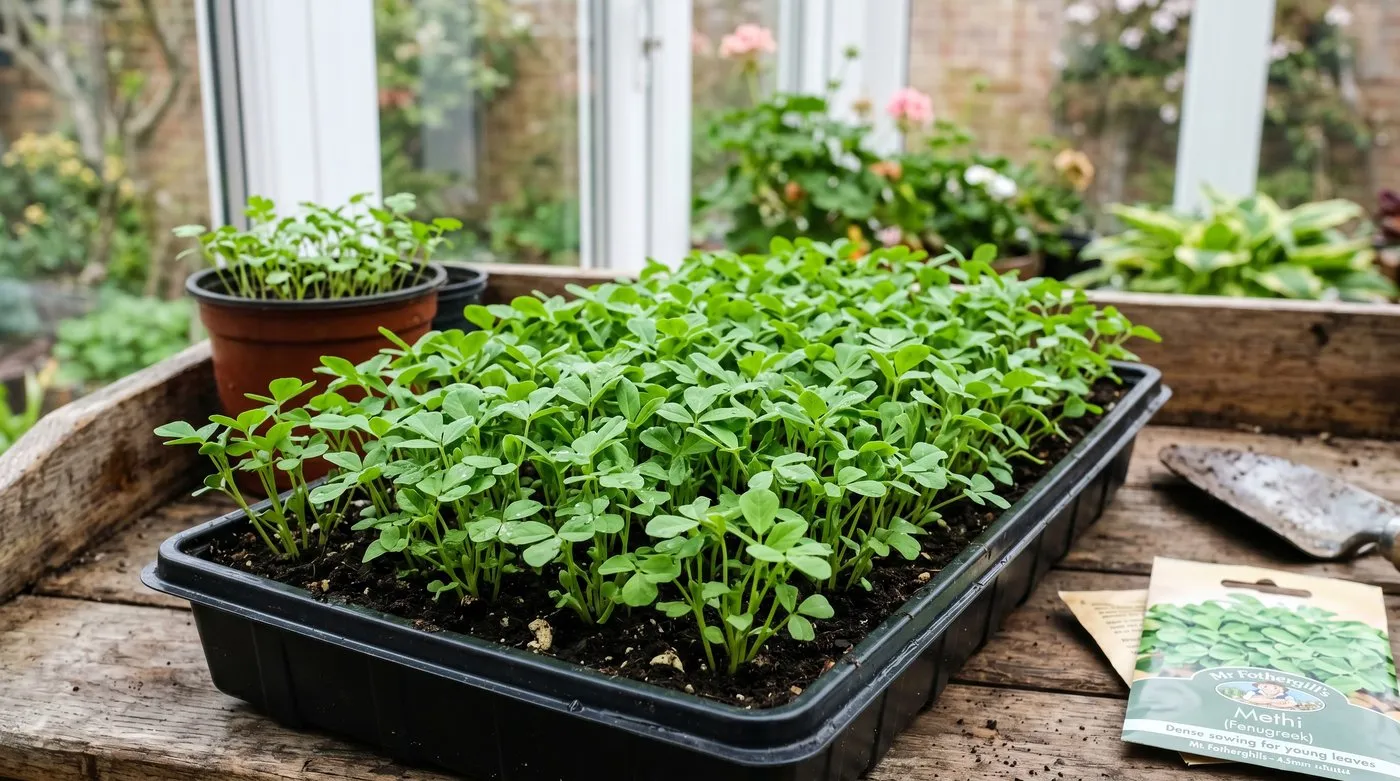 Fenugreek (methi) seedlings at the 4-leaf stage in a sown tray. Cut leaves at 15cm for the freshest flavour
Mustard greens (Brassica juncea)
Mustard greens supply both fresh peppery leaves used in saag and the seed used in tempering. The plant tolerates 10-22C and prefers cooler conditions than chillies or turmeric. Sow direct into pots or beds from March to September at 3-week intervals. Cut leaves at 15-20cm for the mildest pepper note; older leaves grow strongly bitter and hot.
UK mustard plants bolt to seed in midsummer heat. Allow the August sowings to run to seed for the brown mustard seed used in cooking. Each plant produces 200-400g of fresh leaf and 30-80g of seed. Read the dedicated how to grow mustard greens guide for cultivar choice and the seed-saving protocol.
Tier 2: heat-loving spices for greenhouse growing
The four heat-loving Indian spices need protected cropping in UK conditions. A south-facing greenhouse, conservatory, or warm indoor room handles all four. The cycle is longer than the leafy spices but the yield-per-plant is much greater.
Indian chillies (Capsicum annuum and chinense)
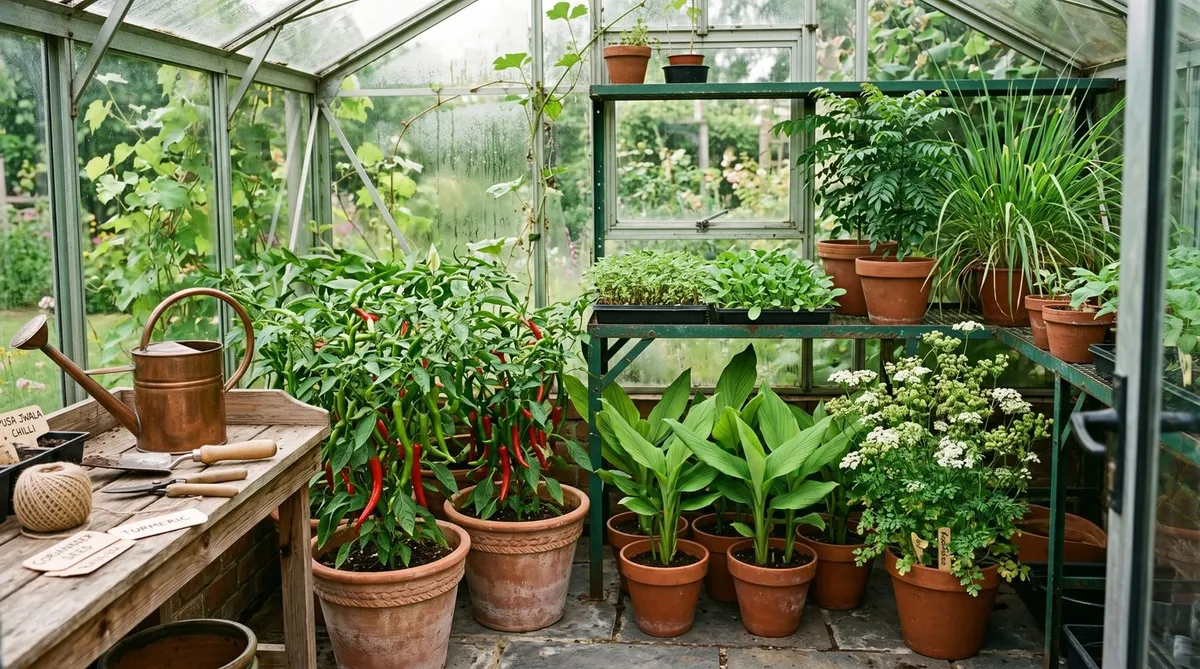
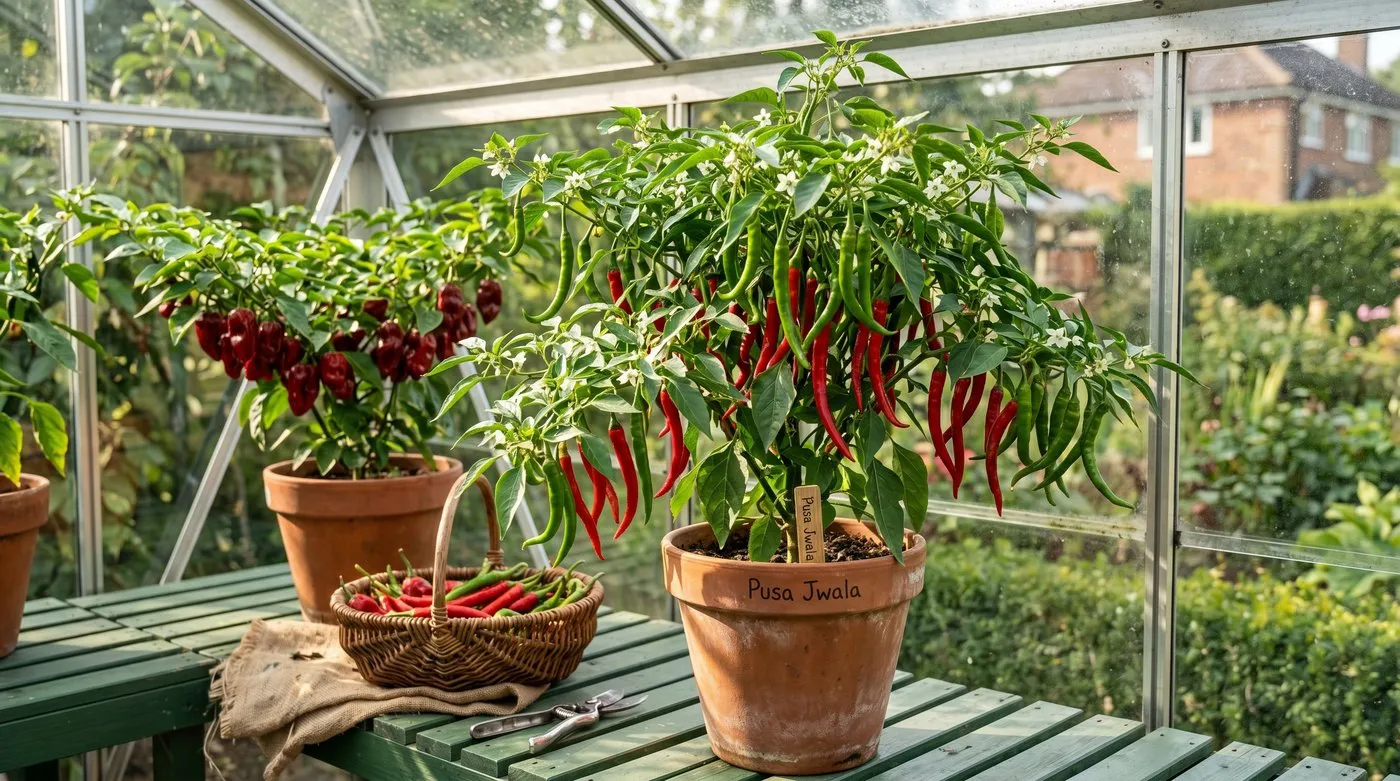
Indian chillies are the most rewarding home-grown spice in the UK. The named cultivars that crop best are Pusa Jwala (long thin red, medium-hot, prolific), Kashmiri (shorter wider red, mild, used for colour), and Bhut Jolokia (extra hot, slow to ripen). Seed sources include Real Seeds, South Devon Chilli Farm, and Plants of Distinction.
Sow seed in January to February in a heated propagator at 24-27C. Pusa Jwala germinates in 14-21 days. Kashmiri takes 18-25 days. Bhut Jolokia is slower at 28-40 days. Pot on through 9cm, 13cm, and finally 25-35cm pots by mid-May. First fruit sets in July, peak harvest is August to early October. A well-grown plant yields 200-500g of dried chilli, enough for 8-12 months of household use.
Turmeric (Curcuma longa)
Turmeric grows from rhizomes, not seed. Buy fresh rhizomes from an Asian grocer making sure each piece has at least one visible green bud. Plant in 30cm pots in multipurpose compost in April at 20-25C, bud uppermost, covered with 5cm of soil. Keep moist and warm through summer. Foliage emerges by mid-May and reaches 1m by August.
The plants need 9-11 months to produce a useful rhizome harvest. Lift in October-November after the foliage yellows. Year-one yield is 200-400g per pot. Replant the largest pieces immediately for a year-two crop that typically doubles to 400-800g. The first year is mostly an investment; year two gives the household supply. Leaves are usable fresh in curry through summer without harming the rhizome growth.
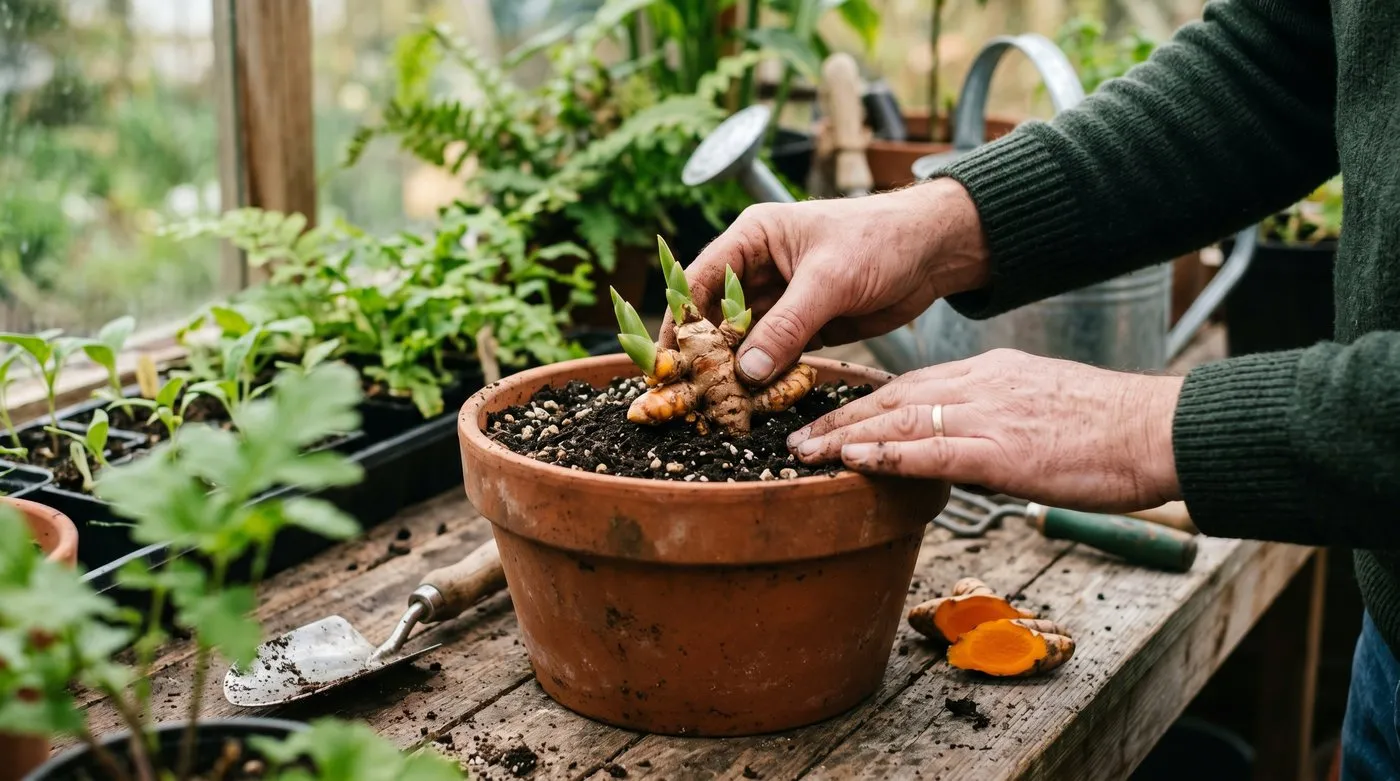 Planting a turmeric rhizome with visible buds. The bright orange interior is the spice-producing tissue developing through the growing season
Ginger (Zingiber officinale)
Ginger is grown the same way as turmeric but with a faster cycle. Buy fresh Asian grocer rhizomes with visible green buds and plant in April at 22-25C in 30cm pots. The shoots emerge by mid-May and the plant reaches 80cm by August. Keep humid through the growing season; ginger dislikes the dry air of a closed-door greenhouse and benefits from misting.
Lift the rhizome in October-November after the foliage yellows. A 30cm pot yields 200-500g of fresh ginger root in year one. The flavour of home-grown ginger is brighter and less fibrous than supermarket ginger because the rhizome has not been stored for months. Save the largest piece with a visible bud for replanting next April. Read the dedicated how to grow ginger guide for the watering protocol and overwintering detail.
Curry leaf (Murraya koenigii)
Curry leaf is a tree, not a herbaceous spice. The plant grows as a permanent 30cm-pot specimen in a UK conservatory, heated greenhouse, or south-facing windowsill. Buy a young plant from a specialist Indian plant supplier; seed germination is slow and unreliable. The mature tree reaches 1m in a pot and produces fresh aromatic compound leaves every 4-6 weeks year-round.
Curry leaf cannot survive UK winters outdoors. Below 7C the leaves drop and below 0C the plant dies. Keep indoors November to April. Move outdoors to a sheltered patio in summer for stronger growth. Fertilise weekly with a balanced liquid feed through the growing season. A single mature tree produces enough fresh leaf for an Indian-cooking household.
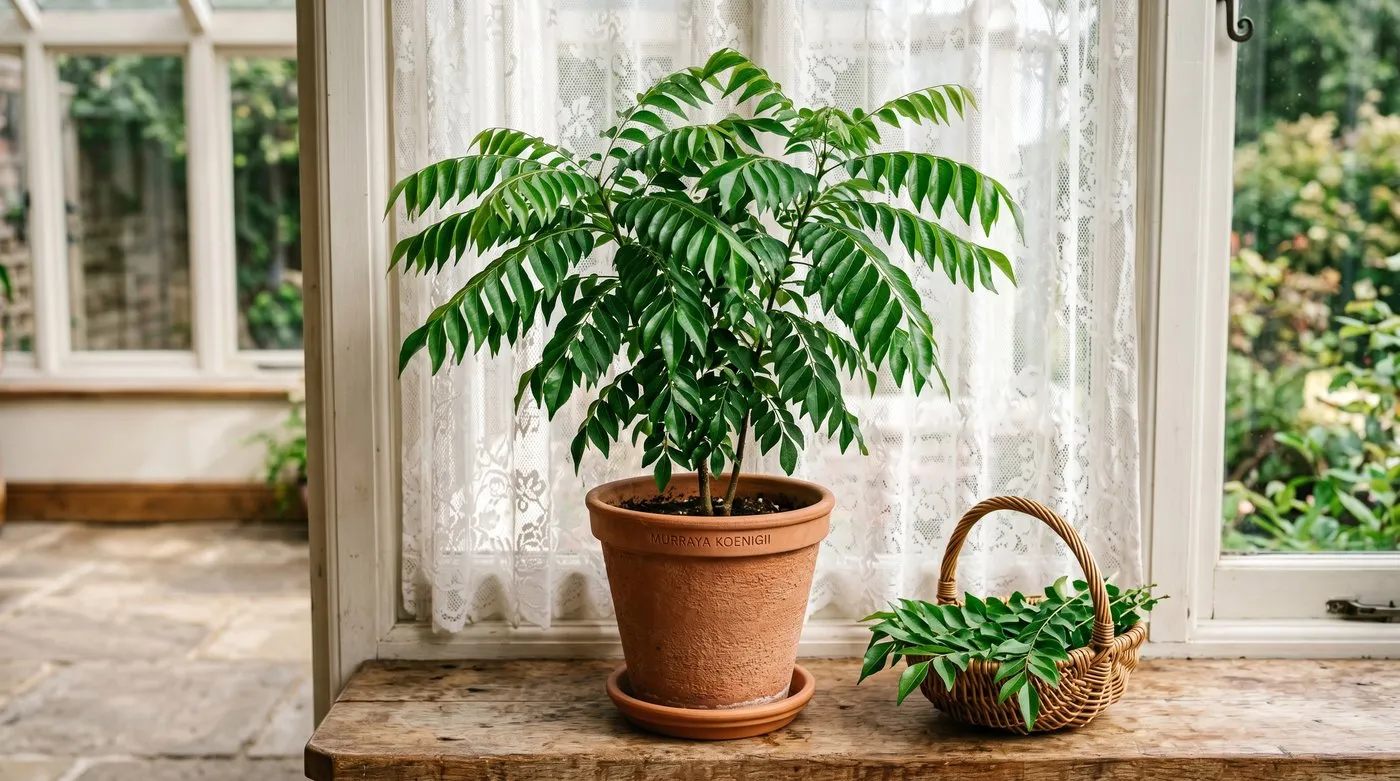 A mature curry leaf tree (Murraya koenigii) on a south-facing windowsill in a Staffordshire conservatory. The plant produces fresh leaf year-round indoors
Tier 3: lemongrass for the Eastern spice rack
Lemongrass crosses the Indian-and-Eastern boundary. The grass is used in Thai, Vietnamese, and Indian cooking, and the home-grown stems carry far more flavour than the dried supermarket equivalent.
Lemongrass (Cymbopogon citratus)
Lemongrass grows from supermarket stems with visible root bases. Trim a stem to 15cm and stand in a glass of water on a sunny windowsill until roots emerge in 2-3 weeks. Pot into 30-35cm pots in multipurpose compost. Keep at 18-25C through summer. The clump expands rapidly from a single stem to 15-25 stems by August.
Lemongrass tolerates UK summer outdoors but must come into a frost-free conservatory or heated greenhouse for winter. The plant survives short periods at 5C but stops growing below 12C. Harvest by cutting stems at the base just above the swollen white section; the clump re-grows. A mature pot produces 200-400g of fresh stems annually.
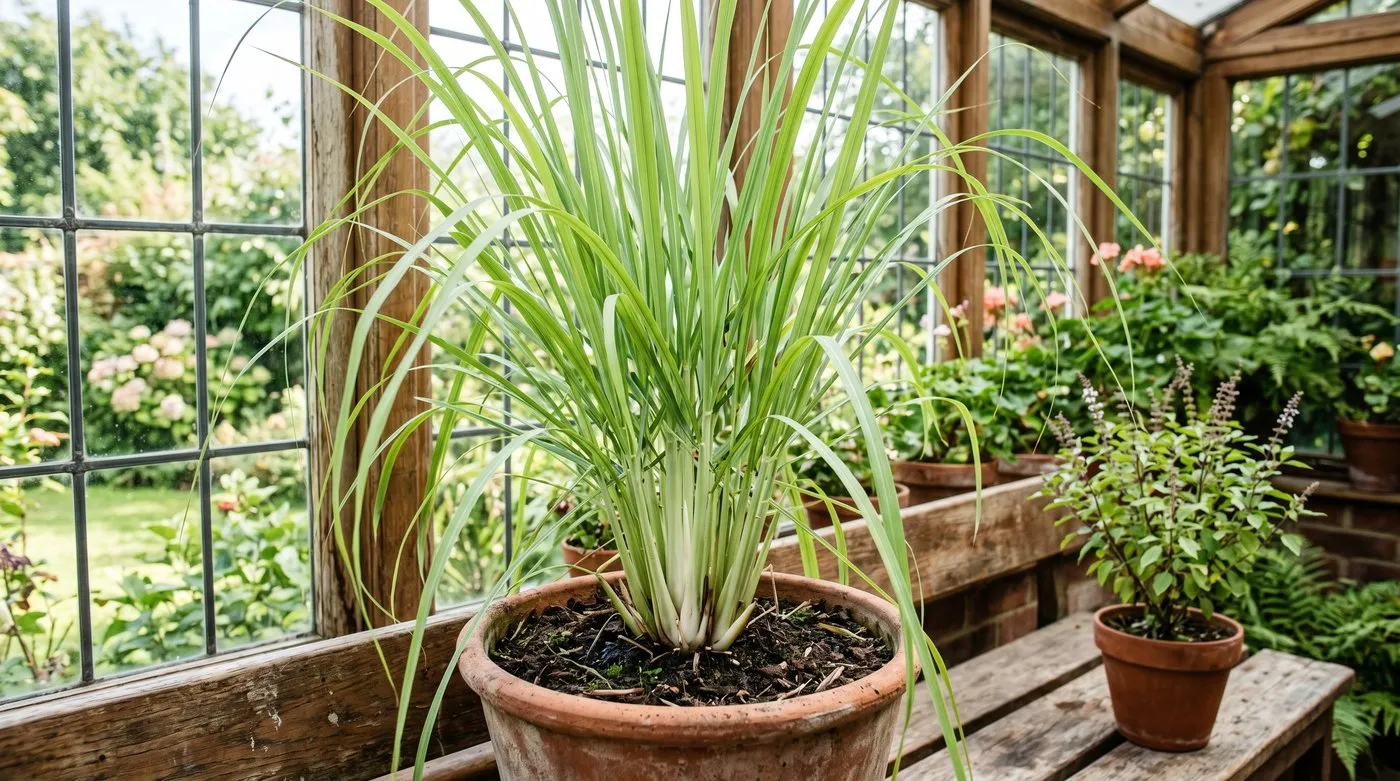 Lemongrass thrives in UK conservatories from May to September. Move indoors before the first frost in October
Spices that will not grow in the UK
The honest section every other UK gardening site skips. Five Indian and Eastern spices come from tropical trees and vines that simply cannot crop in the UK climate even under glass.
- Cardamom (Elettaria cardamomum): The shade-dwelling tropical understorey plant survives in UK conservatories as an ornamental but never flowers or sets the green seed pod that is the spice. Needs sustained 24-32C with 80% humidity year-round.
- Black pepper (Piper nigrum): A tropical climbing vine. Will live but never berry in UK conditions. Even commercial heated greenhouses do not crop pepper here.
- Cloves (Syzygium aromaticum): A tropical tree producing flower buds that become the spice. Will not bud at UK temperatures.
- Nutmeg and mace (Myristica fragrans): A tropical tree. UK conditions are far too cool for fruit set.
- Cinnamon (Cinnamomum verum): A tropical tree producing aromatic bark. Survivable as an ornamental specimen but bark stripping needs a mature tree in tropical conditions.
If a UK supplier sells you “cardamom” or “black pepper” seed claiming UK growability, it is either a different plant labelled misleadingly (cardamom is often confused with shell ginger) or marketing optimism. Buy these spices and accept they travel; concentrate your home growing on the eight that work.
The setup: heat, pots, and light
A 6x4m south-facing greenhouse holds the full Indian spice bed for most UK households. The structure does three things: blocks wind, raises daytime temperature 8-15C above outdoor air, and extends the growing season by 6-8 weeks at each end. Without protected cropping, chillies, turmeric, and ginger will not crop reliably in most of the UK.
Heat continuity matters more than peak temperature
Pot sizes for the spice bed
Use the right pot size from the start. Repotting tropical perennials mid-summer sets back rhizome growth by 4-6 weeks.
| Spice | Final pot size | Compost type | Drainage |
|---|---|---|---|
| Coriander | 25cm | Multipurpose, free-draining | Standard |
| Fenugreek | 30cm tray or 20cm pot | Multipurpose | Standard |
| Mustard greens | 25cm | Multipurpose | Standard |
| Chillies | 25-35cm | Multipurpose with 20% grit | Crocks at base |
| Turmeric | 30-40cm | Multipurpose with 25% sharp sand | Crocks |
| Ginger | 30cm | Multipurpose with 25% sharp sand | Crocks |
| Curry leaf | 30cm permanent | Free-draining with horticultural grit | Crocks essential |
| Lemongrass | 35cm | Multipurpose | Standard |
Light at UK latitudes
UK midsummer day length at 53N is 16.5 hours, which is more than tropical India gets year-round. The constraint is light intensity, not duration. South-facing aspect with no overshadowing matters more than greenhouse size. North-facing growers should use a brighter conservatory or sunny windowsill instead of fighting the wrong aspect.
Month-by-month Indian spice calendar
The UK growing year for Indian spices follows a tight rhythm. Start chillies in January, plant rhizomes in April, harvest leaf crops July to September, and lift rhizomes October to November. Missing a window by 3-4 weeks compresses the cycle and reduces yield.
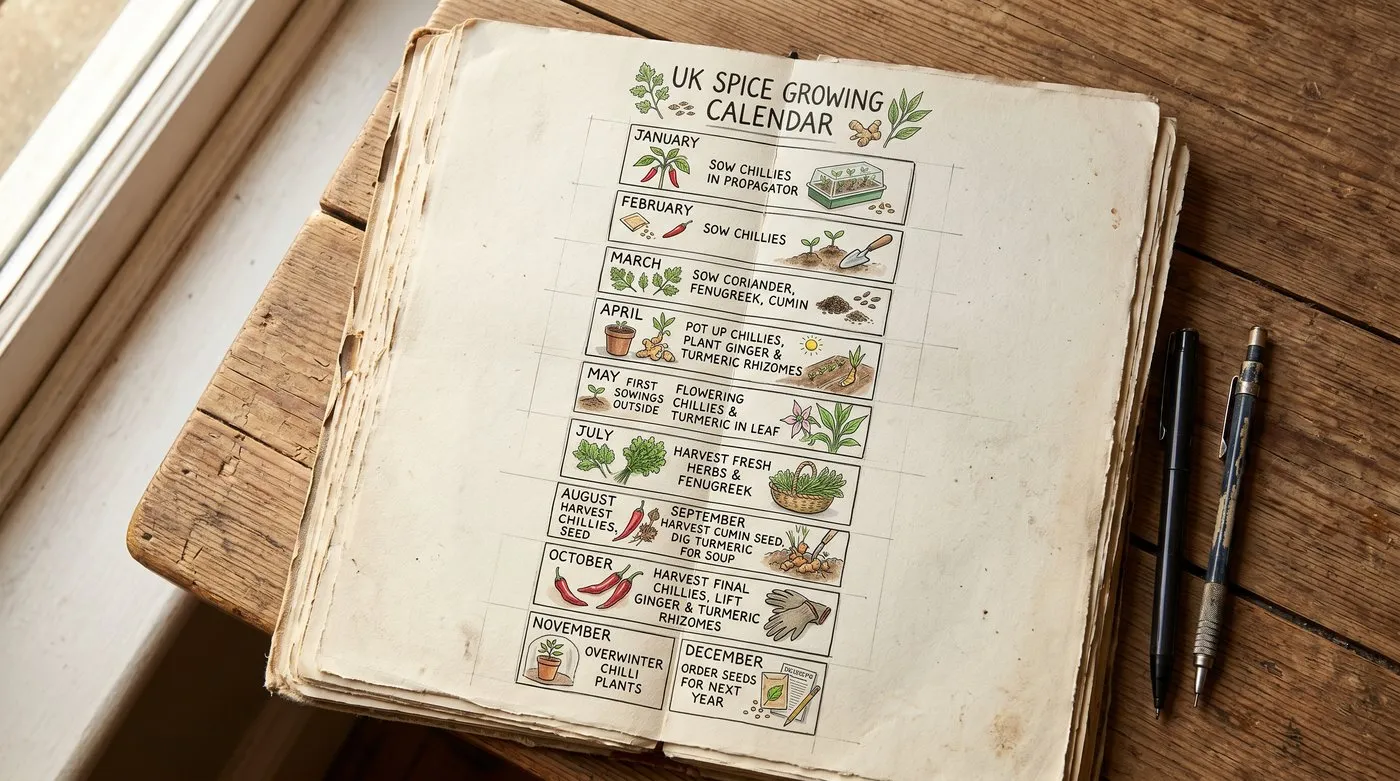 The UK Indian-spice year. Chillies start in January, rhizomes go in in April, peak harvest is August to October
| Month | Tasks |
|---|---|
| January | Sow Bhut Jolokia and other slow chillies in heated propagator at 24-27C |
| February | Sow Pusa Jwala, Kashmiri, and faster chilli varieties at 24-27C. Order turmeric and ginger rhizomes from Asian grocer |
| March | Sow coriander, fenugreek, mustard, and cumin into modules. Pot chilli seedlings into 9cm pots |
| April | Plant turmeric and ginger rhizomes in 30cm pots at 22-25C. Pot chillies into 13cm pots. First outdoor coriander sowings |
| May | Final chilli potting into 25-35cm pots. Lemongrass propagation starts. First outdoor mustard sowings. Turmeric and ginger foliage emerges |
| June | Successive sowings of coriander and fenugreek every 3 weeks. Chillies in flower. Turmeric and ginger in leaf. Curry leaf and lemongrass outdoors on sheltered patio |
| July | Harvest fresh fenugreek leaves, methi, coriander leaf. First chilli fruits ripen. Foliar feed all heat-lovers fortnightly |
| August | Peak harvest of chillies. Begin drying chilli racks. Coriander seed turning brown. Sow last fenugreek and mustard for autumn leaf |
| September | Harvest coriander seed and mustard seed. Continue chilli harvest. Curry leaf production peaks. Bring lemongrass and curry leaf back under cover at month-end |
| October | Lift turmeric and ginger rhizomes after foliage yellows. Final chilli harvest. Cut chilli plants back hard. Store rhizomes in dry sand at 10C |
| November | Overwinter chilli plants at 10C minimum. Set up grow lights for any winter coriander or fenugreek indoors |
| December | Order next year’s chilli seed. Plan rhizome supply. Clean and disinfect the spice greenhouse before January propagator starts |
Common mistakes that lose UK spice harvests
Most failed home-grown Indian spice attempts trace back to one of four mistakes. Get past these and almost every spice in the eight-strong list will crop.
Mistake 1: Not running overnight heat from June
UK growers focus on daytime maximum and ignore overnight minimum. A clear summer night drops a greenhouse to 9-12C even after a 28C day. Chillies, turmeric, and ginger stall below 16C overnight. A small thermostatic heater on a 16C setpoint solves this for £45-£70 of summer electricity.
Mistake 2: Sowing chillies too late
January is the right sowing month for chillies in the UK. Most UK seed packets say March-April, but that gives the plant only 4 months of warmth and the harvest collides with the first autumn cold. Sow in January and the plant gets 7-8 productive months. A heated propagator at 24-27C is essential at that date.
Mistake 3: Lifting turmeric or ginger too early
Both rhizomes need the full 9-11 month cycle. Lifting in August because “the plant looks tired” gives 60-90g of rhizome instead of the 200-400g a fully grown plant produces. Wait until the foliage actually yellows in October-November. The rhizome puts on most of its weight in the final 6 weeks.
Mistake 4: Trying to grow tropical spices outdoors
Buying cardamom seed or planting a clove tree in a UK garden wastes time and money. These plants need 24-32C year-round with high humidity. Concentrate on the eight that work; buy the tropical spices.
Sourcing seeds, plants, and rhizomes in the UK
Buy from UK suppliers with named cultivars and clean seed stock. Avoid generic “Indian spice” mixes that lack cultivar identification.
- Real Seeds (realseeds.co.uk): Pusa Jwala, Kashmiri, and Bhut Jolokia chilli seed plus fenugreek, mustard, and coriander.
- Plants of Distinction (plantsofdistinction.co.uk): Cumin, fenugreek, and harder-to-find Indian and Eastern seed.
- South Devon Chilli Farm: Live chilli plants by post for growers who skip the propagator stage.
- Asian grocers nationally: Fresh turmeric, ginger, and lemongrass rhizomes for propagation. Always pick rhizomes with visible green buds; refrigerated stock often fails to sprout.
- Specialist Indian houseplant suppliers: Live curry leaf trees. Buy mature plants, not seed.
For seed-saving methods after your first home spice harvest, the Garden Organic Heritage Seed Library publishes evidence-based seed-saving protocols. Their seed-storage method works the same way for home-saved fenugreek, mustard, and coriander.
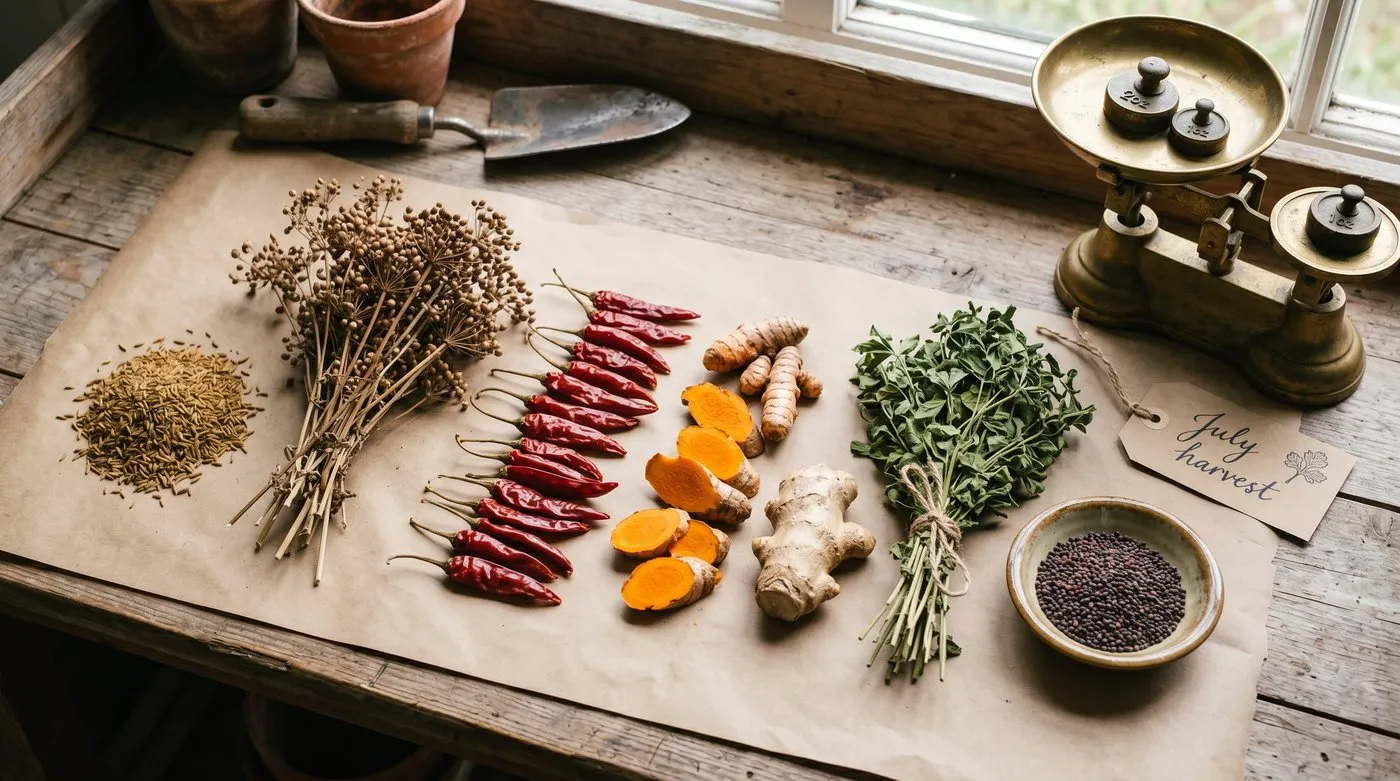 A July to October UK spice harvest. Home-dried spices hold 1.5-2x the volatile oil content of supermarket equivalents
How the UK spice rack fits the wider garden
The Indian spice bed slots into a broader UK kitchen garden rather than sitting in isolation. Coriander, fenugreek, and mustard fit into a normal allotment herb bed. The leafy spices share growing conditions with most European herbs, so the same propagator and seed trays serve both. Curry leaf and lemongrass live alongside other tropical houseplants in a heated conservatory.
For year-round leaf crops indoors, our supermarket herbs indoors guide covers the propagation method that works for both Indian and Mediterranean herbs. For larger Asian leaf crops alongside the spice bed, the pak choi and Asian greens guide covers the cooler-weather companions.
Frequently asked questions
Can you grow Indian spices in the UK?
Yes, eight Indian and Eastern spices grow well in UK protected cropping. Chillies, turmeric, ginger, coriander, fenugreek, mustard, curry leaf, and lemongrass crop reliably in a south-facing greenhouse or sunny conservatory. Tropical spices such as cardamom, cloves, nutmeg, and black pepper will not crop because they need sustained 26C+ year-round.
What is the easiest Indian spice to grow in the UK?
Coriander is the easiest Indian spice to grow in the UK. The plant tolerates 12-25C, grows on a sunny windowsill or outdoor pot, and produces leaf in 6 weeks. Successive sowing every three weeks from March to September gives continuous fresh leaf. Seed for coriander spice ripens in autumn outdoors.
How do I grow chillies for Indian cooking in the UK?
Sow Indian chilli seed January to February in a heated propagator at 24-27C. Varieties Pusa Jwala, Kashmiri, and Bhut Jolokia thrive in UK greenhouses. Pot on to 25-35cm final pots by May. Harvest July to October. Each plant yields 200-500g of dried chilli. Overwinter plants by cutting back hard and keeping at 10C minimum.
Can I grow turmeric and ginger in the UK?
Yes, both grow in UK greenhouses, conservatories, and warm indoor rooms from fresh Asian grocer rhizomes. Plant rhizomes with visible buds in 30cm pots in April at 22-25C. Lift in October-November after foliage yellows. Year-one yield is 200-500g per pot for ginger and 200-400g for turmeric; turmeric doubles in year two if you replant the largest pieces.
Which Indian spices will not grow in the UK?
Cardamom, black pepper, cloves, nutmeg, and cinnamon will not crop in the UK climate. These tropical trees and vines need year-round 24-32C with high humidity and equatorial day length. UK conservatories can keep ornamental specimens alive but they will not flower or set the spice-producing seed or bark.
Next step in the UK spice cluster
Now that you have the eight-spice overview, the next move is choosing where to start. New growers should begin with the leafy spices (coriander, fenugreek, mustard) and add chillies and rhizomes as confidence builds. Read the dedicated how to grow chilli peppers and how to grow ginger guides for the per-crop detail, and the medicinal herb garden guide for the wider home-pharmacy angle that pairs naturally with the Indian spice bed.
The RHS Curcuma longa profile is the authoritative botanical reference for turmeric care, and Garden Organic’s seed library protocols cover the seed-saving methods that turn your first home spice harvest into next year’s planting stock.
Our team produces practical UK gardening guidance from source research, contributor records and established horticultural practice. Editorial standards are overseen by Matt W.