Key takeaways
- A single plant yields 2-4kg of edible storage tubers in a good UK season
- Yacon is frost tender; plant out late May, lift Oct-Nov at the first frost
- Needs a long 200-day season, full sun, shelter, and rich moist soil
- Curing freshly lifted tubers for 1-2 weeks raises sweetness sharply
- Tubers are low-calorie; the sweetness is FOS and inulin, not digestible sugar
- Save the knobbly crowns, not the storage tubers, to grow next year's plants
Yacon (Smallanthus sonchifolius) is one of the most rewarding unusual crops you can grow in the UK, yet almost nobody does. Learning how to grow yacon takes a single season, and the payoff is large: 2-4kg of sweet, crunchy storage tubers from one plant. The flesh eats like a cross between an apple and a water chestnut. This Andean relative of the sunflower is frost tender, so it grows like a dahlia, planted out after the last frost and lifted before winter.
What yacon is and where it comes from
Yacon is a frost-tender perennial tuber from the Andes, grown for sweet storage roots rather than its flowers. It belongs to the daisy family, Asteraceae, and is a close cousin of the sunflower and the Jerusalem artichoke. The plant grows 1.5-2m tall in a UK summer, topped with small yellow daisy flowers that open late and rarely set seed here.
Below ground it produces two distinct structures. The first is a cluster of large, smooth, brown-skinned storage tubers that you eat. These store water and the sweet carbohydrate that makes the crop worth growing. The second is a knobbly mass of pinkish-red crowns sitting right at the base of the stems. You never eat these; you split them up to grow next year’s plants.
Andean farmers have grown yacon for over a thousand years. It thrives in the cool, frost-free highlands of Peru, Ecuador and Bolivia, which is why a mild, long UK season suits it surprisingly well. If you already grow other oddities, it slots neatly alongside the unusual crops worth growing in the UK.
When to plant yacon in the UK
Plant yacon crowns out in late May, once the last frost has passed in your area. Yacon has zero frost tolerance. A single touch of frost blackens the foliage, exactly as it does to a dahlia. The plant needs a long season of 200 days or more to bulk up a full crop, so the aim is to start it under cover and plant the maximum amount of growth into the frost-free window.
Pot up dormant crowns in March or April, one knobbly piece per 1-litre pot, in a frost-free greenhouse or on a bright windowsill. Keep them at 12-15C to wake them gently. By late May they will have leafy shoots 15-30cm tall. Harden them off over a week, then plant out after your last frost date. In the Midlands that is the third week of May; in Scotland or the north, wait until early June.
For other tender roots that follow the same plant-out timing, see how to grow sweet potatoes in the UK, which also resents any chill.
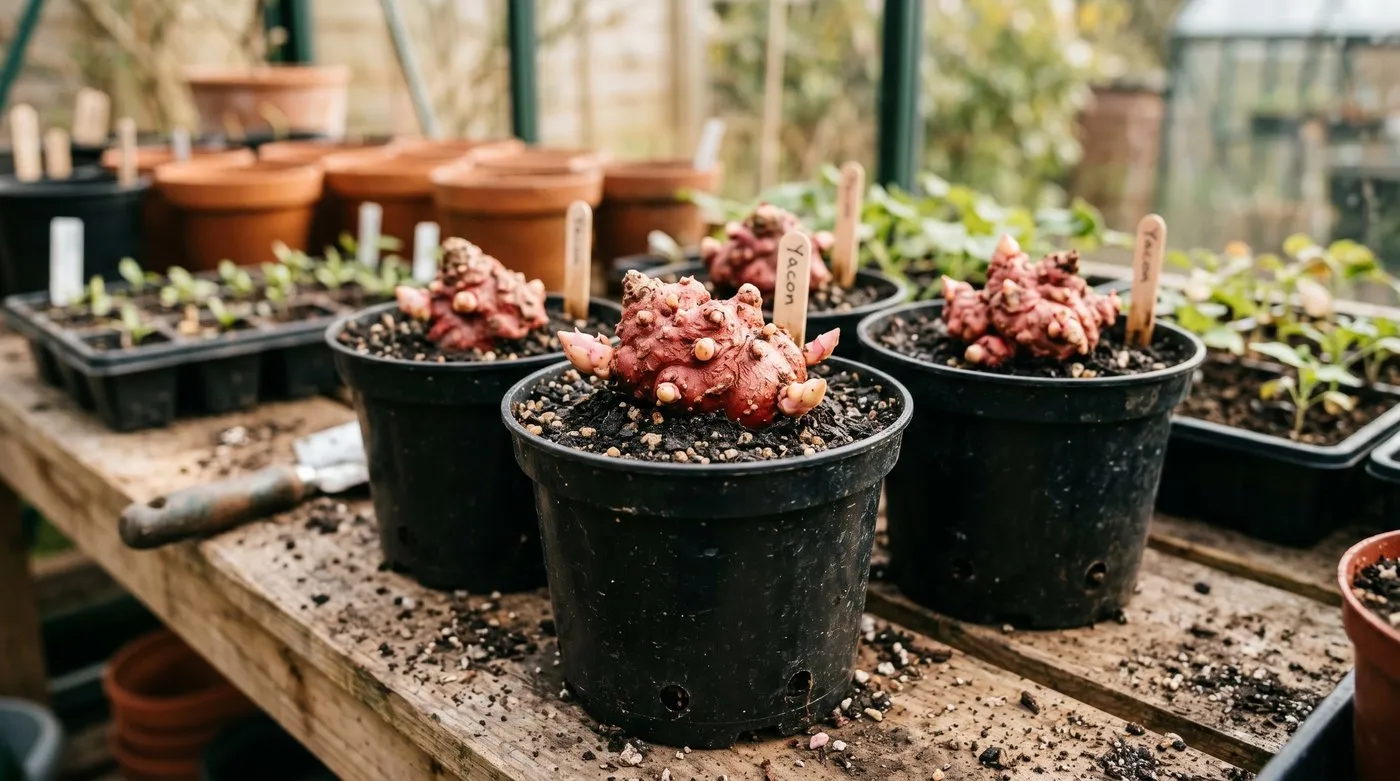 Yacon crowns potted up in April, one knobbly piece per pot, ready to grow on before late May planting.
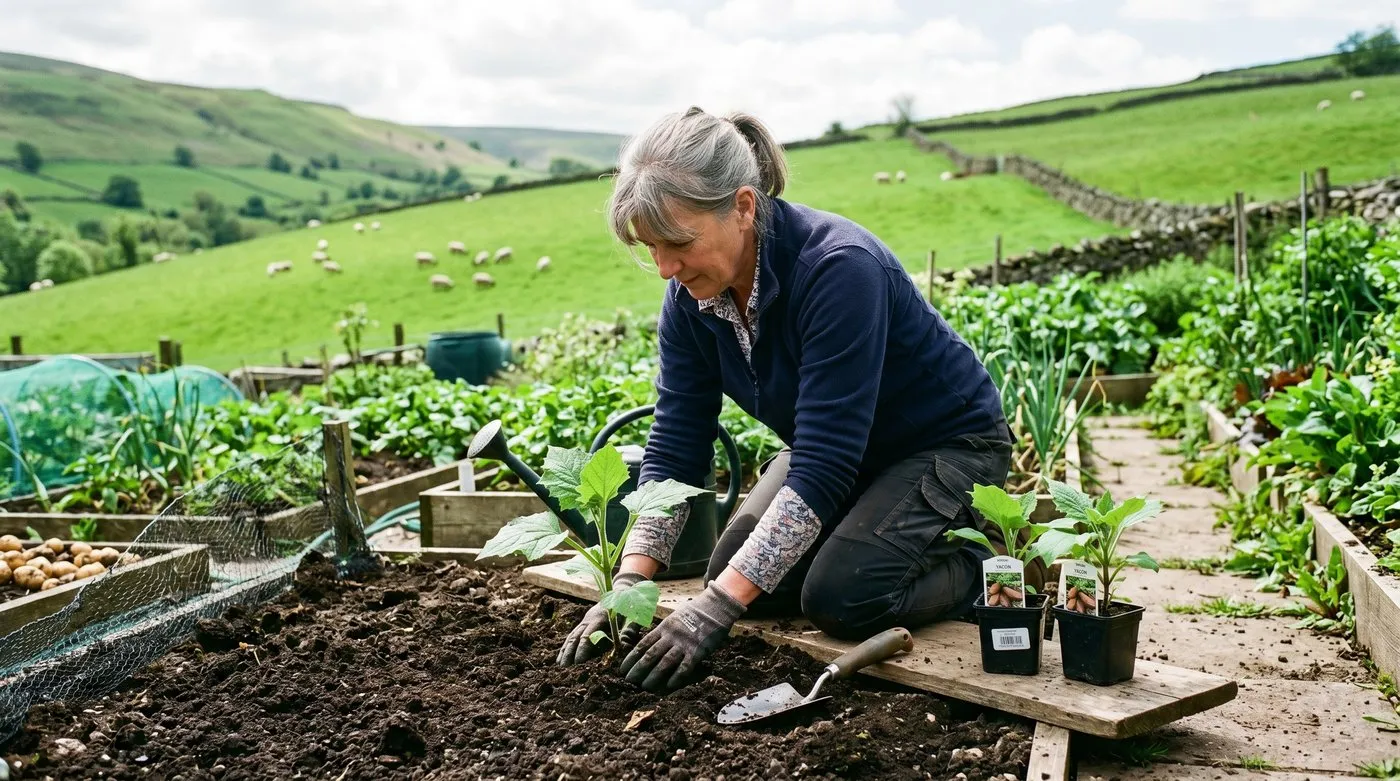 Plant yacon out only after the last frost, late May in most of the UK. The young plants are as frost-tender as dahlias.
Soil, sun, and spacing for a heavy crop
Yacon crops best in rich, moisture-retentive soil in full sun, sheltered from strong wind. The plant is a heavy feeder and a thirsty one. It builds 2kg or more of fleshy tuber in a few months, and that takes both food and water. Thin, dry soil gives small, woody tubers and a disappointing weight.
Dig in two bucketfuls of well-rotted manure or garden compost per square metre before planting. A spot that grew beans or potatoes the year before works well. Yacon grows tall, so the stems act like a sail; an open, exposed plot leaves them prone to wind-rock, which loosens the crown and checks growth. A south-facing fence or a hedge to the windward side helps.
Space plants 75-90cm apart each way. They look small in June but fill that space completely by August. On a wet, heavy plot, plant on a low ridge to stop the crowns sitting in standing water over the early autumn. If your ground is light and dry, dig a deeper organic-rich pocket and mulch heavily, the same trick that helps drought-tolerant vegetables hold on through summer.
Watering and summer care
Yacon needs steady moisture through summer; a dry spell stalls tuber formation and shrinks the final crop. Once the plants are established and growing fast in July and August, they drink heavily. The leaves are large and soft, and they wilt visibly in dry, sunny weather. A plant under water stress simply stops bulking up.
Water deeply once or twice a week in dry spells, soaking the root zone rather than wetting the surface. A thick mulch of straw, grass clippings or compost around each plant locks in moisture and keeps the roots cool. Beyond watering and an occasional liquid feed, yacon needs almost nothing. It has very few pests in the UK. Slugs may nibble young shoots in June, but the mature plant shrugs off most trouble.
Stake tall plants on exposed sites with a single stout cane, tied loosely, to stop wind rocking the crown loose. Otherwise leave them be and let them grow.
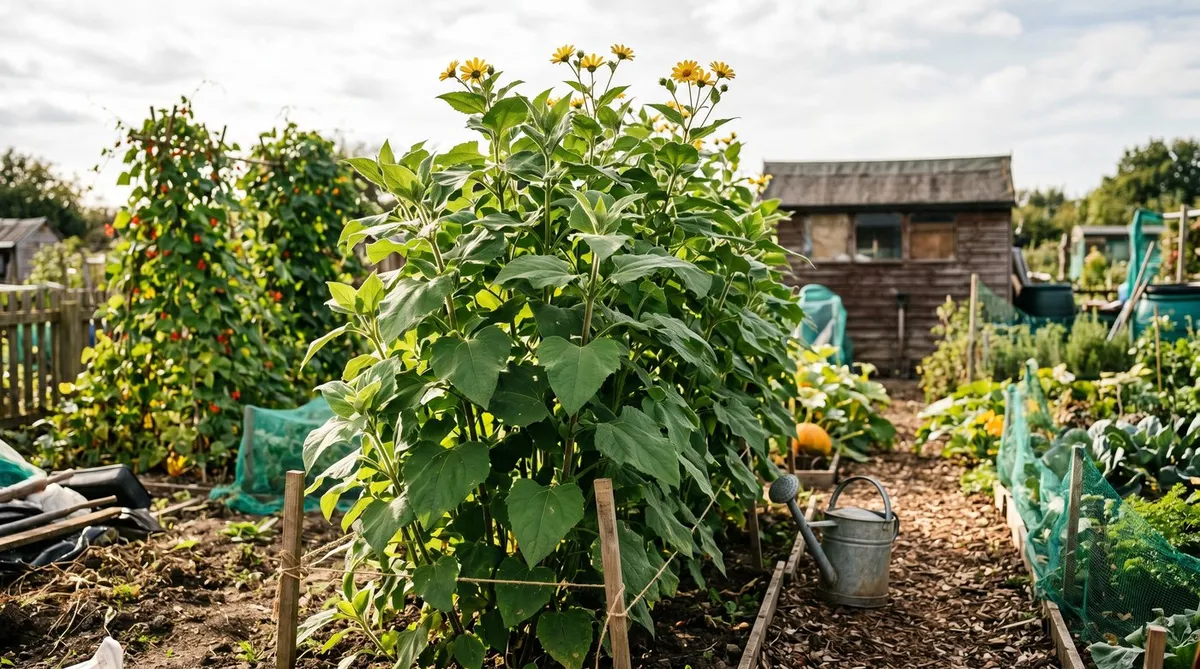
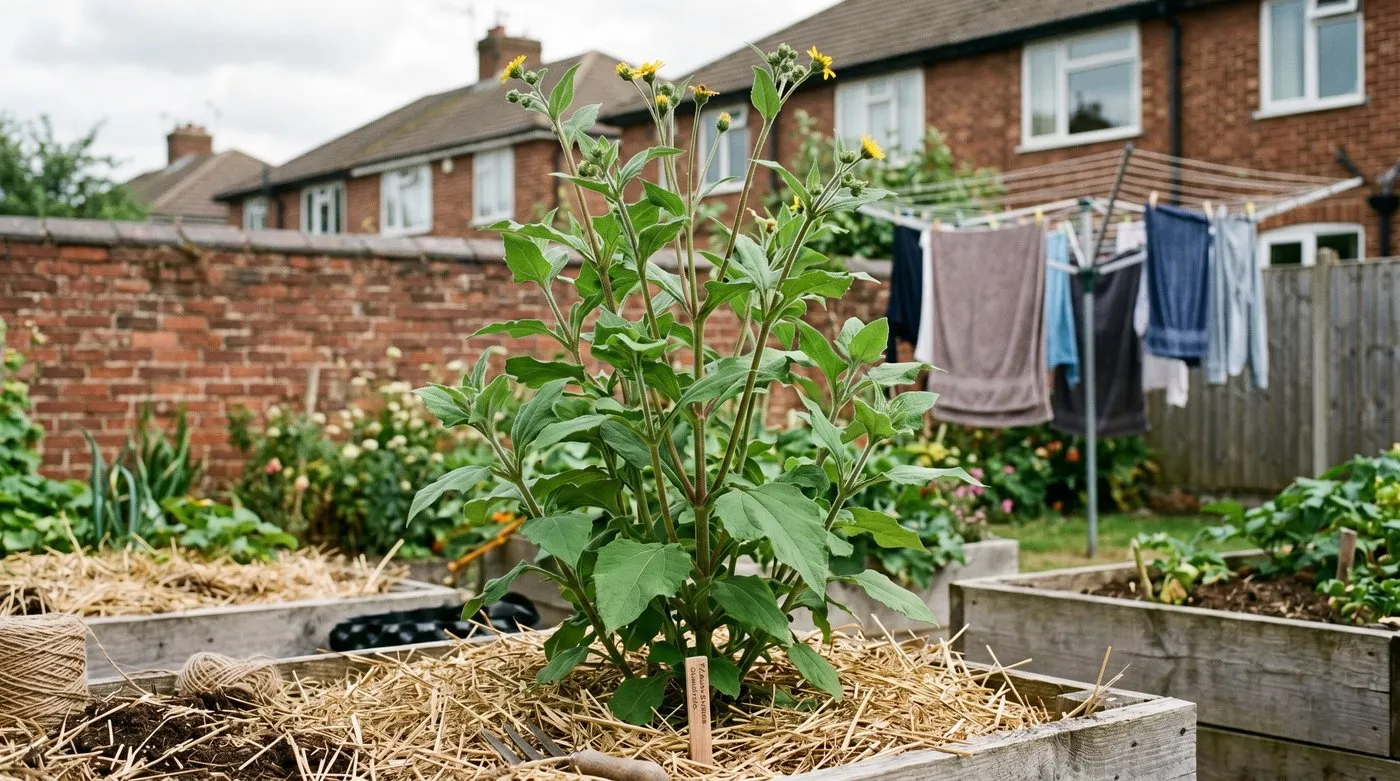 By August a single yacon plant reaches 1.8m, with broad leaves shading out weeds across its whole spacing.
How yacon stores sweetness: the science of curing
Yacon stores carbohydrate as fructooligosaccharides, which curing converts into sweeter, free sugars over one to two weeks. This is the single most important thing to understand about the crop, and the part most beginners get wrong. A freshly lifted yacon tuber is crunchy and juicy but barely sweet. It tastes like a watery, slightly earthy potato. Eat it then and you will wonder what the fuss is about.
The sweetness develops after lifting, in a process growers call curing. It runs in rough stages:
- Days 0-2: Skins are thin, flesh is bland and wet. Move tubers out of soil into a dry, frost-free shed at 8-15C.
- Days 3-7: Enzymes begin breaking the stored fructooligosaccharides down into simpler, sweeter sugars. Skins start to toughen.
- Days 8-14: Sweetness peaks. The flesh now tastes like a ripe pear or melon. Skins are leathery and protect against rot.
The critical mistake is lifting and eating straight away, deciding yacon is dull, and never growing it again. Some growers speed curing by leaving tubers in the sun for a few days, but a steady, dry, frost-free shed gives the most reliable result. After curing, store in a cool, dark place and the sweetness holds for two to three months.
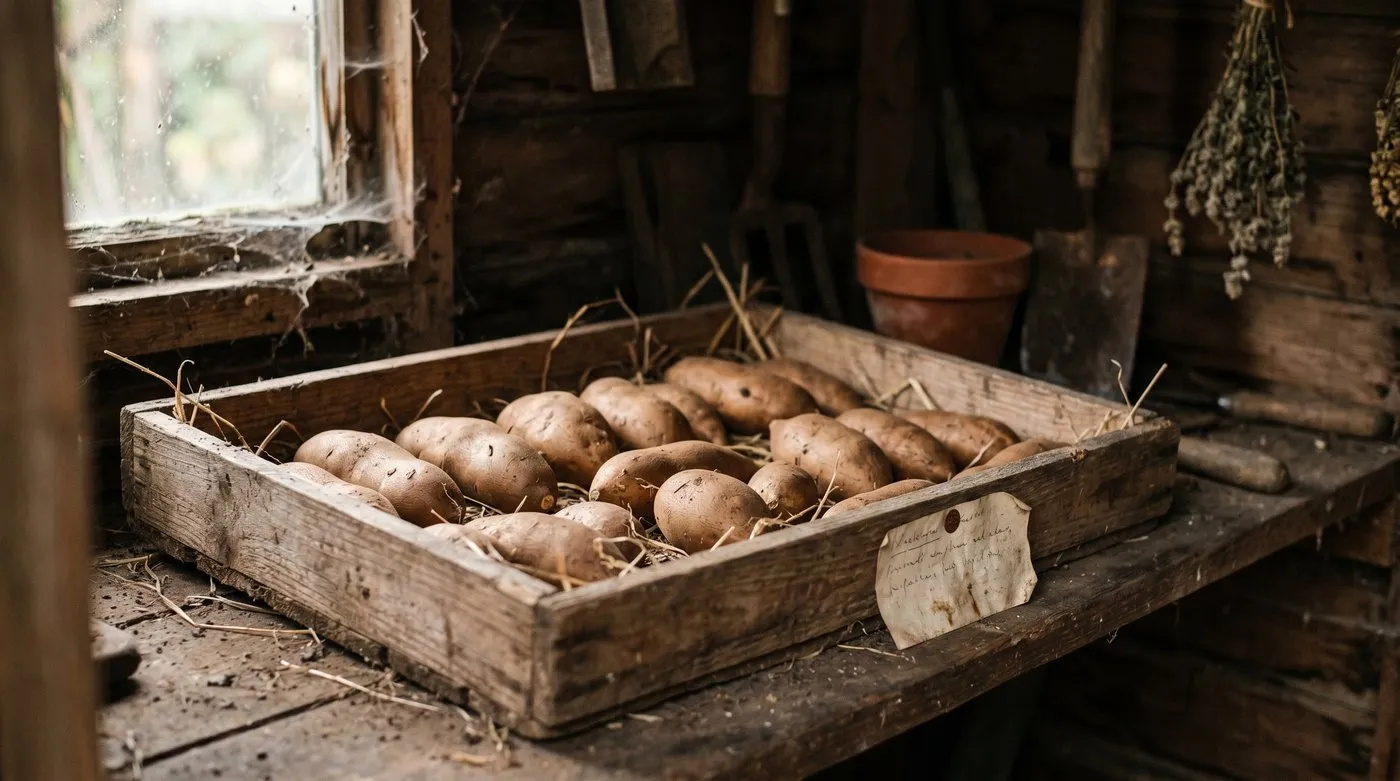 Curing lifted tubers in a frost-free shed for one to two weeks converts starches to sugars and sweetens them noticeably.
When and how to harvest yacon tubers
Harvest yacon in late October or November, at or just after the first hard frost has blackened the foliage. Frost is the signal, not the enemy. It kills the top growth but does not damage the tubers below for several days, so there is no rush to lift the moment it strikes. Cut the dead stems down to 10cm first so you can see where to dig.
Lift the whole clump carefully with a fork, working in from a wide radius. The storage tubers are brittle and snap easily, and a broken tuber rots faster in store. Lever the clump up whole, then tease the soil away by hand. You will find two things: a ring of large, smooth, fat storage tubers for eating, and a tight central knot of small, knobbly, reddish crowns that grew the stems.
Separate the two by hand. The smooth storage tubers go to cure and eat. The knobbly crowns are your seed stock. The technique mirrors lifting any winter root cleanly, covered in our guide to storing root vegetables through winter.
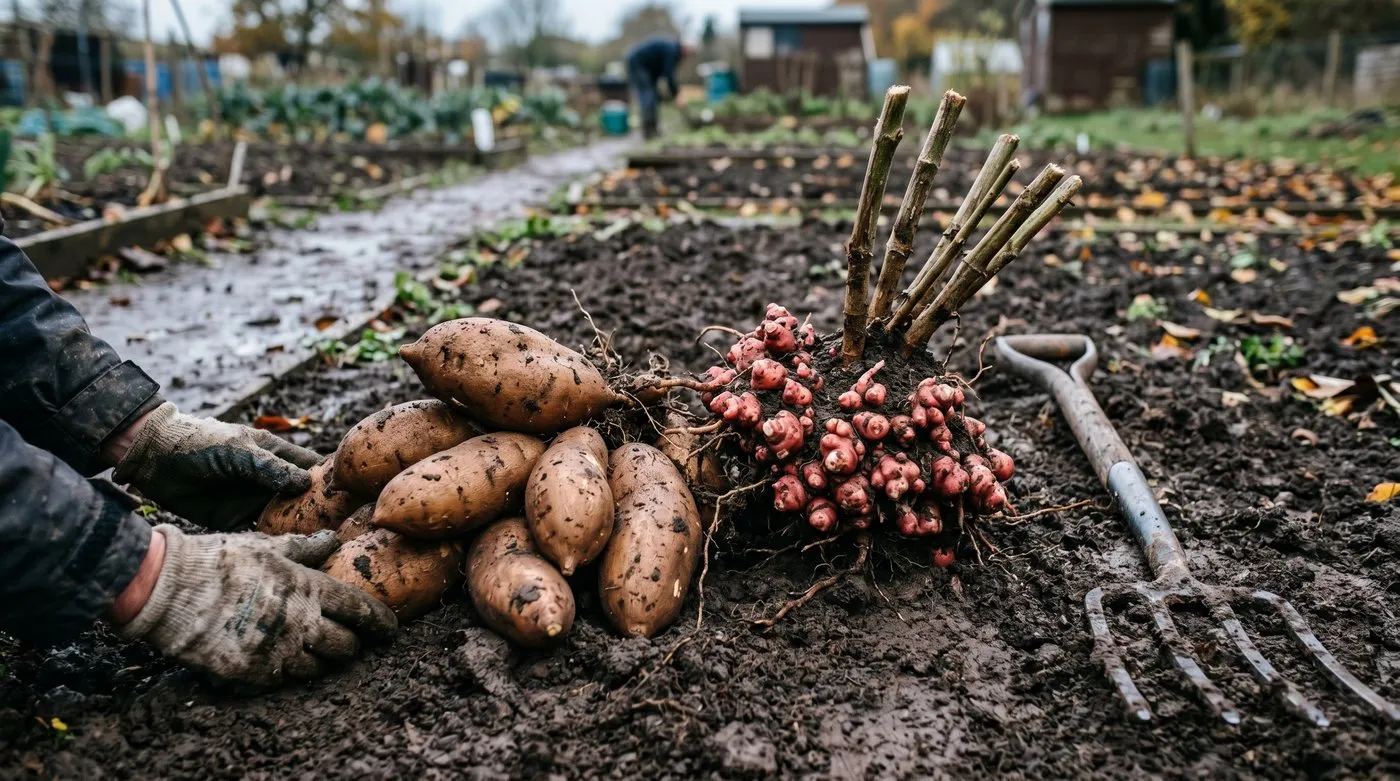 A single clump lifted in November: smooth storage tubers on the left for eating, knobbly crowns on the right for replanting.
Yacon vs oca vs Jerusalem artichoke
Among Andean and unusual tubers, yacon gives the highest fresh weight and the sweetest raw flesh, but needs the longest season. Each crop suits a different gardener, so the choice comes down to your space, soil and patience. The table ranks the three by overall ease and reward on a typical UK plot.
| Crop | Yield per plant | Taste | Hardiness | Effort | Season |
|---|---|---|---|---|---|
| Yacon | 2-4kg storage tubers | Sweet, crunchy, apple-pear when cured | Frost tender | Low; needs curing | 200+ days |
| Jerusalem artichoke | 1-2kg tubers | Nutty, earthy, cooked only | Fully hardy | Very low; invasive | 180 days |
| Oca | 0.3-0.8kg tubers | Lemony, waxy, mild | Frost tender | Medium; short-day | 200+ days |
| Mashua | 0.5-1kg tubers | Peppery, strong | Frost tender | Medium | 200+ days |
Yacon wins on sheer weight and on a flavour most people enjoy raw. Jerusalem artichoke is the easiest and hardiest but is cooked, spreads hard, and is famously windy to digest. Oca is charming but low-yielding and needs short autumn days to bulk up. If you want comparison with a fully hardy option, our guide to growing Jerusalem artichokes in the UK covers that crop in full.
Yacon month by month in the UK
Yacon follows a strict frost-to-frost rhythm, so each month has one clear job from spring to late autumn. The plant is dormant in winter, races through summer, and is lifted before the cold sets in. Timing the start and the lift matters more than anything in between.
| Month | Task |
|---|---|
| February | Check stored crowns for rot. Keep cool, dark, frost-free |
| March | Pot up dormant crowns, one piece per 1-litre pot, at 12-15C |
| April | Grow on shoots under cover. Keep frost-free. Begin hardening late month |
| May | Plant out after the last frost, late May in the Midlands. Space 75-90cm |
| June | Mulch around plants. Watch for slugs on young shoots. Water if dry |
| July | Water deeply in dry spells. Plants reach 1m and grow fast |
| August | Peak growth, plants hit 1.5-2m. Keep watering. Stake exposed plants |
| September | Small yellow flowers open. Reduce feeding. Keep soil moist |
| October | Watch for first frost. Frost blackens foliage; cut stems to 10cm |
| November | Lift the whole clump. Separate storage tubers from crowns. Begin curing |
| December-January | Cure then store tubers cool and dark. Overwinter crowns frost-free |
Where to buy yacon crowns and tubers
Buy yacon from a specialist UK supplier, because it is rarely sold in garden centres and almost never as true seed. Yacon seldom sets viable seed in the UK climate, so you start it from a crown or a planting tuber, not a seed packet. A single starter crown bought once will keep you in plants for life, as each autumn lift gives a dozen new crowns. The table ranks the main UK sources by reliability and what they actually send.
| Supplier | What they sell | Reliability | Notes |
|---|---|---|---|
| Real Seeds | Planting crowns, spring dispatch | High | Long-standing specialist in unusual crops; clear growing notes |
| Incredible Vegetables | Crowns and rare cultivars | High | Andean tuber specialist; widest yacon variety choice |
| Thompson & Morgan | Plug plants in spring | Medium | Mainstream availability; sells out fast, dispatched as young plants |
| Allotment swaps | Spare crowns from other growers | Variable | Free, but check crowns are firm and rot-free before accepting |
How to propagate yacon from crowns
Propagate yacon by dividing the knobbly crown clump, which is far more reliable than offsets or cuttings. Every autumn lift hands you the means to multiply your plants for free. The crown is the red, knobbly mass at the very base of the stems, quite separate from the smooth storage tubers you eat. Each crown carries dormant growth buds, like the eyes on a seed potato.
The table ranks the three propagation routes by how reliably they produce a strong plant.
| Method | Reliability | Speed | Best for |
|---|---|---|---|
| Crown division | High, near 100% take | Plants ready by late May | The standard, gold-standard method for everyone |
| Offsets / side crowns | Medium, around 80% | Slightly slower to bulk | Increasing a favoured plant |
| Basal stem cuttings | Low, around 50% | Slow, needs heat | Last resort if crowns are scarce |
To divide, snap or cut the crown clump into pieces, each with at least one visible pink bud and a chunk of firm tissue. Dust cut surfaces with sulphur if you have it, to deter rot. Store the divided crowns in barely-damp compost in a frost-free shed over winter, then pot them up in March. Crown division is the method to rely on; cuttings are fiddly and rarely worth it.
Common mistakes when growing yacon
Eating the tubers straight from the ground
The biggest mistake is tasting yacon fresh, finding it bland, and giving up. Fresh tubers are crunchy but barely sweet. The flavour only arrives after one to two weeks of curing. Always rest the crop before judging it.
Planting out too early
Yacon has no frost tolerance at all. Planting in early May, before the last frost, means a single cold night can cut the young plant down to nothing. Wait until late May in the Midlands, early June further north. A late start still gives a full crop; a frosted plant gives none.
Storing the wrong part for next year
Beginners often save the big smooth storage tubers to replant, then wonder why nothing grows. The storage tubers rarely have growth buds. The knobbly red crowns at the base of the stems are the part that sprouts. Save those, eat the rest.
Letting the plant go dry in midsummer
A yacon plant short of water in July and August stops bulking up its tubers. The damage is invisible until you lift a light crop in autumn. Mulch heavily and water deeply in dry spells to keep the tubers swelling.
Lifting in a panic at the first frost
Frost blackens the leaves but does not harm the tubers underground for several days. There is no need to dig in a hurry on a cold morning. Cut the dead top growth off and lift at your leisure within the following week.
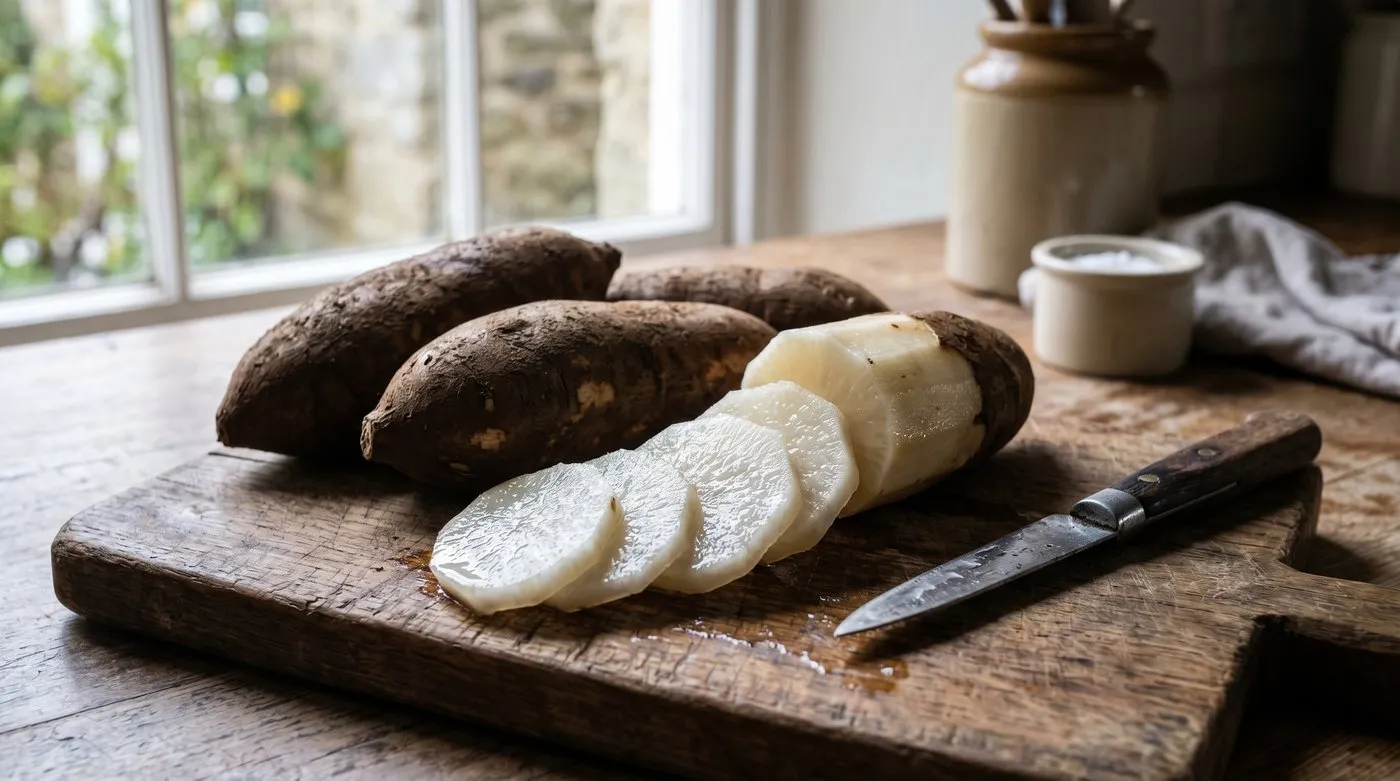 Cured yacon sliced raw: crisp, juicy, white flesh that eats like a sweet cross between apple and pear.
Storing and eating your yacon crop
Cured yacon stores for two to three months in a cool, dark, frost-free place and is eaten raw or lightly cooked. Once curing has built the sweetness, treat the tubers like a robust fruit. Keep them in a box of barely-damp sand or in paper sacks in a shed or garage, somewhere that stays between 4C and 10C. They keep far better than a potato and do not sprout in store.
Eat yacon raw for the best of it. Peel off the thin skin, then slice or grate the crisp flesh straight into salads, or eat it like an apple. It browns slowly, so a squeeze of lemon keeps it white. It also takes a light stir-fry well, staying crunchy where other roots go soft. The sweetness is fructooligosaccharide and inulin, which the body does not fully digest, so the calorie count is very low. The RHS gives a useful overview in the RHS profile for yacon, and Garden Organic carries good background on growing unusual crops without chemicals. Yacon sits well in any plot that already runs perennial vegetables for low-effort returns.
Frequently asked questions
Is yacon easy to grow in the UK?
Yes, yacon is easy if you give it a long, frost-free growing season. Plant crowns out in late May once frost has passed. It needs rich, moist soil and full sun. The plant looks after itself through summer, then dies at the first autumn frost. The only real skill is curing the tubers afterwards to bring out the sweetness.
What does yacon taste like?
Yacon tastes like a cross between an apple and a water chestnut. The flesh is crisp, juicy, and faintly sweet when first lifted. After a week or two of curing the sweetness rises sharply to something close to a ripe pear. It stays crunchy raw and is excellent grated into salads or eaten like fruit.
How much yacon does one plant produce?
When do you harvest yacon in the UK?
Harvest yacon in late October or November, at or just after the first frost. Frost blackens the top growth but does not harm the tubers below for a few days. Lift the whole clump carefully with a fork. Separate the large smooth storage tubers for eating from the small knobbly crowns kept for replanting.
Why do you need to cure yacon tubers?
Curing converts stored carbohydrate into sweet sugars, raising sweetness sharply. Freshly lifted tubers taste bland, like a watery potato. Resting them in a dry, frost-free shed for one to two weeks lets the flavour develop. The skins also toughen, which helps them store for two to three months in a cool, dark place.
Is yacon good for diabetics?
Yacon’s sweetness comes from fructooligosaccharides and inulin, which the body does not fully digest. This means it adds sweet flavour with very few digestible calories and a low impact on blood sugar. It is often promoted as a prebiotic. Always check with a medical professional before changing your diet for a health condition.
How is yacon different from Jerusalem artichoke?
Yacon is eaten raw for sweet, crunchy tubers; Jerusalem artichoke is cooked. Jerusalem artichoke is fully hardy and spreads invasively, while yacon is frost tender and stays put. Yacon causes far less digestive upset than Jerusalem artichoke, whose inulin is famously windy. Both are easy Andean and North American crops for UK plots.
Now you can grow and cure a heavy crop of yacon, build out the rest of your unusual root patch by reading our guide to growing your own vegetables in the UK for the next step.
Our team produces practical UK gardening guidance from source research, contributor records and established horticultural practice. Editorial standards are overseen by Matt W.