Key takeaways
- Bore holes 1.2m deep filled with fine sifted media give straight, long roots
- Sow fresh seed in February, thinning to one plant per bore station
- Forking is caused by stones, fresh manure, and obstructions in the soil
- Feed sparingly, as too much nitrogen causes whiskery, coarse roots
- Float roots out with water at lifting to avoid snapping the long taper
- Judges reward length, a clean even taper, smooth shoulders, and no whiskers
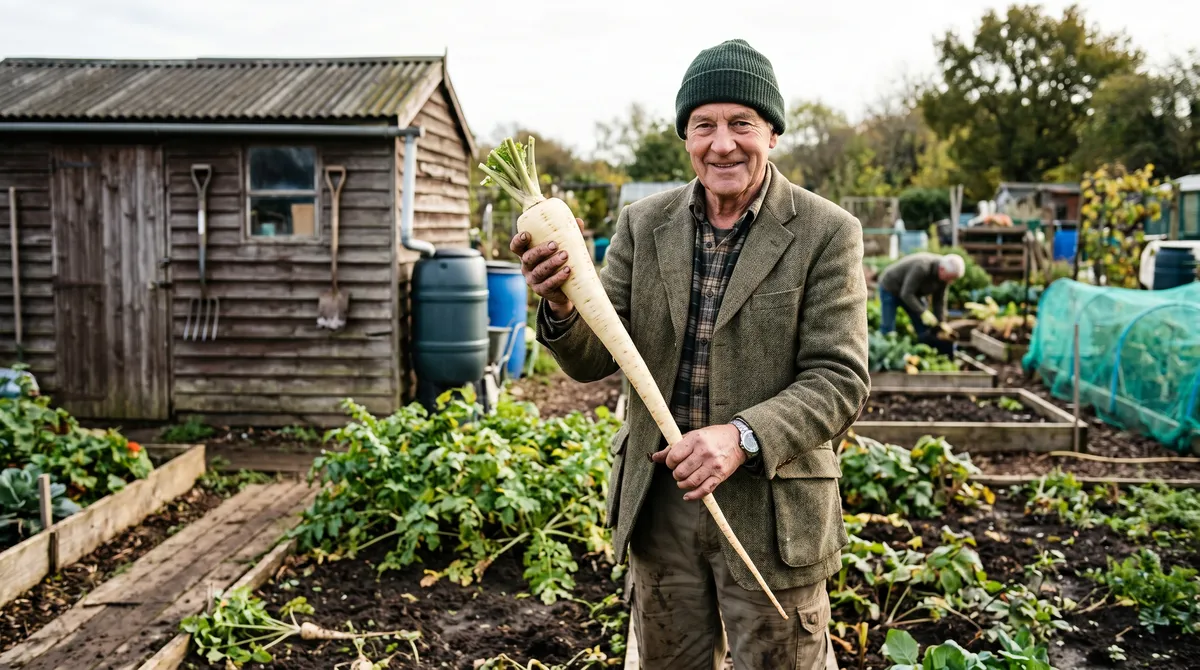
Growing a metre-long parsnip is one of the great feats of exhibition gardening, and it cannot be done in ordinary soil. A show parsnip needs a deep column of fine, stone-free media to drive its taproot straight down without forking, which is why exhibitors use the bore-hole method: deep conical holes filled with sifted compost. Get the boring, the media, and the lifting right and a single root can pass a metre in length with a clean, even taper. This guide covers the full exhibition technique, from preparing the bores in winter to floating the roots out unbroken on show morning.
The growing is patient work, but it is the lift that wins or loses the class. A snapped root on the bench is a season gone.
Why show parsnips need the bore-hole method
A parsnip’s natural taproot wants to grow long and straight, but ordinary garden soil fights it. Every stone, clod, or pocket of fresh manure the growing tip meets makes the root fork, splitting into the multiple legs that are useless on the show bench. To grow the long, single, tapering roots judges want, you must give the root a clear run through fine, even, obstruction-free media.
The bore-hole method does exactly that. You make a deep, narrow, cone-shaped hole and fill it with finely sifted media, so the root drives straight down a soft, stone-free column. The surrounding bed can be any soil, since the root only follows the bore. This is the same principle exhibitors use for long carrots and long beetroot. For everyday eating parsnips grown in open ground, our guide on how to grow parsnips covers the simpler approach; the show method below is a different discipline.
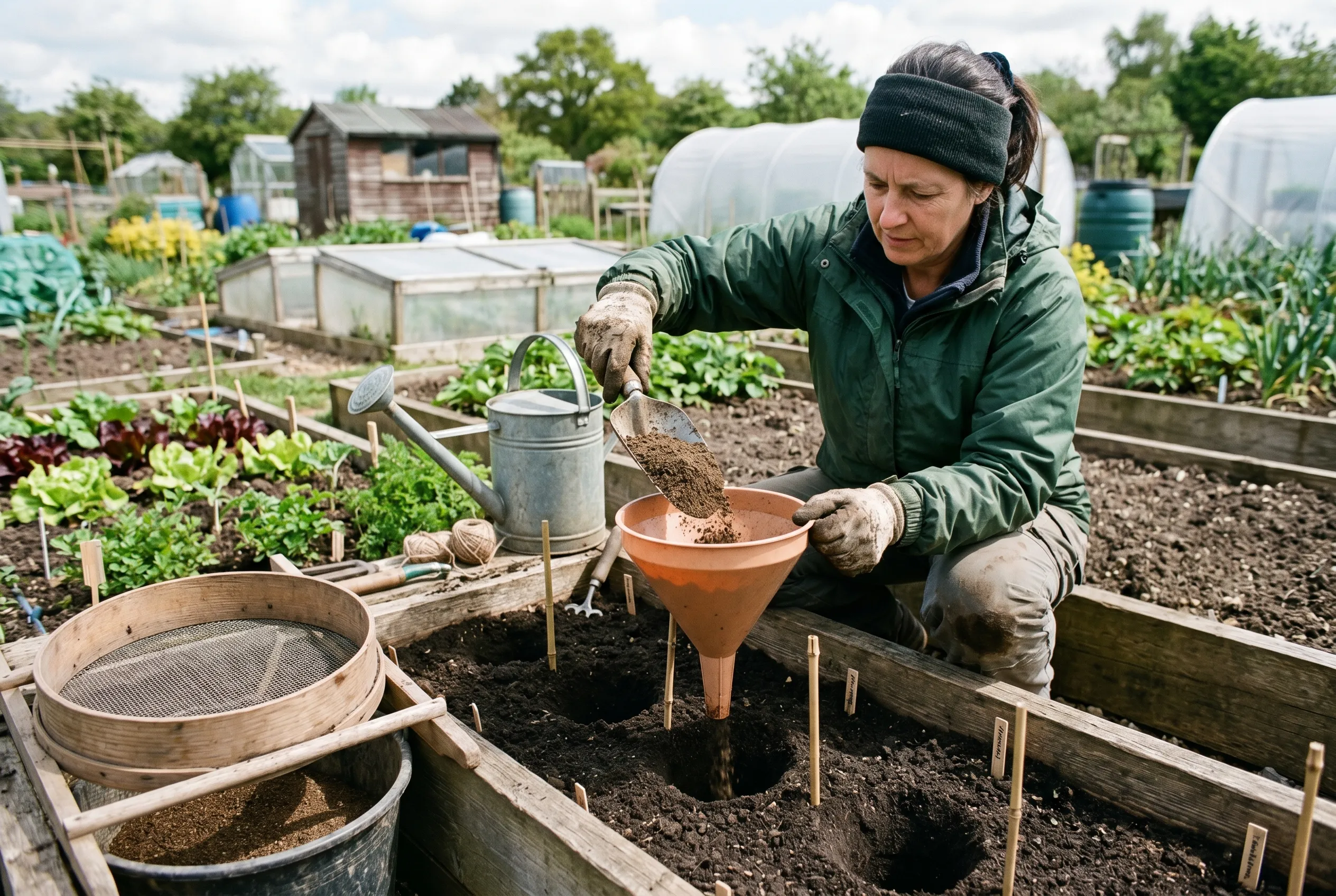 The bore-hole method: deep conical holes filled with fine sifted media give the taproot a clear, stone-free run downward.
Preparing the bores and the media
Make the bores in a deep raised bed or a barrel, anywhere you can get 1.2m of depth. Drive a crowbar or a steel auger straight down and work it in a circle to open a cone-shaped hole about 1.2m deep, around 15cm wide at the top tapering to a point. Space the bores 20-25cm apart.
The media is what makes or breaks the root. Sieve a mix of fine sand, loam or molehill soil, and peat-free compost through a 6mm riddle to remove every stone and lump. Many exhibitors use roughly equal parts, adding a measured dose of balanced general fertiliser so the column carries gentle, even nutrition. Fill each bore with the sifted media, firming it gently in stages with a cane so there are no air gaps, and dome the top slightly. The fineness matters more than the recipe: any grit or lump in the column will fork the root.
| Growing method | Root result | Best for |
|---|---|---|
| Bored hole, sifted media | Long, straight, even taper | Showing, exhibition |
| Raised bed, stone-free soil | Good length, occasional fork | Keen amateurs, kitchen-plus |
| Open garden soil | Shorter, often forked | Everyday kitchen crops |
| Stony or recently manured soil | Heavily forked, whiskery | Avoid for any parsnip |
Sowing fresh seed early
Sow in February, earlier than a maincrop, to give the long season the big roots need. Parsnip seed is short-lived, so buy fresh seed every year; old seed germinates poorly and unevenly. Sow two or three seeds at the top of each filled bore, since germination is slow and patchy at that cold time, then thin to the single strongest seedling per station once they are up.
Germination can take three to four weeks in February cold. A cloche, jar, or a little bottom heat speeds and evens it. Some exhibitors chit the seed first on damp kitchen paper and sow only those that have sprouted, guaranteeing a plant at every station. Keep the surface moist until the seedlings establish. Protect the young plants from slugs, which can clear a whole station overnight. For the wider rotation, parsnips follow a crop grown on garden compost rather than fresh manure.
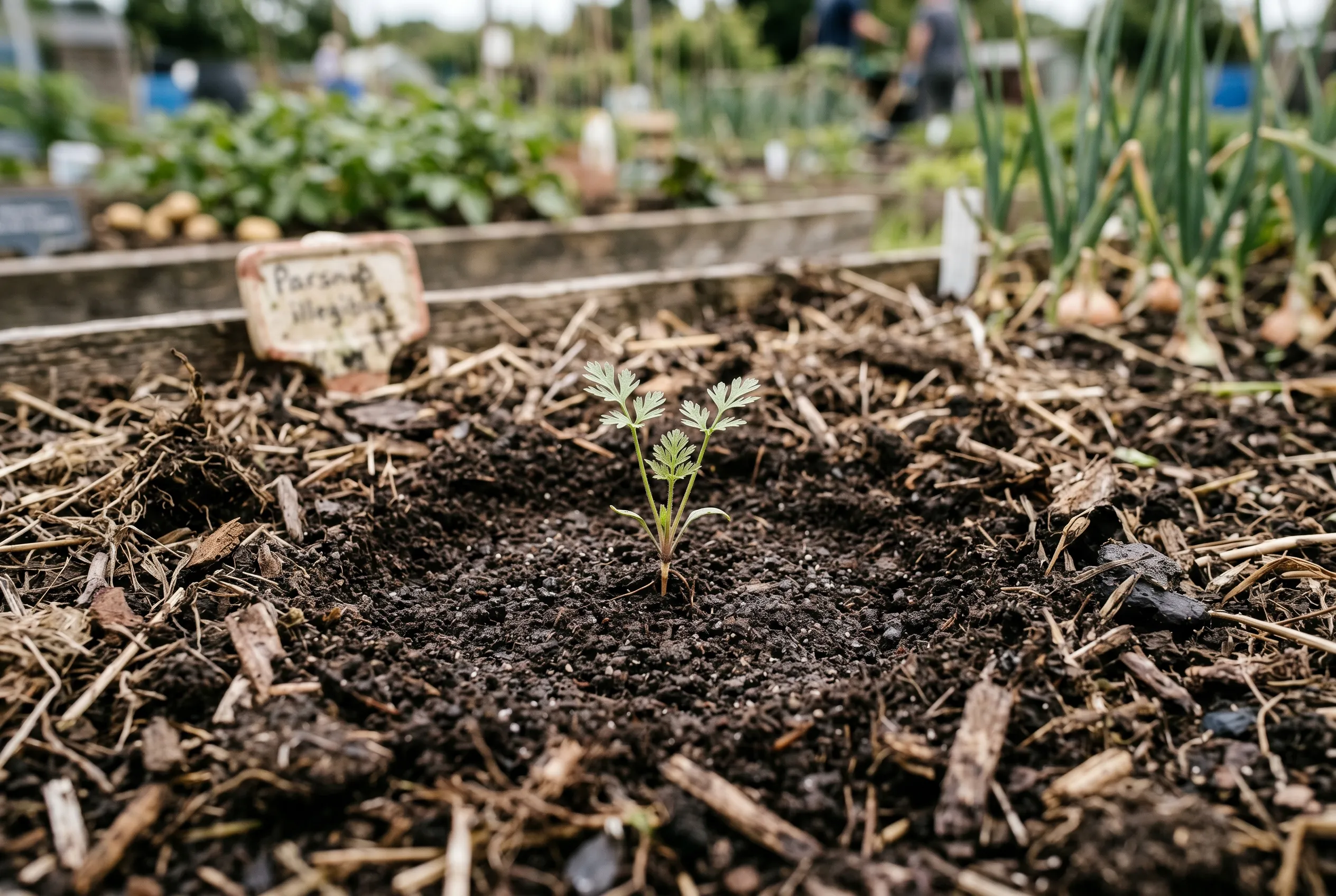 Thin to one strong seedling per bore station. A single plant down each prepared column gives the long, undivided root.
Watering, feeding, and avoiding forks
Water steadily and evenly through the season, soaking down the bore so the root never checks. Erratic watering after a dry spell causes the root to split. In a barrel or raised bed the fine media can dry fast, so check often in summer.
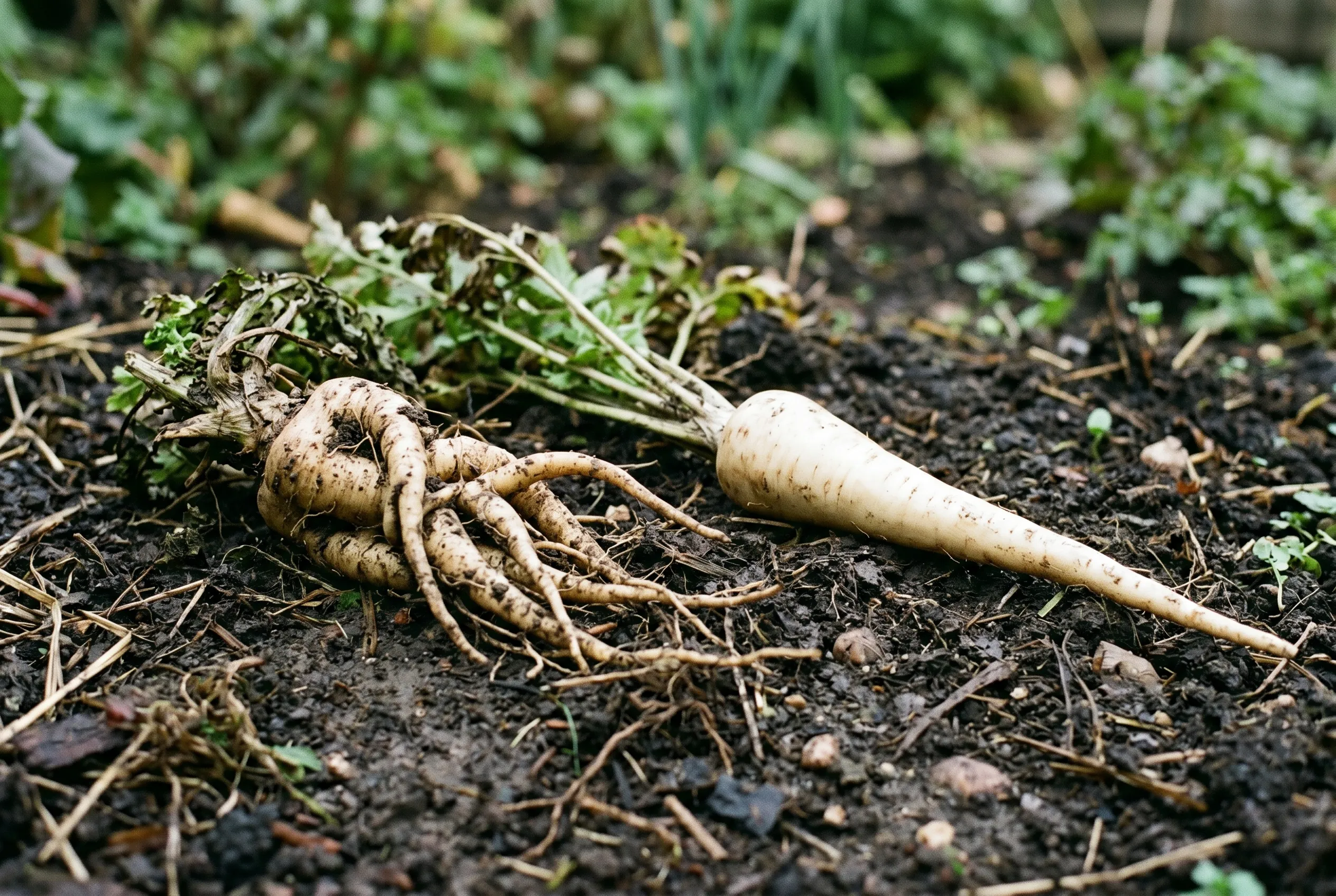 Forking, on the left, is caused by stones or fresh manure. The bore-hole method gives the clean single taper on the right.
Lifting the roots without breaking them
Lifting is the hardest part of the whole exercise, and it loses more show roots than every pest combined. A metre-long parsnip is brittle and snaps if pulled straight up. The professional method is to dig a deep trench alongside the row, then wash the soil away from the side of the root with a gentle hose so it lifts out sideways and flat, fully exposed, rather than being levered out.
Lift the day before the show, keep the roots cool and damp, and handle them by the shoulders, never the tip. Wash off every trace of media under a soft flow, taking care not to scrub or bruise the skin. A snapped or scrubbed root cannot be shown, so this slow, careful lift is where patience pays. The same float-out care suits long carrots and beetroot grown the same way.
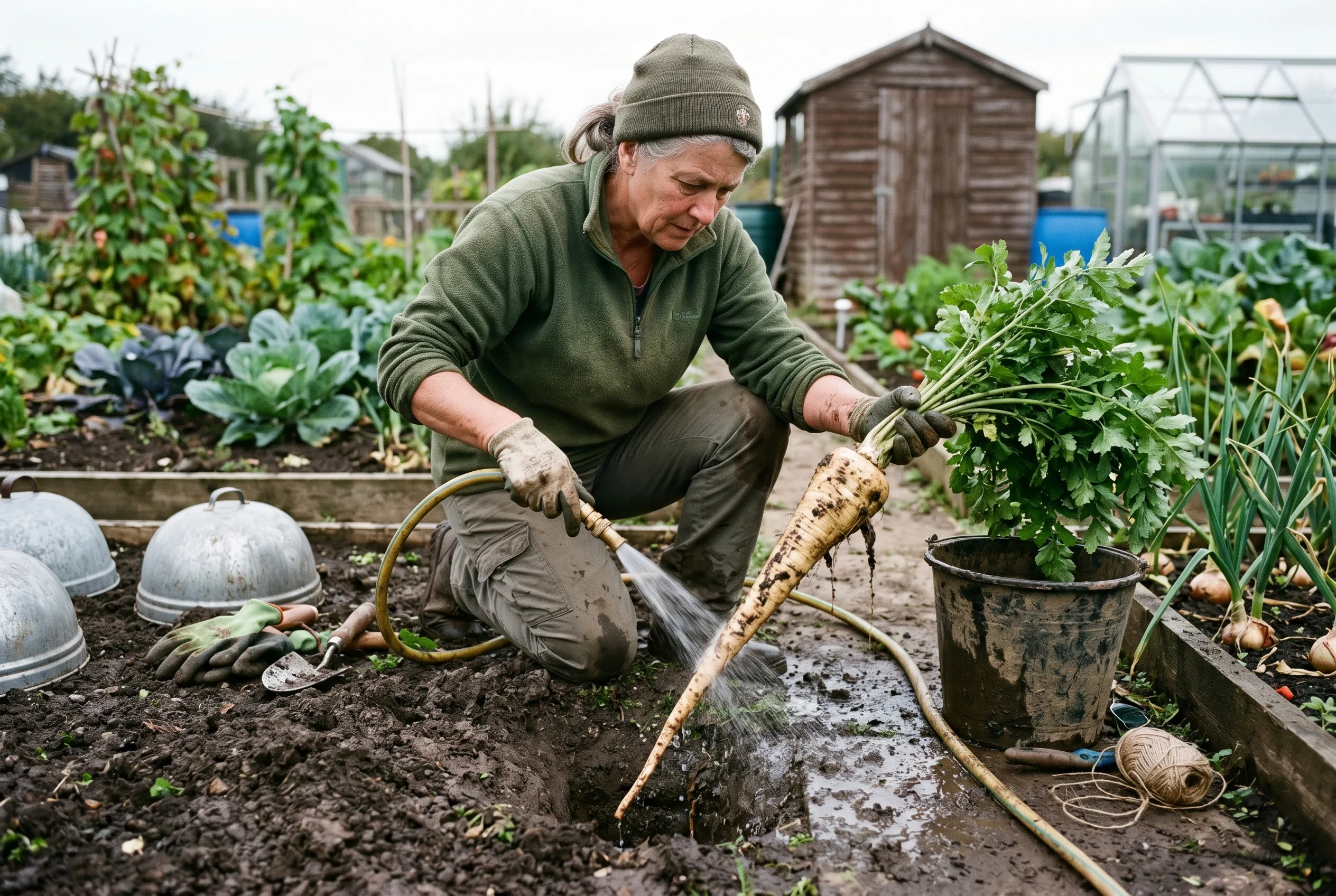 Float the root out sideways with water rather than pulling it up. Lifting, not growing, is where most long show roots are lost.
Staging show parsnips
Present a matched set, usually three or five roots, as uniform in length, thickness, and colour as you can select. Trim the foliage to a short, neat tuft as the schedule dictates, and trim the long tap point cleanly if required. Lay the roots with tapers aligned, shoulders even, washed pure and creamy-white.
Judges reward length, a clean even taper, smooth unblemished shoulders, and the complete absence of side whiskers or forks. Marks are lost for splits, canker (the orange-brown rot at the shoulder), whiskery roots, and mismatched sizes. Choosing a canker-resistant variety like ‘Tender and True’ guards the shoulders, while ‘Gladiator’ and ‘Excalibur’ are bred for length and smoothness. The same matched-set discipline that wins parsnip classes applies to show carrots and exhibition leeks.
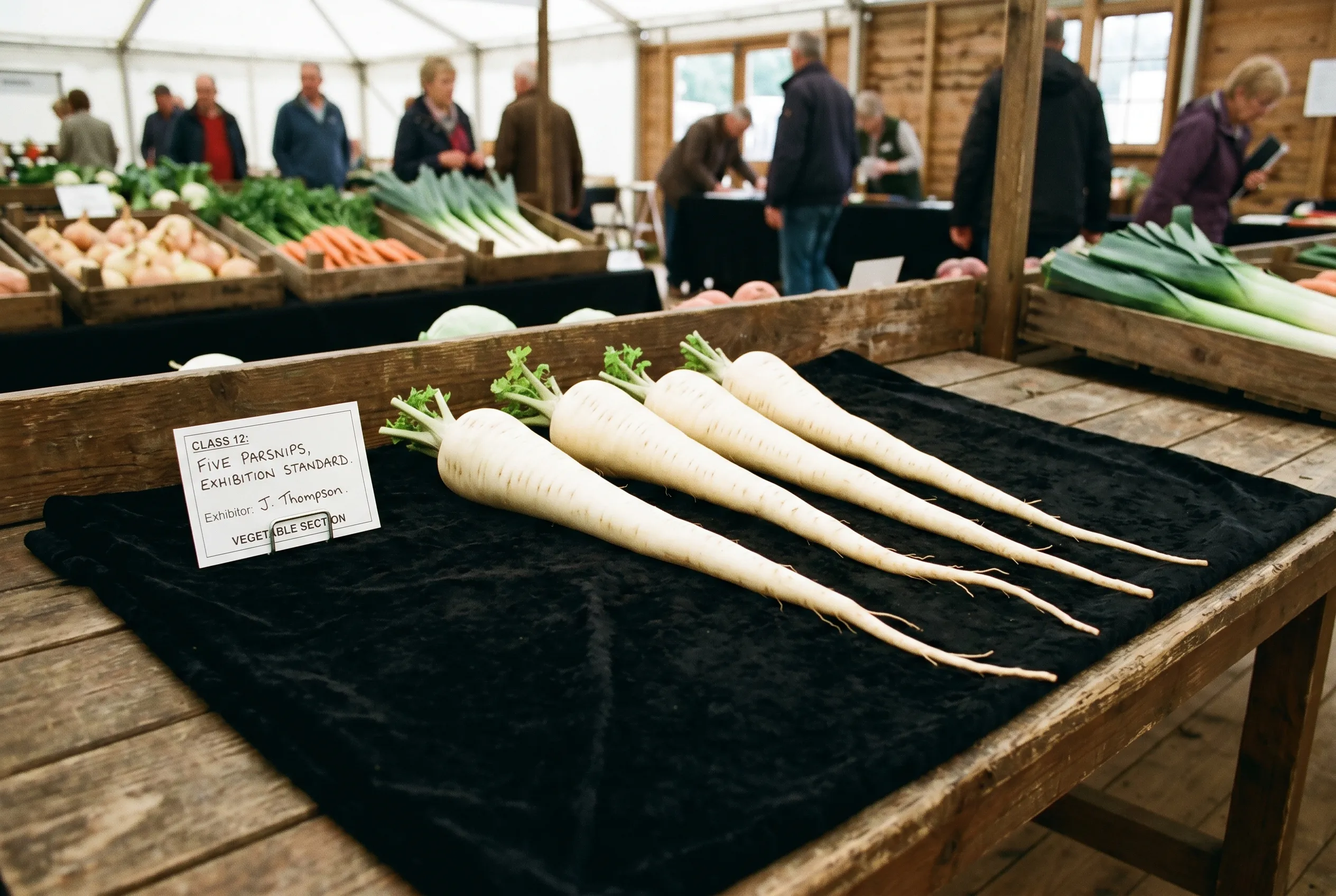 A matched set staged with tapers aligned and shoulders even. Length, clean taper, and no whiskers take the points.
Show parsnip season by season
The exhibition parsnip year runs almost the full twelve months, far longer than a kitchen crop. Knowing the sequence keeps each stage on time.
| Month | Job |
|---|---|
| December to January | Bore the holes, sieve and mix the media, fill the columns |
| February | Sow fresh seed, two or three per station, protect from cold |
| March to April | Thin to one strong seedling per bore, guard against slugs |
| May to August | Water evenly down the bores, feed sparingly, keep weed-free |
| September | Roots bulk and lengthen, ease back on water slightly |
| October to November | Lift by trench-and-float for autumn shows, then stage |
The long lead time is why exhibitors prepare the bores in midwinter, months before sowing. Rushing the boring and media in spring is a common reason roots fork: the column has not settled, and lumps work loose. Do the patient winter work and the growing season looks after itself.
Common show parsnip mistakes
These errors cost the long, clean roots judges want.
- Stones or fresh manure in the column. The single biggest cause of forking. Sieve the media and never add fresh manure.
- Old seed. Parsnip seed dies fast. Buy fresh each year or face gappy, uneven germination.
- Pulling roots straight up. Snaps the brittle taper. Trench alongside and float them out.
- Overfeeding nitrogen. Produces whiskery, coarse roots. Feed sparingly and balanced.
- Letting the bore dry out. Causes splitting and checks. Water deeply and evenly all season.
Rotate the bored bed each year and rest the ground under a green manure to keep it in good heart. The Royal Horticultural Society’s parsnip growing advice covers the basic cultivation behind the show technique.
Frequently asked questions
How do you grow long parsnips for show?
Grow them in deep bore holes filled with fine sifted media. Make conical holes about 1.2m deep, fill with a sieved sand and loam mix, sow fresh seed at the top, and thin to one plant. The root drives straight down the soft column without forking.
What is the bore-hole method for parsnips?
The bore-hole method makes a deep conical hole with a crowbar or auger, filled with fine sifted compost. The fine, stone-free media lets the root grow long and straight. It is the standard technique for exhibition parsnips, carrots, and long beetroot.
Why do parsnips fork or grow legs?
Parsnips fork when the growing tip hits a stone, a clod, or a pocket of fresh manure. The root splits and grows multiple legs. Stone-free sifted media in a bored hole removes the obstruction and lets the root run straight down.
When should you sow parsnips for showing?
Sow show parsnips in February, earlier than maincrop, to give the long season needed for size. Use fresh seed every year, as parsnip seed loses viability fast. Warmth or a cloche speeds the slow germination at that cold time of year.
How do you lift a long show parsnip without breaking it?
Dig a deep trench alongside the root, then wash the soil away with a hose so the root floats free sideways. Never pull a long parsnip straight up, as the brittle taper snaps. Lifting is where most show roots are lost.
What do judges look for in show parsnips?
Judges reward long roots with a clean, even taper, smooth shoulders, and no side whiskers or forks. Marks are lost for splits, canker, whiskery roots, and mismatched sizes. Present a uniform, well-washed, undamaged matched set.
Our team produces practical UK gardening guidance from source research, contributor records and established horticultural practice. Editorial standards are overseen by Matt W.