Key takeaways
- Lanolin, urea, glycerin and ceramides repair; beeswax forms a barrier
- Use a barrier balm before gardening, a thick repair cream overnight
- Fragrance-free creams suit cracked, split and sensitive skin
- Cotton gloves over cream overnight cut healing time roughly in half
- Urea at 10 percent softens callus; 5 percent suits everyday dry skin
- Deep cracks that bleed or weep need a pharmacist or GP, not more cream
Gardening is hard on hands. Soil draws moisture out of the skin, grit and tools wear it thin, and the constant washing strips the natural oils that keep skin supple. By midwinter many gardeners end up with cracked thumbs, sore knuckles and split fingertips that catch on everything. The fix is not one miracle cream. It is the right repair ingredients, a barrier layer before you garden, and a simple overnight routine.
Why Gardening Wrecks Your Hands
Three forces gang up on a gardener’s skin. Understanding them tells you which cream to reach for.
First, soil alkalinity. Most British garden soil sits between pH 6.5 and pH 8, and the skin’s protective surface, the acid mantle, sits around pH 4.7 to 5.5. Working bare hands in alkaline soil and compost pushes skin pH up, swells the surface cells and weakens the barrier. The skin loses water faster and dries out.
Second, abrasion. Grit, bark, twine and tool handles sand the surface layer thin. Repeated friction on the same spots, the thumb pad and the side of the forefinger, builds hard callus that then splits along the creases. Those splits are the painful cracks gardeners know well.
Third, repeated washing. Scrubbing soil off with hot water and soap, often several times a day, strips the skin’s own oils and lipids. Each wash removes a little more of the fatty cement that holds the surface together. By February the barrier is so depleted the skin cracks at the knuckles when you make a fist.
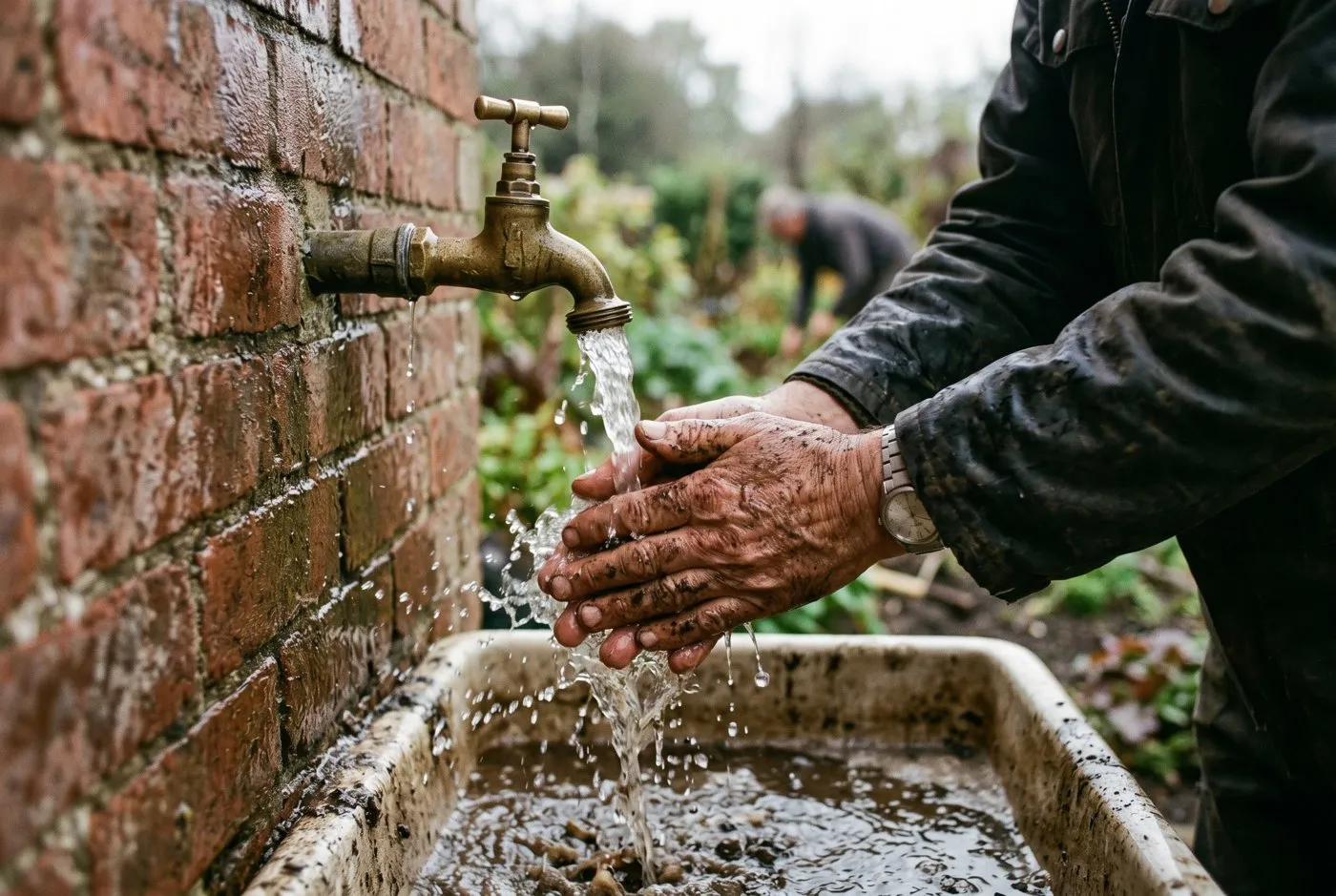 Cold-water washing at the outdoor tap strips skin oils with every rinse. Pat dry and seal with cream within three minutes, while the skin still holds water, or the barrier keeps thinning through winter.
The Repair Ingredients That Actually Matter
Ignore the marketing on the front of the tube. Turn it over and read the ingredients. A handful of proven actives do the real work, and they fall into three jobs: pulling water in, holding it there, and rebuilding the barrier.
Humectants pull water into the skin. Glycerin is the workhorse, cheap and effective, and appears near the top of most good creams. Urea is the gardener’s secret weapon. At 5 percent it hydrates everyday dry skin. At 10 percent it softens hard callus so cracks stop forming. Some heel and hand balms run urea up to 25 percent for thick, fissured skin.
Occlusives seal water in. Lanolin, the grease from sheep’s wool, is the strongest of the lot and the active in nipple balms that gardeners quietly swear by. Beeswax and petrolatum form a tough barrier film. Shea butter and cocoa butter sit between occlusive and emollient, softening as they seal.
Barrier-rebuilders patch the skin’s own structure. Ceramides are the lipids that cement skin cells together, and creams that include them rebuild the barrier rather than just coating it.
Gardener’s tip: Read the first five ingredients. If glycerin, urea, lanolin, shea butter or ceramides appear there, the cream will work. If the top of the list is water, alcohol and fragrance, put it back.
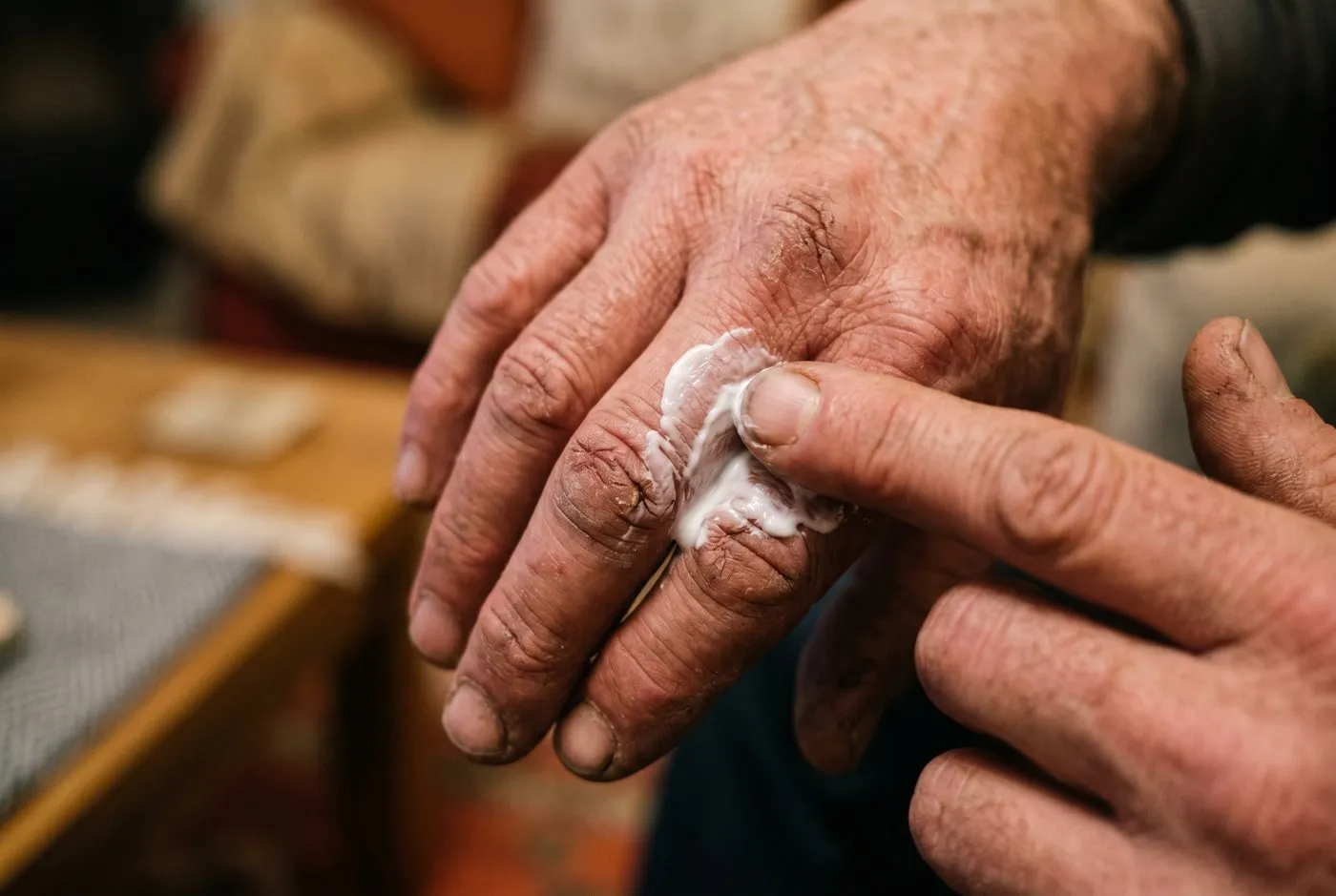 Cracks form along the knuckle creases where callus splits. A urea cream at 10 percent softens the hard skin so it flexes instead of tearing. Work it in twice a day through the cold months.
Hand Cream Types Ranked for Gardeners
Not all creams do the same job, so do not judge them on the same scale. This table ranks the five types a gardener needs by their role, from the overnight heavy lifter down to the everyday light cream. Match the type to the state of your hands.
| Cream type | Key ingredient | When to use | Texture | Role and notes |
|---|---|---|---|---|
| Lanolin repair balm | Lanolin, often 100 percent | Overnight on deep cracks | Thick, greasy, sticky | Strongest occlusive. Nipple balms work brilliantly here. Best for split fingertips |
| Overnight intensive | Urea 10 percent plus glycerin | Last thing at night, under gloves | Rich, slow to sink in | Softens callus and rehydrates. The crack-closer. Pair with cotton gloves |
| Fragrance-free repair | Ceramides, glycerin, shea | Daytime on sore or sensitive skin | Medium, non-greasy | Rebuilds barrier without stinging. Best for dermatitis-prone hands |
| Beeswax barrier balm | Beeswax, shea, plant oils | Before you garden | Waxy, sits on top | Blocks soil and water. Goes on first, not last. Reapply after washing |
| Everyday light cream | Glycerin, light oils | Between jobs, warmer months | Light, fast-absorbing | Maintenance only. Will not fix cracks. Keeps mild dryness at bay |
A few widely sold UK examples by type, so you know what to look for: lanolin balms sold as nipple cream (Lansinoh, Purelan) for the deep cracks; urea creams such as CCS or Flexitol heel-and-hand formulas for callus; ceramide repair creams such as CeraVe or E45 for sensitive skin; and a beeswax-based gardener’s barrier balm or hand salve for the before-you-garden coat. None of these is sponsored. They are simply common on UK shelves and built around the right actives.
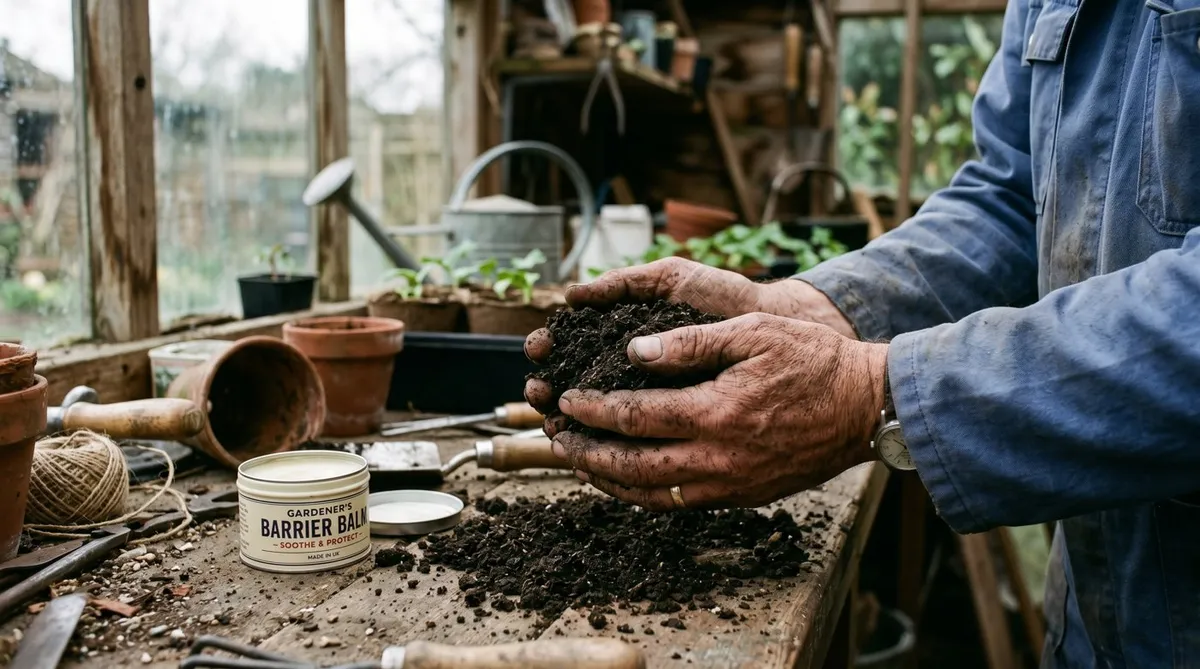
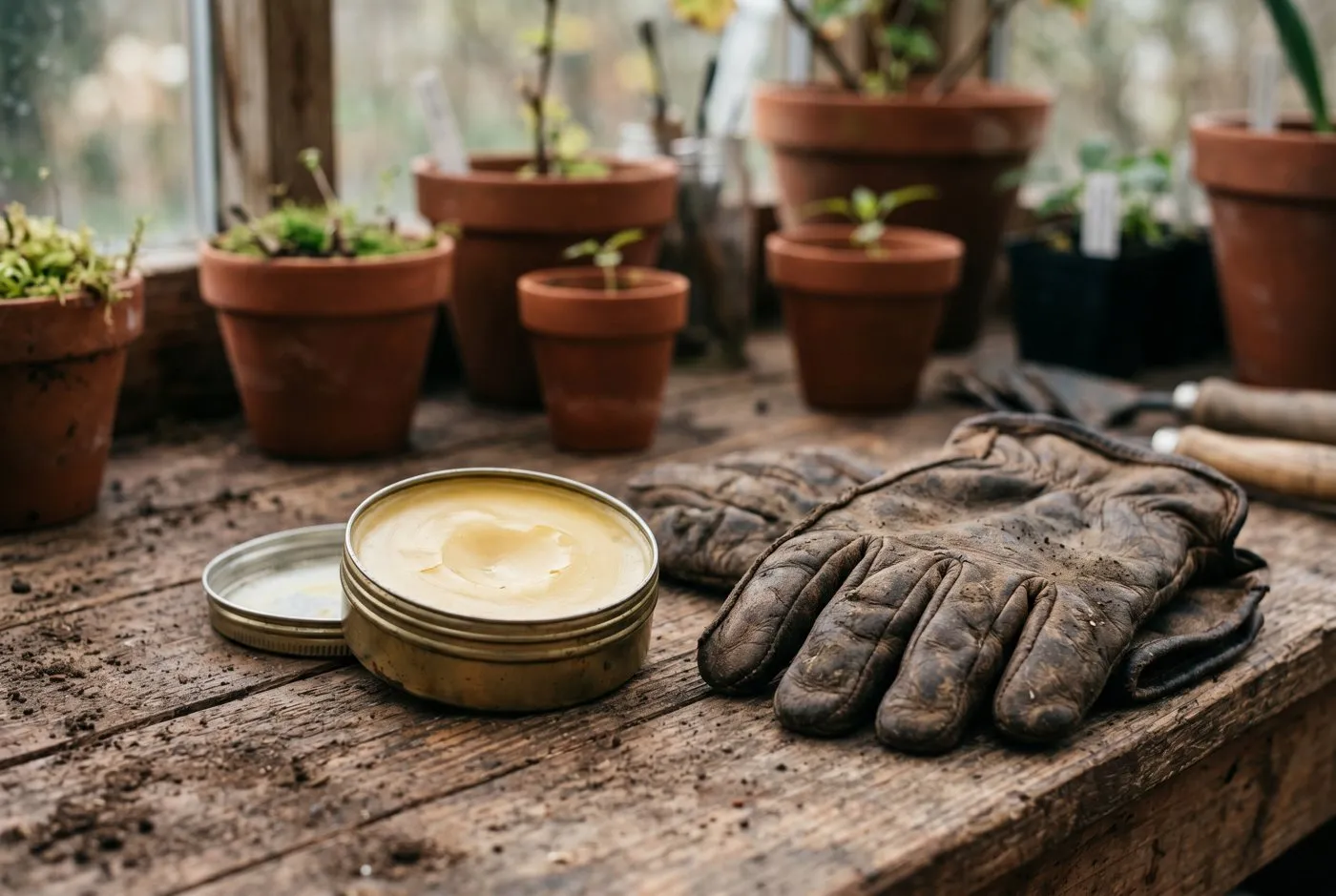 A beeswax barrier balm goes on before the gloves, not after the wash. The waxy film blocks alkaline soil and grit so your skin starts each session protected rather than exposed.
Barrier Cream or Repair Cream, and Why You Need Both
A barrier cream is preventive. You put it on before you garden. It lays a waxy or silicone film over the skin that blocks soil, water and grit from reaching the surface. Beeswax balms and dimethicone-based barrier creams both work. The point is to stop the damage before it starts, so the skin is not stripped and abraded all afternoon.
A repair cream is restorative. You put it on after washing and overnight, when the hands are clean and the skin can absorb actives. Urea, lanolin, glycerin and ceramides go to work rebuilding the barrier and softening callus while you are not using your hands.
Warning: Barrier creams are not a substitute for gloves on rough or thorny work. Use both. A film of balm will not stop a rose thorn or a splinter, and broken skin lets soil bacteria in.
The Cotton Glove Overnight Trick
This single habit does more for badly cracked hands than any upgrade in cream. The method is simple and it has fixed deep splits for me in three to four nights instead of ten.
Wash and pat the hands dry. Work a thick repair cream, a 10 percent urea or a lanolin balm, into every crack and across the knuckles. Do not be mean with it. Then pull on a pair of thin cotton gloves and sleep in them. The gloves trap warmth and moisture against the skin, stop the cream rubbing off on the bedding, and hold the actives in contact with the cracks for seven or eight hours.
Plain white cotton gloves cost a few pounds for several pairs. Wash them at 40 degrees and reuse. The same trick works with cling film on a single bad thumb, but cotton gloves are kinder and let the skin breathe a little. Run it nightly for a week on cracked hands and the difference is obvious by day three.
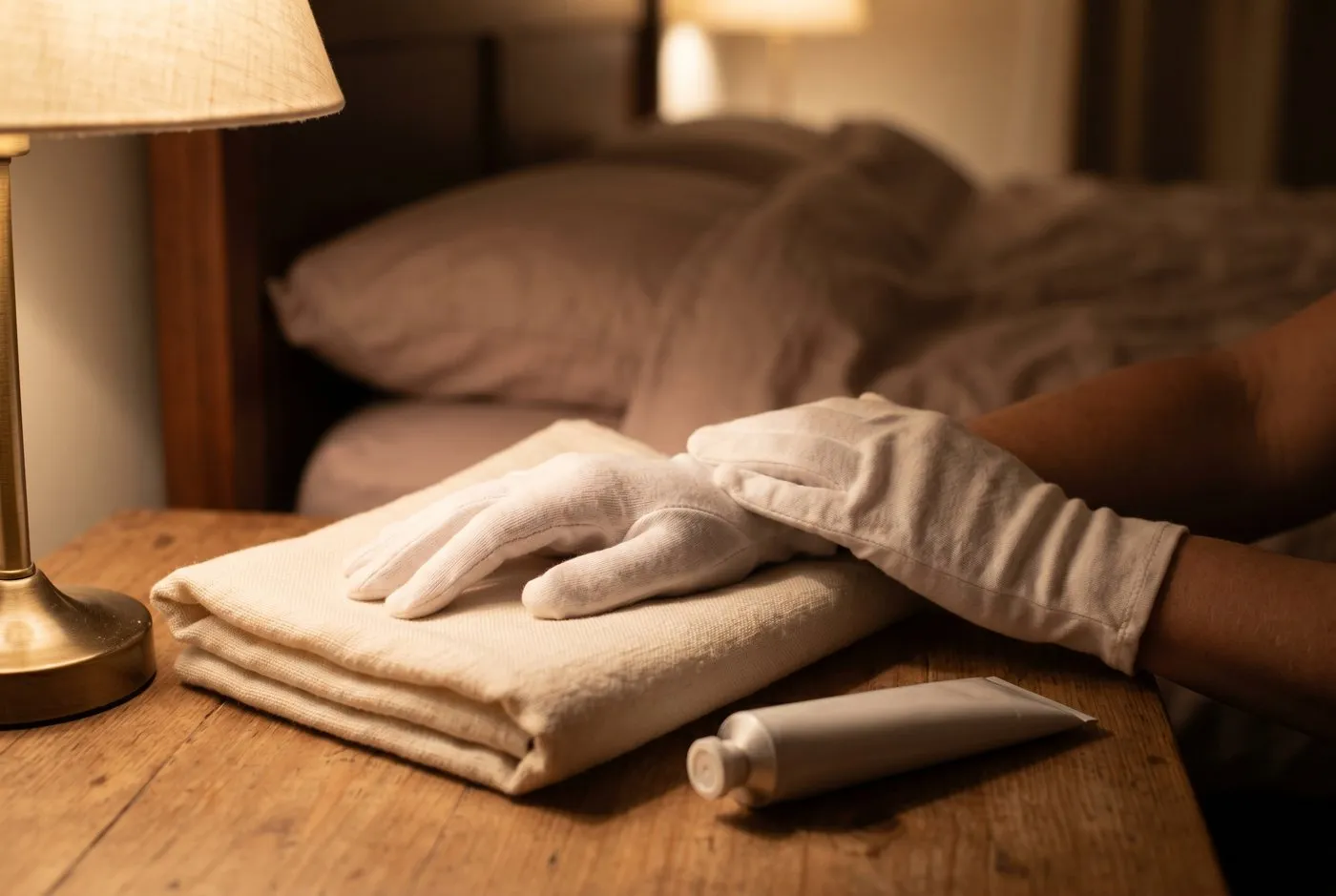 Cotton gloves over a thick cream hold the actives against the cracks all night. The cream cannot rub off, and trapped warmth speeds absorption. This is the fastest way to close split fingertips.
A Simple Hand-Care Routine Through the Year
The timing detail that matters most: get cream on within about three minutes of washing, while the skin still holds surface water. Cream applied to damp skin seals that water in. Cream applied to bone-dry skin has less to lock down.
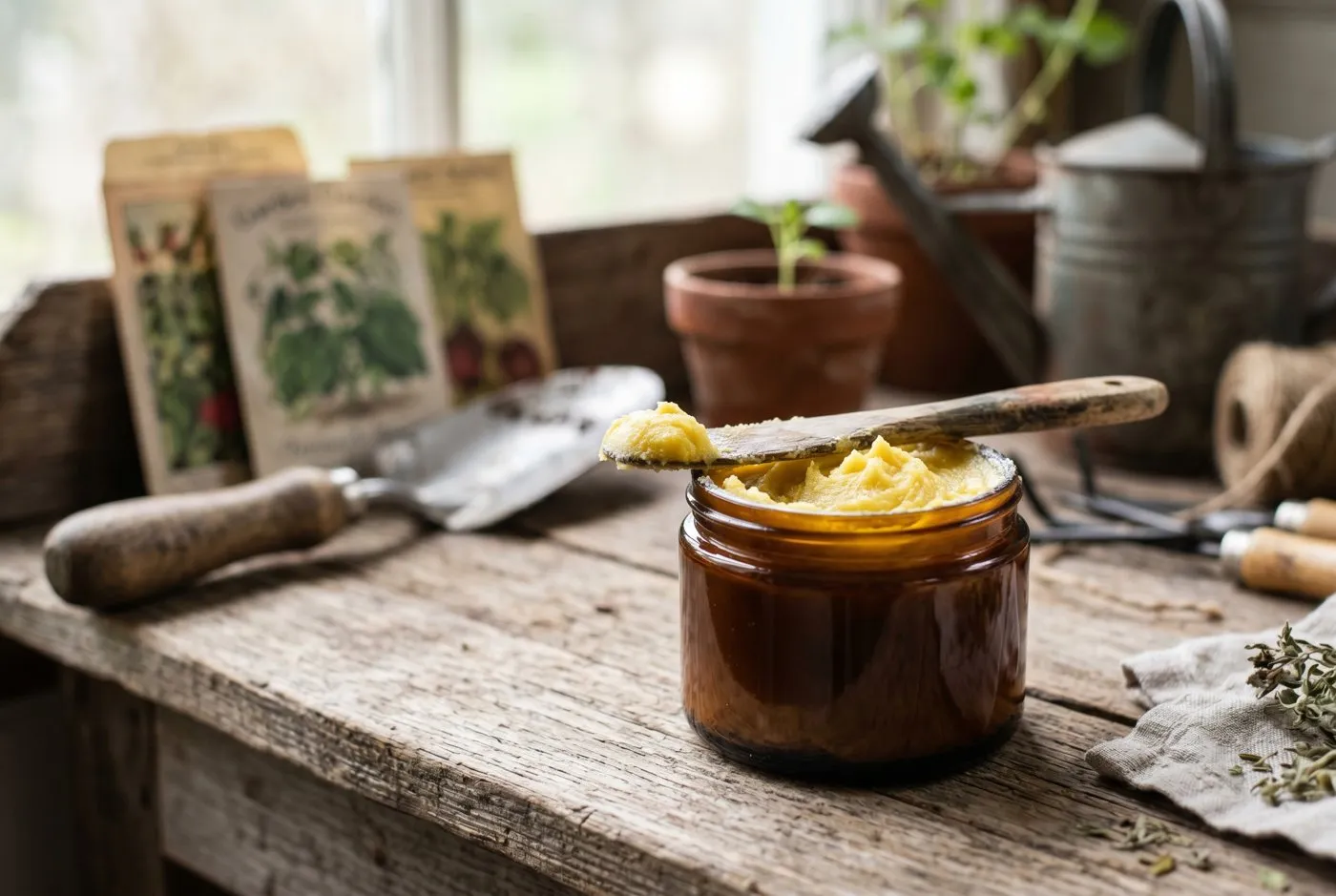 A lanolin and shea balm is the heavy artillery for overnight repair. It is greasy and slow to sink in, which is exactly why it works under gloves while you sleep rather than during the working day.
Common Mistakes That Keep Hands Cracked
Most gardeners with chronically sore hands are making one of these mistakes. Each is easy to fix.
Washing and not moisturising. The worst habit of all. Every wash strips oils. Walking away with bare wet hands lets them dry out tighter than before. Keep a cream by every sink and the back door, and use it within three minutes of every wash.
Fragranced creams on cracked skin. Perfume and essential oils smell pleasant but sting open cracks and can trigger contact dermatitis. On split or sore skin, scented creams slow healing and sometimes make it worse. Switch to fragrance-free, dye-free while the hands are broken, then go back to scented once they are merely dry.
Treating callus as the enemy. Some callus protects working hands. The problem is hard, dry callus that splits. The answer is not to file it all off but to keep it supple with urea so it flexes instead of cracking.
Ignoring deep cracks that need a pharmacist. A crack that bleeds, weeps clear fluid or will not close after two weeks is past the point of hand cream. So is any patch that is hot, swollen, crusting yellow or spreading. That is possible infection or dermatitis, and it needs proper treatment, not another tube of moisturiser.
Warning: Do not garden with open, bleeding cracks in bare hands. Soil carries bacteria including tetanus. Cover broken skin, wear gloves, and keep your tetanus jab up to date. The NHS guide to dry and cracked skin explains when self-care is enough and when to get help.
When Cracked Skin Needs a Pharmacist or GP
Hand cream handles dry and mildly cracked skin. It does not handle infection, dermatitis or eczema, and pushing more cream at those wastes time the skin does not have.
See a pharmacist first for split skin that bleeds, weeps or will not heal, for itchy scaly patches, or for any rash that keeps coming back. They can supply stronger emollients, a urea or salicylic acid product for thick callus, or a mild steroid cream for inflamed dermatitis. Pharmacists deal with this daily and the visit is free.
See a GP if the skin is hot, swollen, crusting yellow, oozing pus or spreading, all signs of infection that may need antibiotics. Go too if a steroid cream from the pharmacy has not settled a rash within a couple of weeks, or if cracks keep returning in the same spots despite a good routine. Persistent hand dermatitis sometimes points to an allergy, to latex gloves or a soil component, that is worth identifying.
The honest rule: cream for dry and cracked, pharmacist for stubborn or scaly, GP for hot, weeping or spreading.
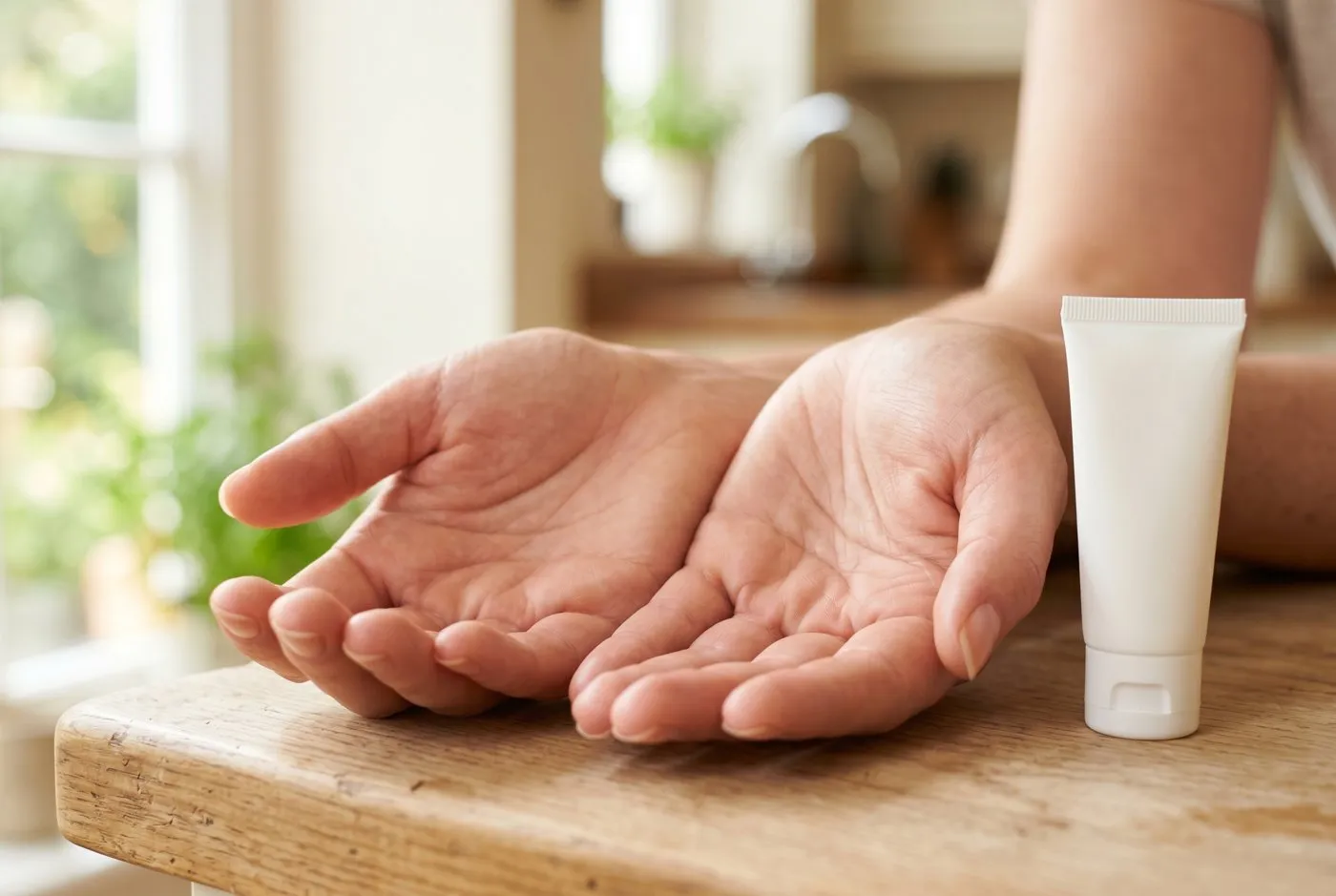 Healed hands after a fortnight of barrier-before, repair-after and overnight gloves. The skin flexes without splitting. Keep a fragrance-free cream by the sink to hold the ground you have gained.
For more on protecting yourself through the cold months, our winter gardening jobs guide covers the seasonal work that does the damage, and keeping your secateurs sharp matters because blunt tools force you to grip harder and chafe the skin.
Frequently asked questions
What hand cream is best for gardeners?
A lanolin or urea repair cream for overnight, plus a beeswax barrier balm. Use the barrier balm before you garden to keep soil and water off the skin. Use the thicker repair cream at night. Fragrance-free versions suit cracked or sensitive skin best. No single cream does both jobs, so most gardeners need the pair.
How do I heal cracked gardener’s hands?
Wash gently, pat dry, then seal with a thick cream overnight. Use a urea or lanolin cream and cover with cotton gloves while you sleep. Repeat nightly for a week. Keep a barrier balm on during the day so the next session does not strip the skin again. Deep cracks that bleed need a pharmacist.
Should I use barrier cream or repair cream?
Both, at different times. A barrier cream goes on before gardening to block soil and water. A repair cream goes on after washing and overnight to rebuild the skin. They do different jobs. Most gardeners with sore hands need the pair, not one or the other. Barrier alone leaves cracks unhealed; repair alone gets stripped off.
Is fragrance-free hand cream better for gardeners?
Yes, for cracked or sensitive skin. Fragrance and essential oils can sting split skin and trigger contact dermatitis. Choose a fragrance-free, dye-free cream when your hands are sore. Save scented creams for hands that are merely dry, not cracked or broken. The skin heals faster without perfume working against it.
When should cracked hands see a doctor?
When cracks bleed, weep, spread or will not heal in two weeks. Yellow crusting, swelling, heat or pus point to infection. Persistent itchy, scaly patches may be dermatitis or eczema needing a steroid cream. A pharmacist can advise first; see a GP if it worsens or an infection sets in.
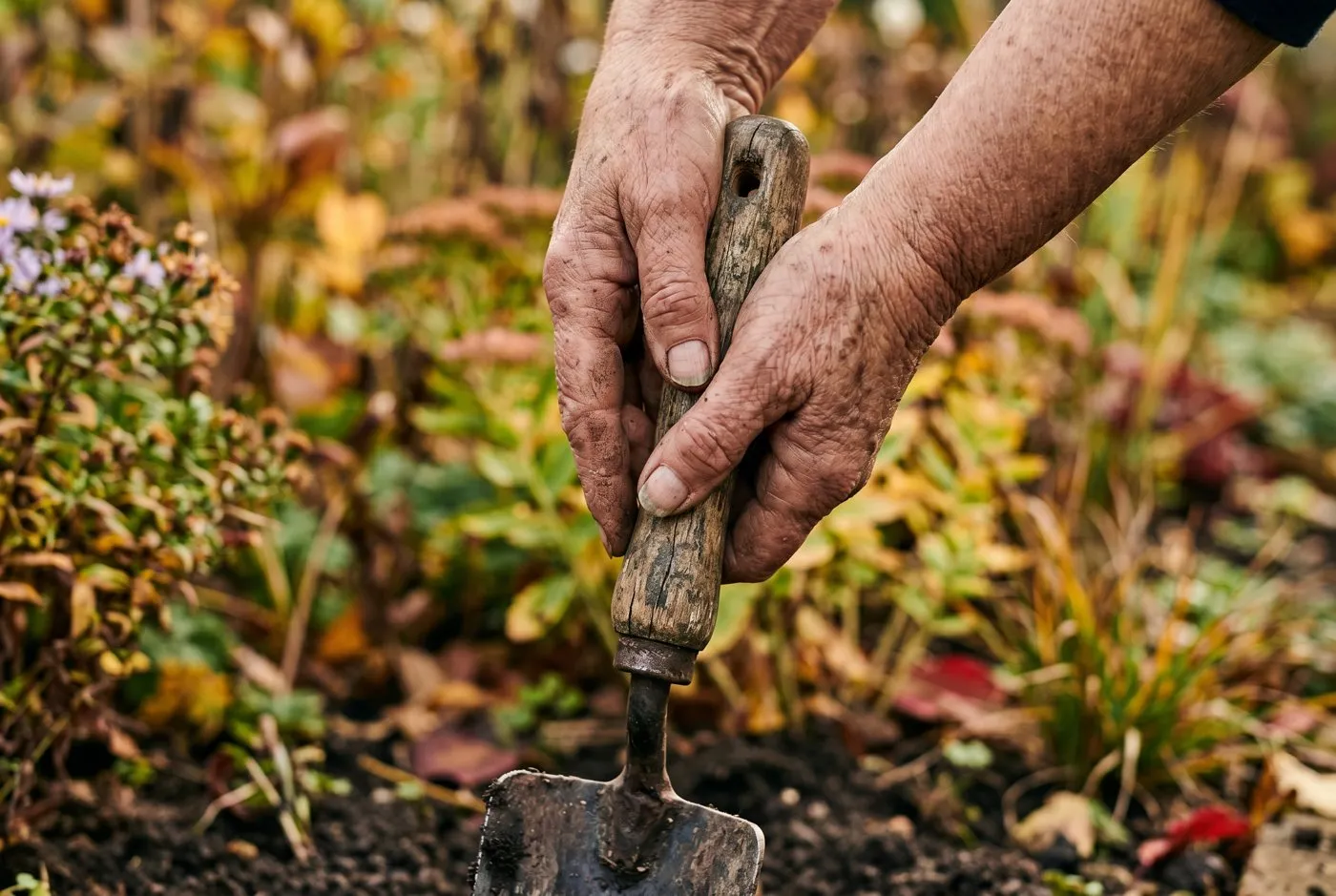 Years of tool work weather the hands, but weathered need not mean cracked. A barrier-and-repair routine keeps even hard-working hands supple enough to flex without splitting through the winter.
Now look after the rest of you
Sore hands rarely travel alone. If gardening leaves you aching, our gardener’s back pain guide covers posture and tools that ease the strain, and our accessible gardening guide and gardening for older gardeners both cover grips and aids that reduce the load on hands and joints. For the wider picture, our gardening and mental wellbeing guide is worth a read once the body is sorted.
Our team produces practical UK gardening guidance from source research, contributor records and established horticultural practice. Editorial standards are overseen by Matt W.