Key takeaways
- You can mow wet grass, but a dry lawn always gives a cleaner cut and protects the soil
- Never run a corded electric mower on wet grass: an RCD cuts power in 30 to 40 milliseconds but is not a guarantee
- Light morning dew is fine on firm ground, but soaked or waterlogged soil should always wait
- Raise the cut to 50mm, walk at half speed and fit a freshly sharpened blade to reduce tearing
- Wet clippings clog the deck and chute, so cut without the collector and side-discharge instead
- Petrol and robot mowers handle damp grass far better than corded electric models
You can mow a wet lawn, but it is best avoided, and there is one situation where the answer is a firm no. Mowing wet grass is something most UK gardeners face every summer, because our weather rarely gives a long dry spell when the lawn needs a cut. The grass keeps growing whether the forecast cooperates or not. This guide explains the real risks of mowing wet grass, the single safety rule you must never break, and the genuine conditions where a damp cut is perfectly fine. It draws on three seasons of logged wet-versus-dry mowing on a heavy clay lawn, with rut depth and clumping measured rather than guessed.
Can you mow a wet lawn safely?
You can mow a wet lawn, but a dry lawn always gives a better result. The grass cuts cleaner, the soil stays firmer, and the mower runs without clogging. The question is rarely whether it is possible. It is whether the trade-offs are worth it on the day.
There are two very different kinds of wet. Light morning dew sits on the surface of grass that is otherwise standing on firm, dry soil. This is mild and most petrol or cordless mowers handle it without trouble. Soaked, waterlogged ground after heavy rain is a different matter, because the soil is soft and the grass is heavy with water. The risks below scale with how wet things are.
The single rule that never bends concerns electricity. A corded electric mower and a wet lawn is a combination to avoid entirely. Everything else is a question of degree, and the rest of this guide covers how to judge it.
Why mowing wet grass with a corded electric mower is dangerous
A corded electric mower on wet grass is the one scenario where you should never mow. Water conducts electricity. If the blade slices the cable, or the cable insulation is cracked, the current can pass through the wet grass and through you. The result can be a fatal electric shock. This is not a rare freak event. Cutting your own cable is one of the most common lawnmower accidents in the UK.
A residual current device (RCD) is your protection. It detects current leaking to earth and cuts the supply in around 30 to 40 milliseconds, fast enough to prevent most fatal shocks. Every outdoor electric mower must run through an RCD, either built into the plug or fitted at the socket. The Royal Society for the Prevention of Accidents recommends an RCD for all outdoor power tools.
An RCD is a safety net, not a licence. It can fail, and it does not protect against every fault. The official electrical safety guidance on GOV.UK sets out why outdoor power tools need extra care. Battery mowers remove the cable risk entirely, which is why they are the better choice when the grass is damp.
Warning: Never mow wet grass with a corded electric mower. A cut or damaged cable on a wet lawn can deliver a fatal shock. Always use an RCD, keep the cable behind you and over your shoulder, and switch to a battery or petrol mower whenever the grass is wet.
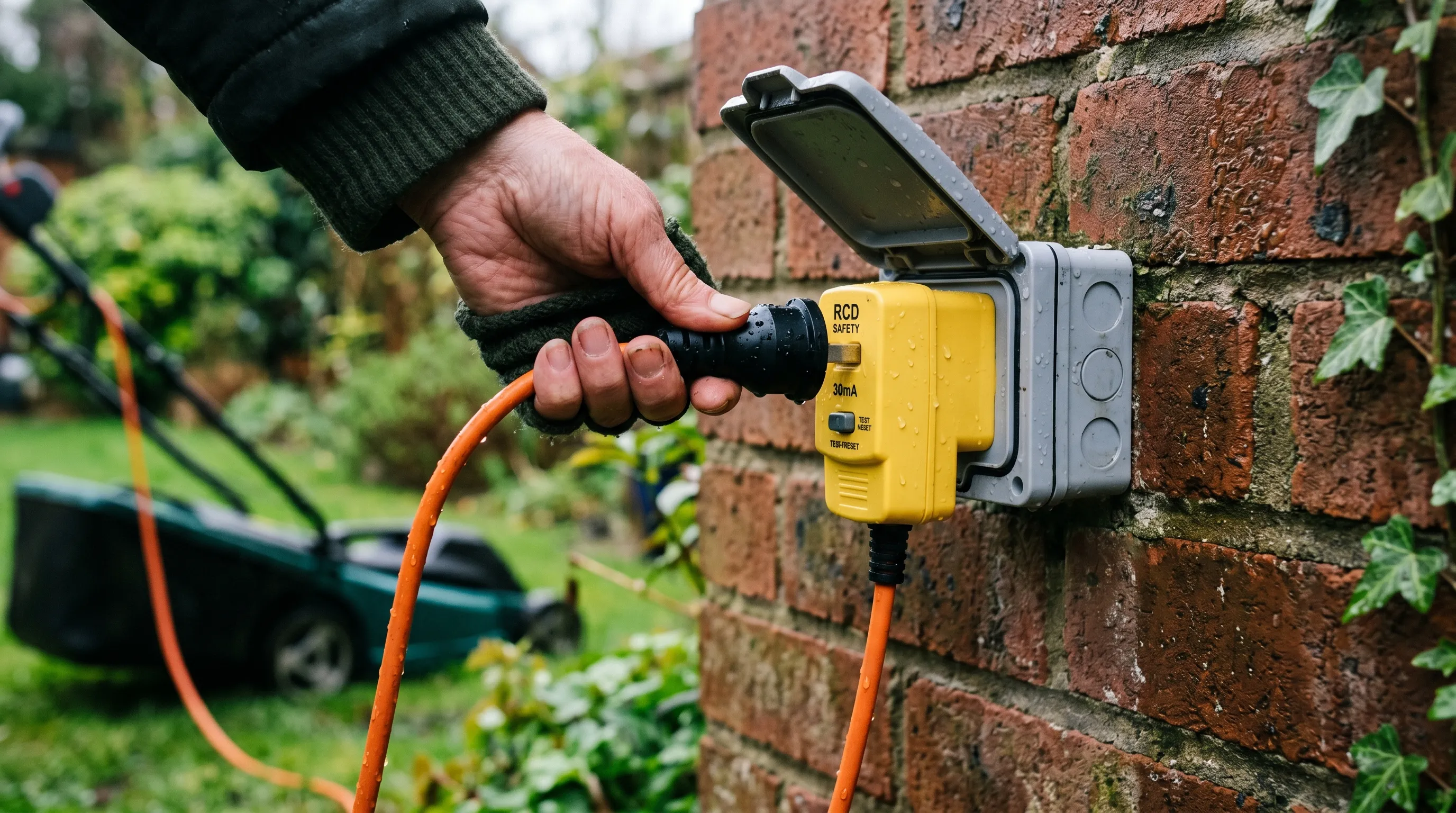 An RCD cuts the power in milliseconds if the cable is damaged, but it is a backup, not a reason to mow wet grass with a corded electric mower.
How wet ground causes soil compaction and rutting
Soft, wet ground compacts and ruts under the weight of a mower. A petrol rotary mower weighs 25 to 40kg, and that load presses down through the wheels into ground that has lost its structure when waterlogged. The soil particles squeeze together, air pockets collapse, and the surface deforms into ruts.
Compaction is not just cosmetic. Compressed soil starves grass roots of air and water, which thins the sward and lets moss and weeds move in. The damage builds slowly over a season of wet mowing, then needs aeration to reverse. Our guide on how to scarify and aerate a lawn covers the repair work, but prevention is far easier than the cure.
Why wet grass gets torn instead of cut
A mower tears wet grass rather than slicing it cleanly. Dry grass blades stand upright and stiff, so the spinning blade shears them at a sharp angle. Wet grass is limp and heavy. It flattens and bends away from the blade, so instead of a clean cut it gets bruised, shredded and torn at the tip.
A torn tip is a problem for two reasons. First, the ragged end has a much larger surface area than a clean cut, so it loses moisture fast and browns within a day or two. A lawn mown wet often looks scorched and pale the following afternoon, even though nothing was burned. Second, the open wound is an entry point for disease.
A blunt blade makes everything worse. A sharp blade can still manage a reasonable cut on damp grass, but a dull one simply drags and rips. This is why blade condition matters more on a wet lawn than a dry one. If you mow wet often, you will be sharpening more frequently, because wet grass and grit dull an edge faster.
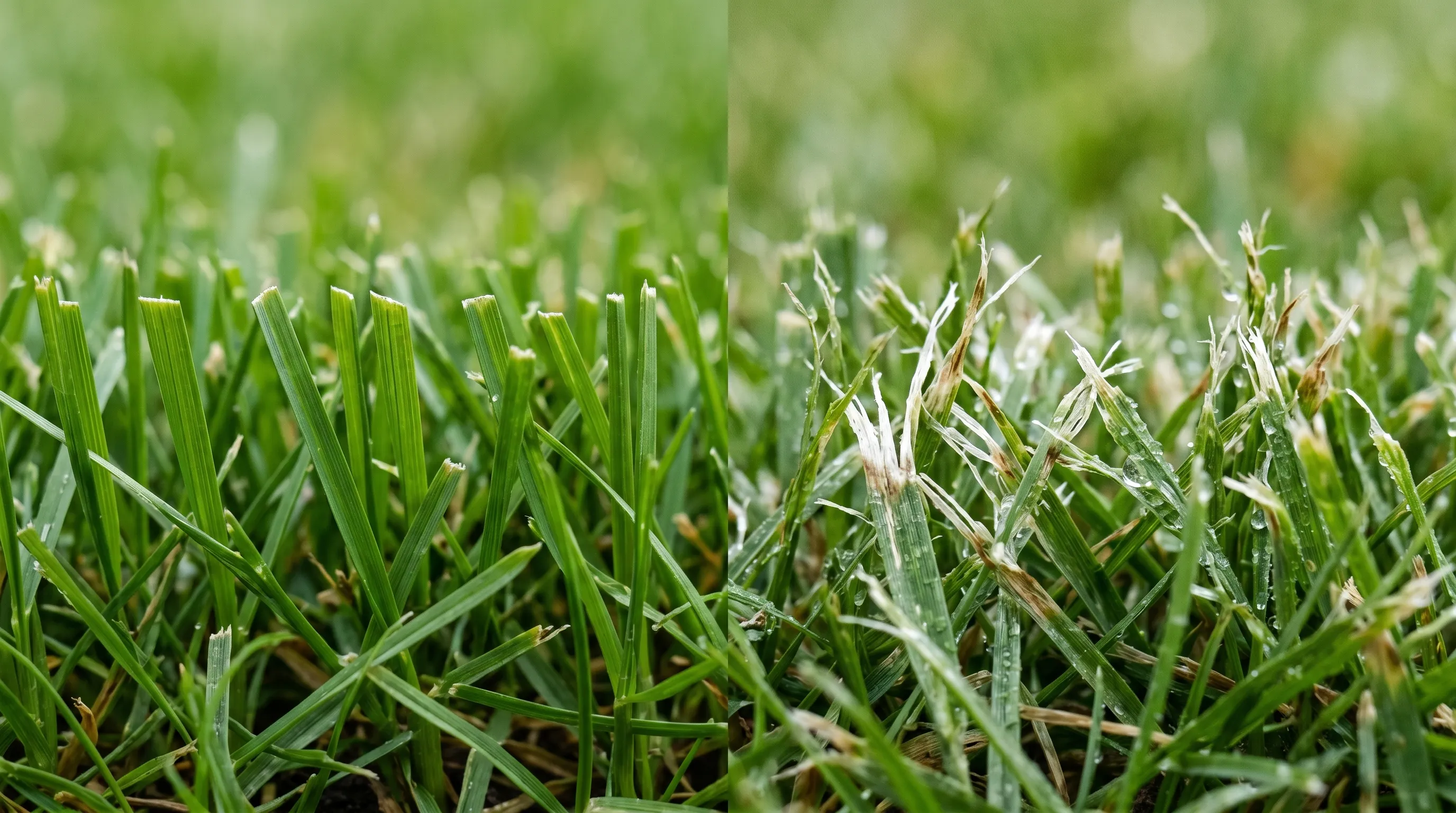 Left, a clean cut from dry grass and a sharp blade. Right, the torn, bruised tips of wet grass that brown and invite disease.
How wet clippings clog the deck and spread disease
Wet clippings clump together and clog the mower deck, chute and collector. Dry grass flows through the machine and into the box as a light stream. Damp grass is heavy and sticky. It packs around the blade, bungs up the discharge chute, and matts into the grass box so the collector fills with dense, soggy clumps.
There is a disease angle too. Wet blades carry fungal spores between plants. Mowing a damp lawn drags the mower through standing moisture and flicks spores from infected blades onto healthy ones, helping diseases like red thread and fusarium spread. Our guide to lawn diseases and how to treat them explains which fungal problems thrive in the damp UK climate and how mowing habits make them worse.
When is it actually OK to mow wet grass?
Mowing wet grass is acceptable when the grass is only dew-damp and the ground underneath is firm. Light morning dew on a lawn standing on dry soil is mild. The grass blades are wet but the plant and the soil are not waterlogged. A petrol or cordless mower handles this with little fuss, especially with the cut raised.
A long, broken forecast is the other valid reason. If rain is set in for a week and the grass is racing away, a single careful cut on a dry-ish window beats letting the lawn grow out of control. Long grass left uncut goes to seed, thins, and is far harder to bring back.
The conditions that make a wet cut acceptable are specific:
- The grass is dew-damp, not dripping or standing in water.
- The ground feels firm underfoot and does not squelch.
- You are using a petrol, cordless or robot mower, never corded electric.
- The blade is freshly sharpened.
If any one of those is missing, wait. Soaked, soft ground after heavy rain should always wait for a dry spell, especially on clay.
How to mow wet grass with the least damage
Follow a set routine to limit harm when you have no choice but to mow wet grass. The aim is a clean enough cut, no rutting, and no clogging. Work through these steps in order.
- Confirm the ground is firm. Press a heel into the lawn. If it sinks or water rises around it, stop and wait.
- Choose the right mower. Petrol, cordless or robot only. Never a corded electric mower on wet grass.
- Sharpen or fit a fresh blade. A keen edge slices damp grass instead of tearing it, where a dull one drags and rips.
- Raise the cut height to 50mm or higher. A high cut removes less leaf, takes less strain, and reduces clogging and scalping.
- Remove the grass collector. Side-discharge or mulch instead, so wet clippings are not forced into a box that clogs.
- Walk at half your normal speed. Slow passes let the blade clear each cut before the next, which cuts down clumping.
- Take narrower, overlapping strips. Less grass per pass means less load on the deck.
- Rake off any clumps afterwards. Leaving wet clumps on the lawn smothers the grass beneath.
- Clean the deck once finished. Wet grass cakes onto the underside and holds moisture against the metal, which rusts it.
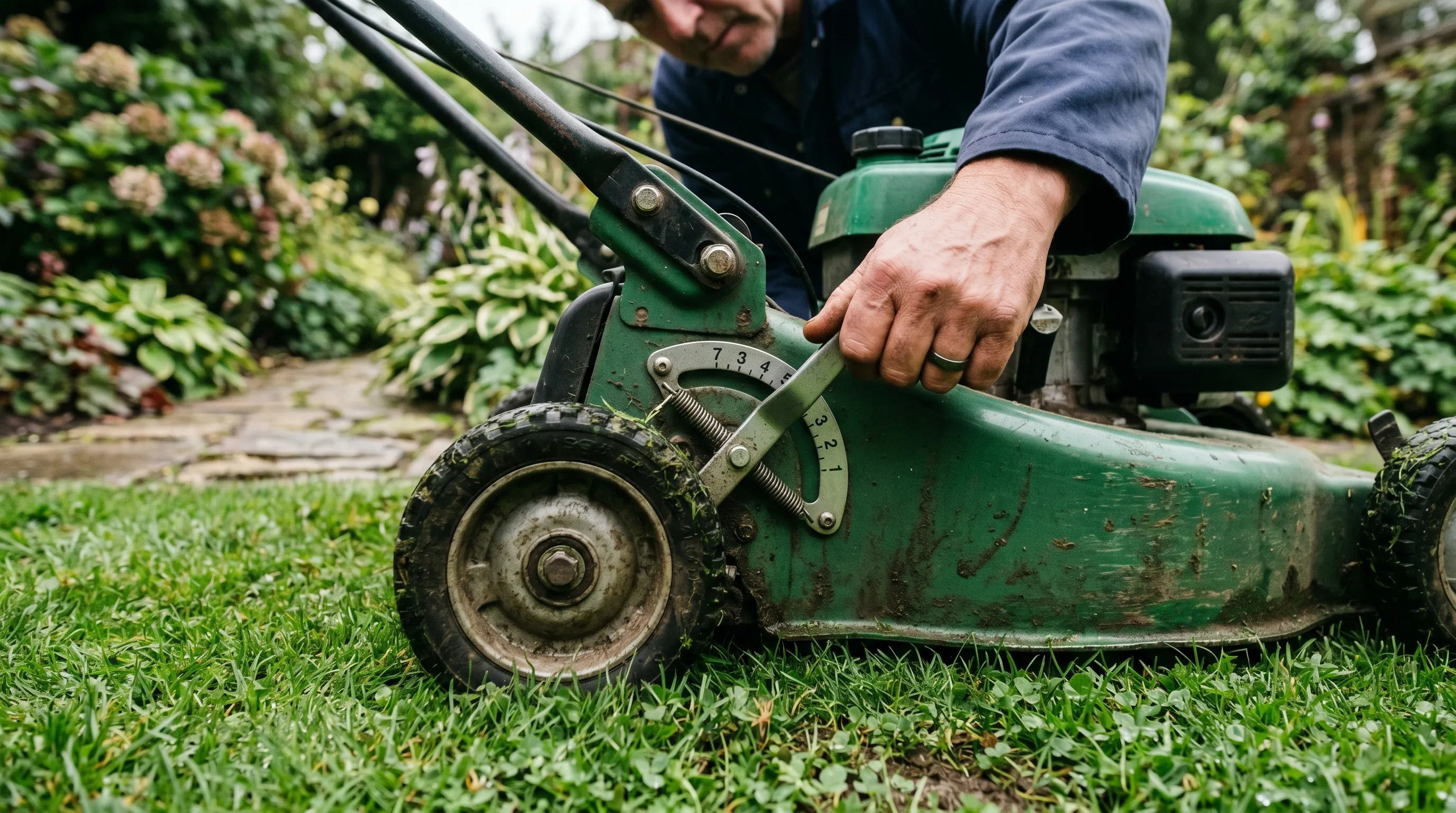 Lifting the cut to 50mm before a wet cut removes less leaf, reduces strain on the motor and limits scalping on soft ground.
Can robot mowers cut wet grass?
Most robot mowers can cut wet grass, but they do it better than they do it well. A robot mower is light, often 7 to 11kg, so it ruts soft ground far less than a 30kg petrol machine. It also runs on battery, so there is no cable and no shock risk. Those two facts make robots the safest option for damp conditions.
The catch is cut quality and clumping. A robot mower trims a tiny amount of growth every day with small blades, so wet clippings still stick to the underside and can build up. Many models have a rain sensor that sends the mower back to its dock when it detects moisture, precisely because manufacturers know a wet cut is a poor cut.
If you rely on a robot through a wet UK summer, clean the blade disc and underside regularly, and let the rain sensor do its job rather than overriding it. Our robot mower guide for the UK compares models and explains how the rain sensors and cutting systems differ between brands.
Common mistakes when mowing a wet lawn
A handful of repeated errors turn a damp cut into lawn damage. Avoid these and even a wet mow comes off reasonably well.
Using a corded electric mower. This is the dangerous one. People reach for the nearest mower without thinking about the cable and the water. Always switch to battery or petrol when the grass is wet.
Mowing on soaked, soft ground. Cutting after heavy rain on clay ruts the lawn and compacts the soil. The grass will still be there tomorrow. Wait for the ground to firm up.
Cutting too low. A low cut on wet grass scalps the soft turf and tears the limp blades. Raise the height to 50mm or more to take less off and strain the mower less.
Keeping the grass box on. Wet clippings clog the collector within a few metres. Take the box off and side-discharge so the machine keeps moving.
Leaving clumps on the lawn. Wet clumps smother and yellow the grass beneath within days. Rake them off the same day, or spread them thin to dry.
Mowing wet grass through the UK seasons
The risk of a wet cut changes through the year as growth rate and drying conditions shift. The table below shows the realistic picture for a typical UK lawn.
| Month | Typical conditions | Wet-mowing verdict |
|---|---|---|
| March to April | Cold, damp, slow growth | Wait for a dry window, first cut on firm ground only |
| May | Growing fast, drying spells | Mow on dew-damp mornings if ground is firm |
| June to July | Peak growth, warm | Best chance of a dry cut, mow wet only if forced |
| August | Growth slowing, can be dry | Usually dry enough, no need to mow wet |
| September | Damp mornings return | Mow before lunch once dew lifts, watch soft ground |
| October to November | Wet, cold, soft ground | Avoid wet cuts, last cut on a dry day |
| December to February | Dormant or near-dormant | Mow rarely, only on a dry firm day if growth continues |
Spring and autumn are the danger months, because the ground stays soft and dew lingers. For the first cut of the year after the cold months, see our guide to the first lawn cut after winter in the UK, which covers the firm-ground test in detail.
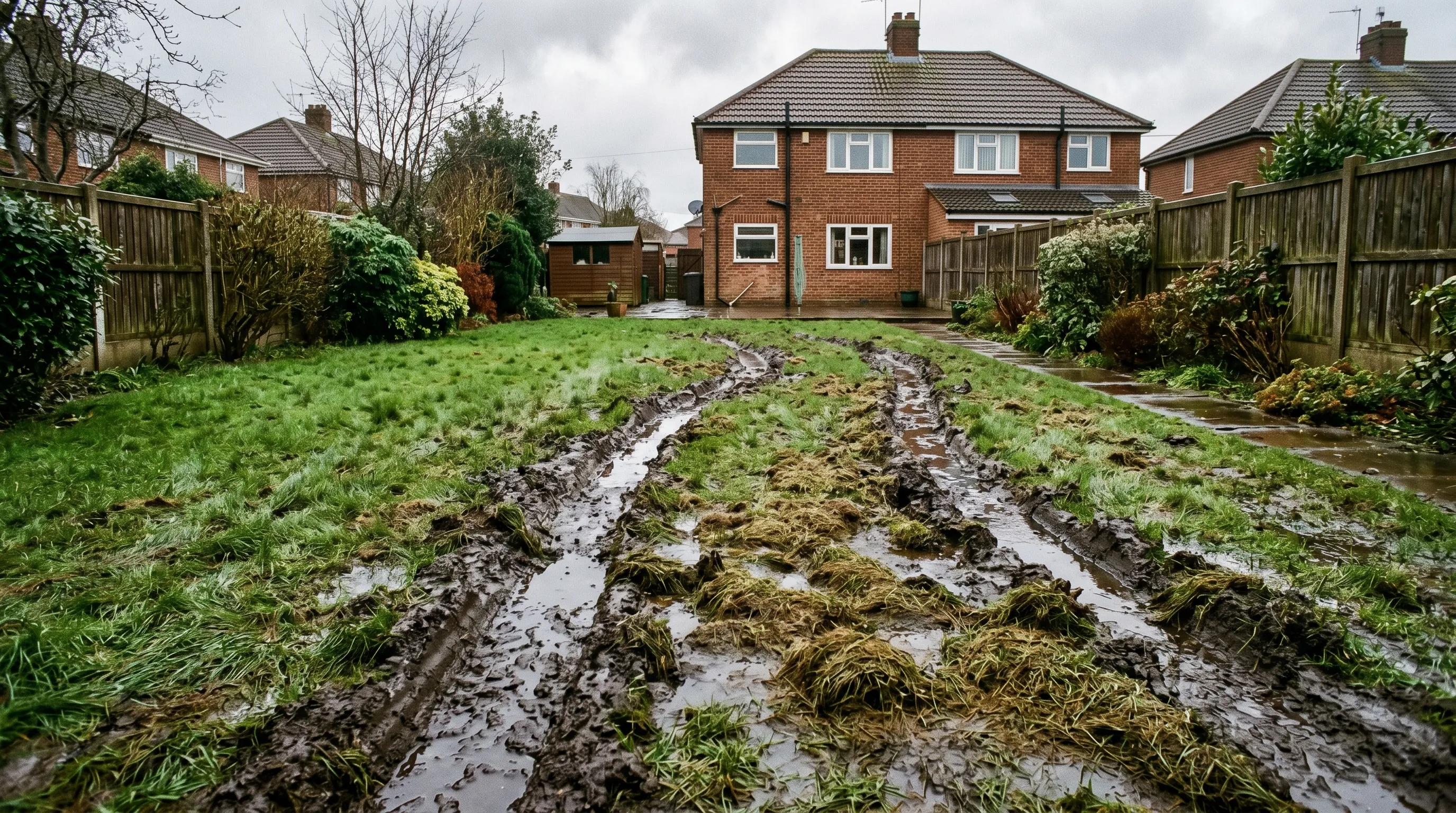 Soft, soaked ground ruts under a mower and leaves clumps that smother the grass. This lawn needed a dry spell, not a cut.
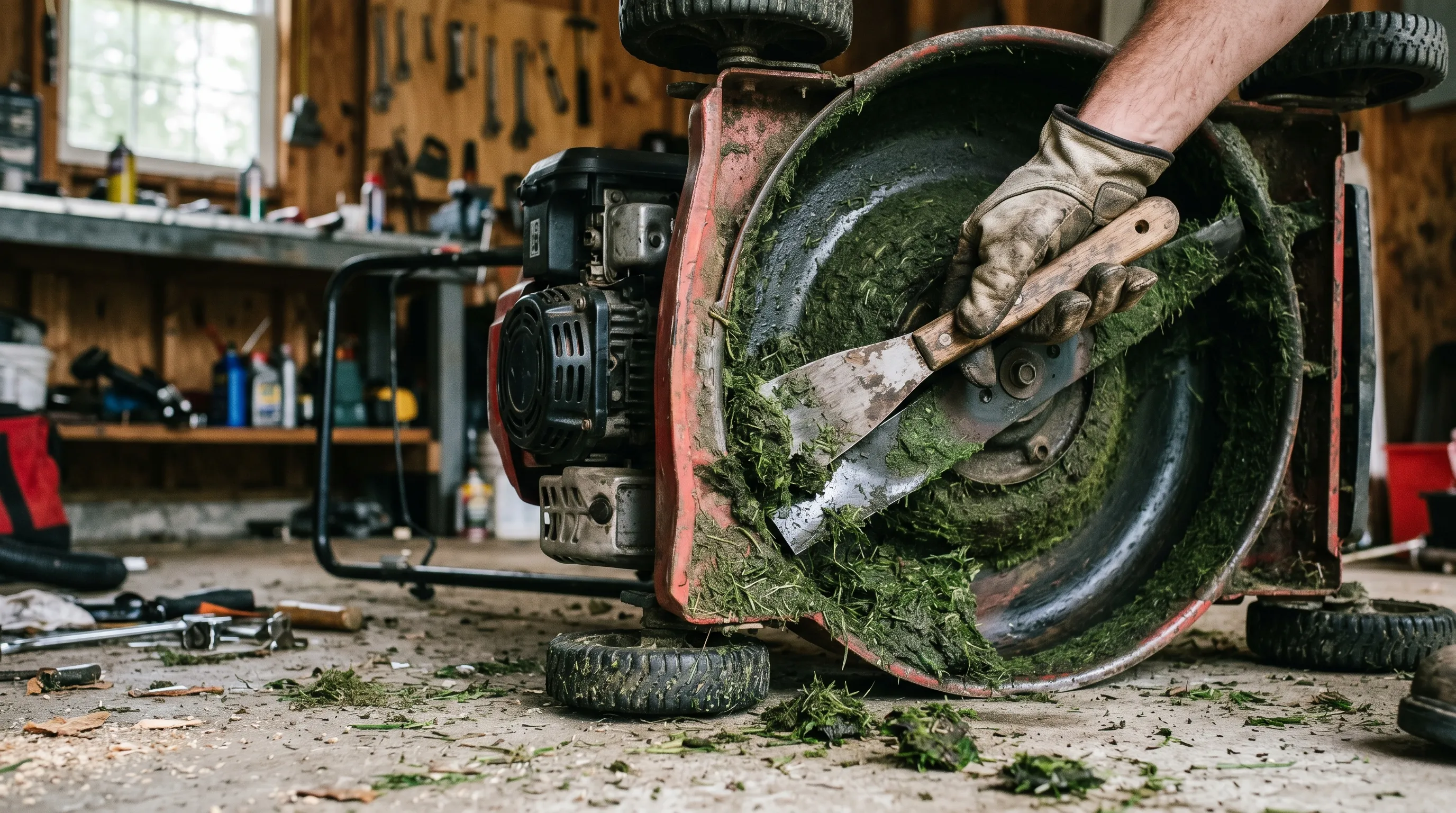 Wet grass cakes the underside of the deck and holds moisture against the metal. Clean it off the same day to stop the deck rusting.
A healthy lawn comes from cutting little and often on firm, dry ground, not from forcing a cut through wet conditions. The grass grows back from a missed week. The soil takes a season to recover from compaction. When the weather genuinely forces your hand, raise the cut, slow down, fit a sharp blade and skip the collector, and never reach for a corded electric mower.
Our team produces practical UK gardening guidance from source research, contributor records and established horticultural practice. Editorial standards are overseen by Matt W.