Key takeaways
- 55 terms defined in one plain sentence each, across 5 themed tables
- Hardening off was the most-asked term: 9 separate people wanted it explained
- Hardy means frost-proof, not indestructible; half-hardy plants die below 0°C
- NPK is just nitrogen for leaves, phosphorus for roots, potassium for flowers and fruit
- Bare-root plants are sold without pots from November to March and cost 30-50% less
Why does gardening have so much jargon?
Gardening jargon survives because most of it is genuinely useful shorthand once decoded. “Prick out into 9cm pots when seedlings have two true leaves” is a precise instruction packed into eleven words. The trouble is that seed packets and plant labels assume you already know the code.
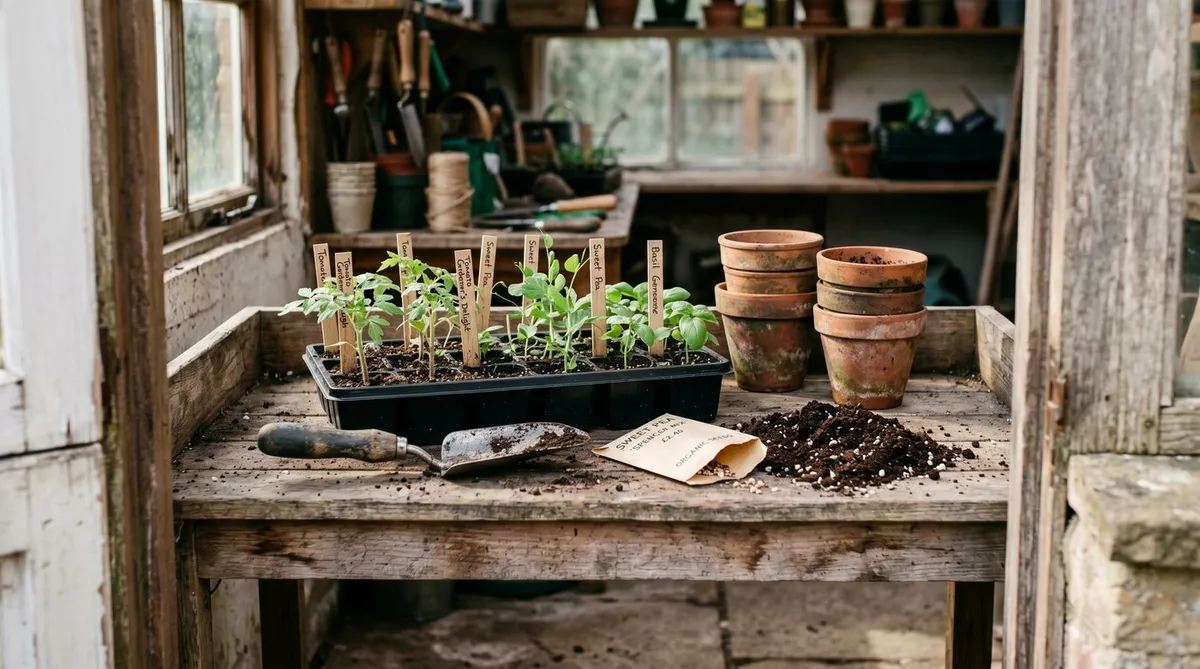
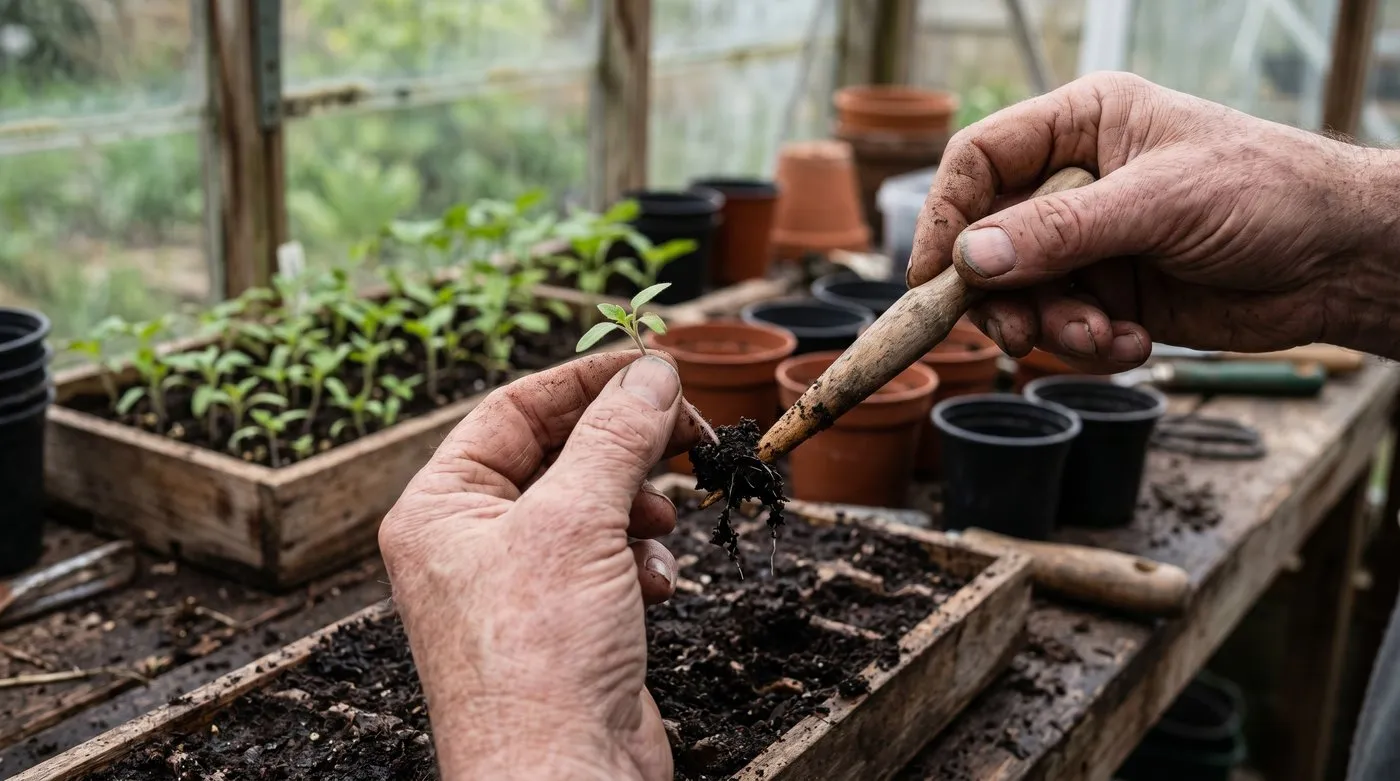 Pricking out in practice: hold the seedling by a seed leaf, never the stem, and it survives the move nine times out of ten.
Sowing and propagation terms explained
Three of these do most of the work. Germination, pricking out and potting on describe the whole journey from packet to plantable plant, and our step-by-step guide to sowing seeds indoors walks that journey with photographs. Hardening off is the one that kills plants when skipped; the full hardening off guide gives a day-by-day schedule.
What do pruning terms actually mean?
Pruning terms describe either a cut or the part of the plant you are cutting. Once you can tell a leader from a lateral, every pruning instruction ever written becomes readable.
| Term | What it means | UK example |
|---|---|---|
| Deadheading | Removing spent flowers so the plant makes more flowers instead of seed. | Roses and dahlias, weekly in summer |
| Pinching out | Nipping off a soft growing tip with finger and thumb to make the plant bush out. | Sweet peas pinched at 10cm tall |
| Stopping | Pinching the main tip to halt upward growth and redirect energy. | Tomatoes stopped after 4-5 trusses |
| Leader | The main central stem of a tree or shrub. | A young apple tree has one leader |
| Lateral | A side shoot growing off a main stem. | Cordon tomatoes have laterals removed |
| Spur | A short, stubby side shoot that carries the fruit buds. | Apples are spur-pruned in winter |
| Coppicing | Cutting a shrub or tree to near ground level so it regrows with fresh stems. | Hazel coppiced every 5-7 years |
| Pollarding | Cutting back to a permanent framework at head height rather than ground level. | Street willows and limes |
| Crown | The branching framework of a tree, or the point where stems meet roots in a perennial. | Never bury a peony crown deeper than 5cm |
| Water shoots | Fast, upright, weak shoots that follow hard pruning. | The thicket on a butchered apple tree |
The single most useful habit is knowing when each plant gets its cut, because the technique is usually easier than the timing. Our year-round pruning calendar lists the right month for 40 common garden plants.
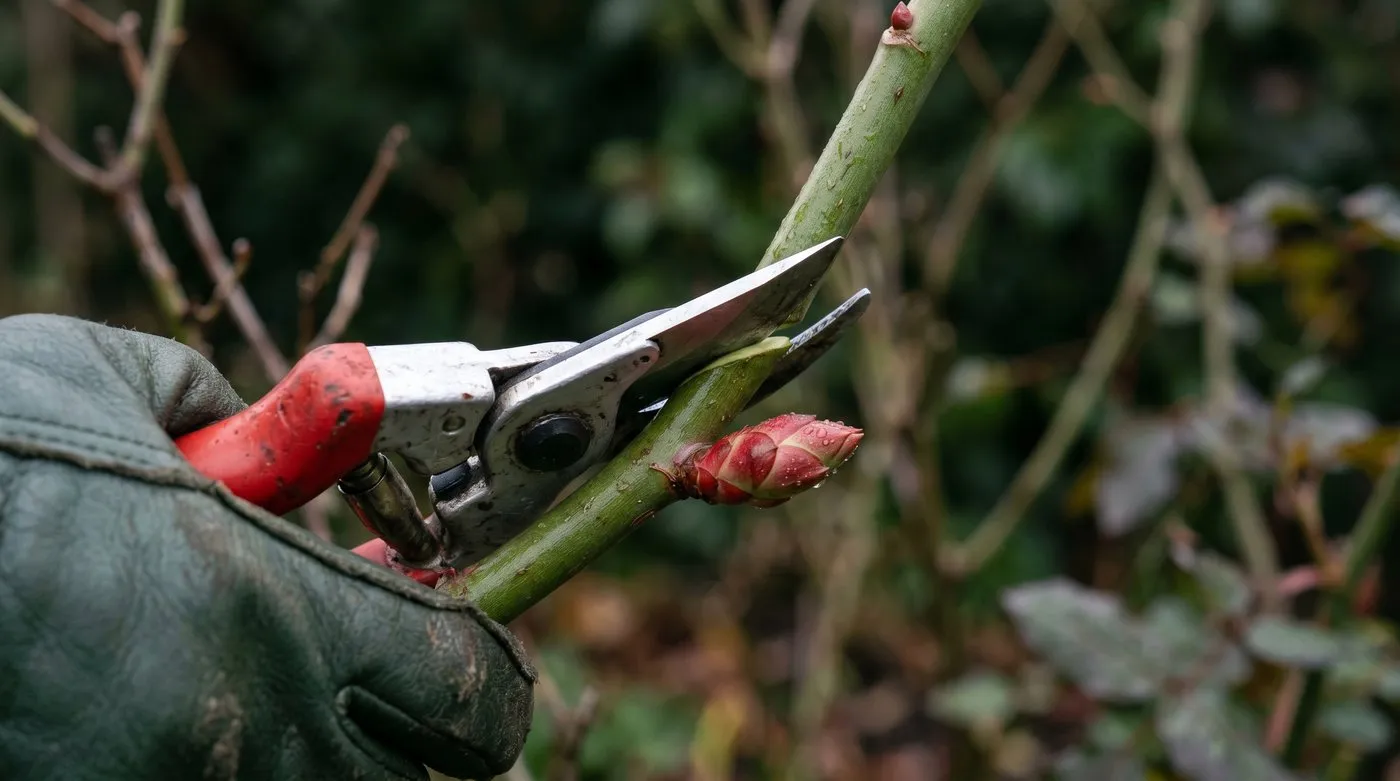 The cut behind the jargon: 5mm above an outward-facing bud, sloping away, and the stem heals cleanly.
What do NPK, ericaceous and tilth actually mean?
Soil terms are the densest jargon in gardening, and the most worth learning. These 12 cover what soil is, what you add to it and what the fertiliser packet is telling you.
| Term | What it means | UK example |
|---|---|---|
| Loam | Soil with a balance of sand, silt and clay; the ideal most gardens lack. | Crumbles in the hand, neither sticky nor gritty |
| Tilth | A fine, crumbly soil surface ready to take seed. | Raked down before sowing carrots |
| pH | The acidity scale of soil, where 7 is neutral. | Most vegetables grow best at pH 6.5-7 |
| Ericaceous | Describes acid-loving plants and the lime-free compost they need. | Blueberries and rhododendrons |
| Organic matter | Anything once living that is added to feed and open up the soil. | Manure, compost, leaf mould |
| Mulch | A layer spread over the soil surface to hold moisture and block weeds. | 5-7cm of bark chips in spring |
| Leaf mould | Crumbly soil conditioner made from rotted leaves alone. | Bagged autumn leaves, ready in 1-2 years |
| Green manure | A fast crop grown only to be dug back in to feed the soil. | Phacelia sown after the potatoes lift |
| NPK | The ratio of nitrogen, phosphorus and potassium in a fertiliser. | Tomato feed runs roughly 4-3-8 |
| Top dressing | Adding fresh compost or fertiliser to the surface without digging it in. | 2cm of compost over pots each spring |
| Liquid feed | Fertiliser diluted in water for fast uptake. | Weekly tomato feed from first flowers |
| No-dig | Leaving soil undisturbed and adding compost on top instead. | 5cm of compost spread each November |
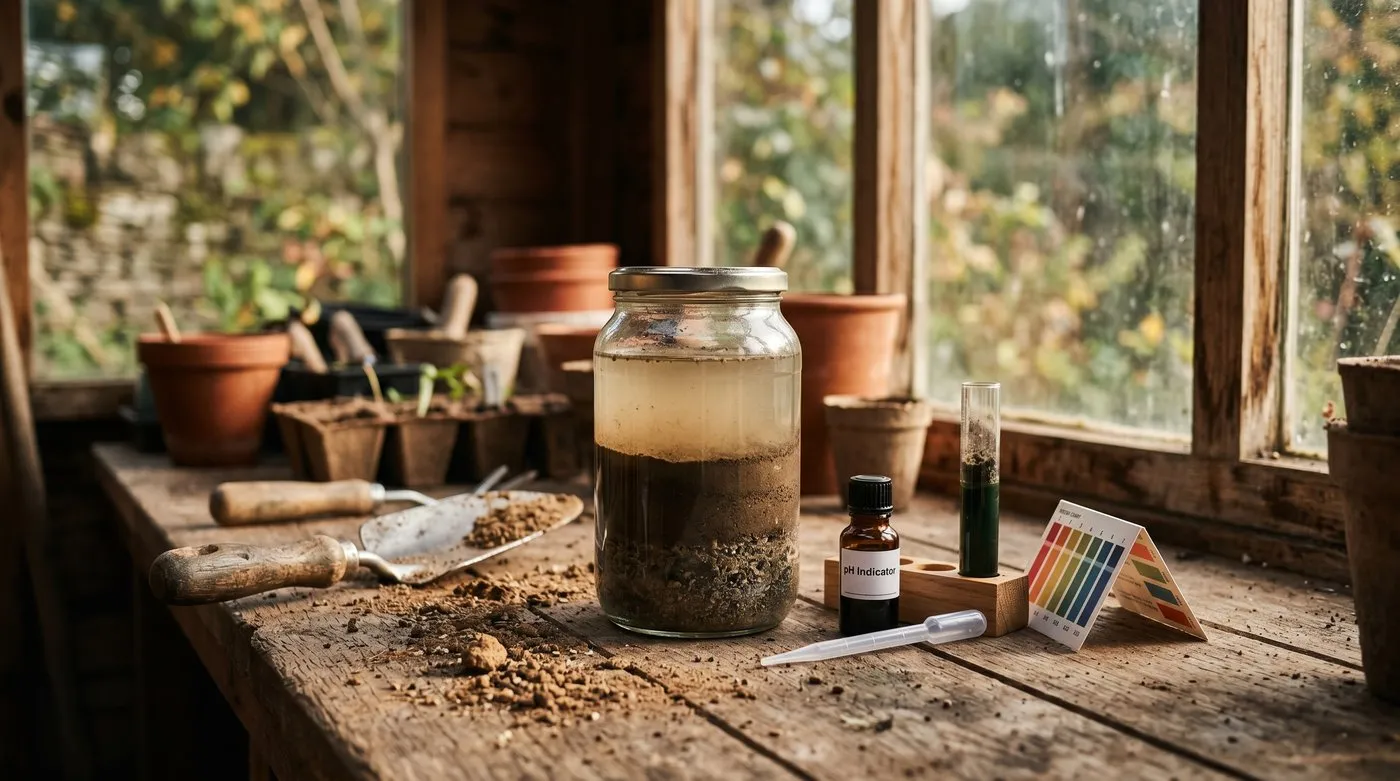 The jam-jar test made visible: sand settles in a minute, silt in an hour, clay overnight, and the layer depths name your soil.
Planting terms: what the label is telling you
A plant label compresses a plant’s whole biography into six or seven coded words. These 13 terms decode the lot, from how the plant is sold to whether it will survive January.
| Term | What it means | UK example |
|---|---|---|
| Hardy | Survives a UK winter outdoors without protection. | Most herbaceous perennials and natives |
| Half-hardy | Killed by frost, so it goes out only after the last frost. | Late May in northern England |
| Annual | Completes its whole life cycle in one growing year. | Cosmos, sweet peas, courgettes |
| Biennial | Grows leaves in year one and flowers in year two. | Foxgloves and wallflowers |
| Perennial | Lives for three years or more, usually flowering every year. | Hardy geraniums, going strong at 20 years |
| Herbaceous | Soft, non-woody growth that dies down to the ground each winter. | A delphinium vanishes in November |
| Deciduous | Drops all its leaves each autumn; evergreen keeps them. | Beech is deciduous, holly evergreen |
| Bare-root | Sold dormant with no pot and no soil, November to March. | Hedging at 30-50% below pot prices |
| Root ball | The mass of roots and compost that comes out of the pot. | Soak it for 30 minutes before planting |
| Pot-bound | Roots circling the pot because the plant has outgrown it. | Tease circling roots loose or they keep spiralling |
| Plug plant | A small seedling raised in a module tray and sold cheaply. | £6 for 12 bedding plugs in April |
| Firming in | Pressing soil around a new plant to remove air pockets. | Knuckle pressure, not boot pressure |
| Graft union | The bulge where a chosen variety joins a hardy rootstock. | Keep a rose’s union just below soil level |
The hardy and half-hardy rows settle more arguments than any others. Hardy describes frost tolerance and nothing else. A hardy plant can still die from sitting in winter wet, and a half-hardy one thrives for years if lifted each autumn. The hardiness ratings published by the RHS put numbers on it, grading plants from H1 to H7 by the temperatures they survive.
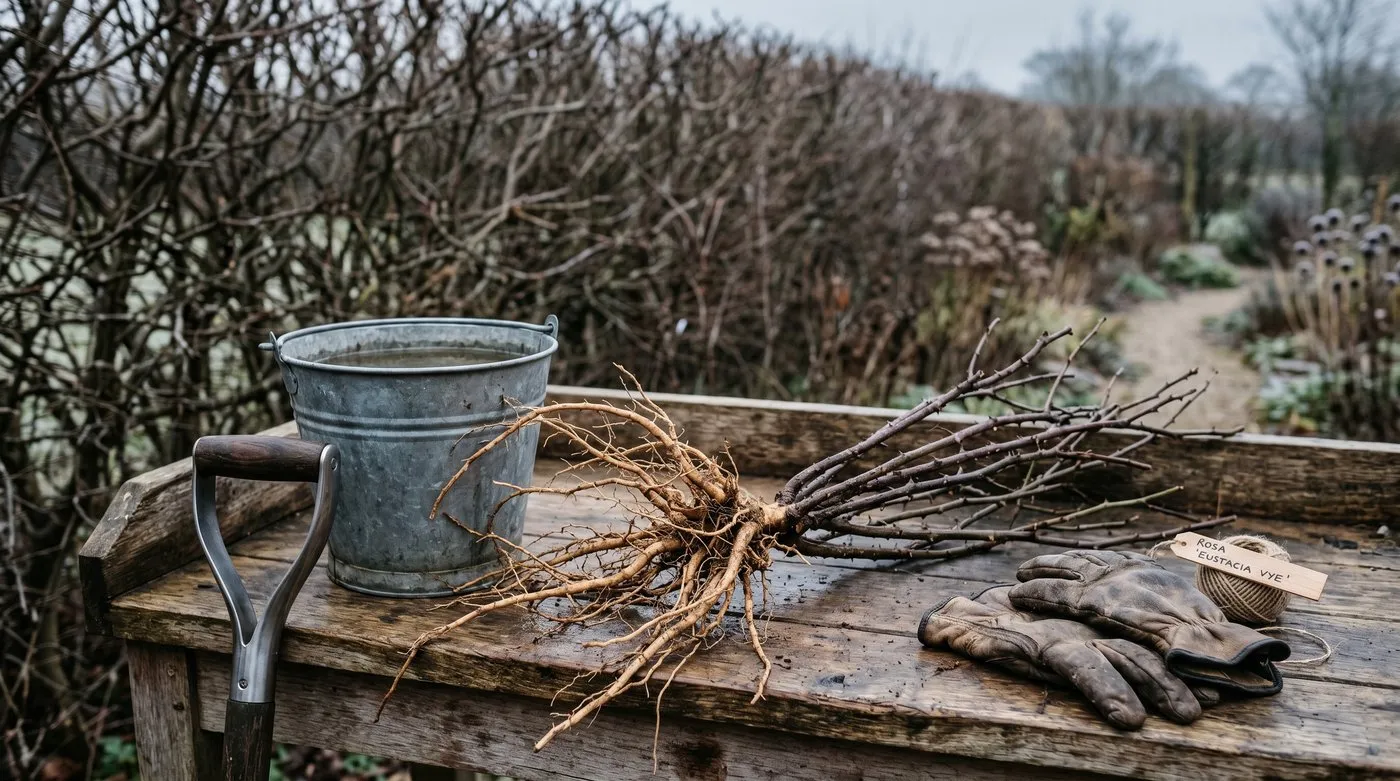 Bare-root decoded: no pot, no compost, sold dormant from November to March, and 30-50% cheaper than the same rose potted.
Problem terms: decoding what went wrong
Problem jargon matters because the diagnosis is in the word. Knowing that stretched seedlings are “leggy” rather than “growing well” changes what you do next.
| Term | What it means | UK example |
|---|---|---|
| Bolting | A vegetable flowering and setting seed before you can harvest it. | Lettuce bolts in hot, dry July spells |
| Damping off | A fungal disease that topples seedlings at soil level overnight. | Sown too thickly in a warm propagator |
| Blight | A fungus-like disease that browns and collapses potatoes and tomatoes in warm, wet spells. | Outdoor tomatoes hit in August |
| Rust | A fungal disease showing as orange-brown pustules on leaves. | Leek rust after a wet summer |
| Canker | A sunken, dead patch on bark or stems that slowly spreads. | Apple canker ringing a branch |
| Chlorosis | Leaves yellowing from a nutrient shortage, often with veins staying green. | Lime-hating plants in alkaline soil |
| Leggy | Pale, stretched growth caused by too little light. | Windowsill seedlings leaning at 45 degrees |
| Biological control | Using a pest’s natural enemy instead of a chemical. | Nematodes watered on for slugs, April |
| Systemic | A treatment the plant absorbs and moves through its tissues. | Works on hidden pests a spray cannot touch |
Half of these problems are prevented rather than cured, and most prevention is just moving crops around. The crop rotation planner shows how a simple bed sequence starves soil diseases of their host plants year after year.
Common mistakes when reading gardening jargon
- Assuming hardy means indestructible. Hardy only describes frost tolerance. A hardy lavender will still die in waterlogged clay; most winter lavender losses are wet roots, not cold.
- Treating compost as one product. Seed compost, multipurpose, ericaceous and garden compost are four different things. Potting blueberries into standard compost kills them within a season.
- Reading deadheading and cutting back as the same job. Deadheading removes single spent blooms in summer; cutting back removes whole stems in autumn or spring. Doing the second when a label says the first costs a year of flowers.
- Ignoring “harden off” as filler text. It is the single most skipped instruction on a seed packet. A 7-14 day transition outside is the difference between a tray that establishes and a tray that collapses.
- Confusing chitting with germination. Chitting is sprouting seed potatoes in light before planting; germination is seed coming to life in compost. Chitting saves 10-14 days; trying to “chit” parsnip seed achieves nothing.
Frequently asked questions
What does hardening off mean?
Hardening off means gradually acclimatising indoor-raised plants to outdoor conditions over 7-14 days. Stand trays outside in the day and bring them in at night, lengthening the outdoor spell each time. Skipping it is the quickest way to lose a whole tray of half-hardy plants to one cold night.
What is the difference between compost and mulch?
Compost is rotted organic matter; mulch is any surface covering laid over soil. Compost can be used as a mulch, but so can bark, gravel or grass clippings. The word describes the job, not the material. A 5-7cm mulch layer holds moisture and blocks most annual weeds.
What does pricking out mean?
Pricking out means moving tiny seedlings from a shared tray into individual pots. Do it once each seedling has two true leaves. Always hold the seedling by a seed leaf, never the stem, because a bruised stem kills it and a torn leaf does not.
What do the NPK numbers on fertiliser mean?
NPK shows the ratio of nitrogen, phosphorus and potassium in a fertiliser. Nitrogen feeds leafy growth, phosphorus feeds roots, and potassium feeds flowers and fruit. A tomato feed is high in potassium at roughly 4-3-8, while a lawn feed leads on nitrogen.
What is bolting in vegetables?
Bolting is when a vegetable flowers and sets seed before you can harvest it. Lettuce, spinach, rocket and onions are the usual culprits. Heat, drought or a cold snap after planting all trigger it. Bolted leaves turn bitter, so harvest fast and sow a fresh batch.
What does bare-root mean?
Bare-root plants are sold dormant with no pot and no soil around the roots. They are available from November to March and typically cost 30-50% less than potted equivalents. Roses, hedging and fruit trees are the most common bare-root buys, and they establish well if planted promptly.
Our team produces practical UK gardening guidance from source research, contributor records and established horticultural practice. Editorial standards are overseen by Matt W.