Key takeaways
- Paperwhites need no cold or chilling period, unlike forced hyacinths and daffodils
- They flower 4 to 6 weeks after potting, often 5 to 7 weeks in a cool room
- Pot from late October to mid-November for flowers by Christmas and New Year
- Grow in gravel or bulb fibre with noses exposed; water to just below the bulb base
- Keep them at 10 to 15C in bright light or the stems grow tall and flop
- A dilute 4 to 6% alcohol solution cuts stem height by 30 to 50% without harming the flowers
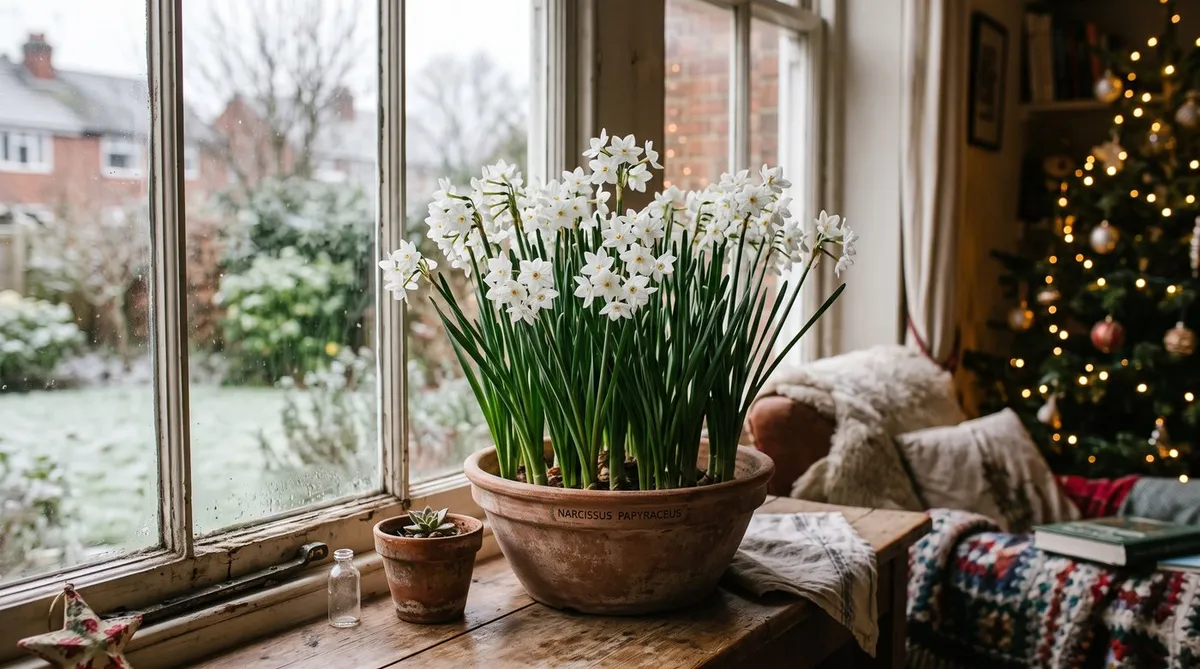
Growing paperwhite narcissi indoors is the fastest way to fill a room with scent at Christmas. Paperwhites are the one forced bulb that skips the cold treatment, so you pot them and they simply grow. Give them six weeks on a cool windowsill and you get clusters of small, strongly fragrant white flowers. The catch is that they stretch and flop if you treat them wrong. This guide covers the whole method: choosing bulbs, potting them in gravel, setting the water level, and timing them to open on Christmas Day. It also explains the researched alcohol trick that keeps the stems short, and why we compost the bulbs afterwards. Everything here comes from nine winters of potting paperwhites on a Staffordshire windowsill.
The forced bulb that skips the cold treatment
Paperwhites are tender tazetta narcissi, most often the species Narcissus papyraceus. They come from the western Mediterranean, where winters stay mild. That warm-climate origin is the whole reason they behave differently from every other spring bulb we force indoors.
Hyacinths, tulips and trumpet daffodils all need a long cold spell before they will flower. That cold period, usually 10 to 14 weeks below 9C, tells the bulb that winter has passed. Skip it and you get leaves but no flower. Paperwhites carry no such requirement. The flower is already formed inside the bulb when you buy it, ready to run as soon as it feels warmth and water.
This is why paperwhites are the easy win of the season. You pot the bulb, add water, and it flowers in four to six weeks with no fridge, no dark cupboard and no waiting. The RHS entry for Narcissus papyraceus confirms it as a tender bulb best grown under glass or indoors in the UK. For a fuller picture of how the cold-treated bulbs work, our guide to forcing bulbs for indoor flowers sets paperwhites alongside the ones that do need chilling.
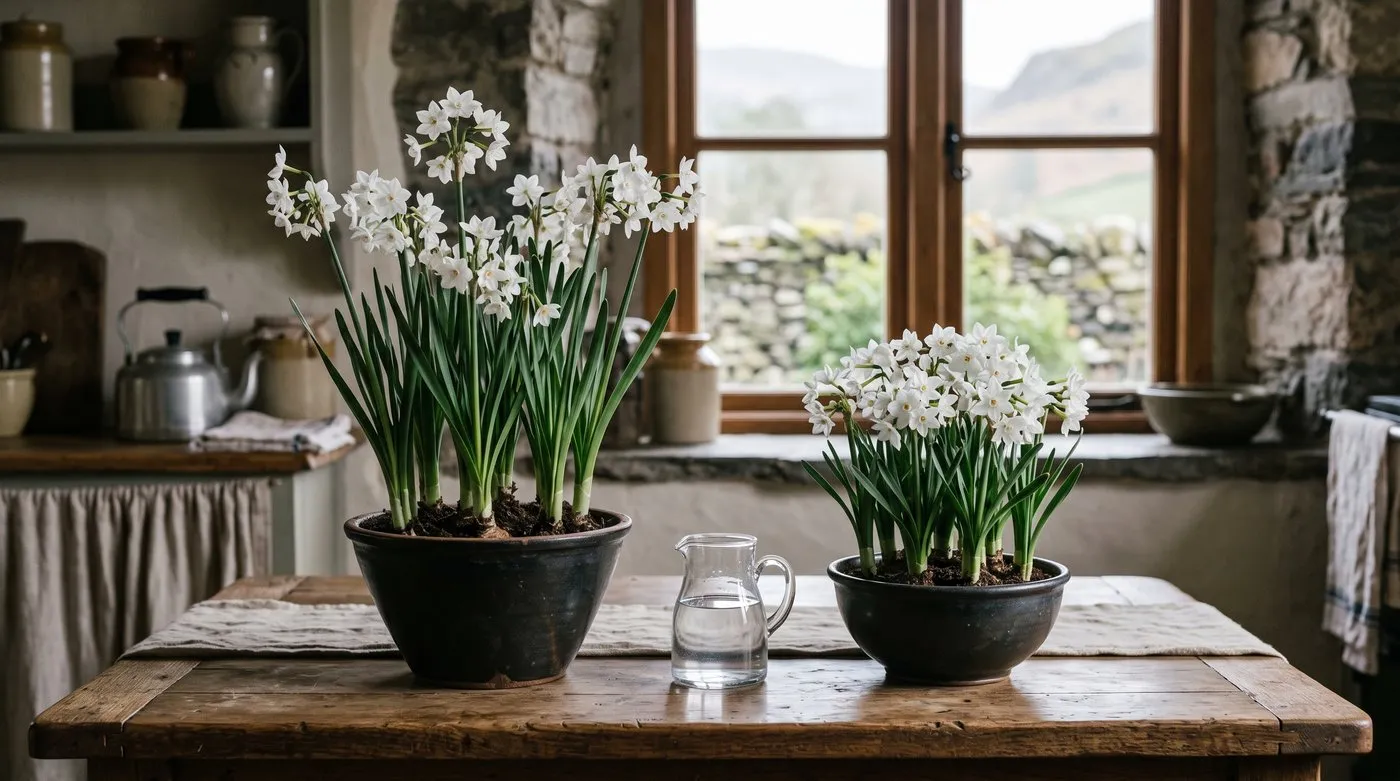
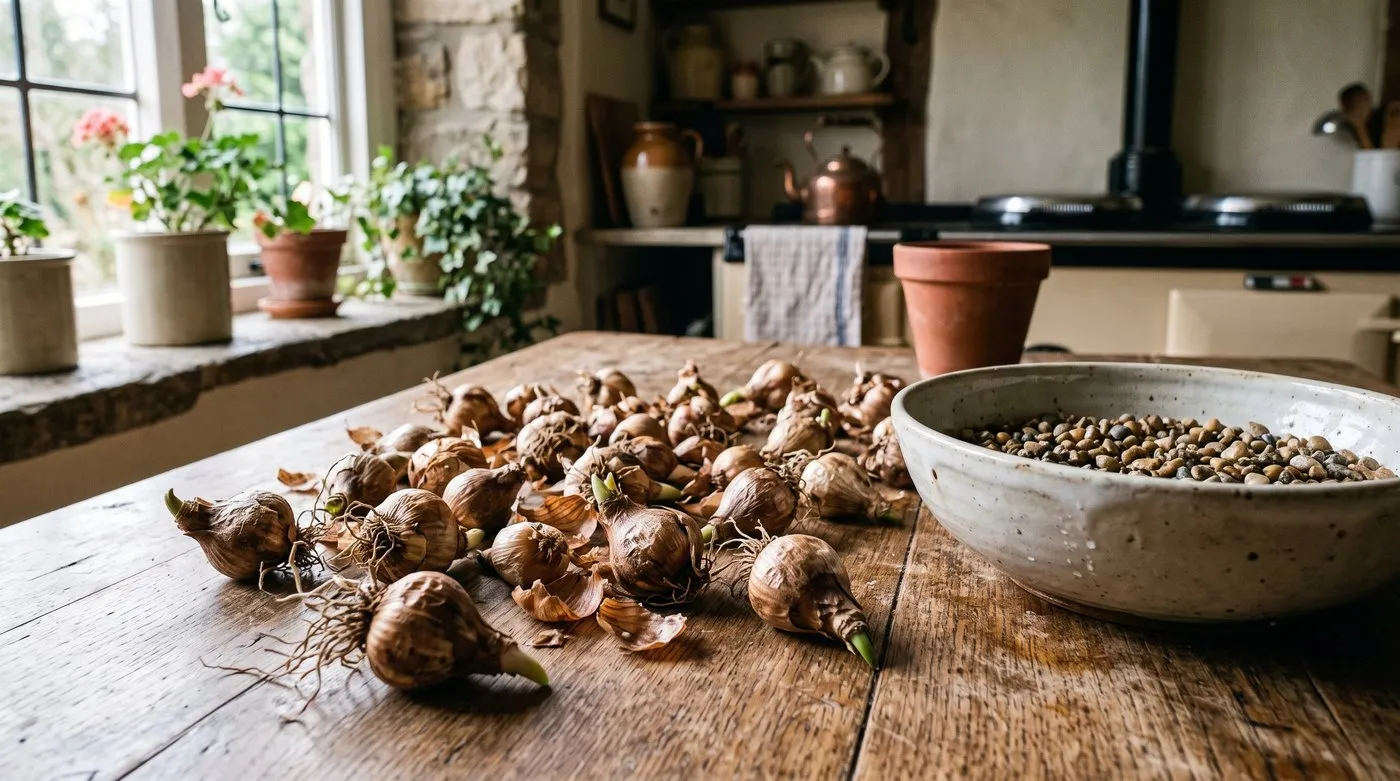 Dry paperwhite bulbs need no chilling. The flower is already formed inside, so potting and water are all it takes to start them into growth.
Which paperwhite varieties to grow for scent and colour
Not all paperwhites are equal, and the differences matter more than the name suggests. Four cultivars turn up most in UK bulb catalogues, and they vary in speed, height and how strong the scent hits.
‘Ziva’ is the standard white paperwhite and the fastest to flower. It is heavily scented, sometimes overpoweringly so in a small room. ‘Nir’ is similar but a shade shorter and a touch less pungent. ‘Inbal’ is the gentlest on the nose, a good pick if strong perfume gives you a headache. ‘Grand Soleil d’Or’ is the odd one out: buttery yellow petals with a small orange cup, and a sweeter, less sharp fragrance.
The scent divides people sharply. Some love the musky, jasmine-like punch. Others find ‘Ziva’ close to unpleasant indoors. If you are unsure, start with ‘Inbal’ or ‘Grand Soleil d’Or’. For more sweetly scented options across the whole house, our roundup of the best scented plants for UK gardens covers gentler alternatives.
| Variety | Colour | Flowering speed | Scent strength | Height untreated |
|---|---|---|---|---|
| ’Ziva’ | Pure white | Fastest, 4-5 weeks | Very strong | 40-45cm |
| ’Nir’ | White | Fast, 4-6 weeks | Strong | 35-40cm |
| ’Inbal’ | White | Moderate, 5-6 weeks | Mild | 35-40cm |
| ’Grand Soleil d’Or’ | Yellow, orange cup | Slower, 6-7 weeks | Sweet, moderate | 30-40cm |
How to plant paperwhites in a bowl of gravel
Paperwhites do not need compost or a pot with drainage. The classic method uses a shallow bowl of gravel, and it works because the roots only need moisture and something to grip. Glass beads, washed pea gravel, horticultural grit or bulb fibre all do the job.
Take a bowl without drainage holes, around 20cm across, and add about 5cm of gravel. Sit five or six bulbs on top, pointed nose upwards, almost touching each other. A packed bowl looks fuller and the bulbs brace one another as they grow. Trickle more gravel around them until only the top third of each bulb and its nose stays clear of the surface.
Bulbs are usually £8 to £14 for a bag of ten from most garden centres or online suppliers. One bag fills two bowls. If you would rather use compost, a gritty, free-draining mix works too, with the noses left proud of the surface exactly as with gravel.
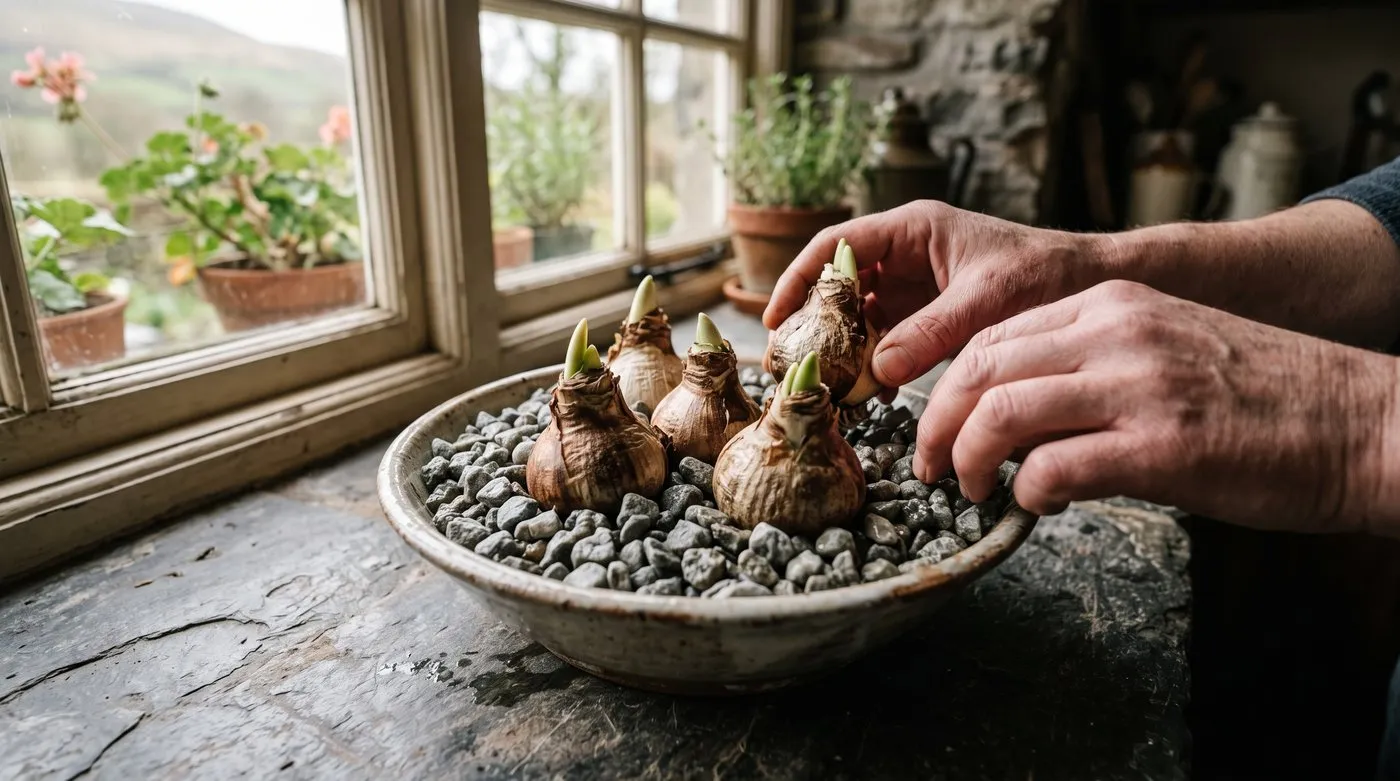 Five bulbs to a 20cm bowl, noses exposed and packed close so they support each other. Gravel holds them steady with no compost needed.
Getting the water level right so bulbs do not rot
The single most common way to kill paperwhites is drowning them. The water must sit just below the base of the bulbs, never touching them. A bulb standing in water rots from the base plate within days, and the whole bowl turns to mush.
Pour water into the gravel until the level reaches the underside of the bulbs, roughly 1 to 2cm below the noses of the gravel line. The roots grow down into the water while the bulb itself stays dry. Check the bowl every few days and top it up, because a bowl in a warm room can lose water fast once roots are active.
Roots usually appear within a week and reach the base of the bowl in 10 to 14 days. A clear glass bowl lets you watch this and judge the level by eye. If you spot cloudy or smelly water, tip it out and refresh it. The rule never changes: keep the bulbs sitting above the water, not in it.
Warning: Never let water cover the bulbs, even briefly. A bulb sitting in water rots at the base plate and collapses within days. Keep the level just below the bases at all times and refresh it if it turns cloudy.
Timing paperwhites to flower for Christmas
The four-to-six-week window makes Christmas timing simple once you count back from the date you want. For flowers open on 25 December, pot your bulbs between late October and mid-November. ‘Ziva’ at the fast end needs about four weeks, so a mid-November potting still lands in time.
Temperature is the lever that fine-tunes the date. A cool room of 10 to 15C gives the sturdiest plants but takes the full five to seven weeks. A warmer spot of 18 to 20C brings flowering forward but stretches the stems. If a batch looks like it will open too early, move it somewhere colder to slow it down. If it lags, nudge it into warmth.
| Pot the bulbs | Grown at 10-15C | Flowers open around |
|---|---|---|
| Mid October | 5-6 weeks | Late November |
| Late October | 5-6 weeks | Early December |
| Early November | 4-6 weeks | Mid December |
| Mid November | 4-5 weeks | Christmas week |
| Late November | 4-5 weeks | New Year |
| Early December | 4-5 weeks | Early January |
For gift ideas that pair with a bowl of forced bulbs, our list of Christmas gardening gifts has plenty that suit a keen indoor grower.
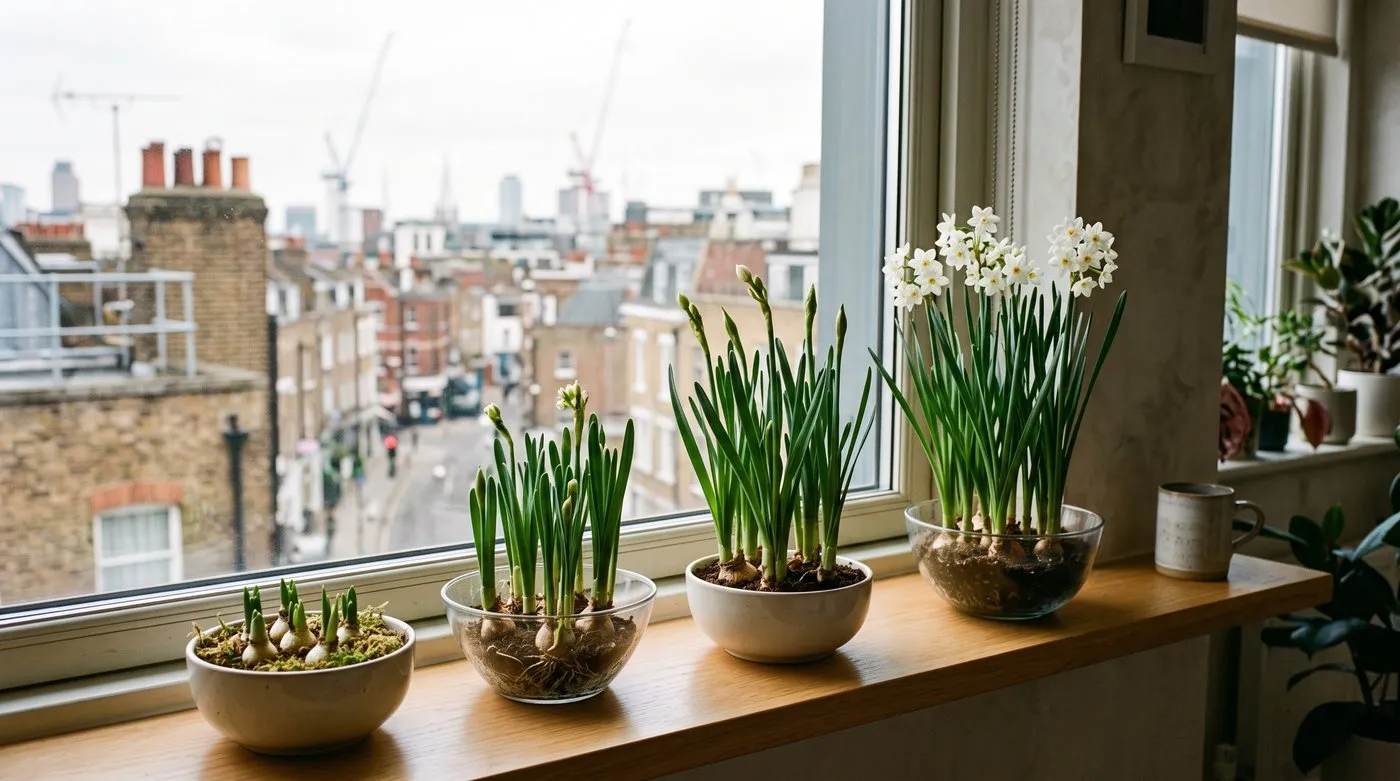 Bowls potted two weeks apart give a run of flowers from late November through January. Stagger the plantings and the scent never stops.
Staggering plantings for flowers all winter
One bowl gives you two to three weeks of flower, then it is over. To keep paperwhites going through the whole winter, pot a fresh bowl every two weeks from late October onwards. Each new batch comes into bloom as the last one fades.
A bag of ten bulbs split across two bowls, potted a fortnight apart, covers most of December. Add a third bowl in late November and you carry the display into January. We usually run three or four bowls on the go at any time, at different stages, so there is always one just opening.
Store the spare dry bulbs somewhere cool and dark until their turn, ideally around 5 to 10C. A garage, shed or cool porch is ideal. Our guide to storing flower bulbs covers keeping them firm and dormant between plantings so they force just as well in December as they did in October. You will find more seasonal indoor projects in our full set of how-to gardening guides.
Why paperwhites flop and how to stop it
Flopping is the great frustration of forced paperwhites. The stems shoot up, the flowers open, and the whole bowl keels over the rim under its own weight. The cause is nearly always the same: too much warmth and too little light.
Grown warm, in a heated living room away from a window, paperwhites race upward looking for light. The stems grow thin, soft and tall, often past 40cm, then bend. Grown cool and bright, the same bulbs stay short, thick and self-supporting. So the first two fixes cost nothing.
Keep the bowl at 10 to 15C in the brightest position you have, a south or east windowsill by choice. Turn the bowl daily so the stems do not all lean towards the glass. Even so, tall varieties like ‘Ziva’ may need discreet support. A few thin twigs or a length of raffia looped around the clump holds them without looking staked. For a related bulb that behaves the same way indoors, see how we handle stretch in our guide to growing hyacinths indoors.
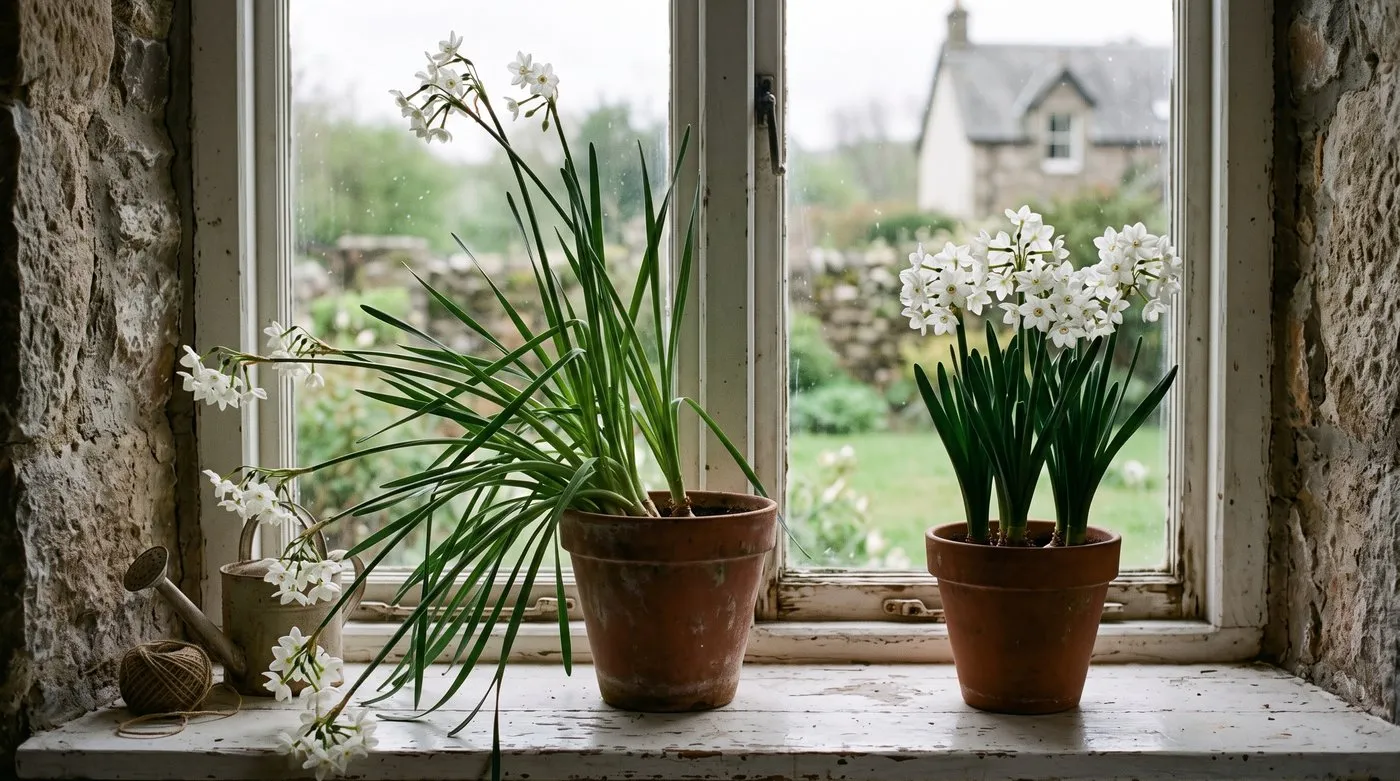 Left, grown warm and dim, stretched to 44cm and flopped. Right, grown cool and bright, stayed short and stood alone. Light and temperature do most of the work.
The alcohol trick that keeps stems short
There is one more fix, and it is backed by proper research. Cornell University found that a dilute alcohol solution stunts paperwhite stem and leaf growth by 30 to 50 percent without shrinking or harming the flowers. It works by mild water stress: the alcohol makes it harder for the roots to take up water, so the plant grows shorter and sturdier.
The method is simple. Grow the bulbs in plain water as normal until the shoots reach 5 to 8cm. Then pour off the water and replace it with a 4 to 6 percent alcohol solution. To make it, mix one part 40 percent spirit such as gin or vodka to seven parts water. Use that dilution for every top-up from then on. Do not use beer or wine, as their sugars feed rot.
Get the strength right, because it matters. Below 4 percent has little effect. Above about 10 percent the alcohol damages the plant and stunts the flowers too. In our own bowls, the treated batch reached 27cm against 44cm untreated, and every treated plant stood upright without support.
Gardener’s tip: Start the alcohol only once the shoots are 5 to 8cm tall, never at potting. Early alcohol slows root formation and weakens the whole bowl. Wait for green growth, then switch every future watering to the dilute mix.
 The same variety, potted the same day. The left bowl had plain water, the right had a dilute gin solution from 6cm. The flowers match; only the height differs.
Paperwhites compared with forced hyacinths and daffodils
Paperwhites sit in a small group of bulbs we force for winter flowers indoors, but they are the least demanding of the lot. The table ranks the three most popular forced bulbs by how much effort each one takes to bring into flower.
| Bulb | Chilling needed | Weeks to flower | Scent | Reuse after forcing | Ease |
|---|---|---|---|---|---|
| Paperwhite narcissi | None | 4-6 | Very strong | Poor, usually composted | Easiest |
| Forced hyacinth | 10-13 weeks cold | 10-14 total | Strong, sweet | Good, plant out in garden | Moderate |
| Forced daffodil | 12-16 weeks cold | 14-18 total | Mild | Good, plant out in garden | Harder |
| Amaryllis (Hippeastrum) | None | 6-10 | None | Good, keeps for years | Moderate |
Paperwhites win outright on speed and simplicity. Hyacinths and daffodils repay the wait by going into the garden afterwards, which paperwhites rarely manage in the UK. If you want a big single flower with no chilling and years of life, our guide to growing amaryllis indoors is the one to read next.
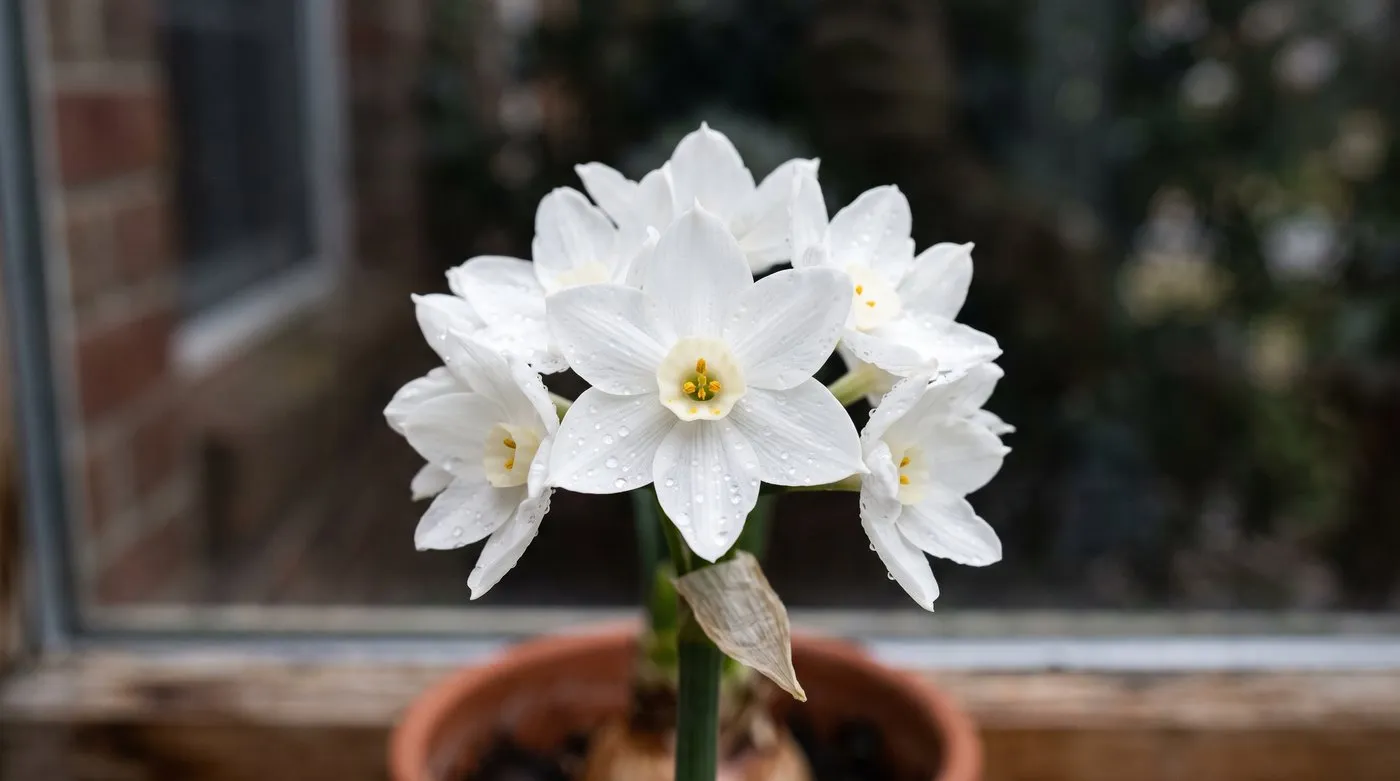 A single ‘Ziva’ cluster carries 12 to 16 florets across three or four stems. Bigger bulbs give more flower heads, so buy the firmest you can find.
What to do after the flowers fade
Here is the honest part most cheerful bulb guides skip. Paperwhites rarely flower well again indoors. Forcing drains the bulb of the reserves that make next year’s flower, and it has no cool season to rebuild them. A second attempt indoors usually gives leaves and nothing more.
Most gardeners compost the spent bulbs once the flowers brown, and that is the sensible call. It feels wasteful, but fresh bulbs are cheap and the effort of nursing an exhausted paperwhite is rarely rewarded.
There is one exception. In a very mild, sheltered coastal garden, planted out into free-draining soil, paperwhites can occasionally naturalise and flower outdoors in later years. In most of the UK, our cold, wet winters rot them in the first season. If you garden in Cornwall, west Wales or the Scilly Isles, it is worth a try in a sunny, gritty spot. Everywhere else, treat them as a one-season joy. For hardy narcissi that come back every spring outdoors, our guide to growing daffodils covers the reliable garden kinds.
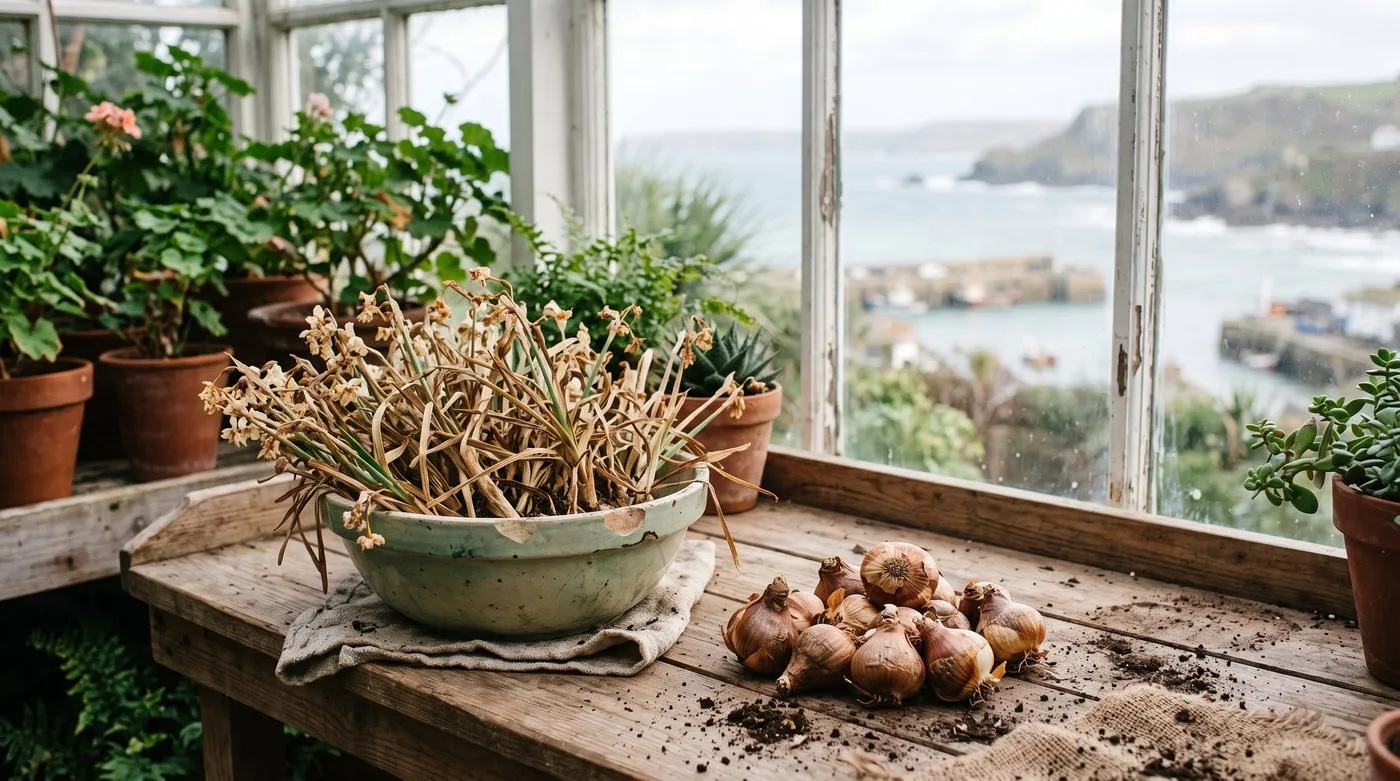 Once the flowers brown, most paperwhites go on the compost. Only in the mildest coastal gardens will planted-out bulbs flower again outdoors.
Common mistakes when growing paperwhites indoors
- Chilling them first. Out of habit, people give paperwhites the cold treatment meant for hyacinths and daffodils. It is wasted effort and delays flowering. Paperwhites need no chilling. Pot them and bring them straight into a cool, bright room.
- Letting water cover the bulbs. Water touching the base plate rots the bulb within days. Keep the level just below the bases, never over them. This is the fastest way to lose a whole bowl.
- Growing them too warm and too dark. A hot living room away from a window makes the stems shoot up thin and floppy. Give them 10 to 15C and the brightest sill you have. Cool and bright is the entire secret to short, sturdy plants.
- Starting the alcohol too early. Switching to the alcohol drink at potting slows root growth and weakens the bowl. Wait until the shoots are 5 to 8cm, then use the dilute mix for every top-up.
- Potting too late for Christmas. Leave it past mid-November and the bulbs will not open until January. Count back four to six weeks from the date you want, and pot in good time or keep late bulbs slightly warmer to catch up.
Now you can time a bowl to open on Christmas Day, read our guide to growing amaryllis indoors for the next step in a scent-free, long-lasting winter flower.
Frequently asked questions
Do paperwhite narcissi need chilling before forcing?
No, paperwhites need no chilling at all. This sets them apart from hyacinths and daffodils, which need weeks of cold first. You simply pot the bulbs and bring them into a cool, bright room. They flower in four to six weeks with no cold treatment beforehand.
How long do paperwhites take to flower indoors?
When should I plant paperwhites for Christmas flowers?
Pot paperwhites from late October to mid-November for Christmas. Allow four to six weeks from potting to bloom. Start a second bowl two weeks later to cover New Year as well. For late-planted bulbs, keep them a little warmer to bring flowering forward.
Why are my paperwhites so tall and floppy?
Too much warmth and too little light make paperwhites tall and floppy. Keep them at 10 to 15C in the brightest spot you have. Turn the bowl daily so the stems grow straight. A dilute alcohol drink also stunts the height by up to half.
Does the alcohol trick really keep paperwhites short?
Yes, a dilute alcohol solution shortens paperwhites by 30 to 50 percent. Cornell University research found 4 to 6 percent alcohol stunts stem and leaf growth without harming the flowers. Water with one part 40 percent spirit to seven parts water once shoots reach 5 to 8cm.
Can you reuse paperwhite bulbs after flowering?
No, paperwhites rarely flower well again indoors. Forcing exhausts the bulb, so most gardeners compost them after blooming. In very mild coastal gardens they may naturalise outside, but they often fail in cold, wet UK soil. Buy fresh bulbs each autumn instead.
What compost do paperwhites need?
Paperwhites need no compost at all. Grow them in a bowl of gravel, glass beads or bulb fibre with the noses exposed. Gritty, free-draining compost also works well. The roots only need moisture and support, so the growing medium simply holds the bulbs upright.
Our team produces practical UK gardening guidance from source research, contributor records and established horticultural practice. Editorial standards are overseen by Matt W.