Key takeaways
- Lift tender bulbs (dahlias, gladioli, begonias) after frost; leave hardy ones in the ground
- Dry or cure lifted bulbs for one to three weeks before storing, or they rot
- Store cool, dark, dry, frost-free and airy, ideally 5-10°C
- Pack in dry sand, vermiculite, or newspaper so bulbs do not touch and air can move
- Label everything; dormant bulbs look almost identical and are impossible to guess later
- Check stored bulbs monthly and remove any soft, mouldy, or shrivelled ones at once
Get bulb storage right and the same dahlias, gladioli, and begonias come back year after year for free, and your bought bulbs stay firm and healthy until planting day. Get it wrong and you open the box in spring to a soft, mouldy mess. The difference comes down to a few simple rules about drying, air, and temperature.
This guide covers which bulbs actually need lifting, how to dry and clean them properly, the conditions that keep them sound all winter, and how to hold bought bulbs until it is time to plant. The same principles apply whether you are storing a handful of dahlia tubers or a tray of mixed bulbs.
First: which bulbs need storing at all?
Before you lift anything, know that most hardy bulbs are better left in the ground. Lifting and storing is only necessary for tender types that frost would kill if left in cold, wet winter soil.
| Lift and store (tender) | Leave in the ground (hardy) |
|---|---|
| Dahlias | Daffodils and narcissi |
| Gladioli | Tulips (see note below) |
| Begonias (tuberous) | Crocus |
| Cannas | Alliums |
| Tigridia | Snowdrops |
| Some ranunculus and anemone | Hyacinths, muscari, iris bulbs |
The rule is simple: lift the frost-tender, leave the fully hardy. Daffodils, crocus, and most spring bulbs are happiest undisturbed; our guide to caring for spring bulbs after flowering covers keeping them thriving in place. Tulips are the exception among the hardy group, and we will come to them. If you are unsure what you are dealing with, our guide to bulbs, corms, tubers, and rhizomes explained sorts out the terms.
When and how to lift tender bulbs
Timing matters. Lift tender bulbs after the first frost has blackened the top growth, usually mid to late autumn, but before the ground turns cold and wet enough to start them rotting in place. The frost is your signal; the wet soil is your deadline.
To lift cleanly:
- Cut the stems back to a few centimetres above the bulb or tuber.
- Ease the whole clump out with a fork, lifting from well outside the crown so you do not spear the bulbs.
- Shake off the loose soil gently. Do not scrub or wash hard at this stage; rough handling bruises the bulbs and bruises let in rot.
Lift on a dry day if you possibly can. Bulbs lifted wet and stored wet are the single commonest cause of winter losses.
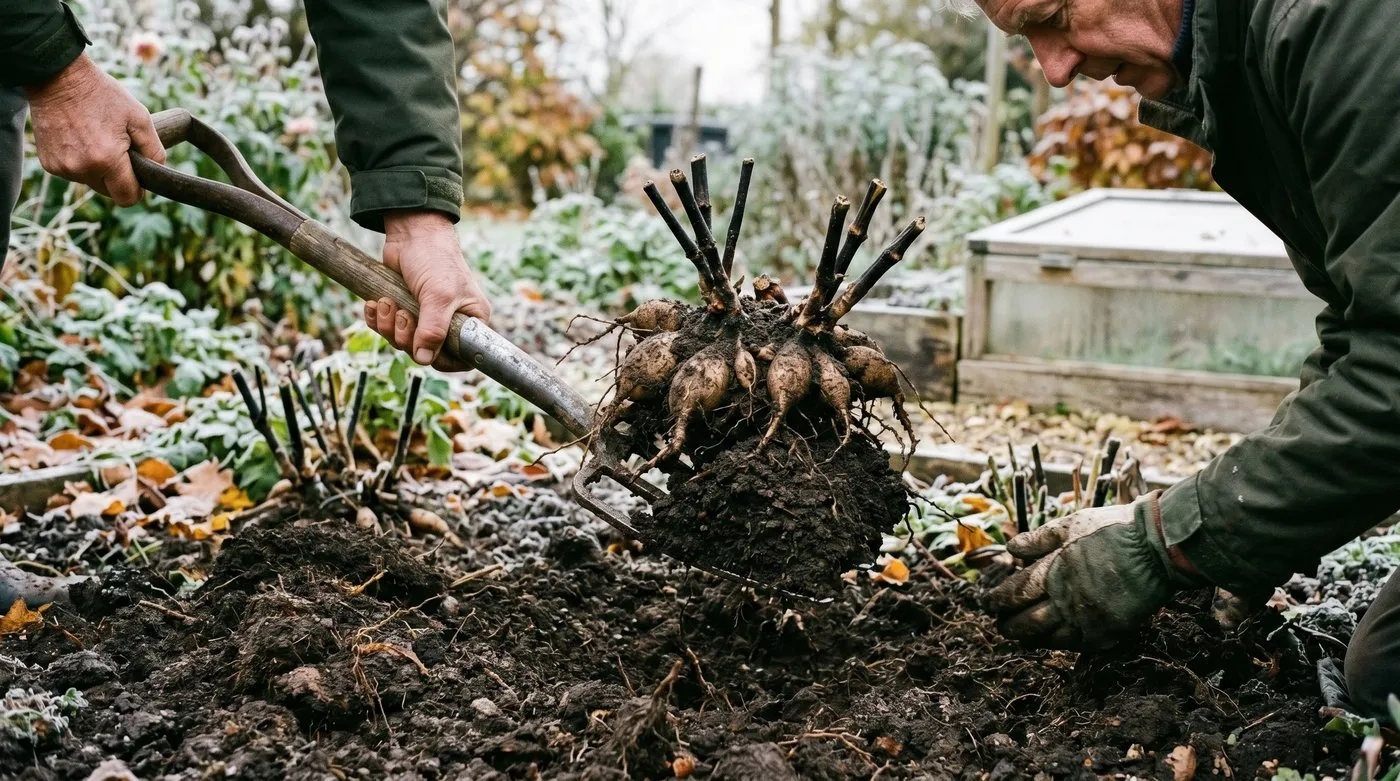 Lift tender bulbs after the first frost blackens the foliage, easing the fork in well outside the crown so you do not spear the tubers. Choose a dry day if you can.
The step everyone skips: drying and curing
This is the make-or-break stage. Freshly lifted bulbs are full of moisture and carry damp soil, and stored damp, they rot. They must be dried, or cured, for one to three weeks before they go into storage.
The method depends on the bulb:
- Dahlias: turn the tubers upside down for one to two weeks in a frost-free shed or garage so moisture drains out of the hollow cut stems. This stops the crown rotting, which is where dahlias usually fail.
- Gladioli corms: spread them in a single layer somewhere warm, dry, and airy for two to three weeks until the old corm and roots come away easily.
- Begonias: dry the tubers gently for a week or two until the remaining stem detaches cleanly.
Once dry, brush off the remaining soil and any loose old skin. The bulbs should feel dry to the touch with no soft, wet, or muddy patches before you store them. Patience here saves the whole crop.
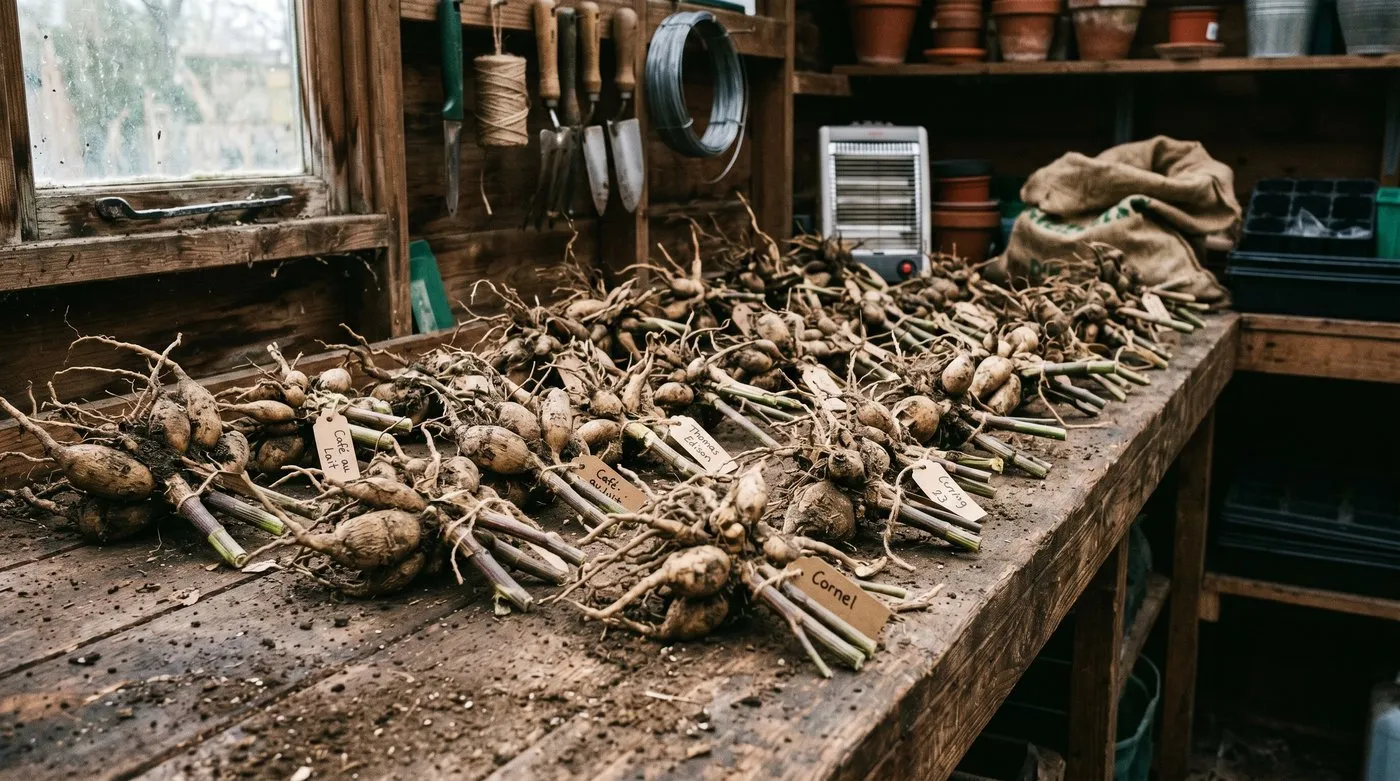 The step everyone skips: cure lifted bulbs for one to three weeks first. Dahlia tubers go upside down so moisture drains from the cut stems, which is where they usually rot.
Clean, sort, and label
With the bulbs dry, do a final tidy and sort before they go away for months.
Clean off the last of the dry soil and rub away loose old skin and dead roots, which can harbour rot and pests. Sort carefully and set aside anything soft, bruised, shrivelled, or showing mould; one bad bulb will infect its neighbours. Only firm, sound, dry bulbs go into storage.
Label everything. Dormant bulbs of different varieties look almost identical, and there is no guessing in spring. Note the type and colour on the tray or bag. This sounds obvious and is the thing people most regret skipping.
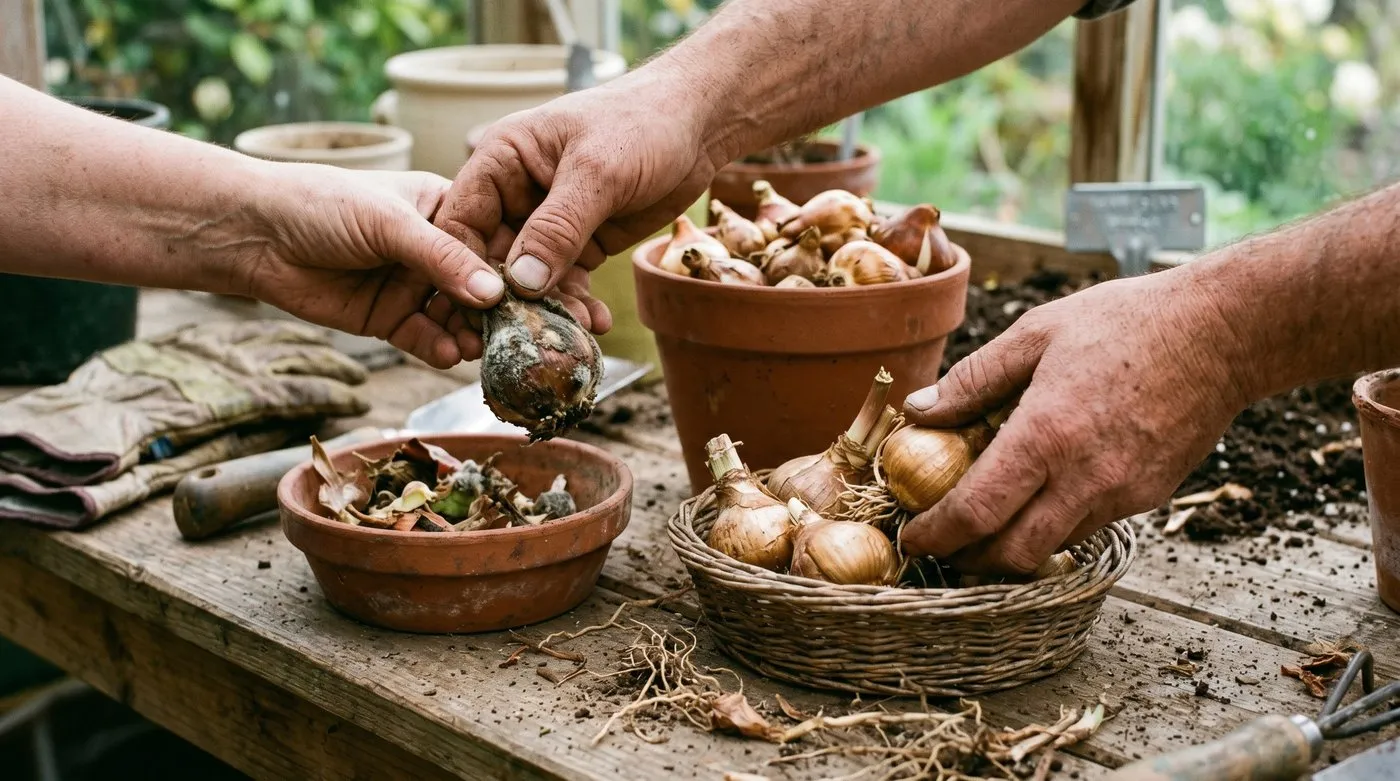 Sort ruthlessly: only firm, sound, dry bulbs go into storage. One soft or mouldy bulb left in the tray will infect its neighbours over winter.
The right storage conditions
Stored bulbs need four things: cool, dark, dry, and airy. Hit all four and they keep for months; miss one and they either rot or dry out.
- Cool: ideally 5-10°C. A frost-free shed, garage, or cool spare room is perfect. Too warm and they sprout early or shrivel; freezing kills them.
- Dark: light encourages premature sprouting. Keep them in the dark.
- Dry: damp is the enemy. The medium and the air both need to be dry.
- Airy: good airflow carries moisture away. This is as important as temperature.
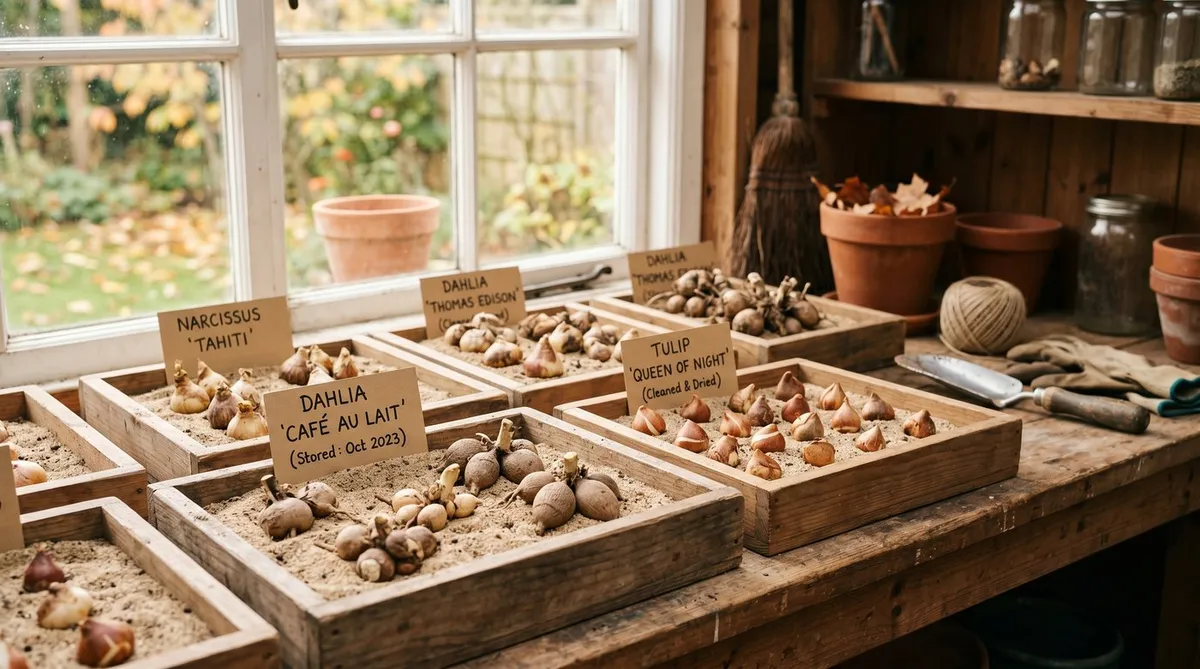
Pack them so they do not touch, in a breathable medium: dry sand, vermiculite, dry compost, wood shavings, or simply wrapped in newspaper. The medium keeps the bulbs apart and absorbs stray moisture. Never seal bulbs in a plastic bag, which traps moisture, makes them sweat, and rots them within weeks. Open trays, paper bags, or net bags are right; airtight plastic is wrong.
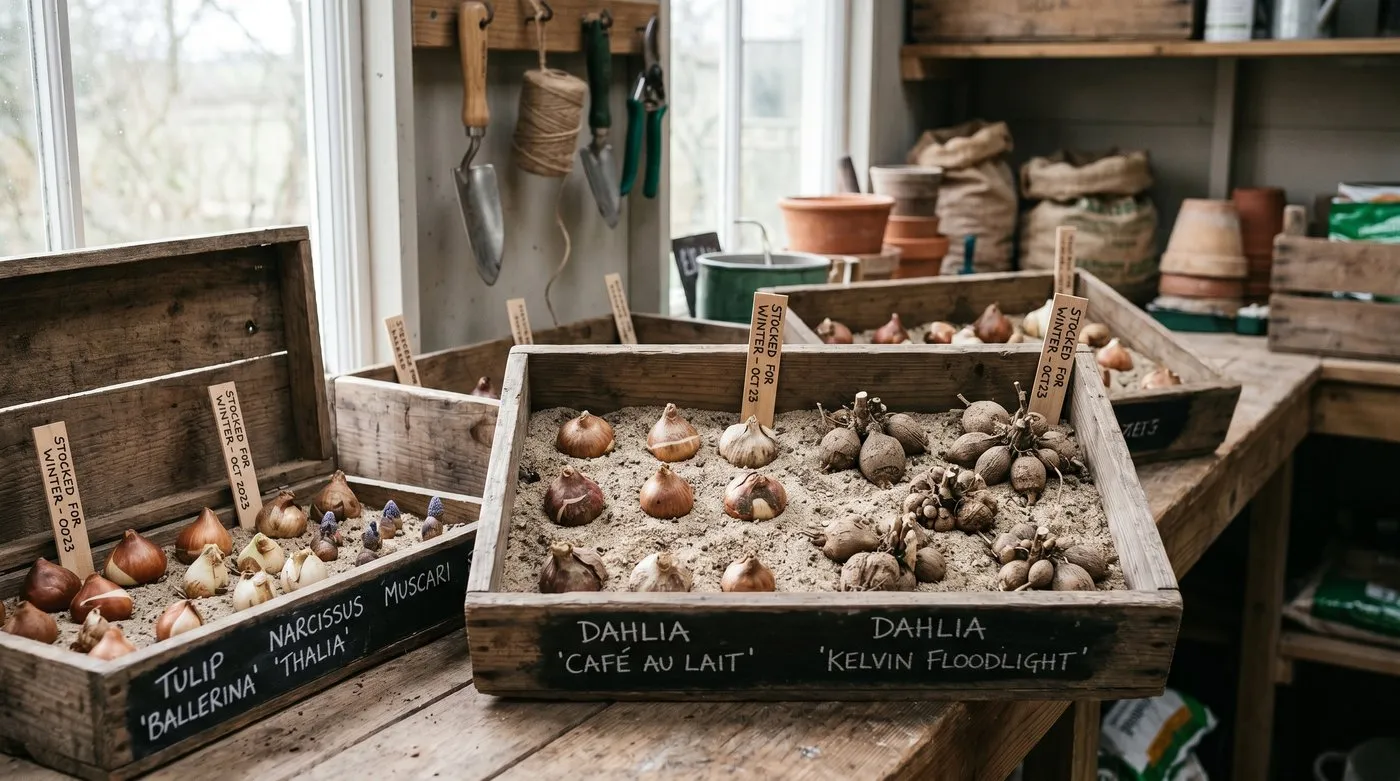 Pack bulbs in dry sand or vermiculite in open trays so they do not touch and air can move around them. Open trays keep; sealed plastic bags sweat and rot.
The root cause most losses share
Nearly every storage failure traces back to one of two things: moisture or lack of air. Bulbs do not usually die in store from cold (unless actually frozen) or from age. They die because they were packed damp, or packed airtight, and rot took hold.
So the whole job, stripped to its essence, is dry them properly, then give them air. Lift on a dry day, cure for a fortnight, store in a dry medium that keeps them apart, and put them somewhere airy and frost-free. Do that and you remove the cause of almost all losses before it can start. Everything else, the exact medium, the precise temperature, is detail around those two essentials.
Warning: Some bulbs and tubers, including daffodil and hyacinth bulbs, are toxic if eaten and can irritate skin. Wear gloves when handling large quantities, keep stored bulbs well away from children and pets, and never store them anywhere they might be mistaken for onions or food.
Storing bought bulbs before planting
You will also need to store bought bulbs that arrive before planting time. The same rules apply: keep them cool, dark, dry, and airy in their paper bags or open trays until you plant. Do not leave them sweating in sealed plastic packaging, and do not let them sit somewhere warm where they sprout early.
Plant bought bulbs in their proper season rather than holding them too long; our guides to when to plant spring bulbs and when to plant daffodil bulbs give the timings. If you want winter flowers indoors, some bulbs can be chilled and brought on early, as our guide to forcing bulbs for indoor flowers explains.
Check through the winter
Storage is not quite fit-and-forget. Check the bulbs about once a month through winter. Look for any that have gone soft, mouldy, or shrivelled, and remove them at once before the rot spreads to sound bulbs nearby. If many are shrivelling, the store is too warm or dry; if several are rotting, it is too damp or airless, so adjust the conditions. A few minutes monthly saves the batch.
Common mistakes when storing flower bulbs
These are the errors that cost gardeners their bulbs every winter.
Storing bulbs damp
The biggest killer. Cure bulbs for one to three weeks until dry to the touch before storing. Damp bulbs rot.
Sealing them in plastic
Airtight bags make bulbs sweat and rot. Use open trays, paper, or net bags and a breathable medium so air can move.
Lifting too early or too late
Lift after the first frost but before the soil turns cold and wet. Too early and the bulb has not finished feeding; too late and it rots in the ground.
Forgetting to label
Dormant bulbs are impossible to tell apart. Label every tray and bag with type and colour as you store it.
Never checking
Bulbs left unchecked let one rot become many. Inspect monthly and remove any soft or mouldy bulbs immediately.
Related reading: Pineapple lily bulbs need lifting in colder gardens, see our guide to growing eucomis in UK conditions.
Frequently asked questions
Which flower bulbs need lifting and storing over winter?
Tender summer bulbs and tubers need lifting in most of the UK: dahlias, gladioli, begonias, cannas, and tigridia. Hardy bulbs such as daffodils, tulips, crocus, alliums, and snowdrops usually stay in the ground all year. The rule is simple: lift anything frost-tender, and leave anything fully hardy where it is.
How do I store dahlia tubers over winter?
Lift them after the first frost blackens the foliage, cut the stems back, and shake off loose soil. Turn the tubers upside down for one to three weeks in a frost-free place to dry and drain. Then pack them in dry compost, sand, or vermiculite in a cool, dark, frost-free spot at 5-10°C, and check monthly for rot.
What is the best way to store bulbs?
Store cleaned, dry bulbs in a cool, dark, frost-free, airy place, ideally 5-10°C, packed in dry sand, vermiculite, or newspaper so they do not touch each other. Good airflow is as important as low temperature, because trapped moisture causes rot. Never seal bulbs in plastic bags, which makes them sweat and rot.
Can I store flower bulbs in the fridge?
Yes, for chilling certain bulbs before forcing, such as tulips and hyacinths, the fridge salad drawer works well, kept away from fruit, which gives off ethylene that damages bulbs. For general overwinter storage of lifted tender bulbs, a cool shed or garage is better, as the fridge is usually too small and too humid for large numbers.
How long can you store flower bulbs before planting?
Most bought spring bulbs keep for a few weeks to a couple of months if stored cool, dark, and dry, but they are best planted in their proper season rather than held over. Lifted tender bulbs store from autumn through winter, around five to six months, until it is safe to start them back into growth in spring. Plant or pot them as soon as conditions allow.
Why are my stored bulbs going mouldy or soft?
Almost always too much moisture and too little air. Bulbs stored damp, packed too tightly, or sealed in plastic sweat and rot. Lift on a dry day, cure them properly before storing, pack them loosely in a dry medium, and keep them somewhere airy and frost-free. Remove any affected bulbs at once before the rot spreads.
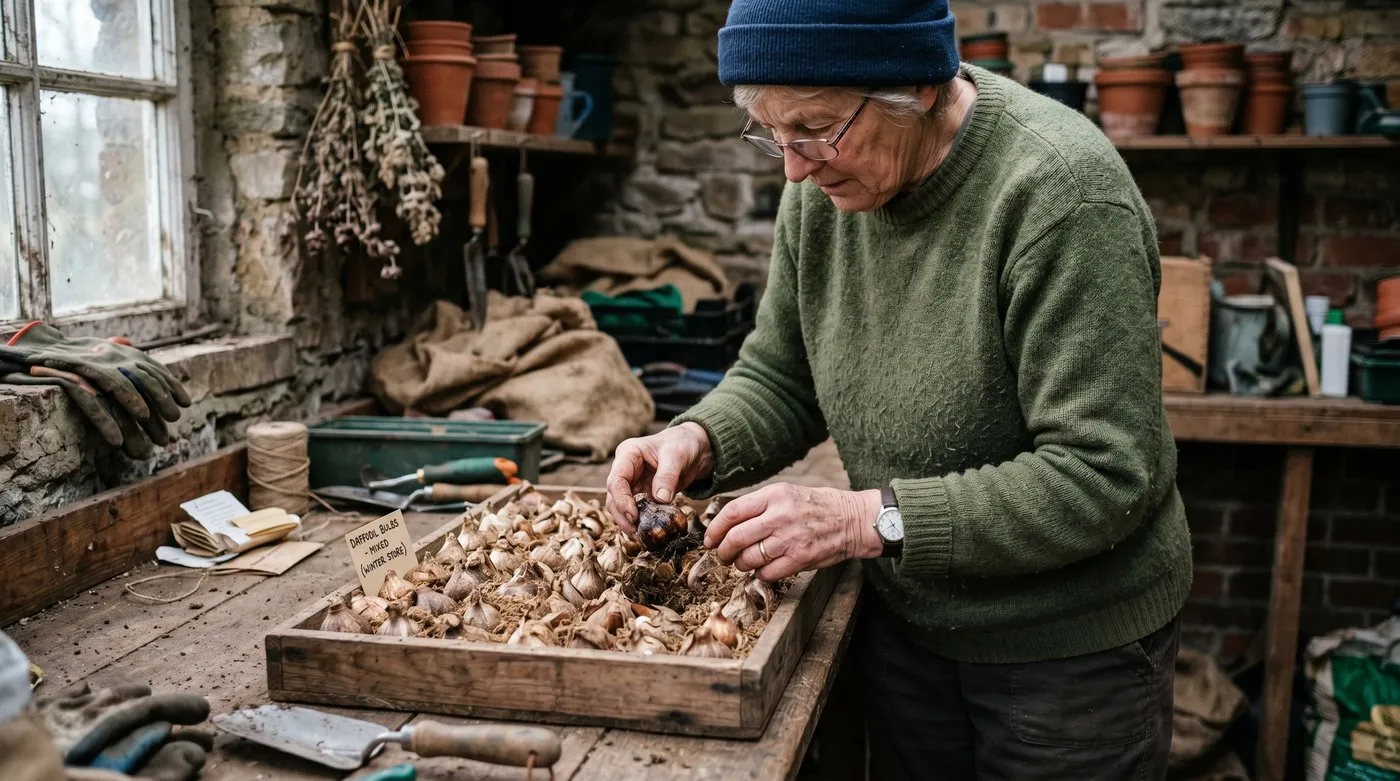 A monthly check is all it takes: remove any soft, mouldy, or shrivelled bulb before the rot spreads, and adjust the store if many are drying out or going damp.
Store them well and your bulbs reward you for years. For trusted, plant-by-plant storage advice, the Royal Horticultural Society’s guidance on storing tender bulbs is a reliable reference to check alongside this guide.
Our team produces practical UK gardening guidance from source research, contributor records and established horticultural practice. Editorial standards are overseen by Matt W.