Key takeaways
- Western red cedar grows 30 to 40cm a year, roughly half the pace of leylandii's 60 to 90cm
- It reshoots from old bare wood, so you can cut it back hard and renovate a tired hedge
- Plant 'Atrovirens', the RHS Award of Garden Merit hedging clone, at 60 to 90cm spacing
- Trim once or twice a year, usually June and again in late August
- Keep it as a clipped wall 1.8 to 3m tall; the foliage smells of pineapple when cut
- Fully hardy to about -25C (RHS H7); watch for cypress aphid browning from April to June
Why gardeners swap from leylandii to western red cedar
Most people who plant leylandii regret the speed within a decade. At 60 to 90cm a year, a leylandii hedge outgrows the gardener. It needs two or three cuts a season and, once it passes head height, the top becomes a job for a tower or a contractor. Miss a couple of years and it is out of reach.
Western red cedar solves the two things leylandii gets wrong. First, it grows 30 to 40cm a year, roughly half the pace, so one or two trims keep it in shape. Second, and this is the part that matters, it reshoots from old bare wood. Cut a leylandii back into brown, leafless wood and it stays brown forever. Cut western red cedar the same way and green shoots push out of the old stems within weeks. That single difference decides which hedge you can live with for thirty years. If your existing conifers have grown too big, our guide on a conifer that is too big explains the pruning limits that trap leylandii owners.
What western red cedar actually is
Western red cedar is not a true cedar. It is Thuja plicata, a large conifer from the wet forests of the Pacific Northwest of North America, where wild trees top 60m. In a garden we clip it hard and keep it as a hedge 1.8 to 3m tall. The foliage forms flat, glossy sprays of tiny scale-like leaves, deep green above and marked with pale bands beneath. Crush a piece and the pineapple scent is unmistakable.
For hedging, one form stands out. ‘Atrovirens’ is the selected hedging clone, darker and denser than seed-raised plants, and it holds an RHS Award of Garden Merit. It keeps its colour through winter where ordinary western red cedar can bronze in cold winds. The RHS entry for Thuja plicata confirms its H7 rating, meaning fully hardy to about -25C.
The plant is dense from top to bottom, unlike some conifers that go bare at the base. That habit, plus the reshooting trait, is why it works as a living wall.
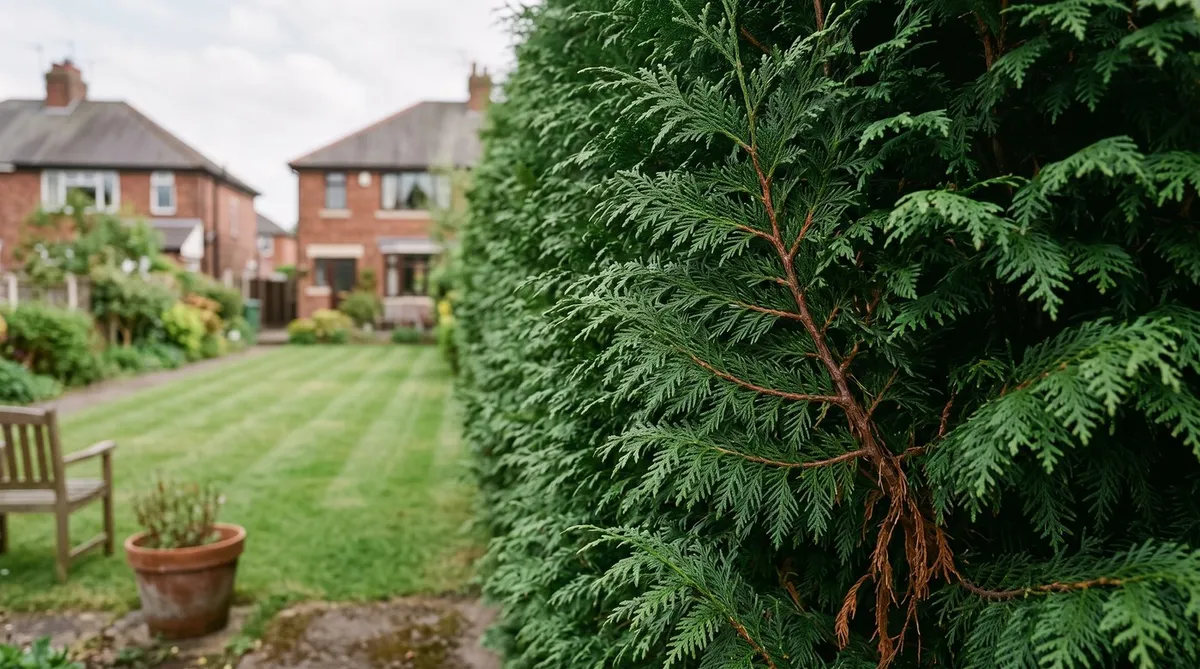
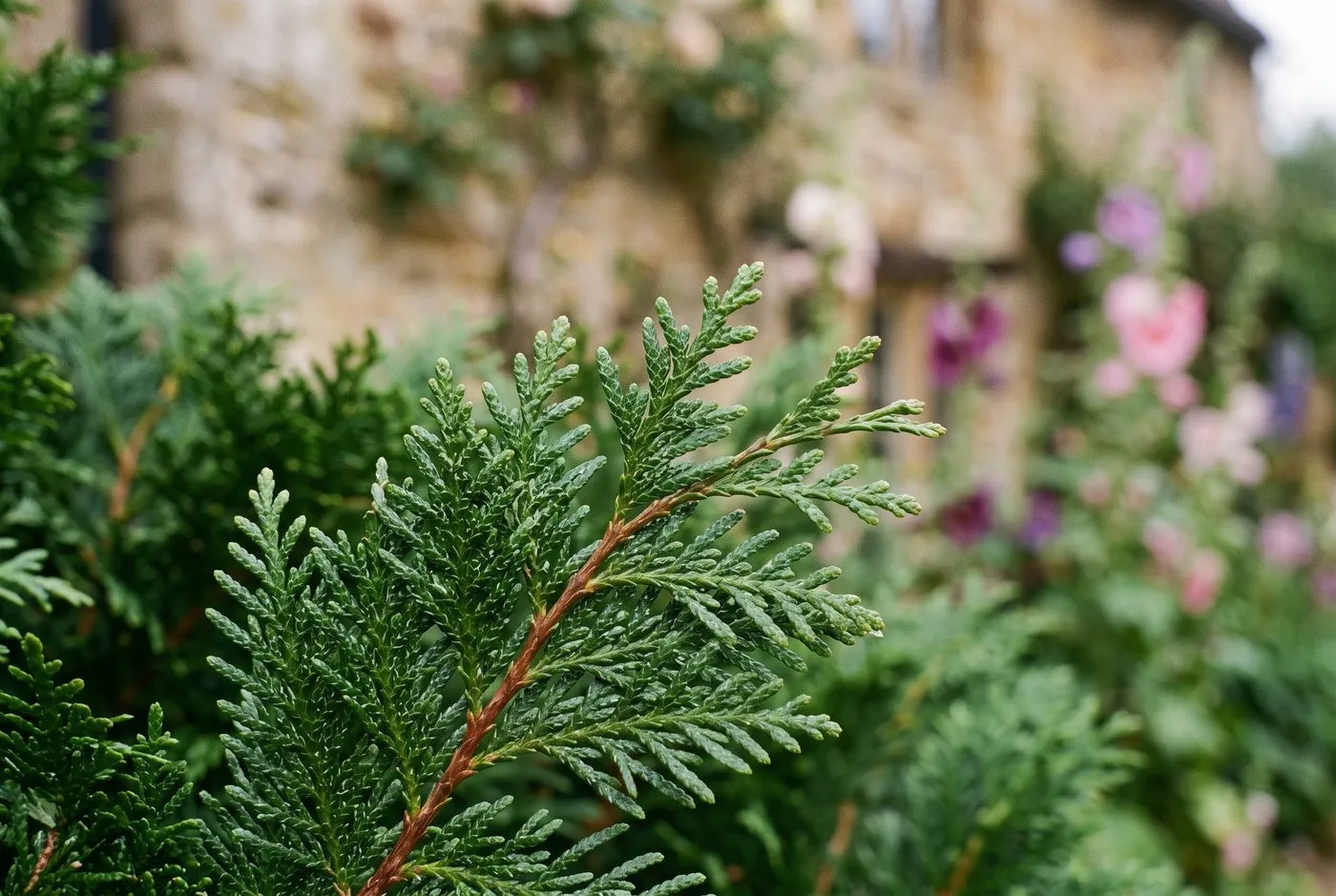 The flat sprays of scale-like foliage that identify Thuja plicata. Deep glossy green, dense to the touch, and strongly pineapple-scented when crushed.
How a western red cedar hedge establishes, stage by stage
A hedge is not planted, it is grown, and the first three years decide everything. Understanding the stages tells you when to water, when to feed and when to start clipping.
- Root establishment (months 0 to 12). After planting, the top barely moves while roots spread. Soil at 7C or above triggers root growth, usually from April. The critical job is water: 10 litres per plant weekly in dry spells.
- Slow top growth (year 1). Expect only 15 to 25cm of height in the first year as the plant invests below ground. Do not panic and overfeed.
- Fast filling (years 2 to 4). Once rooted, growth jumps to the full 30 to 40cm a year. This is when light side-trimming builds density.
- Reaching size (years 4 to 6). A bare-root whip planted at 45cm reaches a usable 1.8m screen in roughly four to five years, faster in mild, moist regions.
The critical mistake here is letting the leader run unchecked to full height while ignoring the sides. Trim the sides from year one and leave the top until the hedge nears its target. A hedge clipped only at the top grows thin and gappy at the base, and western red cedar bases are hard to thicken once shaded out. Our guide to planting bare-root trees in the UK covers the ground preparation that gets roots away fast.
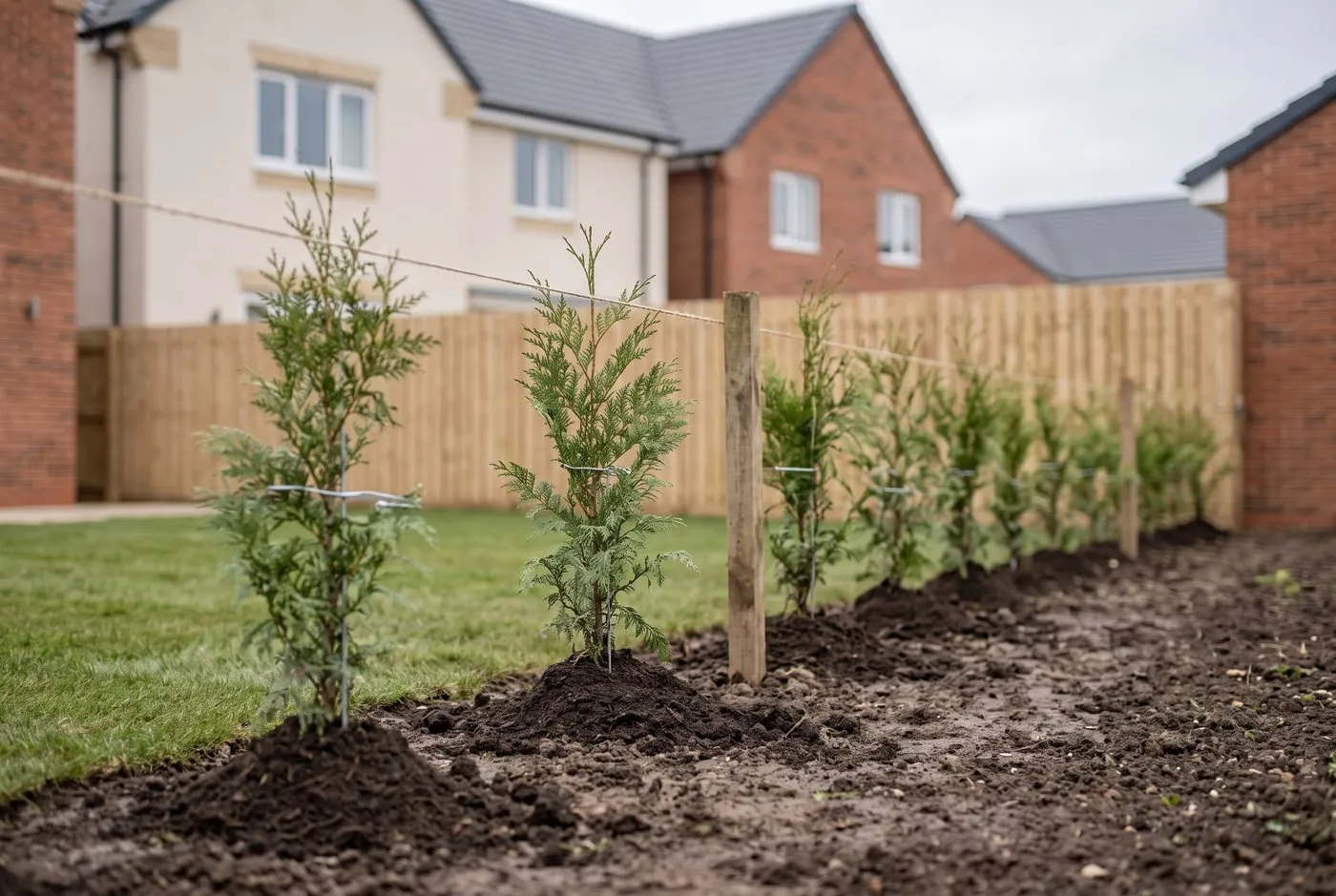 Young plants staked at 75cm spacing to screen a new-build plot. In year one they barely grow up top while the roots spread underground.
Western red cedar vs leylandii, yew and laurel
| Hedge plant | Growth a year | Trims a year | Reshoots from bare wood? | Best use | Rating |
|---|---|---|---|---|---|
| Western red cedar ‘Atrovirens’ | 30-40cm | 1-2 | Yes, strongly | Fast dense screen you can renovate | 1st, our pick |
| Yew (Taxus baccata) | 20-30cm | 1 | Yes | Formal, long-lived, clips tightest | 2nd |
| Cherry laurel (Prunus laurocerasus) | 30-60cm | 2 | Yes, from stumps | Fast broadleaf screen, big leaves | 3rd |
| Thuja occidentalis ‘Brabant’ | 20-30cm | 1 | Yes, weakly | Smaller gardens, slower and neater | 4th |
| Lawson cypress | 30-50cm | 1-2 | No | Screening, but cannot be renovated | 5th |
| Leylandii | 60-90cm | 2-3 | No | Instant screen, relentless upkeep | 6th, avoid |
Western red cedar wins on the balance of speed and control. Yew clips tighter and lives longer, but grows too slowly for anyone wanting quick cover. Cherry laurel is faster still but coarse-leaved and thirsty; if you are drawn to it, read how fast cherry laurel really grows first. Leylandii and Lawson cypress share the fatal flaw: cut into bare wood and it never greens up again.
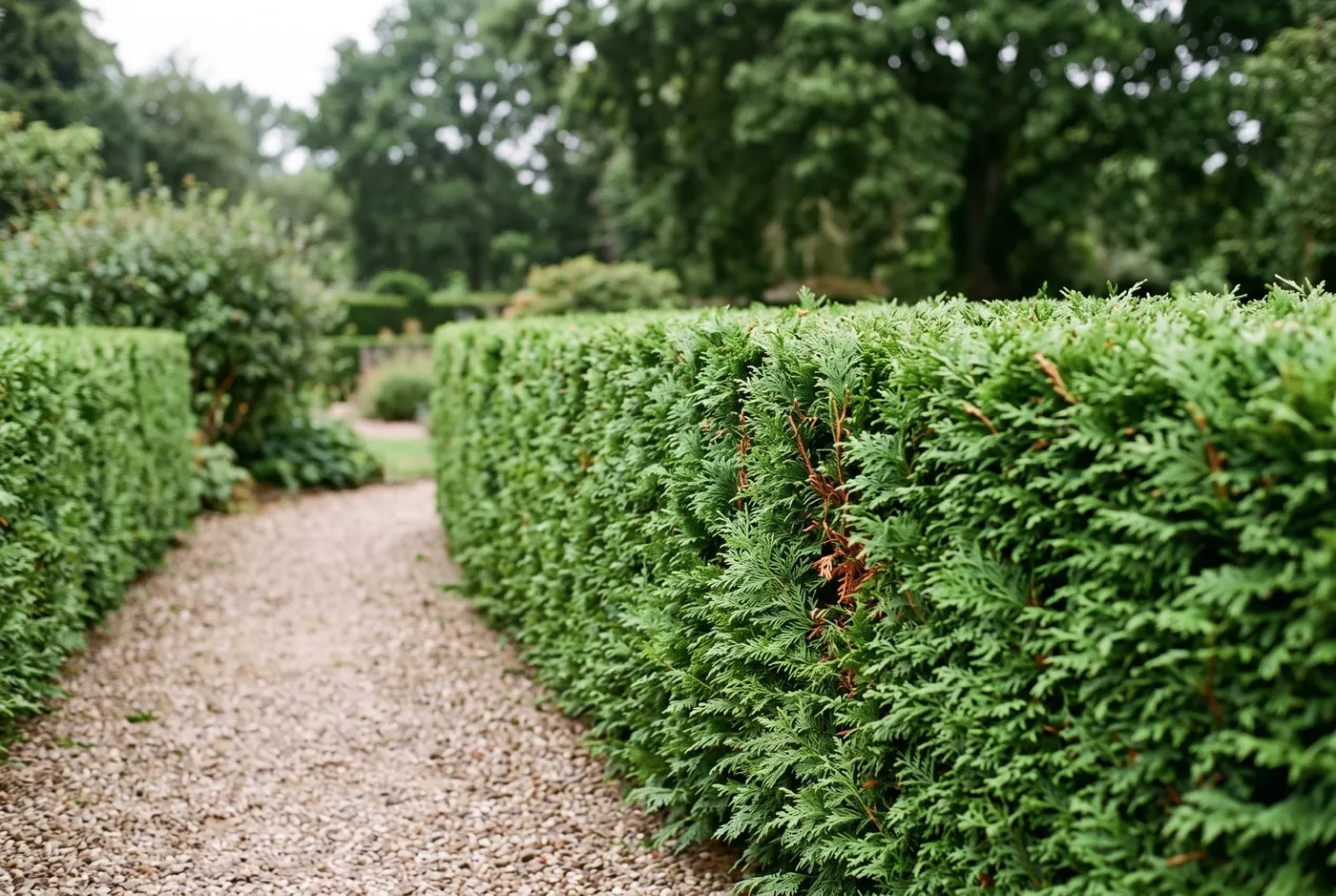 Kept formal, western red cedar clips to a crisp face. A run like this takes two cuts a year, far less work than a leylandii of the same size.
How to plant a western red cedar hedge
Plant bare-root plants from November to March while dormant, the cheapest and best-rooting option at £4 to £8 each. Pot-grown and rootballed plants go in year-round, ideally spring or autumn, at £10 to £15 each. Avoid planting into frozen or waterlogged ground.
Space plants 60 to 90cm apart in a single row. Use 60cm for a quick, dense screen and 90cm where you want a taller hedge over 2.5m. A staggered double row wastes plants and crowds the roots for no real gain. Dig a trench a spade deep along a taut line, and fork a bucket of well-rotted compost or manure into each position with a handful of bonemeal.
Set each plant at its nursery soil mark, never deeper, spread the roots, and firm with your heel. Water in with 10 litres per plant, then mulch 5 to 8cm deep with bark, keeping it off the stems. Water weekly through the first two summers. On heavy ground, first read our notes on improving clay soil so the roots do not sit wet.
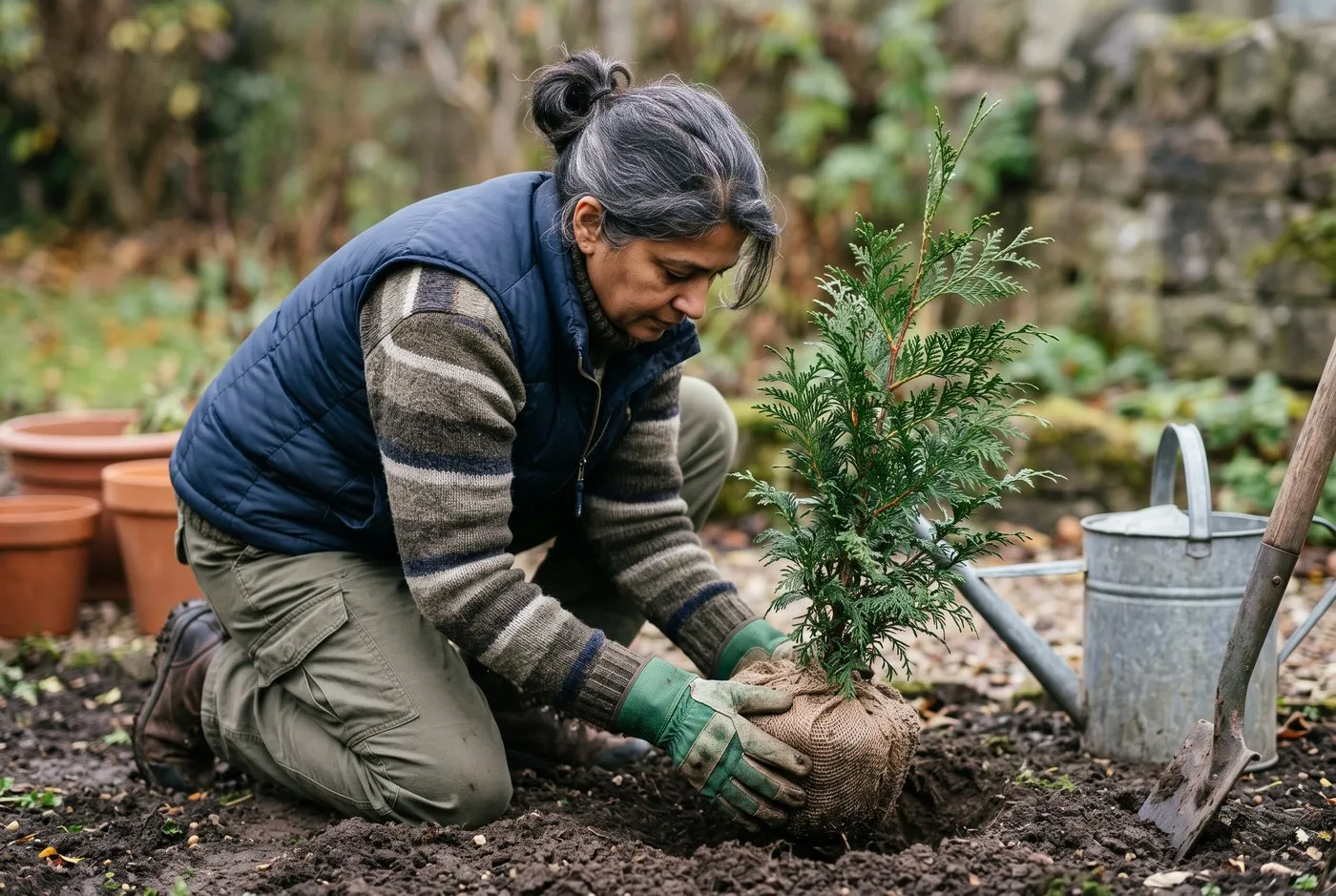 Setting a rootballed plant at the nursery soil mark, no deeper. Firm the soil well and water in with 10 litres to settle the roots.
When and how to trim western red cedar
Trim western red cedar once or twice a year. One cut in June keeps an informal hedge tidy. Add a second in late August for a crisp, formal face. The plant responds well to shears or a battery hedge trimmer, and the pineapple scent rises as you work.
Always shape the hedge with a batter, meaning slightly wider at the base than the top. This lets light reach the bottom and stops the base thinning. Aim for about 5 to 10cm narrower at the top for every metre of height. Never let the top overhang the base or the lower growth dies back.
Check for nesting birds before any cut between March and August. It is an offence under the Wildlife and Countryside Act 1981 to disturb an active nest. Our guide to when to cut hedges legally in the UK sets out the dates and the law in full.
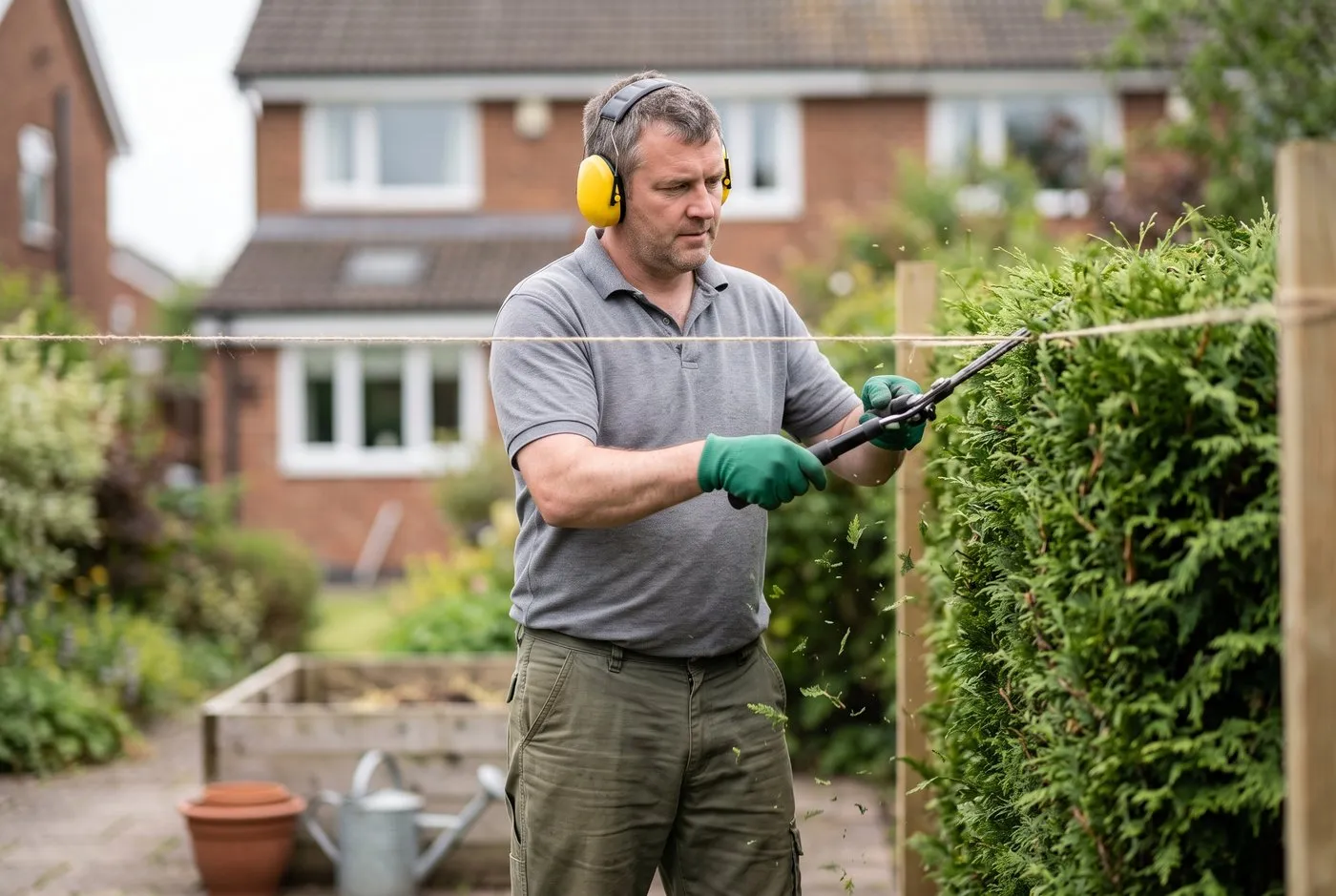 Trimming to a string line with a hedge trimmer in June. Cut the sides with a slight batter, wider at the base, so light reaches the bottom.
Renovating a neglected or overgrown hedge
This is where western red cedar earns its place. A neglected hedge that has grown too wide or too tall can be cut back hard, and it will reshoot from the old bare wood. That recovery is impossible with leylandii or Lawson cypress, which is why so many overgrown conifer boundaries end up ripped out.
The root cause of a hedge outgrowing its space is almost always planting too fast a species and skipping early side-trimming. Prevent it for good by choosing western red cedar over leylandii and clipping the sides from year one. If a conifer boundary is browning rather than overgrown, that is a different problem covered in our guide to conifer hedge browning and recovery.
Warning: Do not cut all the way round a hedge into bare wood in a single year. Removing every leaf at once can kill even a species that reshoots. Always leave one side in full leaf to feed the roots while the cut side recovers, and never renovate a plant already stressed by drought or aphid damage.
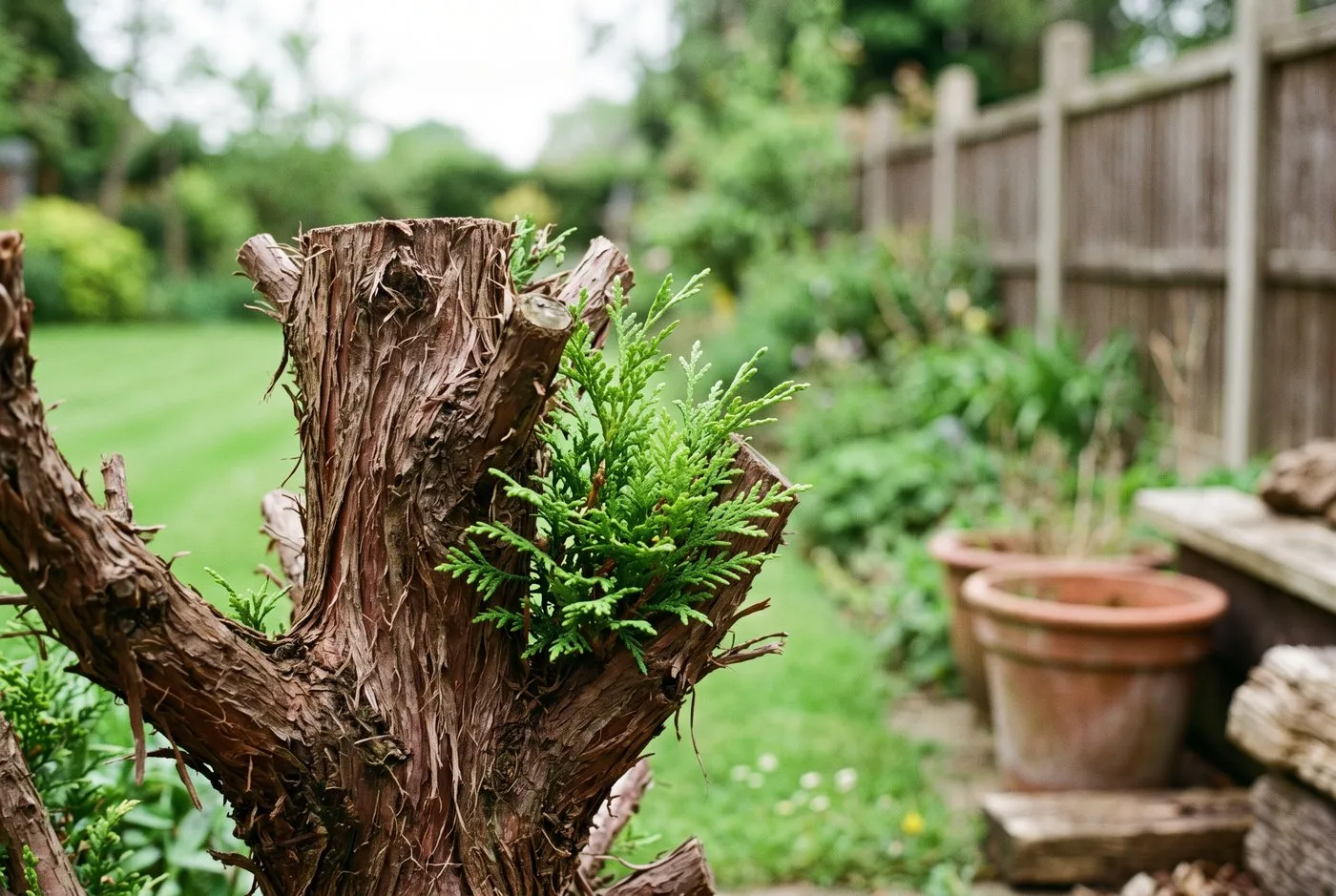 The trait leylandii lacks: fresh green shoots breaking straight from old bare brown wood, one season after a hard cut. This is what makes the hedge renovatable.
Month-by-month western red cedar hedge calendar
| Month | Task |
|---|---|
| January | Fully dormant. Firm any new plants lifted by frost. Plan and order bare-root stock. |
| February | Last chance to plant bare-root before growth starts. Keep roots covered and moist until planting. |
| March | Plant pot-grown and rootballed plants. Apply a slow-release conifer feed as growth begins. Renew mulch. |
| April | Growth resumes once soil hits 7C. Water new plants in dry spells. Watch for early cypress aphid. |
| May | Peak cypress aphid month. Inspect stems for browning and sticky honeydew. Keep young hedges watered. |
| June | First trim of the year, once you have checked for nesting birds. Light shaping only on young hedges. |
| July | Water establishing plants weekly in dry spells. A light side trim keeps the face crisp. |
| August | Main formal trim in the last week, so growth hardens before winter. Stop feeding now. |
| September | Final light tidy if needed. Growth slows. Do not feed, to avoid soft frost-tender shoots. |
| October | Prime month to start bare-root and rootballed planting as dormancy sets in. Mulch new plants. |
| November | Best bare-root planting window. Space at 60 to 90cm, firm well and water in. |
| December | Dormant. Avoid trimming in hard frost. Check ties and supports on exposed hedges. |
The colour is the everyday reason to choose it. A winter leylandii or seedling thuja can look dull and patchy. ‘Atrovirens’ stays a rich green all year, so the boundary reads as a deliberate feature rather than a screen you tolerate.
Cypress aphid and other problems to watch
The main threat to a western red cedar hedge is cypress aphid (Cinara species). These grey-brown aphids feed on the stems from April to June, and the first sign is patches of foliage turning yellow then brown, often on the sunny side. The damage shows weeks after the aphids have gone, which is why it catches people out.
The root cause is a plant under stress, usually from drought or poor establishment, on which aphid colonies build fast. Prevent it by keeping the hedge watered in dry spring spells and never letting a young hedge go thirsty. Inspect stems in May for the aphids themselves and for sticky honeydew. The RHS advice on conifer aphids explains why brown patches on this genus rarely green up quickly, since conifers are slow to reshoot into damaged areas, though western red cedar does so better than most.
Scale insects and, in wet sites, root rots such as Phytophthora are lesser risks. Good drainage prevents nearly all of them. A hedge planted on a free-draining, mulched, watered start shrugs off most trouble.
Roots, boundaries and the law
Western red cedar has a fibrous, spreading root system rather than aggressive tap roots. Even so, roots reach out roughly as far as the hedge is tall, so plant at least 60 to 90cm in from a boundary line or path. This leaves room to trim both sides and keeps roots clear of shallow foundations and drains.
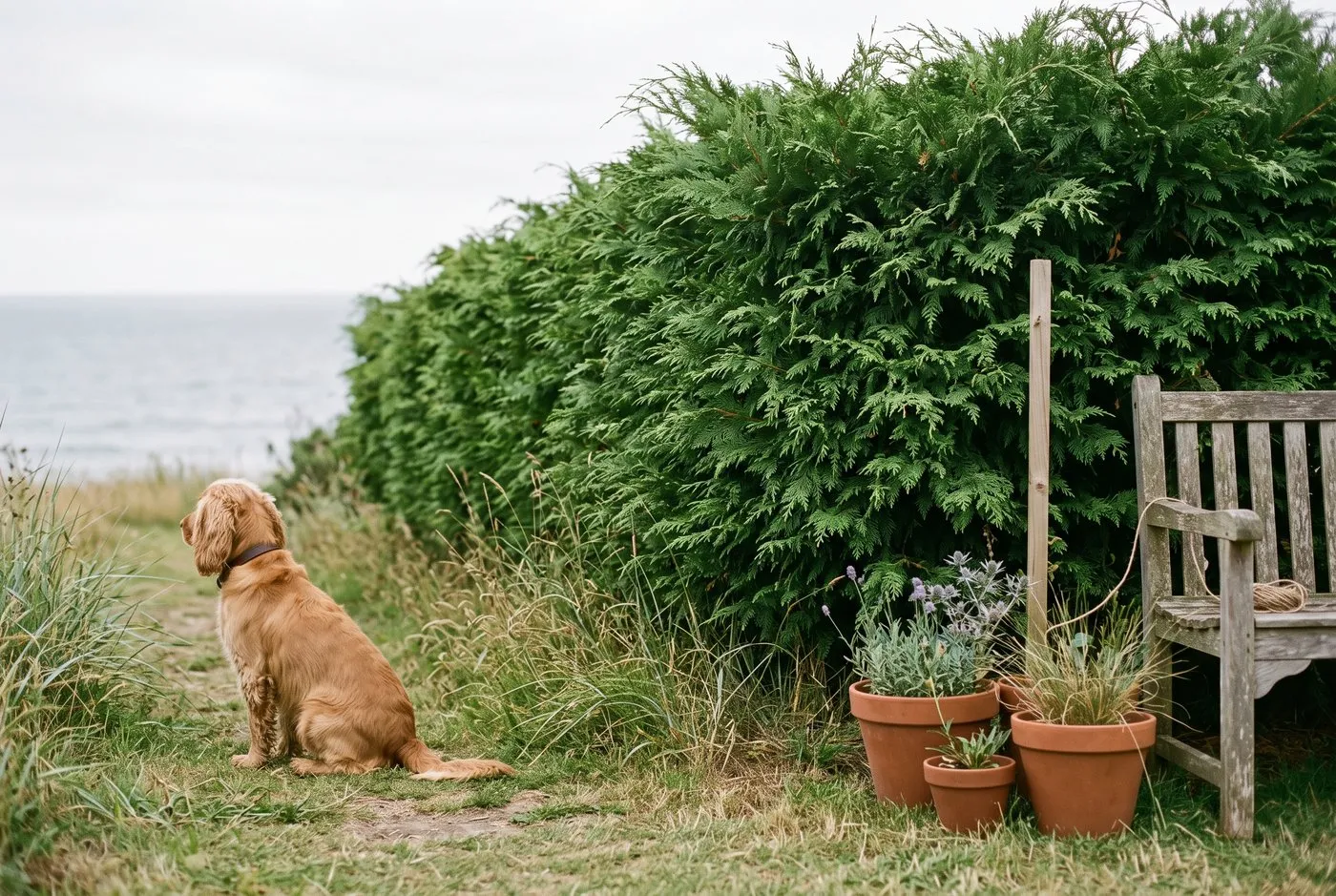 A maturing western red cedar hedge in a seaside garden. Dense from top to base and planted 75cm off the boundary, it gives a solid green screen without invasive roots.
Common mistakes when growing western red cedar
- Treating it like leylandii and cutting three times a year. Western red cedar grows at half the pace. Over-trimming young plants slows them and thins the top. One or two cuts a year is plenty.
- Planting too deep. Setting the plant below its nursery soil mark rots the stem base and stalls growth. Always plant to the old soil line, no deeper, and firm well.
- Skipping water in the first two summers. New conifers die from drought more than anything else. A dry spring also invites cypress aphid. Water 10 litres per plant weekly in dry spells until established.
- Clipping straight sides with no batter. A vertical or top-heavy hedge shades its own base, which then goes bare. Cut the sides tapering inwards, wider at the bottom, so light reaches the base.
- Renovating both sides in one year. Removing all the foliage at once can kill even this forgiving species. Cut one side, wait a full year, then cut the other.
Now you know how to plant, trim and renovate western red cedar, read our hedge planting guide for the UK for the ground preparation and aftercare that get any new hedge away fast. You can also browse more of our how-to guides for the next job on your list.
Frequently asked questions
Is western red cedar better than leylandii?
Yes, for most gardens western red cedar beats leylandii. It grows at half the pace, 30 to 40cm a year against 60 to 90cm, so it needs less trimming. Crucially, it reshoots from old bare wood if you cut it back hard. Leylandii will not, so a badly overgrown one can never be reduced safely.
How fast does a western red cedar hedge grow?
Western red cedar grows 30 to 40cm a year in the UK. That is slower than leylandii but faster than yew or box. In good soil with water for the first two summers, a bare-root whip reaches a usable 1.8m screen in about four to five years.
How far apart do you plant western red cedar?
Plant western red cedar 60 to 90cm apart in a single row. Use 60cm for a quick, dense screen and 90cm for a taller hedge over 2.5m. A double staggered row is rarely needed and just crowds the roots. Space from the plant centres, not the pot edges.
Can you cut western red cedar back hard?
Yes, western red cedar reshoots from old bare wood after hard pruning. This sets it apart from leylandii and Lawson cypress, which stay brown where you cut into leafless wood. Reduce one side one year, the other the next, and green shoots return within a season.
When should you trim a western red cedar hedge?
Trim western red cedar in June, then again in late August if needed. Avoid the main bird-nesting season by checking the hedge first. One trim a year keeps an informal hedge tidy; two gives a crisp, formal face. Never cut in hard frost.
Does western red cedar smell?
Yes, western red cedar smells strongly of pineapple or ripe fruit when clipped. The scent comes from oils in the foliage and is one of its charms as a hedge. Leylandii, by contrast, has a sharp, resinous smell that many people dislike.
How tall should a western red cedar hedge be?
Keep a western red cedar hedge between 1.8 and 3m tall. Above 2m, remember the High Hedges rules under the Anti-social Behaviour Act 2003, which let neighbours complain about evergreen hedges over 2m. For screening most gardens, 2 to 2.5m is plenty and stays easy to trim.
Our team produces practical UK gardening guidance from source research, contributor records and established horticultural practice. Editorial standards are overseen by Matt W.