Key takeaways
- Hornbeam is the hedge for heavy clay: it tolerates waterlogged winter soil that rots beech roots
- Plant bare-root whips November to March, 3 per metre in a single row or 5 per metre staggered
- Whips cost £1-£2.50 each, so a 10m hedge costs £30-£75 in plants
- Rated H7 hardy, below -20C, and happy in part shade and on cold exposed sites
- Trim once a year in late August and clipped plants hold brown leaves all winter
- Lapsed hedges take hard renovation in February and regrow from old wood
- Pleached hornbeam screens cost £150-£300 per tree and solve overlooked gardens
A hornbeam hedge does everything a beech hedge does, and it does it on the soils that kill beech. Crisp green pleated leaves through summer, a dense clipped face, and a coat of warm brown foliage held right through winter. The difference shows underground. Beech demands free-draining soil and sulks or dies on heavy wet clay. Hornbeam does not care.
That makes Carpinus betulus the most underused hedging plant in Britain. It is native, hardy to below -20C, happy in part shade, and costs from £1 a plant bare-root. This guide covers telling it apart from beech, planting distances and costs, trimming, hard renovation, pleached screens and the few problems it ever has.
Why plant a hornbeam hedge instead of beech?
Plant hornbeam instead of beech if your soil is heavy clay, wet in winter, cold or exposed. That is the whole decision in one sentence. On light, free-draining ground the two species perform almost identically. On difficult ground only one of them thrives.
Beech roots rot in soil that sits waterlogged over winter. Plants either die in year one or limp along with thin growth and early leaf scorch. Hornbeam evolved on the heavy clays of southern and eastern England, where it is a true native woodland tree. The RHS rates it H7, its highest hardiness band, meaning it shrugs off temperatures below -20C.
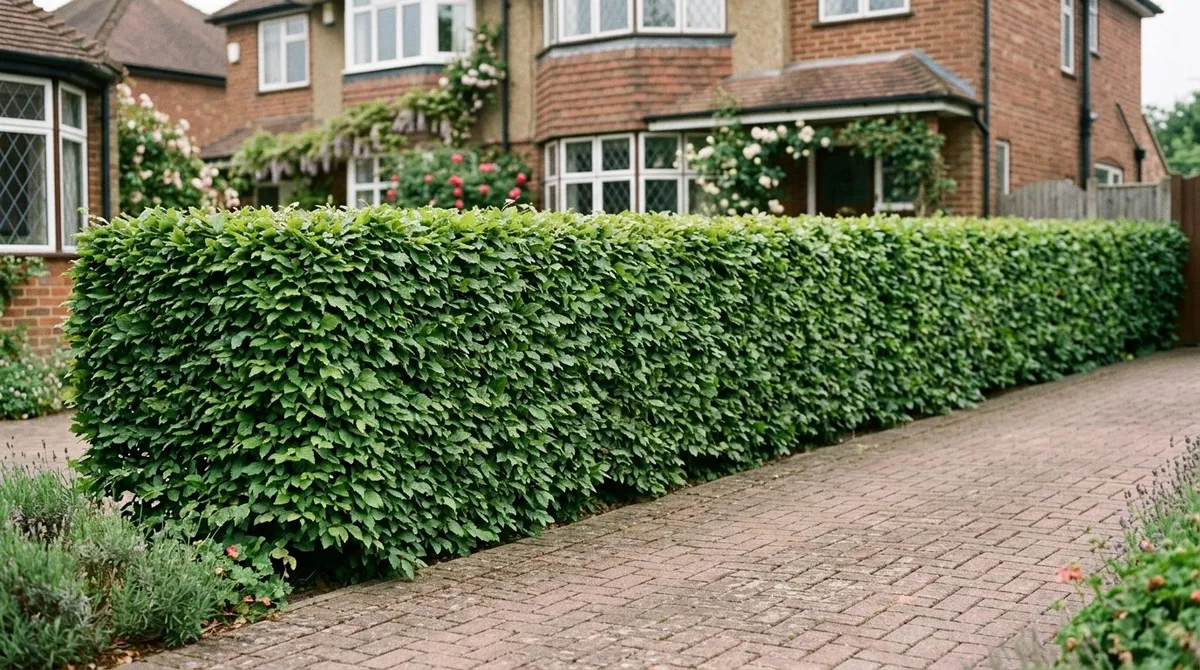
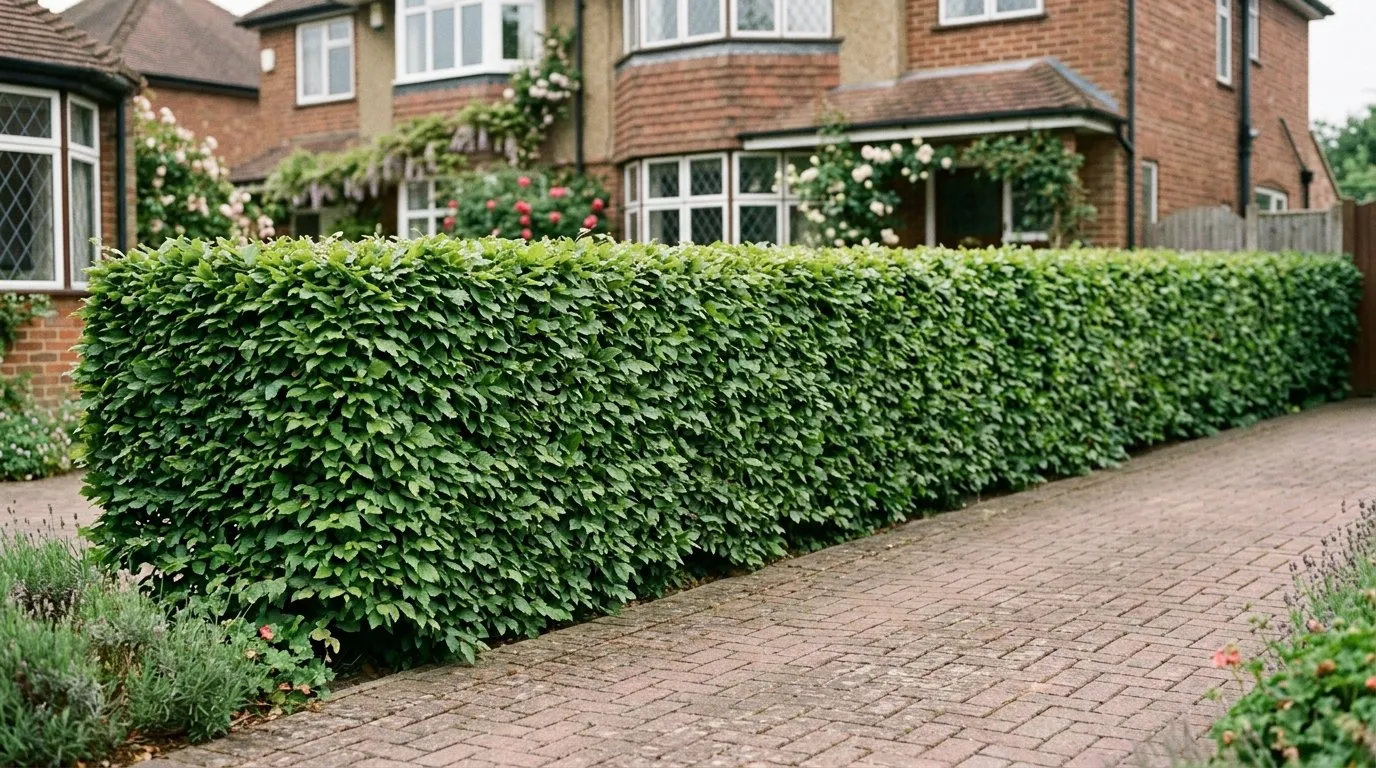 A clipped hornbeam hedge in high summer. On heavy soil it gives this density where beech gives gaps and losses.
How do you tell hornbeam and beech apart?
Look at the leaf surface and the leaf edge: hornbeam is matt and serrated, beech is glossy and smooth. The two get confused constantly at garden centres and in inherited gardens, but the differences are easy once you know them.
Hornbeam leaves are deeply ribbed, with 10-15 pairs of parallel veins pressed into the surface like the pleats of a fan. The edges carry fine, sharp double serrations, like a small saw. The surface is matt green and slightly rough. Leaves run 4-10cm long.
Beech leaves are the opposite in every detail. They are glossy, almost polished, with wavy edges that carry no teeth at all, just a soft fringe of silky hairs in spring. The veins are shallower, in 5-9 pairs.
The bark settles any argument on older plants. Hornbeam trunks are fluted and muscular, pale grey with vertical ripples, and the timber behind that bark is the hardest of any tree in Europe. The Romans cut it for chariots, and farmers later shaped it into ox yokes. Left unclipped it makes a tree of up to 30m, though a hedge never gets the chance.
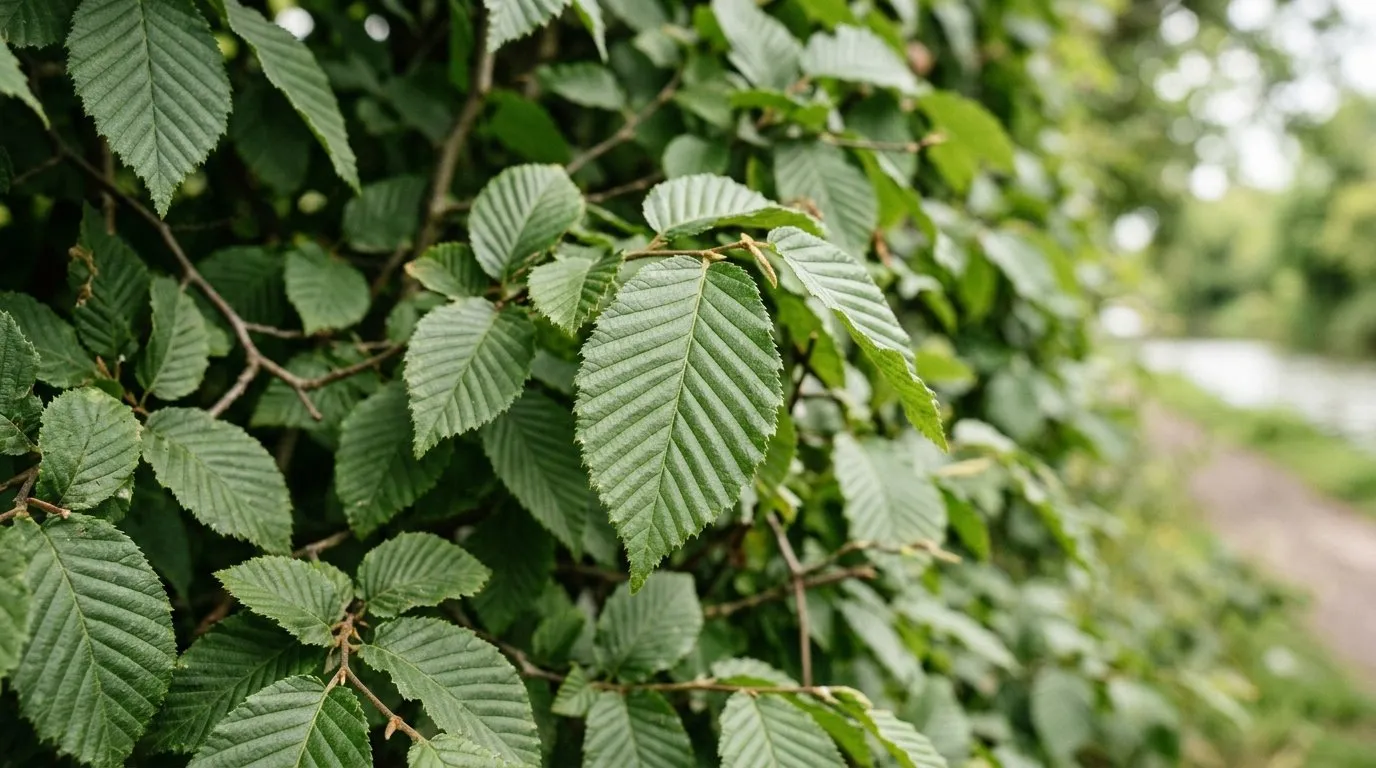 The ID test in one frame: matt, deeply pleated leaves with saw-toothed edges. Beech is glossy with smooth wavy margins.
Does a hornbeam hedge keep its leaves in winter?
Yes, a clipped hornbeam hedge holds most of its dead brown leaves from autumn until the new flush in April. The habit is called marcescence, and it only happens on plants trimmed as hedges. Free-growing hornbeam trees drop their leaves like any other deciduous species.
Honesty matters here, because sellers oversell it. Hornbeam holds slightly less winter leaf than beech. Expect a coppery screen at perhaps 70-80 per cent density, thinning a little after each winter gale, where a good beech hedge stays fuller. It is still far better winter cover than hawthorn or field maple, and the low winter sun through those russet leaves is a genuine feature.
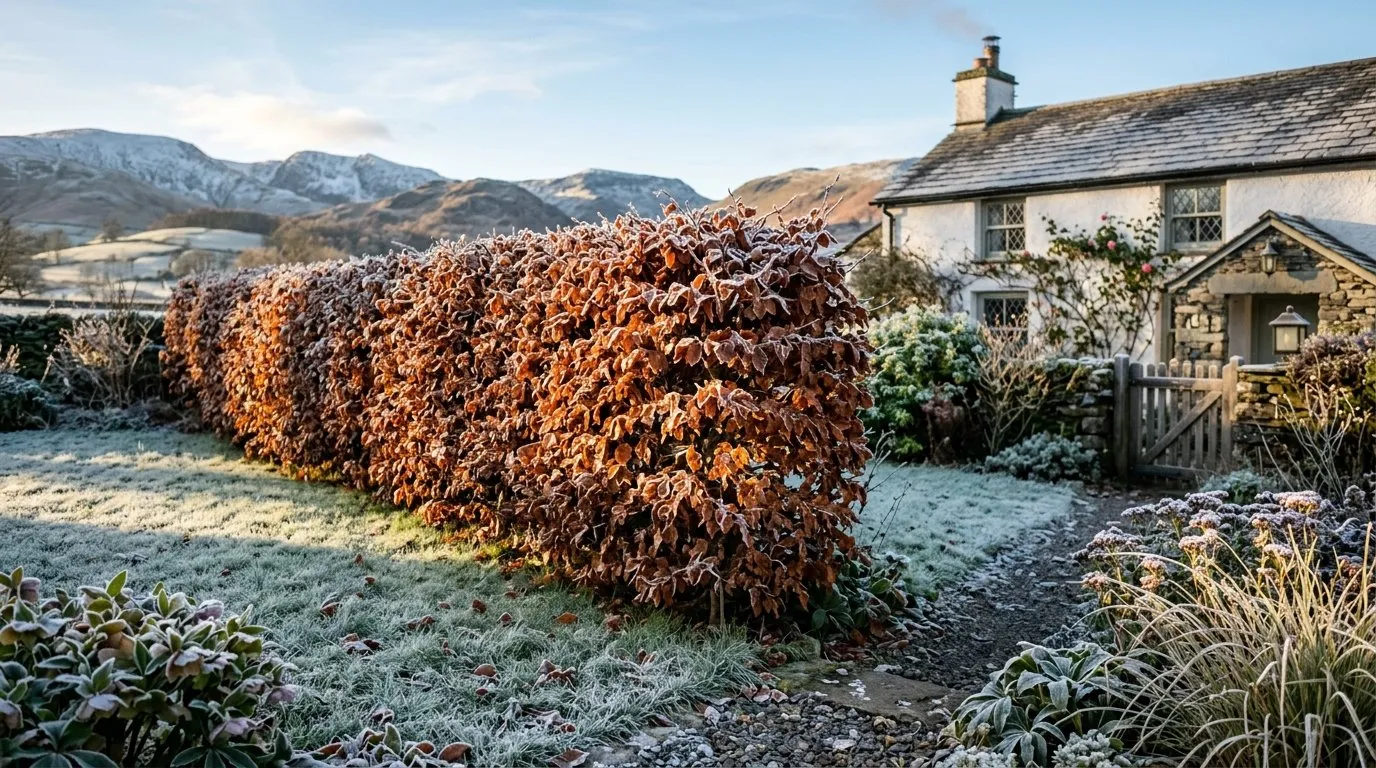 Marcescence in January: a trimmed hornbeam hedge holds its dead leaves as a russet screen until the April flush.
When and how do you plant a hornbeam hedge?
Plant bare-root hornbeam whips between November and March, at 3 per metre in a single row. Bare-root season is the cheap, reliable window. A 60-90cm whip costs £1-£2.50 from hedging nurseries, so a 10m single-row hedge needs 30 plants and costs £30-£75. Pot-grown plants at £8-£15 each extend planting into spring, and instant hedging troughs run from £150 per metre, mostly for impatient budgets.
For a denser hedge, plant a staggered double row: 5 whips per metre, two rows 40cm apart, plants offset. Single rows fill out fine by year five; doubles just get there two seasons sooner.
Preparation beats pampering. Dig over a strip 60-90cm wide, fork the base of the trench, and on sticky ground work in organic matter along the run rather than into individual holes. The methods in our guide to improving clay soil apply directly to a hedge trench. Plant each whip to the old soil mark, firm with a boot, water in, then mulch 5cm deep with bark, keeping it clear of the stems. The step-by-step sequence, including heeling-in if plants arrive before you are ready, is in our full hedge planting guide, and the RHS hedge planting advice matches it.
Even a waterlogging-tolerant species establishes better without competition. Keep a 1m weed-free strip along the hedge for the first three years.
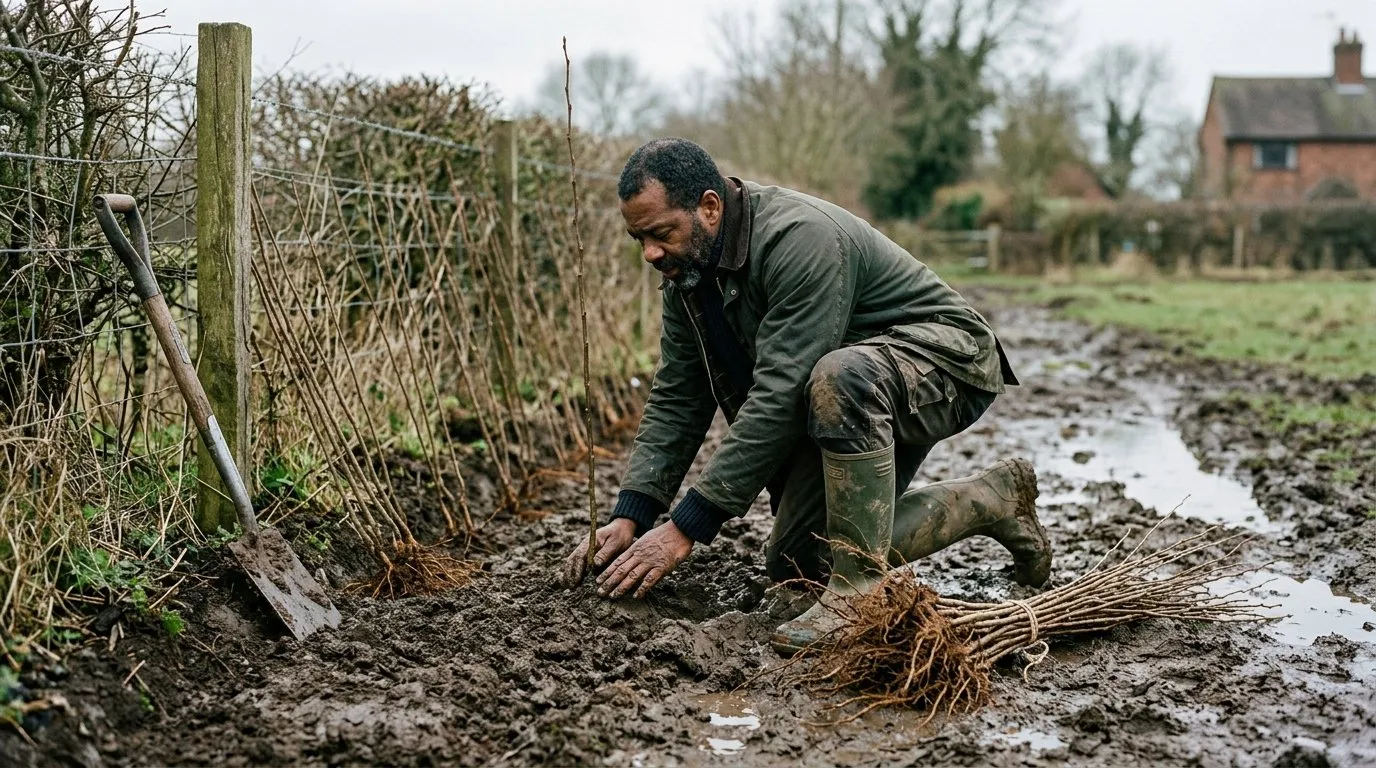 Bare-root planting on winter clay: 5 whips per metre in a staggered double row, firmed in by boot and mulched.
How fast does hornbeam grow, and how tall should you keep it?
Established hornbeam grows 30-60cm a year, and it reaches that pace faster than beech on hard sites. Year one is quiet while the roots get down. From year two the growth comes, and 60cm whips typically make a clippable 1.8m hedge in four to five years.
Height is your choice, because hornbeam holds any line you set. It works from a 1.5m garden divider up to a 4-5m screen hiding a road or an ugly building. On exposed rural boundaries it makes a better windbreak than any fence, filtering wind rather than throwing it into turbulence.
Two establishment jobs actually matter. Water for the first two summers: 10 litres per metre once a week in dry spells, because drought in years one and two kills more new hedges than any pest or disease. And guard against rabbits where they occur. Spiral guards cost about 40p each and save whole rows; deer need 1.2m tree shelters or fencing.
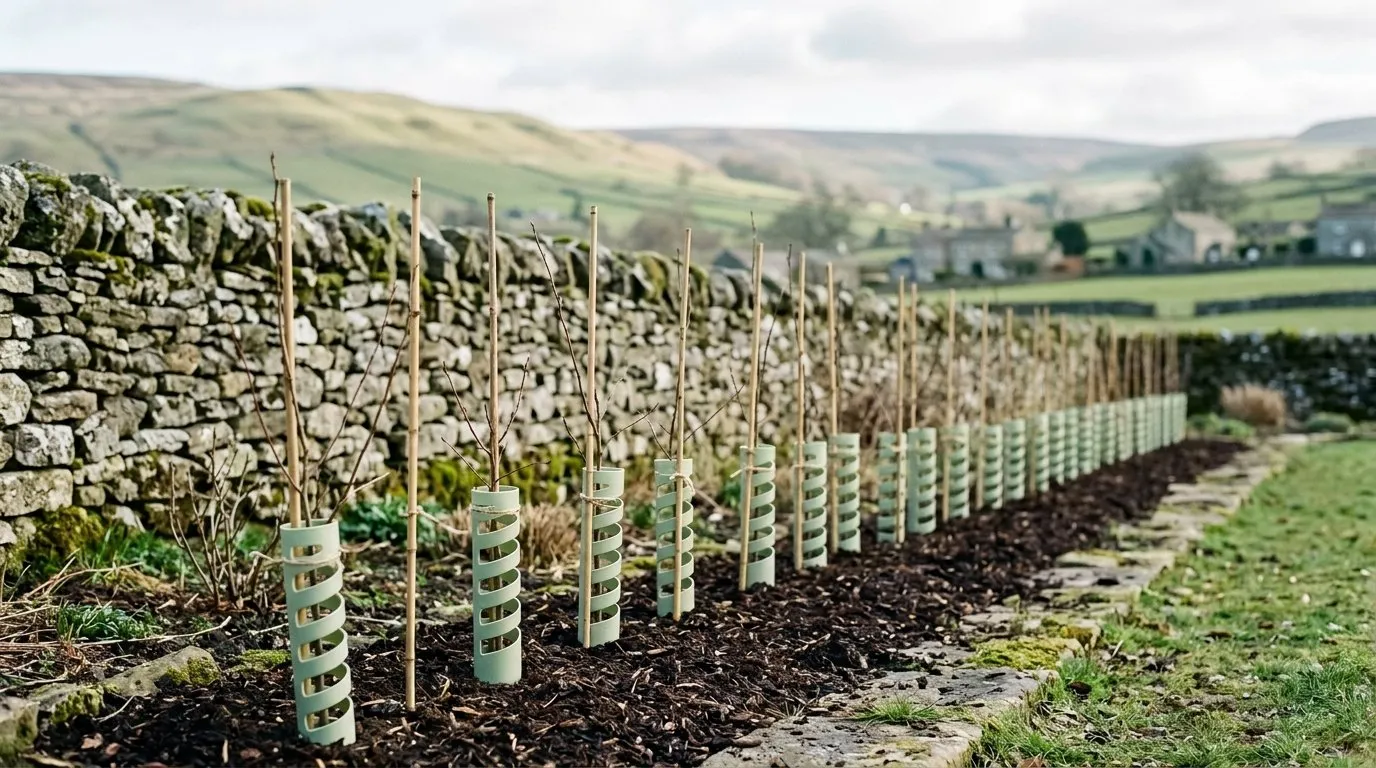 First-winter whips in spiral guards. Rabbits take unguarded rows to the ground; 40p per plant removes the risk.
When should you trim a hornbeam hedge?
Trim hornbeam once a year, in late August or early September. One cut is genuinely enough. The late-summer timing lets the hedge hold a crisp line through autumn, and it is what triggers the winter leaf retention. Cut in June and regrowth spoils the marcescent effect.
Keep the face slightly battered, meaning wider at the base than the top by 10cm or so per side. That keeps the bottom in light and stops the thin ankles that spoil old hedges. A fast-growing young hedge can take a second light tidy in June if you want sharp edges all season.
The law shapes the calendar more than the plant does. The Wildlife and Countryside Act 1981 makes it an offence to intentionally damage an active nest, and the main season runs March to August. Check the hedge thoroughly before any summer cut, and if in doubt wait. Our guide to the legal hedge cutting dates covers the rules, including the stricter August restrictions on countryside hedgerows.
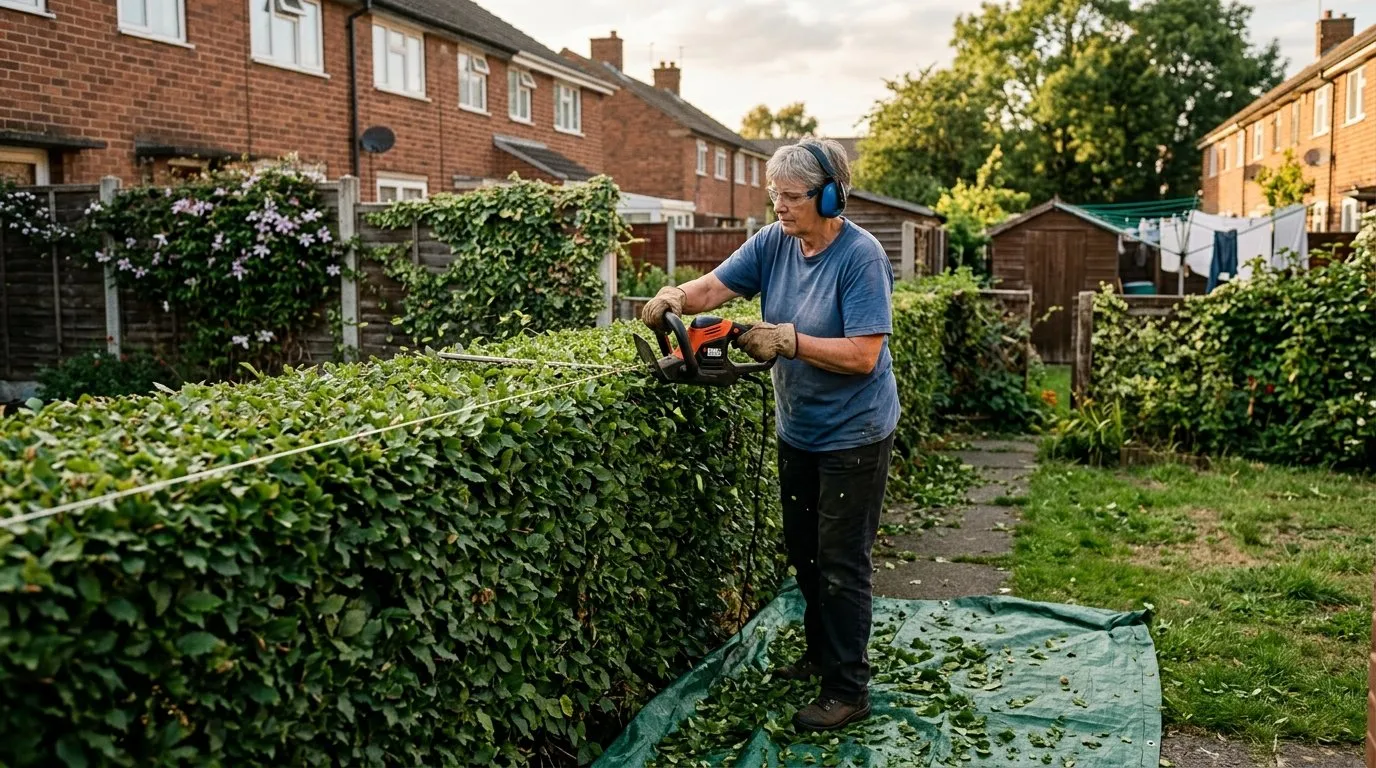 One cut a year, late August. A battered face, wider at the base, keeps the bottom thick for decades.
Can you renovate an overgrown hornbeam hedge?
Yes, hornbeam takes hard renovation better than almost any hedge except yew, and it regrows from old bare wood. This is a traditional coppice tree, cut to the ground on rotation for centuries in the woods of Essex, Hertfordshire and Kent. A lapsed, gappy, 4m monster of a hedge does not need replacing. It needs a saw and two winters.
Do the work in February, while the plant is dormant but with growth about to break. Take the top down to 30cm below your final height, then cut one face hard back to near the main stems. Leave the other face alone. The following February, once the first side has shot away, cut the second face. Feed with 70g per square metre of blood, fish and bone each spring and mulch generously after each stage.
Regrowth is vigorous: expect the skeleton to green over in its first summer and a full clipped face within two to three seasons. The same tolerance of hard cutting is why hornbeam suits parterres, crisp architectural blocks and shapes that need decades of repeated clipping.
What is a pleached hornbeam screen?
A pleached hornbeam screen is a row of clear-stemmed trees with their heads trained flat on frames, making a hedge on stilts. Hornbeam has been the classic tree for it since the formal gardens of the 17th century, and it is now the standard answer to the modern problem of being overlooked by neighbouring upstairs windows.
The arithmetic is simple. A fence may not exceed 2m without planning permission, but sight lines from next door start higher. Pleached trees on 1.8m clear stems carry a trained panel roughly 1.2-1.5m wide and 1-1.2m tall above the fence line, exactly where the privacy gap sits. Planted so the frames touch, they read as a floating green wall. Expect to pay £150-£300 per tree for decent framed stock, plus posts and wires for the first three years. Prune the panels once in late summer like any other hornbeam.
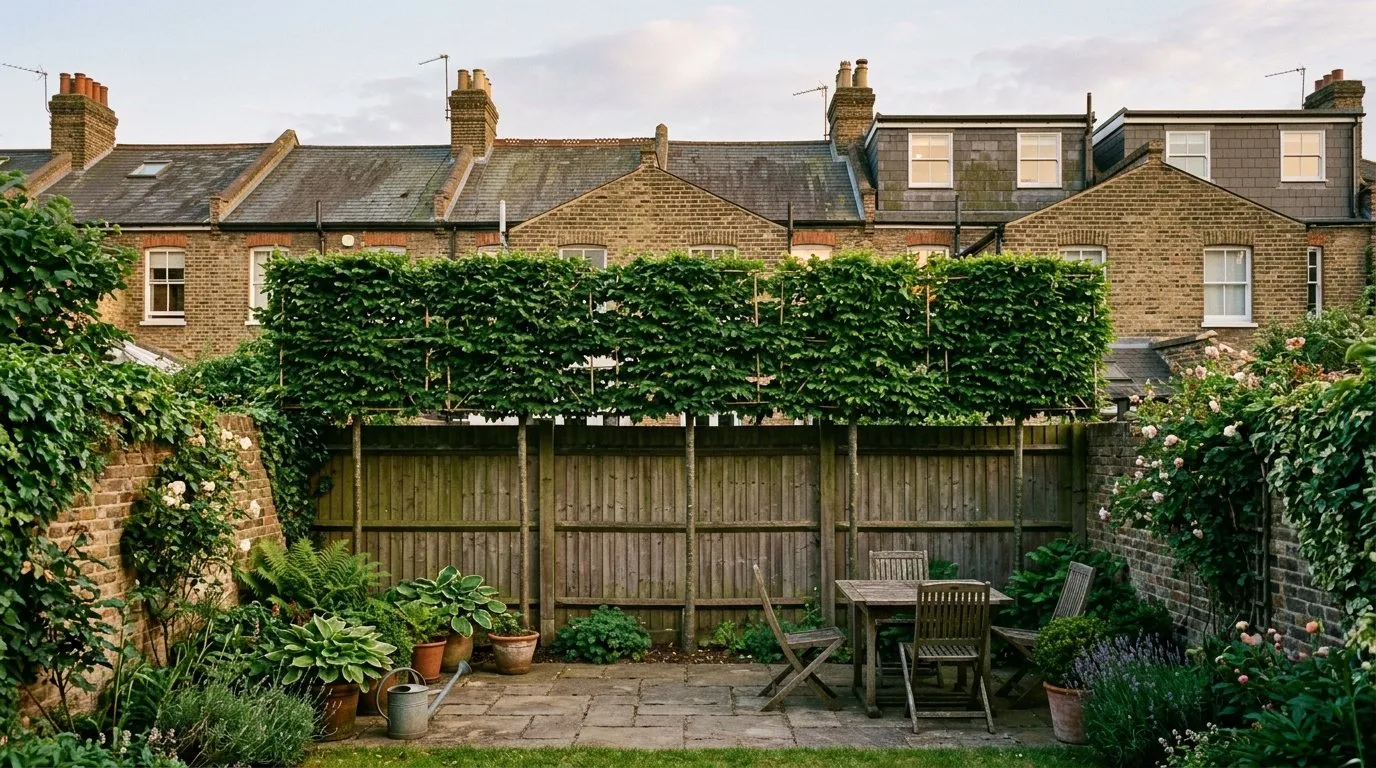 A pleached hornbeam screen lifting privacy above the 2m fence line. Panels sit on 1.8m clear stems and take one trim a year.
Hornbeam vs beech vs yew vs laurel: which should you choose?
Hornbeam wins on difficult soil, yew wins on formality, laurel wins on speed to evergreen bulk, and beech wins on winter colour over free-draining ground. Here is the comparison laid out.
| Hornbeam | Beech | Yew | Cherry laurel | |
|---|---|---|---|---|
| Soil tolerance | Any, including wet clay | Free-draining only | Any except waterlogged | Most, dislikes shallow chalk |
| Winter cover | Brown retained leaves | Brown retained leaves, slightly fuller | Evergreen | Evergreen |
| Growth per year | 30-60cm | 30-45cm | 20-30cm | 60cm+ |
| Cost per metre, bare-root at 3/m | £3-£7.50 | £3-£7.50 | £15-£30 root-balled | £12-£24 pot-grown |
| Trims per year | 1 | 1 | 1-2 | 1-2, secateurs best |
| Hard renovation | Excellent, from old wood | Moderate | Excellent | Good |
| Native | Yes | Yes | Yes | No |
Laurel buys you instant evergreen mass but brings pace you must then manage forever, as our cherry laurel growth rate guide sets out. Yew is unmatched for formal edges but costs five times as much per metre and hates wet feet. Between the two lookalikes, the rule from the top of this page stands: free-draining soil, either; clay or wet, hornbeam.
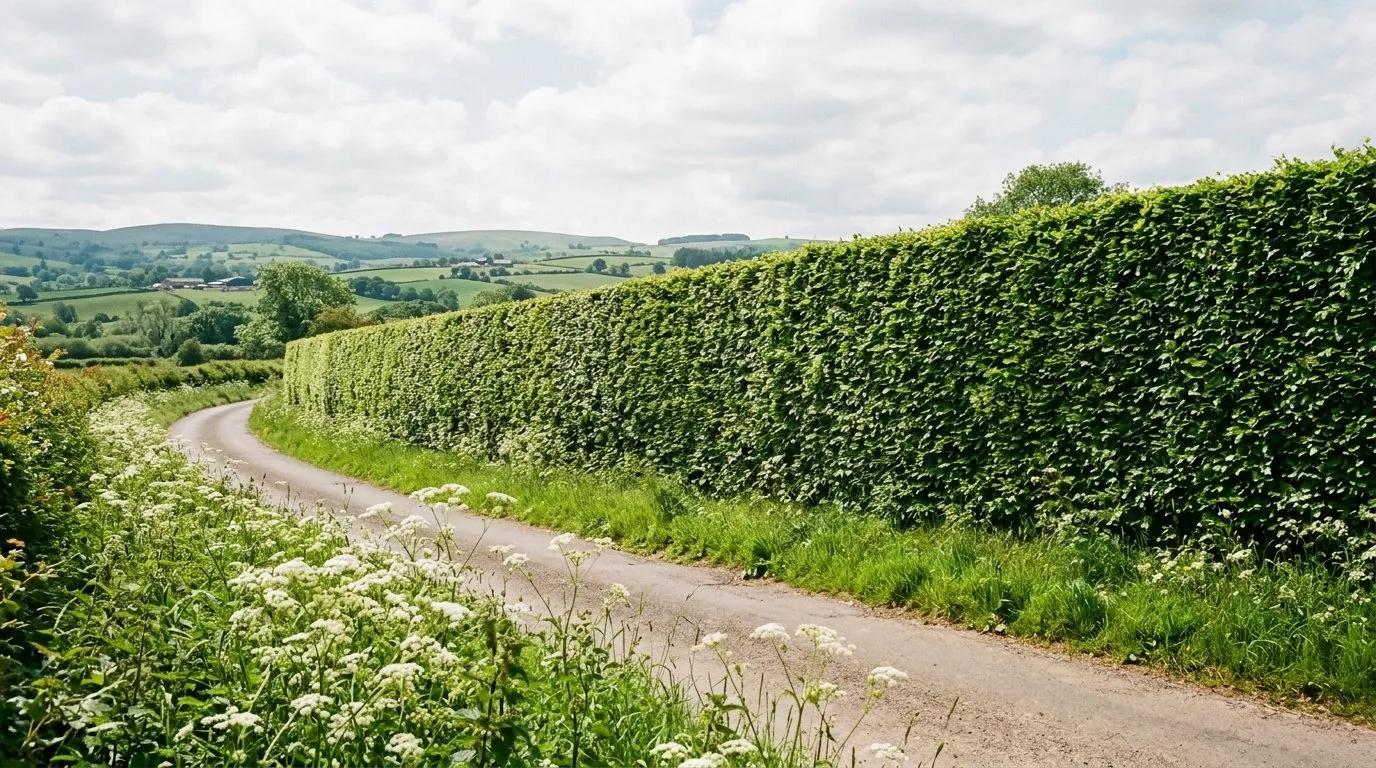 At 4m and one cut a year, hornbeam screens a lane better than any fence, filtering wind instead of fighting it.
What problems affect hornbeam hedges?
Very few, and that is a fair summary rather than a sales line. Hornbeam has no equivalent of box blight, no bacterial shothole like laurel, and none of the browning disasters that write off conifer hedges. The problems that do occur are minor and mostly self-inflicted.
Drought in the first two summers is the main killer, as with every new hedge. The fix is boring and works: 10 litres per metre weekly in dry spells, over a mulch, for two years.
Coral spot shows as pinhead orange pustules on dead twigs, usually after clumsy cutting or storm damage. It colonises dead wood first, so prune out affected material 15cm below the pustules and keep tools sharp so cuts heal fast.
Powdery mildew dusts the leaves white in hot, dry summers, especially on young plants against warm walls. It looks worse than it is. Water the roots, not the foliage, and it rarely returns the following year. Aphids and winter moth nibble the leaves in spring; garden birds do the control for you.
Frequently asked questions
Which is better, hornbeam or beech hedging?
Hornbeam is better on clay, wet or exposed sites; beech suits free-draining soil. The two clip into very similar formal hedges. Beech holds slightly more winter leaf and has the glossier summer colour, but it fails on ground that sits wet. If you are unsure which your soil is, plant hornbeam.
Does a hornbeam hedge lose its leaves in winter?
A trimmed hornbeam hedge keeps most of its dead brown leaves until spring. The effect is called marcescence and only happens on clipped plants, not free-growing trees. Expect a slightly thinner brown screen than beech gives, with a few more leaves dropped in storms, but still useful cover.
How fast does a hornbeam hedge grow?
An established hornbeam hedge grows 30-60cm a year. The first season after planting is slower while roots get down, then growth accelerates from year two. Whips planted at 60cm typically make a 1.8m hedge in four to five years on decent ground.
How far apart should you plant hornbeam hedging?
Plant 3 whips per metre in a single row, spaced 33cm apart. For a thicker hedge, plant 5 per metre in a staggered double row with 40cm between the rows. Closer planting fills the base faster but costs more and gains little after year five.
Can you cut a hornbeam hedge back hard?
Yes, hornbeam regrows reliably after hard cutting in February. It is a traditional coppice species, so even old lapsed hedges shoot again from thick bare wood. Take one face back per winter over two years, feed and mulch afterwards, and full green cover returns within two seasons.
When can you legally cut a hornbeam hedge?
Cut only when no birds are nesting in it, typically September to February. The Wildlife and Countryside Act 1981 makes it an offence to damage an active nest, and the main nesting season runs March to August. A single late August trim is fine after checking the hedge first.
Is hornbeam good for wildlife?
Yes, hornbeam feeds moth caterpillars, seed-eating birds and gives dense winter shelter. Its leaves host species including the nut tree tussock moth, while hawfinches, tits and small mammals take the winged seeds in autumn. The retained winter leaves shelter roosting birds when most hedges stand bare.
Plant whips this coming November, keep the can going for two summers, and by the fifth year you will have the hedge the clay always said you could not grow.
Our team produces practical UK gardening guidance from source research, contributor records and established horticultural practice. Editorial standards are overseen by Matt W.