Key takeaways
- A clipped beech hedge keeps its dead copper leaves from November to April, so it screens all winter
- Plant bare-root whips (60-90cm, £1-£2.50 each) between November and March; potted plants (£8-£15) go in any month
- Space 3 plants per metre in a single row, or 5 per metre in a staggered double row for a thicker hedge
- Beech grows 30-60cm a year and makes a usable 1.5m screen in three to four years
- Most new beech hedges that die are killed by first-summer drought, not disease: 10 litres per metre weekly
- Trim once a year in August; check for active nests before any cut between March and August
- Beech fails on waterlogged heavy clay: plant hornbeam there instead
A beech hedge does something no other common deciduous hedge manages properly: it keeps you screened in January using leaves that died in November. The fresh green of summer turns copper in autumn and simply stays put, rustling, until spring growth pushes it off. You get the softness and colour changes of a deciduous plant with most of the privacy of an evergreen.
Why does a beech hedge keep its dead leaves all winter?
Clipped beech holds its dead leaves because trimming keeps the whole hedge permanently young. The habit is called marcescence, and in beech it is a juvenile trait. Young beech trees, and roughly the lowest 3 metres of old ones, hang on to their dead foliage through winter. Mature wood sheds cleanly in autumn.
A hedge you cut every August never produces mature wood. Every branch stays juvenile, so every leaf turns copper in November and holds until the buds break in mid-April. That is about five months of warm brown screening from a plant most people file under deciduous.
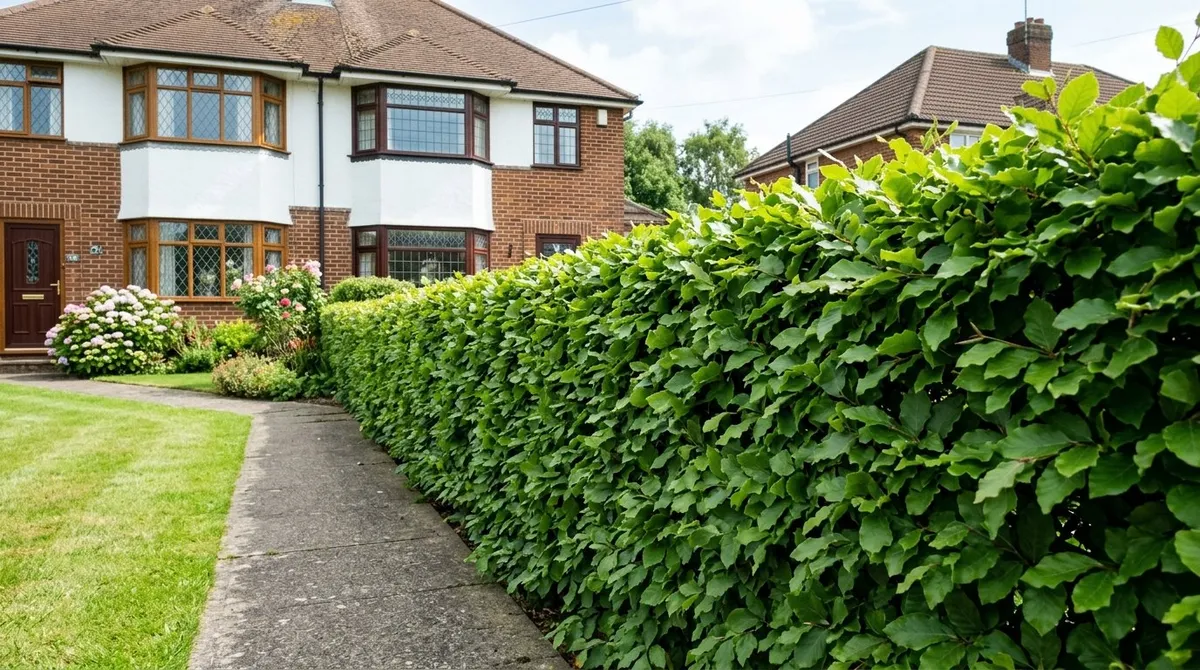
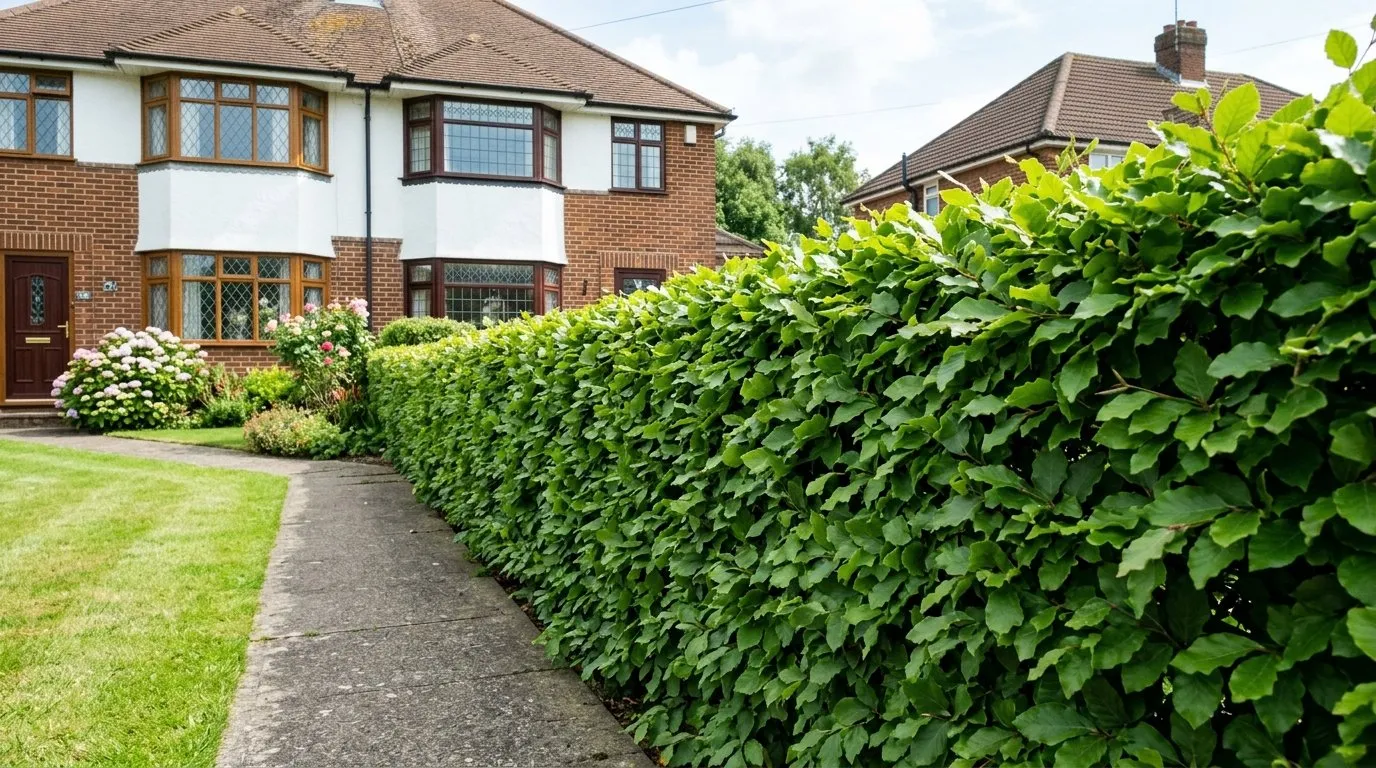 A clipped beech hedge in full summer green. The August cut that keeps it this sharp is also what keeps the winter leaves on.
The screen is not quite evergreen-perfect. A severe gale thins it, and by March there are gaps you would not see in laurel. But stand behind a clipped beech hedge in January and you are hidden. Cold is never the issue either: the RHS growing guide for beech rates Fagus sylvatica H6, hardy to -20C.
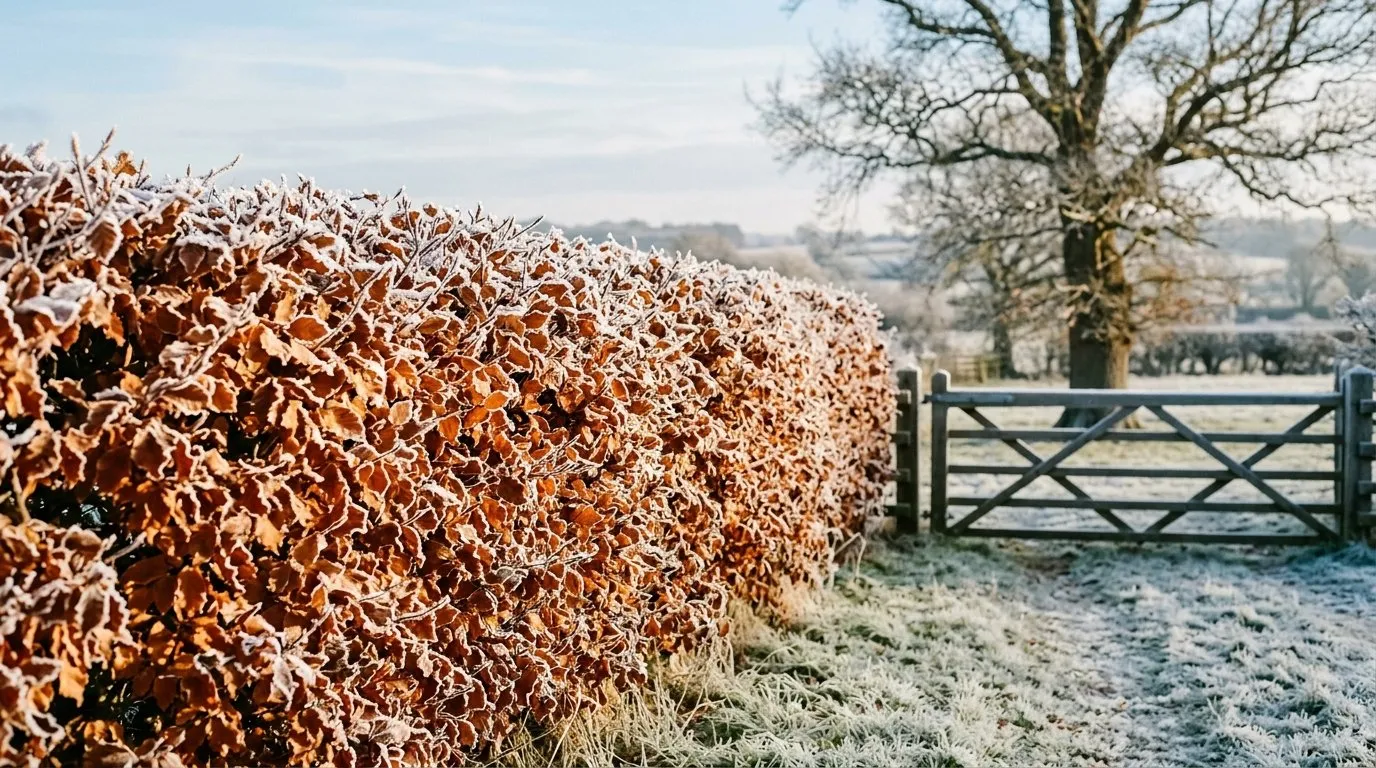 Marcescence in January. The leaves died in November, turned copper and will hold until April. This is normal, not a dying hedge.
When should you plant a beech hedge?
Plant bare-root beech between November and March, while the plants are dormant. This is the cheap season. Nurseries lift open-ground whips of 60-90cm and sell them in bundles: expect £1 to £2.50 per whip depending on quantity, so a bundle of 50 lands somewhere between £60 and £110.
November beats March if you can choose. The soil still carries summer warmth, roots make contact before winter, and the hedge meets its first dry spell already settled.
Potted and cell-grown beech goes in at any month of the year and costs £8 to £15 for the same size plant. Instant hedging exists too: a 1.8m root-balled beech costs £35 to £60 per plant, and it still needs two years of hard watering. Small whips establish faster and usually catch the big transplants by year five.
Bare-root stock has one non-negotiable rule: the roots must never dry out or freeze. Keep the bundle bagged and damp, and if planting is delayed more than a few days, heel the whips into a spare trench. The routine in our bare-root planting guide applies to hedging exactly.
How do you plant a beech hedge, and how far apart?
Plant 3 whips per metre in a single row, or 5 per metre in a staggered double row. Those two densities are the ones that work. A single row at 33cm spacing makes a good hedge in four to five years at the lowest cost. The double row, two lines about 35cm apart with plants offset at 40cm intervals, thickens a full year faster and hides the odd loss.
That prices a hedge at roughly £3 to £7.50 per metre single row, or £5 to £12.50 double. A 10 metre beech hedge costs £30 to £125 in plants. A single 1.8m fence panel with posts and gravel boards runs £80 to £120 installed, and it starts rotting the day it goes up. The hedge wins on money before you even count the blackbirds nesting in it.
Preparation is a strip, not a trench of riches. Fork over a band 60cm wide, get every scrap of perennial weed root out, and resist adding manure to the planting slit. Plant each whip to its old soil mark, firm well with your boot, and water in at 10 litres per metre.
Then three finishing jobs. Cut every whip back by a third; it feels brutal and it builds the dense base you will want at year five. Fit a cane and spiral guard, about 30p each, wherever rabbits visit. Mulch a 50cm-wide strip, 5-7cm deep, with bark or compost, kept just clear of the stems. The full step-by-step, including clearing grass before planting, is in our hedge planting guide.
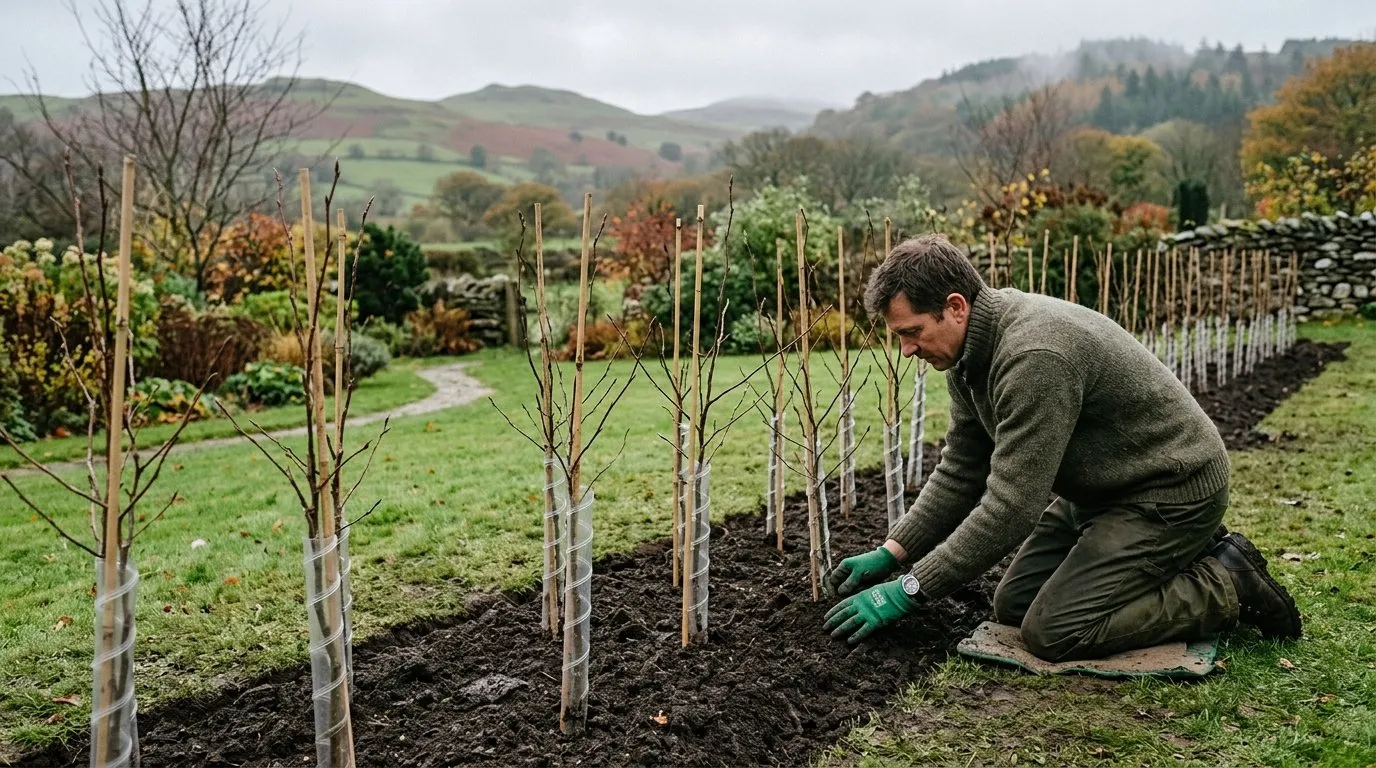 A staggered double row at 5 whips per metre, caned and guarded. The offset pattern closes the hedge a year sooner than a single line.
Beech or hornbeam: which one suits your soil?
Choose by drainage: beech for free-draining ground, hornbeam for heavy wet clay. That single test prevents most beech failures. Beech roots rot in waterlogged soil, and a hedge planted into winter-wet clay declines slowly over two or three seasons with no visible pest to blame. Hornbeam (Carpinus betulus) looks similar, shrugs off the wet, and costs about the same.
The test costs nothing. Dig a 30cm hole on the planting line in November and check it after heavy rain. If water is still sitting there a day later, beech is the wrong plant.
Hornbeam holds some winter leaf too, but less of it, and a duller brown. Copper beech is covered further down: same species as green beech, just a different colour and price.
| Green beech | Hornbeam | Copper beech | |
|---|---|---|---|
| Soil | Free-draining, including chalk; fails in waterlogged ground | Heavy clay, wet and exposed sites | Same as green beech |
| Winter leaf retention | Excellent when clipped, copper, Nov-Apr | Partial and patchier, dull brown | Excellent, darker brown |
| Growth rate | 30-60cm a year | 30-45cm a year | 30-60cm a year |
| Whip cost (60-90cm) | £1-£2.50 | £1-£2.50 | £2-£4 |
| Clipping | Once, August | Once, mid to late summer | Once, August |
| Renovation | February, in stages | February, in stages | February, in stages |
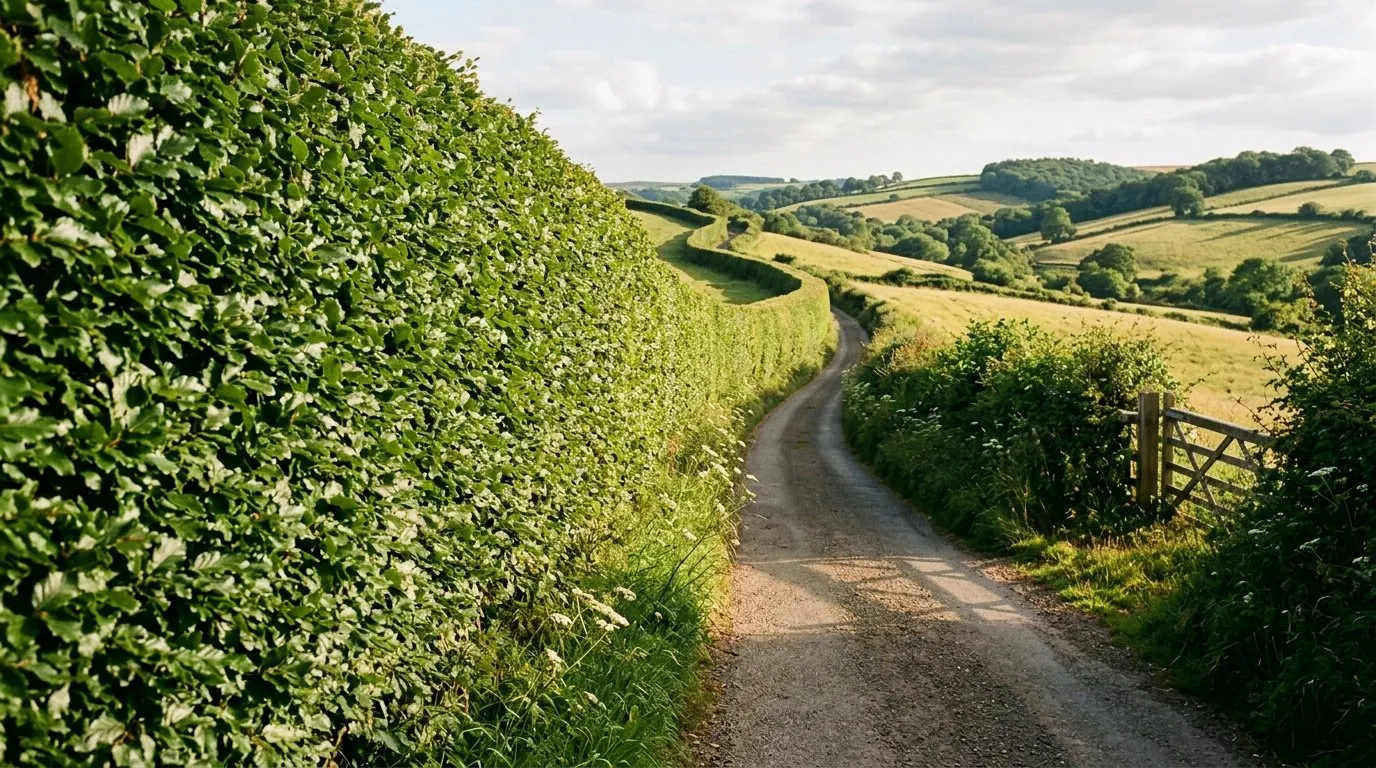 A mature beech boundary on a Devon lane, clipped once a year for decades. On free-draining soil beech outlives the people who plant it.
Watering a new beech hedge: the two summers that decide everything
More new beech hedges die of first-summer drought than of every other cause combined. Lifting a bare-root whip strips away most of its fine feeder root. Until that rebuilds, which takes about two growing seasons, the plant cannot chase water on its own.
The rule is simple: 10 litres per metre, once a week, in any week without proper rain, from April to September, for two summers. A watering can does a 10 metre run in ten minutes. A 15m seep hose costs £15 to £25 and does it while you eat dinner. Top the mulch back up to 5cm each spring, because bare soil loses water twice as fast.
Even done right, expect to lose 2-5% of whips. Order 5% spares with the original bundle and heel them in somewhere shady.
The early warning is in the leaves. Drought-stressed beech leaves come out smaller, turn pale olive, then crisp from the edges inward. Catch it at the pale stage and one deep soak fixes it.
Gardener’s tip: Do the finger test under the mulch every Friday through summer. If the top 5cm is dry, water that evening, 10 litres a metre, poured slowly. A quick daily splash grows shallow roots that fail in the next heatwave. One deep weekly soak grows the roots that make the hedge self-sufficient by its third year.
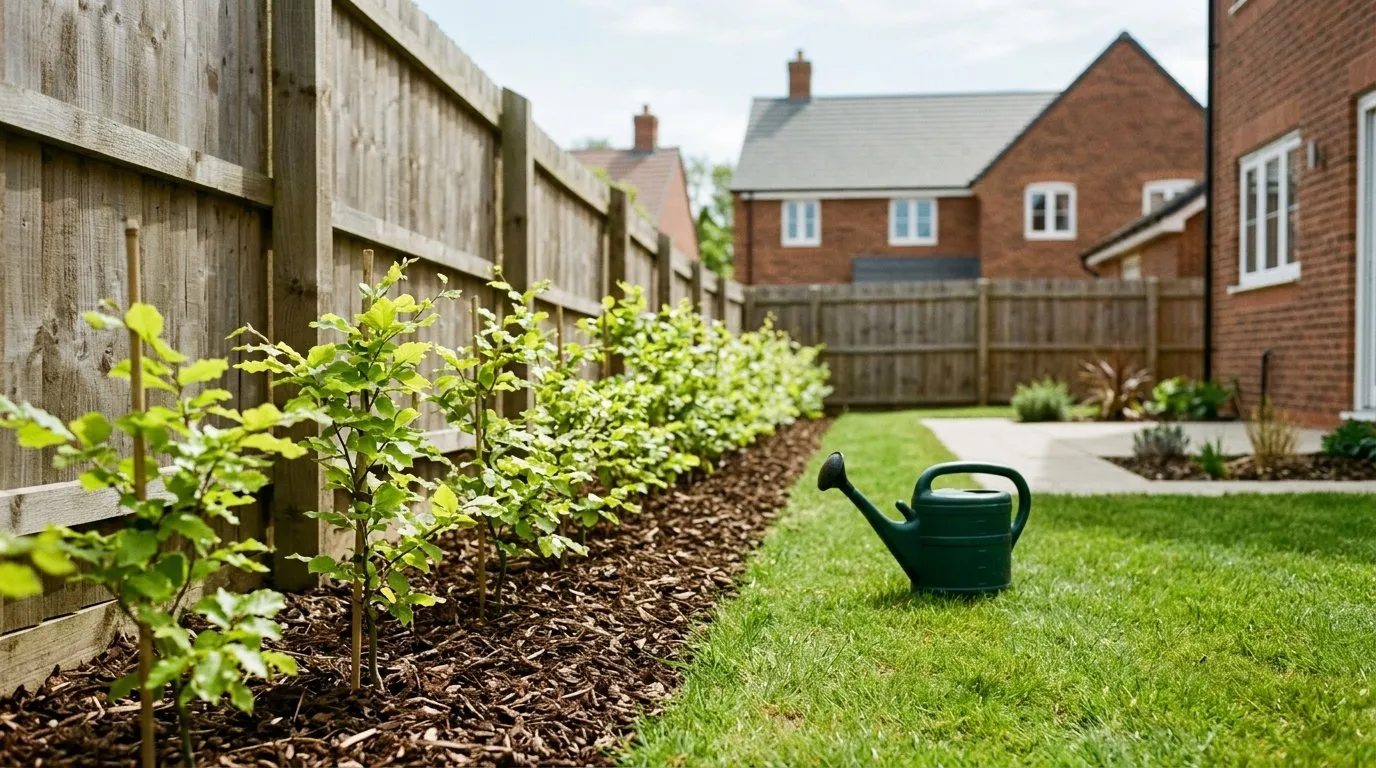 A first-year hedge on a new-build plot with its 50cm mulch strip. The mulch halves the watering and keeps grass from strangling the whips.
When should you trim a beech hedge?
Trim an established beech hedge once a year, in August. That date does two jobs. Growth has nearly finished, so the hedge holds its crisp line right through to spring. And the leaves standing on the hedge in August are mature enough to turn copper and stay attached; cut in June and the soft regrowth that follows never hardens properly, so the winter screen turns patchy. One August cut is what maintains marcescence.
Formative pruning is a separate job in the early years. Each February for the first two or three winters, shorten the leaders and any long side shoots by about a third. It slows the race upward and thickens the base.
The law shapes the timing too. Between 1 March and 31 August, it is an offence under the Wildlife and Countryside Act 1981 to intentionally damage or destroy an active nest. An August cut is legal only if nothing is nesting, so watch the hedge for half an hour first. Birds slipping in with food in their beaks means you wait. The full legal calendar is in our when to cut hedges guide.
Height control is straightforward. Decide the finished height, cut the leaders 15cm below it, and let the top fill out to the line. Bringing an overgrown hedge back down takes longer: reduce by up to a third at a time in February, one face one winter, the other face the next, then the top. Beech takes hard renovation well, but feed and mulch it each spring while it recovers.
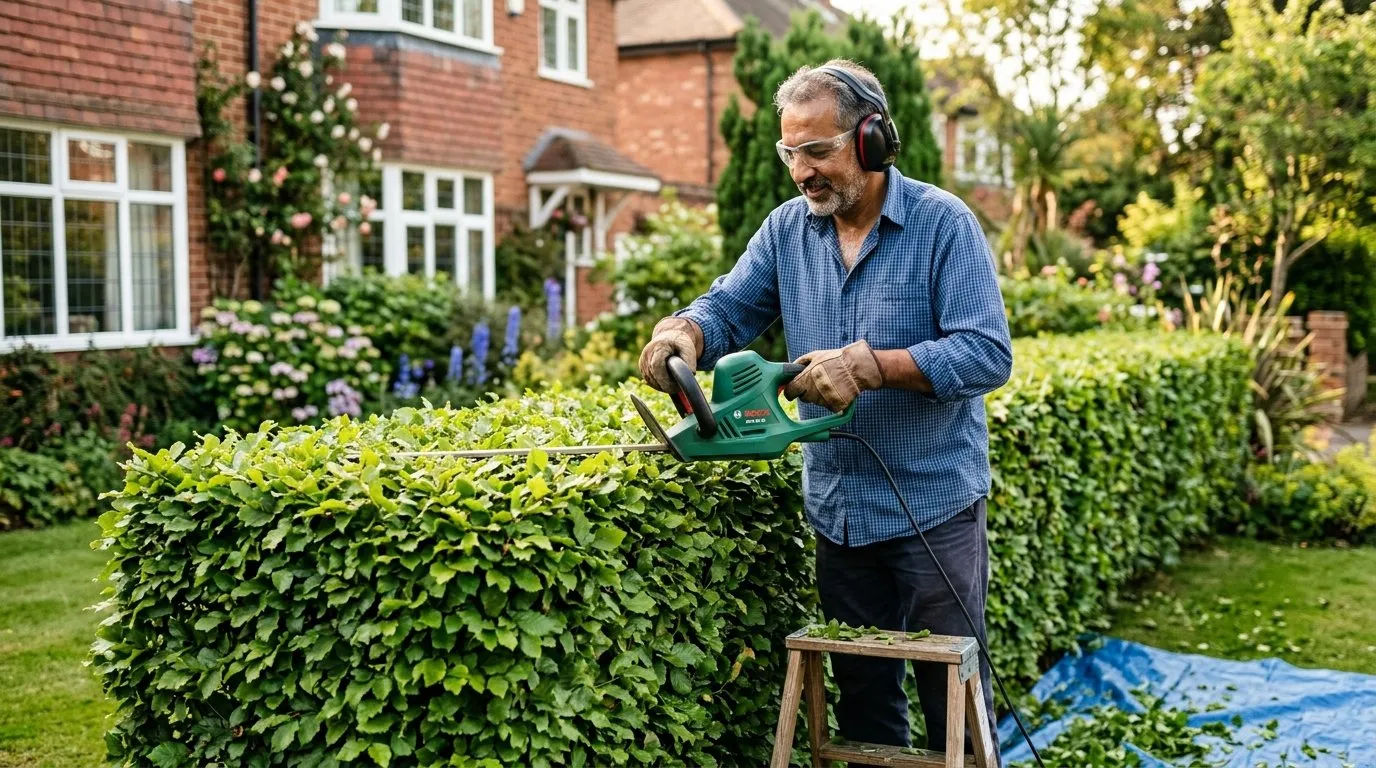 The one cut that matters, in August. Gloves, eye protection, and a string line if you want the top dead level.
Why is my beech hedge turning brown?
Brown leaves in winter are normal; brown, crisp leaves in July mean drought or scorch. Every autumn somebody asks me if their year-old hedge is dying. It is not. From November to April, brown and firmly attached is the whole point of the plant.
Summer browning is a different conversation, and it splits four ways:
Drought stress. Leaf edges crisp first, worst on young hedges and sandy stretches. The fix is the 10 litre weekly soak above, plus mulch. Leaves lost in a drought year usually return the following spring if the wood stays alive; scratch a stem and look for green under the bark.
Scorch. South and west faces can brown in a heatwave even with damp soil, and a late May frost browns the fresh new leaves overnight. Both look alarming and both grow out by mid-July.
Woolly beech aphid. White cotton-wool fluff under the leaves from May to July, sometimes with sticky honeydew below. It is cosmetic. Hose colonies off or leave them; ladybirds and hoverfly larvae usually clear them by August.
Squirrel damage. Grey squirrels strip bark from beech stems between May and July, mostly on wood over ten years old. Growth above a fully ringed stem dies and browns. Cut damaged stems back to sound wood and the hedge fills the gap in two or three seasons.
A browning beech hedge nearly always recovers. A browning conifer often does not, because most conifers cannot regrow from old wood. If you have both on your boundary, our conifer hedge browning guide explains why the diagnosis differs.
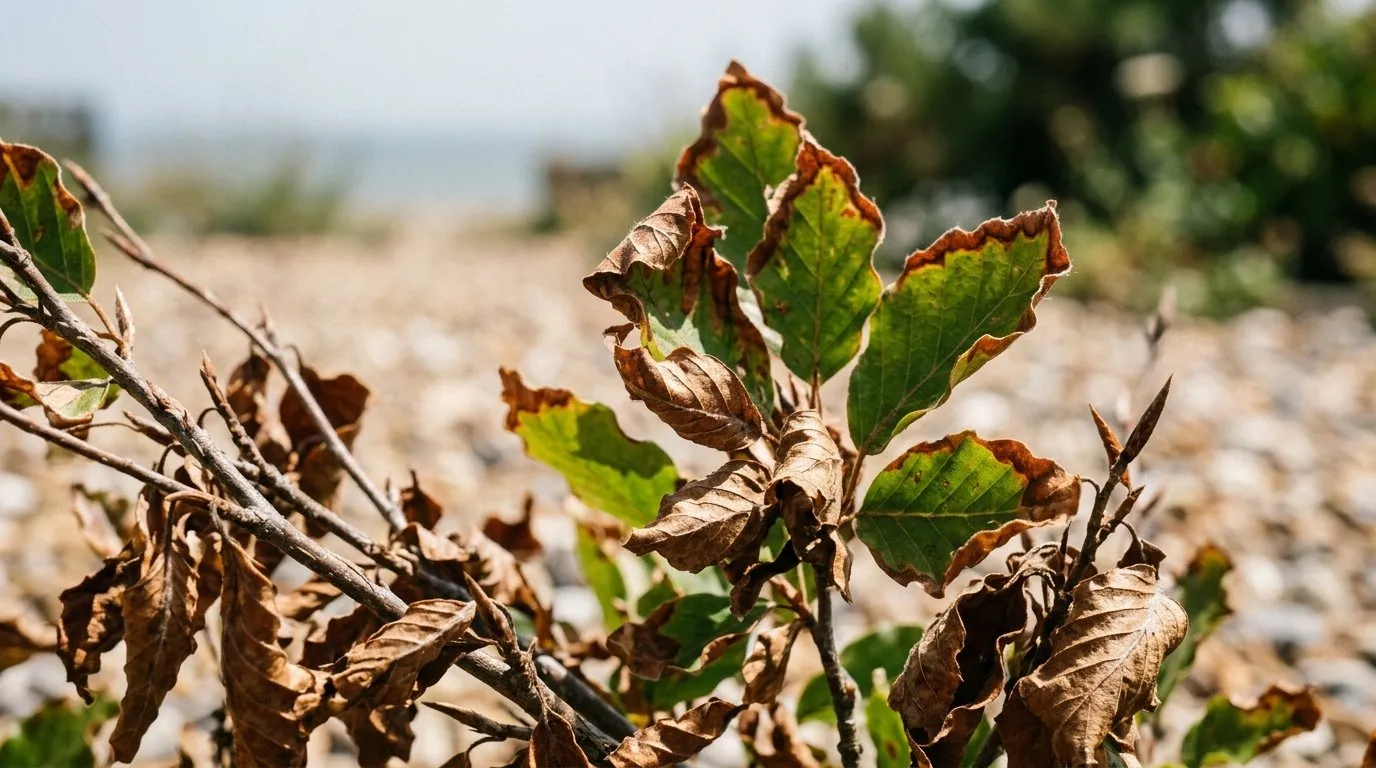 Summer browning from drought, crisping inward from the leaf edges. Different cause, different season and different fix from winter copper.
Is copper beech worth the extra money?
Copper beech is the same species with darker leaves and a 50 to 100% higher price. Whips cost £2 to £4 against £1 to £2.50 for green. Fagus sylvatica Purpurea group leafs out deep purple in spring, holds a dark bronze-purple through summer, and keeps slightly darker winter leaves. Growth rate, spacing, watering and the August cut are identical.
Across a whole boundary the premium adds up: a 10 metre double row costs £100 to £200 in copper against £50 to £125 in green.
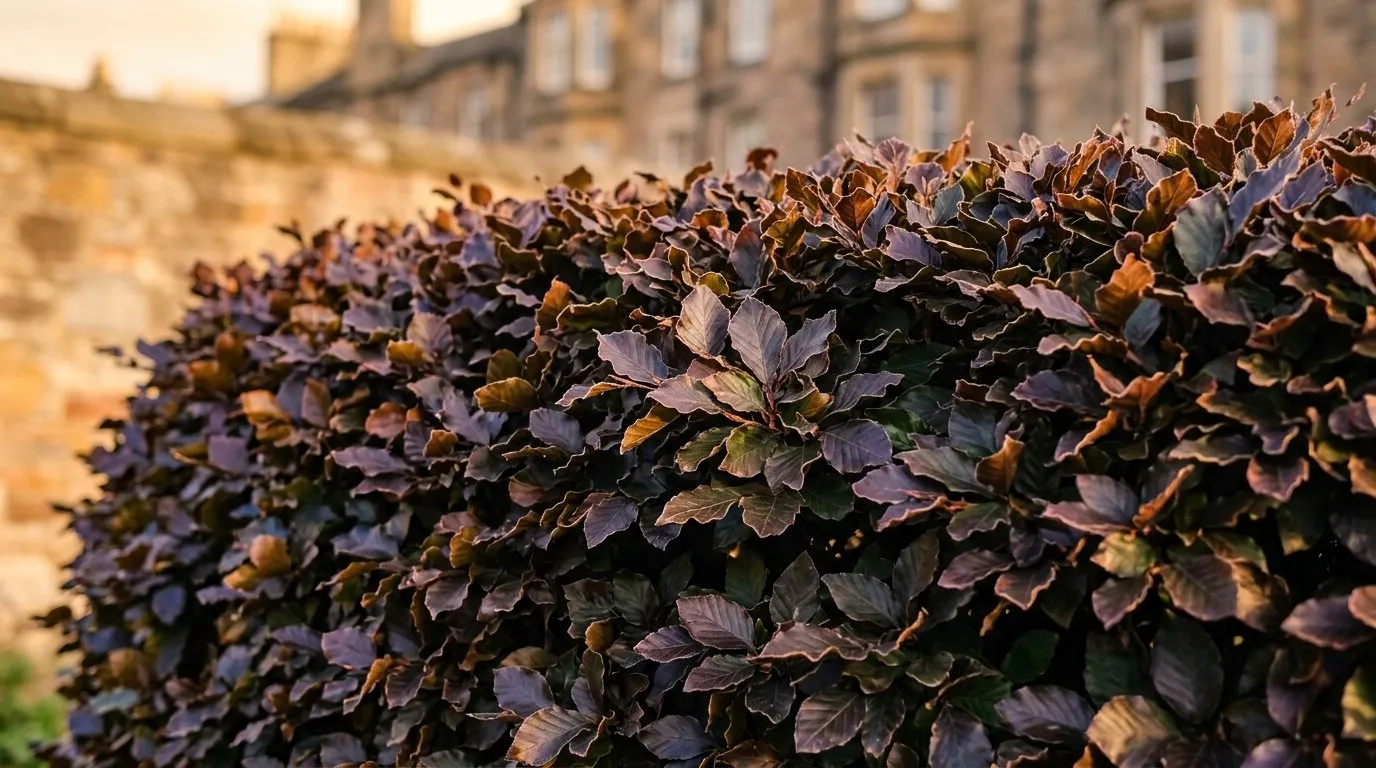 Copper beech in high summer. Same species and same care as green beech, at roughly double the whip price.
Frequently asked questions
Does a beech hedge lose its leaves in winter?
No, a clipped beech hedge holds its dead leaves right through winter. Trimming keeps the hedge juvenile, and young beech growth retains its foliage, a habit called marcescence. The leaves turn copper in November and stay attached until new growth pushes them off in April. Only unclipped, mature beech sheds completely.
How fast does a beech hedge grow?
Beech grows 30-60cm a year once it has settled in. Expect modest growth in the first season while the roots rebuild, then a strong second and third year. Whips planted at 60-90cm typically make a 1.5m screen in three to four years and 2m in five. Feeding and mulching push growth toward the top of that range.
When should you trim a beech hedge?
Trim an established beech hedge once a year, in August. A late-summer cut keeps the hedge crisp through winter and preserves the copper dead leaves that make beech special. Do formative pruning and any hard renovation in February, while the hedge is dormant. Always check for active nests before cutting between March and August.
Why is my beech hedge going brown in summer?
Summer browning almost always means drought stress or leaf scorch, not disease. Young hedges on sandy soil crisp from the leaf edges inward when short of water, so give 10 litres per metre weekly and mulch. Hot south-facing runs can scorch in heatwaves, and a May frost browns new growth, which grows out by July.
How far apart do you plant beech hedging?
Space beech at 3 plants per metre in a single row. For a thicker hedge faster, plant a staggered double row at 5 per metre, with the two rows about 35cm apart. Closer spacing than this does not speed anything up; it just raises the bill and increases losses to competition.
Is beech or hornbeam better for a hedge?
Beech holds its winter leaves better; hornbeam tolerates the heavy wet clay beech cannot. The two look similar when clipped, but beech leaves are glossy with wavy edges, hornbeam matt and pleated. If water sits in a test hole on your boundary in winter, plant hornbeam. On free-draining soil, beech gives the better winter screen.
What is the white fluff on my beech hedge?
White fluff under beech leaves is woolly beech aphid, a cosmetic pest. Colonies of Phyllaphis fagi coat the leaf undersides in cotton-wool wax from May to July. They rarely do real harm on an established hedge. Hose them off if they bother you, or leave them for ladybirds and hoverfly larvae.
Plant whips this November, water like it matters for two summers, and cut once every August. By the third winter yours will be the only hedge on the street still fully dressed in January.
Our team produces practical UK gardening guidance from source research, contributor records and established horticultural practice. Editorial standards are overseen by Matt W.