Key takeaways
- Soft-stemmed plants root in water fast: pothos, tradescantia, coleus, basil and mint in 1 to 3 weeks
- Cut 1cm below a leaf node; the node is where roots form, so it must sit underwater
- Woody, hairy or resinous plants (lavender, rosemary, pelargonium) rot in water rather than root
- Change the water every 3 to 4 days to stop it going slimy and starving the stem of oxygen
- Water roots are brittle and different from soil roots; pot on at 3 to 5cm, not later, to cut losses
- Willow water is a free rooting aid worth using; rooting hormone powder does little for water rooting
You can root cuttings in water for a surprising range of plants, and for the soft, sappy ones it beats compost for speed and for watching the whole thing happen. Drop a pothos stem in a jar on the windowsill and white roots appear within a fortnight. No propagator, no compost, no guesswork about whether anything is happening below the surface. For houseplants and soft herbs it is the easiest propagation there is.
Which plants root reliably in water?
Soft-stemmed, node-rich plants root reliably in water; woody, hairy and resinous plants do not. That single rule saves most of the failures. Water rooting works because these soft stems can push out roots from the leaf nodes while sitting in oxygenated water. Tougher stems either hold too much air, foul the water with hairy leaves, or simply refuse to root without the contact and airflow of a gritty compost.
The star performers are the trailing houseplants. Pothos (Epipremnum) roots faster and more reliably than almost anything, which is why it is the plant everyone starts with. Tradescantia, coleus, heartleaf philodendron, Swedish ivy and spider plant plantlets all root freely in a jar. If you want a full run-through of the indoor options, our guide to propagating houseplants covers water, soil and division side by side.
Among edibles, basil and mint are the classics. A supermarket basil plant or a sprig of garden mint will root in a week or two on the windowsill. The same goes for the mint family generally: lemon balm, oregano and marjoram all take. A single living herb from the supermarket can become a whole tray of plants this way.
Then there are the border plants that surprise people. Coleus aside, fuchsias root well in water, salvias (the soft, herbaceous ones) usually take, and soft cuttings of hydrangea can root, though they root far better in compost. Willow roots so readily it barely counts as a challenge; a fresh willow stem in a jar will root in days, which is the whole basis of willow water as a rooting aid.
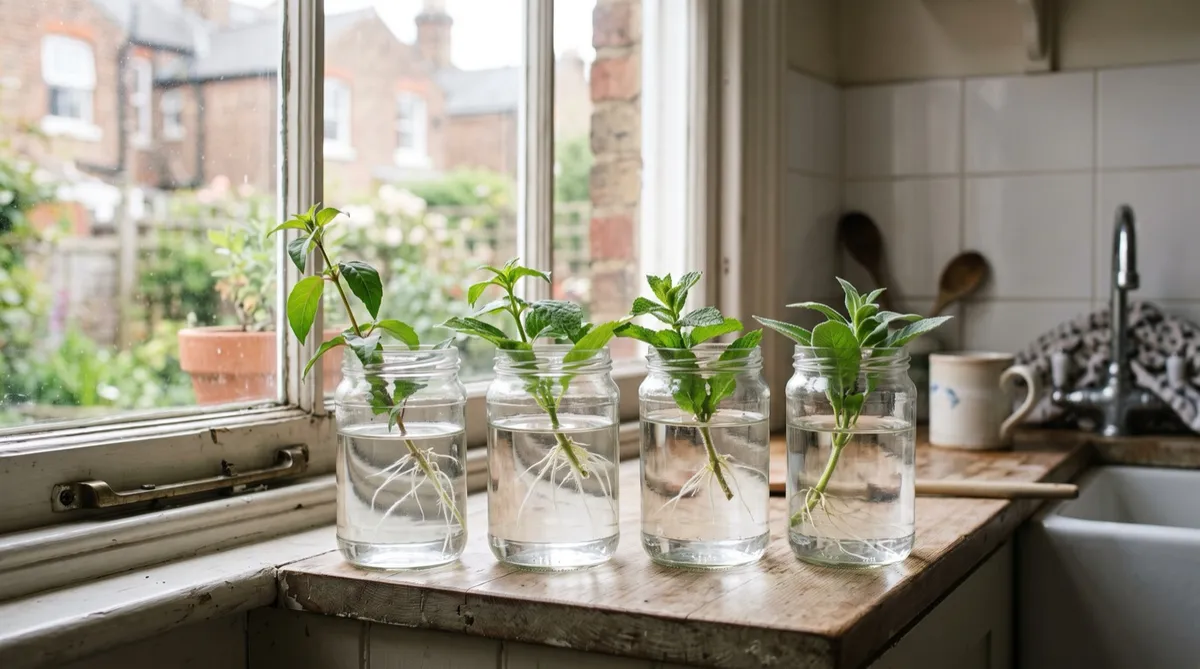
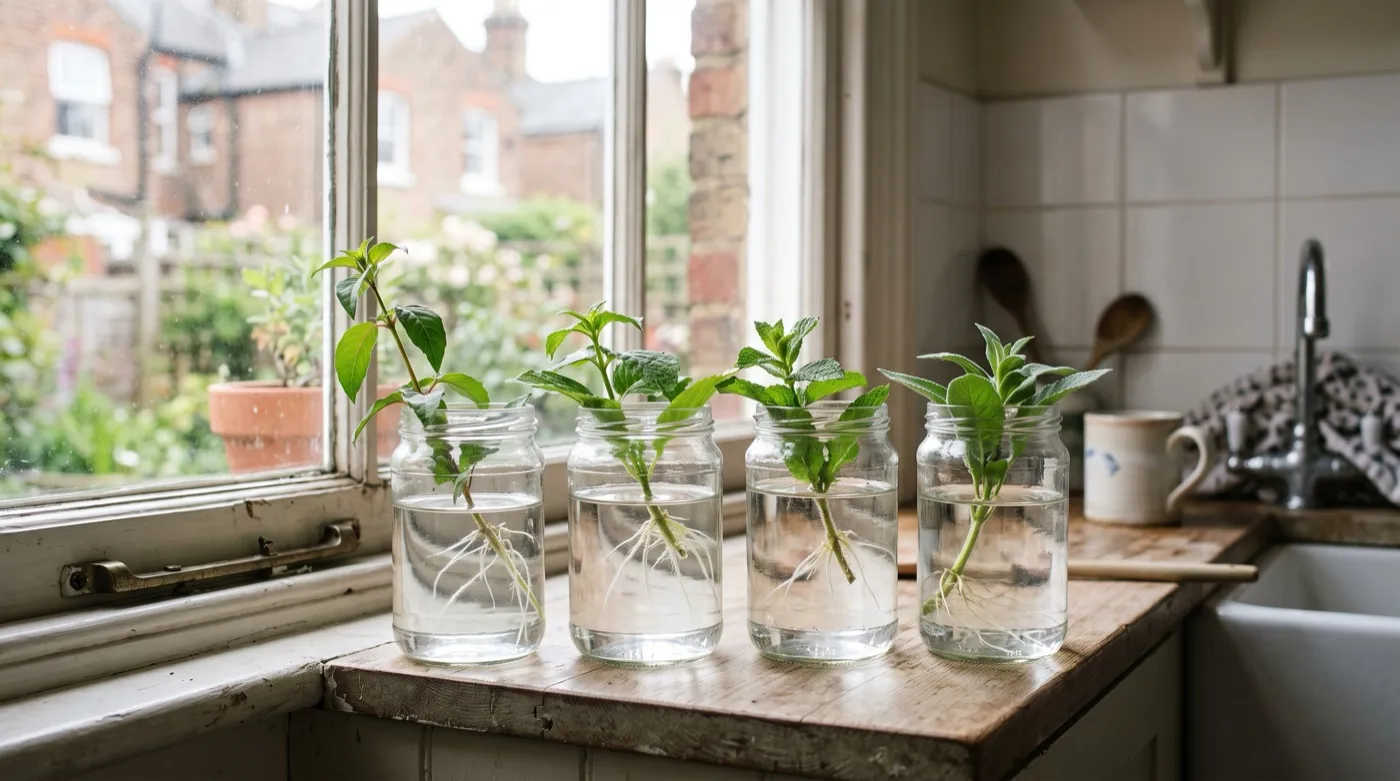 Pothos and mint on a north-facing kitchen sill. White water roots are clearly visible at the submerged nodes after two weeks.
The plants that will not root in water
Woody, hairy-leaved and resinous plants rot in water instead of rooting, so do not waste stems on them. This is the other half of the rule and the source of most wasted effort. If a stem is firm and woody, if the leaves are covered in fine hairs, or if the plant is aromatic and resinous, water rooting is the wrong method.
Pelargoniums (the plants most people call geraniums) are another one people try and lose. The stems are fleshy but prone to rot, and they strike far more reliably pushed into dry-ish compost. Succulents and cacti are the same story: they rot in water and need to callus over in the air before they root in grit. Fuzzy-leaved plants like African violets and many begonias can be done from leaf cuttings, but the leaves rot if left sitting in water for long.
As a working test: if you would take it as a hardwood or semi-ripe cutting, water rooting is unlikely to work. If it is a soft, green, fast-growing stem, it probably will. For the woody subjects, the full cuttings, division and layering guide sets out the right method for each.
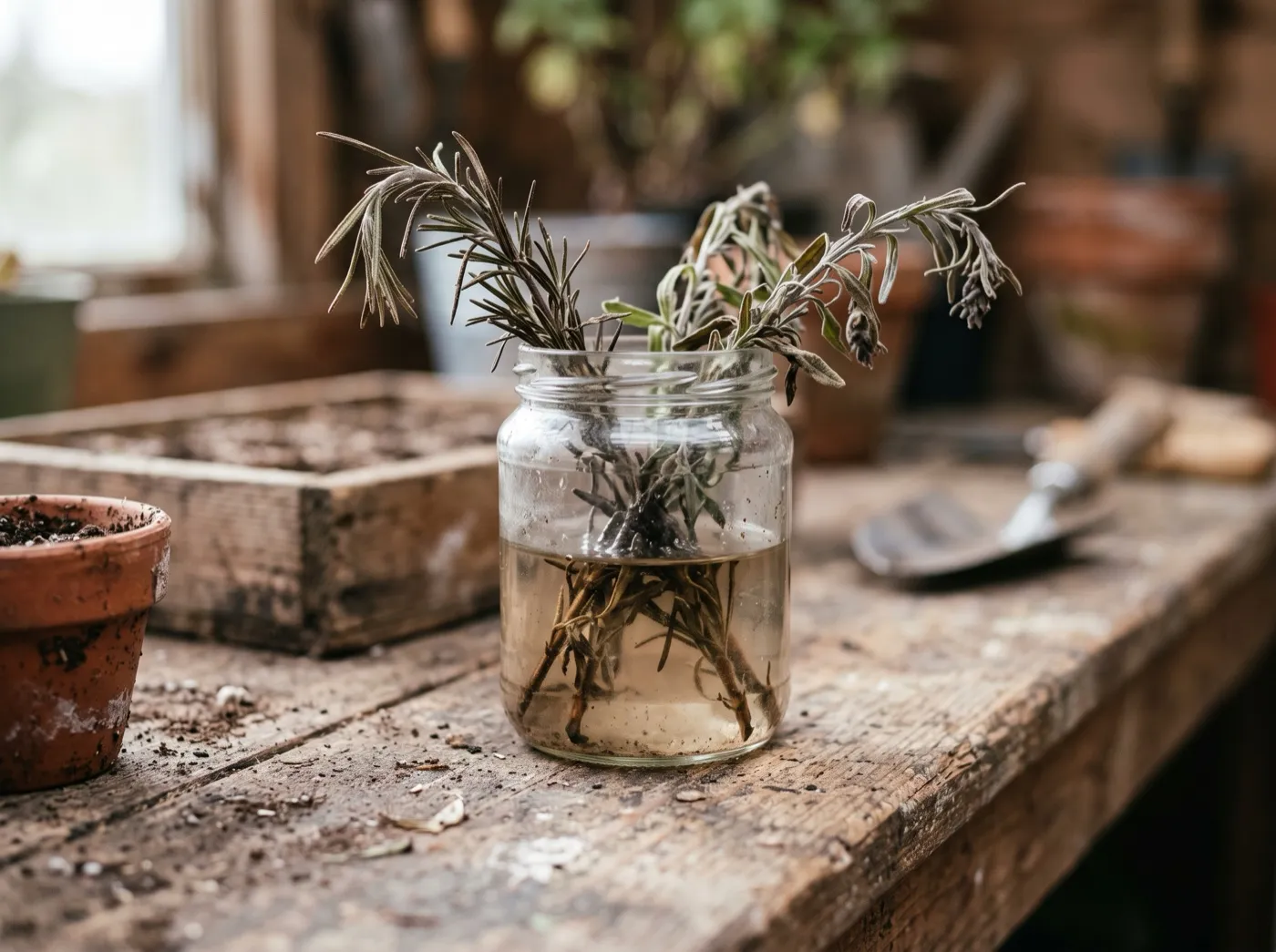 Rosemary and lavender browning off in water. Woody, resinous stems rot before they root, so they belong in gritty compost.
How to root cuttings in water: the method
The method comes down to one thing: get a leaf node underwater in clean water and keep it there. Roots form at the node, not on bare stem, so node position is everything. Get that right and most of the reliable plants root themselves with almost no input from you.
Take your cutting from healthy, non-flowering growth. Aim for a stem 8 to 12cm long with at least two or three leaf nodes. Cut cleanly 1cm below a node with a sharp knife or scissors, because that lowest node is where the roots will emerge. A ragged, crushed cut invites rot, so use a clean blade.
Strip every leaf that would sit below the waterline. This is the step people skip, and it is the commonest cause of slime. No leaf should touch the water; submerged leaves rot within days and turn the whole jar cloudy. Leave two or three leaves at the top to drive the cutting, but pinch off any large ones to cut water loss.
Fill a clean clear glass jar and sit the cutting so two nodes are submerged. Two under the surface gives you more sites for roots and a margin if the water level drops. Stand it somewhere bright but out of direct sun. A north or east windowsill is ideal; a hot south-facing sill cooks the water and encourages algae.
Change the water every 3 to 4 days, sooner if it looks cloudy. Fresh water carries dissolved oxygen, which the rooting stem needs, and stale water is what turns a rooting cutting into a rotting one. Top up between changes as the level falls. That is the entire method.
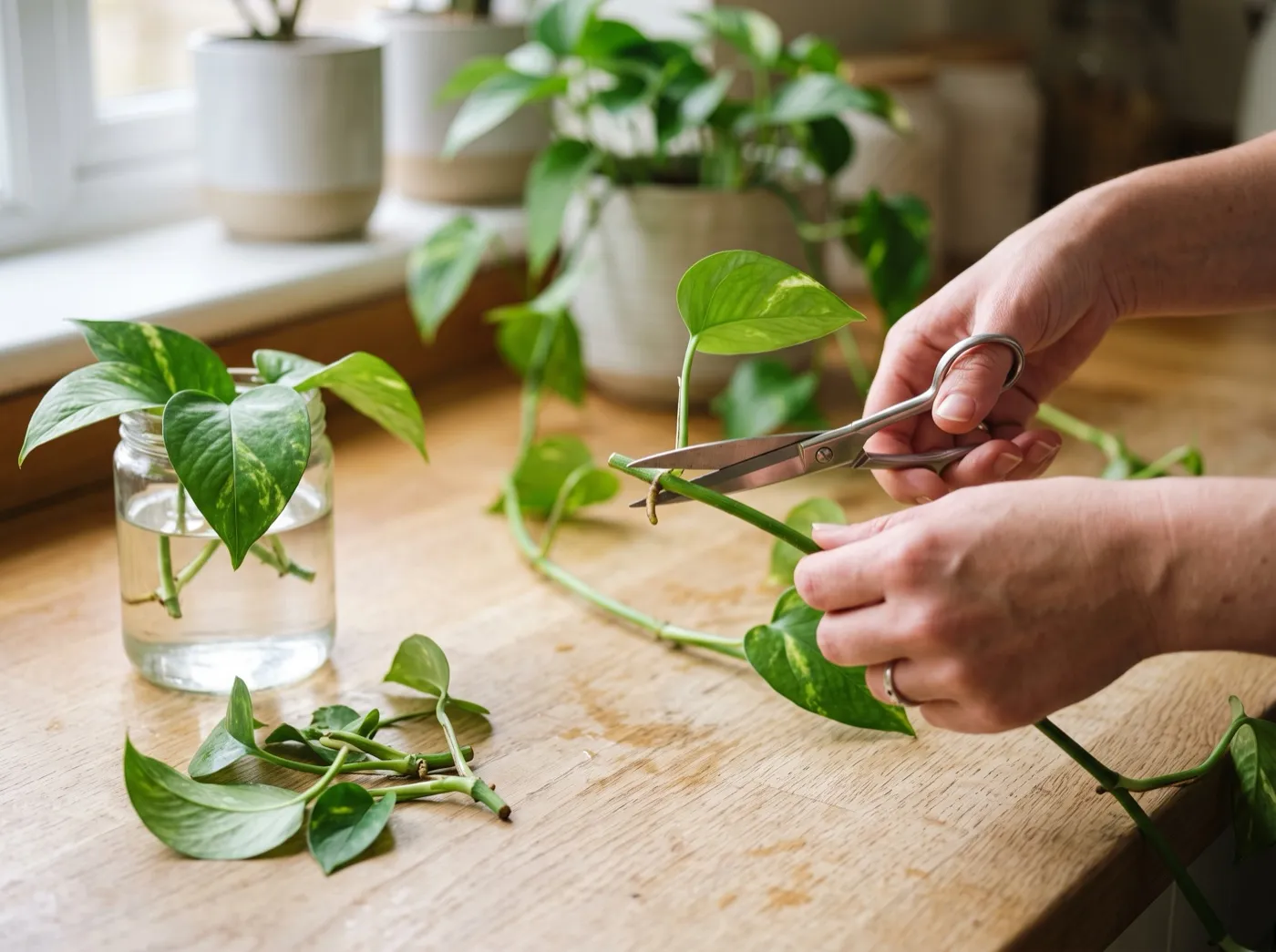 Cut 1cm below a leaf node. The node, the small bump where a leaf joins the stem, is where the roots emerge.
How long do cuttings take to root in water?
Willow is the outlier, rooting in days because its stems are packed with natural rooting compounds. The soft houseplants and herbs come next at one to two weeks. Border perennials and soft shrub cuttings take longer, two to four weeks, and are less certain. Anything past a month in water is usually a plant that would have been better in compost from the start.
Plants that root in water: species, timing and success
| Plant | Days to first roots | Success rate | Best month to take |
|---|---|---|---|
| Willow (Salix) | 3 to 7 | Very high | Feb to Nov |
| Pothos (Epipremnum) | 7 to 14 | Very high | Any (indoor) |
| Tradescantia | 7 to 14 | Very high | Any (indoor) |
| Coleus | 7 to 14 | Very high | May to Sep |
| Basil | 7 to 14 | High | May to Aug |
| Mint | 7 to 14 | High | Apr to Sep |
| Swedish ivy / spider plant | 10 to 14 | High | Any (indoor) |
| Fuchsia | 14 to 21 | High | Apr to Aug |
| Salvia (soft/herbaceous) | 14 to 28 | Moderate | May to Jul |
| Heartleaf philodendron | 14 to 28 | High | Any (indoor) |
| Hydrangea (softwood) | 21 to 35 | Moderate (better in soil) | May to Jul |
Two points from the table. First, indoor plants root year-round because your house stays warm, while garden plants follow the seasons. Second, hydrangea is on the list but flagged, because it will root in water yet does markedly better as a proper softwood cutting in compost.
Water roots versus soil roots: the transfer problem
The roots a cutting grows in water are not the same as roots grown in soil, and that difference is why so many rooted cuttings die at potting. Water roots are thin, white, brittle and covered in fine hairs adapted to pulling oxygen straight from the water. Soil roots are thicker, tougher and built to push through compost and cope with drier air pockets. When you move a water-rooted cutting into a pot, those delicate water roots often cannot adjust. Some rot in the wetter soil, some simply break, and the plant has to grow a second set of roots from scratch.
That relaunch is what looks like death. The cutting sits and sulks for a fortnight, the top wilts, and people assume they killed it. Often it recovers, but you have thrown away the head start water rooting gave you. The whole art of water propagation is getting the plant across to soil before this becomes a problem.
The fix is to pot on early. Do not wait for a jar full of long roots. Move the cutting when roots are just 3 to 5cm long. Short roots have less to lose and adapt faster. This is the single most important habit in the whole process, and it is the opposite of what most beginners do, which is admire the roots until they are 10cm long and hopelessly tangled.
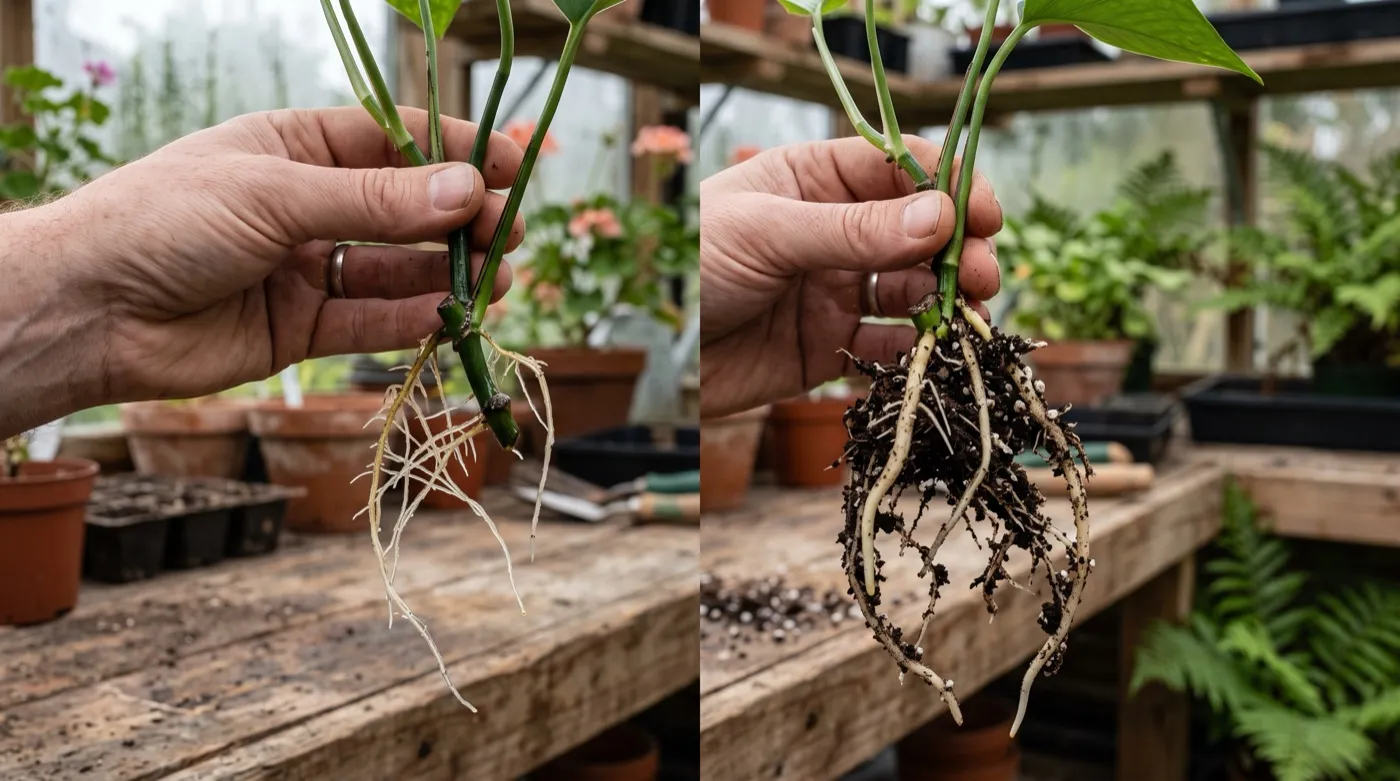 Left, brittle thread-like water roots. Right, tougher soil roots. The two are built for different jobs, which is why transfer is the risky moment.
How to move water cuttings into soil without losing them
Pot water cuttings into a gritty, free-draining mix while the roots are short, then wean them gradually off constant moisture. Rush it or use a heavy wet compost and you lose the plant. Do it carefully and the survival rate jumps.
Use a mix of 60% multipurpose compost to 40% perlite or fine grit. The extra air and drainage stops the young roots sitting sodden, which is what rots them. Fill a small pot, make a hole with a pencil, and lower the roots in without cramming them. Trickle the mix around them; do not press down hard, because water roots snap under pressure.
Water once to settle the compost, then keep it just moist, never wet. The commonest transfer killer is a waterlogged pot. Sit the pot somewhere bright and out of direct sun, and cover the whole thing with a clear plastic bag or a cut-down bottle for 7 to 10 days. That trapped humidity keeps the top from wilting while the roots adjust, effectively easing the plant off its water habit.
Take the cover off for an hour a day after the first week, then leave it off once new top growth appears. New leaves are the signal the plant has made soil roots and taken hold. From there, treat it as a young plant. Overwatering at this stage is still the main risk, so err dry; if you get fungus gnats hovering, that is a sign the compost is too wet, and our guide to fungus gnats on houseplants covers the cure.
Rooting hormone versus willow water for water cuttings
For water rooting, willow water beats shop-bought rooting hormone powder, which mostly washes off and does nothing in a jar. Rooting hormone powder is designed to cling to a stem pushed into compost. Dip a cutting in powder and stand it in water and the powder simply disperses. It is not worth the bother for water propagation.
Willow water is different because it dissolves. Young willow stems are rich in indolebutyric acid, a natural rooting compound, and salicylic acid, a mild antifungal that helps keep the water clean. Both are exactly what a cutting in water wants. Willow itself roots in days on the strength of these compounds, and you can borrow them for harder subjects.
To make it, cut a handful of thin, whippy first-year willow stems, chop them into 3cm lengths, and steep them in a jug of water for 24 to 48 hours. Strain off the stems and use the liquid as your rooting water. It keeps a week or two in the fridge. Stand your cuttings in willow water rather than plain water and the trickier plants, salvias, fuchsias, soft shrub cuttings, root a little faster and slime a little less. If you grow your own willow you have an endless free supply.
For the easy plants, honestly, neither is needed. Pothos, tradescantia and mint do not care; plain tap water roots them fine. Save the willow water for the borderline cases where a small edge tips the balance.
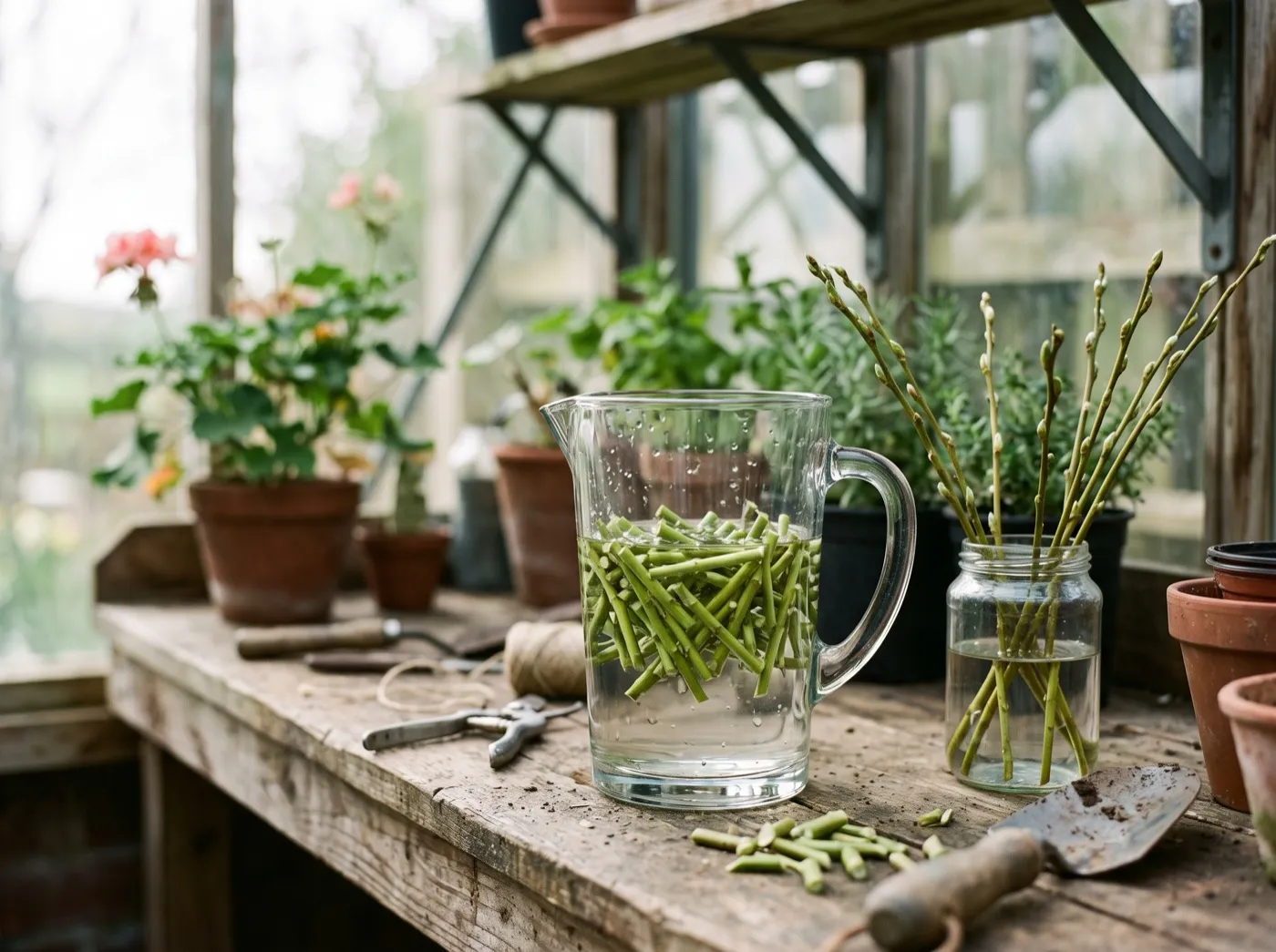 Chopped first-year willow steeping to make willow water. The natural rooting compounds it releases help trickier cuttings along.
Common water-rooting failures and how to fix them
Most water-rooting failures come down to four things: stale water, submerged leaves, the wrong plant, or potting on too late. Fix those and your success rate climbs sharply. Here is what goes wrong and what to do about each.
Slimy water and rotting stems
Cloudy, slimy water is the top failure, and it starves the stem of oxygen while breeding the bacteria that rot it. The cause is almost always stale water or a leaf sitting underwater. Change the water every 3 to 4 days without fail, strip every submerged leaf before you start, and wash the jar between batches. If the stem base has gone soft and brown, that cutting is finished; bin it and start fresh.
Cuttings that sit for weeks and do nothing
A cutting that stalls with no roots after three or four weeks is usually too cold, too dark, or the wrong plant. Water rooting needs warmth, around 18 to 21°C, and bright indirect light. A cold or gloomy spot slows everything to a crawl. Move the jar somewhere warmer and lighter. If it is a woody or hairy plant, it was never going to root in water; switch to a compost cutting.
Algae in the jar
Green algae films the glass in bright rooms and competes with the cutting, though it is more unsightly than fatal. It is driven by light hitting the water. Use amber or coloured glass, wrap the jar in paper, or move it out of direct sun. Changing the water regularly keeps it in check too.
Everything dies at potting time
If the cuttings root well then collapse after potting, the problem is the transfer, not the rooting. Pot on earlier, at 3 to 5cm of root, use a gritty free-draining mix, keep it barely moist, and cover for a week to hold humidity. This is the fix covered in full above, and it is where most of the real losses happen.
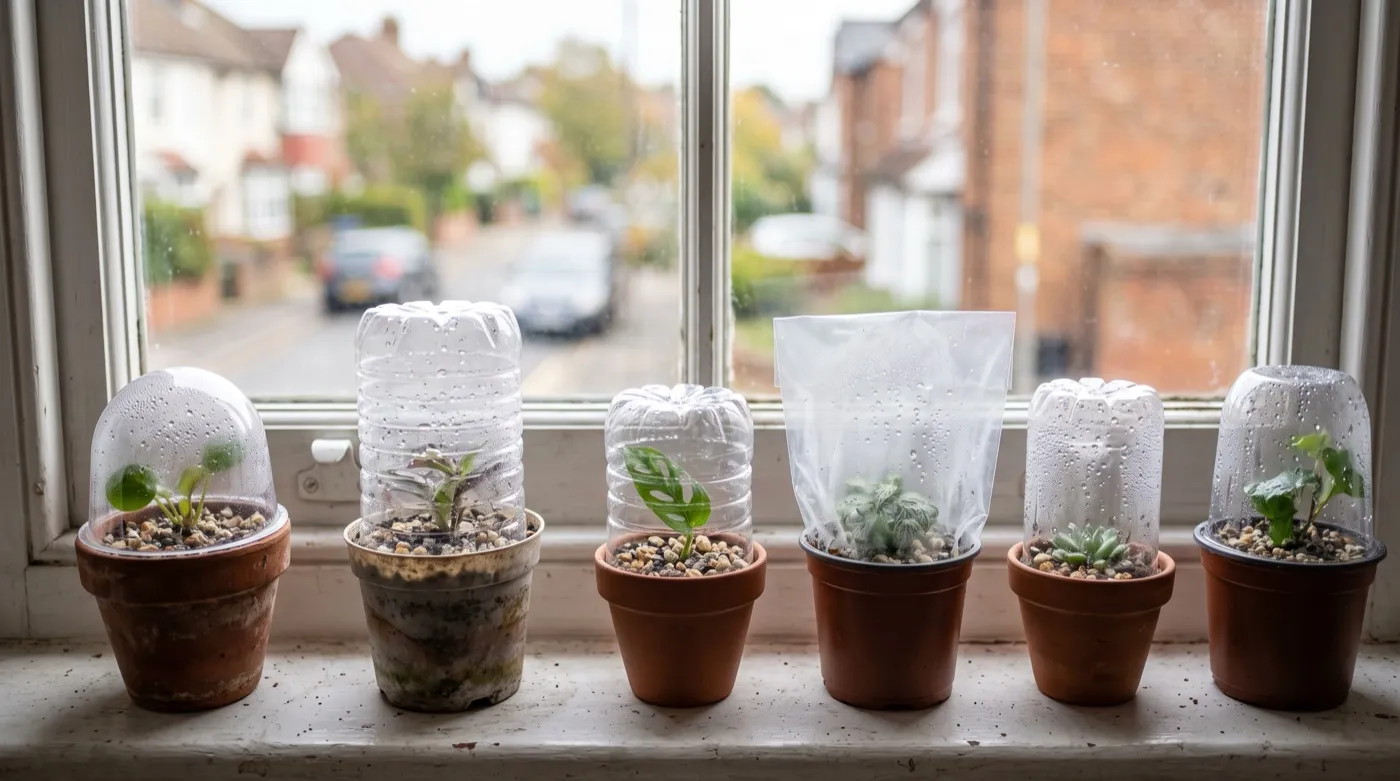 Freshly potted cuttings under clear covers. The trapped humidity carries them through the risky first week off water.
A month-by-month water-rooting calendar
The pattern is simple. From May to September the garden gives you soft growth to root, so that is when you do the herbs, coleus, salvias and fuchsias. The rest of the year, water rooting is a houseplant job. Tomato side-shoots pinched out in summer are another quick win, rooting in a glass of water within a week.
Rooting herbs in water for the kitchen
Soft kitchen herbs root in water quickly and give you free plants from a single supermarket pot or garden sprig. Basil and mint lead the way, and both are ideal starter plants if you have never propagated anything. A £1 living herb from the supermarket can become a dozen plants on the windowsill.
For basil, snip a 10cm non-flowering shoot just below a node, strip the lower leaves, and stand it in water. Roots show in a week to ten days. Basil is fast but prone to sliming, so change the water often and pot on promptly. Full growing detail is in our basil guide. For mint, a sprig from an established plant roots almost as fast, and mint is so vigorous it barely fails; our mint growing guide covers keeping the potted-on plants in check, because mint runs.
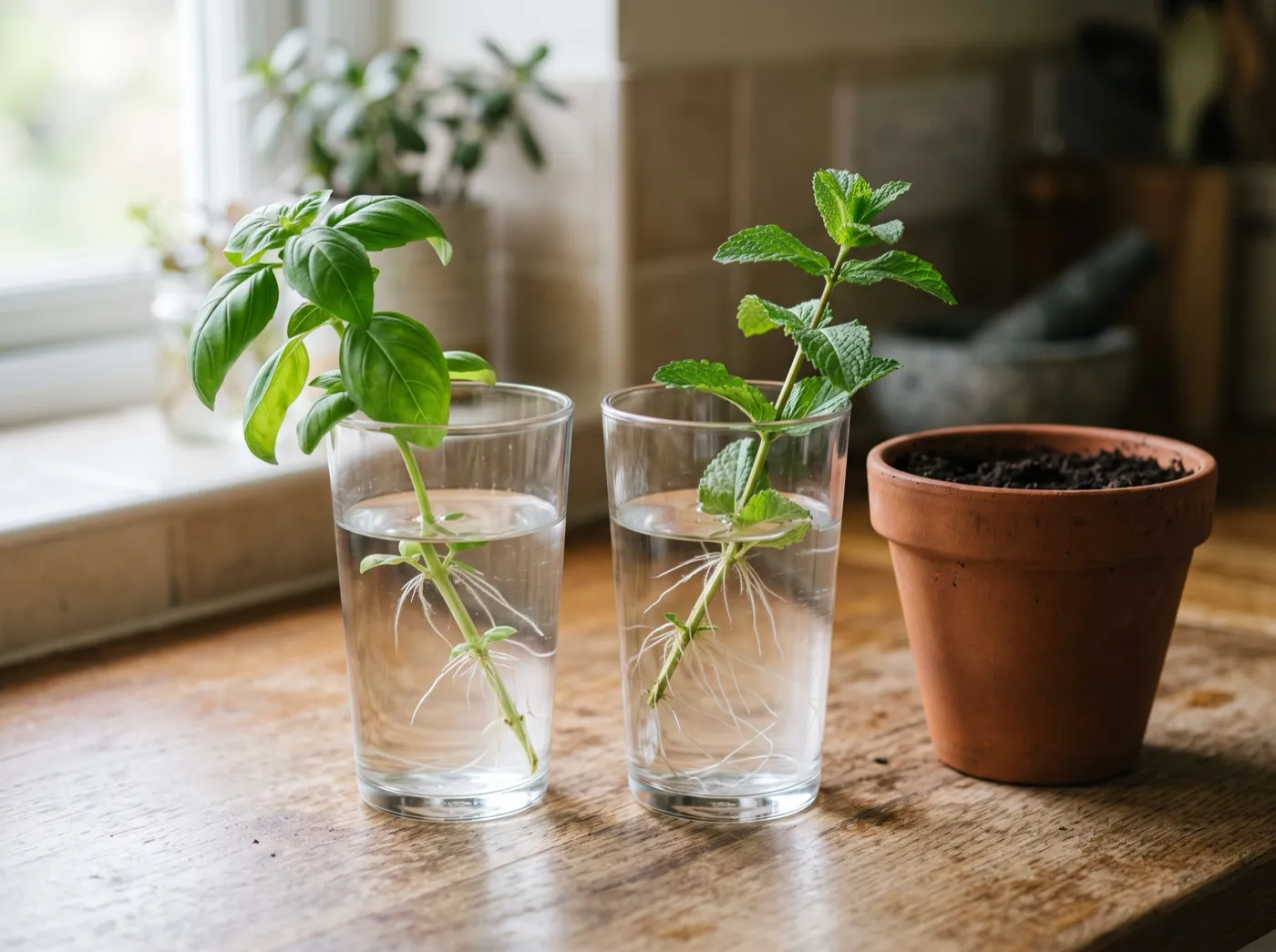 Basil and mint root in water in a week to ten days. Change the water often, as basil in particular slimes if left.
The same works for lemon balm, oregano, marjoram and Vietnamese coriander. The hard-stemmed woody herbs, rosemary, thyme, sage, do not, as covered above; those need a gritty compost cutting. Once your soft herbs have rooted and potted on, they behave like any windowsill herb and can move outside after the last frost.
Rooting garden shrubs and perennials in water
Some garden shrubs and perennials root in water, but they are less certain than houseplants and always root better in compost. Water rooting suits them as a low-effort experiment rather than a reliable method. If you only want one or two plants and enjoy watching the roots, a jar on the sill is fine. For quantity or reliability, take proper softwood cuttings in grit.
Fuchsias are the best of the garden subjects. Soft tip cuttings root in water in two to three weeks, and the plants transfer reasonably well if potted early. Our fuchsia guide has the wider propagation picture. Salvias, the soft herbaceous types, take in water too, though the woody sub-shrub salvias are less willing and are best struck in grit.
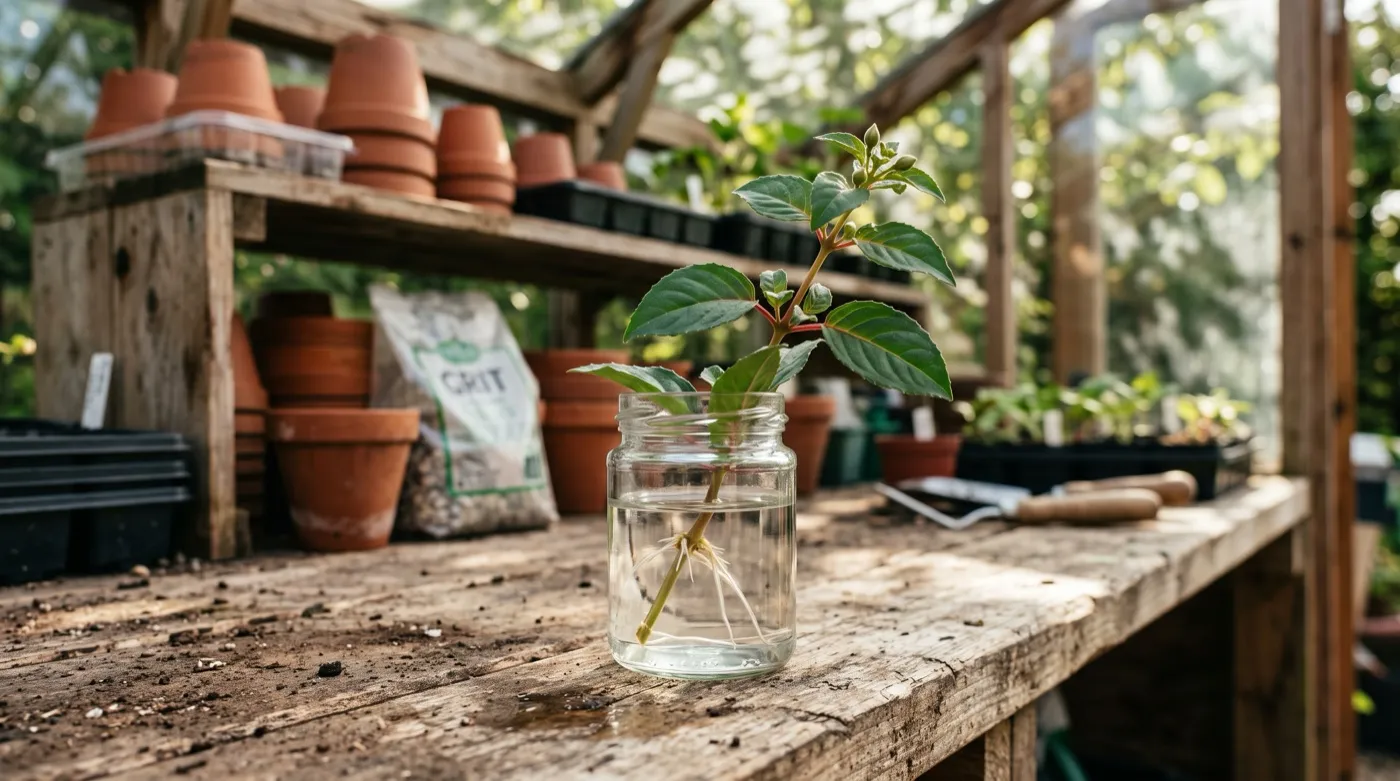 A fuchsia tip cutting rooting in water on the potting bench. Pot it on early, at 3 to 5cm of root, for the best transfer.
Hydrangeas are the classic “it works, but” plant. A softwood hydrangea cutting will root in water over three to five weeks, yet the resulting water roots are weak and the transfer loss is high. The RHS and most growers root them in compost for good reason. If you want hydrangeas from cuttings, our hydrangea guide points you at the soil method. For the proper technique behind softwood cuttings generally, the RHS sets it out at RHS: softwood cuttings, and Garden Organic has sound peat-free advice on rooting media for the potting-on stage.
Frequently asked questions
Which plants root fastest in water?
Pothos, tradescantia and coleus root fastest, often in 7 to 14 days. These soft-stemmed plants form roots readily at the leaf nodes. Mint, basil and Swedish ivy are almost as quick. Willow roots in days. Fuchsia and salvia take two to four weeks. Anything woody, hairy or resinous roots slowly or not at all, so use soil for those.
How long can you leave cuttings in water before potting them?
Pot them on once roots reach 3 to 5cm, usually two to four weeks. Left longer, the water roots grow long and brittle and break during transfer, so the plant stalls. A cutting can survive in water for months, but it rarely thrives; it slowly weakens without soil nutrients. Move it while the roots are short and the transfer is easiest.
Why are my water cuttings rotting instead of rooting?
Rot comes from stale water, too many leaves underwater, or a plant that dislikes water rooting. Change the water every 3 to 4 days. Strip all leaves below the surface so none sit submerged and decay. Use a clean jar. If the stem goes soft and brown at the base or the water turns slimy, that cutting is lost; start again with fresh material.
Do you need rooting hormone to root cuttings in water?
No, rooting hormone powder is largely wasted in water because it washes off the stem. Water rooting works without it for suitable plants. If you want a boost, use willow water: soak chopped young willow stems for 24 hours and stand your cuttings in the liquid. It contains natural rooting compounds and mild antifungal salicylic acid that help harder subjects along.
Why do my water-rooted cuttings die after potting into soil?
Water roots are structurally different from soil roots and often cannot cope with the switch. They are thin, brittle and adapted to absorbing oxygen from water. Pot on early at 3 to 5cm, use a gritty free-draining mix, keep the compost just moist not wet, and cover with a clear bag for a week. This weans the plant across and cuts the shock that kills so many transfers.
Can you root woody cuttings like lavender or rosemary in water?
No, woody, hairy and resinous plants such as lavender, rosemary and pelargonium usually rot in water before they root. Their stems hold too much air and their leaves foul the water. These do far better in gritty compost as proper softwood or semi-ripe cuttings. Water rooting suits soft, sappy, node-rich stems; save the woody subjects for a pot.
What is the best jar and water for rooting cuttings?
Use a clean clear glass jar so you can watch the roots and spot cloudy water. Tap water is fine across most of the UK; let it stand overnight if your supply is heavily chlorinated. Keep two leaf nodes under the surface and top up as the level drops. Amber or coloured glass reduces algae in bright rooms. Wash the jar between batches to stop slime building up.
Once your jar of cuttings has rooted and potted on, keep the propagation going with our guide to growing pothos, the plant that started most of us off.
Our team produces practical UK gardening guidance from source research, contributor records and established horticultural practice. Editorial standards are overseen by Matt W.