Key takeaways
- Start earthing up when shoots reach 20-23cm tall, usually mid to late May
- Draw soil up the stems leaving 5-8cm of foliage showing each time
- Repeat every 2-3 weeks until ridges stand 25-30cm high
- Earthing up stops light reaching tubers, which prevents green toxic skin
- Tall ridges also guard early shoots against late frost and lift total yield
- Maincrop needs 3-4 earthings; first earlies need only 1-2
Earthing up is the job that decides whether half your potato crop is edible or wasted. Done at the right height and the right intervals, it keeps tubers in the dark, guards young shoots from a late May frost, and adds a useful slice to your final yield. Skip it and you lift a basketful of green, bitter potatoes you cannot eat. This guide covers exactly when to start, how high to build the ridges, and how the technique changes for earlies, seconds, and maincrop across a UK season.
The principle is simple. Potatoes form along the underground stem, and any tuber that meets daylight turns green and toxic. Earthing up buries the stem, blocks the light, and gives the plant more depth to crop into. It costs nothing but ten minutes with a draw hoe.
What earthing up actually does to the plant
Earthing up does four jobs at once, and only one of them is obvious. Light exclusion is the headline: covering swelling tubers with at least 5cm of soil stops chlorophyll forming in the skin. Where chlorophyll appears, so does solanine, a bitter glyco-alkaloid the plant makes as a pest defence. Green patches can carry solanine well above the 200mg/kg level regarded as the safe ceiling, which is why greened tubers are cut away or binned.
The second job is stem burial for yield. Potatoes set tubers along the buried portion of the stem, called stolons. Drawing soil up the stem lengthens that buried zone, so a well-earthed plant has more sites to crop into than a flat-grown one. The third job is frost protection: a 25cm ridge of soil insulates emerging shoots through the cold snaps that hit UK gardens into late May. The fourth is weed suppression, since each pass with the hoe buries seedling weeds in the row.
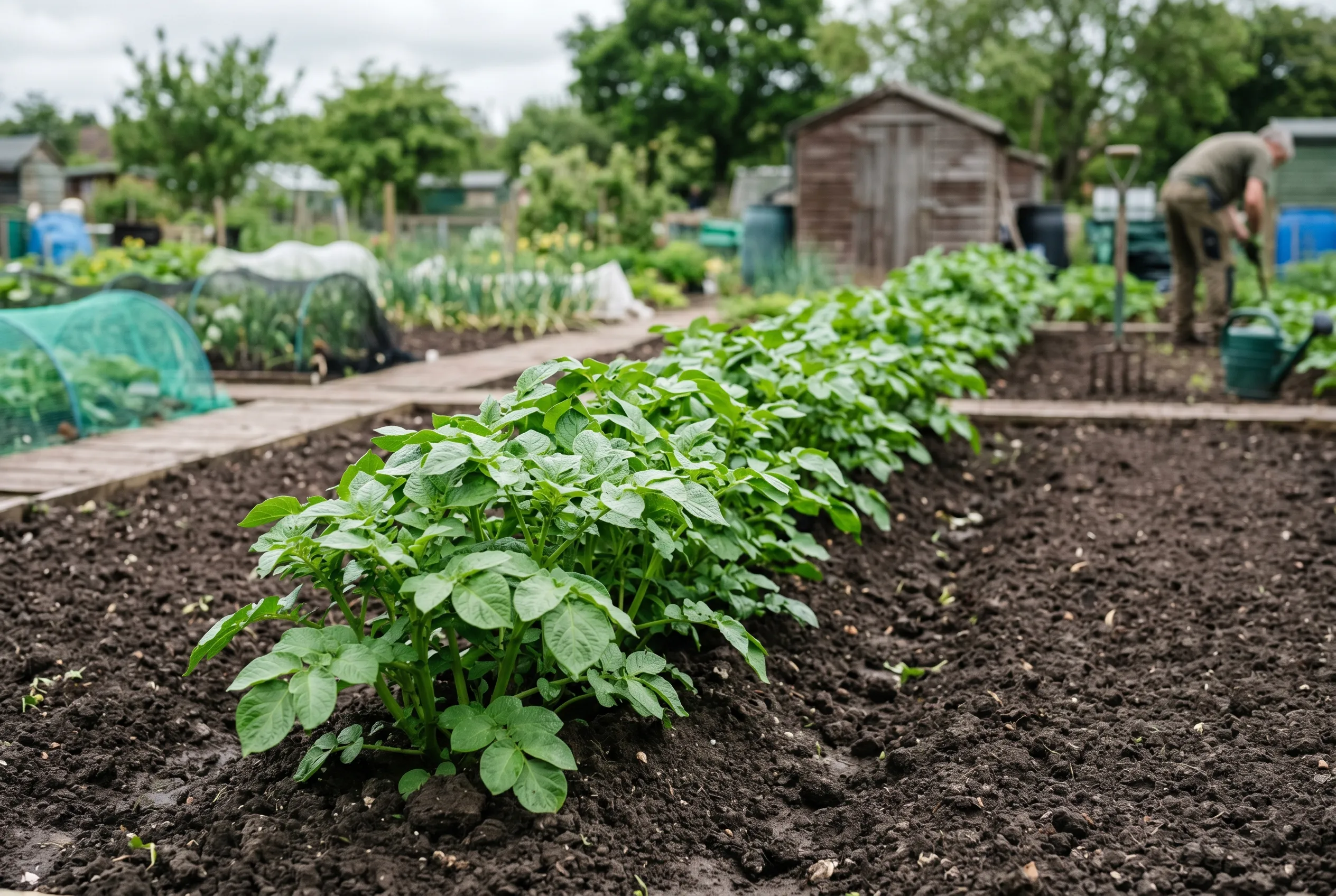 Shoots at 20-23cm are at the ideal height for the first earthing up. Wait much longer and the haulm flops and snaps.
When to start earthing up potatoes
Start the first earthing when shoots stand 20-23cm tall, roughly a hand-span above the soil. In a normal UK spring that falls in mid to late May for March-planted earlies and late May into June for maincrop planted in April. Do not wait for the plants to flower. Flowering is a common myth as a trigger and arrives weeks after the first earthing is overdue.
Work on a dry day when the soil breaks up freely. Wet clay smears into airless clods that cap the ridge and shed water. Earth up in the morning if you can, so the disturbed soil dries through the day. After the first earthing, repeat every 2-3 weeks as the haulm gains height, building the ridge in stages until it reaches 25-30cm and the foliage closes over the row. Once the canopy meets across the bed, the leaves shade the ridge themselves and earthing up stops.
Gardener’s tip: Earth up the evening before or the morning of a frost warning. A freshly drawn 25cm ridge buries the growing tips and shrugs off a late air frost that would blacken exposed foliage.
How to earth up potatoes step by step
The technique takes minutes per row once the rhythm is set. A draw hoe is the classic tool, though a ridging hoe or even a spade works on a small bed.
- Weed the row first. Hoe off any seedling weeds between and along the rows so you are not burying established competitors.
- Loosen the path soil. Break the surface in the furrow either side of the row with the hoe blade so it lifts cleanly.
- Draw soil up both sides. Pull soil from the furrow up against the stems, working from both sides to build a symmetrical ridge. Keep the blade shallow to avoid slicing tubers.
- Leave the tips showing. Stop when 5-8cm of foliage still stands clear of the soil. Never bury the whole plant.
- Firm the ridge lightly. Pat the sides with the back of the hoe so the mound holds shape and sheds rain to the furrow.
- Repeat in stages. Come back every 2-3 weeks, adding 7-10cm of height each pass until the ridge reaches 25-30cm.
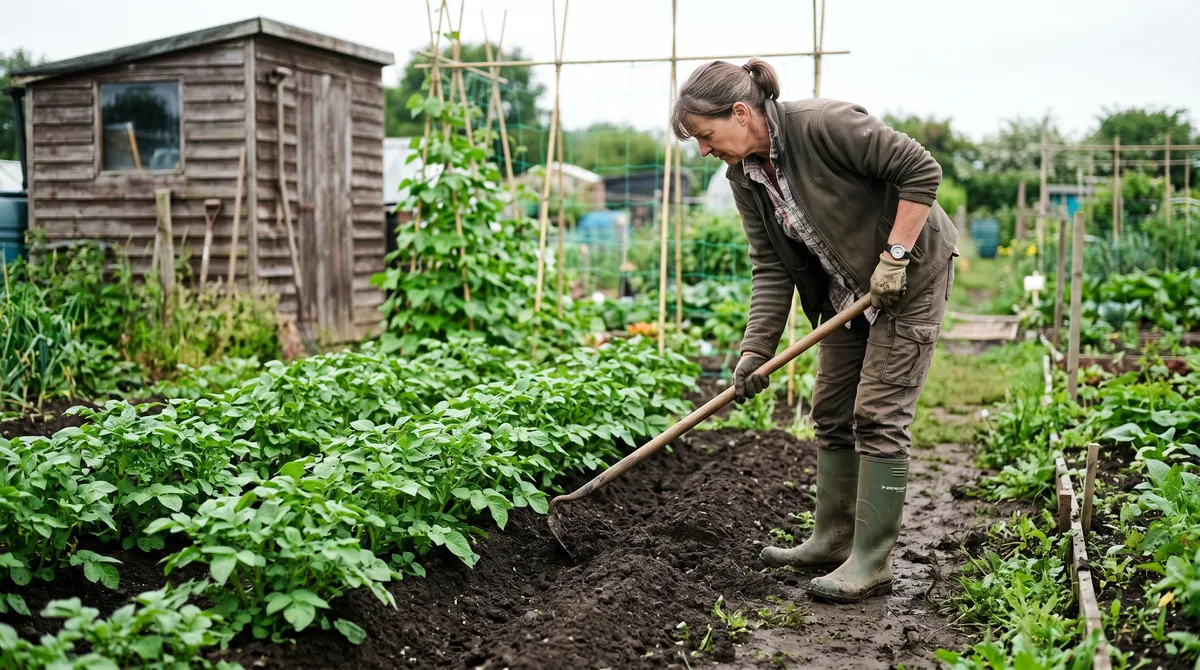
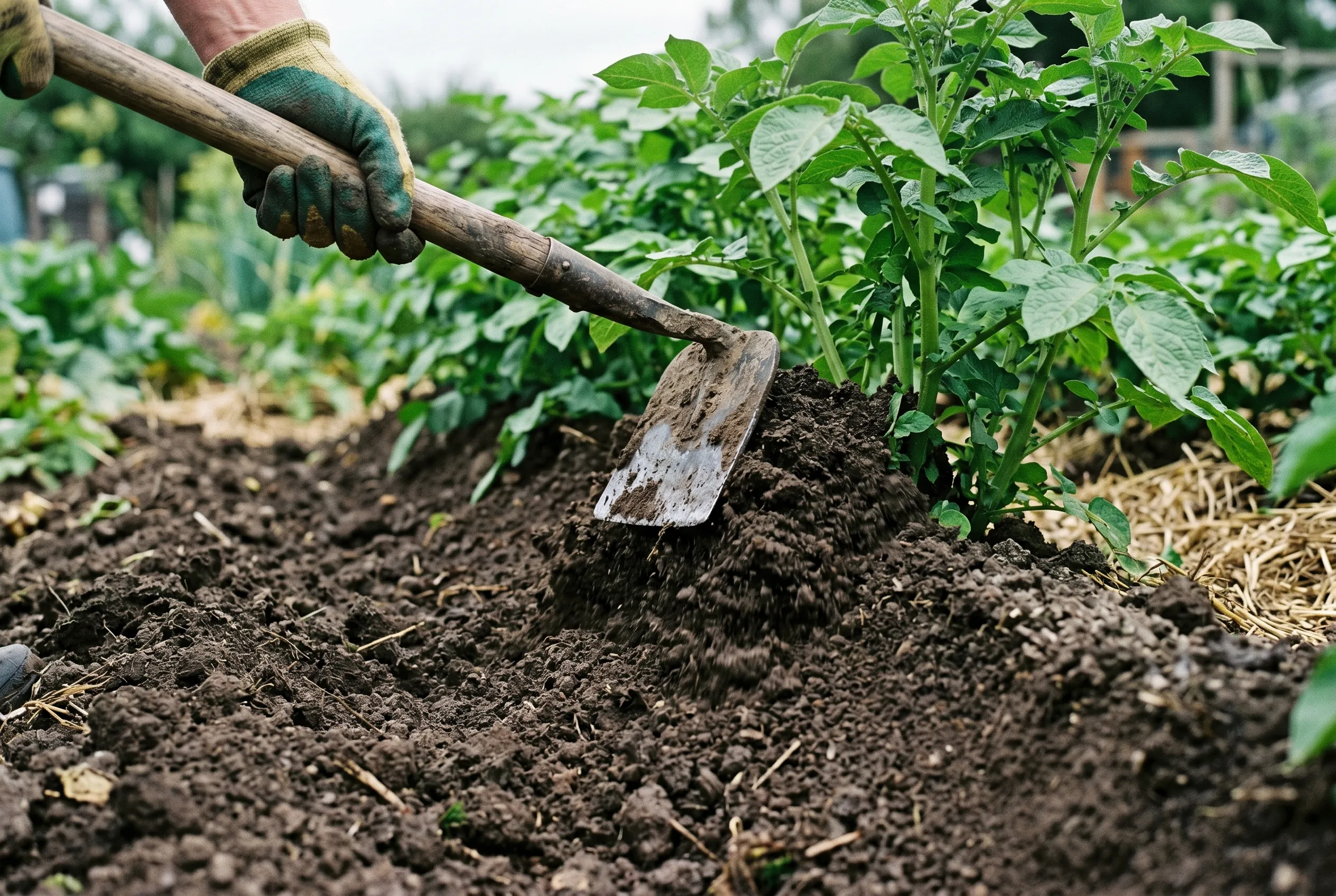 Work the draw hoe from both sides of the row to build an even ridge. Keep the blade shallow so it never nicks a tuber.
Earthing up methods compared
Not every plot uses a hoe and an open furrow. Here is how the main approaches rank for clean yield and effort.
| Method | How it works | Tuber greening control | Effort | Role |
|---|---|---|---|---|
| Draw-hoe ridging | Soil pulled up stems in stages | Excellent (95%+ covered) | Moderate | Primary method for open ground |
| Compost top-up (bags/containers) | Add 10cm compost as shoots grow | Excellent | Low | Primary for patio and small-space growing |
| Straw or grass mulch | Loose mulch piled over stems | Good (80-90%) | Low | Maintenance, suits no-dig beds |
| Through-the-haulm mounding | One late heavy mound near canopy close | Fair (70%) | Low | Emergency catch-up only |
| Left flat (no earthing) | No covering at all | Poor (greening common) | None | Not recommended |
The draw-hoe method is the gold standard for open ground because it buries the most stem and gives the most reliable cover. Mulching with straw is the better fit for no-dig beds where you avoid disturbing soil structure. What no method can do is rescue tubers that have already greened, so the timing of the first pass matters more than the method.
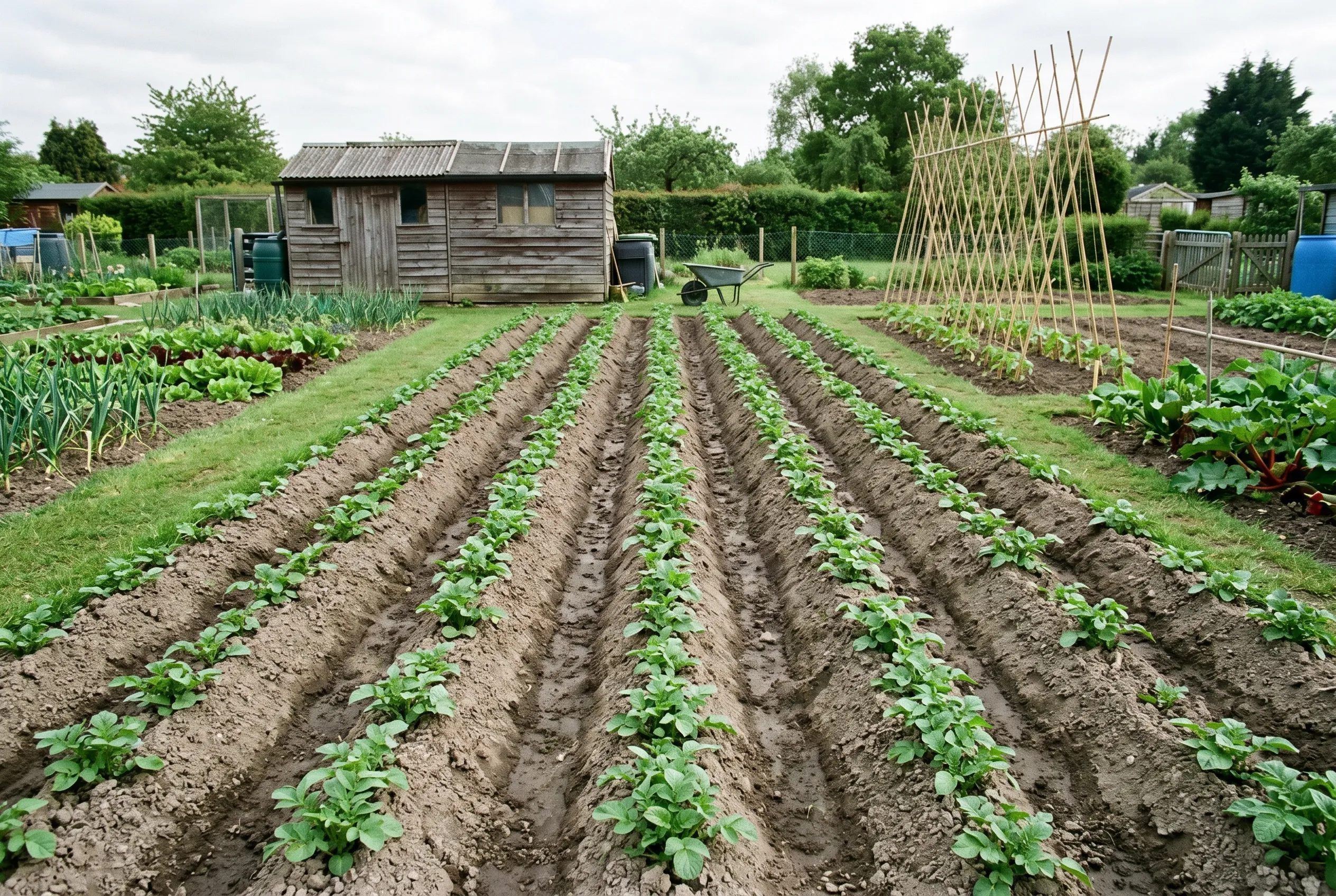 Finished ridges standing 25-30cm tall. The foliage will soon close over the top and shade the soil itself.
Earthing up first earlies, second earlies, and maincrop
How often you earth up depends on how long the crop sits in the ground. First earlies grow fast and shallow, so they need fewer passes than a maincrop that bulks up over four months.
First earlies
First earlies such as ‘Rocket’, ‘Swift’, and ‘Foremost’ are planted in March and lifted from June. They need only one or two earthings, the first in May and a top-up two to three weeks later. Their short season means tubers sit close to the surface, so even a modest 20cm ridge keeps them covered until harvest.
Second earlies and maincrop
Second earlies like ‘Charlotte’ and ‘Kestrel’, and maincrop such as ‘Maris Piper’, ‘King Edward’, and ‘Sarpo Mira’, stay in the ground far longer and bulk up heavily. They need three or four earthings between late May and July. Each pass lengthens the buried stem and adds cropping depth. Maincrop ridges should reach the full 30cm because the larger tubers push harder to the surface as they swell.
| Month | First earlies | Maincrop |
|---|---|---|
| April | Plant, no earthing | Plant tubers 12-15cm deep |
| May | First earthing at 20cm | Shoots emerge, fleece on frost nights |
| June | Second earthing, begin harvest | First and second earthings |
| July | Harvest complete | Third earthing, ridges to 30cm |
| August | Bed cleared | Foliage dies back, cure for storage |
For the full planting picture, see our guides on growing potatoes, choosing the best potato varieties, and harvesting potatoes at the right moment.
Common earthing up mistakes to avoid
Most earthing up failures come down to timing or smothering. These are the errors that cost a clean crop.
Why green potatoes are dangerous and how to prevent them
The reason earthing up matters is solanine, the toxin behind green potatoes. When any tuber meets light, it produces chlorophyll, which turns the skin green, and solanine, which makes it bitter and unsafe in quantity. Solanine concentrates just under the skin and is not destroyed by boiling or roasting. Small green patches can be cut away with a deep margin, but heavily greened tubers belong on the compost heap.
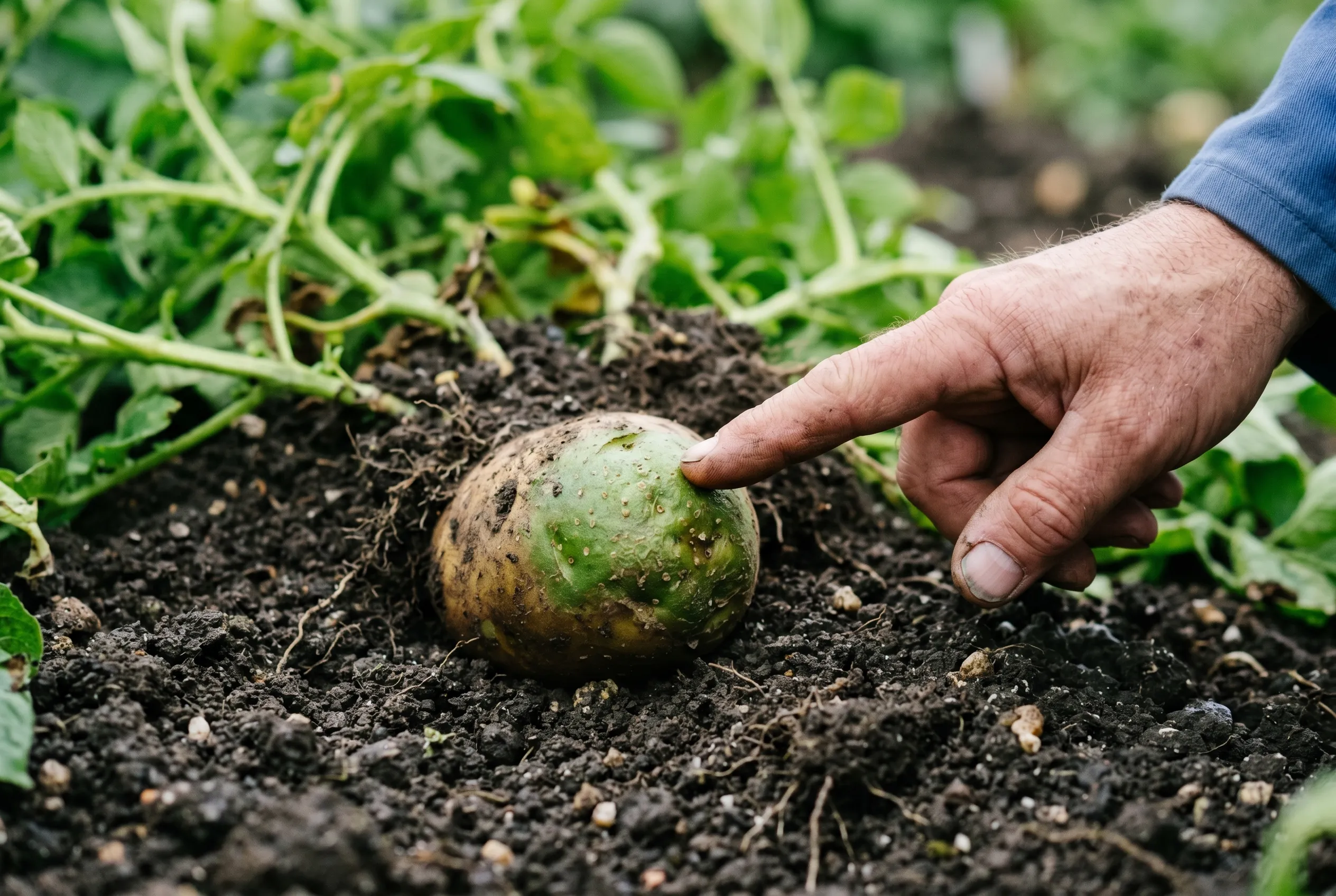 Green skin means solanine. Any tuber that reaches the light turns toxic, which is the whole reason we earth up.
A draw hoe also doubles as your weeder between earthings, so it earns its place on the plot beyond this one job.
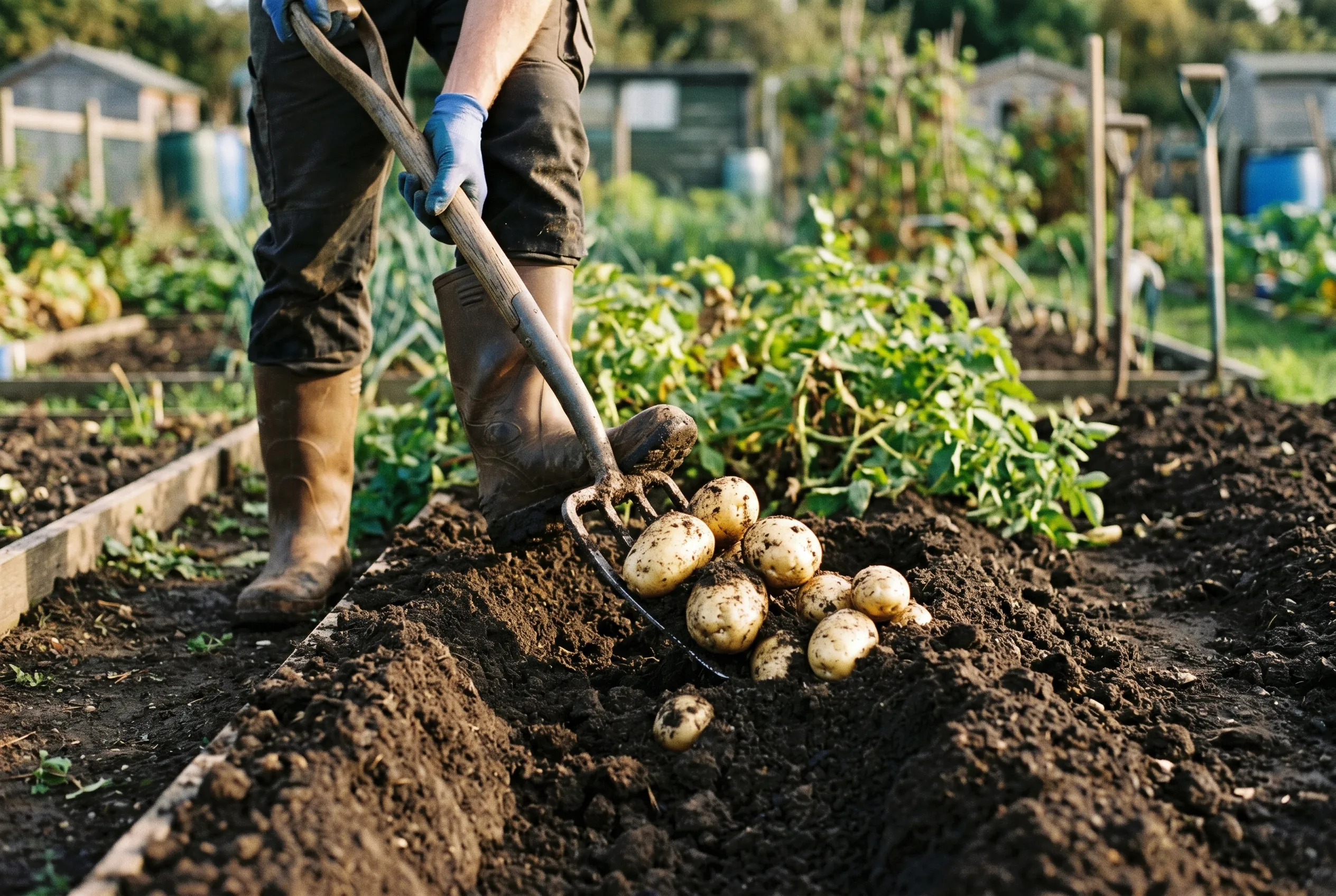 The payoff: clean, unblemished tubers lifted from a well-earthed ridge, with no green shoulders to cut away.
Frequently asked questions
When should I start earthing up potatoes in the UK?
Start when shoots reach 20-23cm tall, usually mid to late May. Earlies planted in March are often ready first. Do not wait for flowers, which appear long after the first earthing is due. Earth up on a dry day when the soil crumbles freely so the ridge holds its shape.
How high should you earth up potatoes?
Build ridges to a final height of 25-30cm. Add soil in stages, drawing it up the stems each time and leaving 5-8cm of foliage showing. A single 30cm mound smothers young shoots, so always build gradually over several earthings spaced two to three weeks apart.
Do you have to earth up potatoes?
Earthing up is not strictly essential but strongly recommended. It stops tubers near the surface turning green and toxic, protects shoots from late frost, and raises yield. Container and bag growers earth up by topping up compost instead of drawing soil up the stems.
Why do my potatoes turn green?
Green potatoes have been exposed to light, which triggers chlorophyll and the toxin solanine. Shallow tubers push to the surface as they swell. Covering them with 5cm or more of soil through earthing up blocks the light and keeps skins pale and safe to eat.
Can you earth up potatoes too much?
You can smother shoots by burying all the foliage at once. Always leave 5-8cm of leaf showing so the plant keeps photosynthesising. Excessive earthing also exposes the bed to drought as ridge tops dry fast, so water ridges in hot spells.
Should I earth up potatoes in containers or grow bags?
Yes, but top up with compost rather than soil. Start bags one-third full, then add 10cm of compost each time shoots gain 20cm until the bag is full. This buries more stem, where extra tubers form, and stops light reaching the crop.
Our team produces practical UK gardening guidance from source research, contributor records and established horticultural practice. Editorial standards are overseen by Matt W.