Key takeaways
- First earlies: dig from late June when first flowers open
- Second earlies: lift from late July as foliage yellows
- Maincrop: harvest September-October after haulm dies
- Cut haulm 2 weeks before lifting maincrop for firm skins
- Lift on a dry day to reduce disease in stored crop
- Cure maincrop 7-14 days in dark cool airy place before storage
Harvesting potatoes well is the difference between 4-6 weeks of eating and 4-6 months of stored food. Timing decides skin condition, storage life, flavour and disease resistance. This guide covers when to lift each potato type (first earlies, second earlies, maincrop), how to read the signs of readiness, the lifting technique that preserves the skin, and how to cure for long-term storage.
When to Lift Each Potato Type
UK potato harvest runs from late June (first earlies) to late October (late maincrop). Each type has its own window.
| Type | Weeks from planting | UK harvest window | Storage life |
|---|---|---|---|
| First earlies | 10-12 | Late June - late July | Fresh use only, 1-2 weeks |
| Second earlies | 12-14 | Late July - mid August | Short storage, 4-8 weeks |
| Early maincrop | 14-16 | Mid August - mid September | Medium storage, 2-3 months |
| Maincrop | 16-20 | Mid September - mid October | Long storage, 4-6 months |
| Late maincrop | 20-22 | Late September - late October | Longest storage, 5-7 months |
The window is approximate. UK weather varies the actual ready date by 1-3 weeks. A cold spring delays harvest; a warm dry summer brings it forward.
For the planting end of the potato year, our companion guide covers chitting, planting dates and bed preparation. This guide covers everything from the first flowering to the storage sack.
First Earlies: The Late June Lift
First earlies are the gourmet potato of the UK season. Charlotte, Foremost, Rocket and Pentland Javelin are the dominant varieties.
Signs of readiness:
- First flowers fully open on the haulm
- Soil mounded over the row begins to crack
- Haulm still green and upright (do not wait for yellowing)
- Test dig: scrape soil away gently with hands, find tubers the size of a hen’s egg
Lifting technique for first earlies:
- Wait for a dry afternoon (24 hours of dry weather minimum)
- Use a flat-tined potato fork (sometimes called a “graip”), never a spade
- Insert the fork 200mm beyond the row to avoid spearing tubers
- Lever the fork upward, lifting the soil and roots together
- Sort through the soil by hand, picking out tubers
- Replace the soil and lift the next plant
First earlies are eaten fresh. Storage is not the goal. Lift only what you will use within 1-2 weeks. The thin papery skins do not toughen and will not store long.
Many UK gardeners lift in stages, picking the largest tubers and leaving smaller ones in the ground to grow on for another 1-2 weeks. This extends the fresh-eating season from late June through to early August.
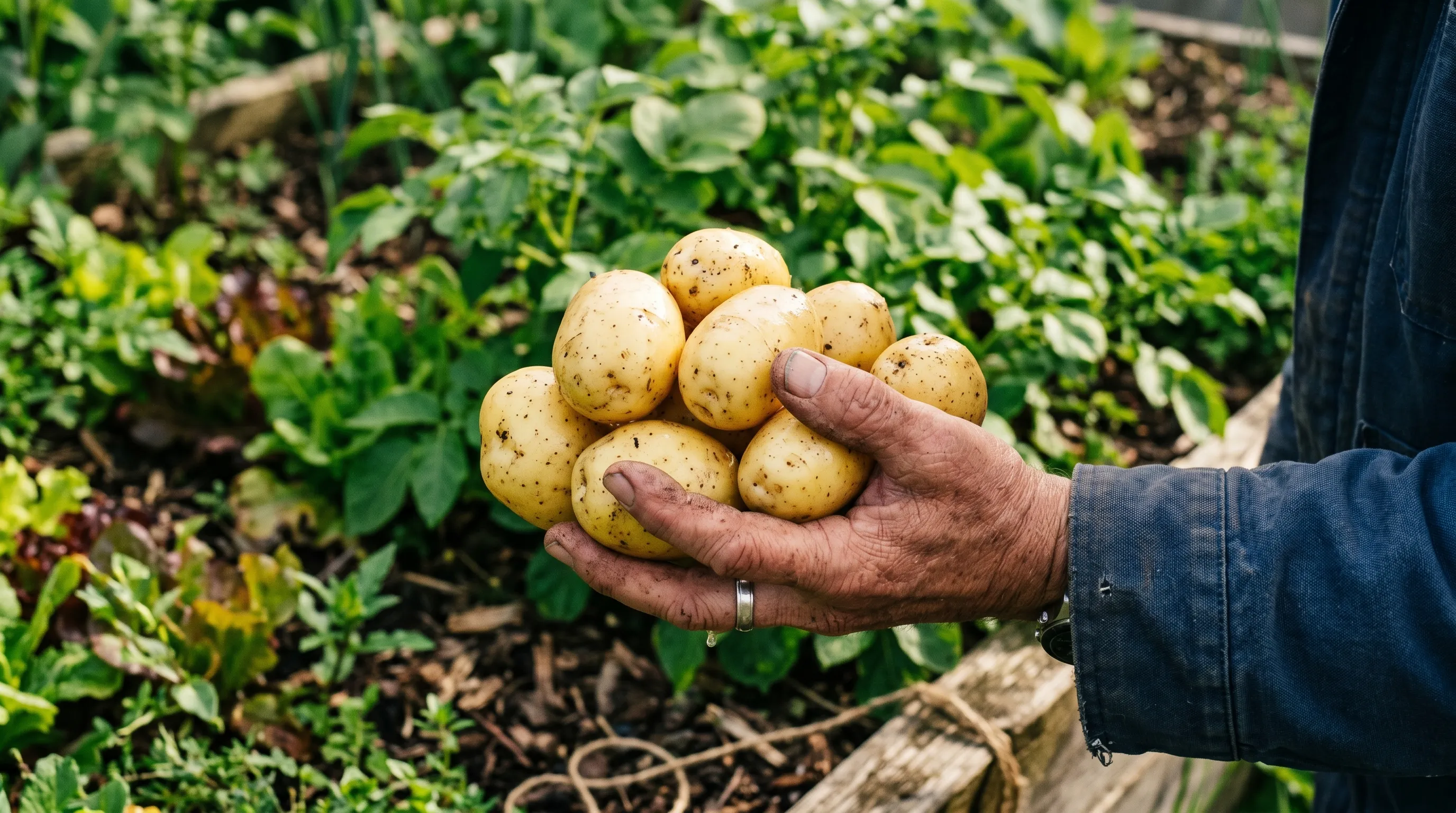 First early Charlotte potatoes at the perfect harvest size: hen’s-egg sized tubers, thin papery skins, ready for the kitchen within 1-2 weeks. The thin skins do not toughen for storage; eat fresh.
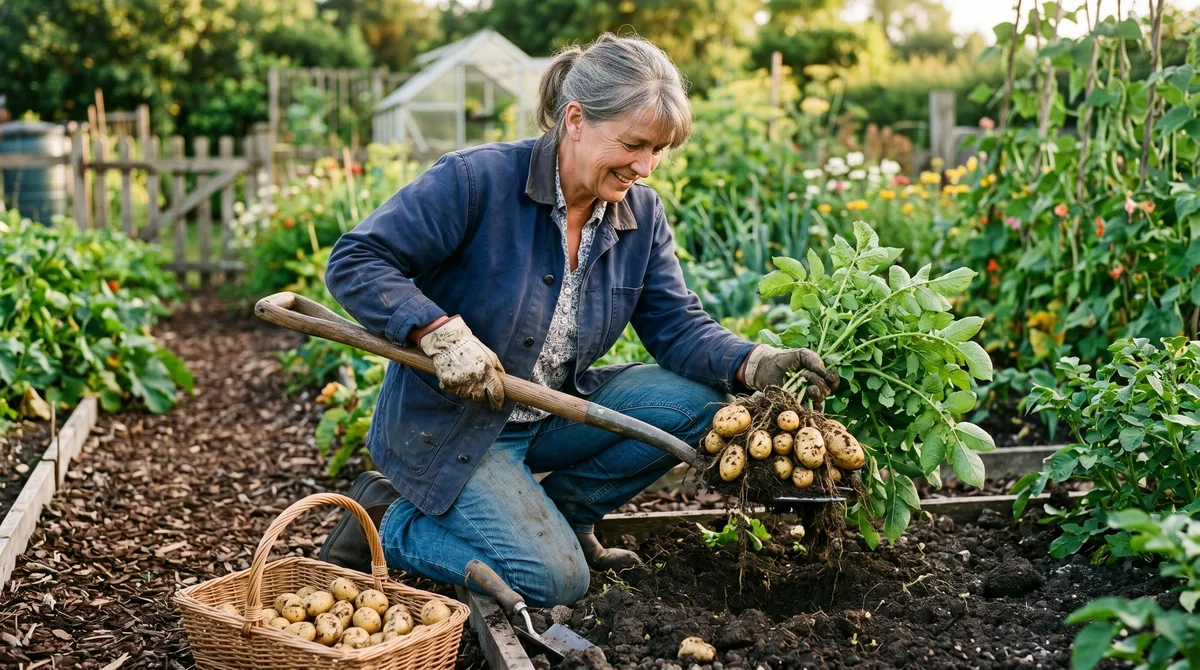
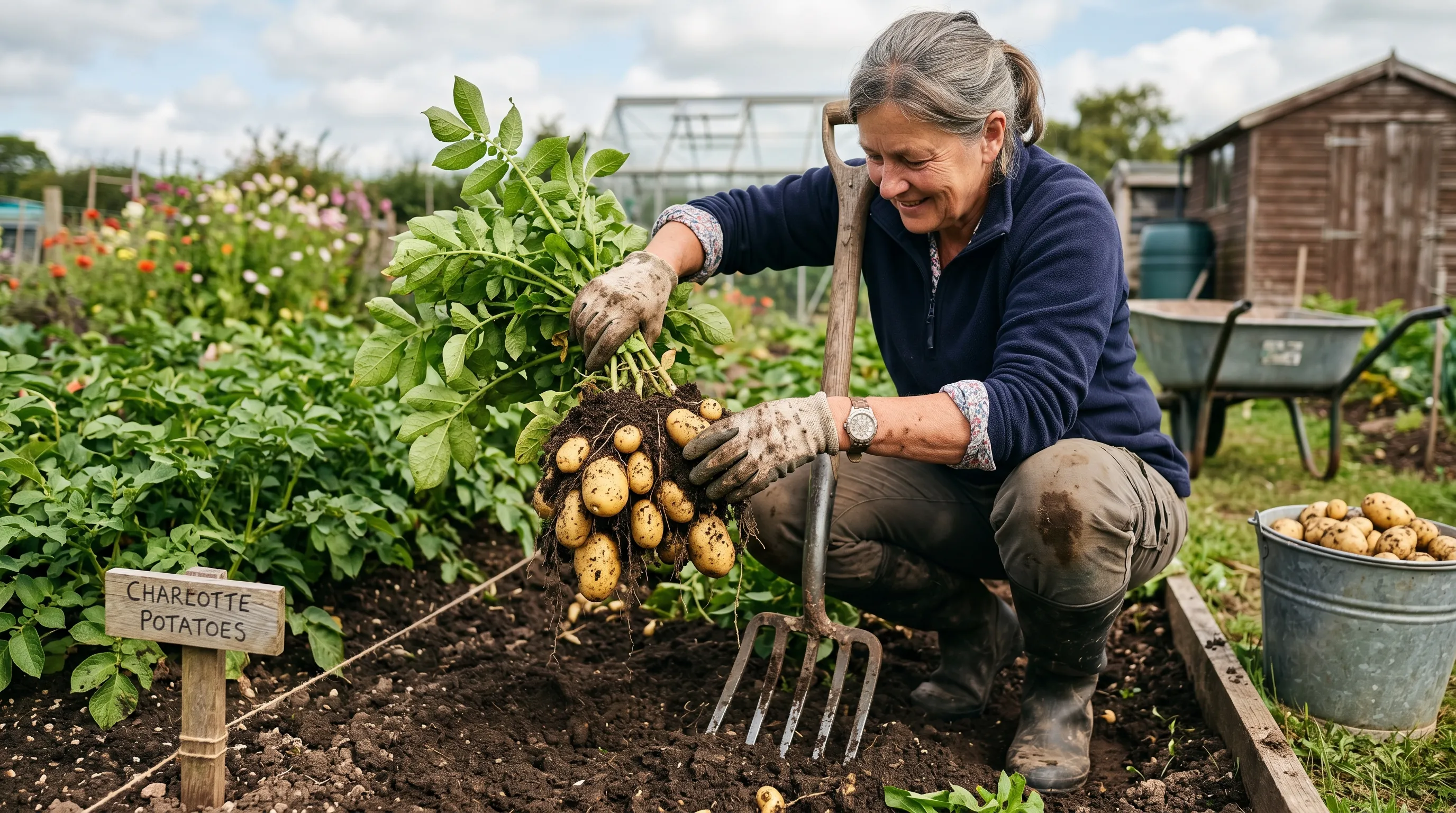 Lifting first early Charlotte potatoes in late June. The fork goes 200mm beyond the row to avoid spearing tubers. First flowers fully open is the signal that the bed is ready.
Second Earlies: The Late July Window
Second earlies bridge the gap between first earlies and maincrop. Kestrel, Wilja, Estima and Charlotte (sometimes grown second-early) are the main UK varieties.
Signs of readiness:
- Foliage begins to yellow at the lower leaves
- Haulm still mostly upright with green upper leaves
- Test dig: tubers 75-100mm long, skins still rub off with thumb pressure
Second earlies are ready 12-14 weeks after planting. Lift in stages through late July and early August.
Lifting technique:
Same fork technique as first earlies. Lift on a dry afternoon. Sort by hand.
Second earlies have an intermediate storage life: 4-8 weeks in a cool dark airy place. Skin is thicker than first earlies but not fully set. Eat through August and September; do not plan to keep through to Christmas.
Some UK gardeners cut the haulm 7-10 days before lifting second earlies to firm the skins. This adds 4-6 weeks to storage life. Useful where the household cannot eat all second earlies fresh.
Maincrop: Reading the Haulm
Maincrop potatoes are the storage workhorse of the UK plot. Maris Piper, King Edward, Desiree, Cara and Picasso dominate the UK maincrop market.
Signs of readiness:
- Haulm turns yellow and starts to die back
- Lower leaves brown and dry
- Stems collapse onto the bed
- Test dig at 200mm depth: tubers full-size with skins that resist a thumb rub
Maincrop is ready 16-20 weeks after planting. UK harvest window: mid September to mid October.
The haulm-cutting step (essential for storage):
- Cut the haulm to ground level 14 days before lifting
- Use shears or a sharp knife
- Compost or burn the haulm (do not leave on the bed; spreads blight)
- Let the bed sit for 14 days
- Then lift the crop on a dry day
The 14-day skin-set window is the single biggest factor in long-term storage success. Tubers lifted with green haulms still attached scuff easily, leak juice, and rot in storage within 8-12 weeks. Cured tubers from cut-haulm beds store 4-6 months.
Lifting technique:
- Use a flat-tined potato fork
- Lift in afternoons after morning dew has dried
- Spread lifted tubers in a single layer on the bed surface for 1-2 hours to surface-dry
- Sort: keep clean tubers for storage; eat damaged or speared tubers within 7 days
- Brush off loose soil with a soft brush (never wash)
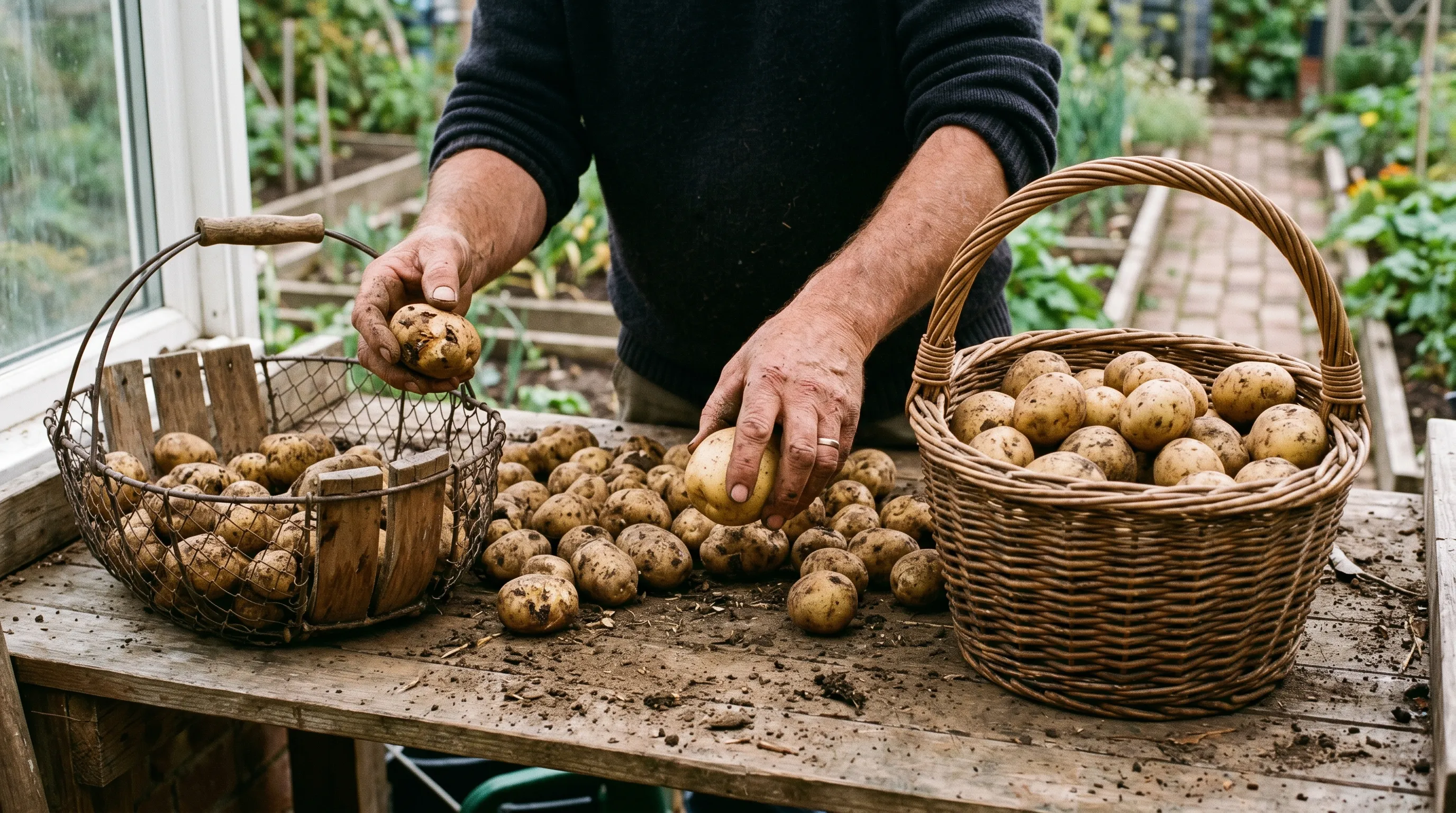 Sorting at the lift. Clean unblemished tubers go to long-term storage on the right. Damaged tubers (fork wounds, pest damage, soft patches) go to the immediate-eat basket on the left. Never store damaged tubers.
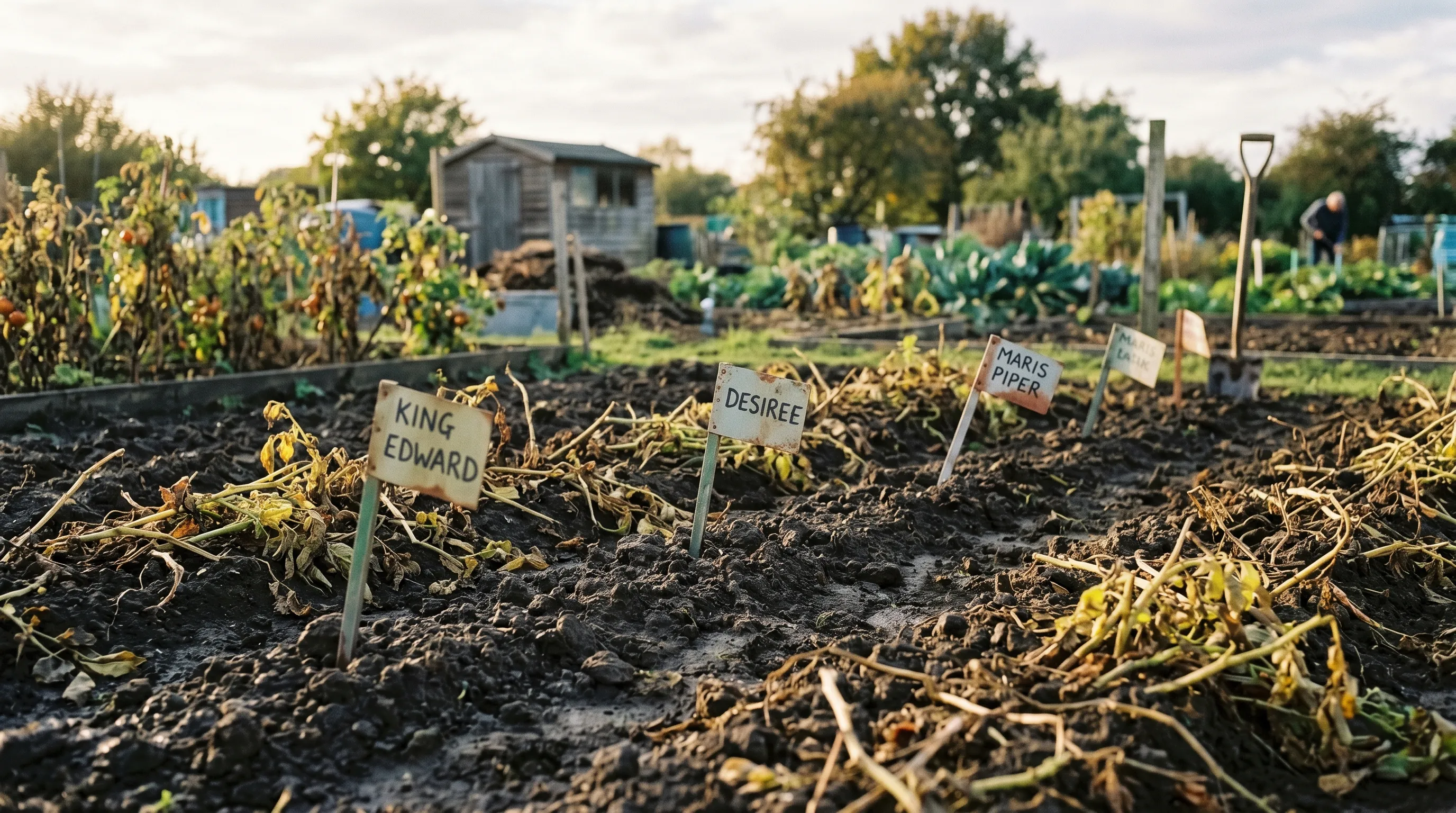 Maincrop bed 7 days after haulm cutting. The remaining stems and roots stay in place to keep the soil structure intact while the underground tubers develop firm storage skins over the next week.
Curing for Storage
Cured potatoes store 3-5 times longer than uncured. The process is simple and adds 7-14 days to the harvest schedule.
Curing setup:
- Spread lifted, brushed potatoes in a single layer
- Use shallow boxes, hessian sacks laid flat, or paper-lined trays
- Place in a dark, dry, airy room at 12-18C
- Maintain humidity at 80-90% (a damp cloth nearby helps in dry conditions)
- Leave for 7-14 days
- After curing, transfer to long-term storage
The curing period thickens the skin, heals small nicks and bruises, and dries any surface moisture. The result is a tuber that resists rot and sprouting through the storage season.
Where to cure on a UK plot:
- Garage floor on a tarpaulin (most common UK location)
- Shed floor on hessian sacks
- Spare bedroom floor with curtains drawn
- Polytunnel or greenhouse floor if temperature controlled
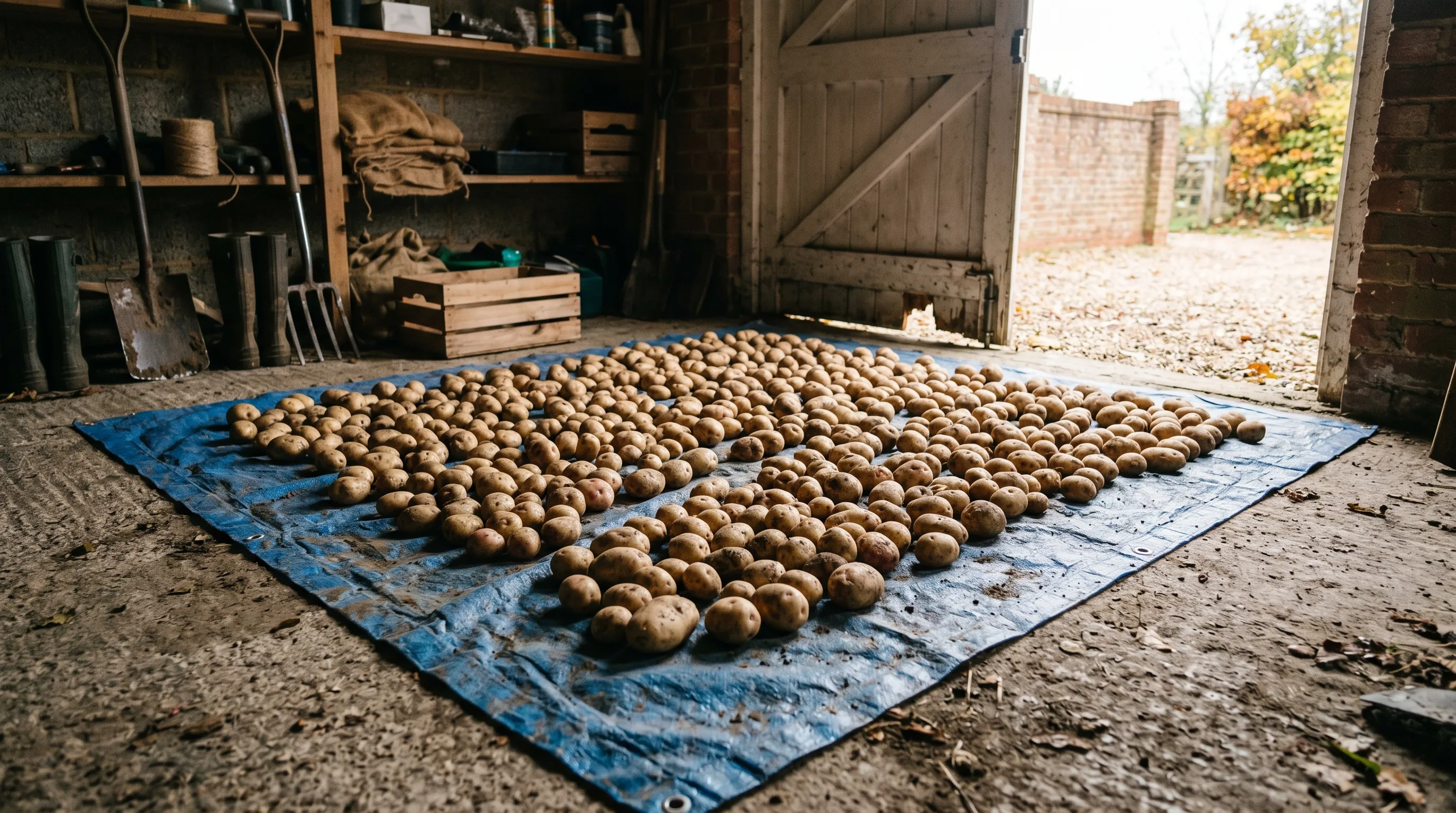 Standard UK curing setup: tarpaulin on a garage floor, tubers in a single layer, ventilation through a cracked-open door. Cure for 7-14 days at 12-18C before transferring to long-term storage.
After curing, sort once more. Remove any tuber showing soft patches, dark spots, or visible disease. One rotten tuber in a sack starts a chain reaction that wastes the whole sack.
After curing, choose between hessian sacks (the standard UK storage), paper-lined wooden boxes (best protection but takes more space), or a traditional clamp (for plots with no indoor storage available). Each method holds cured tubers at 4-8C through to spring.
Blight: When to Lift Early
Late blight (Phytophthora infestans) is the single biggest cause of UK maincrop loss. Signs:
- Dark brown patches on leaves with pale yellow halos
- White fuzz on the underside of affected leaves
- Rapid spread across the row in warm humid weather
- Eventually rot spreading down stems into tubers
If blight is confirmed on a maincrop bed, lift immediately, even if the standard schedule says wait. The fungus will reach tubers within 2-5 days of foliage infection. Better to lift slightly small tubers than lose the crop entirely.
Emergency blight lift:
- Cut and burn or bag all haulm immediately
- Wait 5-7 days for any tuber infection to show
- Lift on a dry day, sort carefully
- Discard any tuber with brown patches, soft spots, or sunken areas
- Use lifted tubers within 2-4 weeks; do not attempt long-term storage
For the wider blight prevention plan, our vegetable pest and disease guide covers crop rotation, copper sprays and resistant varieties.
 Late blight on a UK maincrop potato leaf. Dark brown patches with pale yellow halos and white fuzz on the underside are diagnostic. Once seen, cut and burn all haulms immediately and plan an emergency lift within 5-7 days.
Common Mistakes With Potato Harvest
Mistake 1: lifting maincrop without cutting the haulm. Green haulms feed the tubers and prevent skin set. Always cut 14 days before lifting for storage.
Mistake 2: washing tubers before storing. Water spreads disease and shortens storage life by 50-70%. Brush off loose soil dry. Wash only just before cooking.
Mistake 3: lifting in wet weather. Wet-lifted potatoes pick up soil fungi that cause rot. Wait for at least 48 hours of dry weather.
Mistake 4: storing damaged tubers. Skin nicks, fork wounds and pest damage all become entry points for rot. Sort carefully; use damaged tubers within a week.
Mistake 5: skipping the curing step. Direct from soil to storage sack means 4-8 weeks of life instead of 4-6 months. The 7-14 day cure is the single best storage investment.
For the wider potato year, our when to plant potatoes guide covers chitting and planting. Our how to grow sweet potatoes guide covers the related but very different sweet potato crop.
Potato Harvest Calendar UK Month-by-Month
| Month | Potato harvest task |
|---|---|
| January | Plan harvest schedule based on planting dates |
| February | Chit seed potatoes (start sprouting in light) |
| March | Plant first earlies under cloche or fleece |
| April | Plant second earlies and maincrop |
| May | Earth up rows. Watch for late frost |
| June | Late June: start lifting first earlies as flowers open |
| July | Continue first early lift. Late July: second early lift begins |
| August | Lift second earlies through to mid-month. Watch for blight on maincrop |
| September | Cut maincrop haulm by mid-month. Begin maincrop lift end of month |
| October | Main maincrop lift window. Cure for 7-14 days before storage |
| November | All crops lifted. Storage management |
| December | Check stored crops for sprouting or rot |
The September haulm-cut and October lift window is the cornerstone of the UK potato year. Get those two dates right and the rest is detail.
Frequently asked questions
When do you harvest first early potatoes in the UK?
Late June to late July, 10-12 weeks after planting. Lift when the first flowers open and a test dig at 100mm depth shows tubers the size of a hen’s egg. First earlies are eaten fresh, not stored.
How do you know maincrop potatoes are ready to lift?
The foliage turns yellow and dies back. Cut haulms to ground level 14 days before lifting to firm the skins. The tubers should resist a thumb rub on the skin. If the skin slides off, wait another week before lifting.
Should you wash potatoes before storing?
Never wash potatoes for storage. Brush off loose soil with a soft brush. Water on tubers spreads disease and shortens storage life by 50-70%. Store with soil residue intact. Wash only just before cooking.
What happens if you lift potatoes in wet weather?
Wet-lifted potatoes pick up soil fungi and bacteria that cause storage rots. Skin damage from wet handling cannot heal in cool damp conditions. Storage life drops from 4-6 months to 4-6 weeks. Always wait for a dry forecast of at least 48 hours.
How do you cure potatoes for long-term storage?
Lay lifted potatoes in a single layer in a dark, dry, airy place at 12-18C for 7-14 days. The skins toughen and small skin nicks heal. Move into hessian sacks or paper-lined trays only after curing. Cured potatoes store 4-6 months at 4-8C.
Now plan winter storage
A successful harvest is only half the year. Storage decides whether the crop lasts to spring. Our when to plant potatoes UK guide covers next year’s chitting and planting alongside this year’s harvest planning. For the wider storage detail across roots, brassicas and squash, our storing root crops UK guide covers clamps and sand storage. For the autumn-clearing job that follows the lift, our autumn gardening jobs UK guide covers the wider end-of-season tasks. And to follow the rotation logic after potatoes, our 4-year crop rotation plan shows where the brassica crop sits next year.
Our team produces practical UK gardening guidance from source research, contributor records and established horticultural practice. Editorial standards are overseen by Matt W.