Quick answer
To freeze apples, peel, core and slice them, dip the slices in water with a squeeze of lemon juice, then open-freeze them on a tray before bagging. Or cook them into stewed apple or purée, cool, and freeze in tubs. Frozen apples keep for about a year and are best for crumbles, pies, sauces and baking.
Key points6 at a glance
- Raw apples freeze best peeled, cored and sliced
- A dip in lemony water stops the slices going brown
- Open-freeze slices on a tray first so they don't stick together
- Stewed apple and purée freeze brilliantly in tubs
- Frozen apples are for cooking, not eating raw
- Use them within about a year for the best flavour
In this article8 sections
To freeze apples, peel, core and slice them, then dip them in lemony water. Open-freeze the slices on a tray. Once they’re frozen, tip them into bags. You can also cook them into stewed apple or purée and freeze it in tubs. Frozen apples keep for about a year and are perfect for crumbles, pies and sauces.
The best ways to freeze apples
| Method | Best for | How long it keeps |
|---|---|---|
| Raw slices | Crumbles, pies, cakes | About 12 months |
| Stewed apple | Crumbles, porridge, puddings | About 12 months |
| Apple purée | Apple sauce, baby food, baking | About 12 months |
| Whole apples | Only if you’re short of time | Up to 12 months, but mushy |
Slices and stewed apple are the most useful. They take up little space and go straight from the freezer into the pan or dish.
How to freeze apple slices
- Pick good apples. Use firm apples with no bruises or rot.
- Peel, core and slice. Cut them into slices about 1cm thick.
- Stop them browning. Drop the slices into cold water with a squeeze of lemon juice for a few minutes.
- Dry them. Drain well and pat dry with a clean tea towel.
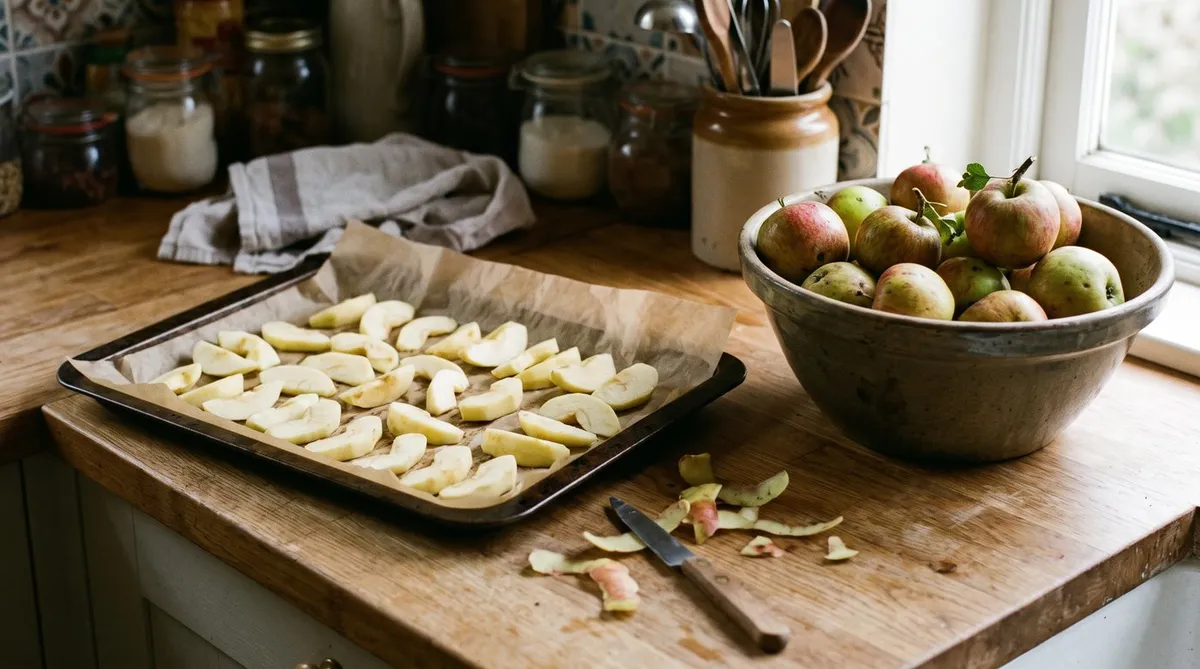
- Open-freeze. Spread the slices on a lined tray so they don’t touch. Freeze for a few hours until firm.
- Bag and label. Tip the frozen slices into freezer bags, squeeze out the air, and write the date on.
Open-freezing stops the slices sticking together, so you can take out just a handful.
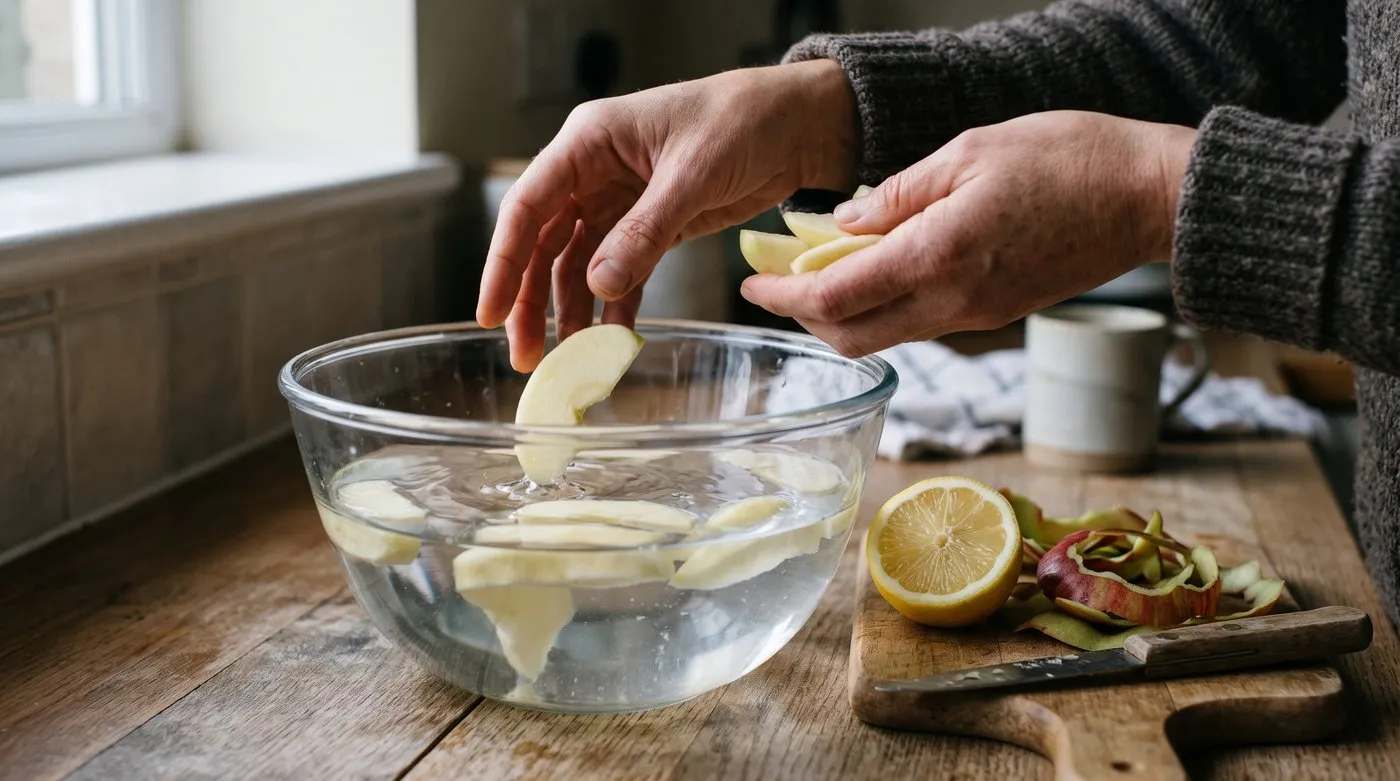
A quick dip in lemony water stops apple slices going brown in the freezer.
Gardener’s tip: Add a sprinkle of sugar and cinnamon to the slices before bagging. They’ll be ready to tip straight into a crumble.
How to freeze stewed apple
Stewed apple is the best way to freeze soft apples, windfalls and big Bramleys.
- Peel, core and chop the apples, cutting out any bruised bits.
- Put them in a pan with a splash of water.
- Add a little sugar if you like, especially for cooking apples.
- Cook gently until soft, stirring now and then.
- Leave to cool completely.
- Spoon into tubs or bags, leaving a little space at the top, then label and freeze.
For a smooth purée, mash or blend it after cooking. It makes great apple sauce or baby food.
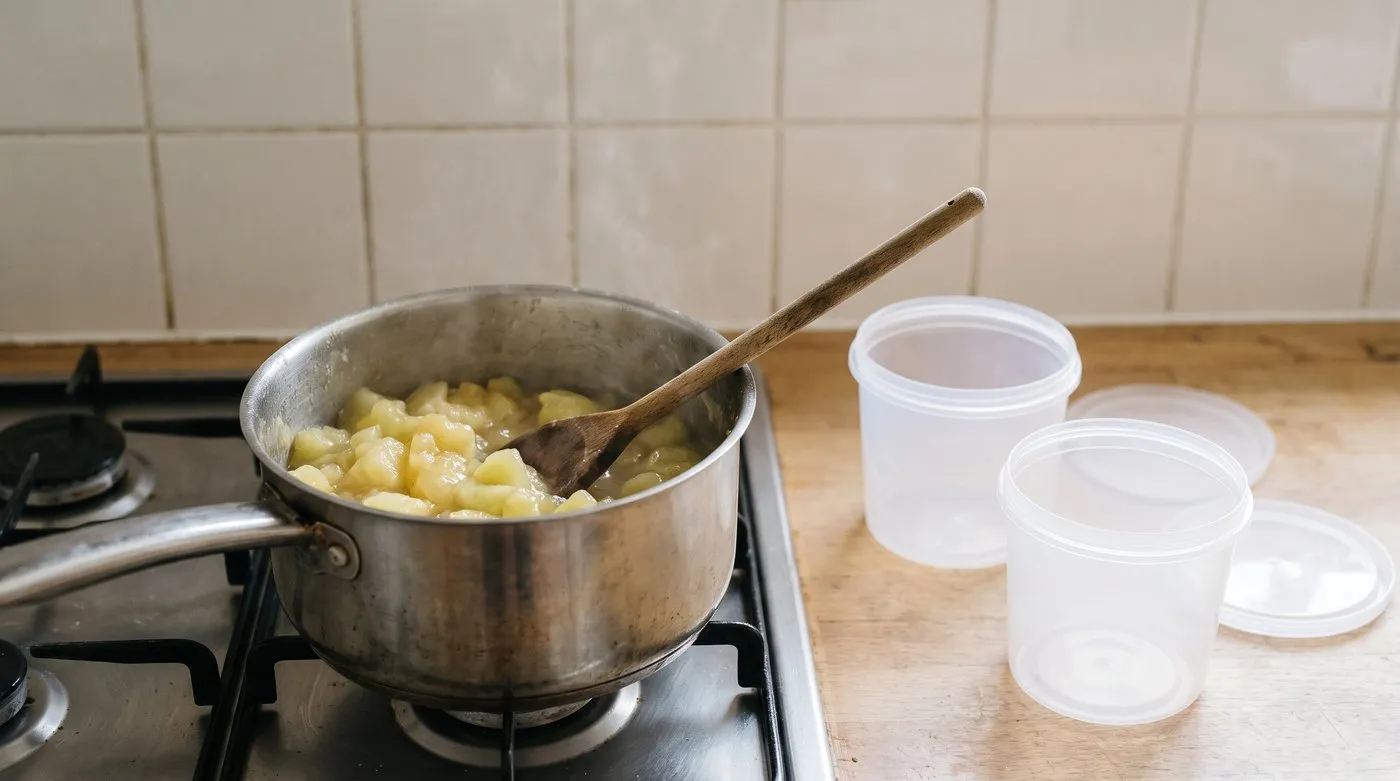
Stewed apple freezes brilliantly and is ready for crumbles in minutes.
Which apples freeze best?
Cooking apples. ‘Bramley’s Seedling’ is the classic. It cooks down to a fluffy purée and freezes perfectly as stewed apple.
Firm eating apples. Varieties such as ‘Cox’s Orange Pippin’, ‘Braeburn’ and ‘Egremont Russet’ hold their shape better as frozen slices.
Soft or early apples. Early varieties like ‘Discovery’ don’t keep long fresh. Stew and freeze them rather than freezing them raw.
Windfalls. Cut out any bruised or damaged parts, then stew and freeze them straight away.
Our guide to the best apple varieties has more on choosing apples for your garden.
Using frozen apples
Crumbles and pies. Tip frozen slices straight in without thawing. Add a few extra minutes to the cooking time.
Stewed apple. Thaw it in the fridge overnight or warm it gently in a pan. Stir it into porridge or yoghurt.
Baking. Use frozen slices in cakes and muffins. Pat off any ice first.
Smoothies. A handful of frozen slices adds sweetness and chill.
Frozen apples go soft when thawed, so they’re not nice to eat raw.
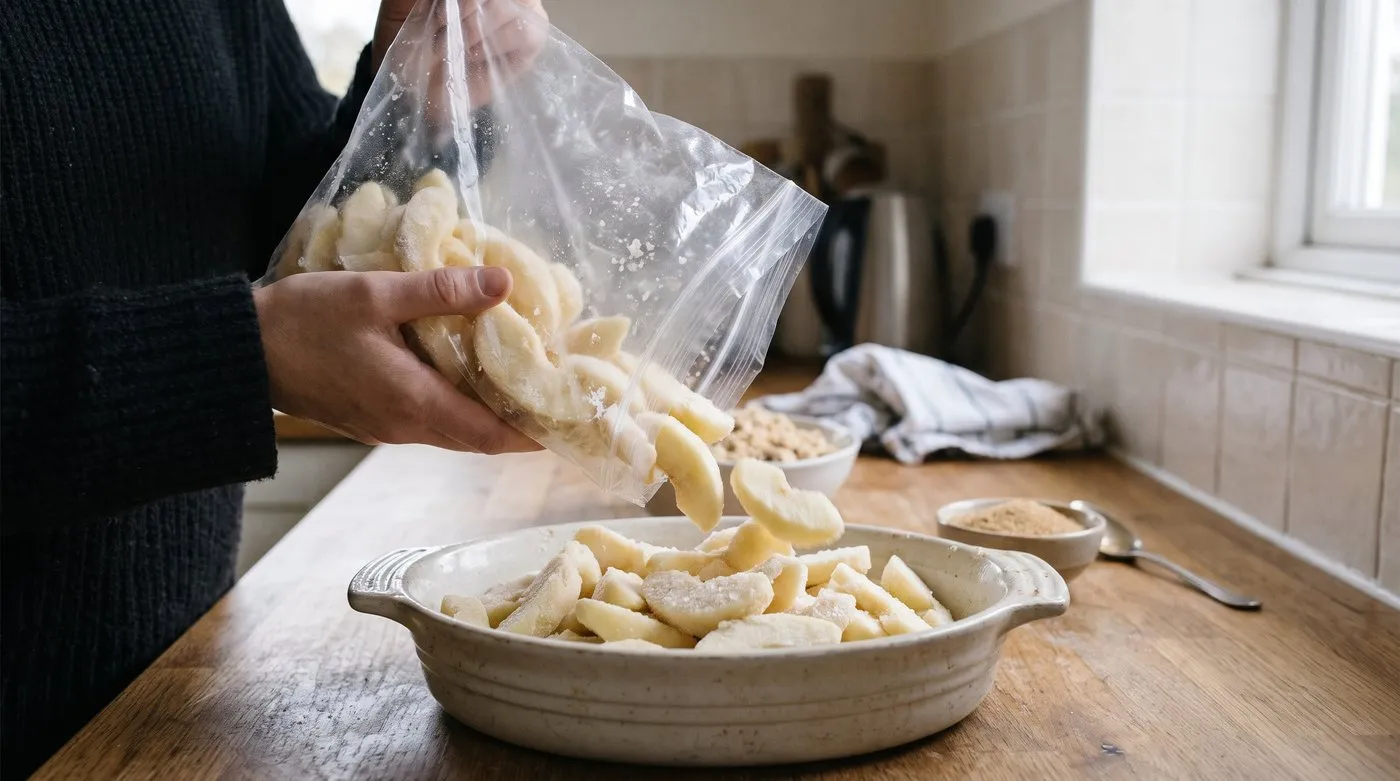
Frozen apple slices go straight into a crumble without thawing.
Other ways to keep your apples
Freezing is just one option. Late apples keep for months stored fresh somewhere cool and dark. Our guide on how to store apples and pears explains how.
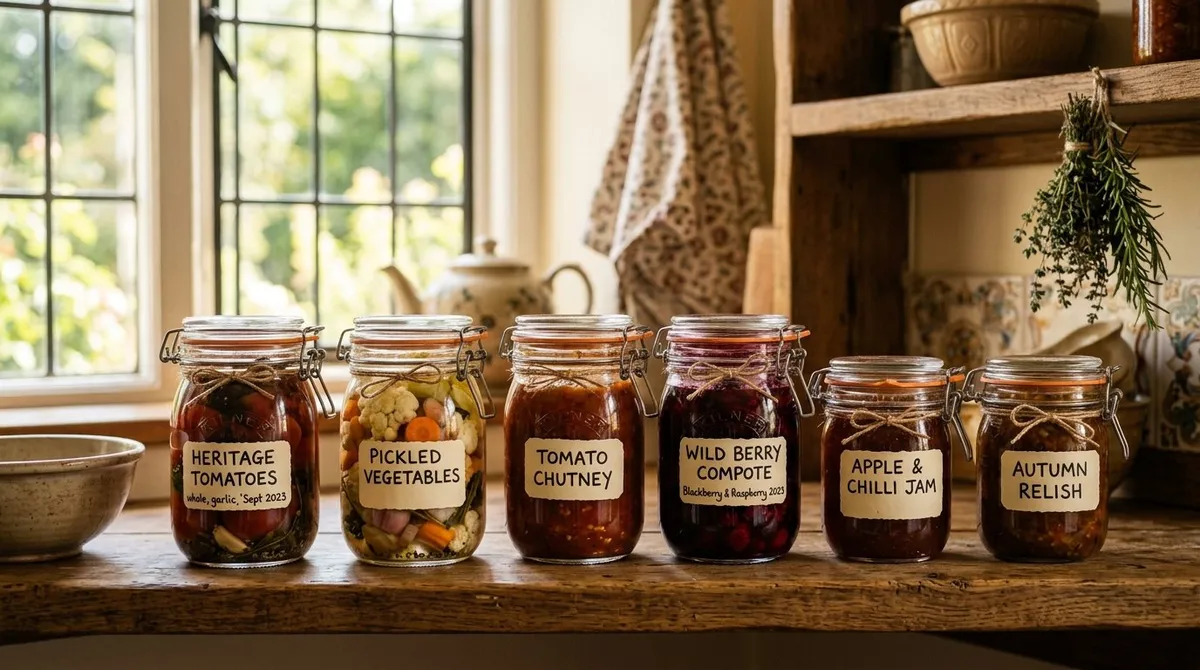
You can also dry apple rings or turn a glut into chutney with our chutney recipes from the garden.
For other fruit, see our full guide to freezing fruit. Short of space? Our guide to choosing a chest or upright freezer may help.
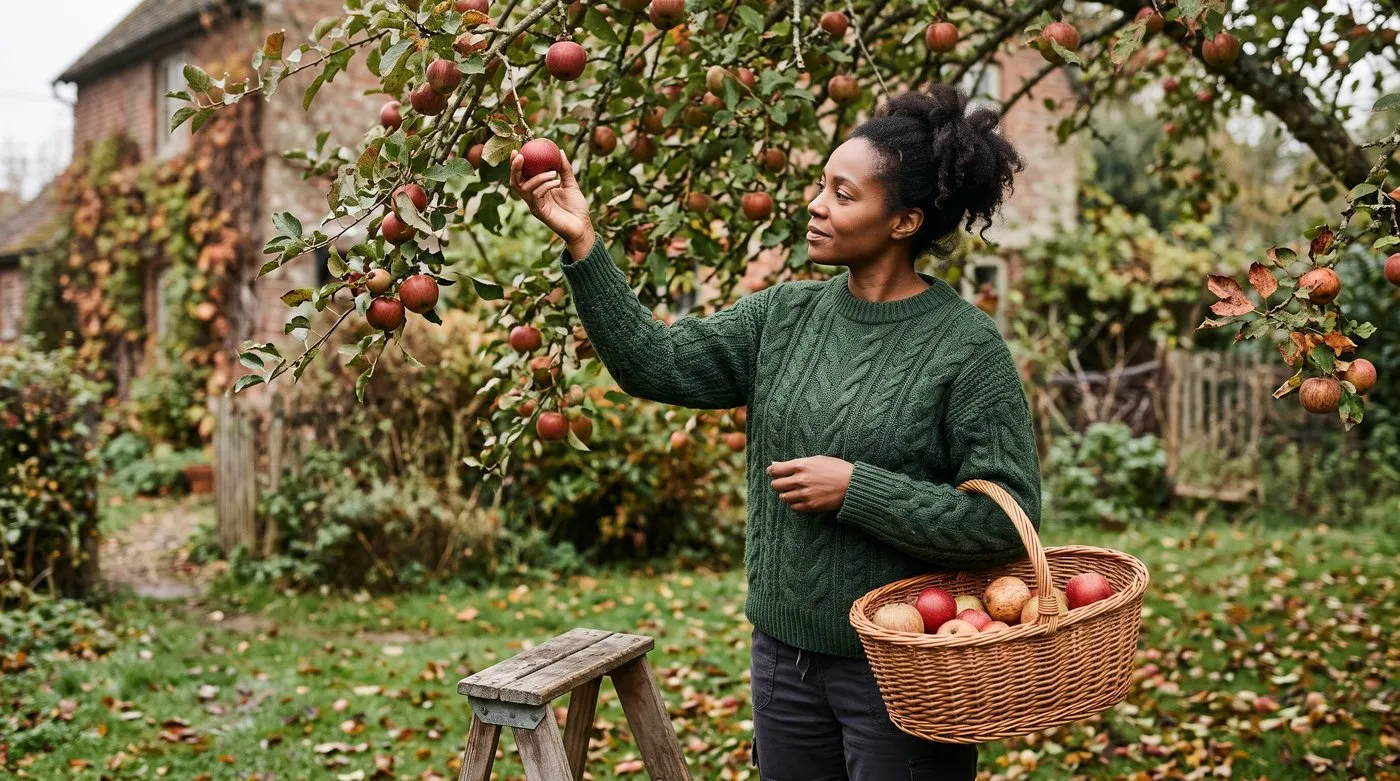
Freeze your best apples soon after picking, while they’re still crisp.
Common mistakes when freezing apples
Skipping the lemon water leaves slices brown and dull.
Bagging slices before open-freezing makes them freeze into one big lump.
Freezing bruised or rotten apples spoils the whole bag.
Forgetting to label bags means you won’t know what’s inside or how old it is.
Packing tubs right to the top can make them split as the purée expands.
Frequently asked questions
Can you freeze apples whole?
You can, but it isn’t the best way. Whole apples go soft and brown when thawed and are hard to peel and core. Slices or stewed apple are much easier to use.
How do you stop frozen apples going brown?
Dip the slices in cold water with a squeeze of lemon juice for a few minutes before freezing. Work quickly, and freeze them as soon as they’re dry.
Do you need to cook apples before freezing?
No, raw slices freeze well for crumbles and pies. Cooking them into stewed apple or purée first gives the best texture, especially for softer eating apples.
How long do frozen apples last?
Use them within about 12 months for the best flavour. They stay safe for longer in a freezer at -18C, but slowly lose taste and texture.
Can you eat frozen apples raw?
Frozen apples go soft when thawed, so they’re not nice to eat raw. Use them in crumbles, pies, sauces, smoothies and baking instead.
Which apples freeze best?
Cooking apples like ‘Bramley’s Seedling’ freeze very well, especially stewed. Firm eating apples hold their shape better than soft ones.
Do you need to thaw frozen apples before cooking?
Not usually. Tip frozen slices straight into a crumble or pie. For stewed apple, thaw it in the fridge overnight or warm it gently in a pan.
So next time you’ve got a glut, get slicing and fill a few bags. You’ll have homegrown apple crumble on the table all winter.
Our team produces practical UK gardening guidance from source research, contributor records and established horticultural practice. Editorial standards are overseen by Matt W.