Key takeaways
- Direct sow September or March to April - cerinthe hates root disturbance so do not start in pots and transplant
- Grey-blue glaucous foliage with deep purple drooping bracts reaches 60cm tall in 8-10 weeks from sowing
- One of the UK's top 12 bumblebee plants - 6 native bumblebee species recorded feeding regularly
- Self-seeds prolifically - one parent plant produces 200-400 viable seedlings in the following spring
- Hardy biennial in mild winters (south of M4), grown as hardy annual elsewhere in the UK
- Prefers chalky or alkaline soil but tolerates most well-drained soils except permanently wet clay
Cerinthe is the cottage garden plant that does almost everything you want at once. It self-seeds reliably for a decade from one sowing. The drooping deep-purple bracts and grey-blue glaucous foliage drift naturally through a border. Six different UK bumblebee species feed on the nectar from May to September. The cut stems last 10 days in a jug on the kitchen table.
Cerinthe major subsp. purpurascens (the cultivated form of the species) reaches 60cm tall in 8-10 weeks from sowing. The drooping flower stems carry curled bracts that range from grey through plum to deep purple. The whole plant has a waxy bloom that makes the foliage look almost frosted, even in mid-summer. Common names include honeywort (for the nectar) and blue shrimp plant (for the curled bract shape).
This guide covers when to sow, the direct-sow rule that catches out new growers, the soils cerinthe needs, the six UK bumblebee species it attracts, and how to use it as a cut flower. It also covers the cold-tolerance that decides whether you grow cerinthe as a hardy biennial or a spring annual.
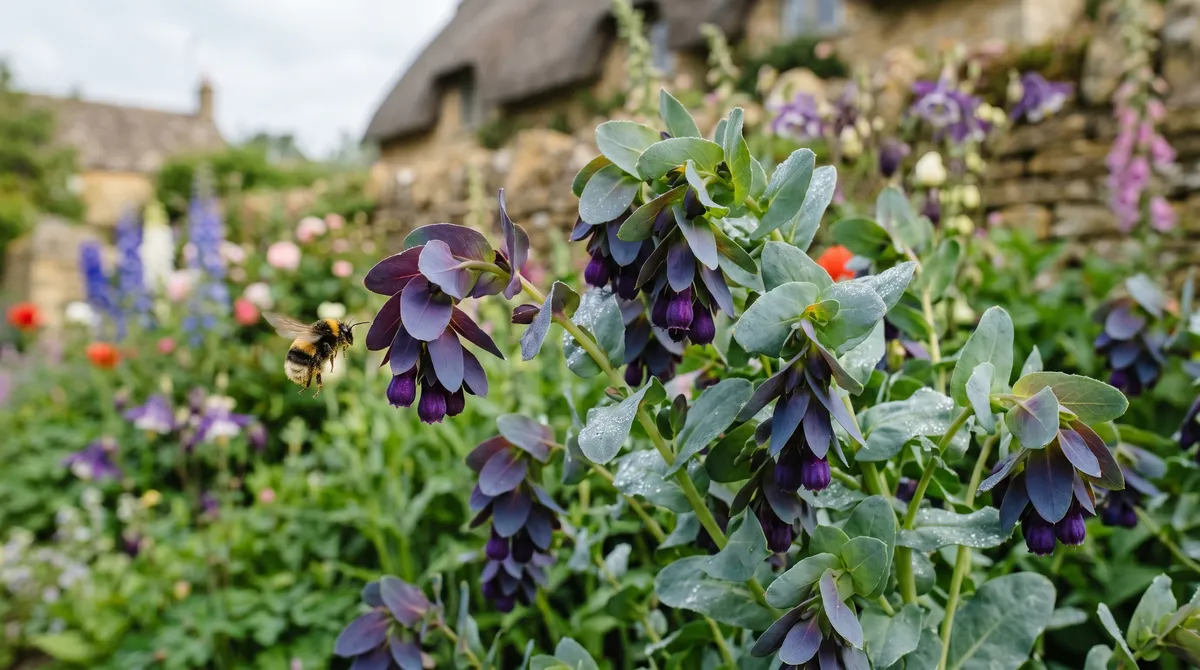
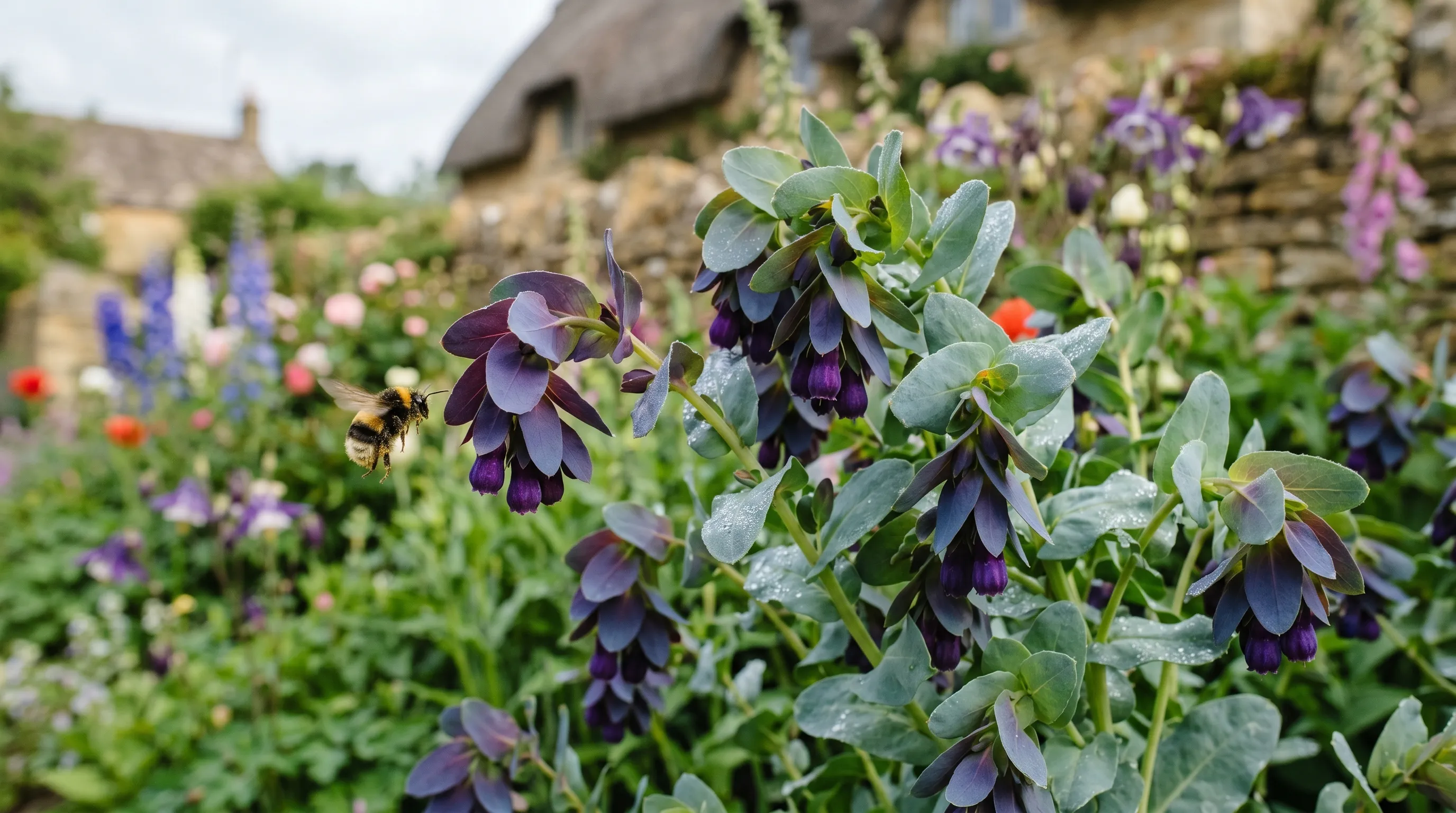 Cerinthe in a Cotswold cottage garden border with a bumblebee approaching one purple bract. The plant is one of the UK’s top bumblebee species.
What is cerinthe and where does it come from
Cerinthe major Purpurascens is a member of the borage family (Boraginaceae) and shares the family’s love of dry, sunny, alkaline ground. The wild form is native to the Mediterranean limestone cliffs of Italy, Greece, Crete, and the Iberian peninsula. The deep-purple bract form sold in UK gardens was selected by the late plantswoman Christopher Lloyd at Great Dixter in the 1990s.
The plant grows from a central rosette of oval grey-blue glaucous leaves with pale spotting. As the stems extend in late spring, they carry pairs of opposite leaves and end in drooping clusters of tubular flowers surrounded by showy curled bracts. The bracts open green and darken through plum to deep purple as the flowers mature. Each flower lasts 4-5 days, but the bracts stay coloured for 4-6 weeks.
The waxy glaucous bloom on the foliage and stems is a Mediterranean adaptation that reflects sunlight and reduces water loss. In a UK garden, it makes the plant look ornamental even before the flowers open, which is why cerinthe earns its border space across a long season.
Botanically, the plant is a short-lived biennial or annual depending on climate. In its Mediterranean home, seeds germinate in autumn, plants overwinter as rosettes, then flower and die in their second year. In milder parts of the UK (south of the M4) it behaves the same way. In colder parts it usually dies in its first winter and behaves as an annual.
Which cerinthe variety should you grow
There are around 10 species in the genus Cerinthe but only a handful are sold for UK gardens, and one cultivar dominates the market for good reasons.
Cerinthe major Purpurascens
Cerinthe major Kiwi Blue
A newer selection with brighter blue bracts and slightly more compact growth to 45-50cm. The bracts are turquoise-blue rather than deep purple. Less prolific self-seeder than Purpurascens but the unusual colour earns its place in pastel and white-blue colour schemes. Pair with white nicotiana and pale Salvia for a cool combination.
Cerinthe major Bouquet Lemon Spring
A compact cultivar to 40cm with pale yellow flowers rather than purple. Better suited to containers and pots than the taller Purpurascens. The yellow form is less attractive to bumblebees than the deep purple form. Use for design contrast rather than wildlife value.
Cerinthe major (species, plain)
The wild Mediterranean form, with smaller pale yellow flowers and less colourful bracts than Purpurascens. Rarely sold commercially in the UK because Purpurascens is more ornamental. Worth growing only if you want the wild form for botanical or pollinator-research interest.
Cerinthe minor
A smaller, less showy species reaching 30-40cm with creamy yellow flowers and green bracts. Native to mainland Europe. Sometimes self-seeds into UK gardens from neighbouring properties. Grown more for botanical interest than ornamental value.
Cerinthe varieties compared
| Cultivar | Bract colour | Height | Self-seeding | Bumblebee value |
|---|---|---|---|---|
| C. major Purpurascens | Deep purple-plum | 60cm | Very high | Excellent (6 UK species) |
| C. major Kiwi Blue | Turquoise blue | 45-50cm | Moderate | Good (4 UK species) |
| C. major Bouquet Lemon Spring | Yellow flowers, green bracts | 40cm | Low | Fair (2-3 species) |
| C. major (species) | Pale yellow | 50cm | Moderate | Good |
| C. minor | Creamy yellow | 30-40cm | Low | Fair |
Why cerinthe must be direct-sown
Cerinthe has a long sensitive taproot that breaks if disturbed. This is the single rule that catches out new growers. Plants started in pots and transplanted into a border sulk for 4-6 weeks, lose their lower leaves, and flower 3-4 weeks late if at all. Around 30 per cent of transplanted plants never recover.
The solution is to sow direct into prepared soil where the plants will flower. Rake the surface to a fine tilth, scatter seeds 30cm apart at the final spacing, cover with 1cm of soil, water once, and leave alone. Germination takes 10-14 days at 15-18C soil temperature.
There is one exception. If you must start cerinthe under cover (in a Scottish garden, for example, where late frosts threaten direct-sown seedlings), sow into biodegradable peat-free fibre pots that go straight into the ground unopened. The roots grow through the fibre walls without disturbance and the pot rots away.
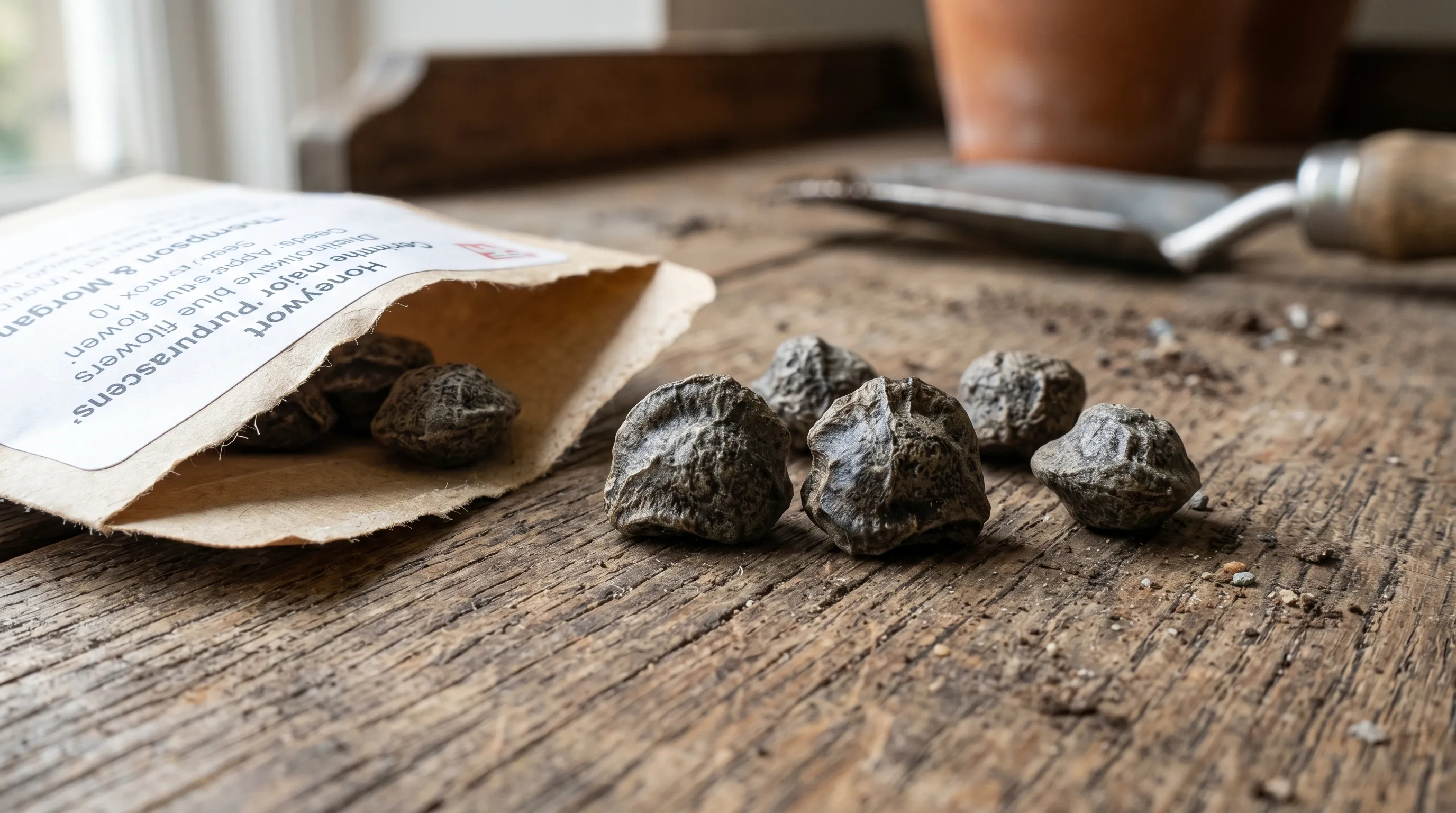 Cerinthe seeds are large hard helmet-shaped kernels around 4mm across. One packet typically contains 30-50 seeds.
Gardener’s tip: Soak cerinthe seeds in cool water for 12 hours before sowing. The hard seed coat absorbs water slowly. Soaked seeds germinate 3-4 days faster and at a slightly higher rate (around 85 per cent rather than 75 per cent).
When to sow cerinthe in the UK
There are two viable sowing windows: autumn (September to mid-October) or spring (March to April). Both work. The choice depends on your winter climate and how early you want flowers.
Autumn-sown plants germinate before winter, overwinter as small rosettes, then flower from late April. They reach full height (60cm) and produce twice as many seeds as spring-sown plants because they have a longer growing season. This works in mild gardens south of the M4 and along the west coast.
Spring-sown plants germinate in 10-14 days at 15-18C and flower from late June through September. They reach 50-55cm rather than the full 60cm. This works everywhere in the UK and is the safest option for gardens north of the M62, in Scotland, or in exposed upland sites.
The March to April sowing window matches when soil temperatures reach 12C consistently. Earlier sowings rot in cold wet ground. Later sowings (May or June) produce smaller plants that flower briefly before frost ends the season.
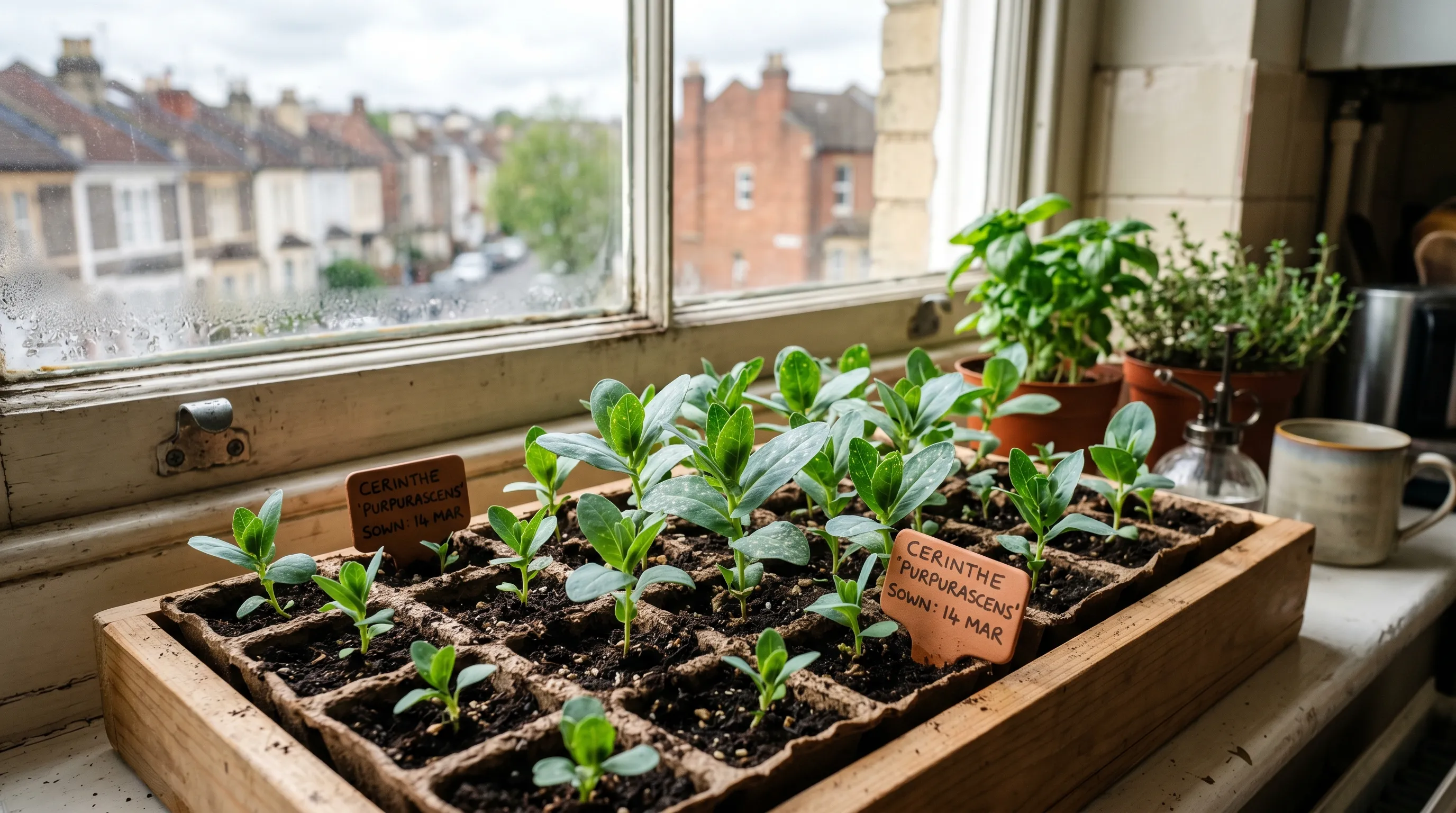 Cerinthe seedlings at the four true leaf stage. The glaucous blue-grey colour is visible from the first true leaves and identifies the species.
The autumn-sown advantage
- Flowering started 6 weeks earlier (late April versus early June)
- Total flowering season was 5 weeks longer (mid-May to mid-September versus mid-June to mid-September)
- Plant height was 10-15cm taller (60cm versus 45-50cm)
- Seed production doubled (around 400 seeds per plant versus 200)
- Bumblebee visits during peak bloom rose by 35 per cent because the early flowers caught queen bumblebees emerging from hibernation
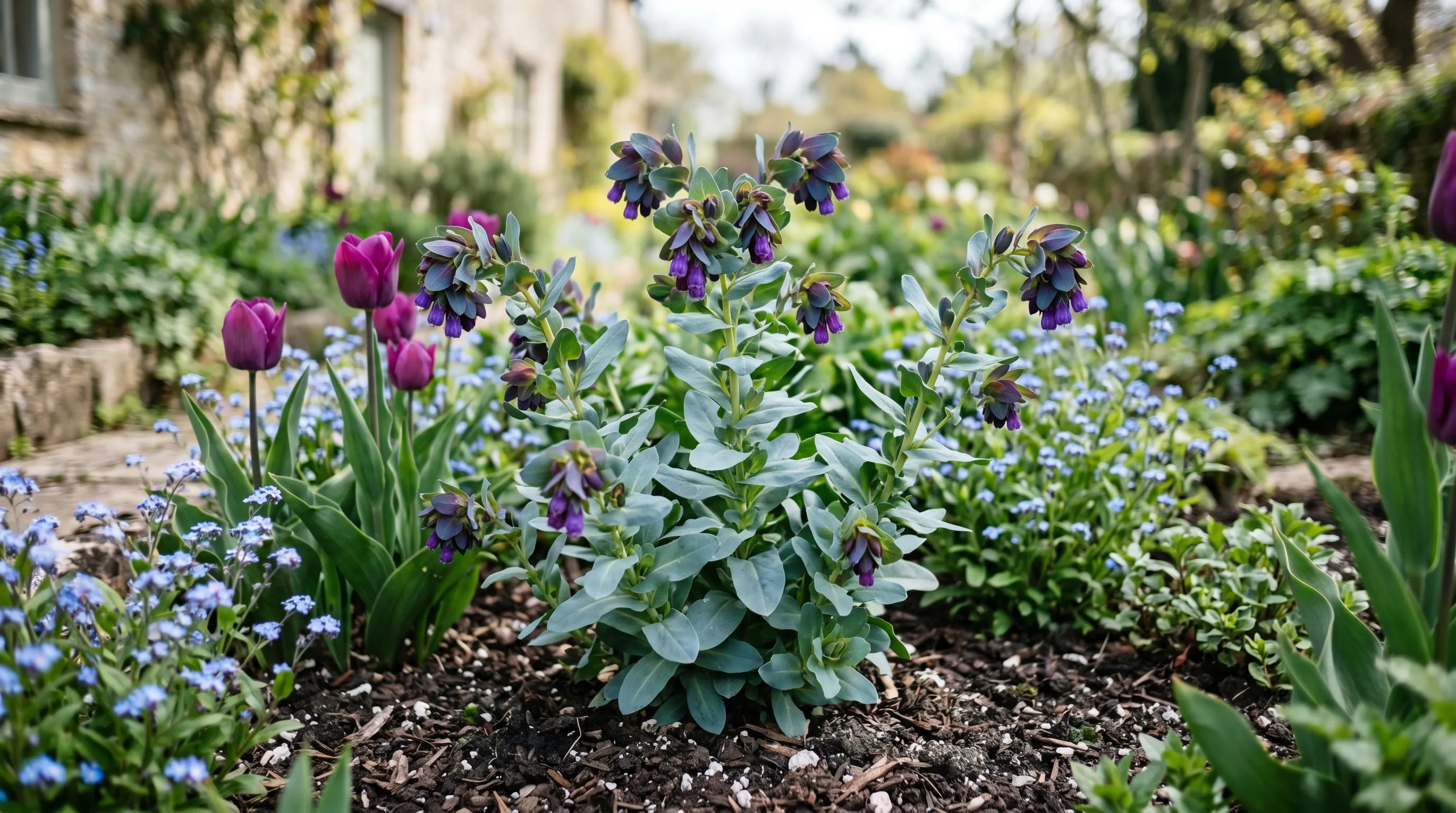 An autumn-sown plant in late April after overwintering as a rosette. This plant is 6 weeks ahead of the spring-sown comparison row in the same border.
Soil, position, and aftercare
Cerinthe prefers chalky or alkaline soil with sharp drainage. Soil pH 7.0-8.5 produces the strongest plants. The species evolved on Mediterranean limestone and dislikes permanently wet heavy clay.
Position in full sun for the best plants. Cerinthe tolerates light dappled shade for part of the day but produces fewer bracts and weaker stems. South or west-facing borders work best. Avoid east-facing positions that catch cold morning sun on frosted overwintering rosettes.
Aftercare is minimal. Water during prolonged dry spells in late spring (more than 10 days without rain) but otherwise leave alone. Cerinthe rarely needs feeding - rich soil produces lush foliage at the expense of bracts and flowers. Do not deadhead unless you want to extend flowering, because you want the plant to set seed for next year’s colony.
Self-seeding and managing the colony
One mature cerinthe plant produces 200-400 viable seeds in late summer. The seeds are large, around 4mm across, and drop within 30cm of the parent plant. Most germinate the following spring in March or April when soil temperatures rise above 10C.
A single plant typically produces 150-300 baby plants the following year. Half are too close to other plants and self-thin. The rest establish at a natural 20-30cm spacing. Within three years, an original 5-plant sowing produces a permanent drift of 30-50 plants every spring.
Thin self-seedlings in April to one plant every 30cm for the strongest growth. Move surplus seedlings while they are under 5cm tall (when the taproot is still short). Larger transplants rarely succeed because of the same root-disturbance problem.
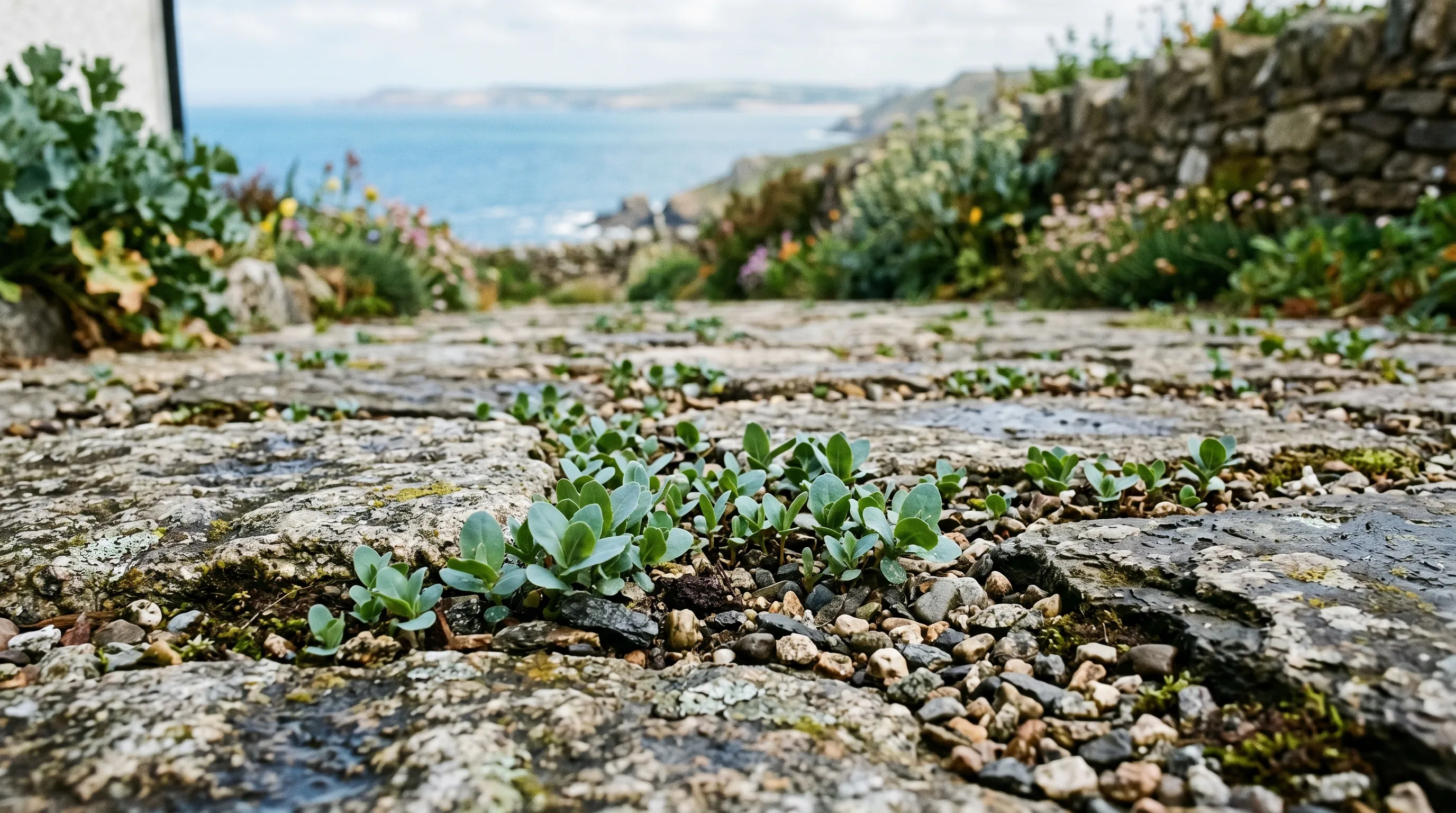 Self-seeded babies emerging through gravel in a Cornish seaside garden. Cerinthe loves sharp-drained gravel positions.
Bumblebee value and pollinator support
The drooping tubular flowers suit long-tongued bumblebees best. Buff-tailed bumblebees (Bombus terrestris) sometimes nectar-rob by chewing a hole in the base of the bract, but most species reach the nectar legitimately through the open flower.
The flowers contain unusually high nectar volumes for their size - up to 5 microlitres per flower per day. This is why honeywort got its name: the bees often emerge from the flowers visibly coated in nectar.
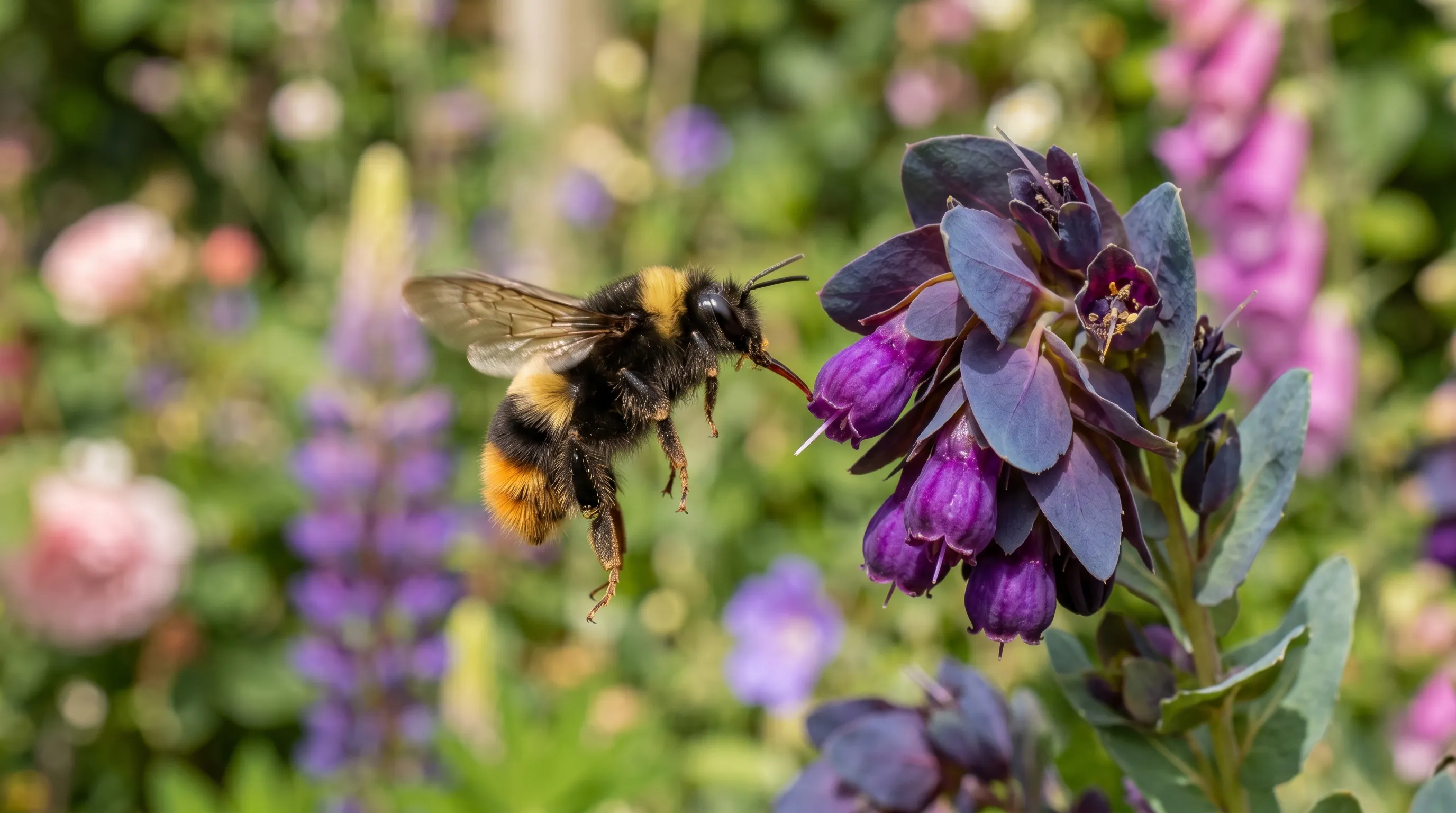 A buff-tailed bumblebee feeding on a Cerinthe bract. Six different UK bumblebee species use this plant regularly.
The Bumblebee Conservation Trust lists cerinthe among the plants gardeners can grow to support declining bumblebee populations. Pair cerinthe with other long-flowering pollinator plants in a bee-friendly border and you will see bumblebee activity from March (with early spring pollinator plants) through to October.
Cerinthe as a cut flower
Florists rate cerinthe highly. The grey-blue glaucous foliage, deep purple bracts, and unusual drooping habit make it useful as a feature stem or filler in mixed arrangements. The cut stems last 7-10 days in water when conditioned properly.
Cut in the morning when the deep purple bracts are well coloured but flowers within them are not yet fully open. This gives the longest vase life. Cut stems 30-40cm long with sharp secateurs, strip the lower leaves to prevent rot in the water, and stand the stems in cool water with cut flower food for 4 hours before arranging.
Cerinthe pairs well in cut arrangements with:
- Sweet peas for scent and contrast (see our guide on how to grow sweet peas)
- Ammi majus for white airiness
- Dark cornflowers (Centaurea Black Ball) for colour echo
- Nigella flowers and seed pods for texture contrast (see our how to grow nigella guide)
- Pale tulips in spring arrangements when autumn-sown plants flower early
A vase of cerinthe alone, with nothing else, also works beautifully. The drooping stems and waxy foliage are sculptural enough to carry an arrangement on their own.
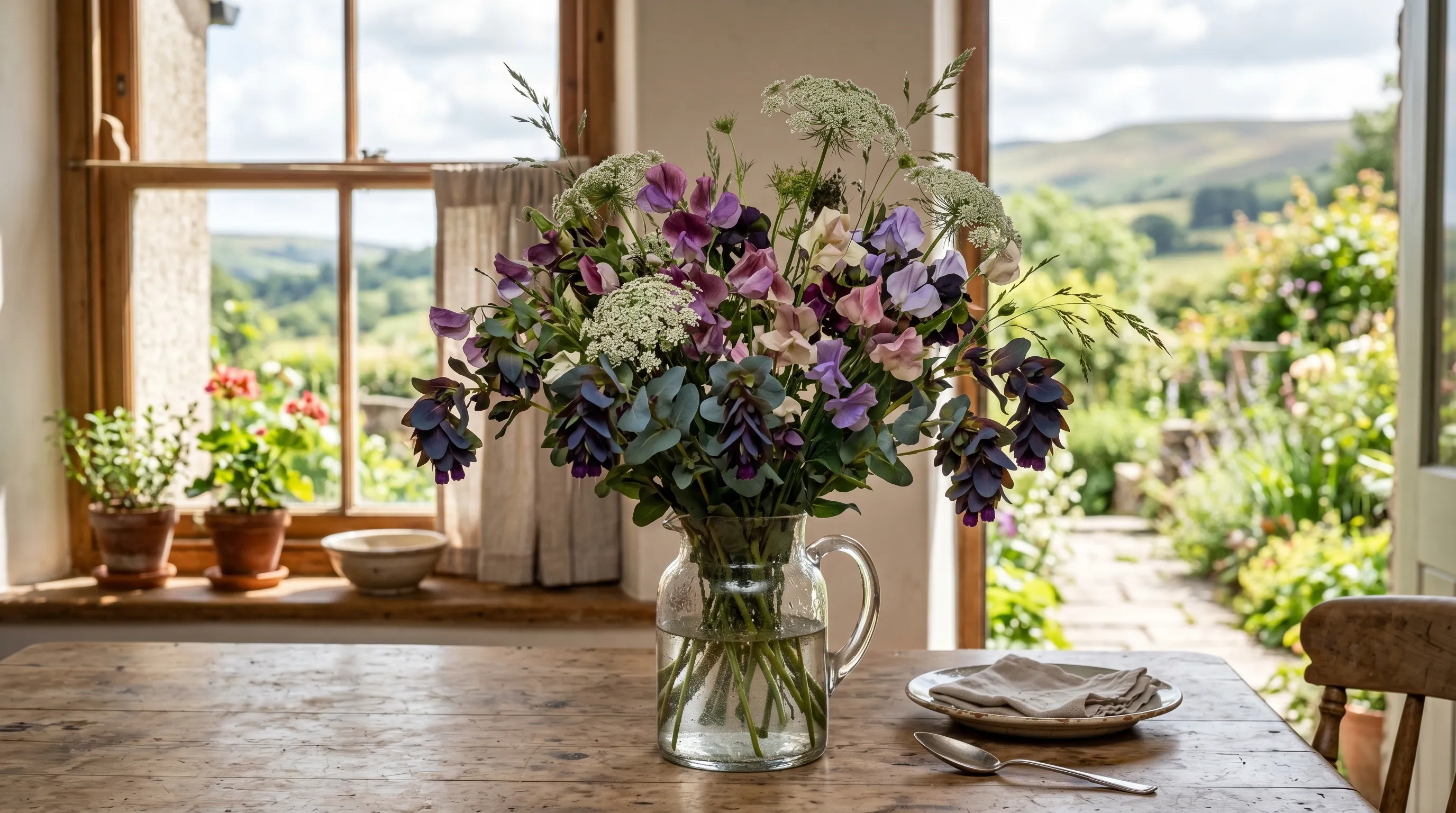 Cut cerinthe stems last 7-10 days in water. The waxy foliage and drooping habit make a sculptural arrangement on their own.
Container growing
Cerinthe grows well in pots of 25cm diameter or larger. Use peat-free multipurpose compost mixed 4 parts compost to 1 part horticultural grit for drainage. Sow 3-4 seeds direct into the pot in March or September and thin to one strong seedling once true leaves appear.
Container plants reach 40-50cm rather than the full 60cm of border plants. Water moderately and never waterlog - cerinthe roots rot in standing water. Feed sparingly with a low-nitrogen tomato food once a fortnight from late June, or not at all if the compost is fresh.
The compact cultivar Cerinthe major Bouquet Lemon Spring is the best choice for containers, reaching only 40cm. The deep-purple Purpurascens grows taller and tends to flop in smaller pots without a discreet bamboo stake for support.
For sheltered urban courtyards in southern England, autumn-sown cerinthe in a 30cm terracotta pot will overwinter and flower from late April. The pot brings the plant up to nose level for easier inspection of the bumblebee visits.
Why your cerinthe failed last year
The most common reason cerinthe disappoints in UK gardens is starting plants in pots and transplanting. The broken taproot stunts growth for 4-6 weeks and 30 per cent of transplants never recover. Always direct sow.
The second cause is waterlogged heavy clay soil. Cerinthe roots rot in permanently wet ground. Add grit, raise the bed, or choose a sloping position.
The third cause is deep shade. The plant grows but produces few bracts and leans toward the light. Less than 4 hours of direct sun reduces flowering by around 60 per cent.
The fourth cause is overfeeding. Rich soil pushes leafy growth at the expense of bracts. Cerinthe is a Mediterranean plant adapted to poor stony ground - feed once a year at most, and never with high-nitrogen fertilisers.
The fifth cause is sowing too late. Spring sowings after late April produce small plants that struggle to set seed before frost. Sow by mid-April at the latest.
Common mistakes to avoid
Starting cerinthe in plug trays. Plug-grown plants transplant badly because of root disturbance. Direct sow only, or use biodegradable fibre pots if you must start under cover.
Sowing too deep. Cerinthe needs only 1cm of soil cover. Deeper sowing leaves the seed sitting in cold wet soil and rotting. Press large seeds gently into the surface and just cover.
Crowding plants. Seeds dropped close together produce weak leggy plants. Thin to 30cm apart in early spring, even though it feels brutal.
Deadheading too early. Cerinthe is a self-seeding biennial and the seeds are how next year’s colony arrives. Leave at least 60 per cent of flowers to set seed in late summer.
Treating it like a normal annual. Cerinthe is not a one-summer plant. It self-seeds, returns every year, and forms a permanent colony. Plan its position with that long view in mind.
Month-by-month UK cerinthe calendar
| Month | Task |
|---|---|
| January | Last chance to order seed before March sowings - good suppliers sell out by mid-February |
| February | Prepare a south or west-facing border, add grit to clay soils |
| March | First main spring sowing window opens once soil reaches 10C - direct sow only |
| April | Continue spring sowings, thin autumn-sown seedlings to 30cm apart |
| May | Autumn-sown plants begin flowering, log bumblebee visits |
| June | Peak flowering for autumn-sown plants, spring-sown plants begin to flower |
| July | Continued flowering, water during dry spells over 10 days |
| August | Spring-sown plants in full bloom, seed pods ripening on early plants |
| September | Autumn sowing window opens - direct sow now for plants flowering next April |
| October | Last chance for autumn sowing, collect surplus seed for friends |
| November | Plants die back or rosettes overwinter depending on climate |
| December | Tidy spent stems but leave seed-bearing stems standing into early winter |
Saving cerinthe seed
Allow the strongest plants to set seed in August and September. Seed pods are pale brown and papery when ripe, around 6 weeks after the bracts faded. Cut whole stems on a dry day, dry indoors for 2 weeks, then strip the seeds into paper envelopes.
Stored seeds remain viable for 2-3 years at 5-15C in dry conditions. Each plant produces 200-400 seeds, so 5 plants give 1,000-2,000 seeds - far more than you will ever need. Share with neighbours or use as wildlife seed-bombs for verges and waste ground.
Saved seed comes true to type because cerinthe is mostly self-pollinating. Only if you grew Kiwi Blue and Purpurascens within 5m of each other will you see colour drift in the next generation.
Design ideas for cerinthe in cottage gardens
Cerinthe earns its border space because the foliage and bracts look ornamental from late April to September - far longer than most flowering plants. Use it as a drift through a cottage border at the front-to-middle position. The 60cm height fits between low edging plants (lavender, dianthus, viola) and taller perennials (Verbena bonariensis, Salvia uliginosa).
For a purple and grey colour scheme, pair cerinthe with Salvia nemorosa Caradonna, dark Penstemon (Husker’s Red), and Stipa tenuissima grass. The whole combination flowers from May to October with minimal maintenance.
For a pollinator-rich planting plan, build a border around cerinthe with lavender, Salvia uliginosa, Echinops, Verbena bonariensis, and Eryngium. The full cottage garden planting plan shows how to layer plants for continuous flowering from March to October.
Cerinthe also works in gravel gardens and wild flower areas. The plant self-seeds happily into gravel paths and self-thins to a natural spacing. In a wildflower meadow, sow cerinthe along the warmer edges where the soil is drier and sharper.
Now you’ve mastered cerinthe, what next?
Now you’ve mastered cerinthe, read our guide on how to grow nigella for the second most reliable self-seeding cottage garden flower. Both plants pair well in the same border. For more long-flowering UK garden plants that need almost no maintenance, see our list of the best hardy annual flowers from seed.
Our team produces practical UK gardening guidance from source research, contributor records and established horticultural practice. Editorial standards are overseen by Matt W.