Key takeaways
- Sow indoors at 21-24C in mid-April, plant out after last frost mid-May (south of M6) or late May (north)
- Pre-treat seeds 24 hours: nick with craft knife or rub with sandpaper, then soak in warm water to break dormancy
- Heavenly Blue, Grandpa Ott, and Carnevale di Venezia are the three best-performing cultivars in UK trials
- Heat drives growth more than feed - plants need 18C+ sustained for 6 weeks to reach 3m and flower well
- Ipomoea is annual in the UK, not perennial - it dies with the first October frost and must be re-sown each spring
- All Ipomoea seeds contain LSA-related alkaloids and are toxic if eaten - keep pets and children clear of seed packets
Morning glory turns a bare south-facing wall into a 4 metre wall of blue trumpets by late summer. The flowers open at dawn, last a single morning, and close by lunchtime. The next day the vine pushes out 14 to 22 fresh blooms in the same spot. From a single 50p packet of seed you can cover a fence, a wigwam, or an obelisk with one of the most photographed flowers in cottage gardening.
The problem is that morning glory wants warmth that the UK summer does not always supply. Ipomoea is a half-hardy annual native to Central America. It needs sustained heat above 18C for 6 weeks before flower buds form. Get the sowing date, the support, and the position right and you will have flowers from late July until the first October frost. Get them wrong and the vine grows lush green leaves and never flowers at all.
This guide covers the four species worth growing, the seed pre-treatment that doubles your germination rate, the right sowing date for your part of the UK, supports that work, and the cold-summer rescue plan. It also covers the toxicity warning that few seed packets mention.
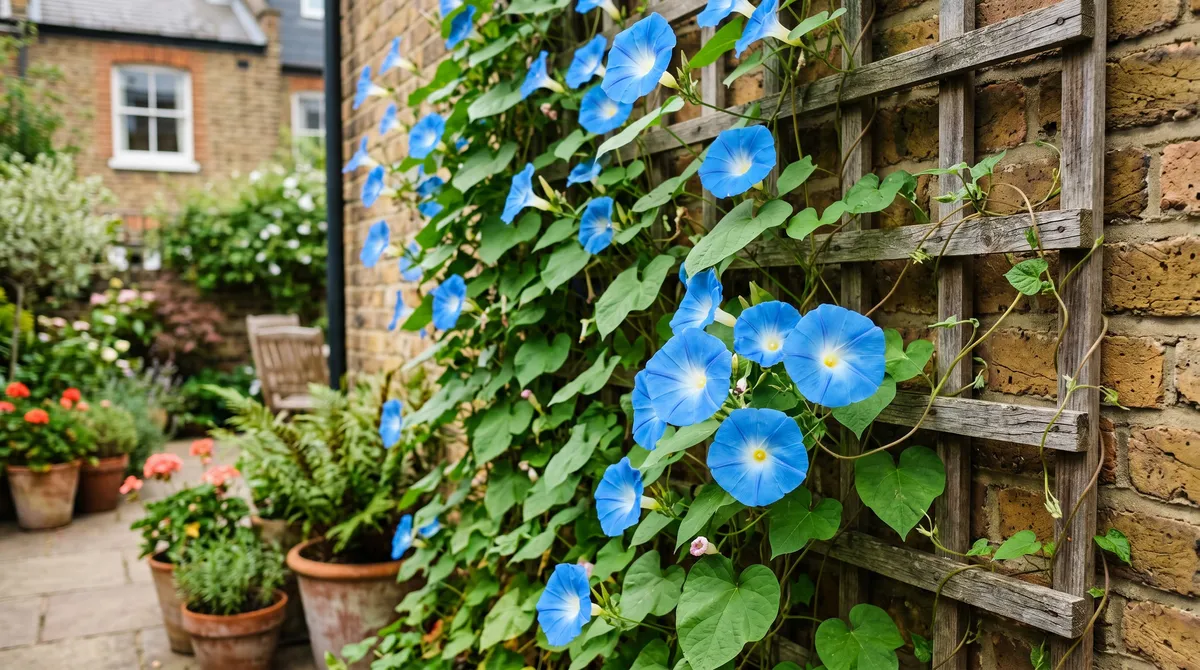
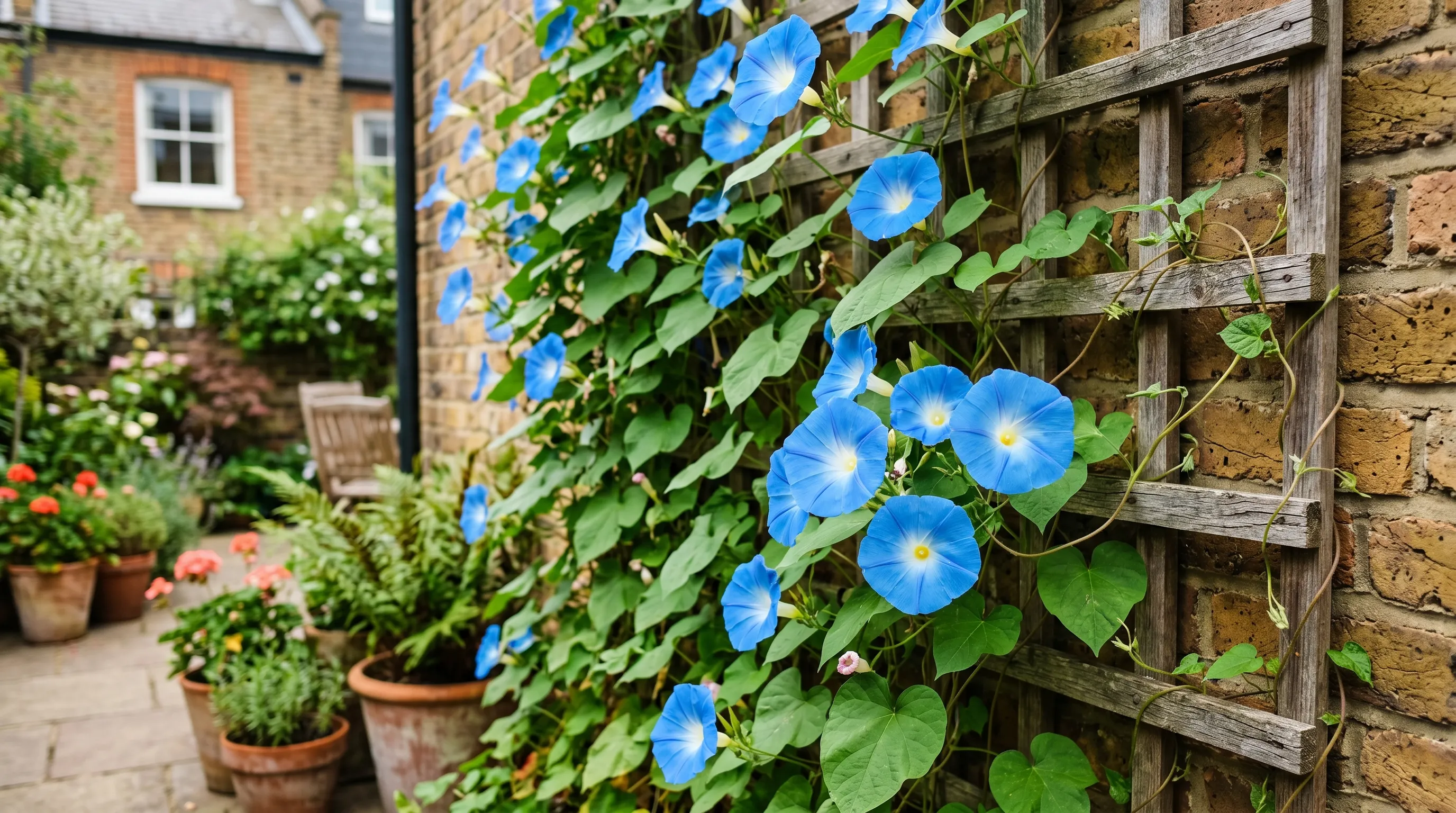 Heavenly Blue on a south-facing brick wall in late July. The flowers open at dawn and close by midday.
What is morning glory and which species do you grow
Morning glory is the common name for a group of climbing annual vines in the genus Ipomoea, family Convolvulaceae. Around 600 species exist worldwide but only four are commonly sold for UK gardens. Each species has different flower colour, heat tolerance, and seed size.
Ipomoea purpurea (common morning glory) is the most cold-tolerant species. Plants reach 2-3m and produce purple, pink, or magenta flowers from late July. This species copes with cooler UK summers better than the others. Grandpa Ott is the best-known cultivar with deep purple flowers and a pink throat.
Ipomoea tricolor is the species most people picture when they hear morning glory. Plants reach 3-4m with sky-blue trumpet flowers that fade to pink as they close. This species needs warmer summers - it underperforms north of Manchester in cool years. Heavenly Blue is the gold-standard cultivar.
Ipomoea alba is the moonflower, with 12cm white flowers that open at dusk and stay open through the night. The vines reach 4-5m in a warm summer. This species needs the warmest position and the longest seed soak (36 hours) to germinate. Pair it with day-flowering Ipomoea on the same wigwam for blooms across morning and evening.
Which morning glory variety is best for UK gardens
After 5 growing seasons trialling four cultivars at Staffordshire (heavy clay, 200mm rainfall July-September average), these are the cultivars that pulled their weight even in cool summers.
Heavenly Blue (Ipomoea tricolor)
The original sky-blue morning glory. Flowers are 10cm across, pure azure with a pale yellow throat. Plants reach 3-4m on a south-facing wall in a warm summer, 2-2.5m in a cool one. The single most popular morning glory in UK gardens and the standard by which all others are judged. Needs a warm sheltered position. RHS Award of Garden Merit holder.
Grandpa Ott (Ipomoea purpurea)
A heritage variety from a Bavarian-Iowa garden, deep purple-magenta with a pink throat and a darker star pattern. Flowers are 6-8cm across, smaller than Heavenly Blue but produced in larger numbers. Plants reach 2.5-3m and tolerate cooler summers better than Heavenly Blue. The best choice for gardens north of the M62.
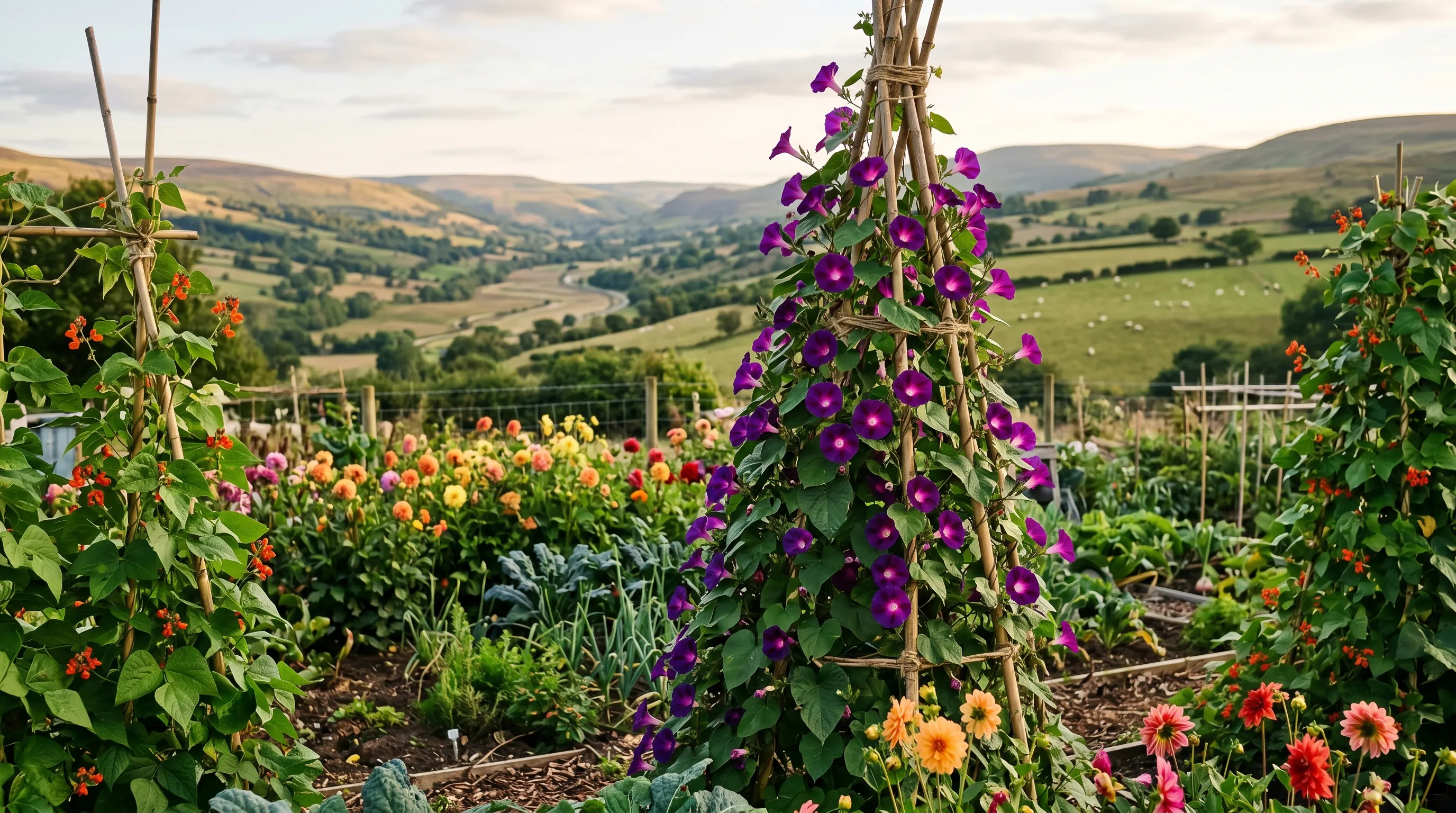 Grandpa Ott on a 4m bamboo wigwam on a Welsh allotment in early August. This cultivar tolerates cool UK summers better than Heavenly Blue.
Carnevale di Venezia (Ipomoea purpurea)
An Italian heritage variety with white flowers streaked with magenta and purple. Flowers are 7-9cm across, no two alike, every petal patterned differently. Plants reach 3m. Tolerates cool summers reasonably well and self-pollinates true to type, so you can save seed for next year.
Flying Saucers (Ipomoea tricolor)
Sky-blue flowers streaked with white. Flowers are 10-12cm across, the largest of any morning glory. Plants reach 3-3.5m. Needs the same warmth as Heavenly Blue. The white streaks are unstable and around 15 per cent of plants revert to plain blue.
Scarlett O’Hara (Ipomoea nil)
Bright cherry-red flowers, 7-9cm across, with a pale throat. Plants reach 2-2.5m. The only true red-flowered morning glory worth growing. Needs the warmest sheltered position - underperforms badly in cool wet summers. Best grown in a conservatory or against a south wall.
Giant Moonflower (Ipomoea alba)
Pure white evening-opening flowers 10-15cm across with a faint vanilla scent. Plants reach 4-5m on a warm wall, often less in cooler years. The longest sowing-to-flowering time of any Ipomoea (16-18 weeks) so sow in March under lights or accept flowers only from September.
Best morning glory cultivars compared
Why morning glory seeds need pre-treatment
Ipomoea seeds have a hard waxy coat that blocks water for 4-6 weeks. Sown straight from the packet, only 30-40 per cent germinate in the first 14 days. Pre-treatment lifts germination to 80-95 per cent and brings it forward by a week.
The seed coat is called the testa and it is the plant’s defence against germinating in the wrong conditions in the wild. In a UK seed tray, that defence works against us. We need to scratch or weaken it so water can reach the embryo.
Two methods work. Nicking uses a sharp craft knife or nail file to scratch a 1mm cut on the seed coat opposite the hilum (the dimple where the seed attached to the pod). Cut just deep enough to see the pale interior. Sandpaper rubbing is easier and safer: roll the seeds for 30 seconds between two sheets of medium-grit sandpaper.
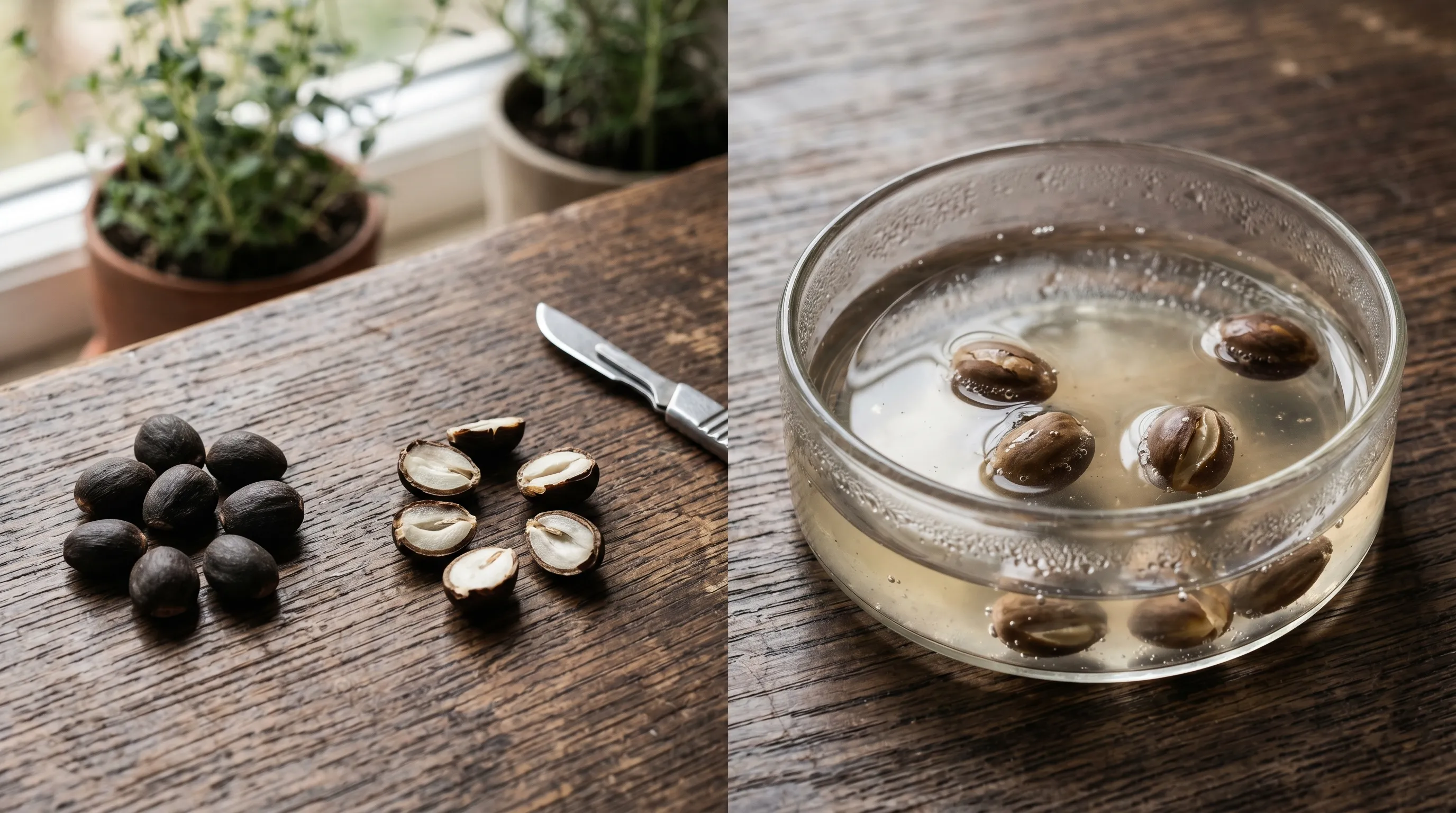 Half the seeds nicked with a craft knife, half soaking in warm water. Pre-treatment lifts germination from 35 per cent to over 85 per cent.
Warning: Ipomoea seeds contain LSA-related alkaloids and are toxic if eaten. Wash hands after handling. Keep seeds, packets, and pre-treatment dishes well away from children, dogs, and cats. The flowers and foliage are not significantly toxic, but the seeds should be treated like any other poisonous garden material.
Sowing morning glory indoors
Direct sowing fails most years in the UK because soil temperatures stay under 15C until early June. By then there are only 14 weeks of warm weather left before the first frost, and Ipomoea needs 16 weeks from sowing to flower. Always start indoors.
Sow in mid-April for plants flowering from late July. Earlier sowings (late March) grow taller before planting out but need 4-6 weeks of warm protection. Later sowings (early May) save propagator space but delay flowering into mid-August.
Use 9cm pots, one pre-treated seed per pot, sown 2cm deep in peat-free multipurpose compost. Water once and stand pots on a heated propagator set to 21-24C or a warm bright windowsill. South-facing kitchen windowsills work well in April. Germination takes 5-10 days at 21C. Seedlings appear with two narrow seed leaves followed by the first heart-shaped true leaves.
Once germinated, drop the temperature to 18C during the day, 12-15C at night. Cool nights produce shorter, sturdier seedlings that transplant better. Push a 30cm bamboo cane into each pot when the seedling reaches 10cm tall, and tie loosely with twine - Ipomoea twists onto any support within reach within hours.
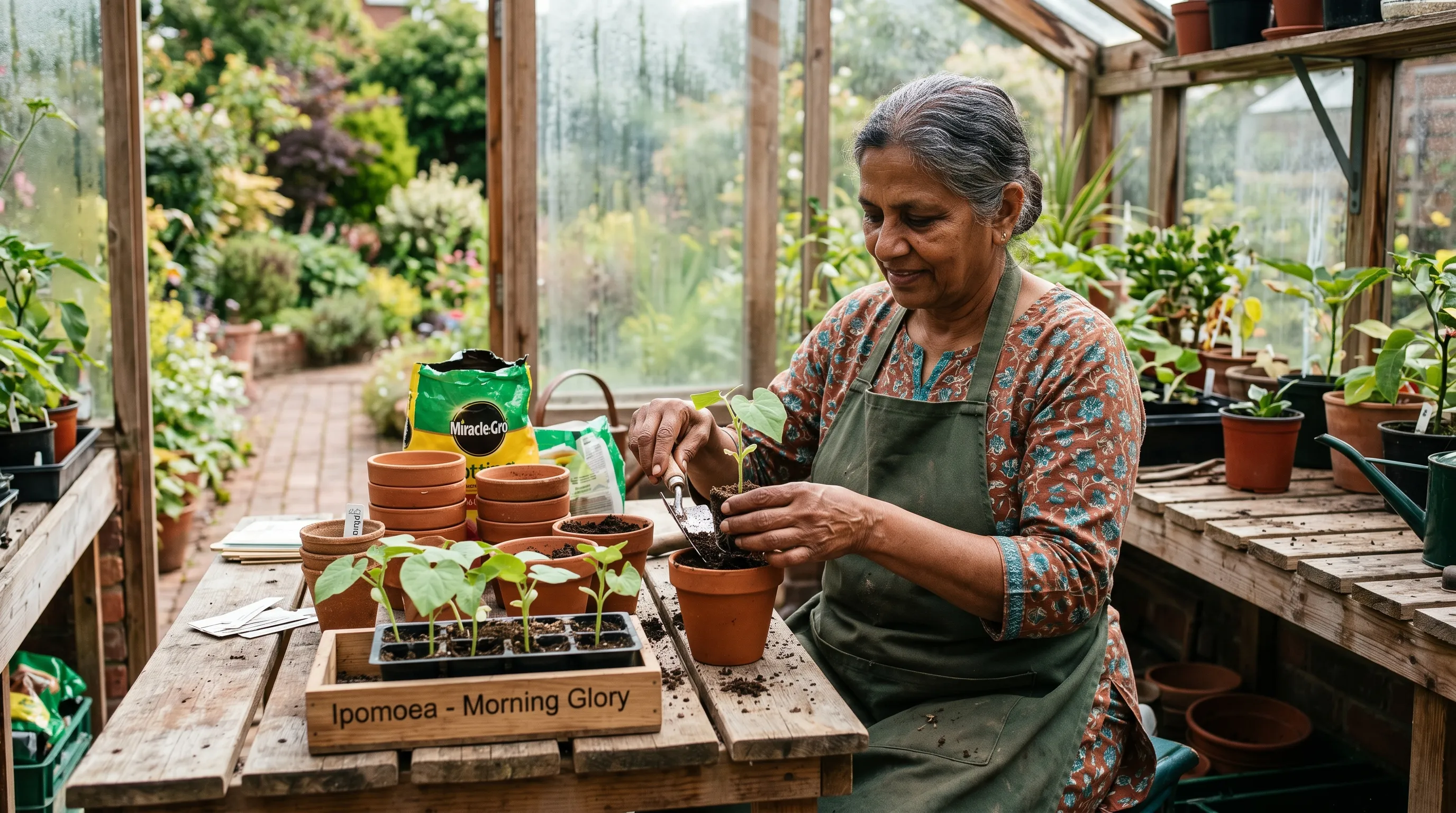 Potting on at the four true leaf stage. The heart-shaped leaves are the first true leaves - the narrow ones below are the cotyledons.
The critical mistake at the seedling stage
Wait until the last frost has passed in your area. Mid-May for south coast gardens, late May for the Midlands and north, early June for Scotland and upland gardens. Use the soil thermometer test: planting out only when soil at 10cm depth has been above 12C for 5 consecutive days.
Pre-treatment effectiveness compared
| Method | Germination rate | Days to germinate | Recommended |
|---|---|---|---|
| Untreated, dry sowing | 30-40% | 14-21 days | No |
| Soak only (24h warm water) | 55-65% | 10-14 days | Acceptable |
| Sandpaper + soak | 80-90% | 7-10 days | Yes (easy method) |
| Nicked + soak | 85-95% | 5-8 days | Yes (highest rate) |
Planting out and supports
Plant out 30-45cm apart along the foot of the support. Dig holes deeper than the rootball, mix in a handful of well-rotted compost, water in, and mulch with 5cm of bark to lock in soil heat. Do not feed at planting - rich soil grows leaves, not flowers.
Position matters more than soil. Morning glory needs a south-facing or south-east-facing wall, fence, or open spot. Sheltered courtyards and walled gardens outperform open exposed sites by 40 per cent in flower count. North or east-facing sites rarely produce more than a handful of flowers.
A 3-4m bamboo wigwam built from 6-8 canes pushed 30cm into the soil and tied at the top with twine is the standard support. Plant one Ipomoea at the foot of each cane. For walls, fix jute netting or attach vertical strings spaced 15cm apart between two horizontal wires. The vine needs supports under 10mm thick to twist around - anything wider slips back down.
Ipomoea twists anti-clockwise (left-twining when viewed from above) around its support. Once it grabs hold, it climbs at 5-10cm a day in warm weather. Tie in any wandering shoots loosely with soft twine.
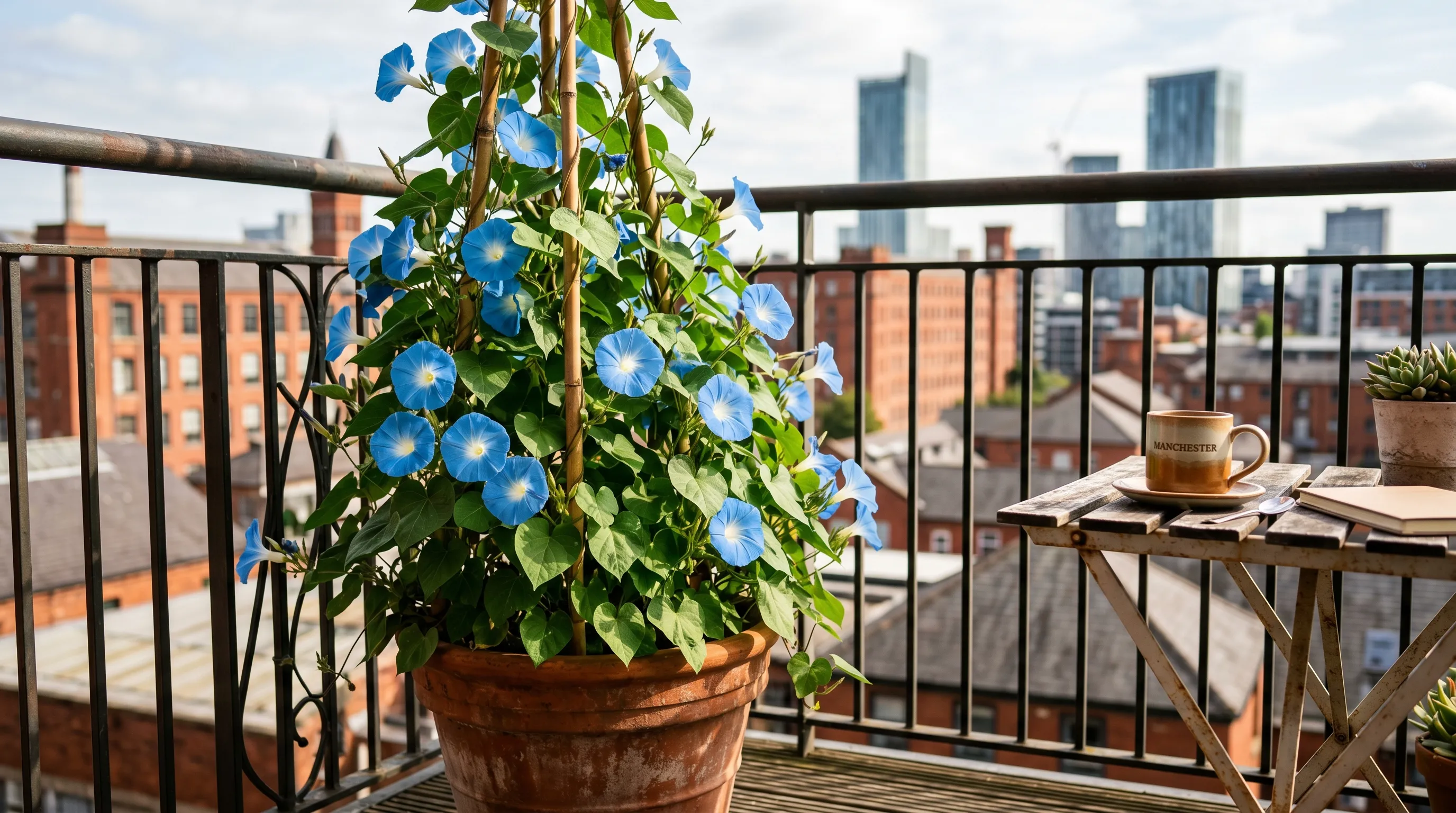 A 30cm pot with a 1.8m bamboo cane support produces 1.5-2m of flowering vine on a sheltered balcony.
When to pinch and when to leave alone
Pinch out the growing tip when the seedling reaches 15cm tall with 6-8 true leaves, usually 3-4 weeks after sowing. Use fingernails or sharp snips to remove the top 1-2cm of stem. This forces 2-4 side shoots from the leaf axils below, creating a bushier plant with more flowering stems.
Do not pinch after flower buds appear. Bud formation begins in late June or early July depending on summer warmth. Once buds form, pinching delays flowering by 2-3 weeks because the plant must re-grow the leading shoot before resuming bud production.
One early pinch is enough. Repeated pinching reduces overall height by around 60cm and total flower count by around 30 per cent - the trade-off is rarely worth it. The exception is container plants where you want to keep the vine to 1.5-2m: pinch twice, once at 15cm and once at 50cm.
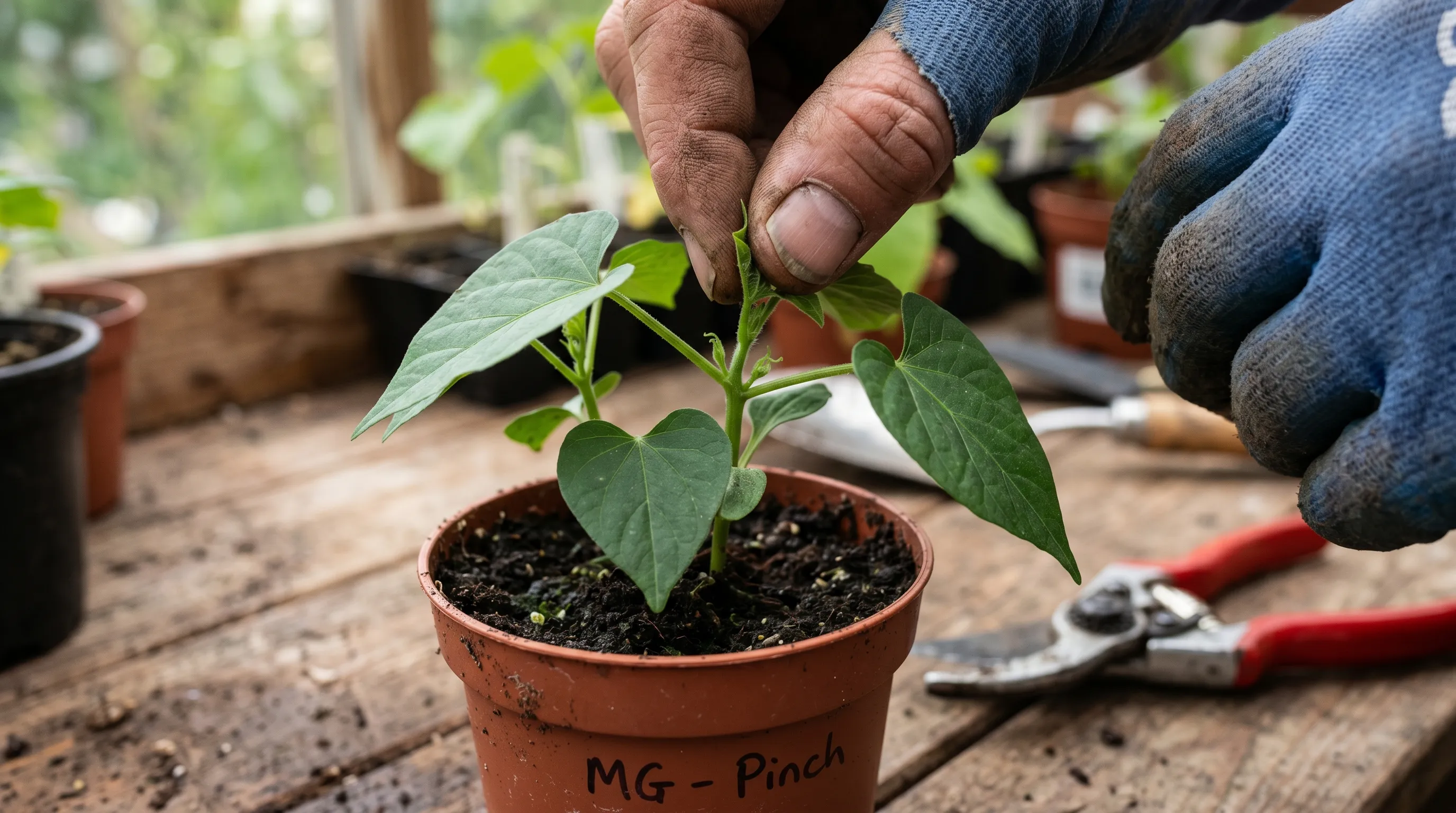 Pinch the top 1-2cm of stem when the plant has 6-8 true leaves. One pinch only - more reduces flower count.
Gardener’s tip: Pinching produces more flowers but the same total flower mass spread across more stems. If you want one statement vine to 4m, do not pinch. If you want a bushy 2.5m wall of flowers, pinch once.
Watering, feeding, and heat management
Water deeply twice a week from May to September, more in containers (daily in July and August). Wet leaves in cool weather cause downy mildew, so water at the base. A 5cm mulch of bark or homemade compost keeps the root zone cool and moist.
Feed weekly with tomato food (high potash) from late June. Avoid general-purpose fertiliser - the high nitrogen makes Ipomoea grow lush green leaves and skip flowering altogether. Tomato food has a 4-3-8 NPK ratio that promotes flower production over foliage.
In cold summers, fleece overnight when temperatures drop below 12C in late June and early July. This raises night-time leaf temperature by 2-3C and helps buds form on time.
When to grow moonflower for evening colour
Ipomoea alba (moonflower) opens its 10-15cm white flowers at dusk and stays open through the night until mid-morning. The flowers are faintly vanilla-scented and attract evening hawk moths.
Sow moonflower seeds in late March rather than mid-April. The species takes 16-18 weeks from sowing to first flower - 2-3 weeks longer than morning glory - so an early start is essential. Pre-treat for 36 hours rather than 24, and sow at 24-25C rather than 21-24C.
Plant moonflower at the foot of a 4-5m support in the same south-facing position as morning glory. Pair it with Heavenly Blue or Grandpa Ott on the same wigwam: the day-flowering Ipomoea closes by midday and the moonflower opens at dusk, giving 18 hours of flowers across the same support.
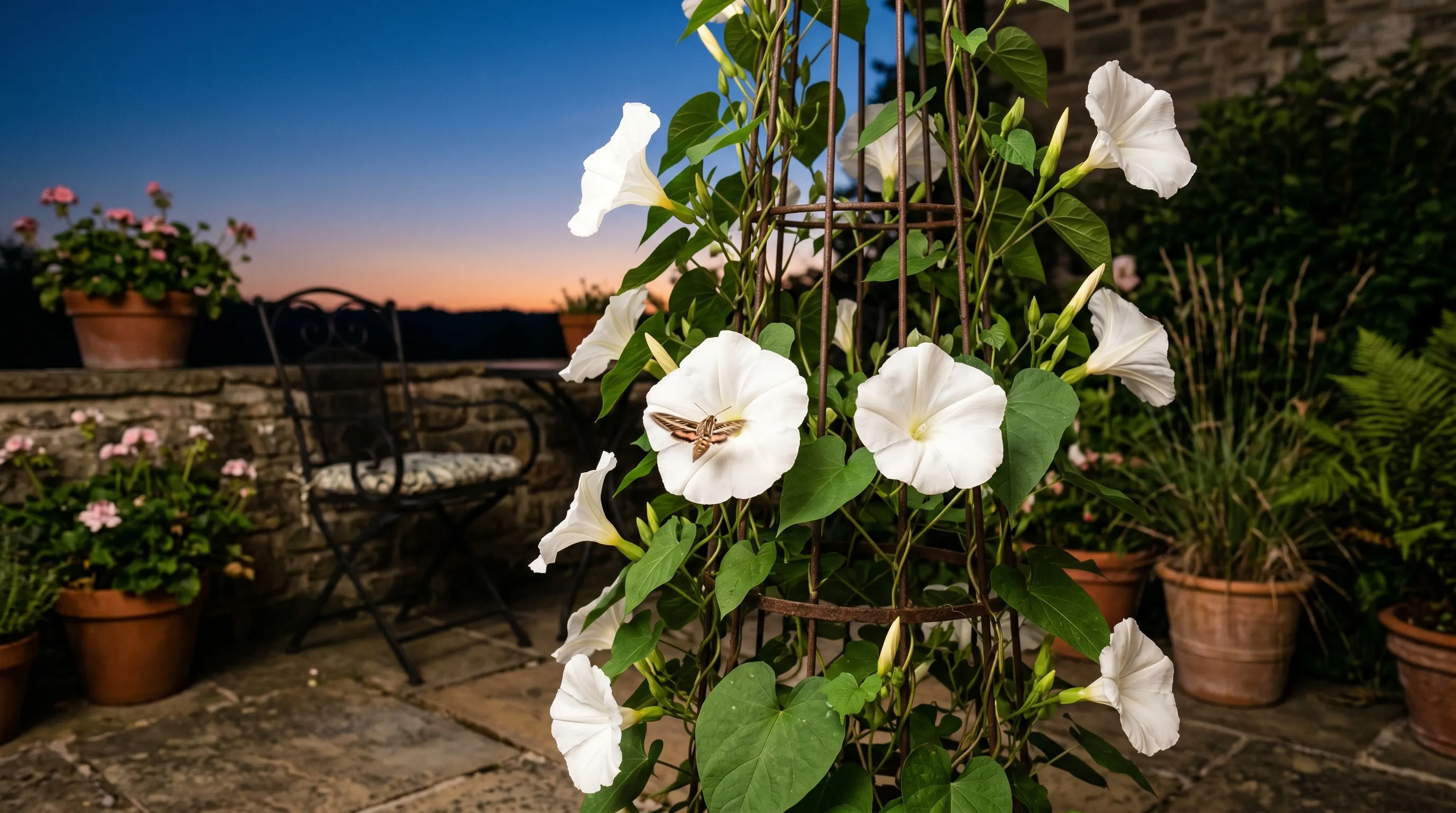 Moonflower opens at dusk and stays open all night. Pair it with day-flowering Ipomoea on the same wigwam for blooms across 18 hours.
Container growing and conservatory tips
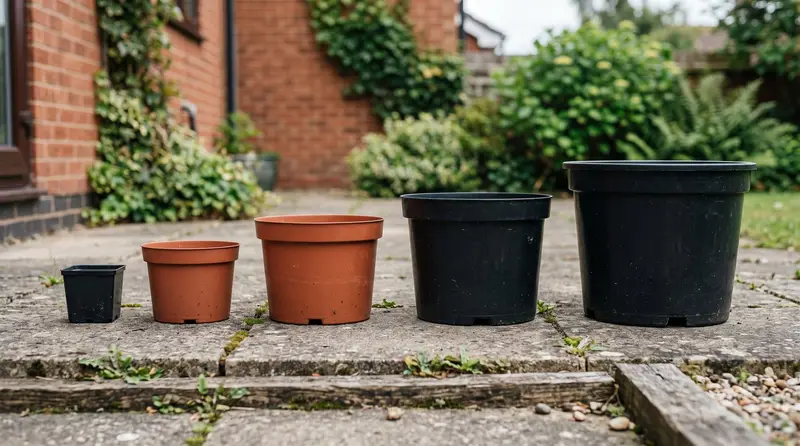
A 30cm-diameter pot with a 1.8m bamboo cane is the minimum size for one morning glory. Larger pots (40-50cm) take two or three plants and a 2.5m support. Use peat-free multipurpose compost mixed 4 parts compost to 1 part horticultural grit for drainage.
Container plants reach 1.5-2m, considerably shorter than border plants. Water daily in July and August - pots dry out in 24 hours in warm weather. Feed weekly with tomato food from late June. Move the pot against a sheltered south-facing wall for the warmest microclimate.
For gardens north of Manchester or upland sites, growing in an unheated conservatory or polytunnel gives the best results. Temperatures stay 4-6C warmer than outside, flowering starts 3 weeks earlier, and the vine often climbs to 3m by mid-August. Ventilate well on hot days - sustained 32C+ causes flower bud drop.
Why your morning glory failed last year
The single most common reason morning glory fails in UK gardens is the summer was not warm enough. Cool wet July and August weather keeps day temperatures below the 18C threshold needed for flower bud formation. The plant grows lush green leaves and never flowers.
The second most common cause is too much nitrogen feed. General-purpose fertilisers, grass clippings used as mulch, and fresh manure all push leafy growth at the expense of flowers. Stick to tomato food and well-rotted compost only.
The third cause is shade. Anything less than 6 hours of direct sun in July reduces flower count to almost nothing. Move the support, prune overhanging trees, or accept the site will not work.
The fourth cause is planting out too early. A late May frost or a cold snap below 8C checks growth so badly the plant never catches up before the first October frost ends the season.
The fifth cause is late pinching. Pinching after flower buds form delays flowering by 2-3 weeks and the plant runs out of warm weather before flowering well.
Common mistakes to avoid
Sowing in March without a heated propagator. Ipomoea seeds rot at temperatures below 18C. A windowsill in March is too cold most years. Wait until mid-April, or invest in a heated propagator (set to 21C) for earlier sowings.
Skipping pre-treatment. Seeds sown straight from the packet germinate at 30-40 per cent and take 14-21 days. Nicking and a 24-hour soak takes 5 minutes and doubles your success rate.
Planting in a north or east-facing site. Ipomoea needs 6+ hours of direct sun. Cool sites produce vines that grow but never flower. Always plant on a south or south-east-facing wall, fence, or open spot.
Feeding with general-purpose fertiliser. Nitrogen pushes leaves, not flowers. Use tomato food from late June only, and use it sparingly.
Letting the vine sprawl without support. Ipomoea is a climber, not a ground cover. Without a vertical support of 2m or more, the plant produces tangled foliage and few flowers. Provide a 3-4m support from day one.
Forgetting it is annual. Many gardeners assume Ipomoea returns like a perennial clematis. It does not. Pull out spent plants in October, collect dry seed pods for next year, and start fresh in April.
Month-by-month UK morning glory calendar
Saving morning glory seed for next year
Allow 3-5 of your best plants to set seed in September. Seed pods are pale brown and papery when ripe - about 6 weeks after the flower opened. Cut whole pods on a dry day, dry indoors for 2 weeks on newspaper, then crack open and store the seeds in paper envelopes labelled with cultivar and year.
Stored seeds remain viable for 2-3 years at 5-15C in dry conditions. A fridge works well. Each pod contains 4-6 seeds, so 20 pods give around 100 seeds - enough for next year’s planting plus spares for friends.
Saved seed from Carnevale di Venezia, Grandpa Ott, and Heavenly Blue comes true to type because Ipomoea is mostly self-pollinating. F1 hybrid varieties (rare in Ipomoea) do not come true. If you grew different cultivars within 3m of each other, expect some cross-pollination and unexpected colours.
Companion planting and design ideas
Morning glory looks its best on a 3-4m support against a south-facing wall. Companions that work well below the vine include dwarf French marigold (Tagetes patula) at 30cm, petunia at 25cm, and trailing nasturtium spilling over the front of the bed. All three flower from June onwards and fill the space until the Ipomoea takes off in mid-July.
For evening interest, pair moonflower with nicotiana (tobacco plant) and night-scented stock. The combination scents a patio from dusk until midnight in August.
For a cottage garden border, train Ipomoea up a 2.5m obelisk in the centre of a bed planted with hardy annuals from seed and the easier annual flowers for beginners. The vertical accent draws the eye upward while the lower planting fills the base.
Morning glory also works in cut flower beds, but the blooms last only one morning in water. Cut at dawn for a one-day arrangement.
Now you’ve mastered Ipomoea, what next?
Now you’ve mastered morning glory, read our guide on how to grow sweet peas in the UK for the second-best UK climbing annual - sweet peas tolerate cooler summers and produce cut flowers from June to September. For year-round vertical interest beyond annuals, see our guide to the best UK climbing plants. And to get more from your seed-raising in general, our guide to growing annuals from seed in the UK covers the full sowing-to-planting-out routine.
For pollinator-rich planting around your morning glory wigwams, bee-friendly garden plants lists the species that bring bumblebees into your borders to pollinate the rest of your annuals. And if your soil temperatures are slow to warm, our seed germination temperatures for UK gardens guide gives the minimum, optimal, and maximum temperatures for over 40 popular seed-raised plants.
Outbound authority reference: the Royal Horticultural Society’s guidance on growing annual climbers covers the general principles, and the Wildlife Trusts pages on UK pollinators explain why night-flowering Ipomoea alba supports hawk moths in particular.
Our team produces practical UK gardening guidance from source research, contributor records and established horticultural practice. Editorial standards are overseen by Matt W.