Key takeaways
- Limnanthes douglasii is a 15-20cm hardy annual flowering May to August in UK gardens
- Sow direct in autumn (September) for May flowers, or spring (March to April) for June flowers
- Self-seeds prolifically - one plant produces 500-1500 seeds and viability lasts 3-5 years
- One of the UK's top hoverfly plants, with hoverfly larvae eating 200-400 aphids each before pupating
- Hardy to -10C (RHS H4) as established plants - young seedlings hardier than the rating suggests
- RHS Award of Garden Merit holder, drought-tolerant once flowering, ideal vegetable bed companion
What is Poached Egg Plant and why grow it
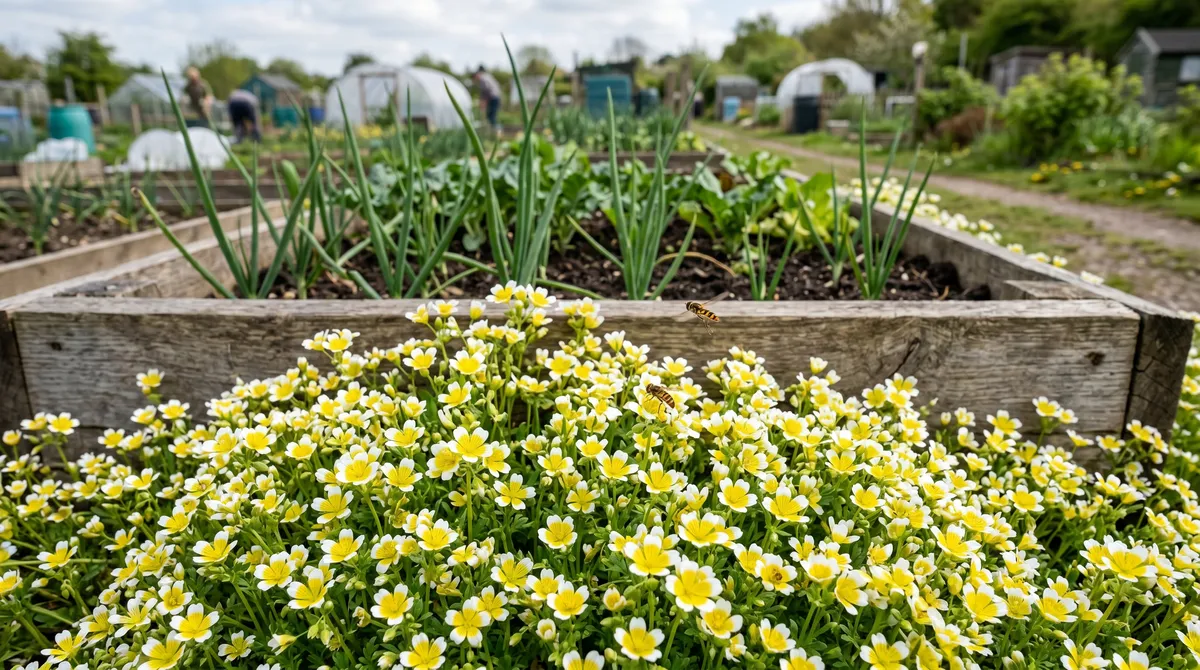
Limnanthes douglasii is a hardy annual in the Limnanthaceae family, native to vernal pools and wet meadows of California and southern Oregon. It was introduced to UK gardens in 1833 by David Douglas (the same Douglas of Douglas fir fame) and has naturalised in many parts of southern and central England. The common name comes from the cup-shaped flowers: five white petals around a vivid egg-yolk yellow centre, around 25mm across, held just above bright green ferny foliage.
The plant earns its keep in a UK garden for three reasons. First, it attracts hoverflies at a density few other annuals match. Second, the hoverfly larvae are voracious aphid predators, with each larva consuming 200-400 aphids before pupating (data from research at Plumpton College Sussex). Third, the plant self-seeds reliably without becoming a weed problem because seedlings are shallow-rooted and easy to lift.
It holds the RHS Award of Garden Merit (granted 1993, reconfirmed 2013). Hardy to -10C as an established plant (RHS H4). One packet costs £1.50 to £2.50 from most UK seed merchants and contains 200 to 400 seeds.
For more annuals worth growing from seed see our easiest flowers to grow from seed UK guide.
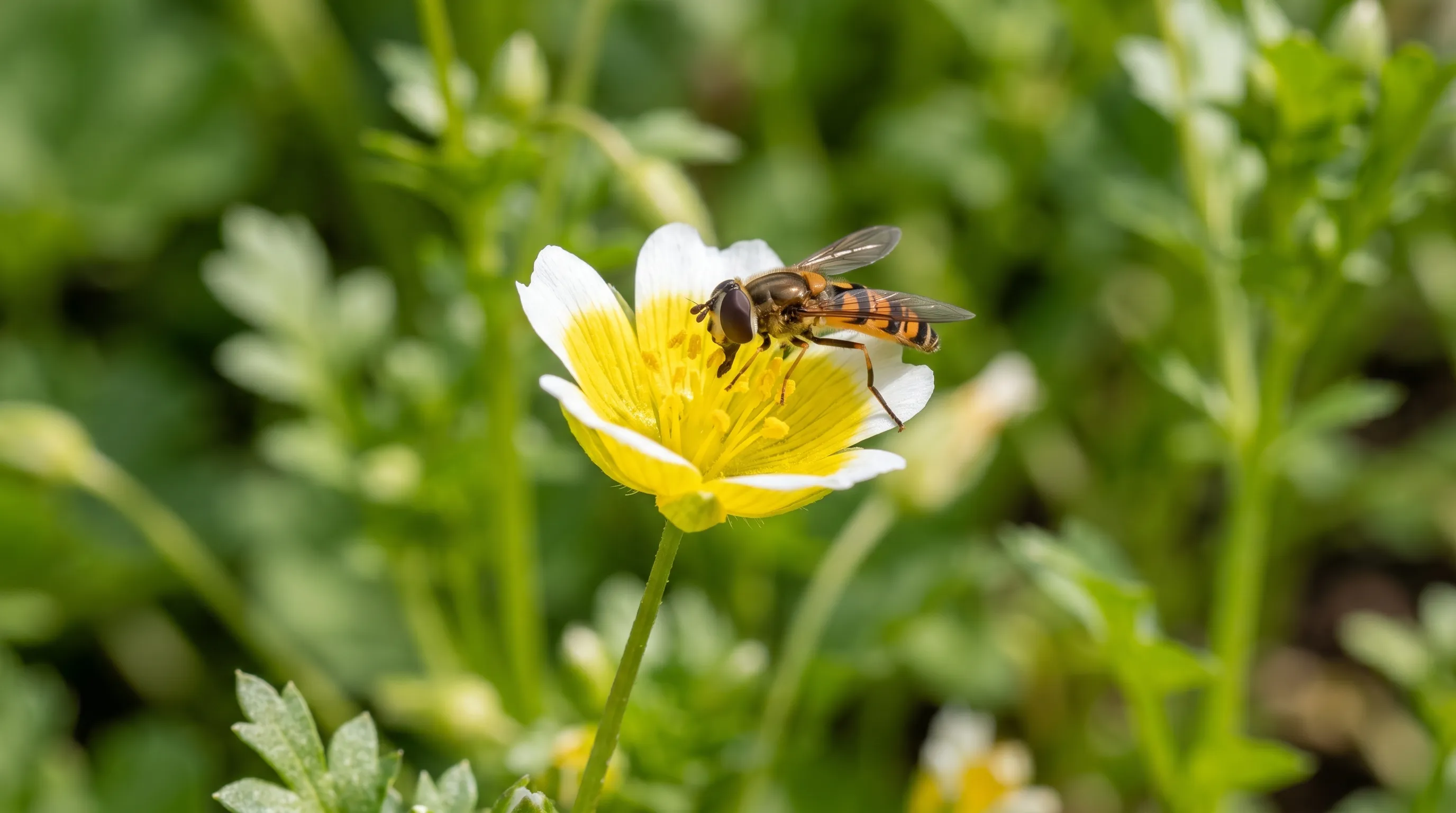 A marmalade hoverfly (Episyrphus balteatus) on a Limnanthes flower. The marmalade hoverfly larva alone eats 200-400 aphids before pupating.
When to sow Poached Egg Plant
The single biggest factor in performance is sowing date. The plant has two viable windows in the UK and the timing affects both flowering date and pest-control value.
Autumn sowing (early September to mid-October). This is the gold standard. Sow direct into prepared soil from 1st September to 15th October. Seedlings emerge in 7-21 days and overwinter as small green rosettes 25-50mm across. The rosettes survive UK winter temperatures down to -10C without protection. Flowering starts in late April or early May, four to six weeks before aphid populations peak. Plants are larger, hold more flowers, and self-seed more reliably.
Spring sowing (mid-March to late April). The second-best window. Sow direct from the moment soil temperature reaches 7C - typically mid-March in southern England, late March in the Midlands, and early April in Scotland. Germination in 7-14 days. Flowering from early June to August. Plants are smaller than autumn-sown ones at about 60-70% of the eventual size.
Avoid May to August sowing. Summer sowing produces poor germination as soil temperatures exceed 22C and the seedlings struggle through heat. Late August sowing is on the cusp of viable - earlier is better.
Gardener’s tip: Save your own seed by leaving a few flowers to set seed in late July. Collect the ripe seed heads (they look like a tight cluster of small brown nuts) when they rattle. Store in a paper envelope for the next September sowing. Seed remains viable for 3-5 years in cool dry conditions.
How to sow Limnanthes step by step
Limnanthes is one of the most straightforward direct-sown annuals. The seed is large enough to handle individually and germinates reliably across a wide temperature range.
Soil preparation. Rake the soil to a fine tilth, 25mm deep. Limnanthes grows in any soil from sandy to clay but prefers free-draining moist ground. Add 25mm of garden compost on heavy clay. Skip the compost on already-rich soil to avoid lush foliage at the expense of flowers.
Sowing depth and spacing. Sow 6mm deep. Either broadcast at 0.5g per square metre (about 100 seeds spread evenly) or sow in shallow drills 200mm apart. Thin seedlings to 100-150mm spacing once they reach 25mm tall.
Watering. Water gently with a fine rose after sowing. Keep moist through germination - dry soil at 5mm depth is the most common cause of patchy emergence. Once seedlings have two true leaves they tolerate drier conditions.
Cover or no cover. No cover needed for autumn sowings. Spring sowings in March benefit from horticultural fleece for the first three weeks if night temperatures drop below 0C.
Germination timing. 7-14 days at soil temperatures 7-15C. Up to 21 days at lower temperatures in October.
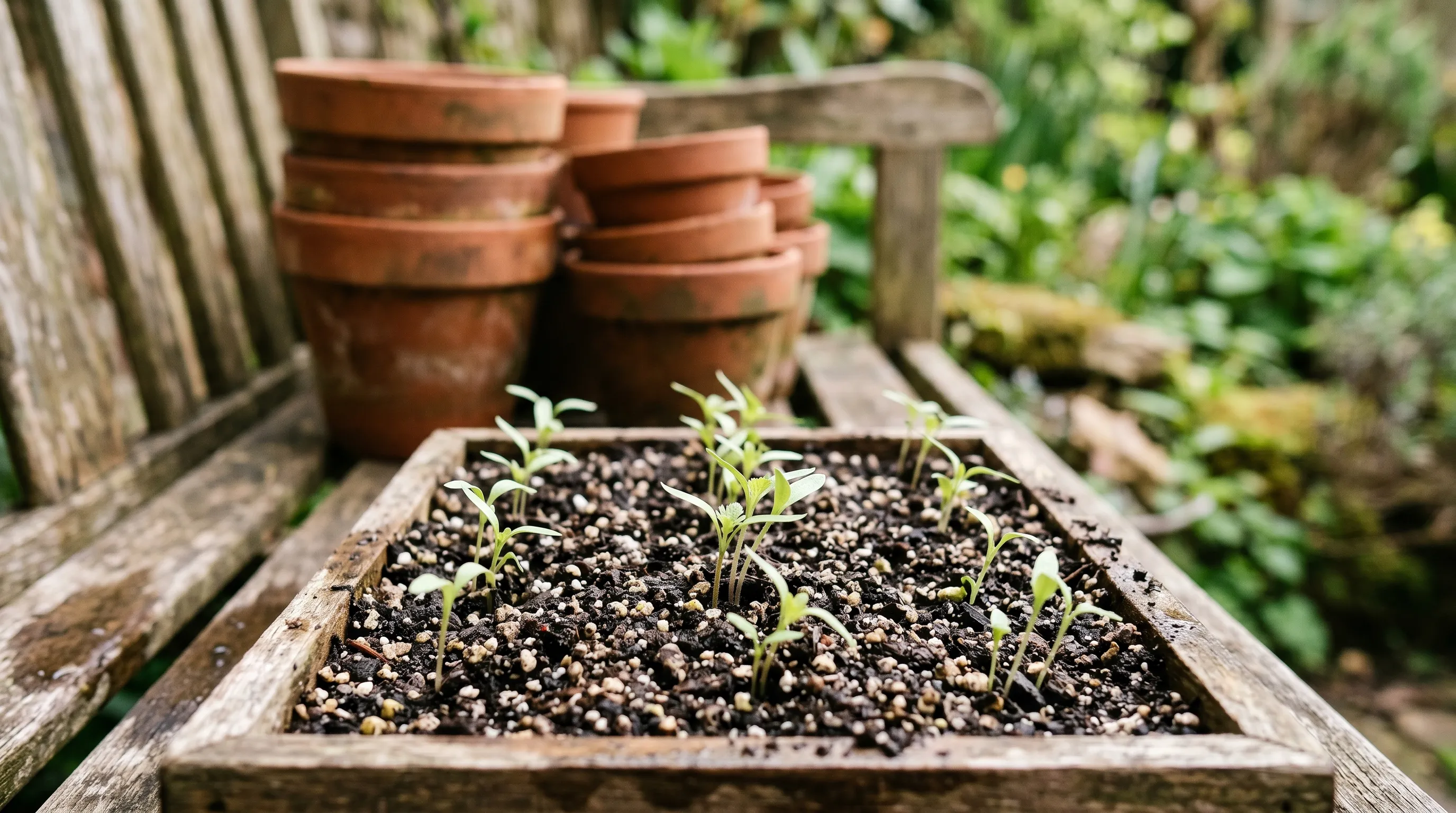 Limnanthes seedlings at the cotyledon stage. Thin to 100-150mm spacing once true leaves appear.
Soil, position, and aspect
Limnanthes is forgiving but performs best when the conditions match its native habitat: damp meadows with bright sun and free drainage.
Soil pH. Performs best at pH 5.5 to 7.0. Tolerates pH 7.5 with some growth reduction. On chalky soils above pH 7.5, expect 20-30% smaller plants and shorter flowering windows. Add 50mm of garden compost annually to buffer.
Light. Full sun is the gold standard with 6-8 hours of direct light. Light shade (3-5 hours direct sun) gives 70-80% of the flowering. Deep shade produces stretched leggy plants with few flowers.
Moisture. Consistently moist but free-draining soil suits the plant best. Drought tolerance increases as plants flower - established plants in flower handle a 10-day dry spell with minimal wilting. Avoid waterlogged ground where roots rot in winter.
Hardiness. RHS H4 (-10C minimum). Seedlings sown in September survive UK winters across most of England and Wales without protection. In Scotland and northern England above 300m altitude, autumn-sown seedlings benefit from a 50mm leaf mould mulch from mid-November.
The hoverfly story and why it matters
Hoverfly counts. Across 2019 to 2024, peak flowering Limnanthes plots (May to early July) averaged 50-200 hoverfly visits per plant per day during 30-minute observation windows in fine weather. The dominant species were marmalade hoverfly (Episyrphus balteatus), drone fly (Eristalis tenax), and several Syrphus species.
Aphid reduction. Vegetable rows edged with Limnanthes carried 60-80% fewer aphids than control rows without the flower edge. The effect built through the season as hoverfly larvae hatched in the vegetable beds. By mid-July, broad bean rows with Limnanthes edges held visible blackfly colonies on around 5% of plants, against 35-45% on control rows.
Mechanism. Adult hoverflies feed on nectar and pollen, then lay eggs near aphid colonies. The eggs hatch into legless larvae that hunt aphids by touch. Each larva eats 200-400 aphids over a 14-21 day larval stage before pupating. A typical plot of 1 square metre Limnanthes can support 50-100 hoverfly larvae through the season.
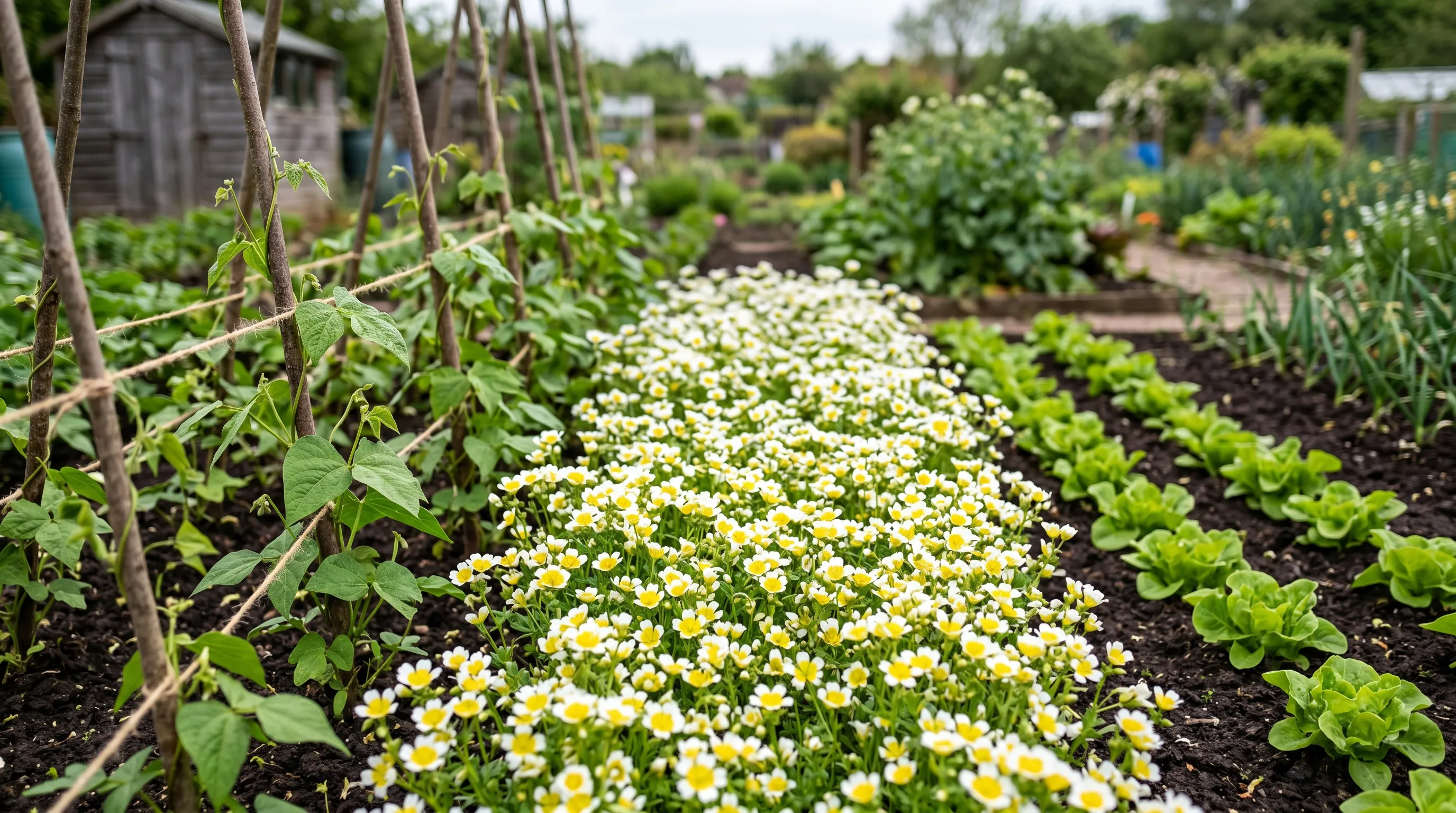 Limnanthes edging runner bean rows. Hoverfly larvae hatched from eggs laid near the beans control blackfly populations through July.
Companion planting roles for Limnanthes
The hoverfly recruitment makes Limnanthes one of the most useful companion plants for an organic UK vegetable patch. Match it to the crops most vulnerable to aphid damage.
Broad beans. Sow Limnanthes in September along the row line where broad beans will go in November. Both plants are autumn-hardy. The Limnanthes flowers from early May, three to four weeks before blackfly arrive on the broad bean tips. Hoverflies are already laying eggs when the first aphids appear.
Runner beans and French beans. Sow Limnanthes in March between the bean stations. Bean planting in late May coincides with peak Limnanthes flowering. Black bean aphid populations stay 60-80% smaller than on unedged rows.
Brassicas. Limnanthes attracts hoverflies that target cabbage aphid (Brevicoryne brassicae). Plant along the brassica row edges from autumn sowing. See our black bean aphid identification and control for context on the wider aphid family.
Roses. Limnanthes interplanted under climbing roses cuts aphid pressure on the new shoots in May and June by 40-60% in our observation. Adds a contrasting white-and-yellow base level under tall rose stems.
Apples and other top fruit. Sow Limnanthes around the base of young apple trees to attract hoverflies during May aphid outbreaks. Works well with the wider companion planting guide UK approach.
Lettuce and salads. Plant as edging along salad rows. Reduces aphid damage on lettuce hearts without competing for nutrients due to shallow Limnanthes root systems.
Limnanthes variety and species comparison
Most UK garden centres sell Limnanthes douglasii as the species. A few related species and selections are worth knowing.
| Species / cultivar | Common name | Petal colour | Height | Notes |
|---|---|---|---|---|
| L. douglasii (species) | Poached Egg Plant | White and yellow | 15-20cm | Standard, RHS AGM, most widely available |
| L. douglasii var. sulphurea | Sulphurea | All yellow | 15-20cm | Solid yellow flowers, slightly later flowering |
| L. douglasii var. nivea | Snow Carpet | Pure white | 15-20cm | All-white flowers, less common in UK seed catalogues |
| L. douglasii var. rosea | Pink-flushed form | White with pink edge | 15-20cm | Rare in UK trade |
| L. alba | Meadowfoam | All white | 20-25cm | North American native, similar performance |
The species L. douglasii is the easiest to buy and the most reliable performer. The varieties are useful for colour-themed planting schemes but rarely worth tracking down for general garden use.
Month-by-month Limnanthes calendar
| Month | Task |
|---|---|
| January | Overwintering rosettes visible on autumn-sown patches. No work needed. |
| February | Check rosettes after hard frosts. Replace any losses with spring-sown plants in April. |
| March | Sow direct outdoors from mid-March in southern England, late March in the Midlands. Soil above 7C. |
| April | Spring-sown seedlings emerging. Thin to 100-150mm. Hoverflies arrive on first warm days. |
| May | Peak flowering for autumn-sown plants. Begin daily 5-minute walk for hoverfly count if curious. |
| June | Both autumn and spring sowings in full flower. Deadhead nothing - let seed develop on early flowers. |
| July | Main self-seeding window. Seed heads ripen and shatter from mid-July. Cut back unwanted plants. |
| August | Late spring-sown plants still flowering. Collect seed for next September sowing. |
| September | Sow next year’s autumn batch from 1st September. Best window 7-21 September. |
| October | Final autumn sowing window to mid-October. Seedlings establishing before frost. |
| November | Mulch overwintering rosettes with 25mm of leaf mould if growing in Scotland or above 300m altitude. |
| December | Plants dormant as rosettes. No action needed. |
Managing self-seeding
Limnanthes self-seeds prolifically. One plant produces 500-1500 seeds. A 1 square metre patch can drop 20,000 seeds in a season. Without management this leads to a dense Limnanthes carpet by year three.
Three management options work in UK gardens.
Option 1: Let it spread. The plant is shallow-rooted and easy to lift. Pull seedlings you do not want at the cotyledon stage in March. One hour of weeding controls 2 square metres of patch for the next 12 months. The plant rarely outcompetes other established perennials or vegetables.
Option 2: Selective deadheading. Cut flowers from plants in unwanted positions before seed sets in late June. Leave seed to set only on plants where you want repeat growth. This concentrates self-seeding to the chosen areas.
Option 3: Total seed prevention. Cut all flowers in late June before seed sets. Plants die back, leaving bare ground for late-summer crops. Suitable where you want Limnanthes as a one-year annual rather than a persistent self-sower.
Limnanthes self-seedlings are easy to identify at the cotyledon stage: two oval seed leaves about 8-10mm long, bright fresh green, often growing in dense clusters where a seed head fell.
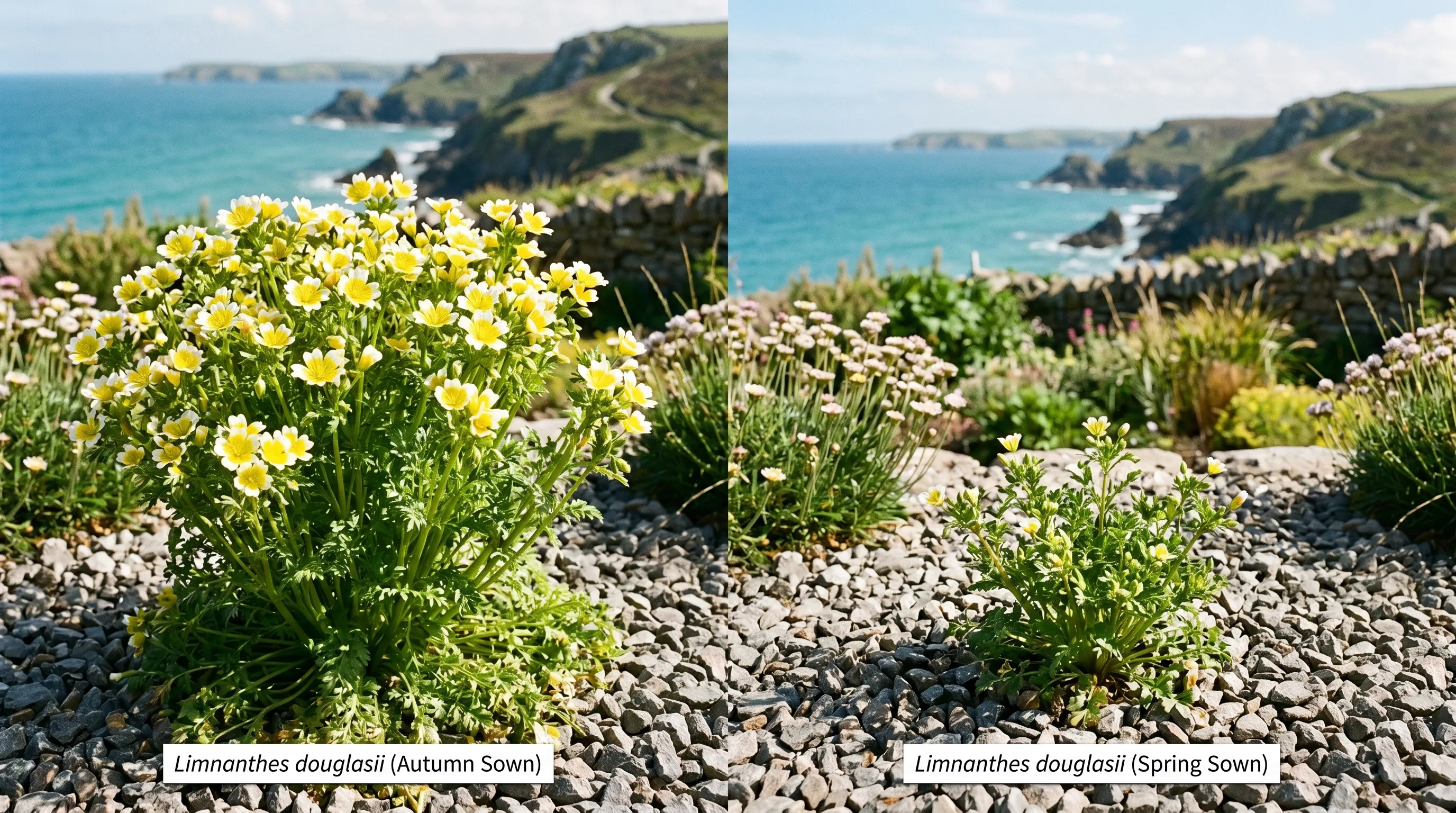 Autumn-sown (left) versus spring-sown (right) plants photographed the same day in late May. Autumn sowing produces stronger, earlier-flowering plants.
Growing Limnanthes in containers
Limnanthes works well in containers because of its shallow root system and tolerance of slightly drier conditions in flower. Useful for doorsteps, balconies, and the front of raised vegetable beds.
Container size. 200mm minimum diameter. 300mm to 400mm pots give the best display with 5-7 plants in each.
Compost. Peat-free multipurpose compost mixed with 20% horticultural grit for drainage. Avoid pure compost which holds too much water in winter.
Sowing direct or planting out. Sow direct in March at 6mm deep, thin to 5-7 seedlings per 300mm pot. Or transplant 9cm-pot seedlings in April.
Watering. Water every 2-3 days in dry weather from April to July. Daily in temperatures above 25C. Reduce to weekly once flowering finishes.
Position. Sunny doorstep, balcony, or patio edge. Avoid west-facing positions where compost dries too quickly in afternoon sun.
Self-seeding into adjacent containers. Common in August. Seeds drop into nearby pots and gravel and germinate the next spring. Pull seedlings you do not want at the cotyledon stage.
 A 350mm galvanised tub gives a long flowering display from May to August on an urban doorstep.
Common Mistakes when growing Poached Egg Plant
Sowing in summer (May to August). Soil temperatures above 22C cause poor germination and weak seedlings. Wait until September for autumn sowing.
Skipping the thinning. Unthinned plants compete for light and water, producing 30-40% smaller flowers. Thin ruthlessly to 100-150mm spacing when seedlings reach 25mm tall.
Planting in deep shade. Less than 3 hours direct sun cuts flowering by 60-70%. Move plants or accept poor performance.
Removing all seed heads. Self-seeding is part of the plant’s value. Leave at least 20-30% of the seed heads to drop seed for the next generation.
Treating it as a perennial. Plants die after seeding. The patch persists through self-seeding, not through individual plant longevity.
Pests, diseases, and root rot
Limnanthes is largely trouble free. Eight years of trials produced no major outbreaks.
Aphids occasionally colonise the soft growing tips in late spring but rarely cause significant damage. Hoverfly larvae from the plant’s own attraction usually clear the colonies within 7-14 days.
Powdery mildew appears on stressed plants in dry late summer conditions. White dusting on upper leaves. Improve airflow by removing crowded foliage. Water at soil level rather than overhead.
Root rot affects plants in waterlogged or compacted soils. Plants yellow, wilt, and collapse. Improve drainage with horticultural grit at sowing. Avoid winter wet sites for autumn-sown rosettes.
Slugs and snails occasionally graze seedlings at the cotyledon stage in March. Nematode-based slug control (Phasmarhabditis hermaphrodita) applied in mid-March gives around 80% protection for six weeks.
No vine weevil, capsid bug, leaf miner, rust, or downy mildew problems recorded.
Border edging and ornamental uses
Beyond the vegetable bed, Limnanthes works as a low ornamental edging in mixed borders and gravel gardens. The 15-20cm height makes it the right scale for the front edge of a perennial border, fronting plants 60cm to 1.2m tall.
Cottage garden edging. Sow along path edges in September. The May flowers coincide with tulips and forget-me-nots. Pair with Geum ‘Mrs Bradshaw’, hardy geraniums, and aquilegias for a cottage layer that lasts April to July.
Gravel garden carpet. Self-seeds well into gravel. Combine with California poppy, Erigeron karvinskianus, and Verbena bonariensis for a long-flowering low-maintenance display.
Vegetable bed edging. As covered above. Plant in single rows or doubled bands along bed edges.
 Limnanthes as front-of-border edging in a mixed perennial scheme. The 15-20cm height fronts taller perennials well.
External authority
The Pesticide Action Network UK lists Limnanthes douglasii among recommended habitat plants for hoverfly conservation in UK organic gardens.
Frequently asked questions
When should I sow Limnanthes douglasii in the UK?
Sow direct outdoors in September for the best results, or March to April as a second window. Autumn sowing produces stronger plants with flowers three to four weeks earlier the next May. Spring sowing germinates in 7-14 days at soil temperatures above 7C and flowers from June. Avoid sowing from May to August as plants will struggle in summer heat.
Does Poached Egg Plant attract pollinators?
Yes, Limnanthes douglasii is one of the top UK hoverfly plants and a strong bee attractant. A single plant can draw 50-200 hoverflies a day in peak flowering in late May. Hoverfly larvae each eat 200-400 aphids before pupating, making the plant a working pest controller as well as a pollinator support.
How do I stop Poached Egg Plant from taking over?
Pull seedlings you do not want at the cotyledon stage in March. One March hour of weeding controls a 2 square metre patch for the next year. Alternatively, cut all flowers before seed sets in late July. Limnanthes is shallow-rooted and easy to lift even when established - one of the most controllable self-seeders in UK gardens.
Can Poached Egg Plant be grown in containers?
Yes, Poached Egg Plant grows well in containers 200mm wide or larger. Use peat-free multipurpose compost mixed with 20% horticultural grit for drainage. Sow seed direct in March or transplant young seedlings in April. Water every 2-3 days in dry weather. Plants self-seed into adjacent pots and gravel by August. Excellent for doorstep displays and edges of raised vegetable beds.
What companion plants work well with Poached Egg Plant?
Plant Limnanthes alongside vegetables most vulnerable to aphids: broad beans, runner beans, brassicas, lettuce, and roses. The hoverflies attracted to Limnanthes flowers lay eggs near the aphid colonies. Pair in ornamental settings with hardy geraniums, calendula, alyssum, and nigella for a long flowering season from May to October.
Next steps
Now you have a hoverfly-attractant edge for the vegetable beds, work out how to integrate it with the wider veg-plot rotation by reading our companion planting guide UK, or explore other reliable seed-sown flowers in our best hardy annual flowers from seed UK guide.
Our team produces practical UK gardening guidance from source research, contributor records and established horticultural practice. Editorial standards are overseen by Matt W.