Key takeaways
- Pussy willow = Salix caprea (goat) and Salix cinerea (grey willow)
- Silvery catkins are male flower buds, open late February to March
- Plant in full sun, moist to wet soil; tolerates heavy clay
- Vigorous: 8-10m if left, so coppice or pollard every 1-2 years
- Roots from a hardwood cutting stuck straight in the ground
- Salix caprea 'Kilmarnock' is a weeping standard for pots and small plots
Pussy willow is the country name for our native goat willow and grey willow. The silvery, silky catkins open on bare stems in late winter, weeks before most shrubs wake up. This guide covers what the plant actually is, where to site it, the absurdly easy propagation, pruning for fresh catkins, and the weeping ‘Kilmarnock’ form that suits a small UK garden.
What Pussy Willow Actually Is
Pussy willow is two native UK species, not one named plant.
The two main species:
- Salix caprea – goat willow, the common large-catkin pussy willow
- Salix cinerea – grey willow, smaller leaves, grows in wetter ground
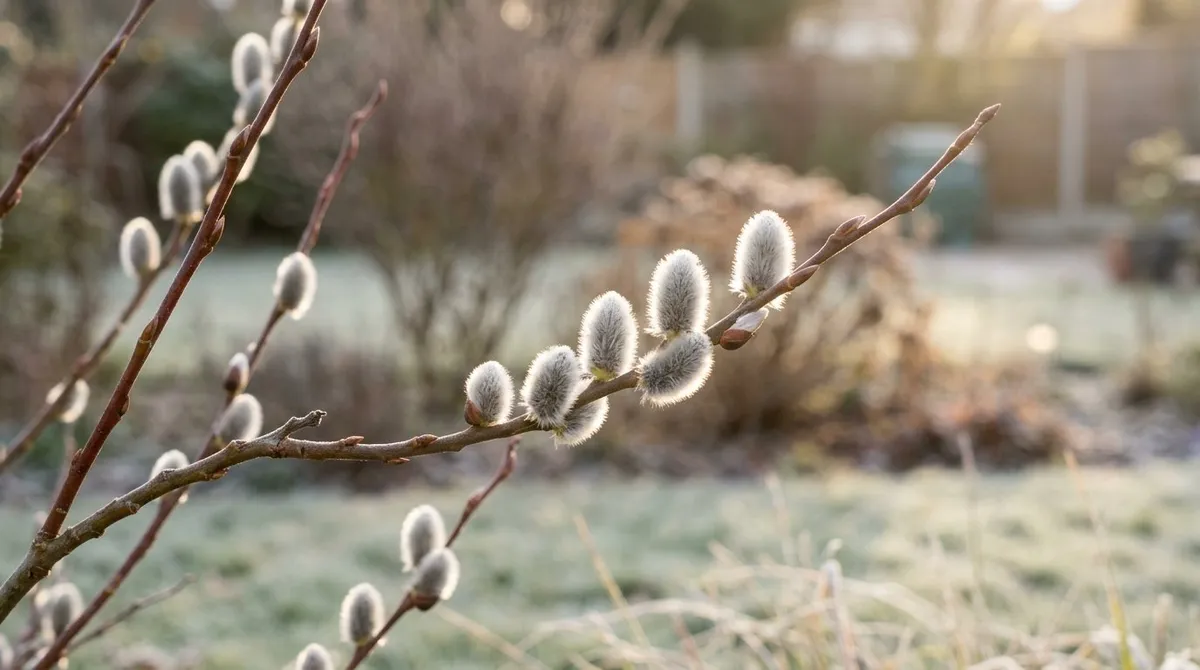
The “pussies” are the catkins. They are the flower buds, and each one is covered in fine silver hairs that look and feel like a kitten’s paw. The silvery stage is the unopened male flower. Pussy willow is dioecious, so a plant is either male or female. The classic fat silver catkins come from male plants. They open in late February and March, then turn yellow as the pollen ripens.
There are good named cultivars too. Salix caprea ‘Kilmarnock’ is a weeping standard, grafted onto a clear stem, perfect for small gardens and pots. Salix gracilistyla ‘Mount Aso’ carries striking rose-pink catkins. Salix melanostachys, the black pussy willow, opens almost black before red anthers show. These give the same early display in less space. For coloured foliage rather than catkins, the flamingo tree, Salix ‘Hakuro-nishiki’, carries pink and white spring leaves on the same easy willow constitution.
Where to Plant Pussy Willow
Pussy willow wants full sun and moisture.
The one thing to plan for is size. Species goat willow is vigorous. Left alone it becomes an 8-10m small tree within 15 years, adding up to a metre a year when young. Site it where that scale works, or commit to cutting it back hard every year. The roots chase water, so keep species willow well away from drains, foundations and pond liners.
How to Grow Pussy Willow From Cuttings
This is the easiest propagation of any UK shrub.
Willow roots so readily that the bark contains natural rooting hormones, salicylic acid and indolebutyric acid. That is why the old “willow water” trick works: soaking willow twigs in water makes a free rooting hormone for other cuttings.
Taking hardwood cuttings:
- Cut pencil-thick, one-year-old stems between November and February
- Trim each to 25-30cm, cut flat at the base and sloped at the top
- Push two-thirds of the length into moist, weed-free ground
- Firm it in and leave it alone
- Roots and leaves appear by April; no rooting powder needed
 Sticking winter hardwood cuttings of goat willow straight into a moist Staffordshire border. Two-thirds of each 30cm stem goes below ground. No hormone, no pot, no fuss. Most root by spring.
Pruning, Coppicing and Pollarding for Catkins
Catkins form on young wood, so hard pruning improves the display.
An old, untouched willow flowers less each year because the catkins sit on one and two-year-old stems. Cut it back and you force fresh wands that carry next spring’s catkins. There are two ways to do it.
Pollarding means cutting back to the top of a clear trunk, usually 1.5-2m up. This keeps the regrowth out of reach of grazing animals and gives a lollipop shape. It suits a willow you want as a feature.
For a garden plant, the simplest routine is to remove one stem in three to the base each March. You always have flowering wood and never lose the whole display in one go. For the timing of this and other shrub work, see our guide to shrubs to prune in summer, and if you need to relocate an established plant our moving perennials and shrubs guide covers lifting willow.
A grey willow coppiced to the stool in March, regrowing as straight wands by June at Staffordshire. These one-year stems carry next spring’s catkins. A two-year coppice cycle gives the best cutting material.
‘Kilmarnock’ Pussy Willow for Small Gardens and Pots
The grafted weeping standard solves the size problem.
Salix caprea ‘Kilmarnock’ is a male goat willow grafted onto a clear straight stem, usually 1.2-1.5m tall. The branches weep down in a neat curtain. It does not grow into a tree and its roots stay contained, so it is safe in a border or a large pot near the house. A 40-50cm pot of loam-based compost suits it well.
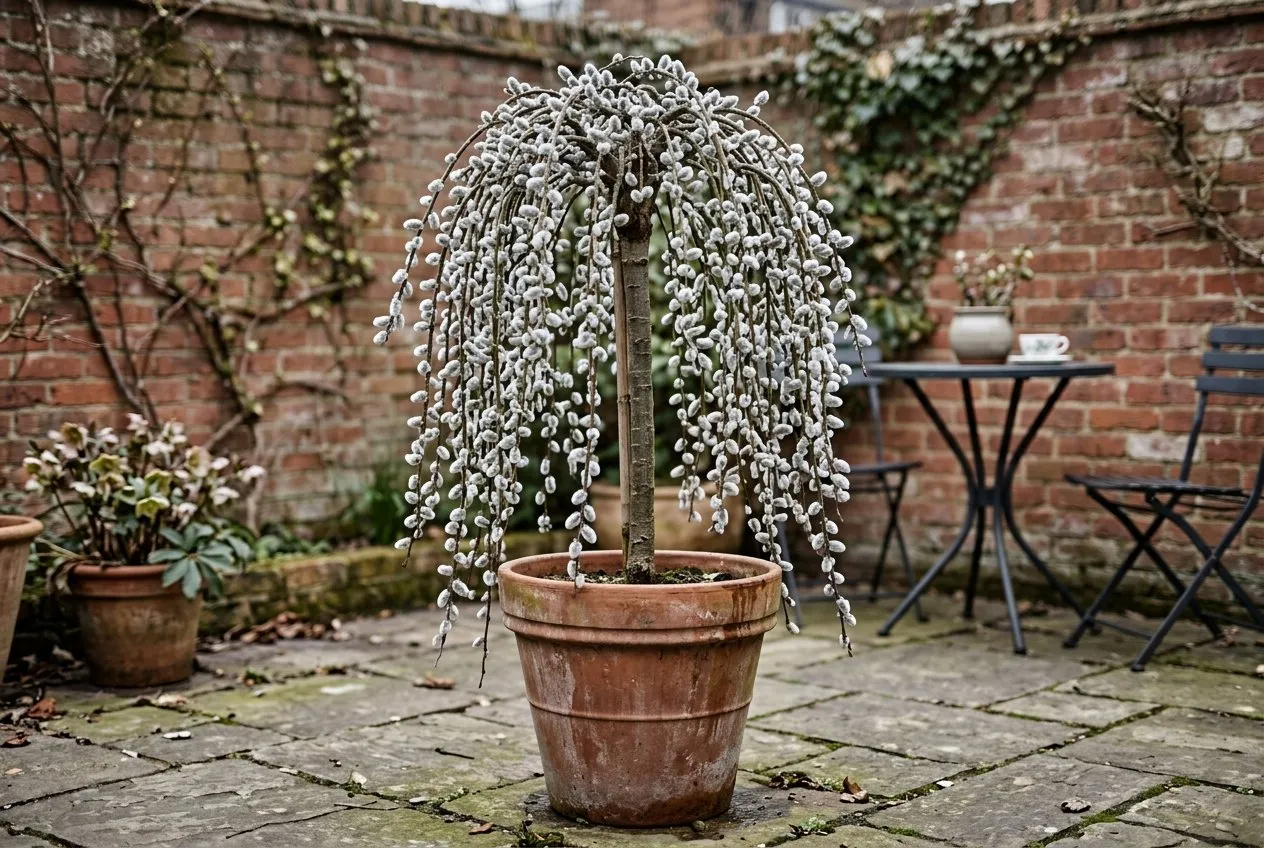 A ‘Kilmarnock’ weeping standard in a 45cm pot on a small courtyard in late February. The grafted form stays compact and pot-safe. It gives the full catkin show with none of the roots-and-rampage problem.
Cutting Stems for the Vase
Pussy willow is one of the best cut stems of late winter.
 Cut goat willow and black Salix melanostachys stems on a Staffordshire windowsill in February. Cut at the silver stage and kept dry, they hold for weeks. In water they open to pollen and may root.
Wildlife Value and Common Problems
Pussy willow is one of the most useful early-spring plants for UK wildlife.
The male catkins open in late February and March, when queen bumblebees emerge hungry and little else is flowering. That early pollen is a lifeline. Honeybees and solitary bees work the catkins too. Goat willow and grey willow are also foodplants for the caterpillars of several UK moths, including the puss moth and sallow kitten. A willow at the bottom of a wildlife garden earns its keep. The Woodland Trust lists native willows among the best trees for early pollinators, and they sit well beside a wildlife pond or in a mixed native hedgerow.
Problems are few but worth knowing.
- Roots and water – the real issue; keep species willow away from drains and foundations
- Anthracnose – a fungus causing leaf spots and shoot dieback in wet springs; prune out affected stems
- Willow rust – orange pustules on leaves; rarely serious, improve air flow
- Sawfly – larvae chew leaves; tolerable on a vigorous plant, leave them for the birds
None of these is fatal on a healthy, well-sited willow. Good air flow from sensible pruning prevents most of the fungal trouble.
A queen bumblebee on open goat willow catkins in early March at Staffordshire. The yellow pollen feeds queens emerging from hibernation. Pussy willow is one of the first nectar and pollen sources of the year.
Pussy Willow Calendar UK Month-by-Month
| Month | Pussy willow task |
|---|---|
| January | Take hardwood cuttings; stick straight into moist ground |
| February | Catkins reach silver stage; cut stems for the vase |
| March | Catkins open to yellow pollen; coppice or pollard now |
| April | New growth and roots appear on cuttings; water if dry |
| May | First dry spell; water cuttings and young plants |
| June | Coppiced stools throw fresh wands; little else needed |
| July | Vigorous summer growth; nothing to do |
| August | Watch for rust or sawfly in a wet year |
| September | Growth slows; plan winter cutting and pruning |
| October | Good month to plant pot-grown standards |
| November | Take the first hardwood cuttings of the season |
| December | Continue sticking cuttings into damp borders |
Related reading: Willow rods weave as well as they grow, covered in our guide to living willow structures.
Frequently asked questions
How do you grow pussy willow from a cutting?
Push a pencil-thick winter stem 20cm into moist ground and leave it. Take hardwood cuttings 25-30cm long between November and February from one-year-old wood. Two-thirds goes below ground. It roots by spring with no hormone needed. Willow is the easiest UK shrub to propagate.
How big does pussy willow grow?
Species goat willow reaches 8-10m as a small tree if left uncut. Salix caprea and Salix cinerea are vigorous and fast, adding up to 1m a year when young. Coppice or pollard every one to two years to keep it as a 2-3m shrub with fresh catkin stems.
Why has my pussy willow stopped producing catkins?
Old, unpruned wood flowers less; catkins form on younger stems. Hard-prune one in three stems to the base each March after the catkins fade. New wands grow over summer and carry next year’s catkins. Pollarded and coppiced plants give the best display.
Is pussy willow good for bees?
Yes, the pollen feeds queen bumblebees emerging in early spring. The male catkins open in late February and March when little else flowers. Honeybees and solitary bees work them too. Grey willow and goat willow are also foodplants for several UK moth caterpillars.
Can I plant pussy willow near the house?
No, keep species willow at least 10m from buildings, drains and ponds. The roots seek water and can crack paving and block drains. For small gardens grow the grafted ‘Kilmarnock’ weeping standard in a large pot, which stays compact and never sends roots out.
Now plan the wider wildlife and cutting garden
Our team produces practical UK gardening guidance from source research, contributor records and established horticultural practice. Editorial standards are overseen by Matt W.