Key takeaways
- Move deciduous shrubs dormant, October to March; evergreens in September or March
- Lift the widest rootball you can carry, ideally matching the shrub's spread
- Keep the rootball intact and wrapped in hessian during the move
- Replant at the same depth and the same compass orientation
- Reduce top growth to balance the feeder roots you lose
- Water deeply through the entire first year, the critical survival period
Moving an established shrub looks brutal, but done at the right time and in the right way most shrubs take it in their stride. The whole job rests on two things: keeping as much of the root system as you can, and reducing the demand on those roots while they recover. Get the season wrong, lift too small a rootball, or let it dry out afterwards, and even a tough shrub can fail. This guide covers exactly when to move which shrubs, how to lift and wrap the rootball, and the aftercare that carries a transplant through its first vulnerable year.
The reward is a mature plant relocated for the cost of an afternoon’s work, rather than years spent growing a replacement from scratch.
When to move a shrub in the UK
Timing is the single biggest factor in success. Deciduous shrubs move best while dormant, from October to March, after the leaves drop and before new growth starts. With no leaves to support, the plant loses little water while it re-roots. Evergreen shrubs keep their leaves and so keep losing water, which makes them trickier. Move evergreens in early autumn (September) or early spring (March), when the soil is still warm enough to grow new roots but the air is cool and damp enough to limit moisture loss.
Avoid three conditions entirely: summer heat, when active growth and high water demand cause severe wilting; hard frost, when the ground is frozen and roots cannot establish; and waterlogged soil, which rots disturbed roots. The ideal day is mild, still, and overcast, with moist but not soggy soil. For evergreens especially, a calm grey day beats bright sun and drying wind.
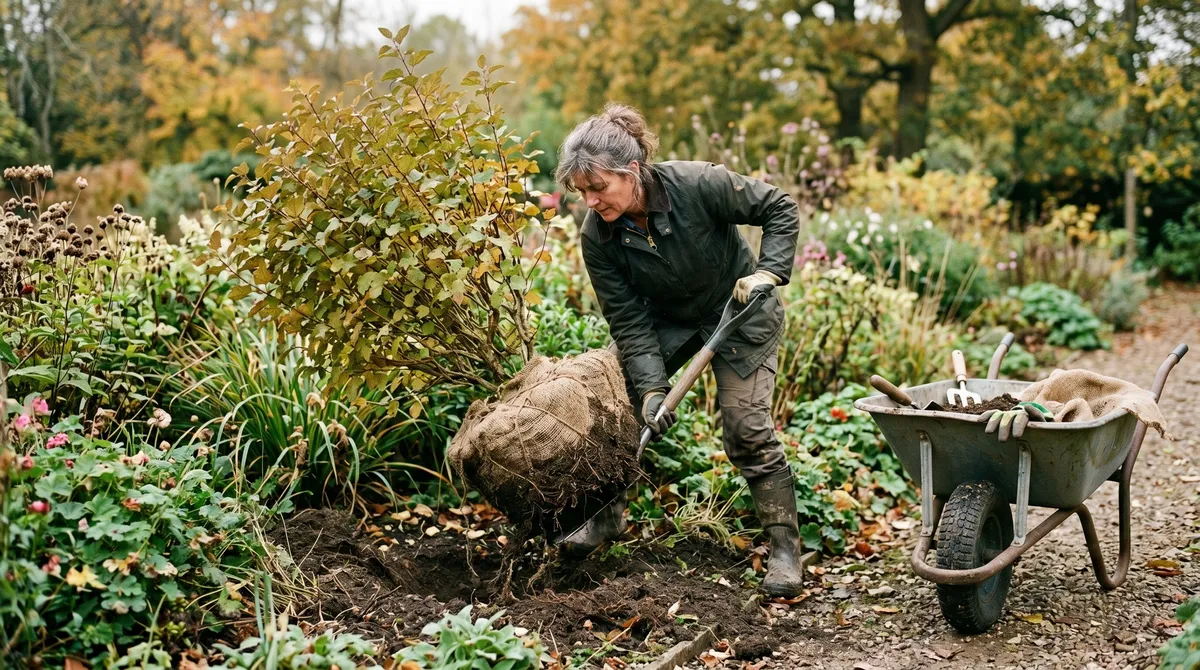
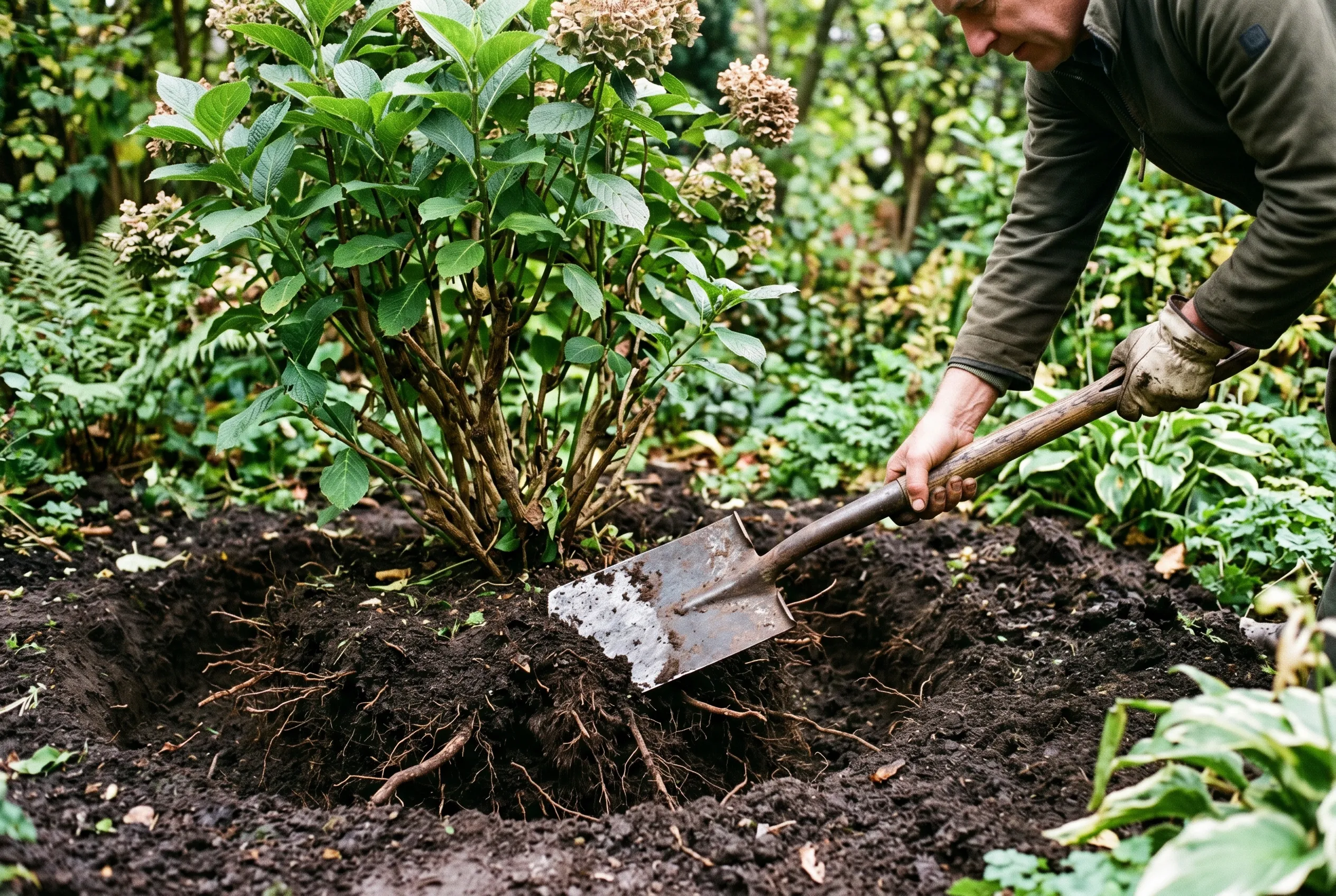 Cut a wide trench at the shrub’s spread, not close to the stem. The wider the rootball, the more feeder roots you keep.
Why transplant shock happens
Understanding transplant shock tells you how to prevent it. A shrub’s roots spread far wider than its branches, and most of its feeder roots, the fine roots that absorb water and nutrients, sit out near the dripline and beyond. When you lift a shrub you inevitably cut off a large share of these. The plant is left with a full set of leaves and branches demanding water, but only a fraction of the roots to supply it. The result is wilting, leaf drop, and, if the imbalance is severe, death.
Every technique for a successful move works on this root-to-shoot balance. Lifting the widest possible rootball keeps more feeder roots. Pruning the top growth reduces the demand side. Moving while dormant or in cool weather lowers water loss. Watering well afterwards supports what roots remain while new ones grow. The critical mistake is treating the move as a one-day job: the shrub stays vulnerable for a full growing season while it rebuilds its feeder roots, which is why first-year watering matters as much as the lift itself.
How to lift and move the shrub
Prepare the new hole before you lift, so the rootball spends as little time out of the ground as possible. Dig the new planting hole twice as wide as the expected rootball and the same depth.
- Water two days before. Soak the shrub so the rootball holds together and the plant is fully hydrated.
- Mark the orientation. Tie a ribbon to the north-facing side so you can replant it facing the same way.
- Reduce the top growth. Cut back about a third of the stems to balance the roots you are about to lose, unless it is a spring-flowering shrub in bud.
- Dig a wide trench. Cut down with a spade in a circle at the shrub’s spread, as wide as you can lift, then undercut beneath to free the rootball.
- Wrap the rootball. Slide hessian or strong sacking underneath and wrap it tightly, tying with twine to hold the soil and roots intact.
- Move it low and supported. Lift by the rootball, never the stem, onto a barrow or sheet. Two people for anything large.
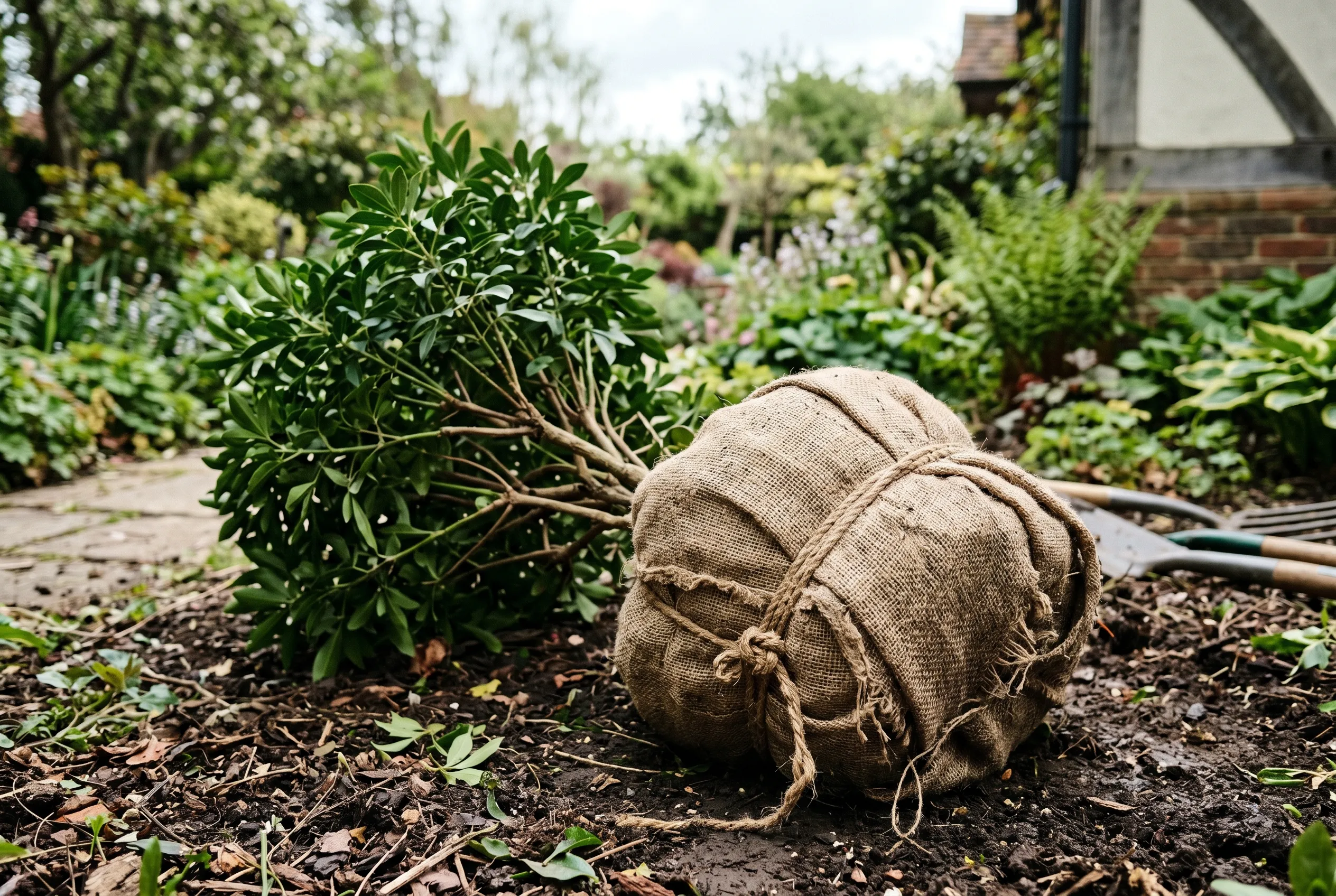 Wrap the rootball in hessian to hold the soil and roots together. A rootball that crumbles apart loses the feeder roots that matter.
How to replant for the best survival
Speed and depth decide the replant. Get the shrub into its new hole quickly, while the roots are still moist.
Set it at the same depth it grew before, no deeper. Planting too deep is a common killer, as it suffocates the roots and rots the stem base. Lay a cane across the hole to check the old soil mark sits level with the surrounding ground. Turn the marked side back to face north so the plant keeps its existing sun orientation. Backfill with the excavated soil, firming in stages with your heel to remove air pockets, then water in heavily to settle the soil around the roots. Finally, spread a 5-8cm mulch ring over the root area, kept clear of the stem, to hold moisture and suppress weeds. On heavy ground, our guide on improving clay drainage helps the new hole drain rather than turn into a sump.
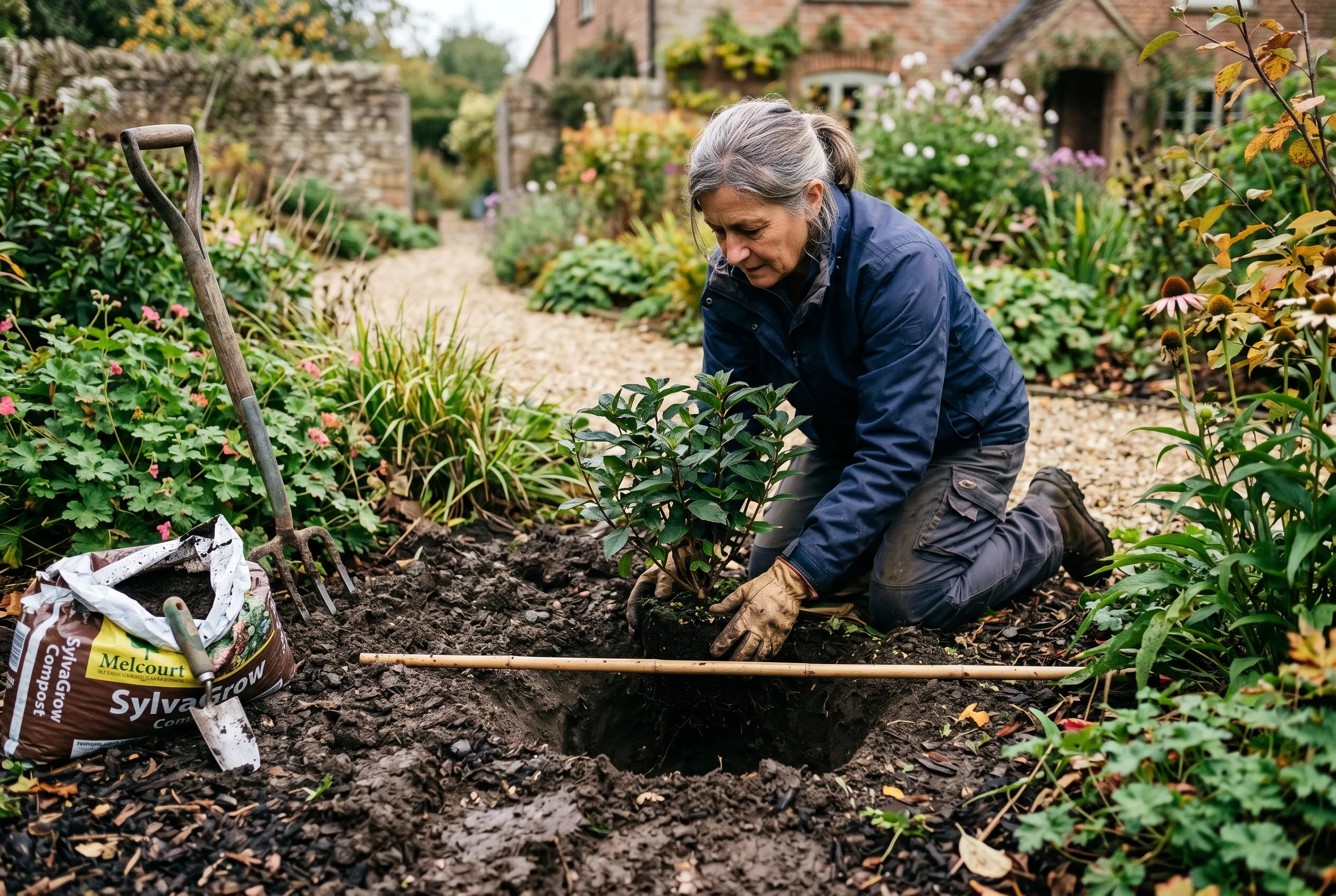 Replant at the same depth, checked with a cane across the hole. Planting too deep is one of the most common ways to kill a moved shrub.
Which shrubs move well and which resent it
Age and species both matter. As a rule, the younger the shrub and the more fibrous its roots, the better it moves.
| Shrub type | Moves well? | Notes |
|---|---|---|
| Young shrubs (under 3 years) | Excellent | Small rootball, recover fast |
| Box, yew, hydrangea, viburnum | Good | Tolerant if rootball kept intact |
| Roses, dogwood, spiraea | Good | Move easily when dormant |
| Large mature shrubs (5+ years) | Fair | Need root-pruning a season ahead |
| Daphne, magnolia, cytisus (broom) | Poor | Resent root disturbance, often fail |
If a shrub is too big to lift with an adequate rootball, root-prune a year ahead: in the autumn before the move, slice a spade’s depth around the future rootball to sever the long roots. The shrub responds by growing dense fibrous roots inside that circle, so it lifts with far less shock the following season. For choosing replacements where a move is too risky, see our roundups of the best flowering shrubs and evergreen shrubs for year-round interest.
First-year aftercare
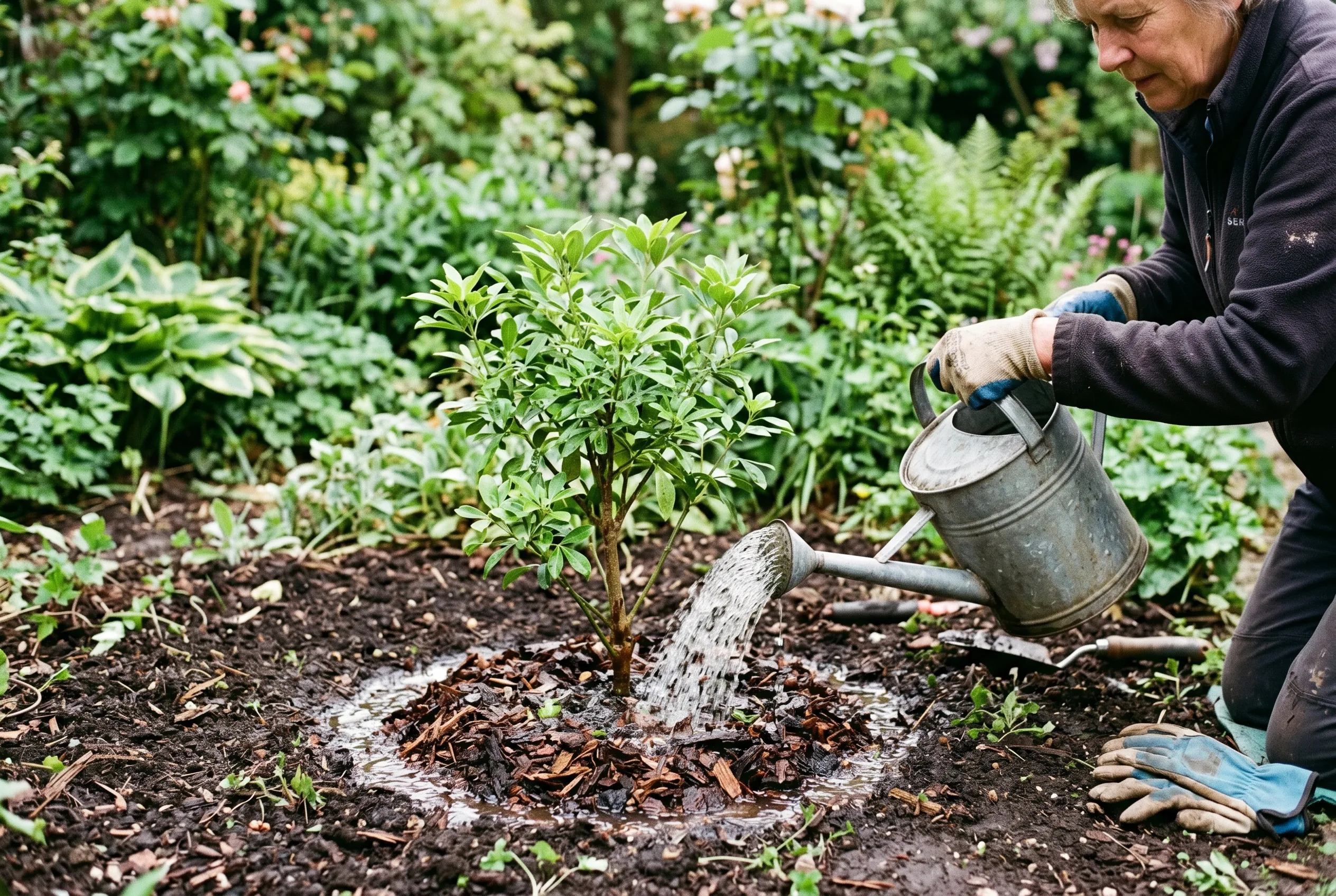 Water in heavily at planting and through the whole first year. Deep, regular soaks are what carry a moved shrub through transplant shock.
For evergreens, protect against drying wind, which scorches leaves faster than the depleted roots can replace the water. A temporary windbreak of fleece on the exposed side helps through the first winter. Do not feed with high-nitrogen fertiliser straight after moving, as it forces top growth the roots cannot support. Hold off until the shrub shows healthy new growth, then feed lightly. Stake only top-heavy shrubs that rock in the wind, as some movement encourages rooting.
Warning: Do not let a moved shrub dry out in its first summer, even if it looks established. The feeder roots are still rebuilding, and a single dry fortnight in July can undo a successful autumn move.
Common shrub-moving mistakes
These are the errors that turn a move into a loss.
- Moving at the wrong time. Summer moves and frozen-ground moves both fail. Stick to the dormant or shoulder seasons.
- Too small a rootball. A mean rootball loses the feeder roots the shrub needs. Lift as wide as you can manage.
- Planting too deep. Burying the stem base rots it. Replant at the exact old depth.
- Letting the rootball dry out or crumble. Wrap it and move fast. Bare, dry roots die within minutes in sun or wind.
- Neglecting first-year watering. The commonest cause of slow failure. Water through the whole first year.
If the new spot is shadier than the old one, check it suits the plant with our guide to the best shrubs for shade before you commit. The Royal Horticultural Society’s advice on moving plants confirms the dormant-season timing and wide-rootball approach.
 The reward for patience: a mature shrub settled into its new spot and flowering again, a year of growth saved.
Frequently asked questions
When is the best time to move a shrub?
Move deciduous shrubs while dormant, between October and March. Move evergreens in September or March, when the soil is warm but the air is cool. Avoid moving any shrub in summer heat, hard frost, or waterlogged ground, as all three reduce its chances of surviving.
How big should the rootball be when moving a shrub?
Make the rootball as wide as the shrub’s branch spread if you can lift it. A wider rootball keeps more feeder roots, which decides survival. For a 1m shrub aim for a rootball around 45-60cm across. Larger shrubs need root-pruning a season ahead.
Will a shrub survive being transplanted?
Most shrubs survive if moved at the right time with a good rootball and watered well afterwards. Young and recently planted shrubs move most easily. Old, large specimens and a few fussy types like daphne and broom transplant poorly and may not recover.
Should you prune a shrub before moving it?
Yes, reduce the top growth by about a third before or just after moving. The shrub loses many feeder roots in the move, so cutting back the top balances the demand and reduces wilting. Do not prune spring-flowering shrubs hard until after they flower.
How do you reduce transplant shock in shrubs?
Keep the rootball intact, replant at the same depth quickly, and water deeply and regularly for a full year. Reducing top growth, mulching, and shading evergreens from drying wind all help. Root-pruning a season ahead greatly reduces shock on large shrubs.
Can you move a shrub in summer?
Avoid moving shrubs in summer if possible. Heat and active growth mean the disturbed roots cannot supply enough water, and the shrub wilts badly. If you must move one in summer, lift a large rootball, cut back the top, shade it, and water daily.
Now you can relocate a shrub with confidence, keep it in shape with our guide to pruning shrubs, and browse all our how-to gardening guides for the next job in the border. This guide covers rescuing a single established shrub; for timing windows by plant group, root-ball sizes by age and what survives a move, see our wider guide to moving perennials and shrubs without loss.
Our team produces practical UK gardening guidance from source research, contributor records and established horticultural practice. Editorial standards are overseen by Matt W.