Key takeaways
- Compost is decomposed organic matter you mix into soil; mulch is any material laid ON the surface
- Garden compost can be used as a mulch, so the two overlap, but bark and gravel are mulches that are not compost
- Apply mulch 5 to 7cm deep over moist, weed-free soil and keep it 5cm clear of plant stems
- Fresh woodchip robs surface nitrogen as it rots, so keep it off bare soil around hungry plants
- Mulch in mid to late spring (March to May) onto warm, damp soil, with a second top-up in autumn
No, mulch and compost are not the same thing, though gardeners use the words as if they were. Compost is decomposed organic matter you mix into the soil or spread as a fine feed. Mulch is any material you lay on top of the soil to suppress weeds, hold moisture and protect roots. The confusion is fair, because garden compost can do both jobs. You can dig it in as a soil improver, or spread it on the surface as a mulch.
What is the difference between mulch and compost?
Compost is a product. Mulch is a job. That single line clears up most of the confusion. Compost is a specific material: decomposed organic matter that has broken down into a dark, crumbly, soil-like substance. Mulch is a function: anything laid on the soil surface to protect and improve it. A material is a mulch because of where you put it and what it does, not what it is made of.
Compost is made by rotting down garden waste, kitchen scraps or manure until the original ingredients are no longer recognisable. The result is rich in nutrients and beneficial microbes. You usually mix it into the soil as a soil improver, or use it as a fine top dressing to feed plants.
Mulch sits on the surface. It can be organic, like bark, leafmould or compost, or inorganic, like gravel and slate. Its job is to block light from weed seeds, slow water loss, and even out soil temperature. The overlap is real: spread compost on the surface and it becomes a mulch. Lay gravel on the surface and it is a mulch, but it will never be compost.
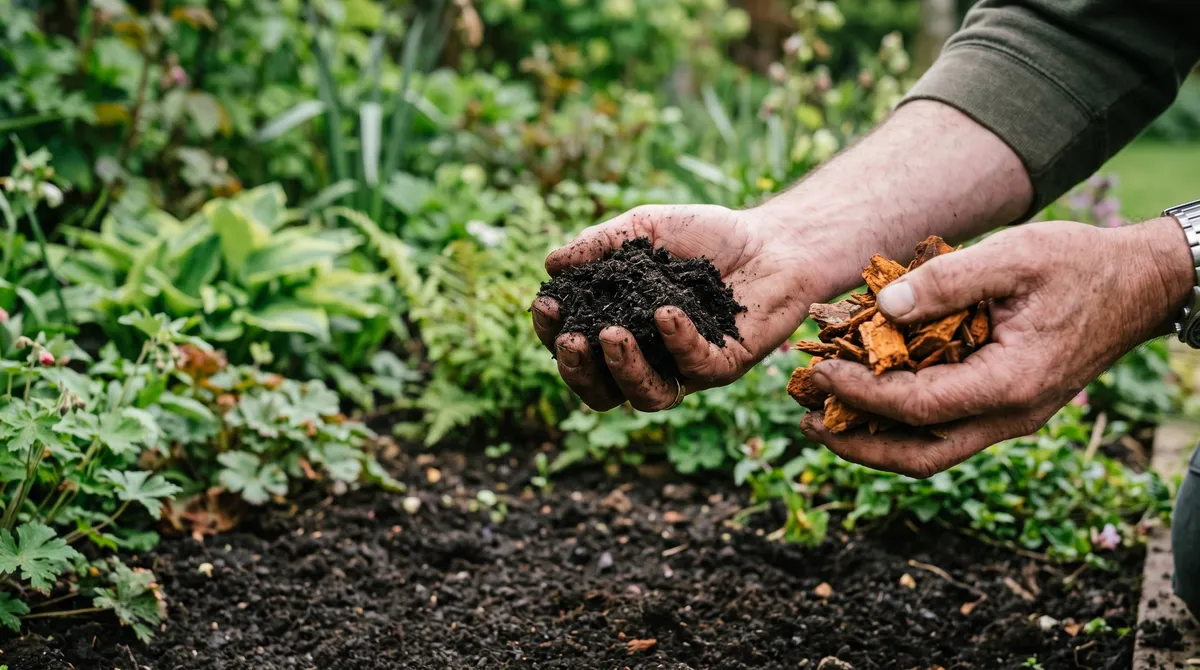
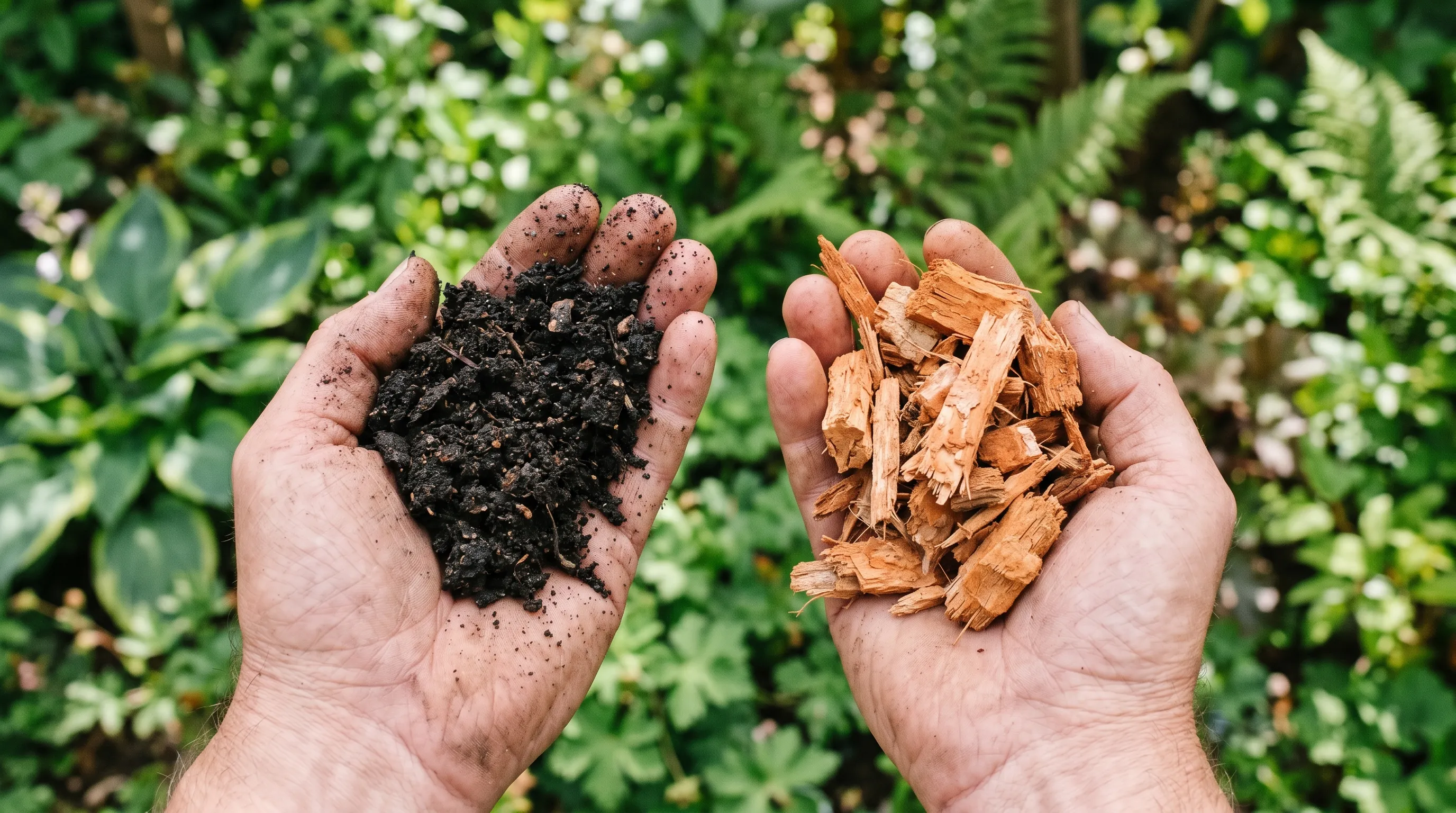 Left: fine, dark compost that mixes into soil. Right: chunky bark that sits on the surface as a mulch. Same border, two different jobs.
Compost vs mulch at a glance
The table below is the quickest way to see how the two differ in practice. Read down the rows and the distinction becomes obvious. Note that garden compost appears in both columns, because it is the one material that genuinely does both jobs.
| Feature | Compost | Mulch |
|---|---|---|
| Main purpose | Feeds and improves soil structure | Suppresses weeds, holds moisture, insulates roots |
| Where it goes | Dug in, or used as a fine surface dressing | Laid on the surface, never dug in |
| Typical materials | Rotted garden and kitchen waste, manure | Bark, woodchip, leafmould, gravel, straw, compost |
| When to apply | Autumn or spring, before planting | Spring onto warm soil, top up in autumn |
| Typical depth | 2 to 5cm worked in, or 3cm dressing | 5 to 7cm laid on top |
| How it breaks down | Already decomposed, releases nutrients fast | Breaks down slowly, feeding soil over months |
The key takeaway is the “where it goes” row. Compost is mixed in. Mulch stays on top. The moment you spread compost on the surface and leave it, it is acting as a mulch. The moment you dig a bark mulch into the soil, you have made a mistake, because raw bark in the soil robs nitrogen.
The seven main types of mulch ranked
Garden compost and well-rotted manure feed the most but break down within a year, so they need an annual top-up. Bark and wood chip last longest but feed little and carry the nitrogen-robbery risk if used fresh. Gravel and grit never rot, so they suppress weeds and improve drainage but add no fertility at all. Grass clippings are a free extra: spread them thin, no more than 2cm, or they turn to a slimy mat that smells and excludes air.
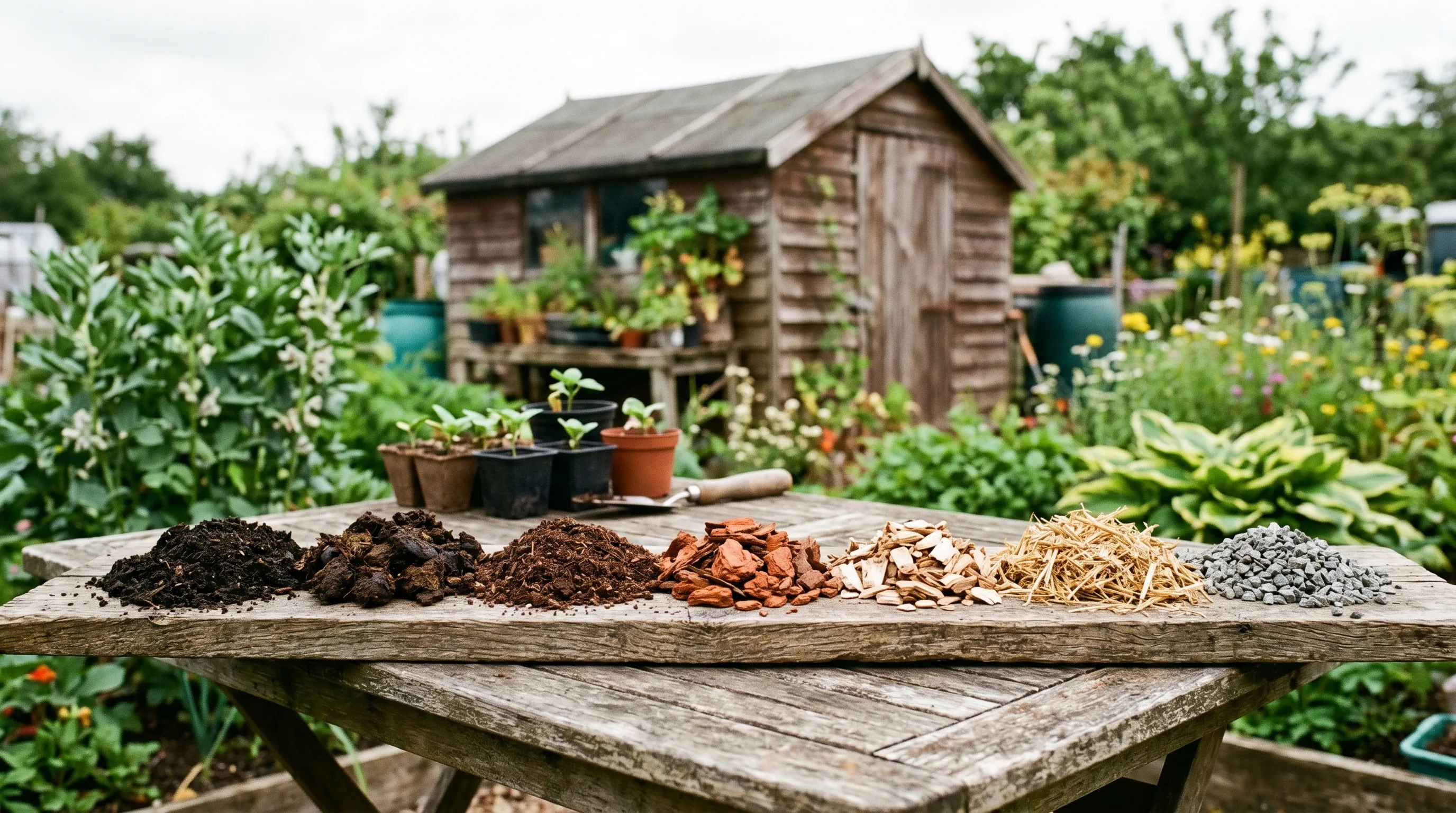 Seven common UK mulches lined up. Compost and manure feed the soil; bark and gravel mainly suppress weeds and hold moisture.
Why fresh woodchip robs nitrogen from your soil
Fresh woodchip and bark temporarily steal nitrogen from the soil surface as they decompose. This is the single most misunderstood point about mulching, and it causes real plant damage when ignored. The science is straightforward once you see it.
Wood is very high in carbon and very low in nitrogen. Its carbon-to-nitrogen ratio sits around 400 to 1, while the soil microbes that break it down need a ratio nearer 25 to 1 to work. To bridge that gap, the microbes pull spare nitrogen out of the surrounding soil. They borrow it to fuel decomposition. While they are busy, that nitrogen is locked up in microbe bodies and unavailable to your plants.
The critical detail most guides miss: this nitrogen drawdown only affects the top 1 to 2cm of soil, right at the wood-soil boundary. Deep-rooted shrubs and trees barely notice, because their feeding roots sit well below the affected zone. The plants that suffer are seedlings, leafy salads and shallow-rooted annuals, whose roots live in the exact layer being stripped.
So the rule is simple. Use fresh woodchip on paths and around established woody plants, where the rob zone does no harm. Keep it off bare soil around young or leafy plants. Better still, stack fresh chip for 6 to 12 months until it darkens and crumbles, by which point the microbes have finished and the nitrogen is released back. A composted bark, rotted for a year, gives all the weed control with none of the rob.
Warning: Never dig fresh woodchip or fresh bark into the soil as a so-called improver. Mixed through the whole root zone, it robs nitrogen at every depth at once and can stunt or yellow a whole bed for a season. Mulch stays on the surface. Compost gets dug in. Keep the two jobs separate.
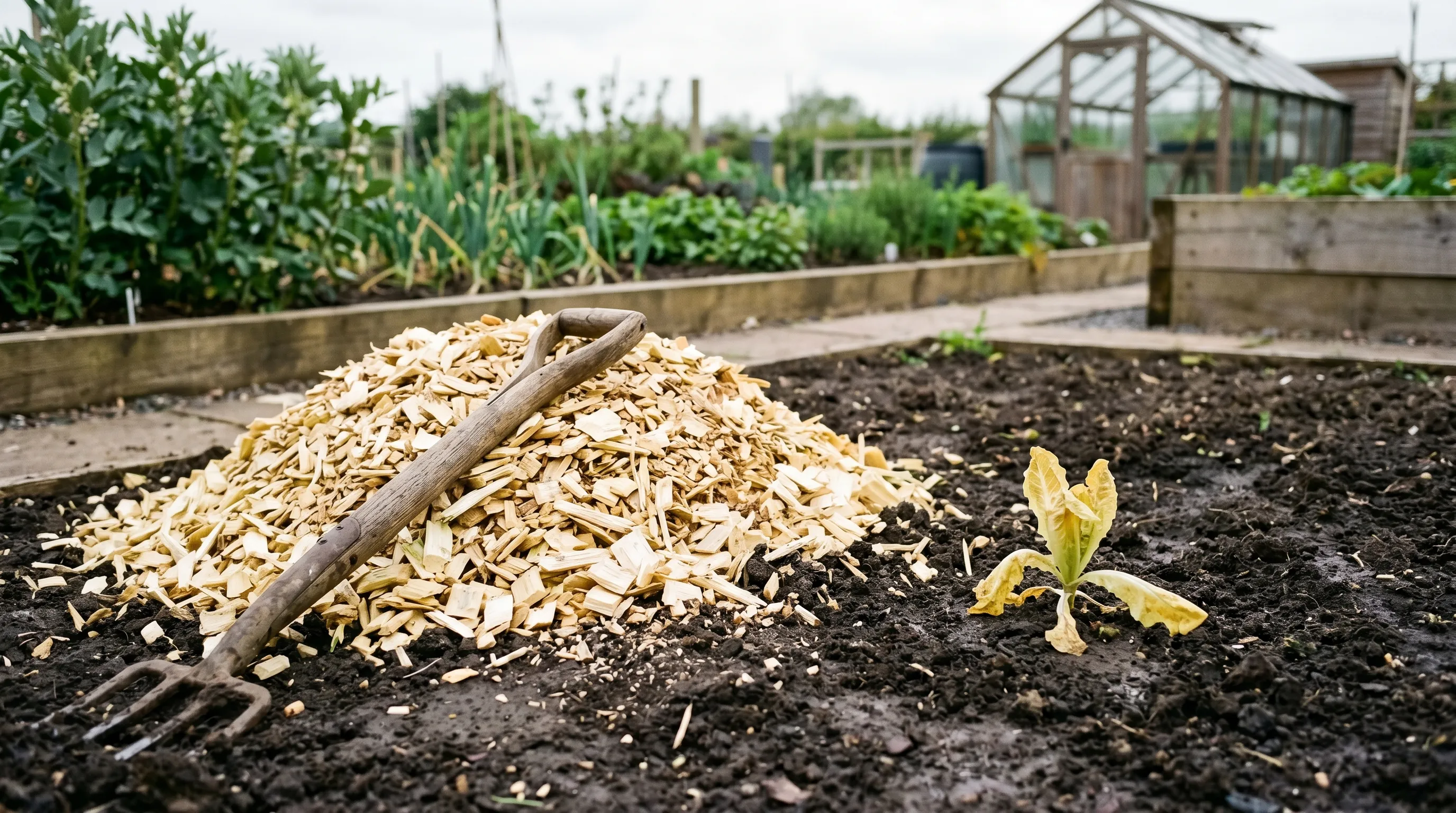 Fresh wood chip on bare soil around leafy crops can yellow seedlings as microbes borrow surface nitrogen to break the wood down.
How deep should mulch be and what to keep it off
Lay organic mulch 5 to 7cm deep over moist, weed-free soil. Depth decides whether a mulch works. Too thin and weeds push through and moisture escapes. Too thick and rain cannot reach the roots while the soil stays cold and airless underneath.
Below 5cm, light still reaches weed seeds and they germinate straight through. At 5 to 7cm, the mulch blocks light, holds moisture and breaks down at a steady, useful rate. Above 8cm, you risk capping the soil so summer rain runs off the top and the roots below stay dry. Gravel mulch is the exception and works at 3 to 5cm, because it does not rot or compact.
Three things should never be smothered by mulch:
- Plant stems and tree trunks. Keep mulch 5cm clear of the base of every plant. Mulch piled against a stem traps damp and causes collar rot. The classic “mulch volcano” heaped around a tree trunk is a slow killer.
- The crowns of clump-forming perennials. Plants like hostas and heucheras rot if their crown sits under wet mulch over winter. Mulch around them, not over them.
- Emerging bulbs and seedlings. A thick mulch laid over the spot where spring bulbs or direct-sown seeds are pushing up can block them entirely. Mulch between rows, not on top.
For the science behind soil structure under a mulch, our guide to no-dig gardening explains how annual surface mulching replaces digging altogether and builds fertility from the top down. The Royal Horticultural Society sets the same 5 to 7cm depth as standard practice.
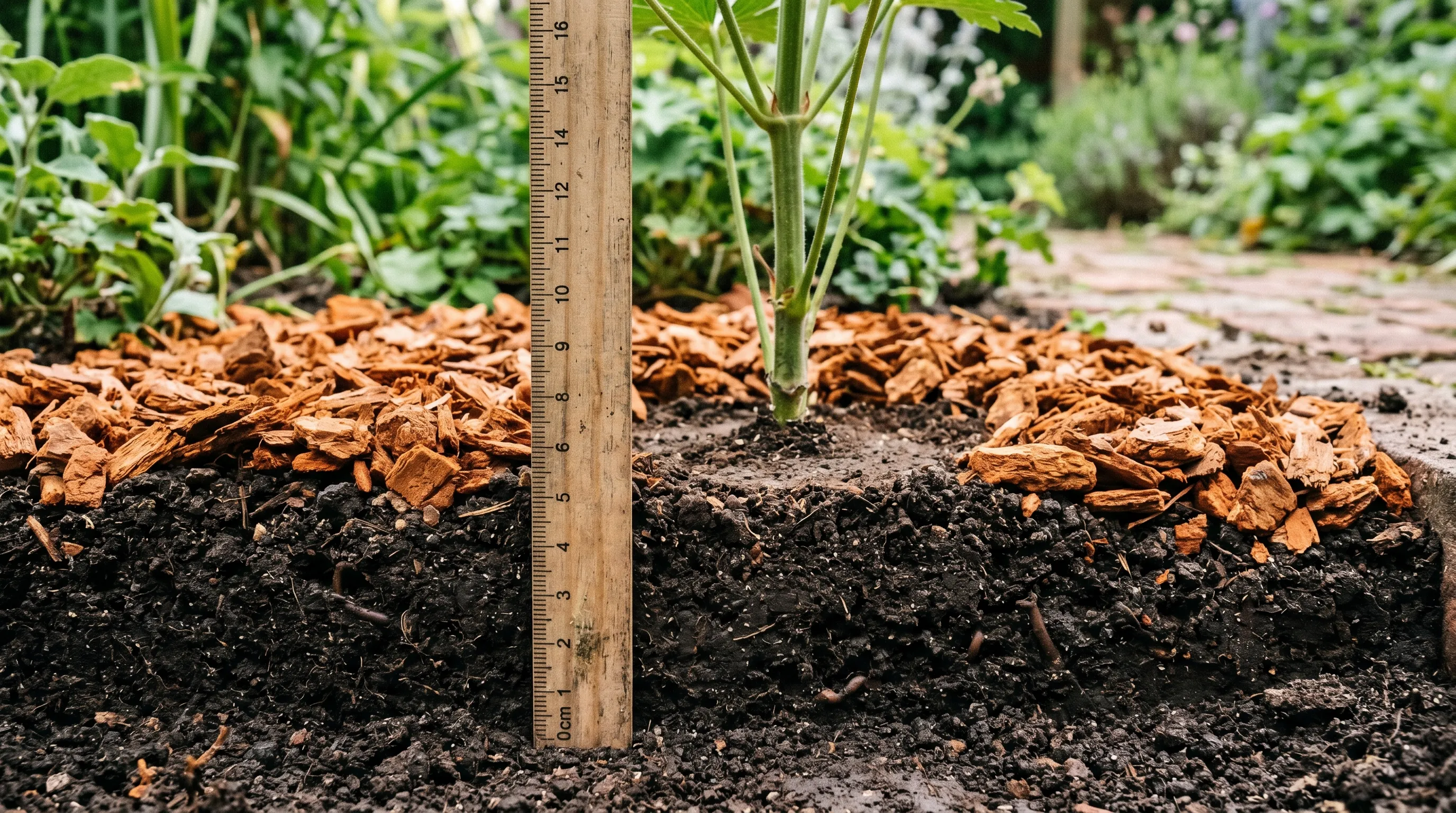 A 7cm mulch layer over moist soil. Note the gap kept clear around the plant stem to prevent collar rot.
When should you use compost instead of mulch?
Use compost when you want to feed and improve the soil itself, not just cover it. The choice is about the job, not the material. If your goal is fertility and better structure, compost is the answer. If your goal is weed control and moisture, a mulch is the answer. Often you want both, which is why compost spread on the surface is so useful.
Reach for a non-compost mulch like bark or gravel when fertility is fine but you want to cut weeding and watering, or you want a decorative finish. A shrub border that is already established rarely needs feeding, so a long-lasting bark mulch makes more sense than compost there. The soil life that breaks mulch down also feeds the mycorrhizal fungi network that plants rely on for nutrients.
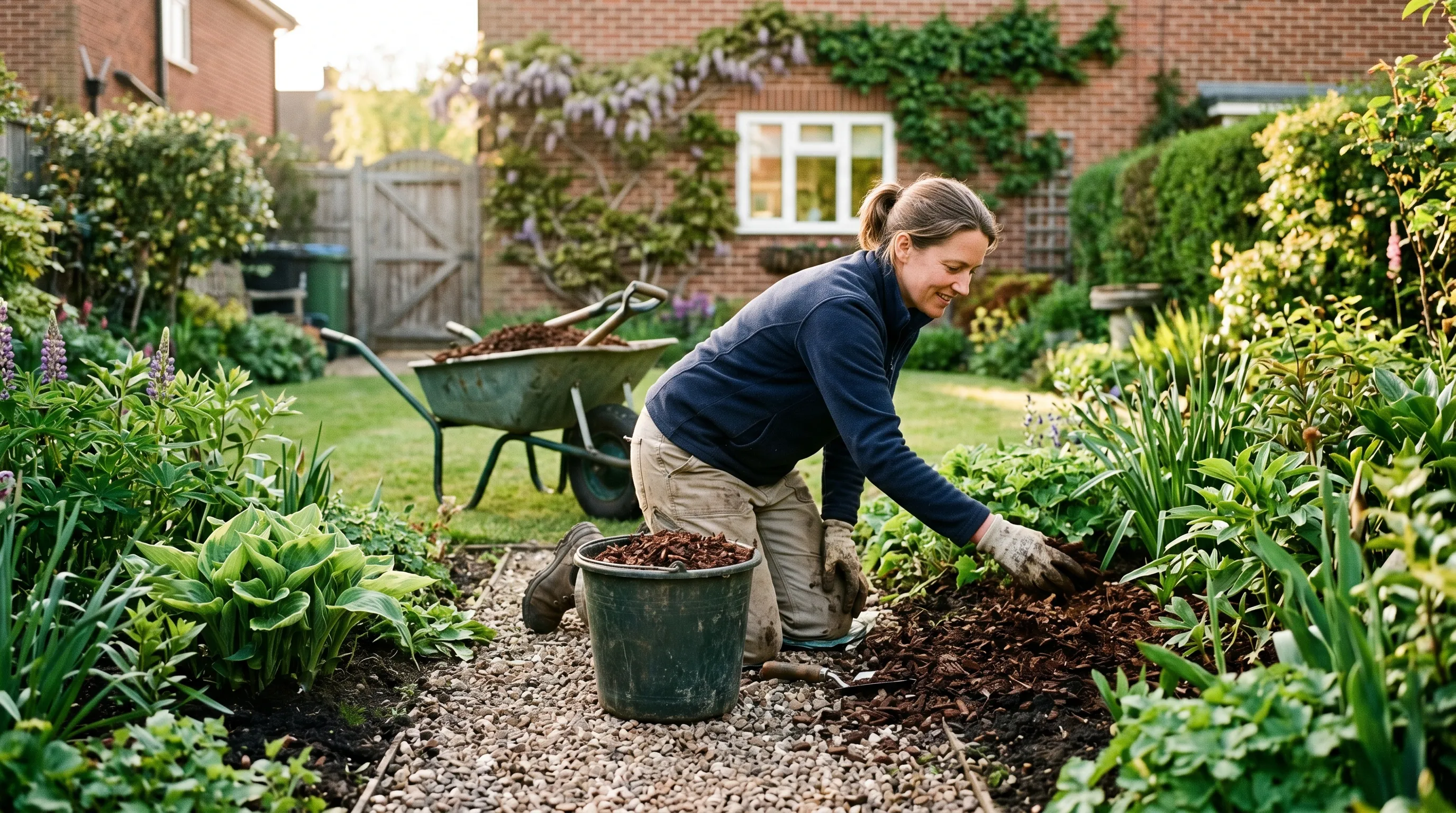 Spreading a 7cm bark mulch by hand in spring. Lay it onto moist, weed-free soil and keep it clear of plant stems.
Common mistakes when mulching and composting
A handful of predictable errors undo all the benefit of mulching. Avoid these five and your mulch will earn its keep.
Mulching onto dry soil. Mulch traps whatever state the soil is in. Lay it over bone-dry ground and it locks the drought in, keeping rain off the roots all summer. Always mulch after good rain or a thorough watering, never onto dust.
Digging bark mulch into the soil. Bark belongs on top. Forked through the root zone it robs nitrogen everywhere at once and can yellow a whole bed. If a material is high-carbon and woody, it stays on the surface.
Piling mulch against stems. The mulch volcano around tree trunks and shrub bases traps moisture against the bark and invites collar rot. Keep a clear 5cm collar around every plant.
Mulching too thin. A 2cm scatter of bark looks tidy but does almost nothing. Weeds push straight through and moisture still escapes. Commit to the full 5 to 7cm or do not bother.
Confusing fresh manure with well-rotted. Fresh manure is too strong and scorches roots and foliage. It also robs nitrogen as it breaks down. Stack it for at least 6 months, or buy it bagged and well-rotted, before using it as a mulch.
For wildlife value, the same rotting process that breaks a mulch down feeds the soil food web. Our guide to composting for wildlife explains how a compost heap and a mulched border together support worms, beetles and the birds that feed on them.
When to mulch through the UK gardening year
Timing matters as much as material. Mulch onto warm, moist soil and you trap the good conditions in. Mulch at the wrong time and you lock in cold or drought. The calendar below is for a typical UK garden.
| Month | Mulching task |
|---|---|
| January | Hold off. Soil is cold and often frozen. Plan and order mulch |
| February | Late winter mulch on milder days, after rain, around established shrubs |
| March | Main spring mulch begins. Soil is warming and usually damp |
| April | Prime mulching month. Mulch borders and veg beds onto moist, warm soil |
| May | Finish spring mulching before soil dries out for summer |
| June | Top up thin patches only. Avoid mulching parched soil |
| July | Mulch holds water now. Only mulch after a good soaking or rain |
| August | Same as July. Water deeply first, then mulch to lock it in |
| September | Autumn mulch begins. Refresh borders as the soil is still warm |
| October | Lay a protective winter mulch of leafmould or compost over beds |
| November | Final mulch on bare veg beds to protect soil over winter |
| December | Hold off on frozen ground. Spread well-rotted manure on dormant beds |
Spring (March to May) is the key window. The soil is warming but still holds winter moisture, so a mulch laid now keeps roots cool and damp right through summer. Autumn (September to November) is the second window, protecting soil and roots over winter and letting worms drag the organic matter down before spring.
Frequently asked questions
Is mulch just rotted compost?
No, mulch is not just rotted compost. Mulch is any surface material, including bark, gravel and straw. Compost is one possible mulch among many. Compost is decomposed organic matter, while a mulch is defined by sitting on the soil surface to suppress weeds and hold moisture. Garden compost spread on top counts as a mulch, but most mulches, like bark and gravel, are not compost at all.
Which is better, mulch or compost?
Neither is better; they do different jobs. Compost feeds and improves the soil when mixed in. Mulch protects the soil surface, cutting weeds and water loss. The best gardens use both: compost dug in or top-dressed to feed, and a mulch laid on top to protect. For a hungry vegetable bed, a compost mulch does both at once, which is why it is so popular.
Can you put mulch over compost?
Yes, you can lay mulch over compost. Spread compost first as a feed, then a bark or gravel mulch on top to suppress weeds. This is a common and effective combination. The compost feeds the plants while the mulch above it locks in moisture and blocks weed light. Keep the total depth sensible, around 7cm combined, so rain still reaches the roots.
Do I need to remove old mulch before adding new?
No, you rarely need to remove old organic mulch. Most bark and compost mulch rots into the soil and you simply top up the thin patches. Only remove mulch if it has matted, gone mouldy, or harbours pests. Otherwise rake it level, check the depth, and add fresh material to bring it back to 5 to 7cm.
Will mulch stop weeds completely?
No, mulch suppresses weeds but does not stop them entirely. A 5 to 7cm mulch blocks light from weed seeds below, cutting annual weeds by around 70%. Perennial weeds with deep roots, like bindweed and couch grass, push straight through. Dig those out first, then mulch to keep new seedlings from germinating in the bare soil.
Get the rest of your soil care right
Our team produces practical UK gardening guidance from source research, contributor records and established horticultural practice. Editorial standards are overseen by Matt W.