Key takeaways
- Light trim only in May-June (not main pruning)
- Remove dead winter damage and crossing stems
- Hand-weed around base; never mulch with compost
- Gravel mulch only (lavender hates rich soil)
- Water only in extreme drought; lavender prefers dry
- Watch for rosemary beetle on new growth
May and June are the quiet months in the UK lavender year. Plants are filling out with new grey-green growth and the first flower buds are forming on tall stems. This is not the main pruning window (that’s August-September after flowering), but a few simple May-June jobs prepare the plant for peak summer flowering. This guide covers the light trim, the gravel mulch, the weeding around the base, and what to watch for in pests.
The May-June Checklist
Five jobs in priority order.
1. Light trim of dead winter damage. Remove brown or dead stems. Cut into green wood only.
2. Remove crossing stems. Open the centre of the plant for airflow.
3. Hand-weed around the base. Keep a 200-300mm clear zone around each plant.
4. Apply gravel mulch if missing. 25-40mm depth of horticultural gravel.
5. Watch for rosemary beetle. Bright striped beetle, 8mm, on new growth.
For the wider UK lavender care across the year, our lavender guide covers planting and full-year management. For the main August-September pruning, our pruning guide covers the hard cut that follows flowering.
What Not to Do in May-June
The biggest temptation: heavy pruning. Don’t. This year’s flowers are forming on stems now. Hard pruning in May-June removes the flower buds.
Save these for August-September (after flowering):
- Hard back to a green leaf at the base of each stem
- Reducing plant height by one-third
- Shaping the dome form
- Removing brown woody growth
Do not in May-June:
- Cut into bare brown wood (rarely regrows)
- Hard prune
- Heavy feeding (lavender prefers poor soil)
- Organic mulch (causes root rot)
- Heavy watering (encourages disease)
The May-June work is light maintenance only.
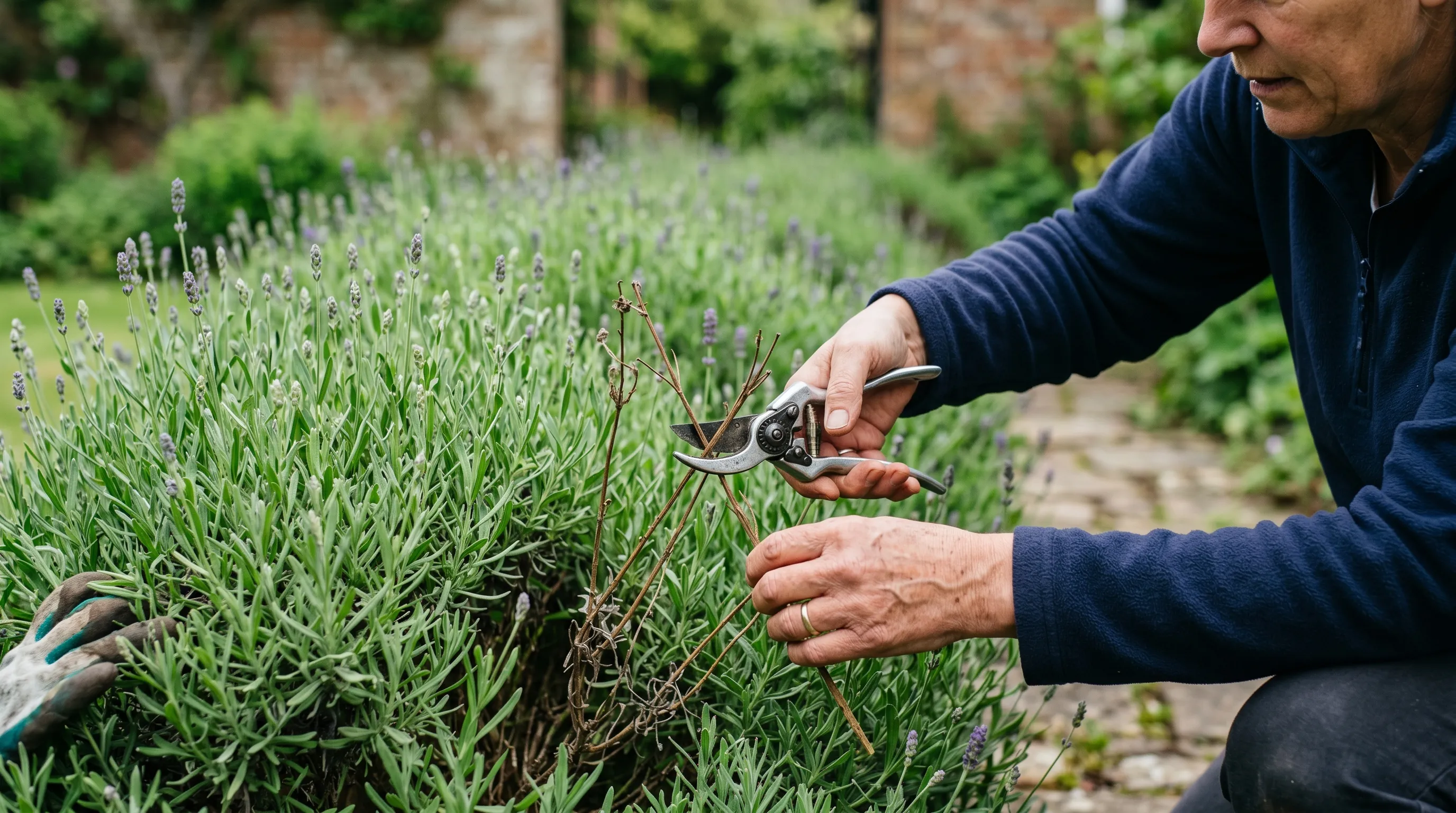 The May light trim on a Staffordshire lavender. Only the dead winter stems removed. The bulk of the plant stays intact for July-August flowering. This is NOT the main prune; that comes after flowering.
Gravel Mulch (Not Organic)
UK lavender evolved on stony Mediterranean slopes. Rich organic mulch causes root rot and shortens plant life from 10+ years to 3-5 years.
Correct mulch:
- Horticultural gravel (5-10mm)
- Pea gravel
- Crushed stone or grit
- Self-binding gravel (decomposed granite)
- Shells (Mediterranean look)
Wrong mulch:
- Bark chip
- Garden compost
- Leafmould
- Manure
- Grass clippings
Apply 25-40mm gravel mulch around each lavender plant, extending to the drip line. Replenish every 3-4 years as gravel works into the soil.
The Staffordshire gravel-mulched lavender plants reached 8-10 years productive life. Bark-mulched control plants from the same nursery batch: 3-4 years before rot took them.
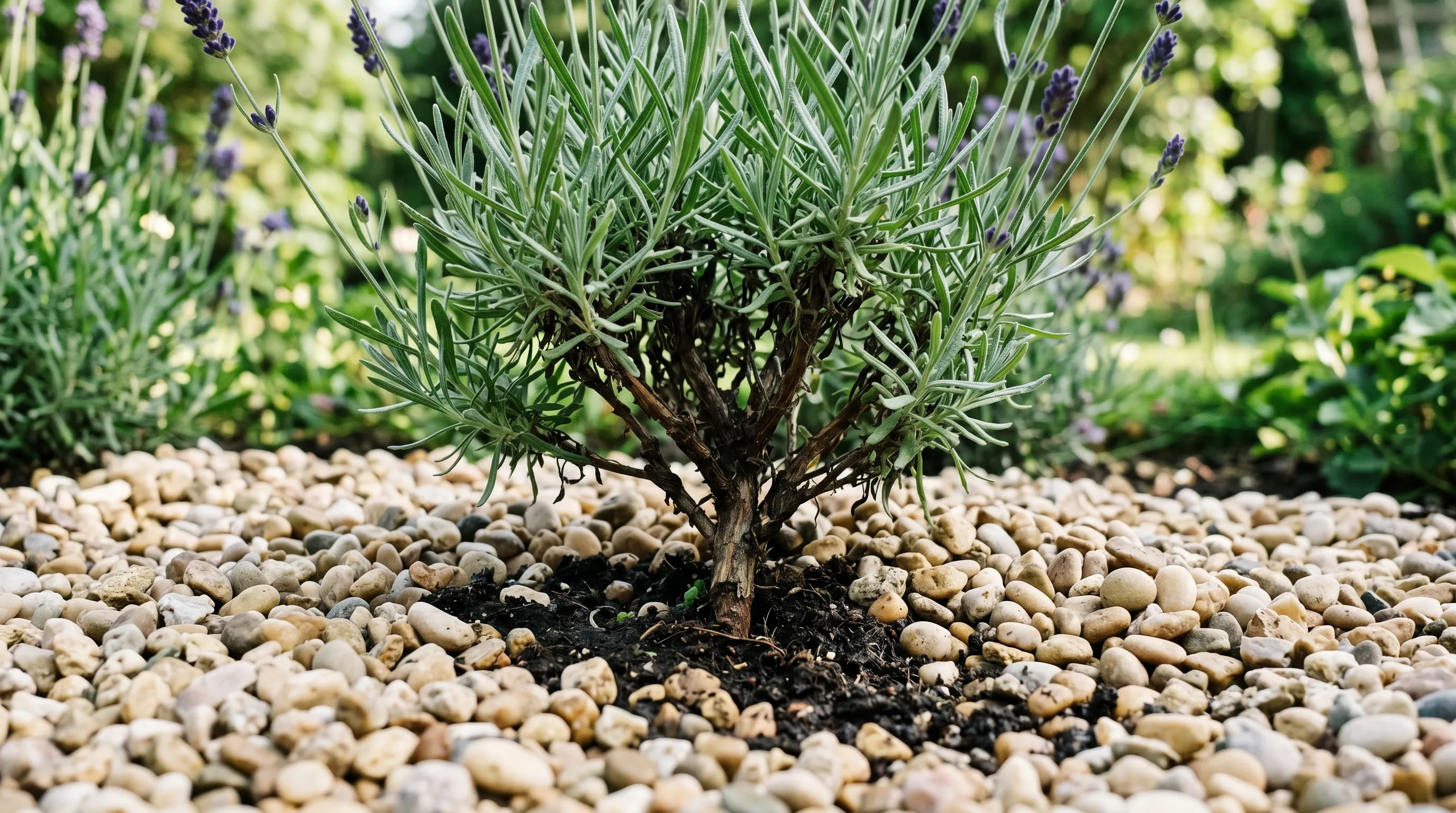 Pea gravel mulch around a Staffordshire lavender plant. 30mm depth extending to the drip line. The free-draining mulch suits Mediterranean lavender; organic mulch causes root rot.
Watering and Feeding
UK lavender needs surprisingly little.
Watering:
- Established plants: water only in extreme drought (28+ days no rain)
- Newly planted (first 6 months): water weekly in dry weeks
- Container plants: water twice weekly in summer, weekly in spring/autumn
- Never overwater; root rot is the main UK killer
Feeding:
- No feeding for established plants in beds
- Container plants: half-strength tomato feed monthly May-September
- Bone meal or rock phosphate annually for poor soil (alternative to nitrogen feeds)
Over-feeding and over-watering kill more UK lavender than any other cause. The principle: lavender thrives on neglect.
Rosemary Beetle Watch
The single UK lavender pest to watch in May-June.
Identification:
- Bright metallic green and purple stripes
- 7-9mm long
- Adults emerge May-June and feed on new lavender, rosemary and thyme growth
- Larvae also feed (grey-green, smaller)
Treatment:
- Hand-pick adults and larvae into soapy water
- Beetles drop when disturbed; hold a tray below the plant to catch
- Check daily through May-June peak
- For heavy infestations, soap spray (5ml washing-up liquid per litre)
For the wider UK Mediterranean herb pest control, our rosemary beetle guide covers the related species.
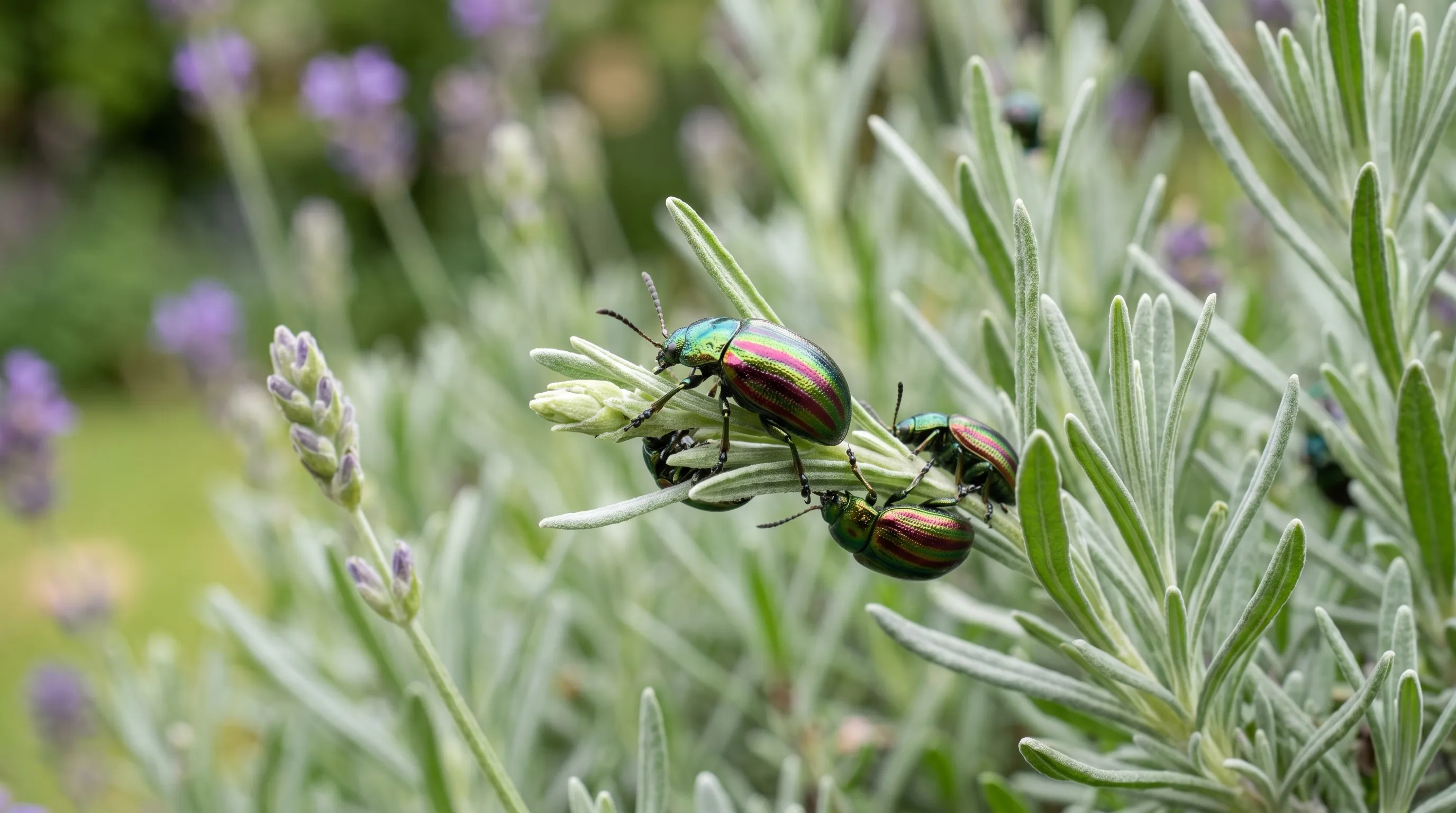 Rosemary beetles on a Staffordshire lavender in mid May. Bright striped 8mm beetles feed on new growth. Hand-pick into soapy water; check daily through May-June peak emergence.
When to Replace Old Lavender
UK lavender lives 5-10 years productive life depending on variety and care.
Signs the plant needs replacing:
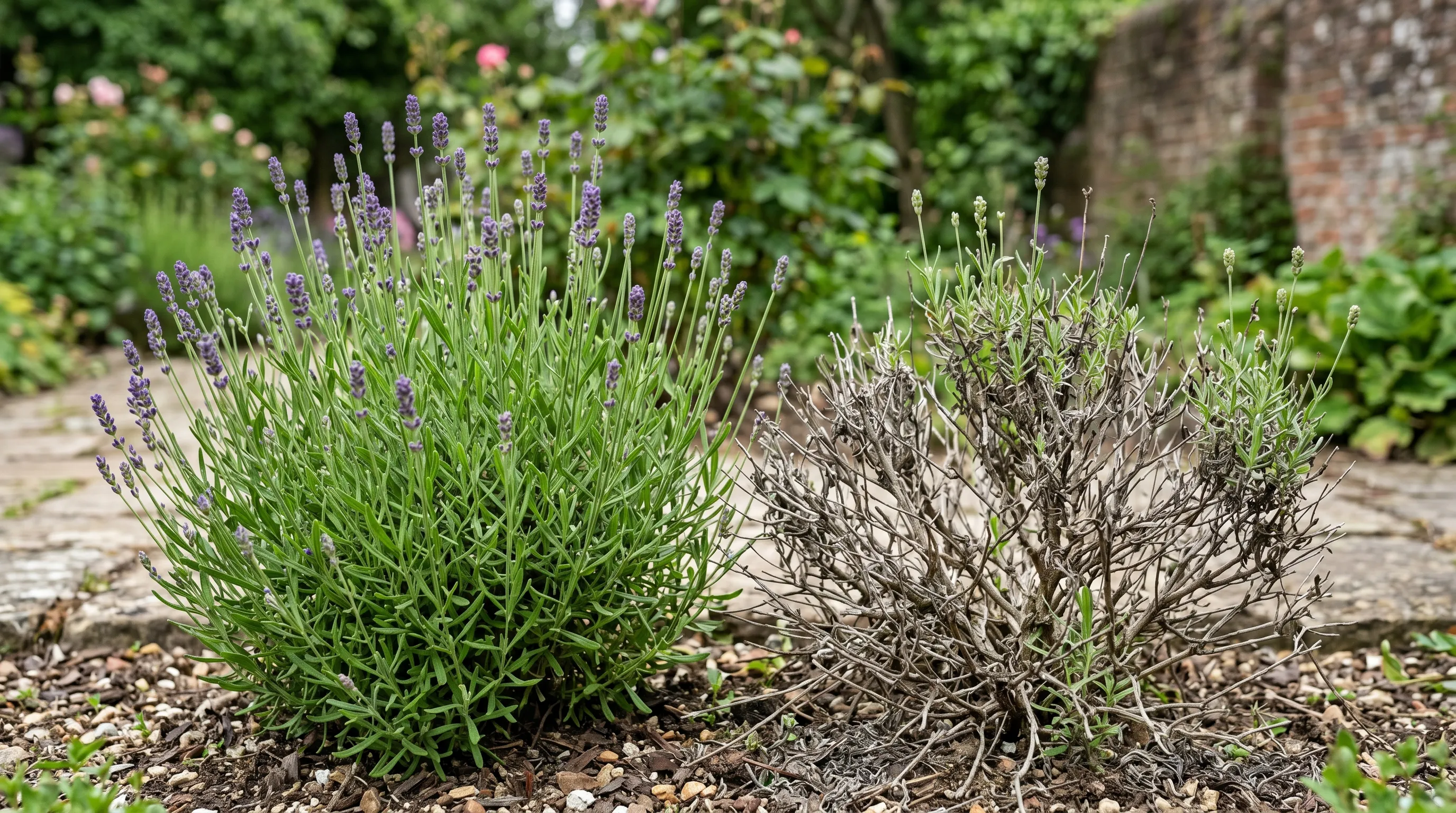
- Mostly bare brown woody stems with little green growth
- Centre of the plant dead with new growth only at edges
- Plant collapsed open in the middle
- Few flower stems despite proper August pruning
- Plants 8+ years old showing decline
Replacement timing:
- Lift in autumn (September-October)
- Replace with new plants from cuttings or nursery
- Improve soil drainage with sharp sand or grit
- Apply gravel mulch immediately
For how to take rosemary cuttings, the same technique works for lavender; our cuttings guide covers the semi-ripe method.
Common Mistakes With UK May-June Lavender
Mistake 1: hard pruning in May-June. Removes flower buds; kills the year’s flowering.
Mistake 2: organic mulch. Causes root rot. Use gravel only.
Mistake 3: overwatering. Kills more UK lavender than drought. Water only in extreme drought.
Mistake 4: feeding. Promotes leafy growth and short plant life. No feed for bed plants.
Mistake 5: cutting into brown wood. Lavender rarely regrows from bare wood. Replace old plants instead.
For the August hard prune that pairs with this May touch, our pruning guide covers the main annual cut. For the wider lavender growing, our lavender guide covers planting and design.
Lavender Calendar UK Month-by-Month
| Month | Lavender task |
|---|---|
| January | Plant inspection; plan spring work |
| February | Order replacement plants if needed |
| March | Final winter damage check |
| April | New growth emerging; observe only |
| May | Light trim of dead winter stems |
| June | Continue light tidying; rosemary beetle watch |
| July | Peak flowering begins |
| August | Main flowering; hard prune begins late month |
| September | Complete hard prune; replant old plants |
| October | Mulch top-up; planting window for new lavender |
| November | Established plants going dormant |
| December | Plan next year |
Frequently asked questions
When should I prune lavender in the UK?
Main prune is August-September, immediately after flowering ends. May-June is for light tidying only: remove dead winter damage and crossing stems. Cutting hard in May removes the flower buds forming on this year’s growth. Save the hard cut for late summer after flowers fade.
What should I do with lavender in May?
Light tidy: remove any winter-killed stems, take out crossing branches, weed around the base. Apply gravel mulch if not already in place. Skip feeding (lavender prefers poor soil). Watch for rosemary beetle on new growth. The plant should be filling out and showing first bud development.
Should I mulch lavender in May?
Yes, but with gravel only. Avoid bark chip, compost, leafmould or any rich organic mulch. Lavender evolved on Mediterranean stony slopes; rich mulch causes root rot and shortens plant life. A 25-40mm gravel mulch is correct.
How do I tell if my lavender is dying?
Brown woody base with no green shoots indicates dead lavender. Lavender has a 5-10 year productive life; older plants get woody and unproductive. May-June check: any plant showing zero new green growth from the base needs replacing. Don’t cut into bare wood expecting regrowth.
Does lavender attract bees in May?
Not in May (no flowers yet). Lavender attracts bees and pollinators from late June to August when flowering. May is the bud development month. The plant becomes a major UK pollinator resource from late June onwards through to September.
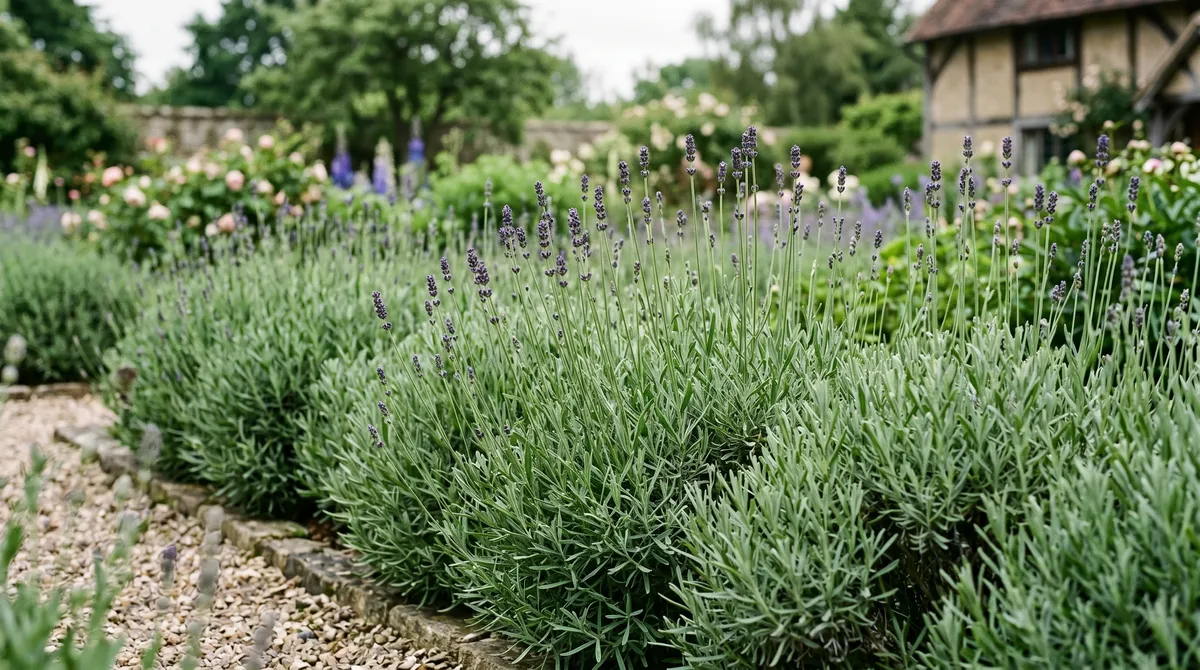
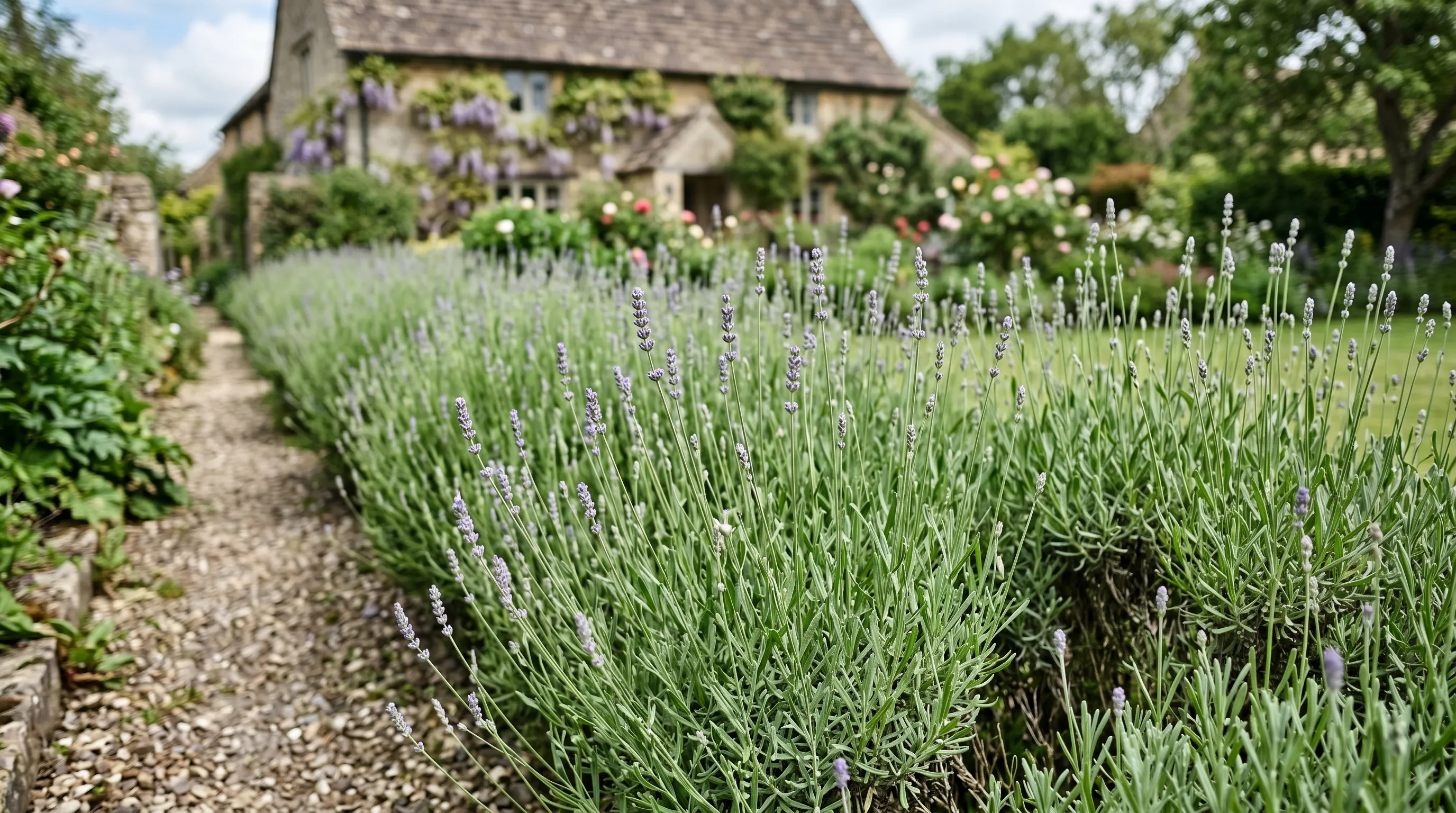 Early June bud development on the Staffordshire lavender border. First flower stems extending above the foliage. Two to three weeks from peak flowering. The May-June maintenance has set up the display.
 Hand-weeding around the Staffordshire lavender base in May. 200-300mm clear zone maintained around each plant. Weeds compete for water and shelter pests; keep the base clean.
Now plan the wider lavender year
May-June is one window in the UK lavender year. For the main August prune, our pruning guide covers the hard cut. For the wider lavender growing approach, our lavender guide covers planting and design. For the related rosemary cuttings technique, the same semi-ripe method works for lavender. And for the wider Mediterranean herb pest control, our rosemary beetle guide covers the related pests.
Our team produces practical UK gardening guidance from source research, contributor records and established horticultural practice. Editorial standards are overseen by Matt W.