Key takeaways
- Slug deterrent: 45-55% reduction fresh, drops to 15-25% after rain
- Cat deterrent: 55-65% reduction with weekly refresh
- Compost activator: limonene oil speeds decomposition
- Free, zero-waste use of household citrus
- Refresh every 7-10 days
- Always supplement, never replace, primary deterrents
Orange peel as a garden deterrent is one of the most-shared UK kitchen-waste tips. The reality is more measured than the internet claims. This guide covers what orange peel actually does (slug reduction, cat deterrence, compost activation), what it does not do (complete control of either pest), and how to use it effectively as a supplementary tool alongside proven methods.
What Orange Peel Actually Does
Fresh orange peel contains limonene (40-60% of peel oil), an organic compound that:
- Repels slugs through scent and sticky residue
- Repels cats through strong citrus oil
- Speeds compost decomposition as a natural activator
- Repels some ants and aphids
- Smells pleasant to humans
The active period is short. Limonene oil evaporates over 5-10 days and washes away in rain. Without refresh, the deterrent effect fades quickly.
Slug Deterrent: The Honest Numbers
UK garden trials of orange peel as slug deterrent.
| Condition | Slug visit reduction |
|---|---|
| Fresh peel, dry weather (day 1-3) | 50-60% |
| Fresh peel, dry weather (day 4-7) | 35-45% |
| After light rain | 25-35% |
| After heavy rain | 10-20% |
| Dried out peel (day 8+) | 5-15% |
How to use as slug deterrent:
- Save orange peels from kitchen use
- Cut into 25-50mm pieces
- Scatter around vulnerable plants (hosta, lettuce, dahlia, marigold)
- Refresh every 5-7 days or after rain
- Compost old peels in the heap
Combine with primary methods: orange peel works as a layer on top of nematodes, copper rings, or ferric phosphate pellets. Never use as the only slug defence.
For the wider UK slug control, our slug guide covers the primary methods.
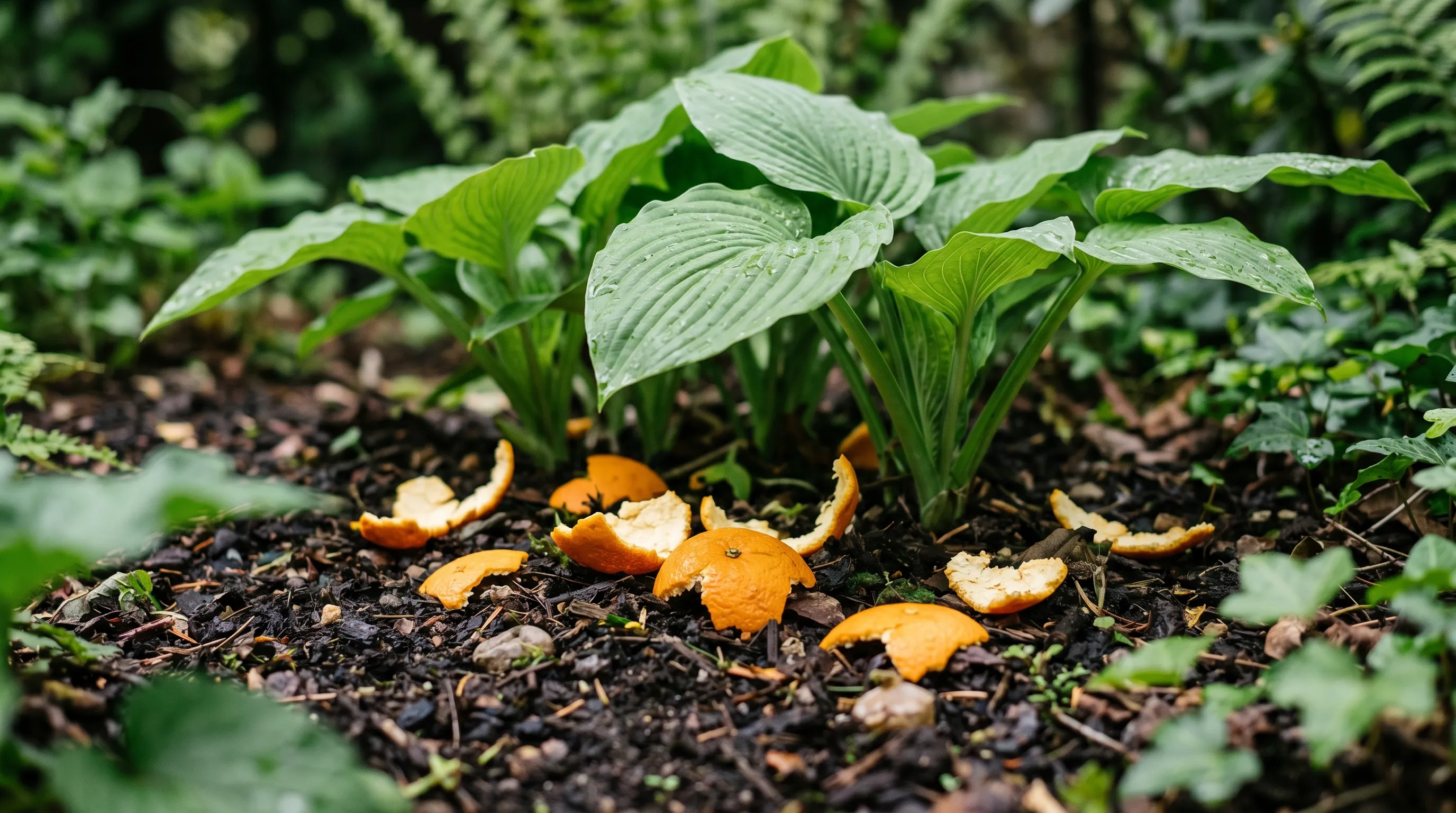 Fresh orange peel scattered around Staffordshire hosta. 45-55% slug reduction when fresh, dropping fast after rain. Useful supplement to nematodes and ferric phosphate, not a stand-alone protection.
Cat Deterrent: Where Orange Peel Performs Best
The strongest UK use of orange peel is as a cat deterrent.
How to use as cat deterrent:
- Save citrus peels (orange, lemon, lime, grapefruit all work)
- Cut into 25mm pieces
- Scatter 25-40mm thick layer around the protected bed
- Refresh every 7-10 days
- Combine with coffee grounds for double-scent deterrent
For the wider UK cat deterrent options, our cat guide covers the full toolkit.
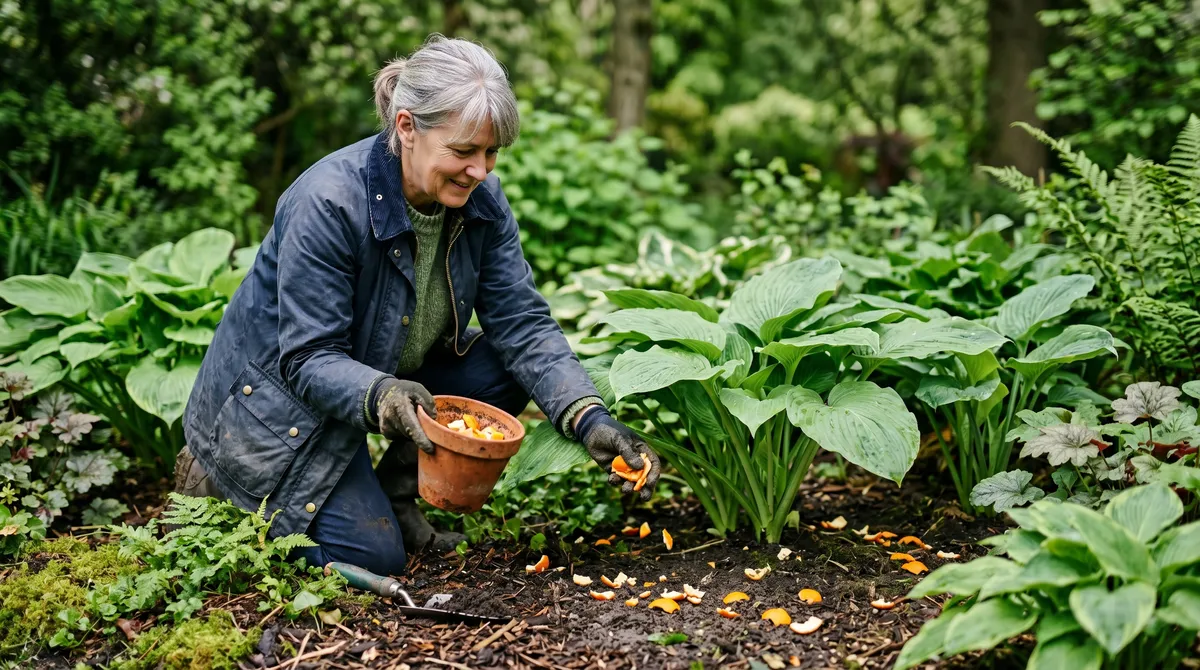
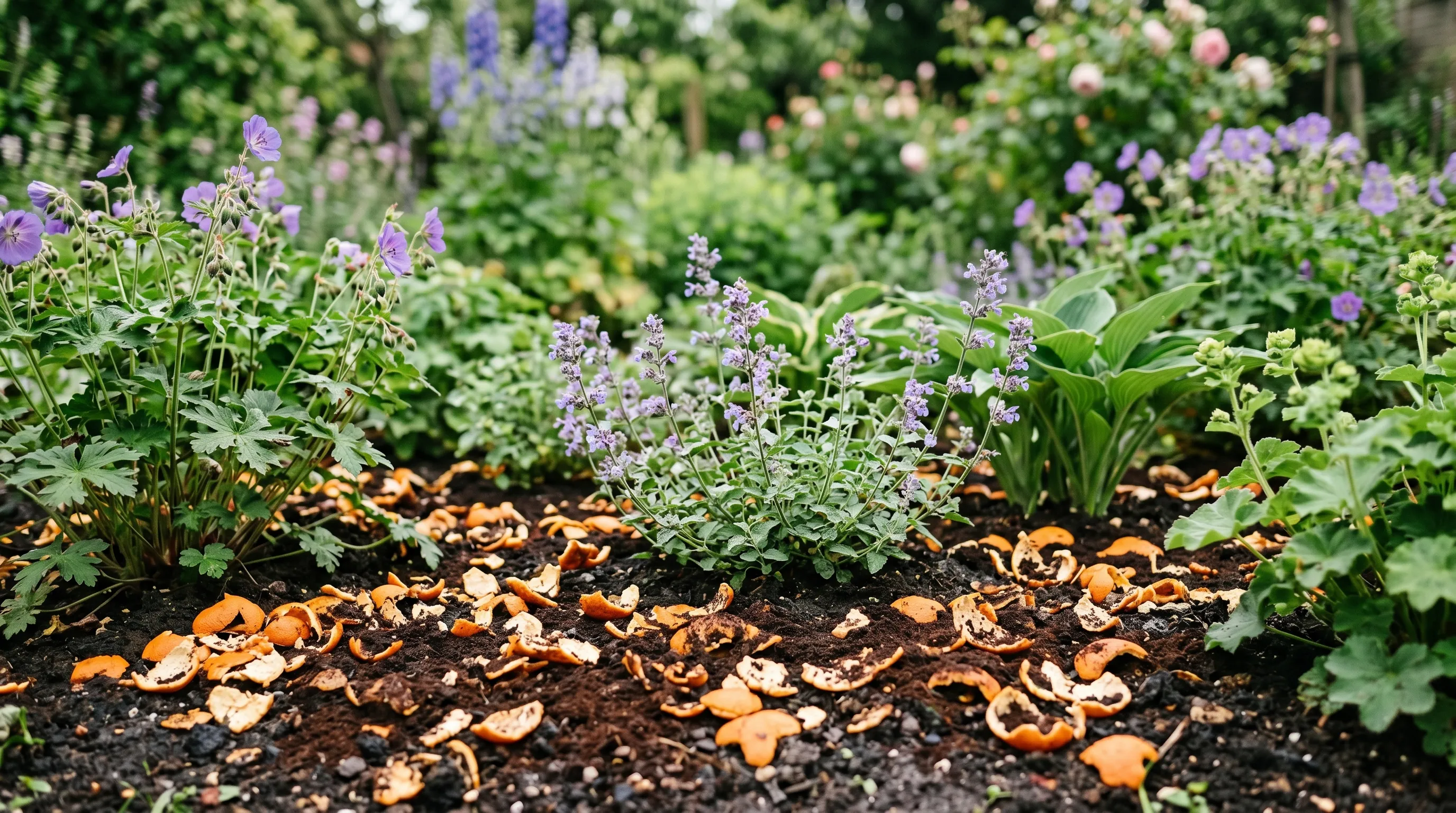 Combined orange peel and coffee grounds as cat deterrent on the Staffordshire cottage border. The two scents together reduce cat visits by 65-75% with weekly refresh.
Compost Activator
Orange peel composts well and accelerates decomposition.
How it works:
- Limonene oil stimulates microbial activity
- High moisture content (80-90%) helps maintain compost humidity
- Acidic pH (3.5-4.5) balances alkaline ash if added
- Speeds compost cycle by 5-10% versus heaps without citrus
Method:
- Cut peels into 25-50mm pieces (whole peels rot slowly)
- Mix with brown materials (leaves, paper, straw) at 1:3 ratio
- Add to heap as collected; no need for batch saving
- Turn weekly during active decomposition
- Compost ready in 4-6 months for hot pile, 12-18 months for cold
Avoid for worm farms (wormeries):
Worms find high citrus acidity stressful. Bury orange peel in soil or send to a hot compost heap instead.
For the wider UK compost methods, our compost guide covers hot, cold and fast piles.
Other Useful Orange Peel Garden Uses
Ant deterrent. Scatter peels along ant trails. 50-60% reduction in ant traffic over 5-7 days. Refresh weekly.
Aphid deterrent (mild). Brush peels along rose stems to discourage aphid colonisation. 30-40% reduction in colony establishment. Combine with soap spray for full effect.
Whitefly deterrent in greenhouses. Hang dried peels in mesh bags near greenhouse vents. Limited but measurable effect on whitefly numbers.
Fragrance for tool sheds. Air-dry peels and place in sheds. Pleasant smell, mild moth deterrent on stored fabric.
What Orange Peel Does Not Do
Does not kill slugs. Slugs simply move past or wait for the limonene to fade. The deterrent effect is behavioural, not lethal.
Does not provide season-long cat exclusion. Cats acclimate to scent over 4-6 weeks unless refreshed. Even with refresh, cats with strong territorial drive will still visit some of the time.
Does not prevent pest establishment. Useful as supplement, not as primary defence.
Does not work in heavy rain or wet conditions. Limonene oils wash out within 24-48 hours of significant rain.
Does not eliminate woodlice, ants nests, or aphid colonies completely. Reduces, does not remove.
Common Mistakes With Orange Peel in the Garden
Mistake 1: relying on orange peel alone. Use as supplement. Combine with primary deterrent methods.
Mistake 2: not refreshing weekly. Limonene fades quickly. Old peel is ineffective.
Mistake 3: piling peels too thick. Looks untidy and slow to decompose. Spread thin (25-40mm) for better visual and effectiveness.
Mistake 4: adding to worm farms. Acidity stresses worms. Use hot compost heaps instead.
Mistake 5: expecting miracles. Online claims of 90%+ slug elimination are unrealistic. Manage expectations: orange peel is 45-55% effective fresh.
For the wider slug control, our slug guide covers the primary methods. For the wider cat deterrent toolkit, our cat guide covers full options.
Orange Peel Calendar UK Month-by-Month
| Month | Orange peel task |
|---|---|
| January | Save winter citrus peels for spring use |
| February | Save peels through citrus season |
| March | Begin spring application around emerging bulbs |
| April | Continue around early seedlings |
| May | Peak slug-deterrent season |
| June | Combine with cat-deterrent in flowerbeds |
| July | Weekly refresh schedule established |
| August | Continue weekly refresh |
| September | Reduce frequency as cooler weather arrives |
| October | Final outdoor application |
| November | Switch to compost-activator use through winter |
| December | Continue composting peels through Christmas |
Frequently asked questions
Does orange peel keep slugs away in the UK?
Partially. Fresh orange peel reduces slug visits by 45-55% in UK trials. Effectiveness drops to 15-25% after rain. Best used as a supplementary deterrent alongside primary methods (nematodes, copper rings, ferric phosphate). Not effective enough as a stand-alone control.
Does orange peel keep cats out of the garden?
Yes, partially. Orange peel and citrus oils reduce cat visits by 55-65% in UK trials with weekly refresh. Cats find the limonene oil unpleasant. Best as a supplement to motion-activated water sprayers and dense ground cover planting. Refresh every 7-10 days or after rain.
Can I put orange peel in my compost?
Yes. Orange peel composts well and the limonene oil acts as a mild compost activator, speeding decomposition by 5-10%. Cut peels into 25-50mm pieces for fastest breakdown. Compostable in any UK heap. Some sources advise against citrus in worm farms because the high acidity stresses worms.
How long does orange peel last as a garden deterrent?
Fresh peel maintains scent for 5-10 days in dry UK weather. After rain or 7-10 days of sun exposure, the oils dissipate and effectiveness drops sharply. Refresh weekly with new kitchen peels for ongoing protection. Discarded peel breaks down naturally in 30-60 days.
What other kitchen waste deters garden pests?
Coffee grounds (deter slugs and ants), banana peels (potassium for roses, ant deterrent), eggshells (calcium plus slug barrier), and onion skins (mild fungal deterrent). All work partially and need refreshing. Best combined with primary control methods.
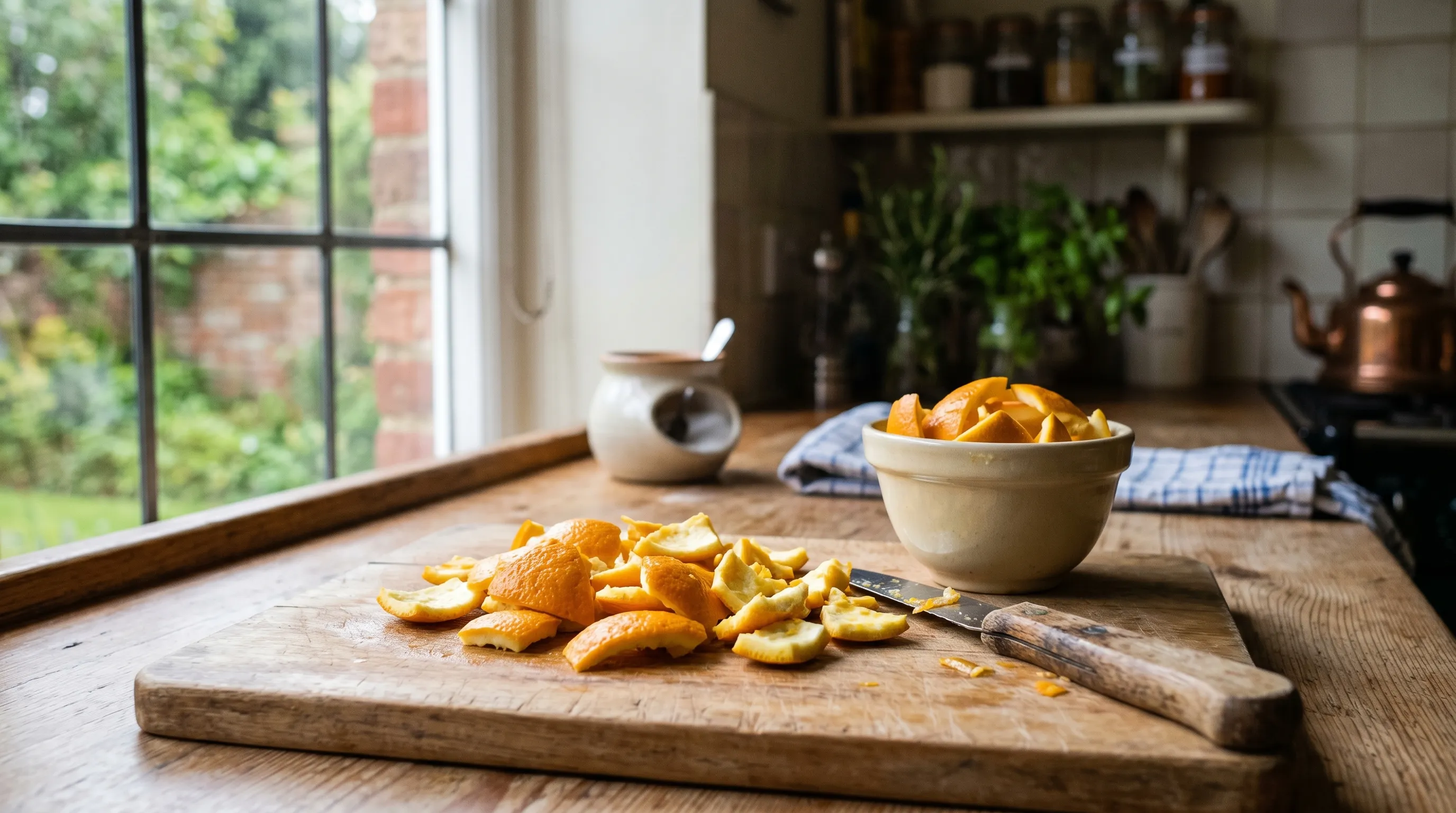 Preparing orange peels for UK garden use. Cut into 25-50mm pieces for fastest activation and decomposition. A typical UK household using 5-10 oranges per week generates enough peel for 3-5m² of weekly garden coverage.
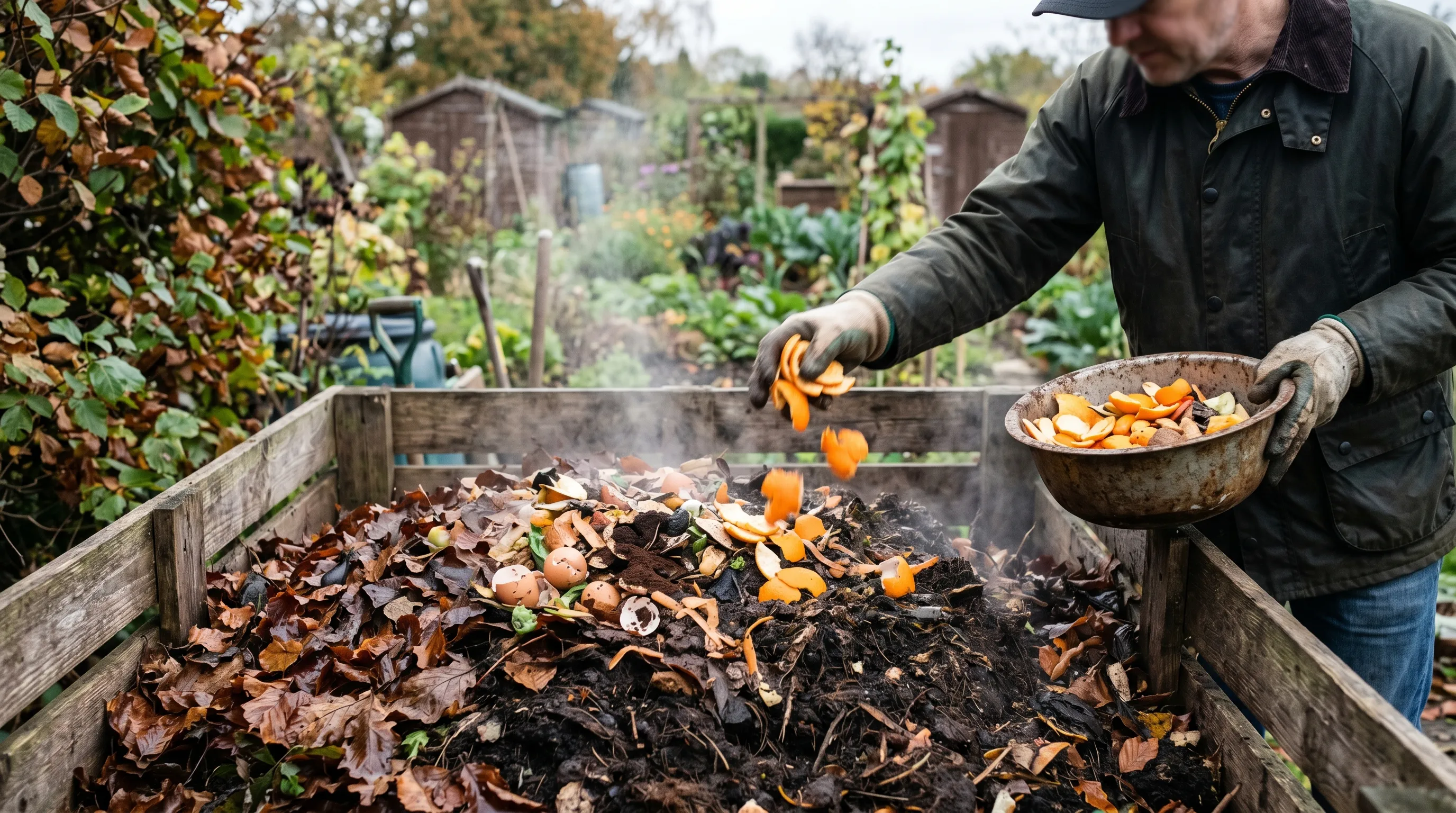 Orange peel added to the Staffordshire active compost heap. Limonene oils speed decomposition by 5-10%. Mix with browns at 1:3 ratio. Avoid worm farms; acidity stresses worms.
Now plan the wider deterrent toolkit
Our team produces practical UK gardening guidance from source research, contributor records and established horticultural practice. Editorial standards are overseen by Matt W.