Key takeaways
- Never walk on waterlogged soil (causes 6-12 months of compaction damage)
- Wait 48-72 hours for surface water to drain naturally
- Lift damaged annuals, cut back broken perennials
- Aerate compacted lawn with fork or hollow-tine in autumn
- Long-term: French drains, raised beds, rain garden design
- Heavy spring rain expected to continue in UK weather pattern
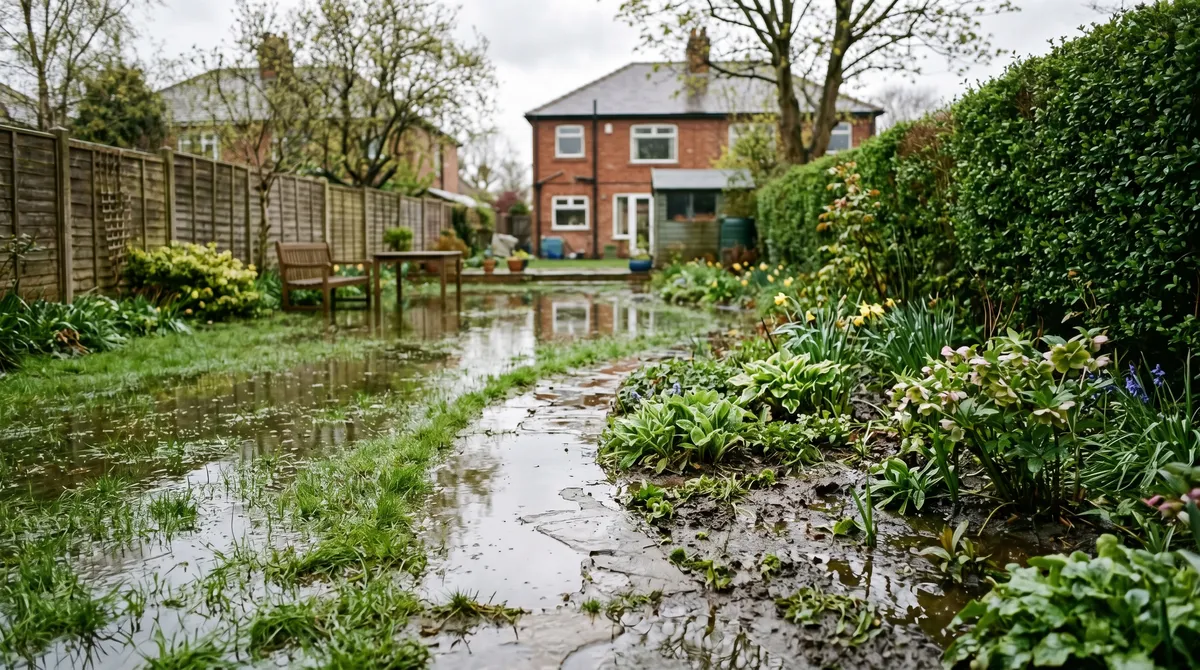
Spring 2026 brought unusually heavy UK rainfall to many regions, leaving gardens waterlogged for days at a time. This guide covers what to do immediately after heavy rain, what to leave alone, how plants recover, and the long-term changes that build waterlog resilience into UK gardens.
After 9 years of recovering UK heavy-rain damage at Staffordshire, the patterns are clear. Patience is the cheapest fix. The no-walk rule prevents compaction damage. Long-term drainage investments prevent repeat damage.
Immediate Response: The First 48-72 Hours
The most important rule: stay off the waterlogged ground.
Walking on saturated soil causes structural compaction that:
- Closes soil air channels
- Kills earthworms and beneficial microbes
- Reduces drainage rate by 40-60%
- Takes 6-12 months to recover even with intervention
Wait for surface water to drain. UK garden soils typically drain surface water within 24-48 hours on free-draining sites and 48-96 hours on clay. Once you can walk without leaving deep footprints, light intervention is safe.
What to do from a path or stable edge (within 48 hours):
- Observe damage; do not enter beds
- Note positions of fallen plants for later assessment
- Photograph for insurance if substantial flooding occurred
- Clear leaves and debris from drains/grates if visible from path
- Ensure rainwater butts and downpipes are clear
What to avoid (during waterlog):
- Walking on lawn or beds
- Lifting fallen plants
- Pulling weeds (compacts soil under your feet)
- Heavy mowing (deep tyre/footprint marks)
- Any digging or hoeing
Plant Recovery Assessment (Days 3-14)
Once the ground is walkable, work through plant damage.
Annuals (bedding plants):
- Fallen or floating plants rarely recover; remove
- Slimy stems indicate rot; remove and dispose
- Upright plants with mud-splashed leaves usually recover after a hose-wash
- Recovery rate: 30-50% for UK annual bedding
Perennials:
- Most UK herbaceous perennials tolerate 3-5 days waterlog
- Broken stems: cut back to a healthy node
- Bent stems: prop with canes; most straighten in 7-14 days
- Recovery rate: 70-90% for established UK perennials
Shrubs:
- Established shrubs rarely show damage from short waterlog
- Watch for yellow leaves at the base (root stress signal)
- Don’t fertilise stressed shrubs for 4-6 weeks
- Recovery rate: 90-95%
Vegetables:
- Lettuce, brassicas: high disease risk; inspect daily
- Onions, garlic: very susceptible to rot; lift any showing yellowing
- Tomatoes, courgettes, beans: usually recover
- Recovery rate varies hugely by crop and duration
Trees:
- Established trees tolerate UK garden waterlog well
- Young trees (under 3 years) may show stress
- No immediate intervention; assess in autumn
- Recovery rate: 95%+
The Staffordshire 2024 heavy-rain event lifted 18 mature dahlias for 4 days underwater. At assessment 14 days later, 14 plants showed new shoots from the tuber. 4 plants died. Recovery: 78% for an extreme case.
Lawn Recovery
UK lawns suffer particular damage from heavy rain.
Immediate observable damage:
- Yellow patches where water sat longest
- Squelchy ground with low resilience to walking
- Visible mud splashes on grass blades
- Standing water in low spots
Recovery actions (after 7-14 days when soil firms):
- Light raking to remove dead grass and debris
- Wait for full drying (3-5 weeks for clay soils)
- Aerate compacted areas with a garden fork: 100-150mm depth, 100mm spacing
- Top-dress bare patches with peat-free compost
- Reseed bare patches with mixed lawn seed
- Apply autumn lawn feed in September
For the wider UK lawn recovery approach, our lawn feeding guide covers long-term restoration.
For severely compacted UK lawns:
- Hollow-tine aeration (hire equipment £30-£50 per day)
- Plug-and-seed bare areas
- Plan French drains if water collected in same spot
- Consider rain garden conversion of chronically wet areas
 Hollow-tine aeration on the Staffordshire lawn 6 weeks after a major rain event. 100mm-deep cylindrical cores removed at 100mm spacing. Sharp sand top-dressed afterwards improves long-term drainage by 30-40%.
Long-Term Drainage Improvements
UK climate is shifting toward heavier intermittent rain. Long-term garden resilience needs structural changes.
Soil structure improvements:
- Annual 50mm leafmould top-dressing on all beds
- Cardboard plus grass mulch on cleared areas
- Avoid digging clay soils (use no-dig methods)
- Add 25-50% sharp sand to chronically wet beds
Drainage installations:
- French drain: trench 300-500mm deep filled with gravel, perforated pipe at base. £150-£400 per 10m installed.
- Soakaway: large gravel-filled hole for downpipe water. £200-£500 to build.
- Land drains: terracotta or plastic pipe network for whole-garden drainage. £1,500-£5,000 professionally installed.
- Rain garden: designed depression to absorb runoff. £100-£300 in materials.
Design changes:
- Raised beds 100-200mm above ground level
- Permeable paving instead of solid slabs
- Gravel paths instead of grass between beds
- Slope grading to direct water to a rain garden
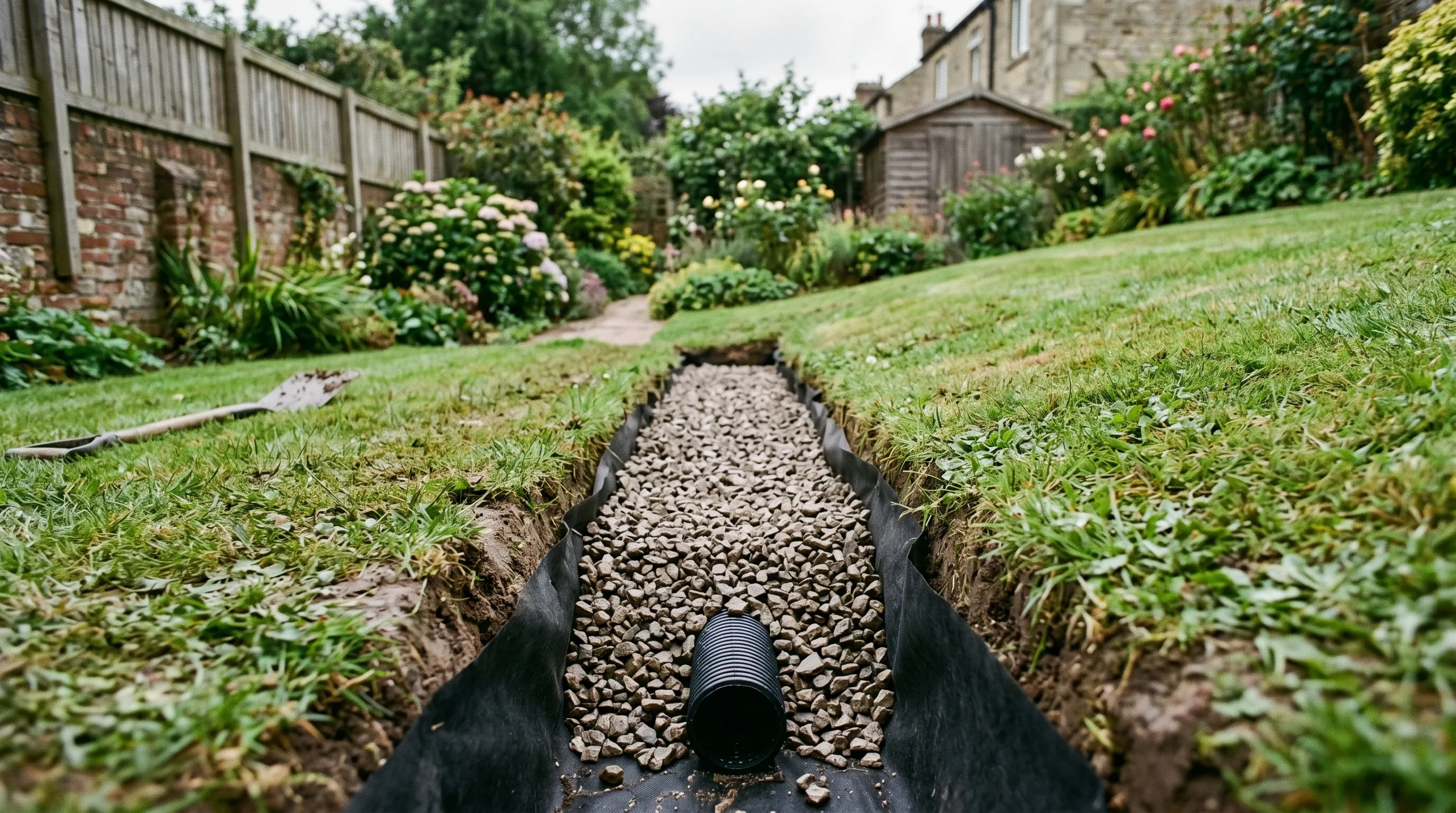 The Staffordshire French drain installation. 400mm deep, 300mm wide, filled with 20mm clean gravel over a perforated 100mm pipe. Diverts runoff from the upper slope to a soakaway at the bottom. Eliminated chronic spring waterlogging.
When to Call in Professionals
Most UK garden waterlogging is manageable with DIY work. Some situations need professional help.
Get a drainage specialist if:
- Water visible in house cellar or floor air bricks
- Foundations or paths showing damp damage
- Lawn pooling in the same spot for 7+ days repeatedly
- Garden 20%+ underwater after typical UK rain
- Slope failures or visible erosion
Get a tree surgeon if:
- Trees leaning after heavy rain (saturated soil weakens roots)
- Large branches broken
- Visible soil cracking around trunk base
- Multiple trees affected
Professional costs: £80-£200 per hour for drainage surveys, £200-£500 per day for tree work. Insurance may cover storm damage; check before paying out of pocket.
Common Mistakes With UK Heavy-Rain Recovery
Mistake 1: rushing in to tidy up. Compacts saturated soil for 6-12 months. Wait 48-72 hours.
Mistake 2: lifting all flopped plants immediately. Many recover. Wait 7-14 days before removing.
Mistake 3: heavy spring feeding after waterlog. Stressed roots cannot use nitrogen. Wait 4-6 weeks.
Mistake 4: ignoring lawn aeration. Compacted lawns stay waterlogged on every subsequent rain. Aerate in autumn after recovery.
Mistake 5: assuming this is a one-off. UK heavy-rain events are increasing. Invest in drainage now to avoid repeat damage.
Sodden Garden Calendar UK Month-by-Month
| Month | Heavy-rain recovery task |
|---|---|
| January | Inspect drainage during winter wet |
| February | Plan spring drainage improvements |
| March | Spring rain monitoring; observe drainage |
| April | Heavy spring rain peak in UK; recovery mode |
| May | Continued recovery; plant assessment |
| June | Replant any losses |
| July | Watch for summer flash flooding |
| August | Plan autumn drainage works |
| September | Aerate compacted lawn areas |
| October | Install French drains during dry weather |
| November | Continue drainage works |
| December | Inspect and clear drains for winter |
Frequently asked questions
What should I do immediately after heavy rain in my UK garden?
Stay off waterlogged areas for 48-72 hours. Walking on saturated soil compacts it for 6-12 months. Wait for surface water to drain naturally. Then assess damage: lift fallen annuals, cut back broken perennials, prop up bent shrubs. Most plants recover without intervention.
Will my flowers recover from being underwater?
Most established UK plants recover from 24-72 hours of waterlogging. Annuals are more vulnerable than perennials. Plants underwater for more than 5-7 days suffer root rot and rarely recover. Recovery signs appear within 7-14 days: new growth from base or stems, leaves greening again.
How do I dry out a waterlogged UK lawn?
Wait for natural drainage (3-7 days for surface water, 14-21 days for full soil drying). Once dry, aerate compacted areas with a garden fork or hollow-tine aerator. Top-dress with sharp sand to improve drainage. Reseed bare patches. Heavy lawns may need French drains long-term.
Will my vegetables survive heavy UK rain?
Depends on the crop and duration. Tomatoes and courgettes recover from short waterlogging. Onions and garlic suffer rapidly (rot in 3-5 days). Lettuce and salad crops often die from disease infection after flooding. Inspect daily for the first 14 days; lift any showing rot.
How can I prevent garden waterlogging long-term?
Combination approach: improve soil structure with annual leafmould top-dressing, install French drains where water collects, raise beds 100-200mm on heavy clay, design rain gardens to absorb storm runoff. UK climate is shifting toward heavier intermittent rain so plan for waterlog resilience.
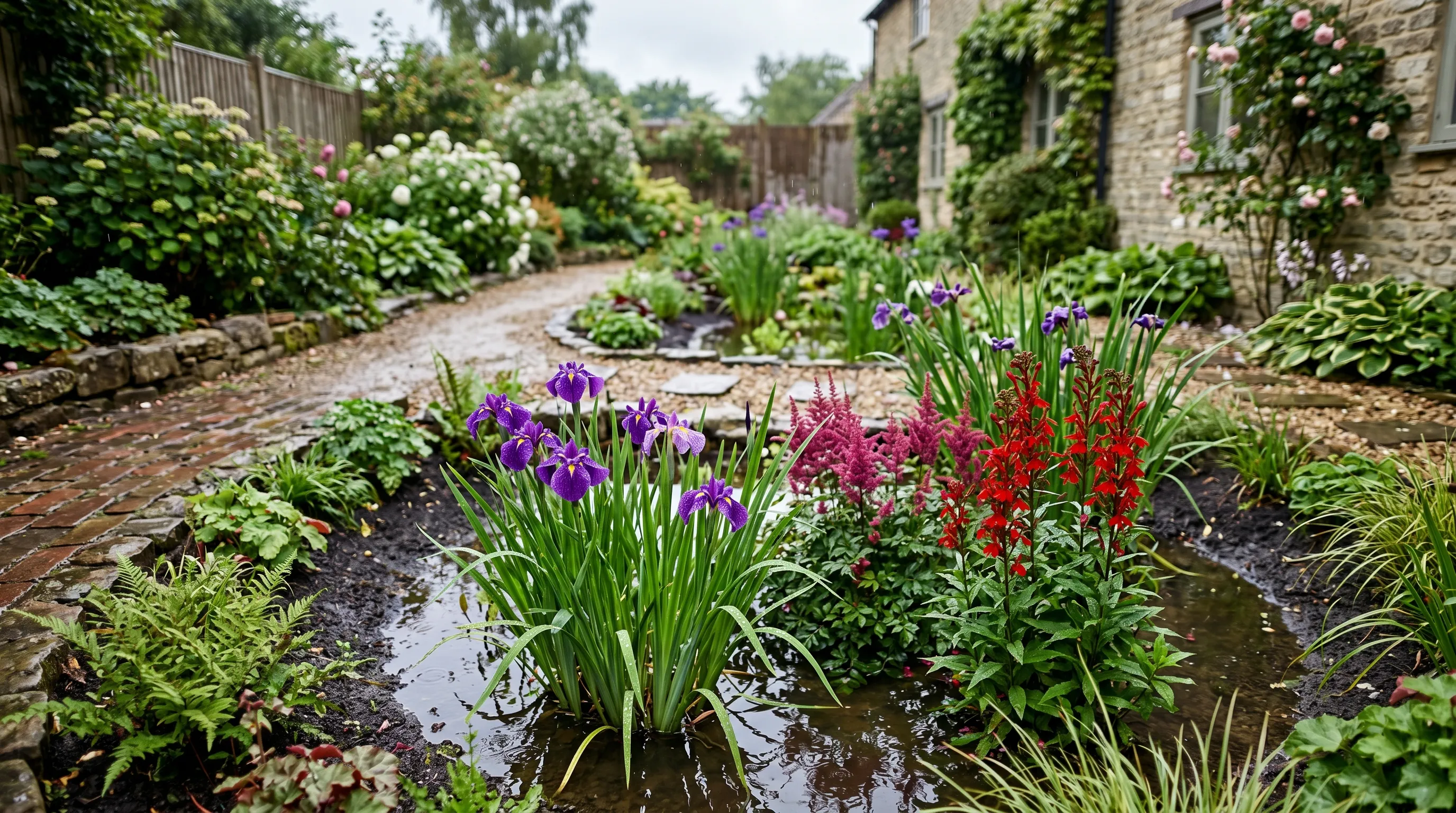
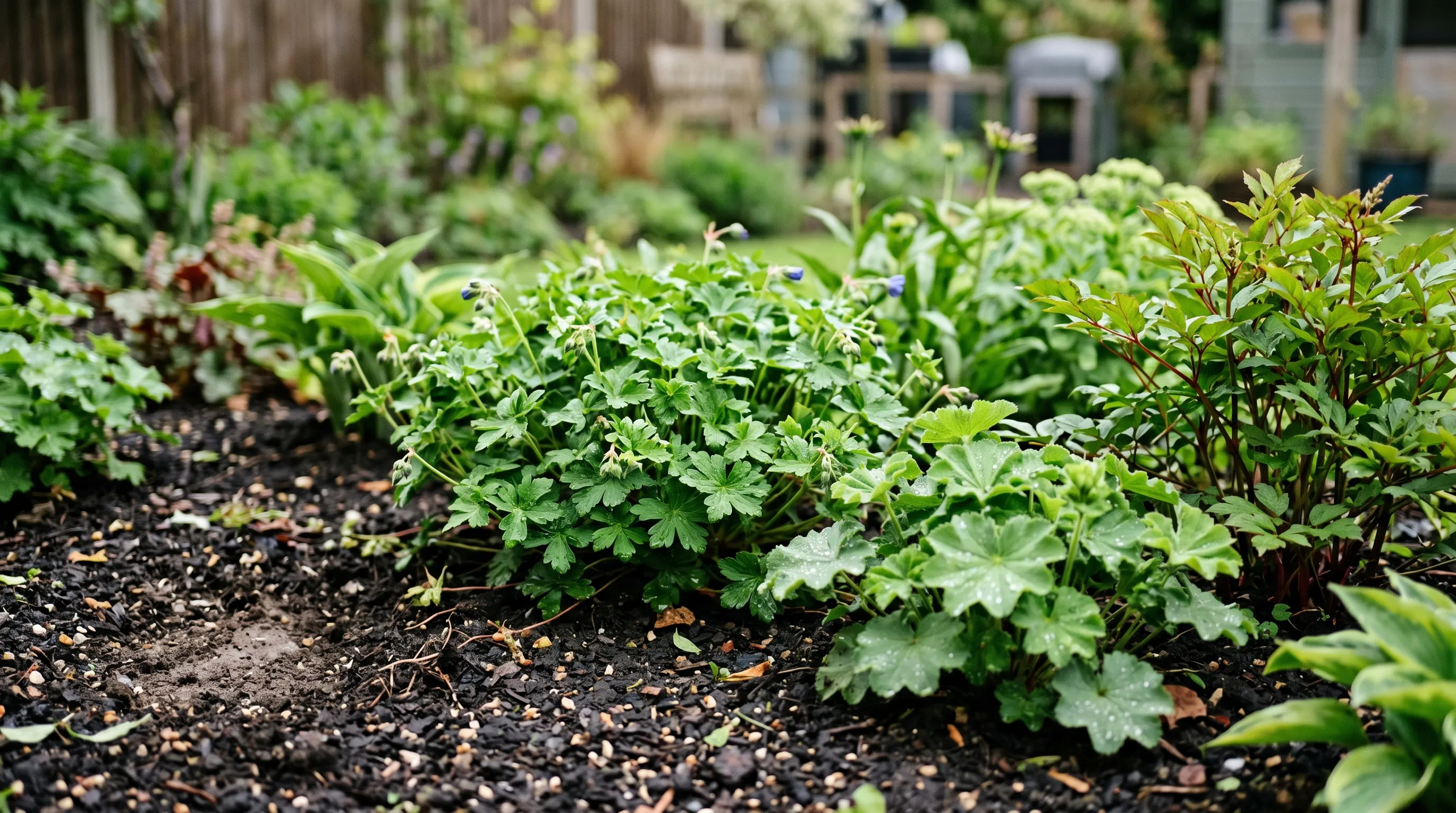 Day 14 recovery on a Staffordshire mixed border after 4 days of waterlogging. New growth on hardy geraniums, salvias and astrantia. Two failed dahlias removed; the rest recovering. The 14-day wait beats immediate intervention.

Now plan the wider waterlog defence
Recovery is one part of UK garden resilience. For the wider drainage solutions, our flooding guide covers larger projects. For autumn lawn recovery and feeding, our lawn guide covers restoration. To plant resilience into beds with bog-tolerant species, our wildlife pond guide covers the related water feature design. And for the wider autumn maintenance schedule, our autumn gardening jobs guide covers drainage clearance among the wider tasks.
Our team produces practical UK gardening guidance from source research, contributor records and established horticultural practice. Editorial standards are overseen by Matt W.