Key takeaways
- Wall-mount tools off the floor to halve rust risk
- Wipe blades with a sand-and-oil bucket after every use
- Sharpen secateurs every 2-3 weeks through summer
- Apply boiled linseed oil to handles every autumn
- 6x4 fits a domestic tool set; 8x6 fits a serious allotment kit
- Wooden sheds breathe better than metal or plastic for tool storage
A well-organised garden shed extends tool life by 8-15 years. A neglected shed shortens it by the same. This guide covers what to buy for the shed, how to lay out the interior, the wipe-and-oil routine that prevents rust, the sharpening cycle that keeps blades cutting cleanly, and the seasonal jobs that protect everything through a UK winter.
After 16 years of fitting sheds across the West Midlands, the patterns are clear. Cross-ventilation matters more than insulation. Wall storage beats floor storage on every measure. The end-of-October wipe-down decides whether spring tools work or need replacement.
What Goes Where: The 8x6 Allotment Shed Layout
A typical 8x6 UK wooden shed gives 14.4m² of floor space and 21-24m² of vertical wall surface. The vertical surface is the gold.
The standard zones in an 8x6 shed:
| Zone | Wall position | What goes there |
|---|---|---|
| Long-handled tools | Back wall, full height | Spade, fork, rake, hoe, edger, brush handles |
| Hand tools | Side wall above bench | Secateurs, trowel, weeder, dibber, scissors |
| Power tools | Side wall, low | Strimmer, hedge cutter, drill, hose nozzle |
| Containers | Floor, opposite corner | Cans, watering cans, kneeling pad, gloves |
| Workbench | Side wall, full | Sharpening, repairs, seed starting |
| Storage shelf | Above bench, 1.5m up | Pots, fertiliser, seed boxes |
| Floor space (clear) | Centre and pathway | Wheelbarrow, lawnmower, sit-down stool |
The principle: anything that can hang, hangs. Everything on the floor collects damp, attracts mice, and gets in the way.
For the wooden shed selection that suits this layout, the Wooden Sheds range from Greenhouse Stores covers 6x4, 8x6 and larger models, with installation included on relevant products. Check each listing for current specifications.
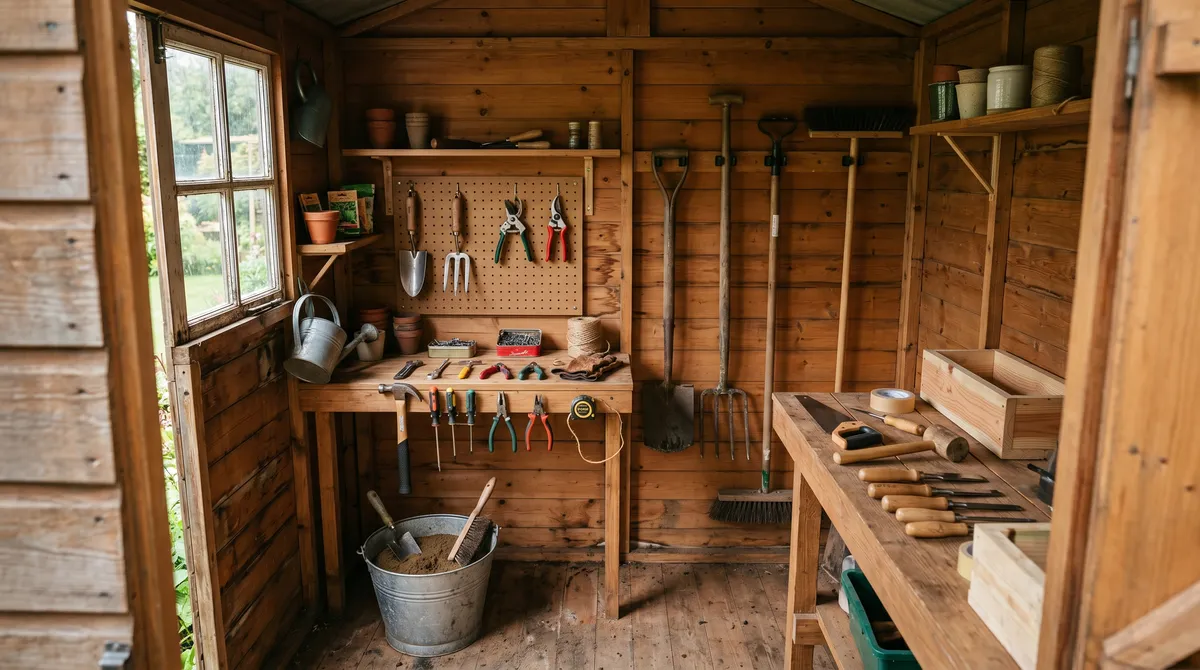
 An 8x6 wooden shed arranged with long-handled tools on the back wall and hand tools above a workbench. Keeping the floor clear leaves room for a wheelbarrow and lawnmower.
Wall Mounting: The Single Biggest Improvement
Floor-stored tools rust in 1-3 winters. Wall-mounted tools last 15-30 years. The investment is small.
Materials for a full wall-mount system:
- 6m of plywood backing board (12mm thick): £15-£25
- 12 metal tool hooks (Spear & Jackson or similar): £15-£25
- 12 wood screws and 12 wall plugs: £4-£6
- 1m of timber batten for shelf supports: £4-£8
- Total cost for 6x4 shed wall storage: £40-£70
The plywood backing board screws to the studs of the shed wall. The hooks then screw into the plywood at any spacing. This gives a clean, flexible system that holds 25-30 tools.
Hook placement rules:
- Long-handled tools: heads at 1.6-1.8m so handles do not block windows or doors
- Hand tools: 1.1-1.5m on a side wall, within arm’s reach of the bench
- Power tools: 0.6-0.9m, low enough to grab without lifting
- Hose and reel: 1.5m on the side wall closest to the door
- Spade and fork: blade-up, never tine-up (tine-up catches clothing and skin)
For tools too awkward to hook (loppers, long-reach pruners), use purpose-made vertical clips screwed into the plywood. These hold the tool by the shaft, not by the head. Cost: £6-£10 for a 5-clip set.
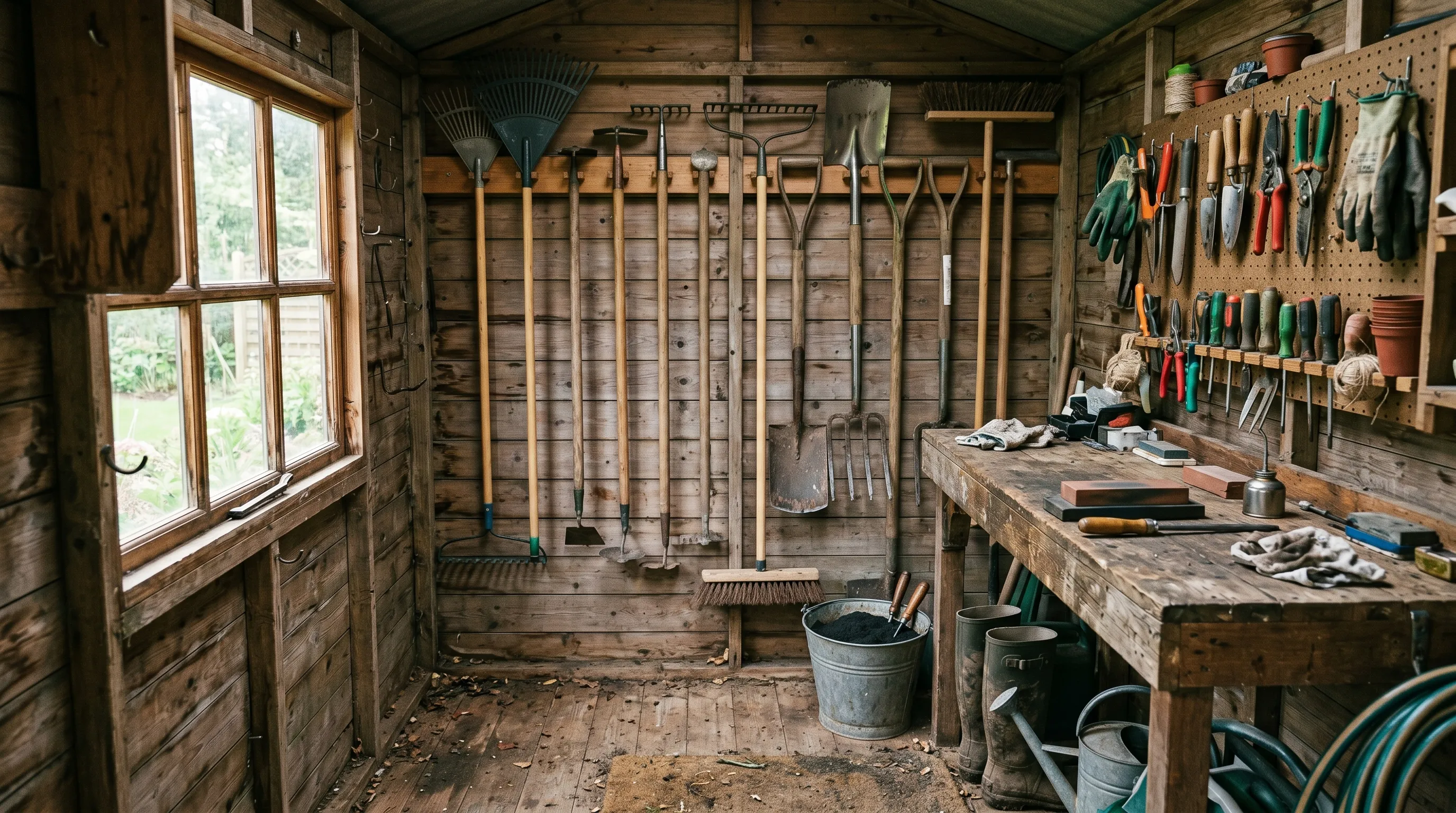
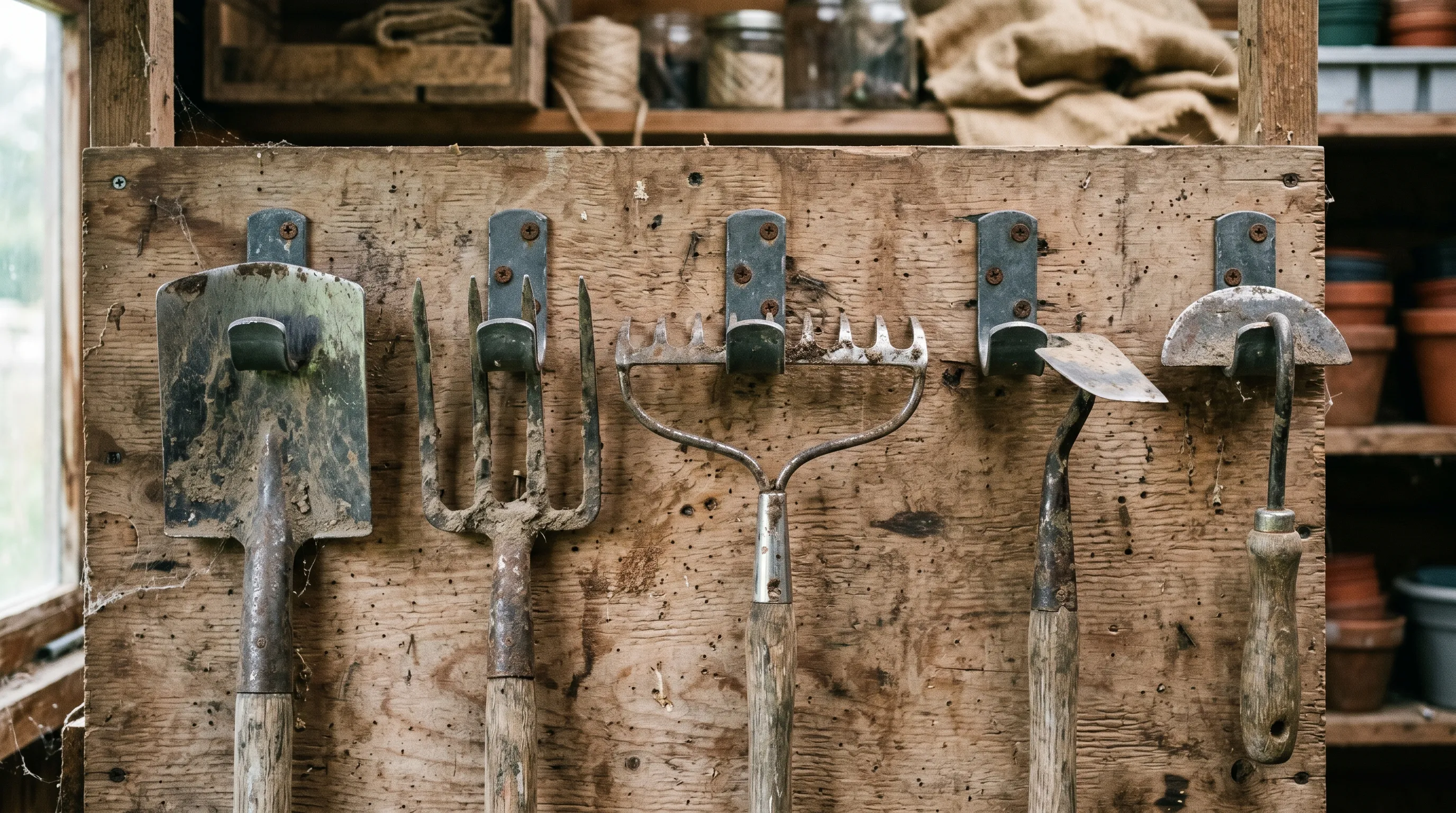 Wall-mounted long-handled tools on a plywood backing board. Each tool hangs vertically blade-up. The setup costs £40-£70 in materials and prevents 90% of routine rust on stored tools.
The Sand-and-Oil Bucket Maintenance System
The single best UK tool-preservation system is the sand-and-oil bucket. Invented in the 1920s, still the best.
Build the bucket:
- 10-litre plastic bucket with handle
- 8kg of sharp builder’s sand (not building sand)
- 250-500ml of boiled linseed oil
- Mix thoroughly with a wooden paddle
Place the bucket in the corner nearest the door. After each use of a spade, fork, hoe or trowel, plunge the blade into the sand 5-8 times. The sand scours off soil. The oil leaves a thin protective film.
The bucket lasts 18-24 months before the sand turns black and the oil saturates. Refresh by tipping out half the sand, adding fresh sand and 100-150ml of new linseed oil, and stirring.
Why boiled linseed oil and not vegetable oil:
Boiled linseed oil dries to a hard varnish-like film. Vegetable oil stays wet and goes rancid, attracting flies and mice. Cost: £8-£12 per 1 litre bottle, enough for 4-6 refills. Available from any UK builders merchant.
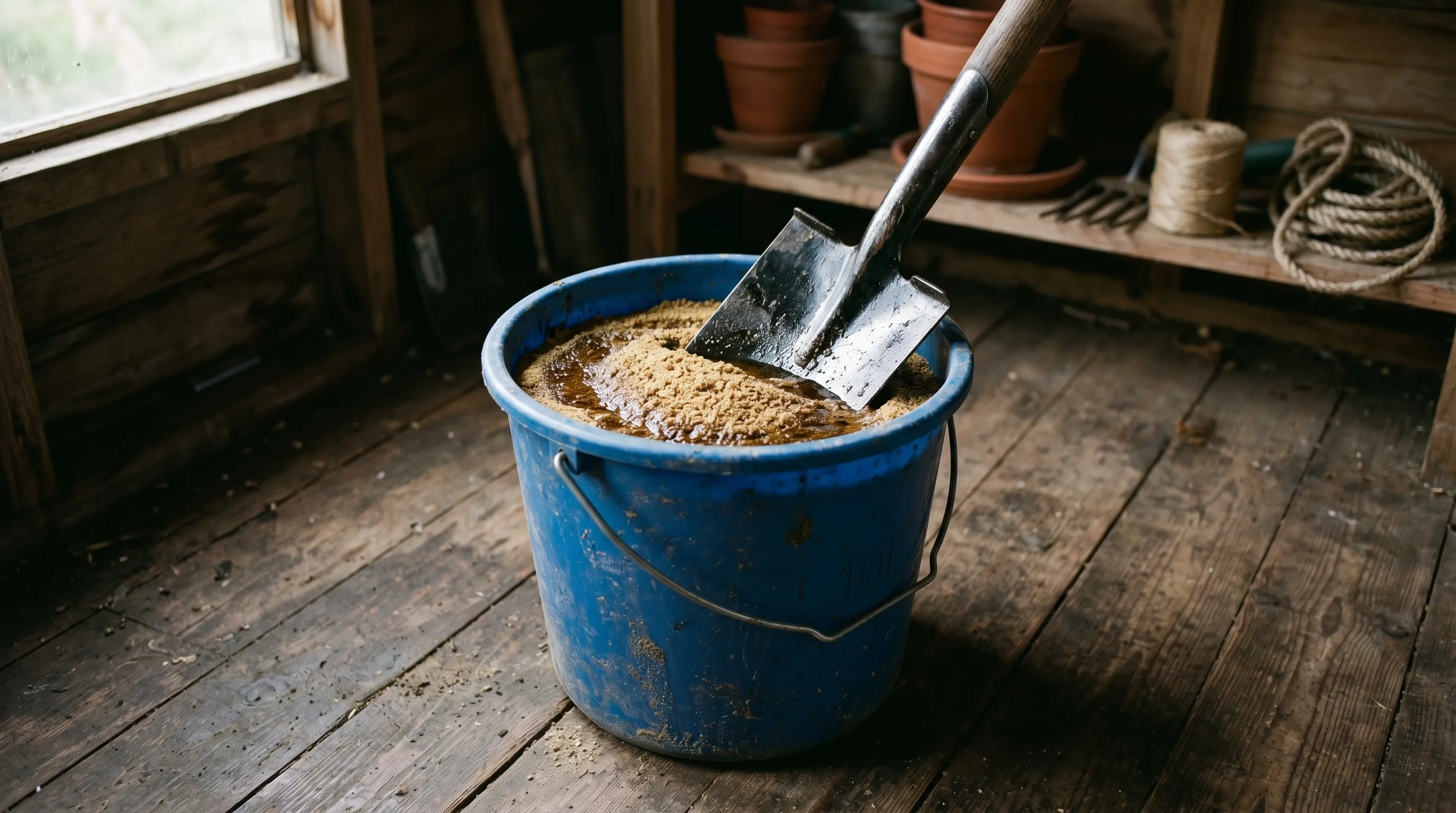 The classic sand-and-oil maintenance bucket. 8kg of sharp sand mixed with 500ml of boiled linseed oil. After each tool use, plunge the blade into the bucket 5-8 times. The sand scrubs soil off; the oil leaves a thin rust-resistant film.
Sharpening: The Weekly 5-Minute Routine
Sharp tools cut cleaner, take 30-40% less effort, and reduce repetitive strain on wrists and shoulders. The sharpening cycle:
| Tool | Sharpening frequency | Tool to use |
|---|---|---|
| Secateurs | Every 2-3 weeks (summer) | Diamond file, 600 grit |
| Loppers | Monthly through summer | Diamond file, 600 grit |
| Shears | Before each pruning task | Whetstone, 400 grit |
| Spade edge | Twice yearly (March, August) | Flat file, then whetstone |
| Hoe edge | Monthly through growing season | Flat file |
| Lawnmower blade | Once yearly in March | Bench grinder + balance |
| Knives (budding, harvest) | Weekly | Whetstone or diamond file |
Basic sharpening kit (one-time purchase):
- DMT diamond file, double-grit (300/600): £25-£40
- Norton oil whetstone: £15-£25
- Flat 250mm bastard file: £8-£15
- 8mm round file (for serrated edges): £6-£10
- Total kit cost: £55-£90
A complete sharpening kit lasts 15-25 years. Store in a small drawer or tin in the shed workbench area.
For secateurs, the technique is simple: hold the blade flat against the file, push the file along the bevel at the same angle as the factory edge, 5-10 strokes one direction only. Wipe with sand-and-oil bucket. Test on a soft stem; a sharp blade cuts without crushing.
 The weekly 5-minute secateur sharpen. Diamond file at the factory bevel angle, 5-10 strokes one direction only. Sharp secateurs cut a 12mm rose stem with 2-3kg of finger force versus 5-8kg for dull blades.
Wooden Handle Care: The Annual Linseed Oil Rub
UK weather punishes wooden tool handles. Untreated ash and beech handles split, splinter and rot within 5-8 years.
Annual handle treatment:
- Wipe handles clean with a damp cloth, let dry
- Light sand with 240-grit paper to remove rough patches
- Apply boiled linseed oil with a soft rag, rubbing along the grain
- Let soak for 15-30 minutes
- Wipe off excess
- Hang to dry for 24 hours before reuse
Avoid:
- Modern polyurethane varnishes (peel under garden use)
- Beeswax (rubs off in days)
- Linseed oil that is not labelled “boiled” (takes weeks to dry)
- Plastic-handled tools (no maintenance possible, but lifespan shorter)
A 1 litre bottle of boiled linseed oil treats 25-30 tool handles, enough for 4-5 years of annual maintenance on a full UK garden tool set. Cost: £8-£12.
 Annual October treatment: boiled linseed oil rubbed along the grain with a soft rag. One bottle treats 25-30 handles. Annually-oiled handles run 16+ years in service; untreated handles need replacement at year 7-9.
Wooden vs Metal vs Plastic Sheds for Tool Storage
Wooden sheds with proper venting are the long-term best for UK tool storage. The wood breathes, regulating humidity passively. Two 100x100mm vents at opposite ends of the shed cost £20-£40 and drop average humidity by 15-25%.
Metal sheds suffer from condensation. Cool nights followed by warm mornings drop water on every interior surface. Tools rust in months without preservation.
Plastic sheds trap stagnant air. No condensation but very high humidity. The same rust effect at slower speed.
For UK gardeners who want the wooden shed long-term value, the Greenhouse Stores wooden shed range covers 6x4 to 12x8 sizes with free installation on Swallow models. Thermo wood and Western Red Cedar both run 25-30 years with minimal maintenance.
Winter Lock-Down: The October Tool Routine
The single most important week of the year for UK tool care is the last week of October. Done properly, tools come out of the shed ready to use in March. Done poorly, half the kit needs replacement or repair.
The October checklist:
- Empty the shed completely. Lay every tool on a tarp outside on a dry day.
- Clean each tool: wire brush off soil and rust, wash sticky residue with hot soapy water, dry thoroughly.
- Sharpen every cutting edge: secateurs, loppers, shears, hoe, spade.
- Sand-and-oil every blade: plunge into the maintenance bucket.
- Apply boiled linseed oil to every wooden handle.
- Paste wax bare metal surfaces (spade backs, fork tines, lawnmower deck).
- Check shed interior: clear out cobwebs, check for mouse activity, repair any damp patches.
- Re-fit ventilation: ensure the two vents are clear and working.
- Replace tools on wall hooks; nothing on the floor.
- Update the tool log: note any tools needing replacement in March.
The full October routine takes 4-6 hours for an 8x6 shed. Cost: £15-£25 in replenished oil and consumables. Result: 25+ year tool life across the whole kit.
Common Mistakes With Garden Tool Storage
Mistake 1: storing wet tools. Even one wet evening of put-away starts rust patches. Always wipe dry before hanging.
Mistake 2: sealing the shed for winter warmth. No vents means high humidity. High humidity means rust. Crack a vent or door open weekly through winter.
Mistake 3: leaving tools on the floor. Damp rises from concrete and earth floors. Floor-stored tools rust 5-8 times faster than wall-mounted.
Mistake 4: skipping the sharpening cycle. Dull tools double the effort and triple the wrist strain. 5 minutes of sharpening saves 5 hours of struggle.
Mistake 5: using vegetable oil for protection. Vegetable oil goes rancid in weeks, attracts mice and flies. Use boiled linseed oil only.
The Greenhouse Stores Wooden Sheds range covers 6x4, 8x6 and larger sizes, including models with installation. The Greenhouse Stores homepage covers the wider range of garden buildings, greenhouses and accessories.
Tool Storage Calendar UK Month-by-Month
| Month | Tool storage task |
|---|---|
| January | Check shed for winter damage, mouse activity |
| February | Sharpen spade and hoe before spring work |
| March | Sharpen lawnmower blade. Annual full tool service |
| April | Restock sand-and-oil bucket if dry |
| May | Replace any winter-damaged handles |
| June | Mid-summer sharpening of secateurs and loppers |
| July | Continue 2-3 week secateur sharpening cycle |
| August | Second annual sharpening of spade and hoe |
| September | Begin pre-winter shed clean. Check vents |
| October | Main annual maintenance routine. Oil all handles |
| November | Final tool wipe-down. Lock in for winter |
| December | Open shed once a week for ventilation |
The October maintenance window is the cornerstone of UK garden tool care. Four to six hours of work produces 25-30 years of tool life across the full kit.
Frequently asked questions
What size shed do I need for UK garden tools?
A 6x4 wooden shed fits a domestic UK gardener’s tool set: spade, fork, rake, hoe, wheelbarrow, hand tools and lawnmower. An 8x6 fits a serious allotment kit plus a workbench. Above 200m² of garden, go to 8x8 or larger.
Should I store garden tools in a wooden, metal or plastic shed?
Wooden sheds breathe naturally and hold humidity at 65-75% with basic vents. Metal sheds condense heavily in autumn and spring, rusting everything inside. Plastic sheds trap stagnant air. Wood is the long-term best for tools.
How do you prevent garden tools from rusting in winter?
Wipe every tool dry before storing. Wall-mount off the floor. Maintain shed cross-ventilation with two small opposing vents. Use a sand-and-oil bucket (5kg sharp sand mixed with 250ml linseed oil) to plunge blades after each use. Apply paste wax to bare metal in October.
How often should I sharpen garden tools?
Secateurs every 2-3 weeks through summer. Spade and hoe edges twice yearly (March and August). Lawnmower blade once yearly in March. Shears at the start of each pruning task. Sharp tools cut cleanly with less effort and reduce repetitive strain on shoulders and wrists.
What is a sand-and-oil bucket and why use it?
A sand-and-oil bucket is a 5-10 litre bucket filled with sharp sand and 250-500ml of boiled linseed oil. Plunge spade, fork, hoe and trowel blades into it after each use. The abrasive sand cleans soil off; the oil leaves a thin protective film. One bucket lasts 18-24 months and prevents 90% of routine rust.
Now plan the wider garden setup around the shed
Our team produces practical UK gardening guidance from source research, contributor records and established horticultural practice. Editorial standards are overseen by Matt W.