
Key takeaways
- Dicksonia antarctica survives to about -5C unprotected; the crown dies first
- Pack the crown with a double handful of dry straw in late October or November
- Wrap the trunk in hessian or fleece, never plastic, which traps damp and rots it
- A chicken-wire cage stuffed with straw protects to roughly -12C inland
- Unwrap gradually in April; new croziers unfurling confirm the crown survived
- Trunks grow only 2.5-5cm a year, so a frosted crown is a costly loss
Tree fern winter protection comes down to one thing: keeping the crown alive. The crown is the growing point at the very top of the trunk, and every new frond a tree fern ever makes emerges from that single spot. Protecting tree ferns in winter is not about the trunk, which is far hardier than people assume. Dicksonia antarctica, the soft tree fern most UK gardens grow, survives to roughly -5C with no cover at all. Below that the crown freezes and the plant dies. This guide covers exactly how to pack the crown, wrap the trunk without rotting it, and time the whole job across a British winter.
The plant is an oddity worth understanding. The “trunk” is not wood but a dense mass of aerial roots, which is why it shrugs off cold the soft crown cannot. Get the crown right and the rest looks after itself.
Why the crown matters more than the trunk
A tree fern has no buds along its trunk and no way to regrow from the side. All growth comes from the crown, a tight whorl of developing fronds at the top of the fibrous stem. Lose the crown and you lose the plant, because there is no second growing point to fall back on.
The trunk tells the opposite story. It is a column of packed aerial roots, not living wood, and it tolerates far harder frost than the crown tissue. This is why a fern can stand through a cold week looking untouched, then fail to reshoot in spring because the crown quietly froze. The damage is invisible from outside.
Understanding this split changes how you protect the plant. Spend your effort and your insulation on the top 30cm, the crown and the soft developing fronds. The trunk needs only a light wrap to slow freeze-thaw cycling and keep driving rain off the fibres. Dicksonia antarctica is the species to know here. The less common Cyathea tree ferns, including the Australian Cyathea australis and New Zealand species, are notably less hardy and need a frost-free spot or a conservatory in most of the UK.
 Left, a healthy crown with the central whorl firm and pale green. Right, a frost-killed crown gone black and mushy, the sign of a dead plant.
How cold a tree fern can take before the crown dies
The headline figure is -5C for an unprotected Dicksonia antarctica. That is the rough point where unshielded crown tissue starts to freeze and fail. The trunk and roots ride out colder spells, but the crown sets the limit for the whole plant.
Protection moves that limit a long way. A crown packed with dry straw and a trunk wrapped in hessian holds the plant safely through about -8C, the level most UK gardens hit in a normal winter. Add a chicken-wire cage stuffed full of straw around the trunk and you push protection to roughly -12C, enough for a cold inland garden in a hard year.
Where you garden decides how much you do. Mild and coastal areas, including Cornwall, the south-west, west Wales, and the warmer city heat islands of London, often see tree ferns left out with little more than a crown plug. Cold inland and northern gardens need the full treatment every year. Frost pockets, exposed plots, and heavy clay that holds cold all push you toward more insulation, not less.
| Protection level | Minimum temp it protects to | Effort | Role |
|---|---|---|---|
| Straw-packed crown + fleece or hessian trunk wrap | About -8C | Moderate | Gold standard for most UK gardens |
| Chicken-wire cage stuffed with straw around trunk | About -12C | High | Severe cold, exposed and inland plots |
| Fronds folded up and tied over crown only | About -3C below bare | Low | Supplementary, adds to a crown plug |
| Crown plug of dry straw, no trunk wrap | About -6 to -7C | Low | Mild and coastal gardens only |
| Left bare, no protection | About -5C | None | Frost-free or near-frost-free spots only |
The straw-packed crown plus a breathable trunk wrap is the gold standard. It buries the crown in dry, insulating air pockets while letting the trunk breathe. What no method can do is revive a crown that has already frozen, so the timing of the first wrap matters more than the materials you choose. A fern protected too late is a fern lost.
How to protect a tree fern crown and trunk step by step
The whole job takes ten minutes per plant once you have the materials to hand. You need dry straw or bracken, a length of horticultural fleece or hessian, and garden twine. Keep the straw dry until you use it, because wet straw freezes into a useless block.
- Plug the crown. Push a generous double handful of dry straw or bracken down into the central whorl. Pack it firm so it fills the funnel and sits proud of the crown rim.
- Fold and tie the fronds. Gather the existing fronds up and over the stuffed crown, then tie them loosely with twine. They form a first layer of insulation over the straw.
- Cap the crown. Drape fleece over the tied fronds and crown, leaving a small gap so trapped damp can escape. A breathable cap keeps the straw dry from above.
- Wrap the trunk. Spiral hessian or fleece up the trunk from the base, overlapping each turn by a third. Tie it off at intervals. Never use plastic against the fibres.
- Add a cage for hard winters. In cold gardens, ring the trunk with chicken wire to leave a 10cm gap, then pack the gap solid with dry straw for a full insulating jacket.
- Shield from above only if needed. In a very wet, exposed spot, a loose plastic sheet over the crown cap sheds rain, but it must sit clear of the breathable layer so air still moves.
Warning: Never wrap the trunk in plastic or bubble wrap directly against the fibres. Plastic traps winter damp, and a tree fern trunk left wet and airless through a UK winter rots from the inside. Always use breathable hessian or fleece next to the trunk.
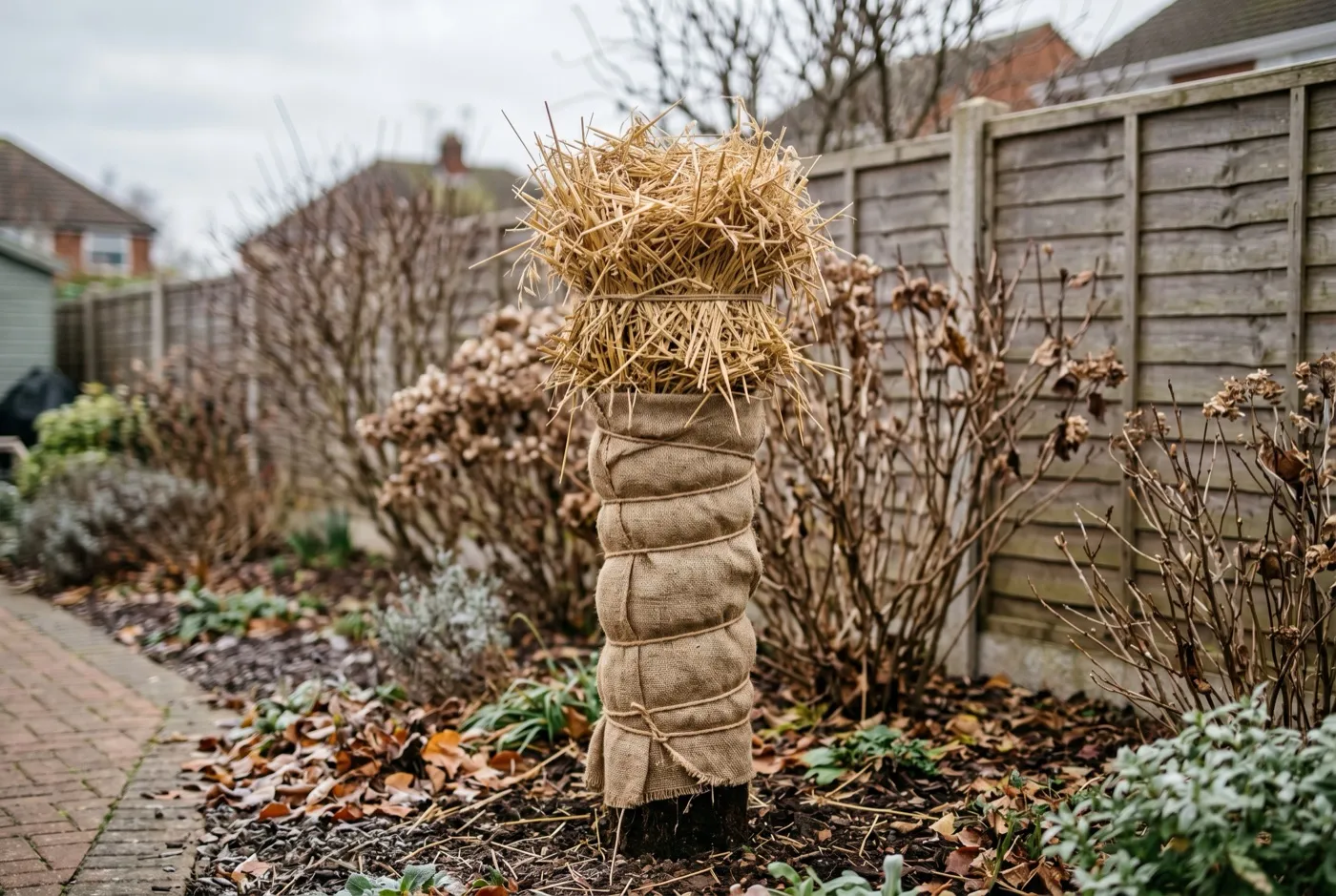 A crown packed with dry straw and a hessian-wrapped trunk, the gold-standard setup, in a suburban Midlands border before the first hard frost.
 A potted tree fern moved against a warm house wall in a city courtyard rides out winter with far less wrapping than an exposed garden specimen.
When to wrap and when to unwrap across a UK winter
Hold your nerve in spring. Leave the protection on until hard frosts have passed, usually April, then remove it gradually over a week or two rather than in one go. Stripping a fern bare on a bright April day exposes soft crown tissue to a sharp late frost, which is how people kill a plant that survived the whole winter. Peel back the trunk wrap first, then the crown cap, watching the forecast as you go.
Watch the crown through May for new croziers, the tightly coiled fiddleheads that uncurl into fresh fronds. They confirm the crown survived. Once they appear, cut away any browned old fronds you folded over in autumn. Tree ferns are slow, with the trunk gaining only 2.5-5cm a year, so a fern that loses a season to a frosted crown sets you back hard.
| Month | Task |
|---|---|
| October | Watch the forecast; gather dry straw; wrap early in cold gardens |
| November | Plug the crown, wrap the trunk, cage if needed before the first hard frost |
| December to February | Check wraps after gales; keep straw dry; mist trunk only in dry mild spells |
| March | Leave protection on; resist early unwrapping despite warm days |
| April | Remove protection gradually once hard frost has passed |
| May to June | Watch for croziers; cut old fronds; resume regular trunk watering |
For more half-hardy and exotic plants that need this kind of seasonal care, see our guide to the best hardy exotic and tropical plants for UK gardens.
Watering tree ferns through the seasons
Tree ferns drink through the trunk, not just the roots, which catches most newcomers out. The fibrous trunk absorbs water down its whole length, so in the growing season you mist or hose the trunk and water into the crown two or three times a week in warm weather. A dry trunk in summer browns the fronds from the tips.
Winter watering needs restraint, not a full stop. Reduce watering sharply once growth slows, but never let the crown dry out completely, because a parched crown is as vulnerable as a frozen one. In a mild spell, a light mist of the trunk keeps the fibres alive without leaving them sodden and rot-prone in the cold.
 A mature Dicksonia antarctica in a sheltered Cornish courtyard, the kind of mild coastal spot where minimal winter cover keeps it lush year-round.
Common tree fern winter mistakes to avoid
Most tree fern losses trace back to a handful of avoidable errors. These are the ones that kill plants in UK gardens every winter.
- Wrapping the trunk in plastic. Plastic against the fibres traps damp and rots the trunk over a wet winter. Always use breathable hessian or fleece next to the plant.
- Forgetting the crown. People wrap the trunk and leave the crown open, then lose the plant. The crown is the part that dies; plug it first, always.
- Unwrapping too early. A warm March tempts gardeners to strip the cover. A sharp April frost on bare crown tissue then kills a fern that survived the worst of winter.
- Using wet or rotting straw. Damp straw freezes solid and offers no insulation. Pack the crown with dry straw or bracken and keep an outer cap to shed rain.
- Treating coastal advice as national. A method that works bare in Cornwall fails in a Yorkshire frost pocket. Match your protection to your own garden’s lowest temperatures.
The wider point is that insulation works by trapping still, dry air, and a loose straw plug does that better than any single wrapped layer. Fleece and hessian then keep that dry pocket protected and breathing. The Royal Horticultural Society’s guidance on overwintering tender plants supports the same breathable, dry-air approach for half-hardy exotics.
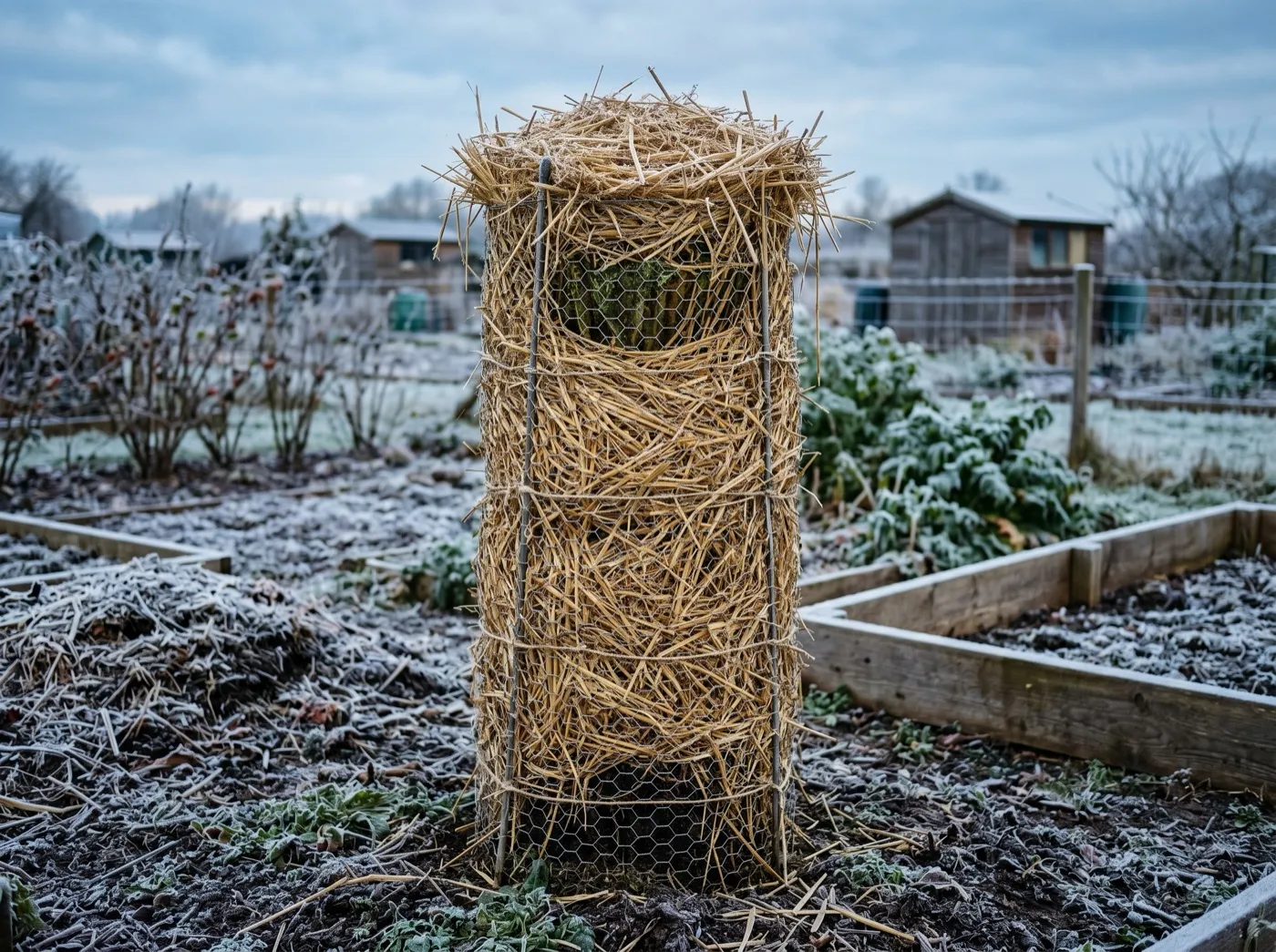 A chicken-wire cage packed with dry straw, the setup for cold inland and exposed plots, photographed on a frosty Midlands allotment.
Related reading: Tender exotics need similar winter cover, see our guide to growing abutilon in the UK.
Frequently asked questions
How cold can a tree fern survive in the UK?
Dicksonia antarctica survives to about -5C unprotected, lower with cover. The crown is the part that dies first, not the trunk. With a straw-packed crown and a hessian wrap it shrugs off -8C, and a straw-filled wire cage carries it to roughly -12C. Mild coastal gardens often need almost nothing.
Which part of a tree fern do I protect in winter?
Protect the crown, the growing point at the top of the trunk. Every new frond emerges from this single point, so a frosted crown means a dead plant. The trunk itself is a tough mass of roots and tolerates far more cold than the soft crown tissue does.
When should I wrap a tree fern for winter?
Wrap when the first hard frost threatens, usually late October to November. Watch the forecast rather than the calendar. In a mild autumn you can leave it later; in a cold inland garden act sooner. Remove the protection gradually from April once hard frosts have passed.
Can I use bubble wrap or plastic on a tree fern trunk?
No, never wrap the trunk in plastic or bubble wrap directly. Plastic traps moisture against the fibrous trunk and causes rot over a damp UK winter. Use breathable hessian or horticultural fleece instead. Plastic is only safe as a temporary outer rain shield over a breathable layer.
Should I cut the fronds off a tree fern before winter?
No, leave the fronds on where you can. Folding old fronds up over the crown and tying them adds useful insulation. They may brown and die back in hard frost, but they shield the crown first. Cut them away only in spring once new croziers appear.
How do I know if my tree fern survived the winter?
Look for new croziers unfurling from the crown in late spring. A healthy crown stays firm and pale green at its centre. If the crown is mushy, black, and smells of rot by May, it has died. Give a slow fern until June before writing it off.
Our team produces practical UK gardening guidance from source research, contributor records and established horticultural practice. Editorial standards are overseen by Matt W.