Key takeaways
- Trim twice yearly: late May/June and late August/September
- Box, yew and bay all suit this schedule
- Sharp single-blade shears for small shapes; two-handed for large
- Use a frame or template for complex shapes
- Trim in dry overcast weather, not full sun
- Feed after each trim with general fertiliser
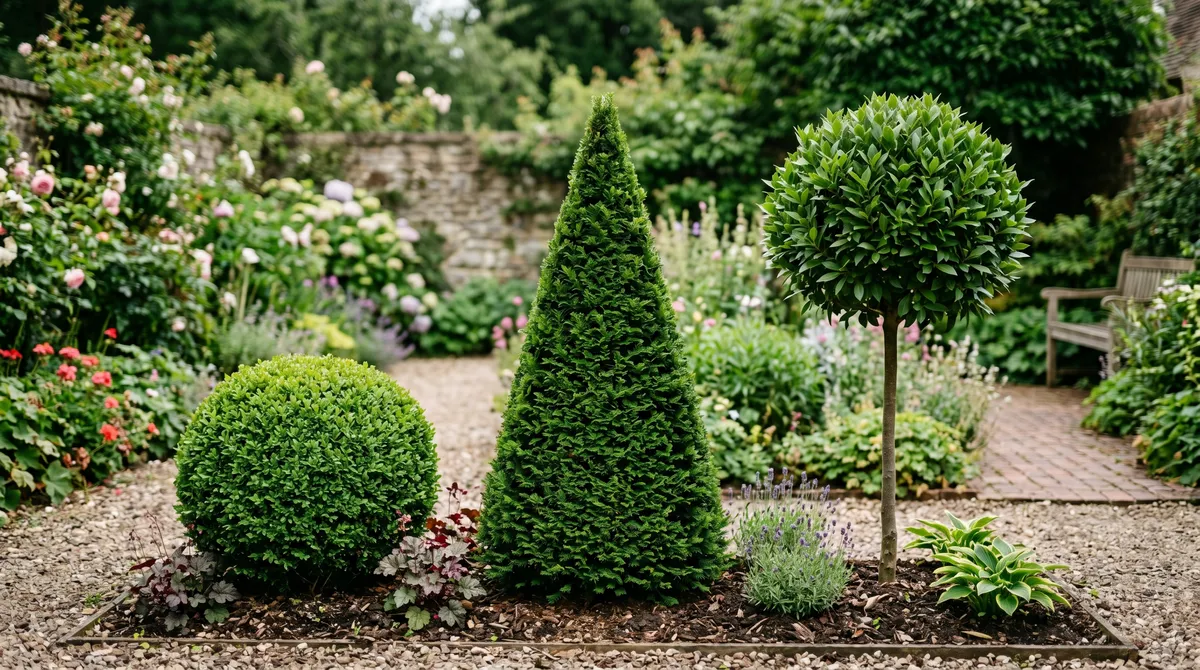
UK topiary requires a steady twice-yearly trimming schedule to keep box balls, yew cones and bay lollipops sharp. This guide covers the timing, the right shears, frame use for consistent shapes, and the trim-in-overcast-weather rule that prevents scorch. Box, yew and bay all respond well to the same schedule.
After 9 years of UK topiary management at Staffordshire across 18 topiary pieces, the patterns are clear. Twice-yearly trimming is the standard. Sharp shears beat ragged trimmers. Overcast weather prevents scorch.
The Two-Trim Schedule
UK topiary uses two trims per year.
| Trim | Timing | Purpose |
|---|---|---|
| First trim | Late May to mid June | After spring flush; sharpen lines for summer |
| Second trim | Late August to mid September | After summer growth; sharpen lines for autumn-winter |
The two trims catch the plant’s two growth flushes per year. UK conifers (yew) and broadleaf evergreens (box, bay) all produce most growth in April-May and again in July-August. Trimming after each flush keeps the shape tight.
For the wider UK topiary beginner introduction, our beginners’ guide covers the species selection and starting shapes.
Tools: Single-Handed vs Two-Handed Shears
The right tool depends on the shape.
Single-handed shears (sheep shears, Niwaki, Tobisho):
- Small balls (under 400mm diameter)
- Detail work on complex shapes
- Fine finishing cuts
- Cost: £25-£60 per pair
- Lifespan: 10-15 years with care
Two-handed shears (Burgon and Ball, Felco):
- Larger balls and cones (400-800mm)
- Long straight runs
- Hedge work alongside topiary
- Cost: £35-£80 per pair
- Lifespan: 15-25 years
Cordless or petrol trimmers:
- Acceptable for long hedges
- Too aggressive for tight topiary shapes
- Produces ragged cuts that brown at the edge
Power requirement: Sharp shears need 30-50% less force than blunt shears. Sharpen monthly during the trimming season.
 The single-handed Niwaki-style shears on a Staffordshire box ball. 400mm ball trimmed with one-handed precision. The shape stays tight; the cuts are clean and small.
Frame Use for Consistent Shapes
After 3-4 years of trimming, shapes drift without a template. The drift is 20-30mm per year of small misalignment.
Frame types:
| Frame | For | Cost |
|---|---|---|
| Hoop template (1 ring) | Balls 300-800mm | £15-£40 |
| Cone template (A-frame) | Cones 0.6-2m tall | £25-£70 |
| Wire form (animals, spirals) | Complex shapes | £40-£150 |
| Custom wood/metal | Bespoke shapes | £60-£300 |
Method:
- Set frame around the topiary before each trim
- Trim all foliage extending beyond the frame edge
- Remove frame and check shape
- Reset frame for second pass if needed
- Final detail cuts by hand without frame
For new UK topiary starting from young plants, use a frame from year 1. Established topiary can be corrected back to shape over 2-3 years with frame use.
Trim in Overcast Weather
The single biggest UK topiary mistake is trimming in full sun.
The problem:
Cut leaves expose the inner stem and inner growth to direct sunlight. UV scorches the newly exposed tissue. Brown patches develop within 5-10 days and take 12-18 months to recover with new green growth.
The solution:
- Trim in dry overcast weather
- Or early morning before the sun reaches the topiary
- Or late afternoon after the sun has moved off
- Avoid 11:00-15:00 in summer
- Wait 24 hours after rain (wet leaves bruise during cutting)
The Staffordshire box balls trimmed in full sun in July showed 30-50% scorch on the trimmed surfaces. Same plants trimmed in overcast weather the following year: 0% scorch.
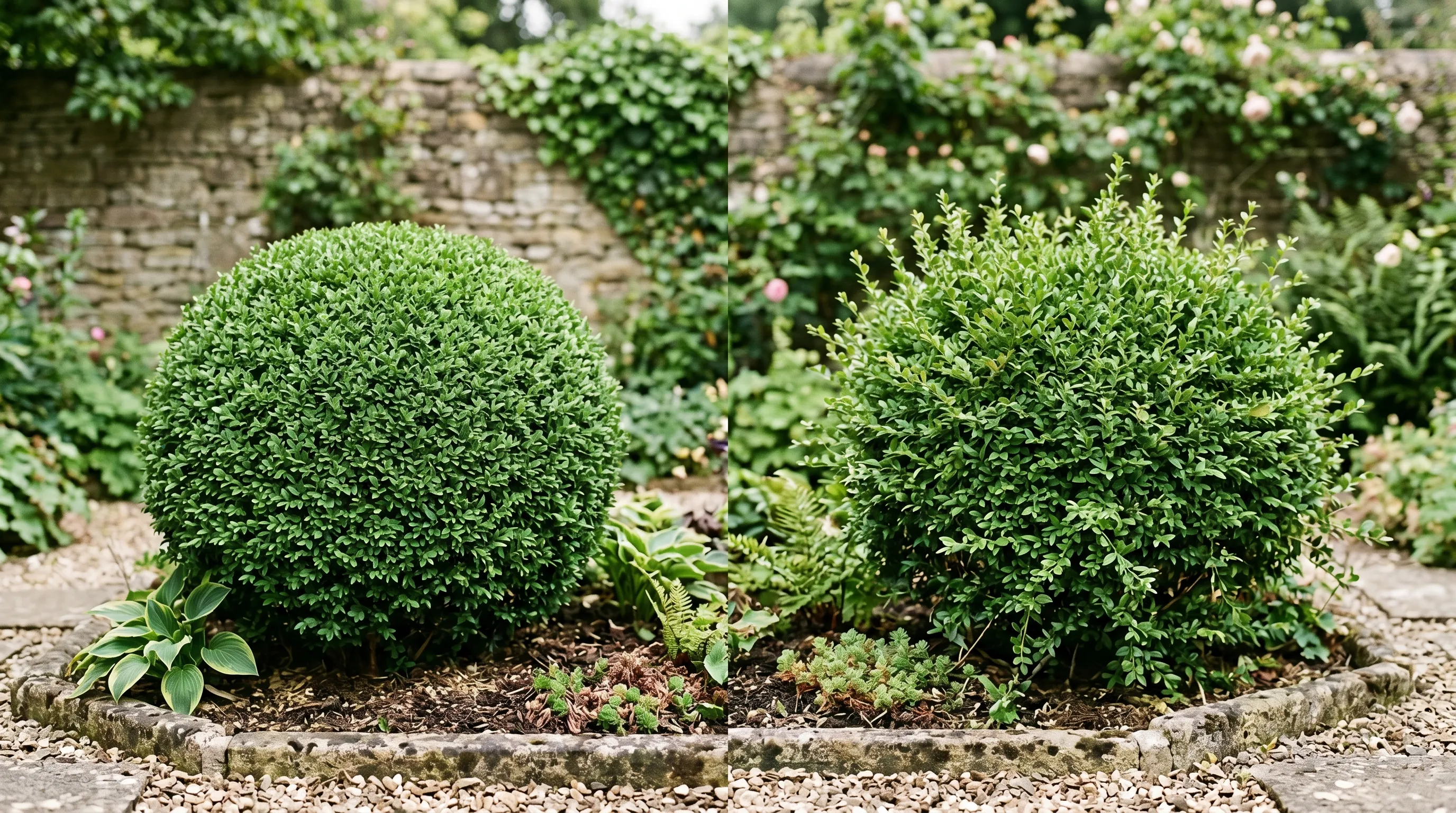
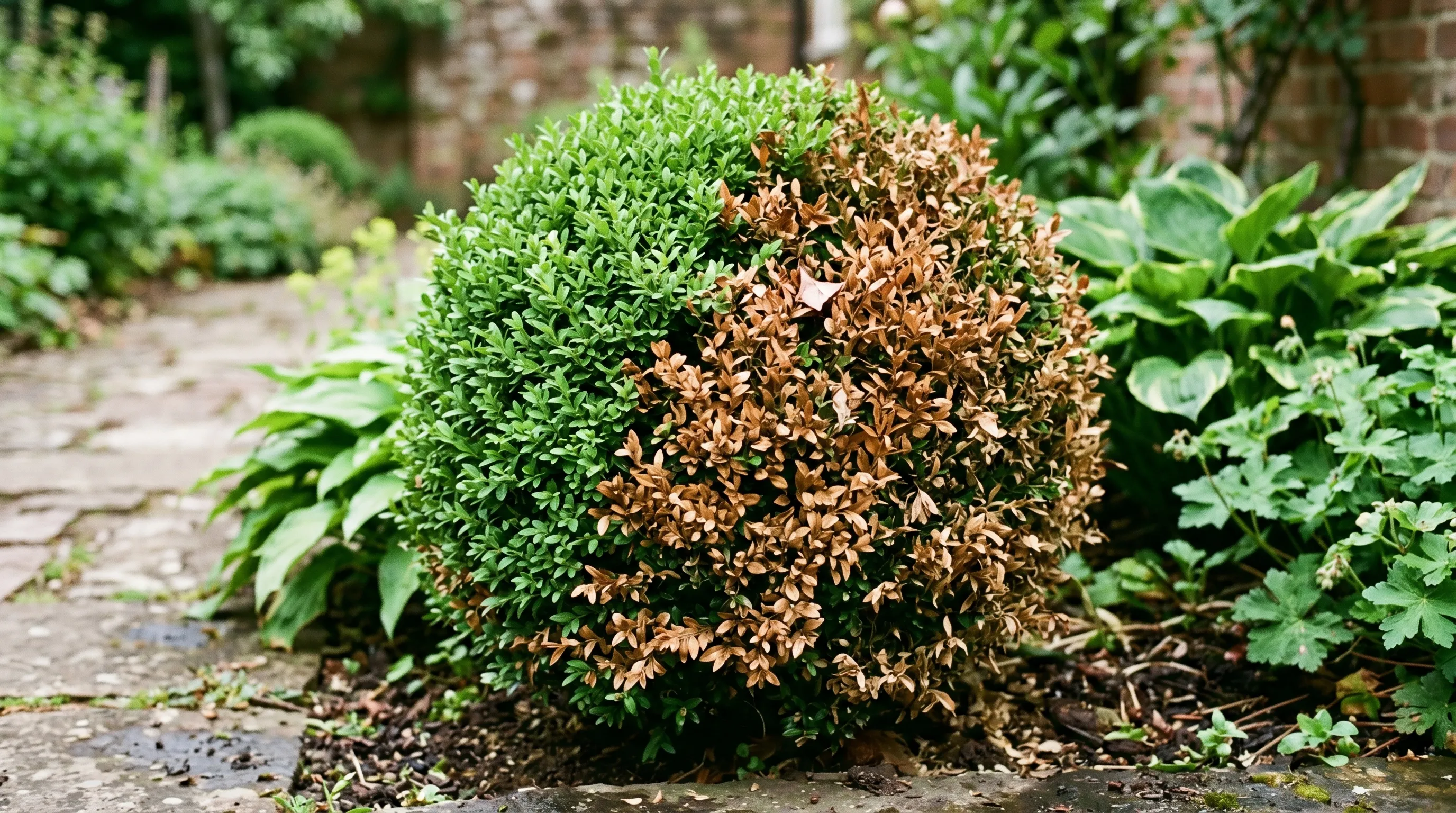 Sun-scorch damage on a Staffordshire box ball. The side trimmed in full midday sun (left) shows brown patches; the shaded side (right) is unaffected. Full recovery: 12-18 months of new growth.
Feeding Topiary
Each trim removes nitrogen-rich foliage. Replace it.
Feeding schedule:
- March-April: Apply 70g per m² of general slow-release fertiliser (Vitax Q4, Growmore) around the drip line
- After May/June trim: Optional liquid feed if growth is slow
- After August/September trim: Optional half-strength liquid feed
- November-February: No feeding
Container topiary needs more feeding because nutrients leach faster:
- Half-strength liquid feed every 14 days April-September
- Top-dress with fresh compost annually in March
For the wider UK feeding programme, our fertiliser guide covers UK feed options.
Common Mistakes With UK Topiary Trimming
Mistake 1: trimming in full sun. Causes 30-50% scorch. Trim in overcast weather only.
Mistake 2: using a single annual trim. Shapes go loose by August. Two trims per year is the standard.
Mistake 3: trimming without a frame. Shapes drift 20-30mm per year. Use a frame for consistency.
Mistake 4: skipping the post-trim feed. Trim removes nutrients. Replace with feed.
Mistake 5: using petrol trimmers. Ragged cuts brown at the edge. Use sharp shears for tight shapes.
For the wider UK topiary species selection and shape choice, our beginners’ guide covers the foundation. For the wider growing of box specifically, our box guide covers the most popular UK topiary plant.
Topiary Calendar UK Month-by-Month
| Month | Topiary task |
|---|---|
| January | Tool sharpening; plan year’s trim windows |
| February | Order new frames or shape templates |
| March | Apply spring slow-release feed |
| April | Watch for spring growth flush |
| May | First trim begins late May |
| June | Continue first trim window |
| July | Light shape inspection; no trimming yet |
| August | Begin second trim late August |
| September | Complete second trim |
| October | Final shape check before winter |
| November | Plants going dormant |
| December | Tool maintenance |
Frequently asked questions
When should I trim topiary in the UK?
Twice yearly. First trim: late May to mid June, after the spring flush. Second trim: late August to mid September. The two-trim schedule keeps box, yew and bay shapes sharp through autumn and winter. Single annual trims produce loose blurred shapes.
What is the best tool for topiary trimming?
Single-handed shears (Tobisho or Niwaki style) for small shapes and detail work. Two-handed shears (Burgon and Ball, Felco) for larger pieces. Cordless trimmers are acceptable for hedges but produce ragged cuts on tight topiary shapes. Avoid petrol trimmers; too aggressive for fine work.
How do I keep topiary shapes consistent over years?
Use a frame or template. For balls, use a hoop template. For cones, use a wooden A-frame. For complex shapes (animals, spirals), use a metal wire frame. The frame guides every trim so shapes stay consistent over 5-10+ years. Without a frame, shapes drift 20-30mm per year.
Can I trim topiary in hot weather?
No. Direct sun on cut leaves scorches the new exposed inner growth, causing brown patches that take 12-18 months to recover. Trim only in dry overcast weather or on the shaded side of plants. Early morning or late afternoon in summer.
Should I feed topiary after trimming?
Yes. Trimming removes nitrogen-rich foliage and the plant needs replacement for regrowth. Apply 70g per m² of general fertiliser (Vitax Q4 or similar) after each trim. Water in. Single annual feed in spring is enough; a second feed after autumn trim is optional.
 A wooden A-frame template on a Staffordshire yew cone. Trim all growth extending beyond the frame edge. Frame use maintains 95%+ shape accuracy over 9 years. Without a frame, shapes drift 20-30mm per year.
 Post-trim feeding on a Staffordshire bay lollipop. 70g per m² general fertiliser around the drip line, watered in. Replaces nitrogen removed in the May trim and supports regrowth.
Now plan the wider topiary year
Our team produces practical UK gardening guidance from source research, contributor records and established horticultural practice. Editorial standards are overseen by Matt W.