Key takeaways
- Lawn sand is three things: iron sulphate (moss killer), sulphate of ammonia (greens grass) and a sand carrier (spreads it evenly)
- Moss turns black within 2-3 days and is dead enough to rake out after 10-14 days
- Standard rate is 35-70g per m²; over 70g per m² risks scorching the grass too
- Best applied April-May or September on a dry day with the lawn slightly moist underneath
- Water in after 48 hours if no rain falls, or the iron can scorch the leaf
- Iron sulphate stains paving, pots and clothing a rust-brown that does not wash off
What exactly is lawn sand?
Lawn sand is three ingredients mixed together. It is not just sand, despite the name. The sand is a carrier, nothing more.
The active parts are iron sulphate (also called ferrous sulphate or sulphate of iron) and sulphate of ammonia. The iron sulphate kills moss. The sulphate of ammonia is a fast nitrogen fertiliser that greens the grass. The sand, usually a fine silica or builders’ sand, dilutes the two chemicals so they spread thinly and evenly across the turf. Without the sand carrier you would drop concentrated chemical in clumps and burn the lawn.
Most UK products sit in a fairly narrow range. The table below shows typical proportions, though brands vary, so always read your own packet.
| Ingredient | Typical proportion | Job it does |
|---|---|---|
| Iron sulphate (ferrous sulphate) | 10-17% | Blackens and kills moss |
| Sulphate of ammonia | 3-5% | Feeds nitrogen, greens the grass |
| Sand carrier (silica/fine sand) | 78-87% | Spreads the actives thinly and evenly |
That iron content is the number that matters most. A mix at the lower end (around 10%) is gentler and forgiving for first-timers. A mix near 17% works faster on thick moss but scorches grass more readily if you overdose. Some old “homemade” recipes skip the ammonia and use straight iron sulphate cut with sand, but a shop-bought lawn sand gives you the nitrogen boost the grass needs to fill the gaps once the moss dies.
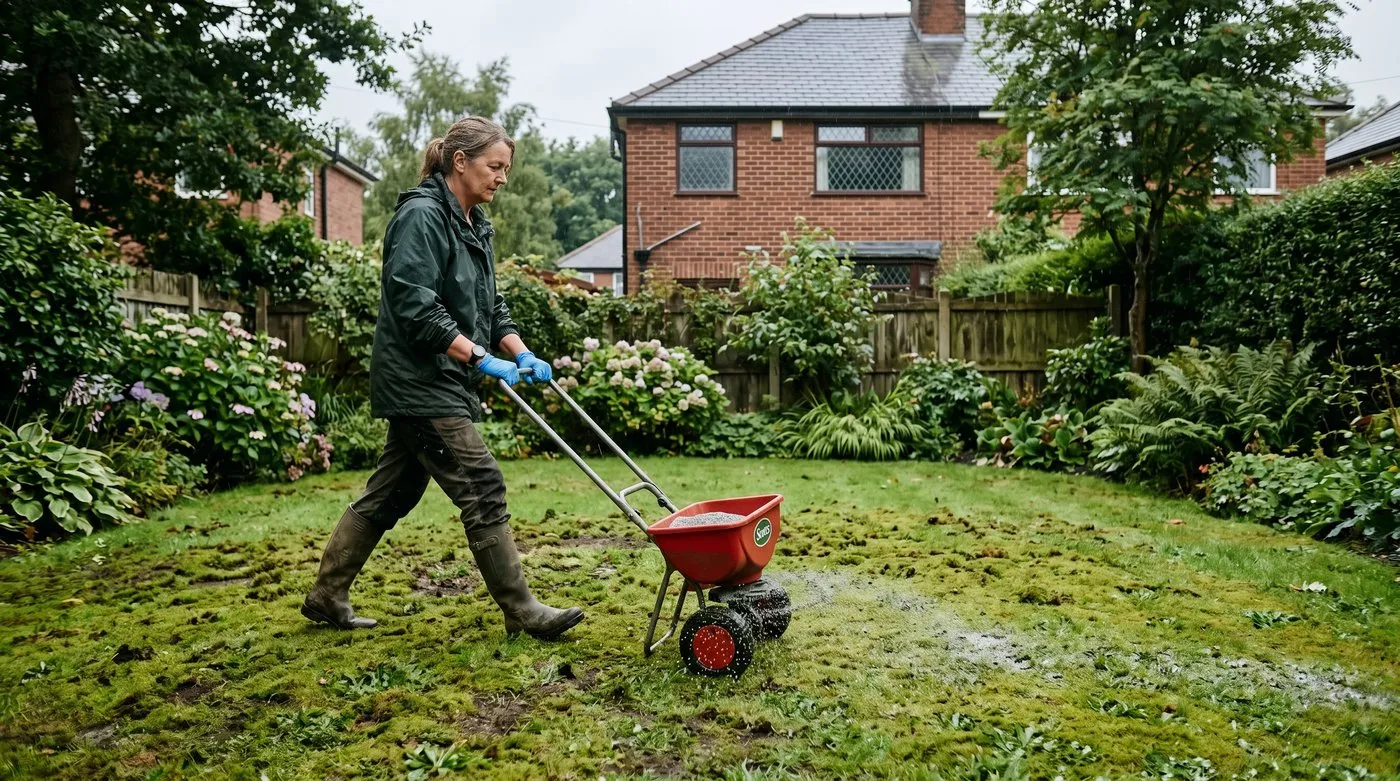 A typical late-winter Lancashire back lawn, mottled with moss after a damp, low-light season. This is the state lawn sand is designed to tackle.
How does lawn sand actually work?
Lawn sand does three jobs at once. Each ingredient acts on a different problem, which is why it is so popular as a single spring treatment.
The nitrogen greens the grass. Sulphate of ammonia is a quick-release nitrogen feed. It pushes leaf growth and deepens the colour within a week or two. This matters because dead moss leaves bare patches. The nitrogen drives the surrounding grass to spread sideways and fill them. Lawn sand without the feed would leave you with black moss and thin, hungry turf.
The iron also scorches soft weeds. Broad-leaved weeds with soft leaves, such as daisy, white clover, pearlwort and speedwell, get burned by the iron. They shrink and brown off, giving the grass a competitive edge. Lawn sand does not reliably kill these weeds at the root, so deep-rooted ones recover. For a proper weed clearance you still want to tackle the common lawn weeds with a selective weedkiller. Lawn sand simply tips the balance in the grass’s favour for a season.
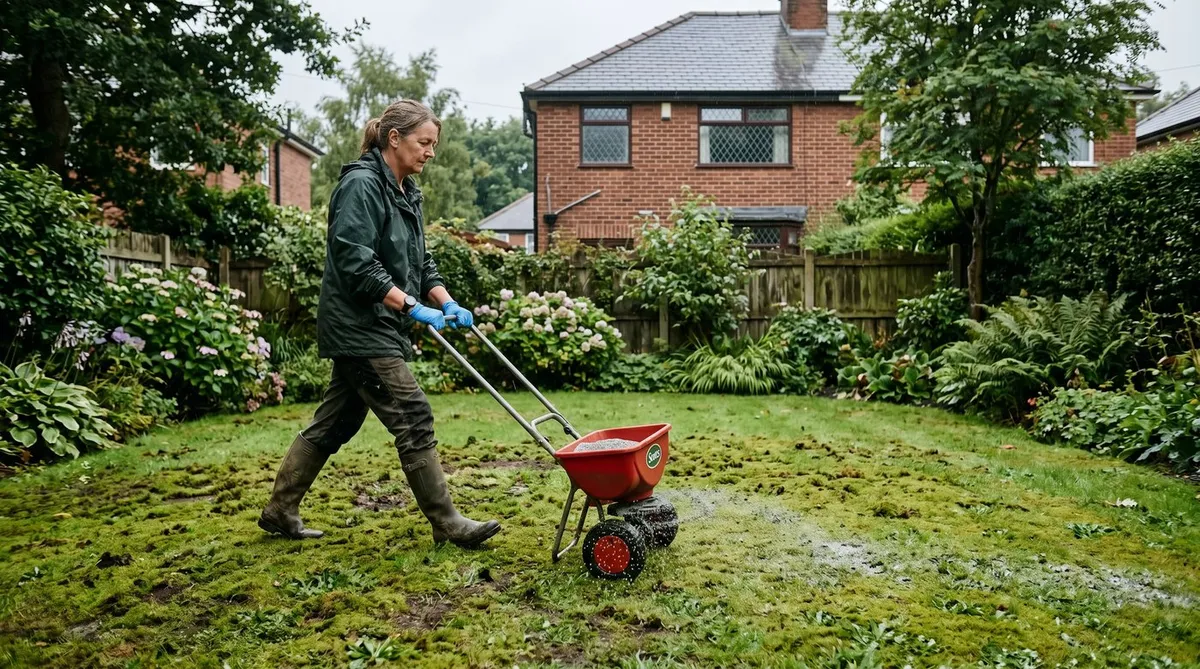
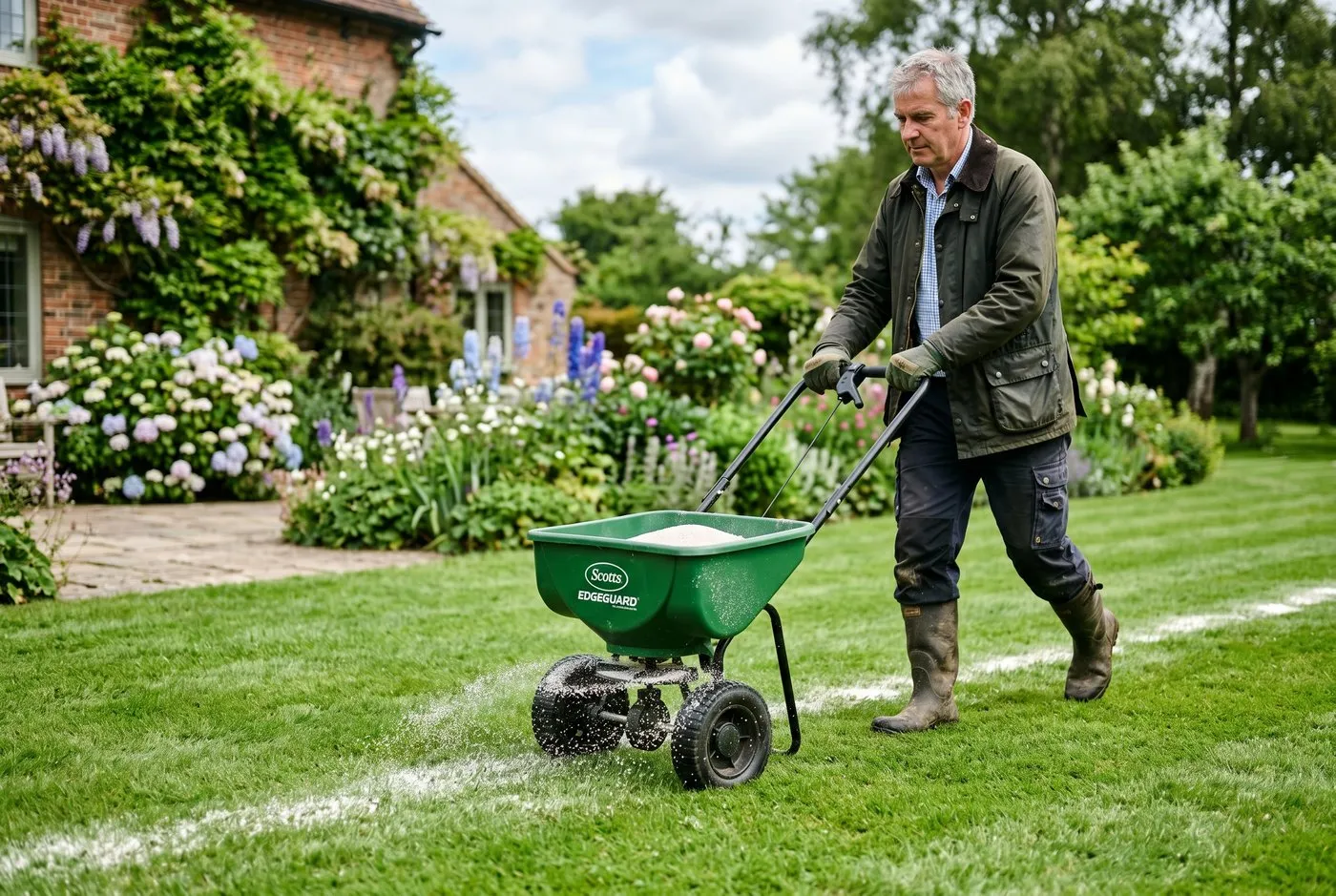 Applying lawn sand with a calibrated drop spreader in a shaded, north-facing town garden. Even coverage is the difference between a tidy result and a striped, scorched lawn.
When should you apply lawn sand?
Apply lawn sand in spring (April to May) or early autumn (September) on a dry, settled day. Those are the two windows where the grass is growing strongly enough to recover and the moss is active enough for the iron to reach it.
The weather on the day matters as much as the season. You want:
- A dry day with no rain forecast for at least 48 hours, so the iron sits on the moss and is not washed straight off.
- Slightly moist soil underneath, ideally a day or two after light rain, so the grass is not drought-stressed.
- Mild temperatures, roughly 10-18°C. Hot, sunny days above 20°C sharply raise the scorch risk.
- No frost forecast, which stresses both grass and the chemistry.
Gardener’s tip: Mow two or three days before you apply, not on the same day. A freshly cut lawn is mildly stressed, and the moss is easier to coat when the grass is a touch longer. Box off the clippings so the granules land on the lawn surface, not on a mulch of cut grass.
How do you apply lawn sand correctly?
Even coverage at the right rate is everything. Get the dose right and you get black moss and green grass. Get it wrong and you get a striped, scorched lawn that takes weeks to recover.
Step two: spread it evenly. Use a drop spreader or wheeled broadcast spreader for anything over 50m². For small lawns, split the dose in half, walk it up and down once, then walk the second half across at right angles. This crosshatch method evens out any gaps far better than a single pass. For tiny areas you can scatter by gloved hand, but be slow and deliberate.
Step three: leave it 48 hours, then water in. The iron needs roughly two days in contact with the moss to do its work. After 48 hours, if no rain has fallen, water the lawn thoroughly. This washes the chemicals off the grass blades and dilutes them at root level, which stops the iron scorching the green grass. Skip this watering in dry weather and you risk burning the lawn you are trying to save.
The table below sets out the rates and what to expect at each.
| Application rate | When to use it | What happens |
|---|---|---|
| 35g per m² | Light moss, first-time users | Gentle moss kill, low scorch risk |
| 50g per m² | Moderate moss, established lawns | Reliable blackening in 2-3 days |
| 70g per m² | Heavy, thick moss | Fast, strong kill, watch the grass closely |
| Over 70g per m² | Never deliberately | Scorches grass as well as moss |
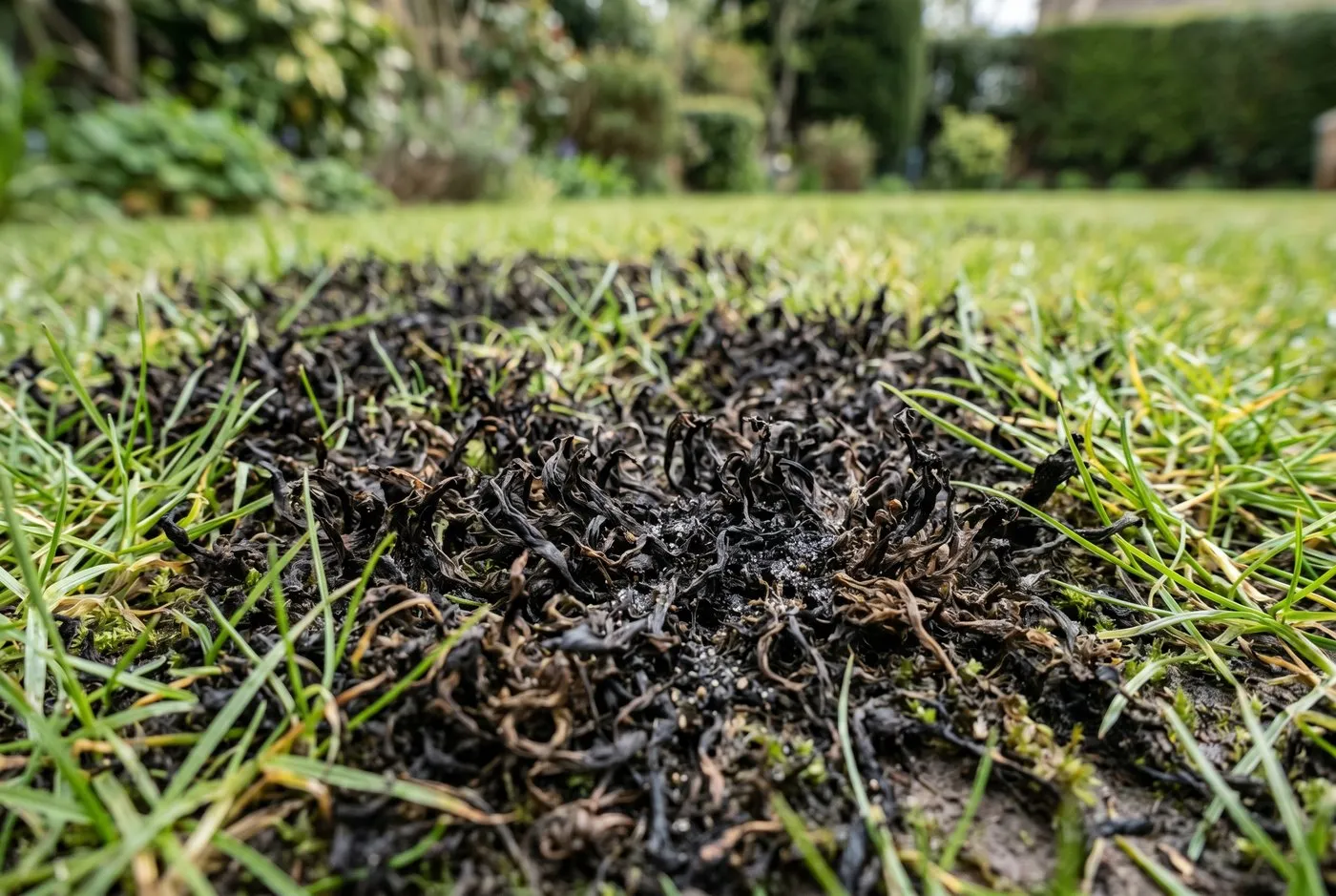 Forty-eight hours after treatment on an exposed Welsh hillside lawn, the moss has blackened completely while the grass stays green. This is exactly the result you want before raking.
Step four: rake out the dead moss after about two weeks. Once the moss is black and brittle, around 10-14 days, rake it out with a spring-tine rake or a powered scarifier. This is the satisfying bit. Dead moss pulls out in dark handfuls and leaves the grass clear to grow into the gaps. Composting it is fine, though add it gradually as it is acidic. Pulling out the dead moss is half the job, so it pairs naturally with a proper effort to scarify and aerate the lawn while you are at it.
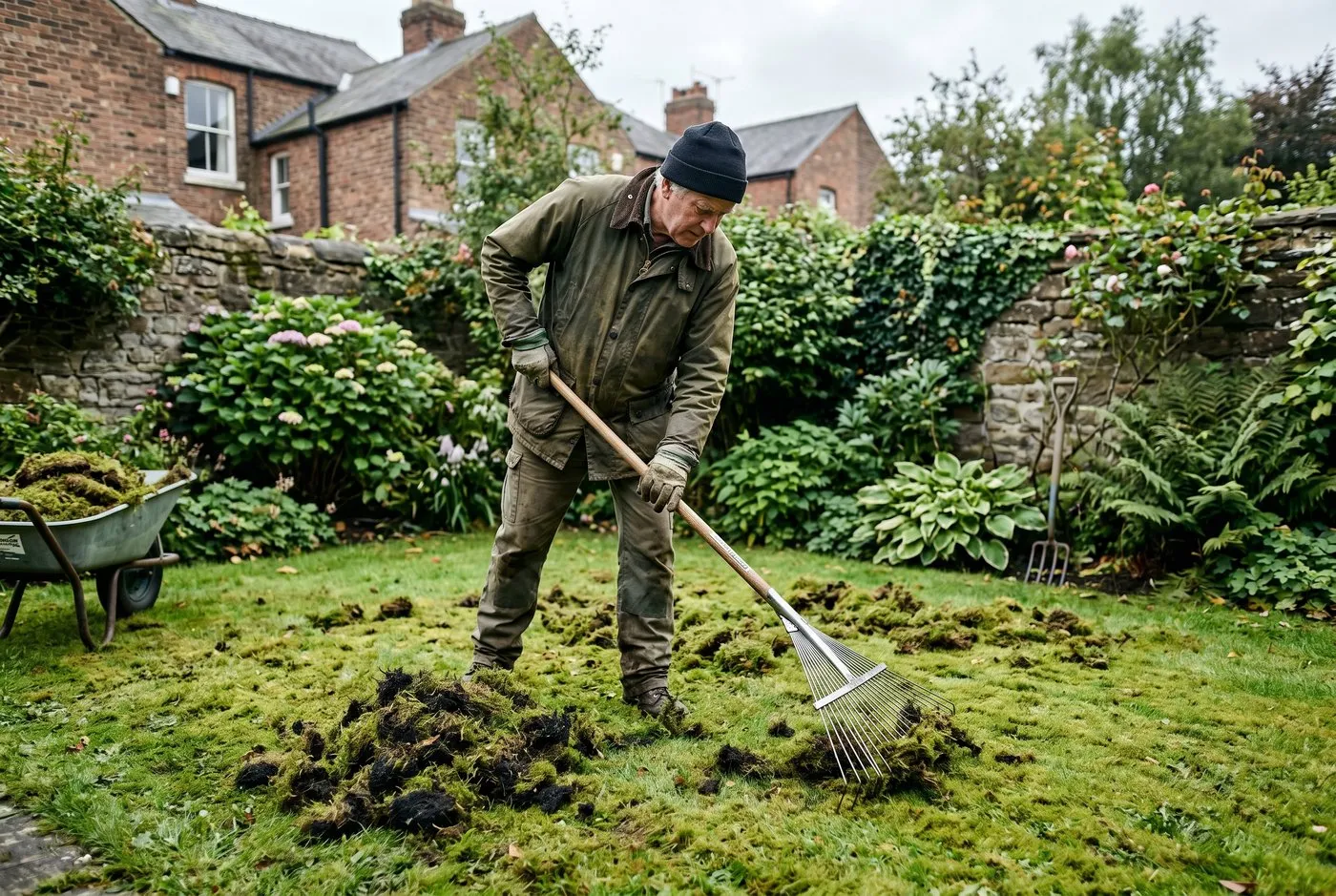 Raking out the dead moss with a spring-tine rake in a suburban back garden, two weeks on. The blackened material lifts out cleanly, leaving room for grass to fill in.
How does lawn sand compare to other products?
Lawn sand is one of several ways to tackle moss and weeds, and it is not always the right one. Here is how it stacks up against the main alternatives you will see in UK garden centres.
Versus a liquid moss killer. Liquid moss killers are usually iron sulphate in solution. They work the same way on moss but carry no fertiliser and no sand carrier, so they are cheaper and faster to apply over large areas with a knapsack sprayer. They will not green the grass, though, and they stain just as readily.
Versus a 4-in-1 feed, weed and moss killer. These combined products add a selective weedkiller to the iron and feed. They are the all-rounder for a tidy lawn, killing weeds at the root rather than just scorching them. The trade-off is cost and the need to follow the timing carefully. If your lawn has serious weeds as well as moss, a feed-weed-mosskiller often does more in one pass.
Versus straight iron sulphate. Pure iron sulphate, bought as a powder and dissolved in water, is the cheapest moss kill of all. Gardeners use roughly 15-20g per litre of water across a square metre. It is potent and stains badly, with no grass-greening nitrogen and no sand to spread it evenly. It suits experienced gardeners who want fine control over a budget.
| Product | Kills moss | Greens grass | Kills weeds at root | Stains paving | Rough cost (100m²) |
|---|---|---|---|---|---|
| Lawn sand | Yes (knock-down) | Yes | No, scorches only | Yes | £8-15 |
| Liquid moss killer | Yes (knock-down) | No | No | Yes | £6-12 |
| Feed, weed & moss killer | Yes (knock-down) | Yes | Yes | Yes | £12-20 |
| Straight iron sulphate | Yes (knock-down) | No | No | Yes, badly | £4-8 |
Lawn sand sits in the middle: it greens the grass and knocks back moss in a single dry application, which the cheaper options do not. If you want a gentler, slower route that builds turf health rather than chemically scorching it, you can also simply feed your lawn well and rake the moss out by hand, though that takes far more effort on a heavily mossed plot.
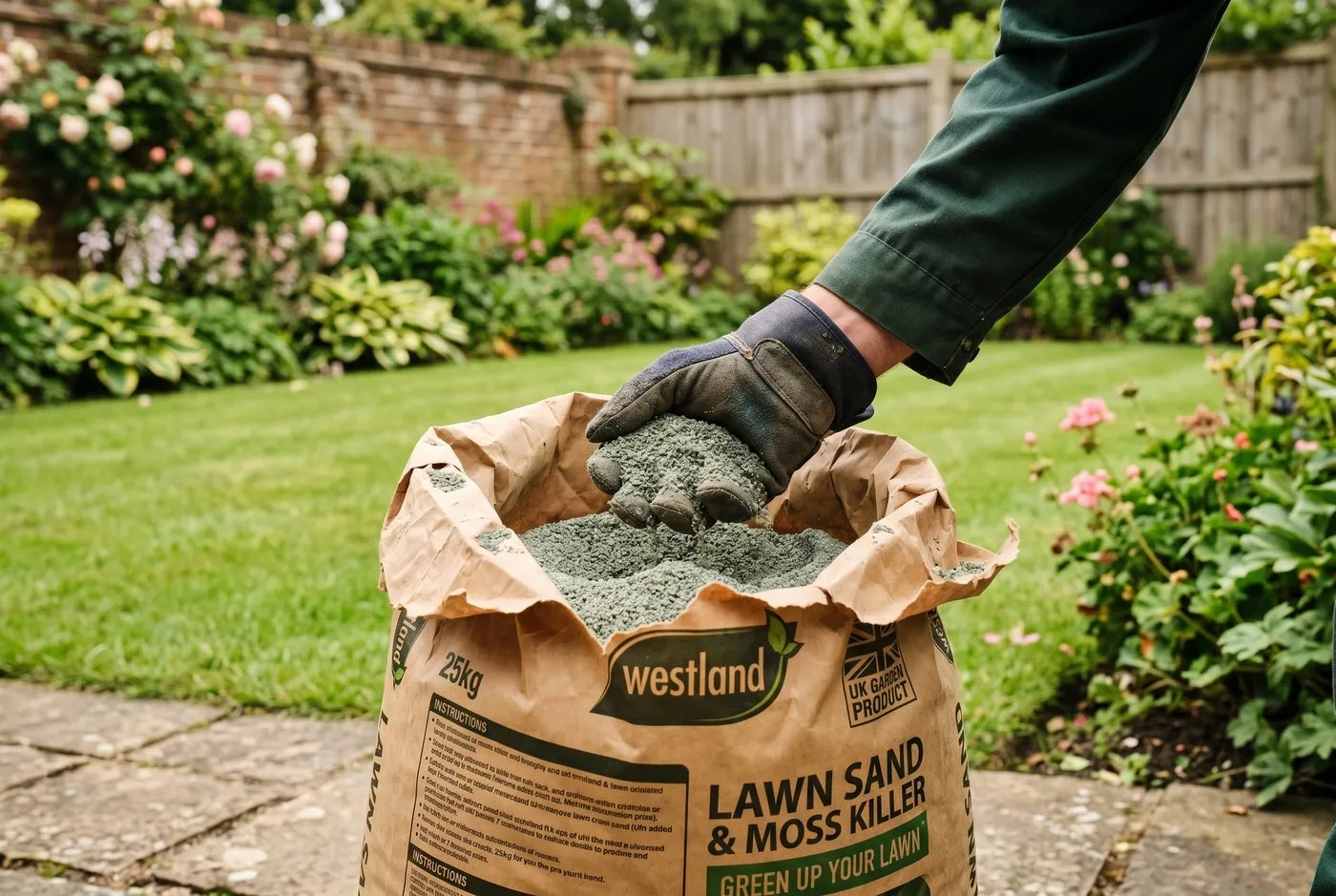 Weighing lawn sand on shed scales before application. The iron sulphate content on the bag, here around 15%, tells you how aggressive the product is and how carefully to dose it.
Is lawn sand safe, and what should you watch for?
Lawn sand is safe to use with sensible care, but the iron sulphate causes real problems if you are careless. Three things catch people out.
Keep pets and children off until it is watered in. The iron and ammonia are mild irritants. Keep pets and children off the treated lawn until you have watered it in and the grass has dried, usually 2-3 days after application. After watering in and a dry spell the lawn is fine to use again. Store the bag sealed, dry and out of reach.
A few other mistakes to avoid:
- Treating moss without fixing the cause. Moss thrives in shade, compaction and damp. If you do not improve drainage, aeration or light, the moss returns every winter. After raking out, top-dress the lawn with a sandy mix to improve surface drainage and discourage regrowth.
- Applying before heavy rain. Rain within 48 hours washes the iron off the moss before it works. Check the forecast.
- Mistaking other lawn problems for moss. Patches of fungal growth or mushrooms in the lawn are not moss and will not respond to lawn sand. Identify what you actually have first.
- Expecting one treatment to end moss forever. Lawn sand is a seasonal knock-down. Pair it with the cultural work, and read up on how to properly get rid of moss in your lawn for the long-term fix.
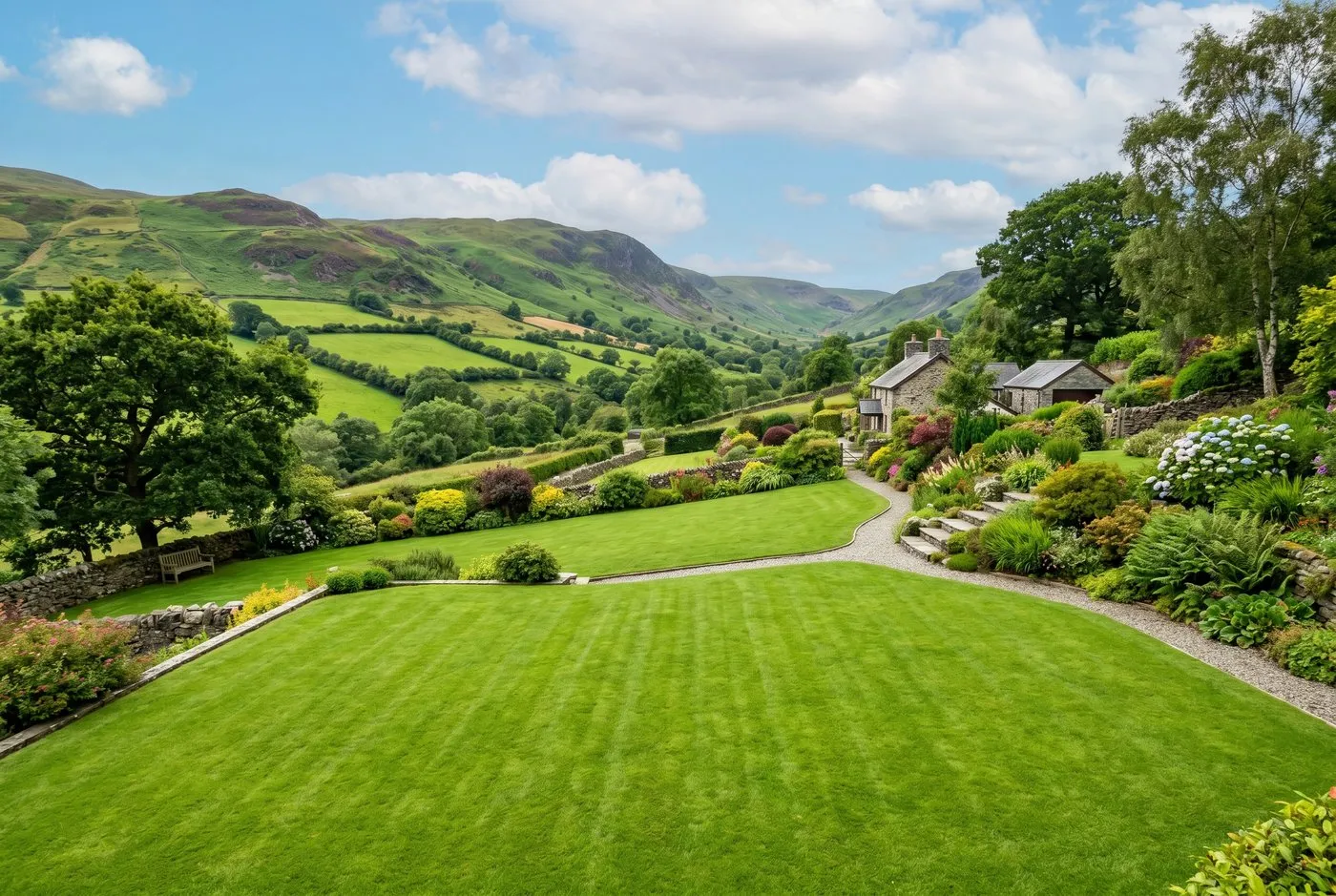 The same plot weeks later: dead moss raked out, gaps filled, and the grass darker and thicker after the nitrogen feed. This is the payoff from a well-timed, correctly dosed treatment.
Next step
Lawn sand is a cheap, effective spring or autumn job that blackens moss in days, greens the grass and tidies the lawn, as long as you weigh the dose, spread it evenly and water it in on time. But it treats the symptom, not the cause. The lasting result comes from fixing the shade, compaction and drainage that let moss in. Apply your lawn sand on the next dry, mild day, rake out the black moss a fortnight later, then move straight on to aeration, top-dressing and a sensible feeding routine to keep the moss from coming back next winter.
Our team produces practical UK gardening guidance from source research, contributor records and established horticultural practice. Editorial standards are overseen by Matt W.